Southern Innovator made its way to the annual Global South-South Development Expo (GSSD Expo), which was held this year in Rome, Italy and was hosted by the Food and Agriculture Organization (FAO) of the United Nations. It was great to meet many of the people presenting their work at the Expo and to catch up with the team at the Special Unit for South-South Cooperation.
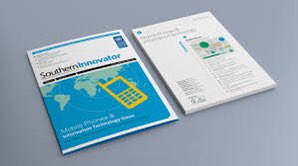
Southern Innovator Issue 1 called a “tour de force of what is interesting, cutting edge and relevant in the global mobile/ICT space…”
As solar power technology has improved, new pioneers have emerged to exploit this innovation. Several decades ago, solar power was seen as too expensive for wide-scale roll out in poor countries and communities. But today, an army of solar technology pioneers has fanned out across the world to show the new wave of innovations and how they make solar power affordable.
More than 1.7 billion people around the world have no domestic electricity supply, of whom more than 500 million live in sub-Saharan Africa (World Bank). Without access to domestic electricity, these people need to fall back on expensive, battery-powered devices or use gas generators and lamps: a cost that eats into their income.
More than 90 percent of Nigeria’s estimated 155 million people (US Census Bureau) live on just US $2 a day. Many of them are small farmers in remote areas. Access to information is very poor, especially critical information that can improve farming methods and boost incomes.
One of the most effective ways to communicate to a large number of people over a large territory is through radio.
A clever use of solar-powered battery radios has enabled the building of a low-cost, two-way communications network for rural farmers. The Smallholders Farmers Rural Radio (http://smallholdersfoundation.org) network broadcasts to 250,000 listeners with 10 hours of daily programming. The communications network reaches 3.5 million farmers in around 5,000 villages in Imo State (www.imostate.gov.ng), southeast Nigeria. The programming tackles issues from sustainable farming practices to HIV/AIDS and how to open a bank account . The clever part is the two-way dialogue between the listeners and the radio station. This is done through mobile radios known as AIR devices. They are small, solar-powered radios that let listeners send voice messages to the radio station. The message is stored on the radio station’s computers and later broadcast during a programme, allowing farmers to share their experiences, ask questions and receive answers in their own language.
The slim, hand-held silver-coloured radios have a small antenna and dials.
The network was created by Nnaemeka Ikegwuonu, who won a 2010 Rolex Laureate award (http://young.rolexawards.com/laureates/nnaemeka_ikegwuonu). The awards seek to foster innovation in the next generation. Launched in 2009, it looks for “visionary young men and women at a critical juncture in their careers, enabling them to implement inventive ideas that tackle the world’s most pressing issues in five areas: science and health, applied technology, exploration, the environment and cultural preservation.”
Ikegwuonu hopes to bring the service to other parts of Nigeria.
His radio studio is the height of simplicity and sophistication: a laptop computer, a microphone, a headset and a small control board to manage the sound levels. The radio signal is broadcast through a 30-metre-high antenna.
Solar power is being creatively used in many countries to tackle energy poverty. This ranges from lamps and lights to cookers to small power packs for electronic devices, all the way to large hardware to power homes and communities.
In India, whole villages are already using solar energy and improving their standard of living. Various companies and projects are selling inexpensive solar appliances – from cooking stoves to lanterns and power generators – across the country.
A report by the International Finance Corporation called the sub-Saharan solar market the largest in the world – a market of 65 million potential customers, who could access off-grid lighting over the next five years (IFC). The report anticipated high growth rates of 40 to 50 percent for anyone entering the market, with less than one percent of the market currently being served.
With a billion Africans using just four percent of the world’s electricity (The Economist), energy poverty is already harming further economic growth and development gains. As Africa’s population is expected to double to 2 billion by 2050, the gap between people’s needs and the power available will be stark: in Nigeria, out of 79 power stations, only 17 are working (The Economist). It will take innovators like Ikegwuonu to bring hope to this situation and transform lives despite the obstacles.
Published: December 2011
Resources
1) ToughStuff has developed a modular range of affordable solar powered energy solutions to the three main power needs of poor consumers in the developing world – lighting, mobile phones and radios. Website:www.toughstuffonline.com
2) Solar Power Answers is a one-stop-shop for everything to do with solar power. It has a design manual and guides to the complex world of solar power equipment. Website:www.solar-power-answers.co.uk/index.php
3) How We Made It Africa: A website detailing success stories on businesses investing in Africa and how people are making the most of opportunities on the continent. Website:www.howwemadeitinafrica.com
4) Solar Sister: A clever way to sell solar lamps and torches using a network of women. Website: www.solarsister.org
6) Lighting Africa: Lighting Africa, a joint IFC and World Bank program, is helping develop commercial off-grid lighting markets in Sub-Saharan Africa as part of the World Bank Group’s wider efforts to improve access to energy. Lighting Africa is mobilizing the private sector to build sustainable markets to provide safe, affordable, and modern off-grid lighting to 2.5 million people in Africaby 2012 and to 250 million people by 2030. Website:www.lightingafrica.org
Development Challenges, South-South Solutions was launched as an e-newsletter in 2006 by UNDP’s South-South Cooperation Unit (now the United Nations Office for South-South Cooperation) based in New York, USA. It led on profiling the rise of the global South as an economic powerhouse and was one of the first regular publications to champion the global South’s innovators, entrepreneurs, and pioneers. It tracked the key trends that are now so profoundly reshaping how development is seen and done. This includes the rapid take-up of mobile phones and information technology in the global South (as profiled in the first issue of magazine Southern Innovator), the move to becoming a majority urban world, a growing global innovator culture, and the plethora of solutions being developed in the global South to tackle its problems and improve living conditions and boost human development. The success of the e-newsletter led to the launch of the magazine Southern Innovator.
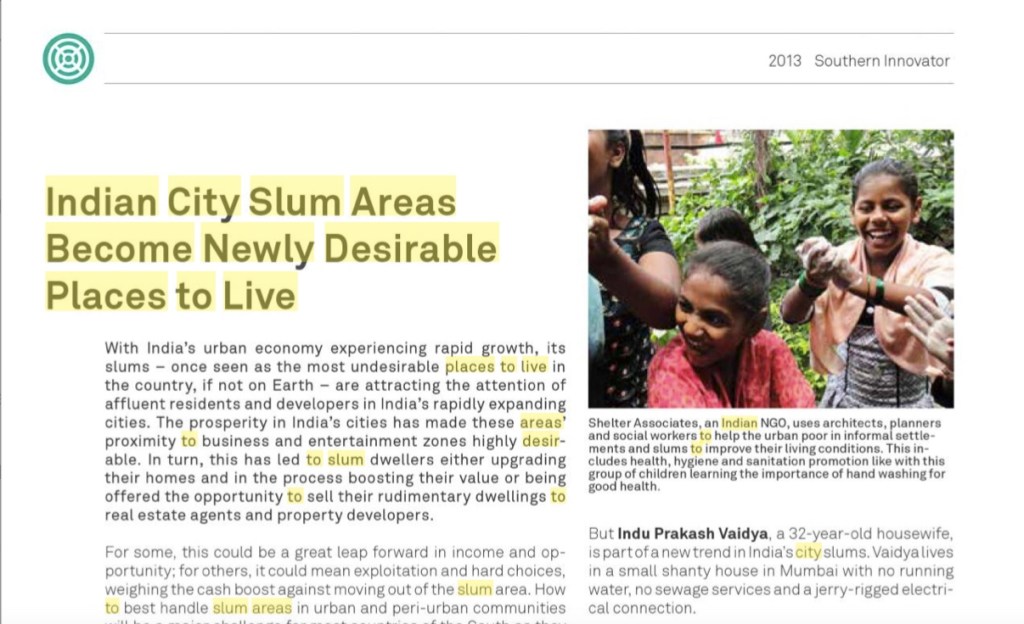
With India’s urban economy experiencing rapid growth, its slums – once seen as the most undesirable places to live in the country, if not on Earth – are attracting the attention of affluent residents and developers inIndia’s rapidly expanding cities. The prosperity inIndia’s cities has made these areas’ proximity to business and entertainment zones highly desirable. In turn, this has led to slum dwellers either upgrading their homes and in the process boosting their value, or being offered the opportunity to sell their rudimentary dwellings to real estate agents and property developers.
For some, this could be a great leap forward in income and opportunity; for others, it could mean exploitation and hard choices, weighing up the cash boost against moving out of the slum area.
How to best handle slum areas in urban and peri-urban communities will be a major challenge for most countries in the South as they continue to urbanize.
India’s phenomenal economic growth rate – forecast to be 7.9 percent this year by the Asian Development Bank, after averaging 7.7 percent per year over the past decade – has been the force behind an expanding middle class population, now estimated at 50 million people (McKinsey). Forecasts see it swelling from 5 percent ofIndia’s population to 40 percent by 2025.
With 30 percent of the population living in urban areas and cities contributing 60 percent of the country’s GDP and 90 percent of government revenues (Wall Street Journal), city-dwellers’ fate is critical to the functioning of the economy.
According to the 2001 Indian census, slums make up 25 percent of all housing and 26 percent of urban households lack access to sanitation facilities.
But Indu Prakash Vaidya, a 32-year-old housewife, is part of new trend inIndia’s city slums. Vaidya lives in a small shanty house in Mumbai with no running water, no sewage services and a jerry-rigged electrical connection.
Vaidya’s home is a just a single room for the five people in her family. They sleep on the cement floor and the ‘kitchen’ is a two-burner gas stove. The dwelling is so poorly constructed that they have to move around inside the room when it rains outside to avoid getting soaked.
But her humble home has been valued at US $24,000 by people looking to buy it.
According to real estate agent Hari Ram, the average price of a 91 square metre shanty home in Mumbai is now US $46,000.
“Shanties as small as 120 square feet… are as expensive as US $93,000,” Dinesh Prabhu, a construction company owner, told NDTV television.
Sixty percent of Mumbai’s 21 million people live in slums. And many are now finding themselves the subject of a property boom. This has led to the bizarre spectacle of luxury high-rise buildings sprouting up in a sea of slum housing. The slums are attracting the attention of those with money because many busy city workers face long commutes and are desperate for homes closer to work and entertainment areas.
The value of living close to the action is summed up by one slum dweller:
“People would kill to be in a place like this,” said slum dweller Sundar. “There are four local train stations close by. And the bus stop is a stone’s throw away.”
Some say this real estate boom offers enormous potential for the poor.
“All I can say is, given the current real-estate rates, those slums are invaluable,” said Sharad Mahajan of the Pune-based nonprofit organization Mashal (http://mashalindia.org). Mashal focuses on the problem of urban shelter and also implements housing projects. It has been working in the Dharavi slum area with theMaharashtra government on its redevelopment. The slum is well-known for its representation in the film Slumdog Millionaire, and the area is next to the Bandra-Kurla Complex business district of Mumbai. Mashal has been mapping the area, home to 60,000 families, to make sure the redevelopment is fair to the families living there.
Land tenure is an issue however. Many slum dwellers do not have official title to the land they live on. Over time, they have become semi-official places to live as governments have hooked many up to electricity and drinking water. Issues of corruption and exploitation are also other problems that need addressing if this real estate windfall is to actually benefit slum dwellers.
Typical slum dwellers are day labourers and poor migrants. But others are people who good easily afford to live somewhere else but don’t want the long commutes to work.
“It is simpler and less expensive to live here,” said Sankaralingam, a plastic merchant, who estimates his annual income at around US $9,300: an amount that could get him a home somewhere nicer.
For Indu Prakash Vaidya, the dilemma – to sell or not to sell – makes for some painful choices. While her current home is prone to flooding during the rainy season, she feels she would have nowhere else to go if she sold the home.
Yet the pressure to sell is great and elemental.
“I have three children, and their education and well-being need to be taken care of. Financial constraints can push me to sell this shanty in the future, then where will I live? I will have nowhere to go,” she told NDTV.
Published: December 2011
Resources
1) New documentary Urbanized gives a passionate over-view of the challenges facing the rapidly urbanizing world around us. Website: http://urbanizedfilm.com/
Development Challenges, South-South Solutions was launched as an e-newsletter in 2006 by UNDP’s South-South Cooperation Unit (now the United Nations Office for South-South Cooperation) based in New York, USA. It led on profiling the rise of the global South as an economic powerhouse and was one of the first regular publications to champion the global South’s innovators, entrepreneurs, and pioneers. It tracked the key trends that are now so profoundly reshaping how development is seen and done. This includes the rapid take-up of mobile phones and information technology in the global South (as profiled in the first issue of magazine Southern Innovator), the move to becoming a majority urban world, a growing global innovator culture, and the plethora of solutions being developed in the global South to tackle its problems and improve living conditions and boost human development. The success of the e-newsletter led to the launch of the magazine Southern Innovator.
Powerful new grassroots crowd-mapping tools have sprung up in the past few years across the global South, from Brazil’s Wikicrimes (www.wikicrimes.org) real-time crime mapping technology to the now famous Ushahidi (http://ushahidi.com) – a non-profit company making the free and open source Ushahidi software for information collection, visualization and interactive mapping – from its base in Kenya. They share some common features. All draw on the widespread use of mobile phones in the global South combined with growing access to the Internet, either through 3G mobile phone services, WiFi wireless connections, Internet centres or increasingly available broadband Internet services.
They then connect the mobile phones to the new mapping services available either on the phones or on the Internet. One example is Google Maps (http://maps.google.com).
These mapping services are revolutionary in what they bring to poor communities. They allow people to quantify in real time what is happening in their area, as well as see what is happening around the world. Where in the past this sort of mapping and statistical data collection was chiefly the domain of government departments and private services for wealthy corporations, individuals can now participate in the collection of data and map what is happening in their area. This can include mapping actual crime as it occurs, or slum-mapping, where a visual snap-shot of a slum area is made to better target aid and development.
This is a game-changer for human and sustainable development. It has the potential to close the gap between the collection and analysis of data and action. Accurate, real-time data makes it easier to push government agencies to deliver on their promises, especially during a crisis.
Kenya’seMazingira website (www.emazingira.org) is showing the difference these tools can make. It allows people to identify potentially destructive practices that harm the environment – unregulated forestry, pollution, dangerous animals, land degradation, climate change – and alert others to what is happening. This level of awareness, it is hoped, will in time reduce the destruction of local environments and improve the quality of life for both humans and wildlife.
Mazingira means “environment” in Swahili. The website’s motto is “Keeping the environment clean for the future generation”.
The eMazingira website is a visually simple affair with a leafy banner image and an interactive map showing what is happening. It is in its first iteration and future upgrades are on the way. A rolling list of incidents keeps readers briefed on what is happening, from “Fire burning” to “Sewer burst” to “Rogue elephant”. There are five main categories to choose from and users can file reports by text message, email, sending a Tweet (www.twitter.com) or filling in an online form on the website.
“We got to know about Ushahidi during its first deployment which was in Kenya, when it was used to map post-election violence incidents in early 2008,” explains Dunston Machoka, director of BTI Millman Limited (www.btimillman.com) inNairobi,Kenya, a custom software development firm leading the project.
“We were inspired to develop eMazingira, on one hand, because of the passion we had for environmental conservation and on the other hand, from the success stories we had observed of Ushahidi deployments inKenya,HaitiandJapan.”
Machoka believes this is a critical time forKenya’s environment: “eMazingira comes at a time when environmental conservation is a huge concern inKenya. Our key observation was that there was no effective reporting mode for environmental incidents for citizens.”
The website hopes to better engage citizens in tackling the country’s environmental problems and sees this as a way to spur further government action.
One of eMazingira’s proudest moments came when it won the World Summit Youth Award as the 2011 Runner Up for the use of ICT towards attaining the United Nations Millennium Development Goals.
But how easy is it to work with this technology? Machoka advises those starting out to turn to the Ushahidi team for support.
“I would advise them to get in touch with the Ushahidi team through their website and by doing so the deployment will be easy, fast and there will be adequate assistance in case of any challenges,” he said.
For the next two years, eMazingira will be focusing on rolling out the service to the country, from the main towns to rural areas.
“At the end of the period we hope to start similar programmes in East Africa based on the lessons learnt inKenya,” confirms Machoka.
And that isn’t where the eMazingira story will stop: its creators also want to deploy the technology globally, if countries have the right conditions.
“The key necessity for the application would be good mobile and Internet infrastructure and government that can promote citizen participation in environmental conservation,” Machoka said.
Published: December 2011
Resources
1) With less than five years until the 2015 deadline to meet the Millennium Development Goals, any tool that can make development decisions more precise is a benefit. Website:http://www.undp.org/mdg
2) The Map Kibera project uses an open-source software programme, OpenStreetMap, to allow users to edit and add information as it is gathered. This information is then free to use by anybody wanting to grasp what is actually happening in Kibera: residents, NGOs, private companies and government officials. Website:http://www.openstreetmap.org
4) Mobile Active.org: MobileActive.org is a community of people and organizations using mobile phones for social impact. They are committed to increasing the effectiveness of NGOs around the world who recognize that the over 4 billion mobile phones provide unprecedented opportunities for organizing, communications, and service and information delivery. Website: http://www.mobileactive.org
Development Challenges, South-South Solutions was launched as an e-newsletter in 2006 by UNDP’s South-South Cooperation Unit (now the United Nations Office for South-South Cooperation) based in New York, USA. It led on profiling the rise of the global South as an economic powerhouse and was one of the first regular publications to champion the global South’s innovators, entrepreneurs, and pioneers. It tracked the key trends that are now so profoundly reshaping how development is seen and done. This includes the rapid take-up of mobile phones and information technology in the global South (as profiled in the first issue of magazine Southern Innovator), the move to becoming a majority urban world, a growing global innovator culture, and the plethora of solutions being developed in the global South to tackle its problems and improve living conditions and boost human development. The success of the e-newsletter led to the launch of the magazine Southern Innovator.













 David South Consulting
You must be logged in to post a comment.