Categories
Archive Development Challenges, South-South Solutions Newsletters

Session 1: Impacts, Coping Strategies and Livelihoods

A Report from the UN Conference on the Social and Political Dimensions of the Global Crisis: Implications for Developing Countries (12-13 November 2009)

Organised by the United Nations Research Institute for Social Development (UNRISD), Geneva, Switzerland. Held at the Palais des Nations.
Just as this chart showed at the time of the Global Financial Crisis, the countries in “The Ring of Fire” have experienced exceptional turbulence and turmoil in the years after the crisis. For example, the UK has had austerity budgets, a no-growth economy, Brexit and the ‘shock therapy’ of the COVID-19 pandemic. The US, on the other hand, has clashed with its allies, seen a new cold war emerge with rivals China and Russia, and experienced significant domestic unrest, culminating in the storming of its seat of Government, the Capitol.
Just as now (2021) 2009 was a year in which the questions revolved around receiving a vaccine (for H1N1) and how best to affirm a person’s identity and citizenship. Photo: David South
Iceland saw its banking system collapse during the Global Financial Crisis, sparking demonstrations (October 2008-2011) and the “Pots and Pans Revolution”. Photo: David South

Session 1: Impacts, Coping Strategies and Livelihoods

The first session addressed one of the seismic shifts of our time: that we are witnessing the largest migration in human history from rural, agricultural communities to megacities. In 2007, the world became a majority urban place, with profound consequences for rural communities. Arindam Banerjee, Centre for Development Studies, pointed out that despite India’s high growth rate over this decade, agriculture experienced a low growth rate. This led to a lack of respect for farmers, who were dealing with falling prices and reduced credit. And when commodity prices do rise, farmers do not benefit under the current system.

The percentage of credit advanced in rural areas in India has been on the decline since 1991. People have now become dependent on informal credit sources with higher interest rates. Banerjee suggested some solutions to this crisis: boosting domestic demand, reducing dependence on exports, price support to growers, strengthening co-op credit services, and more employment programmes like NREGA (http://nrega.nic.in/) (National Rural Employment Guarantee Act) to support purchasing power in the rural sector. India needs to prevent a depression in the rural sector and find a solution to the fact rising prices are not going into producer’s pockets.

And how do people cope in villages when a crisis hits? May Tan-Mullins from the University of Durham compared fisher folk in Indonesia and China and their responses to economic crises in 1997 and now. In the Indonesian village during 1997’s Asian crisis, low-income families lived on US $30 to US $45 a month. In today’s Chinese village of 700 households, low-income families are living on US $300/month. The village also benefits from money made during a yearly fishing festival. Average earnings in the community are relatively good: between US $700 and US $1,000/month.

The Indonesian village during the 1997 crisis saw a big drop in the currency and it didn’t stabilise until 1999. Indonesian government stimulus through a health card scheme came along, but it wasn’t rolled out until 1999. The people were basically left to cope on their own with the crisis.

The current crisis in China in 2009 has had fewer effects on the village. The currency is under control and stable. The government has introduced stimulus packages, and the village is part of a long-term strategy to integrate it into the urban economy. In visits, Tan-Mullins had observed people had not suffered much, but they feared the real impact will come in 2010. The stimulus works out to about 2,000 Yuan (US $292) per household. However, low-income families have not benefited because they can not access formal supports like unemployment insurance.

The Indonesian fishing village survived by turning to informal credit sources. One example was to exchange ice and petrol in return for guaranteed deals for the fish at below market prices. A local mosque offered help with food parcels for 6 months in what was called a “trans-village religious network.” Women moved out of households and started working in the market, while some women made extra money cracking cashew nuts.

The Chinese fishing village has also seen social changes. There has been a cutback on perceived unnecessary education for girls. People are turning to family networks, or to gaunxi (doing favours for friends) (http://en.wikipedia.org/wiki/Guanxi). Marriage, for some fishing men, is seen as a way to use a woman to help out at home. Tan-Mullins concluded Asian communities cope better with downturns because their informal networks kick in. The Chinese are good natural savers: up to 30 to 40 percent of monthly income, which can help families weather the bad times. She called for a better understanding of these complex networks.

In Mexico, the country faces multiple challenges and social trends that were already heading in a negative direction before the crisis erupted. Lourdes Arizpe, from the National Autonomous University of Mexico, gave a sobering account of the extent of Mexico’s social breakdown. She called it “a profligate economy and an orphan society.” She detailed how migrants and drug dealers create new social and economic realities for the country. Mexico’s drug war alone has killed over 6,000 people in recent years. While some segments of the working population are finding their creative side during the downturn, others are turning to destructive behaviour. Mexico is suffering from too much legal and illegal drug use, and the medical costs of diseases of over-consumption (obesity, diabetes). The social breakdown has led to more teenage suicides and youth hooligans. Overall, Arizpe believes “all trends over the past 20 years have become worse.”

This has led to many crises being hidden from the official statistics. For example, the migration from Mexico of women for the global care market is harming Mexican children who are denied a full-time mother. This is causing a care deficit in the Global South. Teenage boys without authority figures are then recruited into drug dealing.

Arizpe’s solutions include recommending the Mexican government have a scheme for the unemployed, which would help take away the incentives to migrate for employment to other countries. She also encourages using the substantial remittance payments sent back to Mexico by migrants to invest in business and capital investment, rather than just homes.

A Report from the UN Conference on the Social and Political Dimensions of the Global Crisis: Implications for Developing Countries (12-13 November 2009)

Session 2: Social Policy: Country and Regional Perspectives

Session 3: Social Policy: Global Perspective

Session 4: Political Economy Dimensions of Crisis

Relevant stories previously covered in Development Challenges, South-South Solutions:

Model Indian Villages to Keep Rural Relevant (https://davidsouthconsulting.wordpress.com/south-south-case-studies/development-challenges-south-south-solutions/model-indian-villages-to-keep-rural-relevant/)
A New House Kit for Slum Dwellers that is Safe and Easy to Build (https://davidsouthconsulting.org/2021/10/03/a-new-house-kit-for-slum-dwellers-that-is-safe-and-easy-to-build/)

This work is licensed under a Creative Commons Attribution 4.0 International License.

ORCID iD: https://orcid.org/0000-0001-5311-1052.

© David South Consulting 2021
Categories
Archive Blogroll

Past Clients + Publications | 1991 – 2016

DS Consulting logo copy
First business card David South Consulting
The first business card for David South Consulting. Inspired by the Dutch post office’s (PTT Post) corporate identity developed by Studio Dumbar, the card was designed by Brian Cartwright of Toronto’s Rocket Design. Work at this time included investigative journalism for Canada’s top magazines and newspapers, magazine and newsletter editing, and communications for a prestigious medical history funder. From the very beginning, we were inspired by Dutch design for the public sector and the importance placed on this in The Netherlands. The work of Hein van Haaren, former head of the PTT’s Aesthetics Department, and graphic design pioneers Wim Crouwel and Gert Dumbar, still remain key influences to this day.
Financial Times business card 1995
As a reporter for two Financial Times newsletters, New Media Markets and Screen Finance, I covered the rapidly growing UK (and Scandinavian) television and new media markets and the expanding film-financing sector in Europe.
Features Editor Id Magazine 1996-1997
This Canadian alternative bi-weekly magazine broke new ground with its investigative journalism and online journalism. It gathered together highly talented, young contributors, many of whom are leading figures in journalism, the arts and technology today.
UNDP Mongolia business card 1997
As the UN’s head of communications in Mongolia (1997-1999), I founded the UNDP Mongolia Communications Office and oversaw a two-year communications programme to respond to the biggest post-WWII peacetime economic collapse. Award-winning and influential, the Office pioneered the use of the Internet in international development crisis response and was called a “role model” for the rest of the United Nations.
UNDP Ukraine business card 2000
Following on from the success of the UNDP Mongolia Communications Office, I worked with the head of the UN Ukraine mission to strategically relaunch the mission web portal, incorporating the newly launched UN Millennium Development Goals (MDGs).
Ukraine biz card Ukrainian_mini
GOSH business card 2001-2003
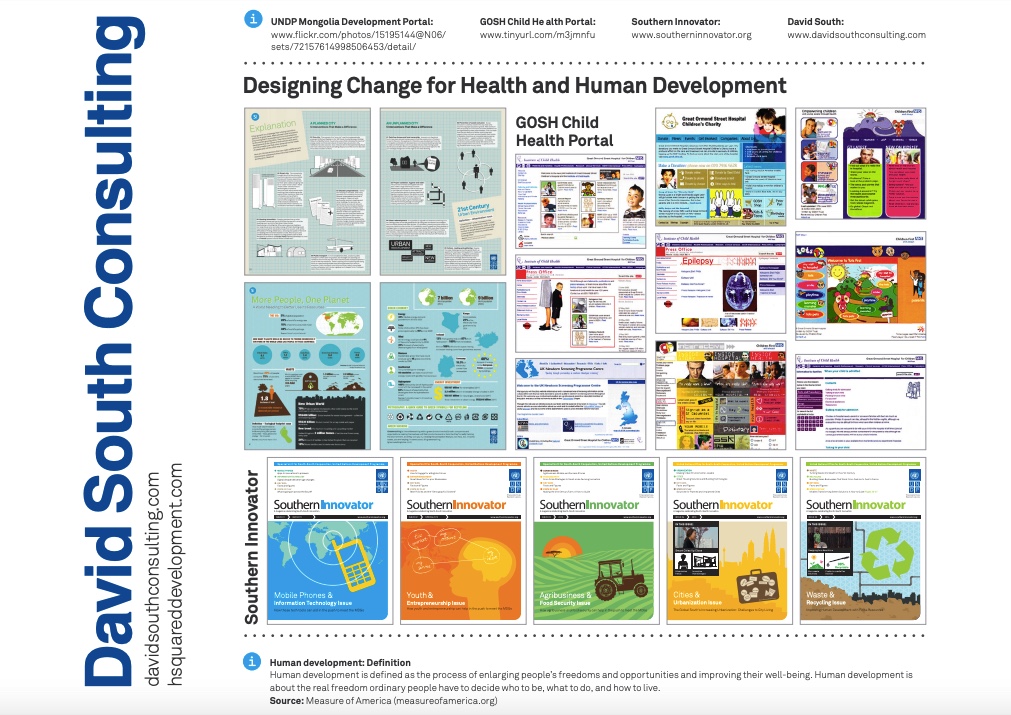
Drawing on my extensive experience strategically using the Internet to achieve communications goals, I was hired to head a two-year project to launch the GOSH Child Health Web Portal. Award-winning, it was called a “role model” for the wider National Health Service (NHS) and one of the most admired websites in the UK public and charity sectors. The website was cited as contributing to the hospital’s high rating and attracted additional funding for its research.
Mong MDG biz card_mini
UN MDGs Education Media Project
As part of an assessment of Mongolia’s media capabilities to communicate the Millennium Development Goals (MDGs), infographics were introduced for the first time to the mission.
Southern Innovator business card
With the Global Financial Crisis erupting, I was retained by the United Nations Office for South-South Cooperation (UNOSSC) to research and write a monthly e-newsletter and develop a new magazine to offer solutions and raise the profile of South-South cooperation as a development response to the crisis. Both publications proved highly influential, leading to the wider adoption of South-South cooperation and to national governments picking up the innovation agenda being brought about by the rapid take-up of mobile phones and information technology. The magazine Southern Innovator was called “a terrific tour de force of what is interesting, cutting edge and relevant in the global mobile/ICT space…”.
David South Consulting business card
In 2010, David South Consulting was relaunched with a new logo and branding for the 21st century. It represented a new phase, as work became global and very high-profile and influential. The foundations have been laid for future growth and expansion.

Watch Magazine

Watch Magazine masthead 1994
Watch Magazine was launched in 1994 and quickly became the authentic 1990s voice of Toronto’s youth. As one of Toronto’s first youth start-ups, Youth Culture became a successful youth communications brand and expanded to national distribution by the late 1990s. Launched during the economic austerity years in Canada, it was one of the contributors to Toronto’s economic resurgence and renewed business vitality.

New Media Markets

New Media Markets masthead 1995
As a reporter for two Financial Times newsletters, New Media Markets and Screen Finance, I covered the rapidly growing UK (and Scandinavian) television and new media markets and the expanding film-financing sector in Europe.

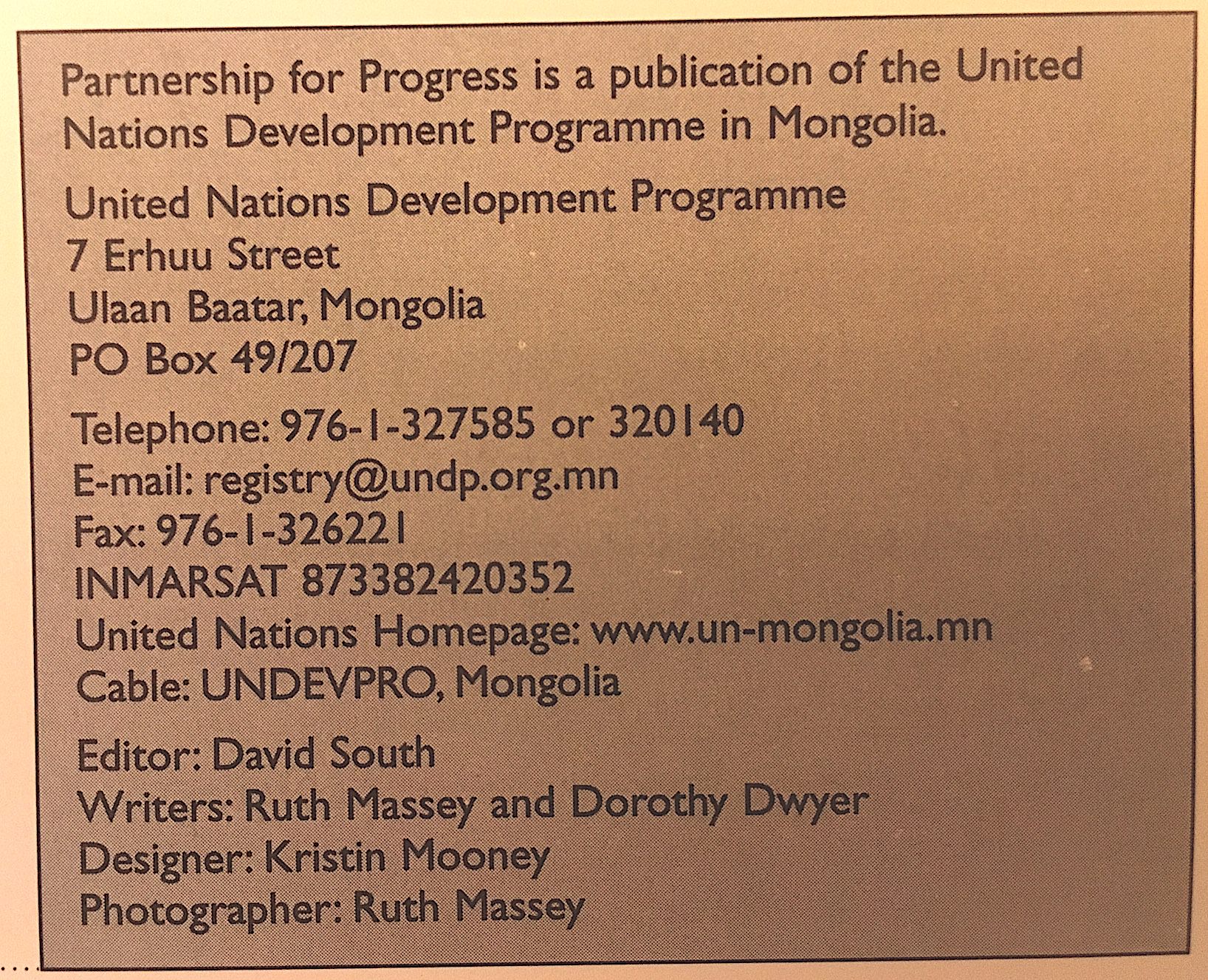
A Partnership for Progress: The United Nations Development Programme in Mongolia

P4P masthead 1997
The Partnership for Progress brochure raised the curtain on the UN’s response to Mongolia’s economic and social crisis in the late 1990s. It celebrated Mongolia’s independence and its flourishing media scene and free expression after the long years of Communism and state repression.

Human Development Report Mongolia 1997

Human Development Report Mongolia 1997
The first human development report for Mongolia captured in data and stories the damage done by the harsh transition from Communism and the imposition of austerity during the 1990s. It found high levels of poverty in the country and a heavy toll taken on people’s health, communities and families. The report was received with great enthusiasm and had two print runs.

Blue Sky Bulletin

Blue Sky Bulletin
The Blue Sky Bulletin newsletter broke with the usual approach taken by UN newsletters of offering up ‘grip n’ grin’ pictures of men in suits and instead offered actual stories and data on how Mongolia’s transition crisis was faring. It was distributed within Mongolia and by post and email outside the country to help raise awareness of the country and its development challenges.

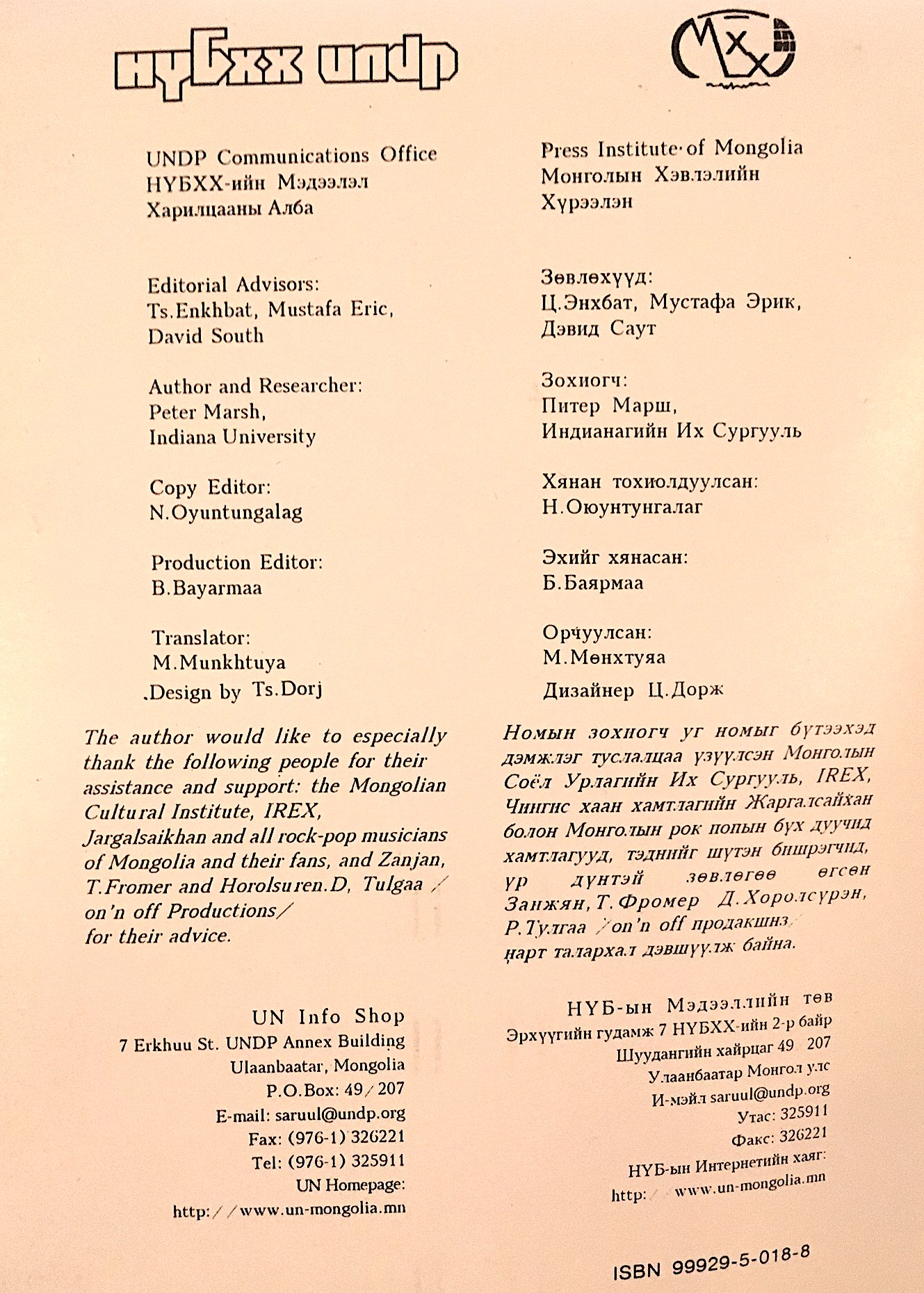
Mongolian Rock-Pop Book

Mongolian Rock-Pop Book
Researched and written by ethnomusicologist Dr. Peter Marsh, this book on the impact of Mongolian rock and pop on the country’s business and entrepreneurship culture, shone a spotlight on a lively modern music scene.

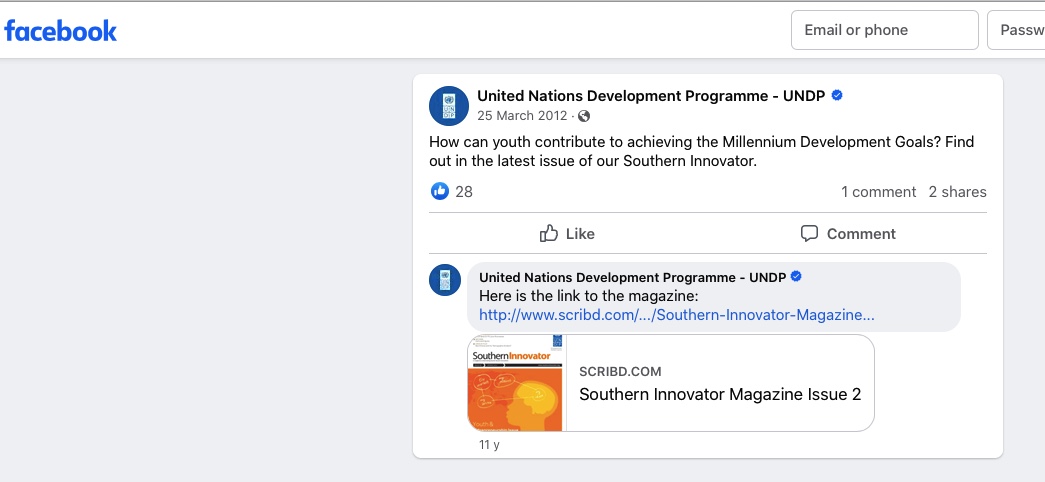
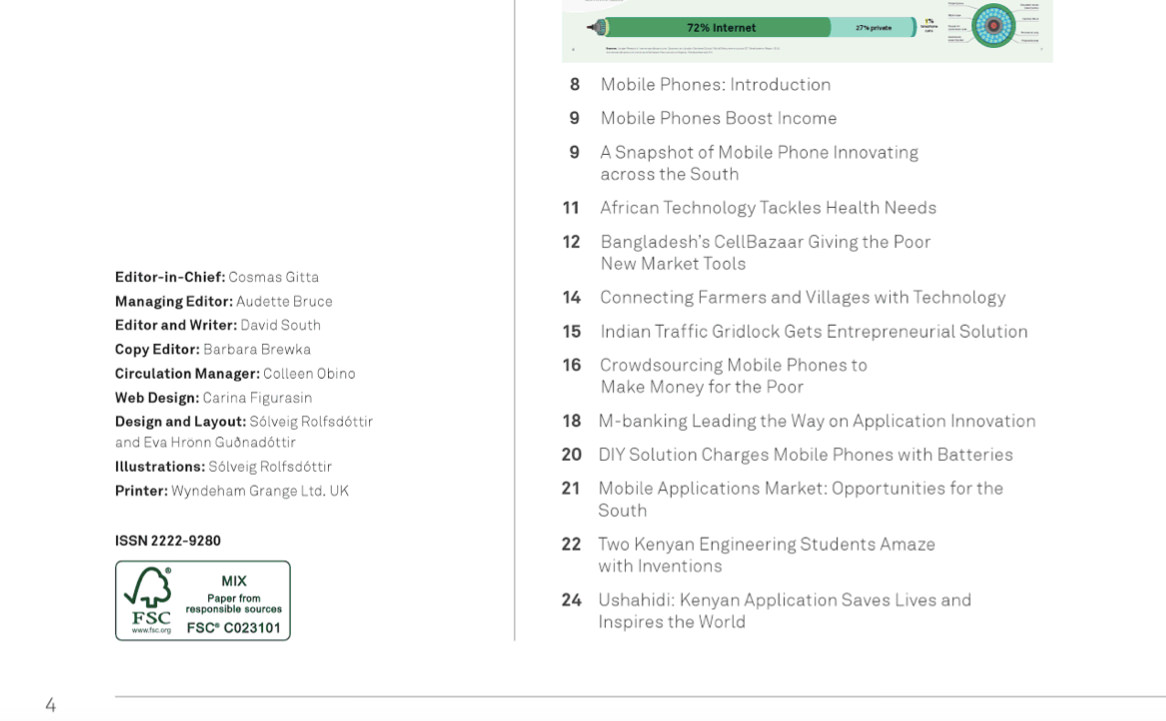
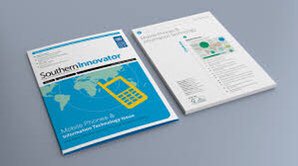
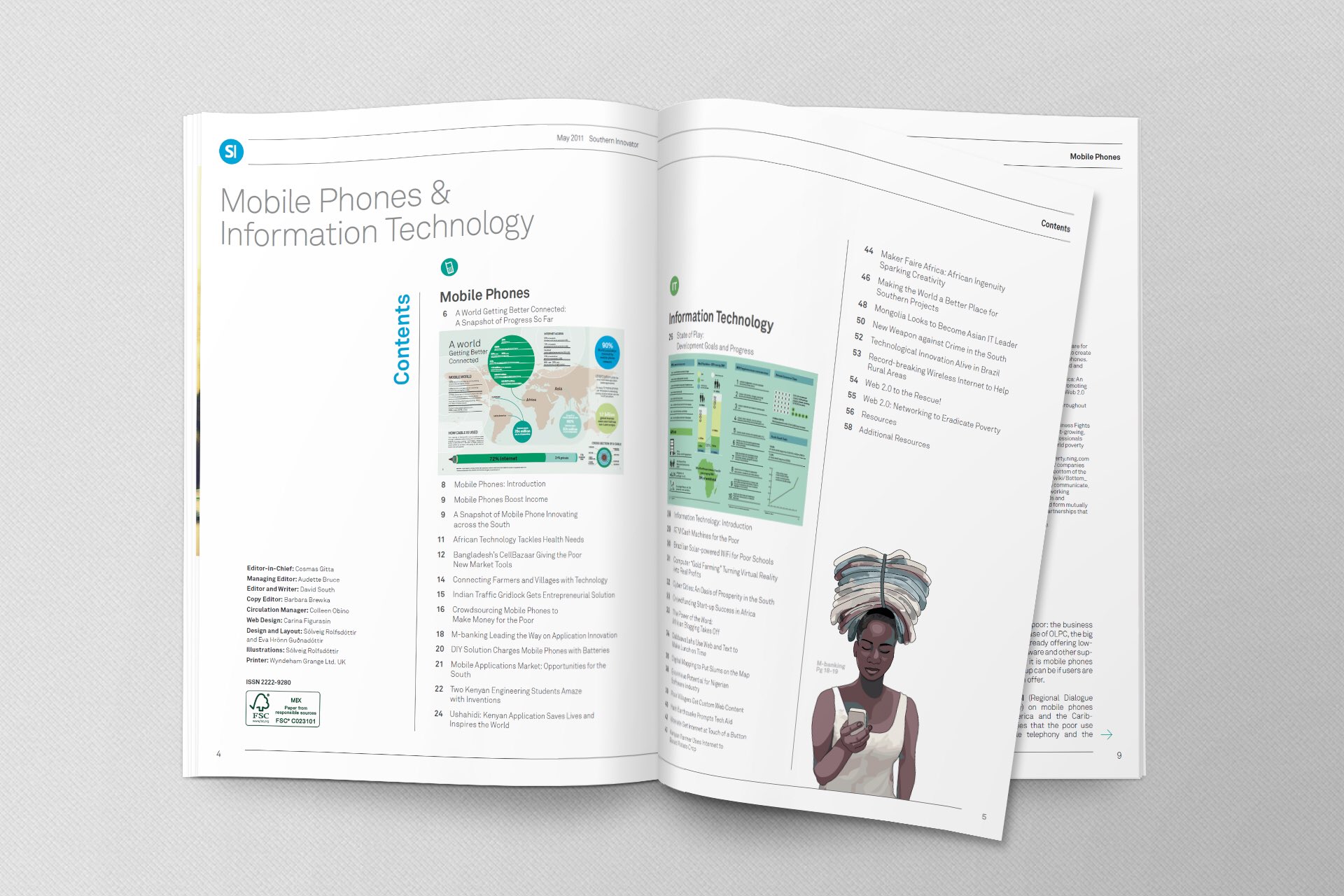
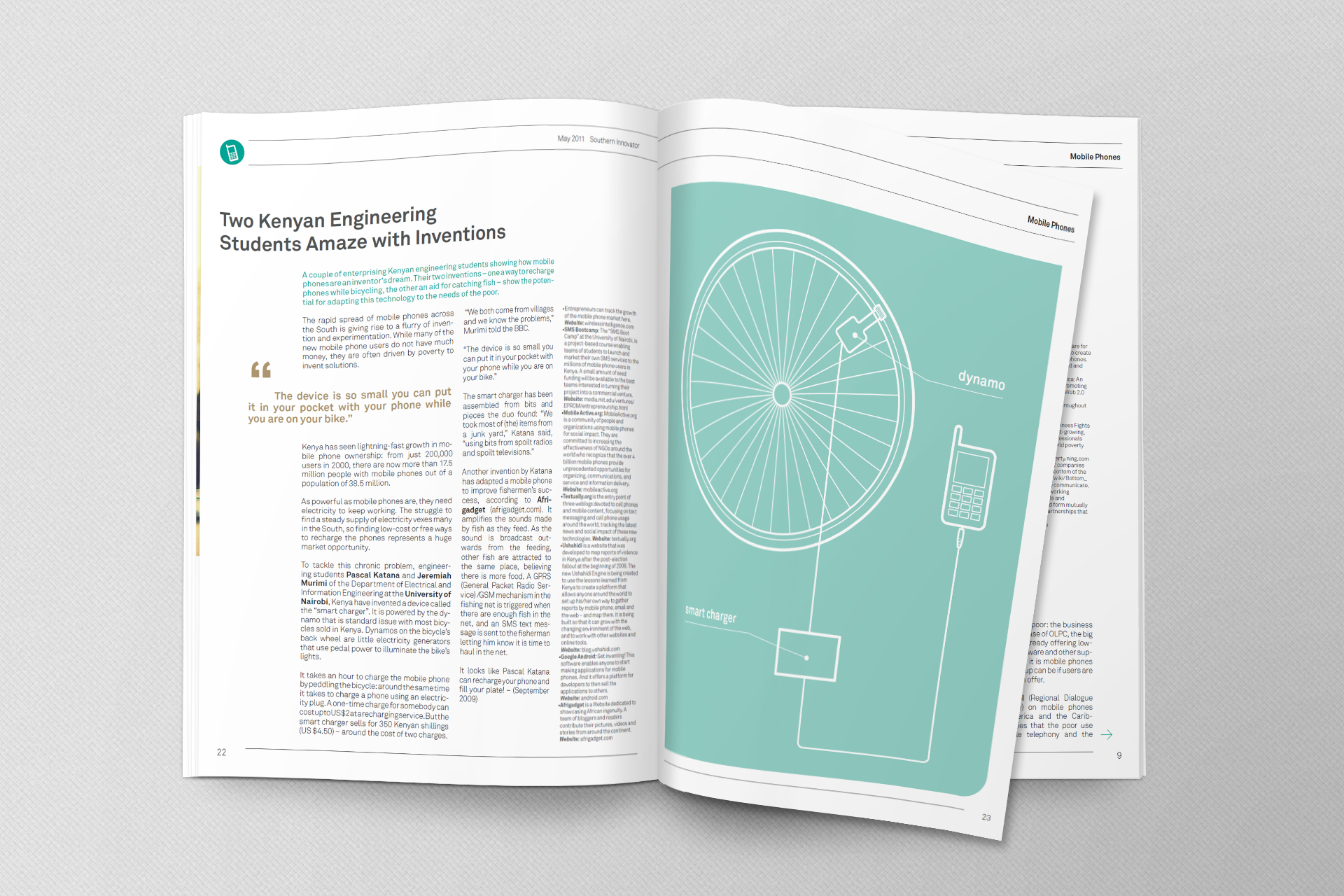
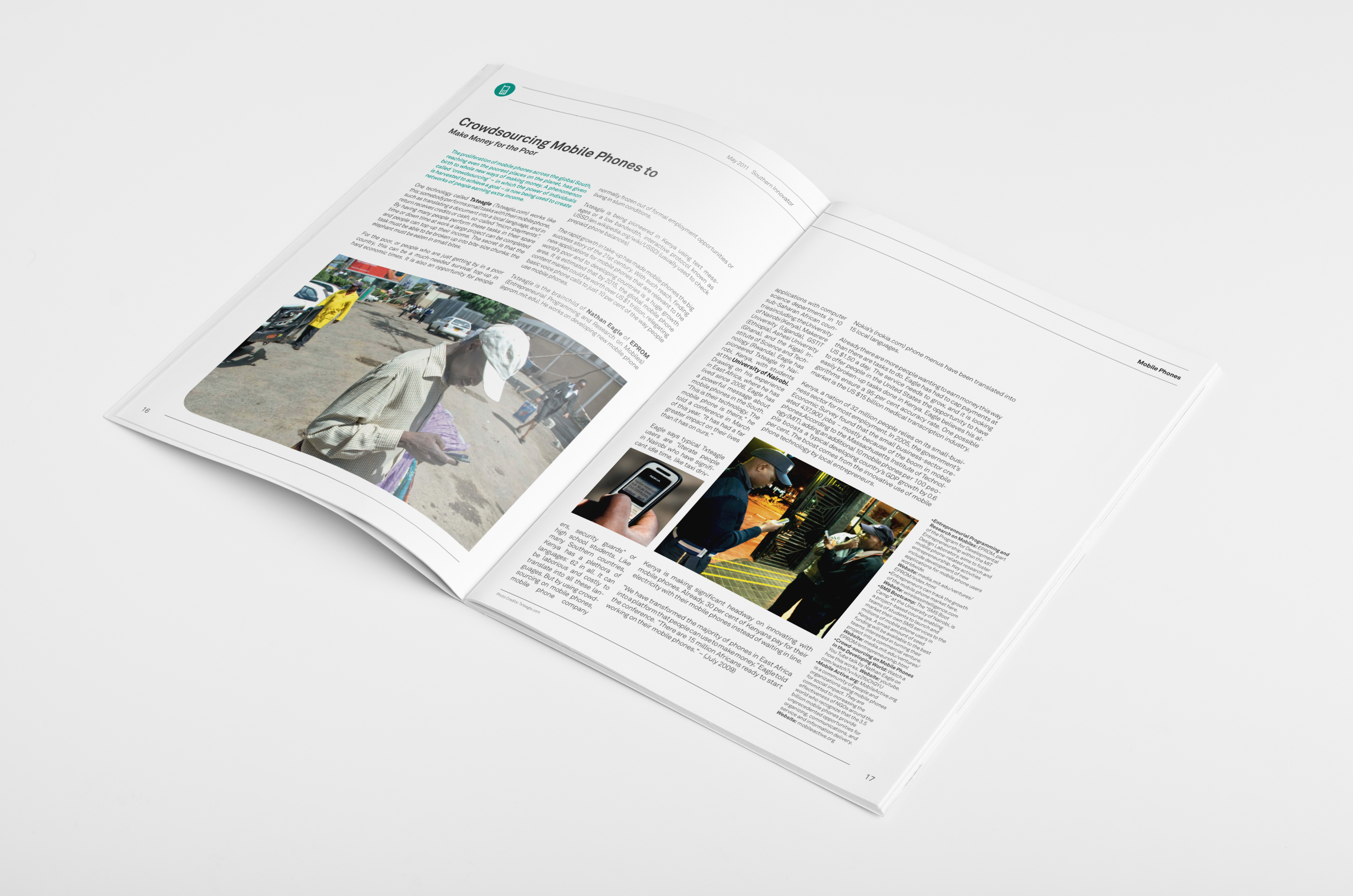
Southern Innovator Magazine Issue 1: Mobile Phones and Information Technology

SI Issue 1
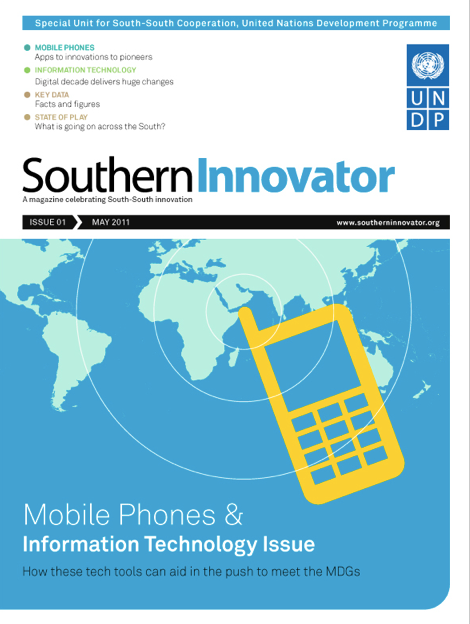
The first issue of Southern Innovator was called “a terrific tour de force of what is interesting, cutting edge and relevant in the global mobile/ICT space… ” and a “Beautiful, inspiring magazine from UNDP on South-South innovation.”

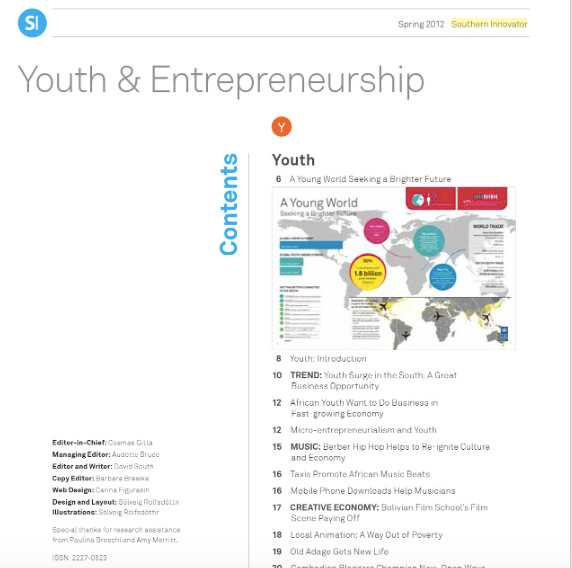
Southern Innovator Magazine Issue 2: Youth and Entrepreneurship

SI Issue 2
Issue 2 of Southern Innovator drew praise for painting a positive picture of how the world’s development challenges could be taken on: “Thank you David – Your insight into the issues facing us a[s] [a] ‘global Village’ is made real in the detail of your article – 10 out of 10 from the moladi team.”

Southern Innovator Magazine Issue 3: Agribusiness and Food Security

SI Issue 3
Issue 3 was on the theme of agribusiness and food security.

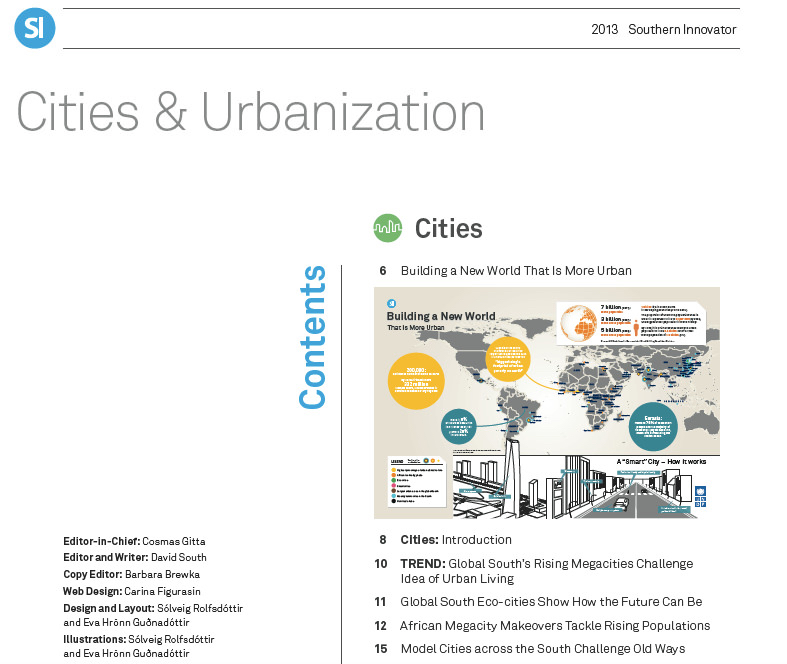
Southern Innovator Magazine Issue 4: Cities and Urbanization

SI Issue 4
Issue 4 on cities and urbanization saw Southern Innovator visit innovative new cities across Asia. Readers said “The magazine looks fantastic, great content and a beautiful design!” It is designed by Icelandic graphic designer and illustrator Solveig Rolfsdottir.

Southern Innovator Magazine Issue 5: Waste and Recycling

SI Issue 5
By this point, the Southern Innovator brand was drawing praise for being “one of the best sources out there for news and info on #solutions to #SouthSouth challenges.” Readers also said they “really enjoyed reading them [Southern Innovator], impressive work & a great resource. Looking forward to Issue 6. My best wishes to you & your team at SI.”
DSC web address in green_mini (1)

ORCID iD: https://orcid.org/0000-0001-5311-1052.

© David South Consulting 2021

Categories
Archive Development Challenges, South-South Solutions Newsletters

New Journal Celebrates Vibrancy of Modern Africa

By David SouthDevelopment Challenges, South-South Solutions

SOUTH-SOUTH CASE STUDY

Africa has seen huge changes to its communications and media in the past five years. The rise and rise of mobile phones, the expansion of the Internet and the explosion in African blogging and social media, on top of flourishing print and broadcast media, all bring an increasing range of options for telling African stories and increasing dialogue.

With all this new media creating new communications channels – and all the turmoil and change affecting millions as economies and countries change – people need the ability to make sense of it all. One magazine is trying to play that role.

An entrepreneur and multimedia innovator has created a unique publication that is capturing the spirit, ideas and stories of modern Africa. It is a high-quality product, has gathered together talented writers and photographers and is gaining a growing global audience. Chimurenga Magazine (http://www.chimurenga.co.za/) based in Cape Town, South Africa, calls itself a “pan African publication of writing, art and politics.” Named for the Zimbabwean Shona word for “revolutionary struggle,” it is published three times a year. Editor Ntone Edjabe is from Cameroon and came to Cape Town in the 1990s after the end of South Africa’s racist Apartheid regime.

With more than 100 contributors, the magazine offers insight into contemporary Africa, what occupies people’s thoughts and how their lives are actually lived.

It is involved in a wide range of other activities, including co-curating a Global South Dialogue Series. And its readership is truly diverse.

“We have readers who are long-term prisoners at Pretoria Central Prison, who have subscriptions that they get to us in coins, and readers who are successful businessmen,” Edjabe said to The Financial Times Magazine.

Chimurenga is out to challenge perceptions of Africa. Practicing the art of long-form journalism more associated with established high-end publications like The New Yorker (newyorker.com), the magazine sets out to challenge perceptions about Africa.

“Discourse on Africa is geared towards simplicity,” Edjabe told CNN. “Everything must be simple – ‘he’s a poor black man, he’s a victim’ – like there has to be a simple story, in a way this is what signifies Africa and global consciousness.

“The moment you bring a degree of complexity to it, it kind of throws people off, they just don’t know where to look anymore. It’s like, ‘what’s going on?’ So Chimurenga in a way does not try to maintain the superficiality of this narrative – we engage with life, we try to present life as complex as it really is.”

Stories in the journal include Billy Kahora writing on the decay of a neighbourhood in Nairobi, Kenya, Michael Abrahams writing about his time in the Cape Town mental hospital after a suicide attempt, and Sean O’Toole following a Zimbabwean immigrant on his journey into South Africa.

The magazine’s website carries back issues of the journal, along with a shop selling magazines, books and t-shirts and the “Chimurenga Library,” an archive of pan-African, independent periodicals. There’s also live online streaming of music – “from ancient techno to future roots” – through the Pan African Space Station radio station, there is a biennial publication of urban life it calls “Africa-style,” and the writings of 14 African writers who visited 14 African cities to check-up on life in urban areas.

As an example of the creativity of Chimurenga’s talent, a special issue of the magazine tried to better understand the impact of violence in South Africa in May 2008 that led to the deaths of 62 people. It did this by creating a fictitious newspaper called The Chimurenga Chronic (http://www.chimurenga.co.za/chimurenga-magazine/current-issue) set during the violence.

The writers are a mix of Anglophones and Francophones, all based in Africa. Common subjects focus on the world of lower-middle class Africa. Examples of past issues show the variety of its content: Conversations With Poets Who Refuse To Speak, Futbol, Politricks & Ostentatious Cripples, Conversations in Luanda and Other Graphic Stories, *We’re all Nigerian!

Well-travelled editor Edjabe has studied and lived in Lagos, Nigeria and Johannesburg, South Africa. He has worked as a disc jockey, music writer and basketball coach. He launched Chimurenga in 2002. He told The Financial Times Magazine “I printed 1,000 copies, which I carried around in my bag. I sold it mainly to friends.”

It was supposed to be a one-off publication but became a journal, initially written mostly by his friends.

“I found out later that this is how most journals actually begin,” he said. “At the time I thought it was unique.”

He aspired to get Africans writing about the Africa they saw and lived in. The challenge was changing the dynamic he found of writers only considering something worth writing about if it had been featured in non-African media.

Edjabe had already made his mark with an innovative initiative to show the diversity of what Africa has to offer. Three years after arriving in South Africa he started the Pan African Market (PAM) in Cape Town. An African cultural centre, it began as a craft market with various traders able to run their individual businesses and leasing stall space from the market. PAM became very successful because it brought together Africans from across the continent and offered a vibrant mix of artists, small businesses and food. It now has 33 stores and stalls from 14 countries of Africa. Shoppers can find arts and crafts, hair dressing, tailoring, holistic healing and catering.

Hard copies of Chimurenga are distributed around Africa and sent to Europe, the United States and India.

“There’s a feeling about writing something, sharing something that is beautiful and truthful from one’s perspective,” Edjabe told CNN.

Published: June 2012

Resources

1) How to Start a Magazine: Simple online advice on starting and running a magazine. Website: http://www.ehow.com/how_16579_start-magazine.html

2) Venture Capital for Africa: VC4Africa is the largest online community of investors, angels and entrepreneurs working to build businesses on the continent. Website: http://vc4africa.biz/landing/?redir_to=%2F

https://davidsouthconsulting.org/2022/10/21/african-media-changing-to-reach-growing-middle-class/

https://davidsouthconsulting.org/2021/01/05/development-challenges-south-south-solutions-newsletter/

https://davidsouthconsulting.org/2021/07/14/freedom-of-expression-introducing-investigative-journalism-to-local-media-in-mongolia-1999-25-january-2016/

https://davidsouthconsulting.org/2021/05/25/ger-mongolias-first-web-magazine-and-a-pioneering-web-project-for-the-united-nations-12-january-2016/

https://davidsouthconsulting.org/2022/11/01/indian-newspapers-thrive-with-economy/

https://davidsouthconsulting.org/2022/10/04/popular-chinese-social-media-chase-new-markets/

https://davidsouthconsulting.org/2022/11/01/southern-innovator-magazine-2010-2014/

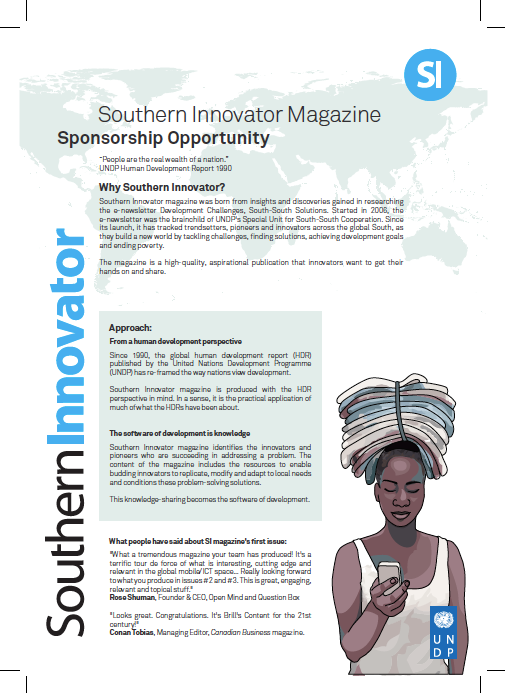
Development Challenges, South-South Solutions was launched as an e-newsletter in 2006 by UNDP’s South-South Cooperation Unit (now the United Nations Office for South-South Cooperation) based in New York, USA. It led on profiling the rise of the global South as an economic powerhouse and was one of the first regular publications to champion the global South’s innovators, entrepreneurs, and pioneers. It tracked the key trends that are now so profoundly reshaping how development is seen and done. This includes the rapid take-up of mobile phones and information technology in the global South (as profiled in the first issue of magazine Southern Innovator), the move to becoming a majority urban world, a growing global innovator culture, and the plethora of solutions being developed in the global South to tackle its problems and improve living conditions and boost human development. The success of the e-newsletter led to the launch of the magazine Southern Innovator. 

https://davidsouthconsulting.org/2021/03/05/southern-innovator-issue-1/

Creative Commons License

This work is licensed under a
Creative Commons Attribution-Noncommercial-No Derivative Works 3.0 License.

ORCID iD: https://orcid.org/0000-0001-5311-1052.

© David South Consulting 2022

Categories
Archive Development Challenges, South-South Solutions Newsletters

Mobile Phone Microscopes to Revolutionize Health Diagnostics

By David SouthDevelopment Challenges, South-South Solutions

SOUTH-SOUTH CASE STUDY

Mobile phone usage has increased hugely across the global South in the past five years. In Africa, the number of mobile phone subscribers reached 545 million in 2013, while there are 3.5 billion mobile phone users in Asia and the Pacific (ITU). Some 93 million people in Africa and 895 million in Asia and the Pacific have mobile phone Internet access (ITU).

“Every day we are moving closer to having almost as many mobile-cellular subscriptions as people on earth,” Brahima Sanou, Director of the ITU Telecommunication Development Bureau, wrote in its latest report on their growth.

The number of mobile phone subscriptions in the developing world has surpassed 5 billion and the number in the world as a whole reached 6.8 billion in 2013 (ITU), out of a world population of more than 7.1 billion. This compares to considerably lower numbers of people with access to the Internet: 2.7 billion in the world (ITU).

While many people in poorer countries have basic versions of mobile phones, the next generation of smartphones has been growing in number as prices come down (http://en.wikipedia.org/wiki/Smartphone). Examples of these smart phones include the BlackBerry, Apple’s iPhone, the Samsung Galaxy, and the Nokia Lumia. Smartphones tend to have enormous computing power and an ability to run complex ‘apps’ or applications – including public transport options, maps, restaurant and store locators, banking services and market information and resources. They can also access the Internet through Wi-Fi, and have camera and video capability.

What people can do with these feature-packed phones is limited by little other than human imagination. With the ability to store large amounts of data and images, using apps that perform a limitless range of services and tasks, smartphones can be deployed as powerful tools to tackle problems.

Science fiction sagas have long fantasized about people being able to walk around with small electronic devices that can do immensely powerful tasks, including being a medical diagnostic tool. But this science fiction dream is rapidly becoming reality in the global South.

Various initiatives and innovators are using mobile phones and smartphones to conduct medical diagnosis and gather data for medical studies in real time.

Some innovations are even turning smartphones into mobile microscopes.

Developed by the University of California, Berkeley in the lab of Professor Daniel Fletcher (http://cellscope.berkeley.edu/), the CellScope (cellscope.com) is capable of turning the camera on a cell (mobile) phone into a diagnostic microscope with a magnification of 5x to 60x. Fletcher’s lab has also pioneered work on needle-free injection technology.

The CellScope can be used for ocular imaging (technologies for visualizing and assessing a range of diseases of the eye) and for detecting tuberculosis, blood-borne diseases and parasitic worms.

Fletcher is a bioengineer and was impressed with how much mobile phone technology has proliferated across the global South.

“You don’t have to put in these copper wires (for phone lines) anymore; you have the (cell) towers. It’s big business,” Fletcher told The Scientist Magazine.

“It’s leaping over the need for infrastructure.”

Fletcher and his colleagues experimented by attaching extra lenses to smartphones. They then used the phone to image cells that had been stained with fluorescent dyes to make them easier to see. The quality of the image was so good, they were able to diagnose malaria from blood samples and tuberculosis from sputum (spit) samples.

With the addition of image analyzing software, the phone was able to automatically count the number of Mycobacterium tuberculosis bacilli. They were trying to prove you did not need conventional microscopes to do this sort of diagnostic work.

Fletcher and his colleagues are currently trialling the technology in Vietnam, India, Cameroon and Thailand.

“Technology alone doesn’t create effective health care,” Fletcher emphasizes. “It’s got to be part of a context in which the information is captured and validated and is analyzed in the right way, and treatments are then available in response to information.”

Another group from Toronto General Hospital in Canada (http://www.uhn.ca/corporate/AboutUHN/OurHospitals/Pages/TGH.aspx) has ‘hacked’ an iPhone smartphone by placing a 1 millimeter ball lens on the phone’s camera. Isaac Bogoch, an infectious disease specialist, had been investigating parasitic worm infections in children on Pemba Island off the coast of Tanzania. Along with Jason Andrews of Massachusetts General Hospital, they had been inspired by a report about how a team of researchers from the University of California, Davis had created a simple microscope out of an iPhone with a 1 millimeter lens. This makeshift microscope was used to take pictures of blood smears at a 350 times magnification and giving a 1.5 micron resolution.

“We thought that was a great idea,” Bogoch told The Scientist Magazine. Bogoch regularly works as part of an international team around the world, often in remote locations.

“We thought … we could take it to the field and see if it accurately works in a more real-world setting.”

Inspired, Bogoch got together with his colleagues and created a similar microscope with a 3 millimeter ball lens and then got to work using it to identify soil-transmitted helminth eggs in stool samples in Tanzania. When examining the stool samples of 199 children in a clinical trial using the makeshift microscope, they were able to accurately identify helminth infections in 70 per cent of the cases. They also found the iPhone microscope did very well at spotting eggs of particular parasites, such as 80 per cent of Ascaris lumbricoides infections (http://en.wikipedia.org/wiki/Ascaris_lumbricoides). The success rate dropped significantly, however, when trying to detect whipworm parasites (just over half) and hookworm infections (14 per cent).

But this is early days and an experiment: “Obviously the results aren’t perfect and there’s definitely room for improvement,” Bogoch admits.

What stands out is the potential to completely revolutionize health care by continuing to develop the capability of smartphones. With their portability and low cost, they also have the advantage of not needing a trained physician to operate them, according to David Walker, president of the American Society of Tropical Medicine and Hygiene, in The Scientist Magazine.

One of the many advantages of combining a microscope with a digital smartphone is the ability to take a picture and send it straight away to someone to make a diagnosis.

Even more exciting, Sebastian Wachsmann-Hogiu at the University of California, Davis (http://cbst.ucdavis.edu/people/sebastian/) is adapting mobile phones to undertake spectroscopy (http://en.wikipedia.org/wiki/Spectroscopy), using diagnostic test software to analyze samples on the spot. This, when successful, would be akin to the capabilities first mooted in the science fiction television and film series Star Trek (startrek.com). In Star Trek, the doctor is able to use a small handheld digital device to quickly diagnose what ails somebody.

The potential for this technology in the global South is significant. Aydogan Ozcan at the University of California, Los Angeles, who is also working on mobile phone microscopes, believes this is as significant as the dawn of the personal computer: “If you look at the early computers, they were bulky, they were extremely expensive,” he says.

But now computers “are portable … and almost anyone can afford them. The same thing is going on today (with microscopy). We are miniaturizing our micro- and nano-analysis tools. We’re making them more affordable; we’re making them more powerful.”

It looks like this science fiction dream will soon become today’s reality.

Published: July 2013

Resources

1) World Telecommunication/ICT Indicators Database. Website: http://www.itu.int/en/ITU-D/Statistics/Pages/stat/default.aspx

2) HealthMap: HealthMap was founded in 2006 by a team of researchers, epidemiologists and software developers at Boston Children’s Hospital. It is an established global leader in utilizing online informal sources for disease outbreak monitoring and real-time surveillance of emerging public health threats. Website: http://www.healthmap.org/en/

3) A home-made portable microscope: A design developed in the 1970s by Chinese students who fashioned a microscope from a plastic bottle. Website: http://www.microscopy-uk.org.uk/mag/indexmag.html?http://www.microscopy-uk.org.uk/mag/artjul00/awscope.html

4) Ways to make simple homemade microscope lenses. Website: http://www.microscopy-uk.org.uk/mag/indexmag.html?http://www.microscopy-uk.org.uk/mag/artoct07/jd-lens.html

Creative Commons License

This work is licensed under a
Creative Commons Attribution-Noncommercial-No Derivative Works 3.0 License.

ORCID iD: https://orcid.org/0000-0001-5311-1052.

© David South Consulting 2023