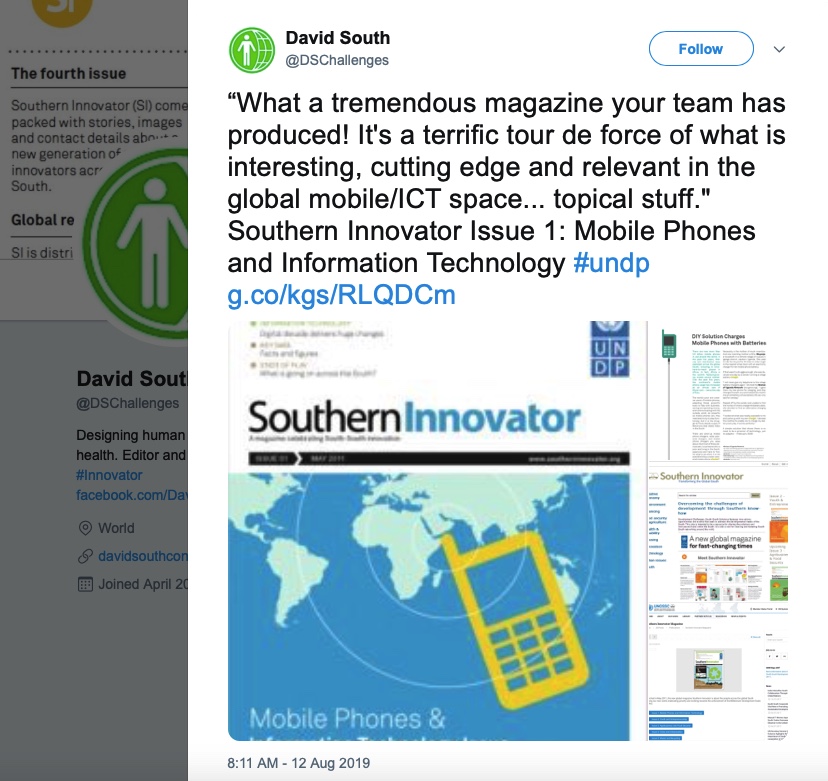
Launched in 2011, Southern Innovator’s first issue on mobile phones and information technology proved highly influential, profiling the work of a new generation of innovators. It has been cited in books, papers and strategic plans.
Southern Innovator Magazine Issue 1: Mobile Phones and Information TechnologyCitation in Using Mobile-Enabled Devices for Engagement and Monitoring of Patient with Chronic Disease: Hypertensive Case in the International Journal of Scientific & Engineering Research Volume 10, Issue 4, April 2019 (ISSN 2229-5518).
Publication: Southern Innovator Issue 4: Cities and Urbanization
Publisher: United Nations Office for South-South Cooperation (UNOSSC)
Date: 2013
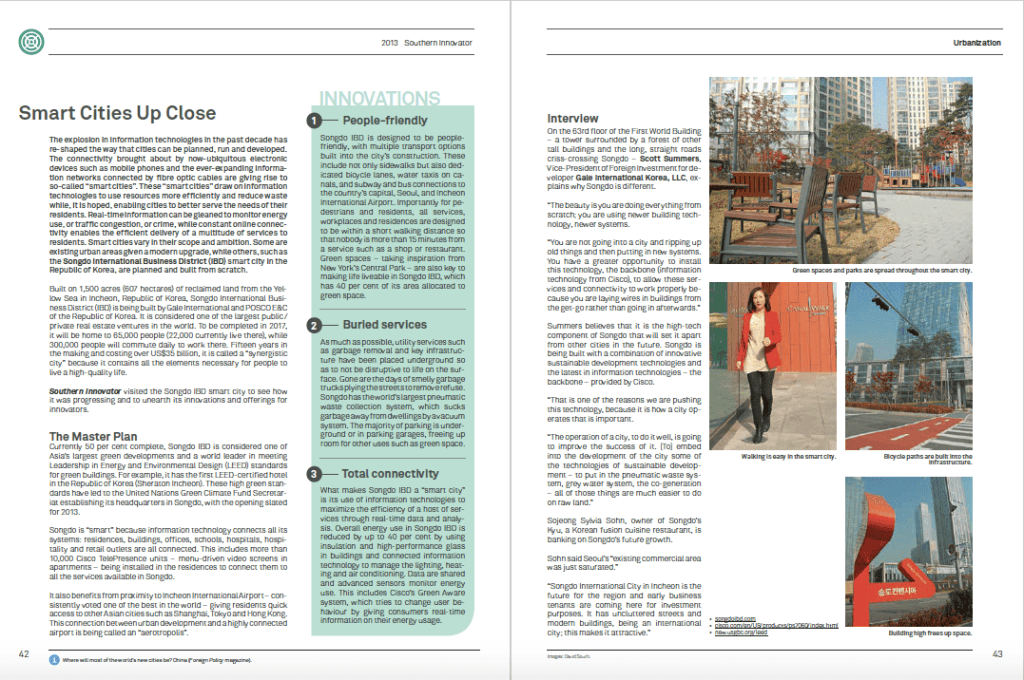
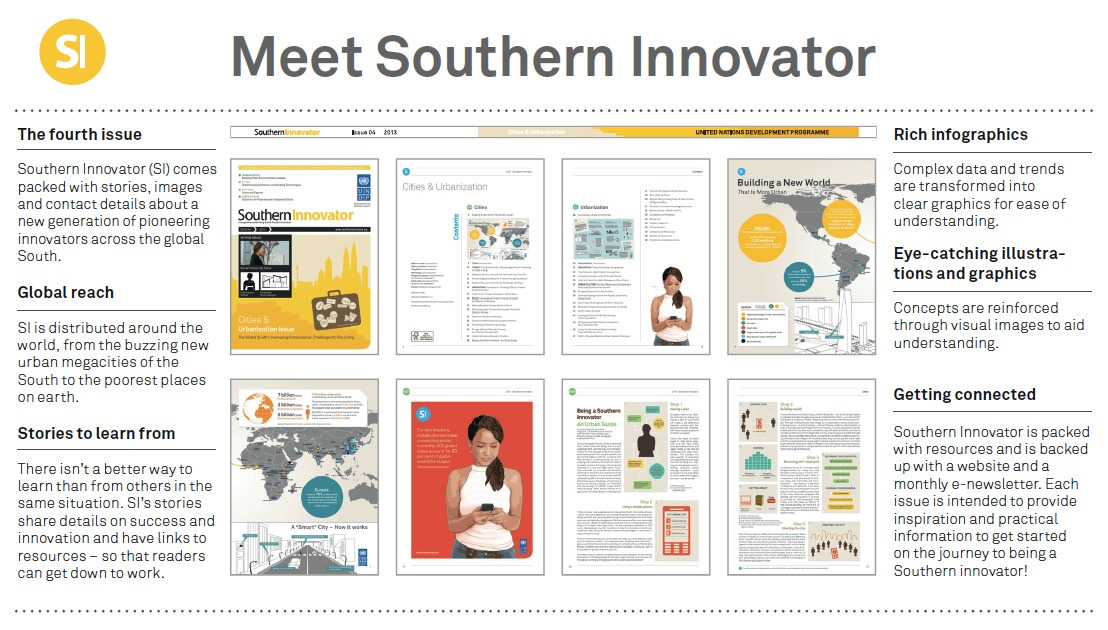
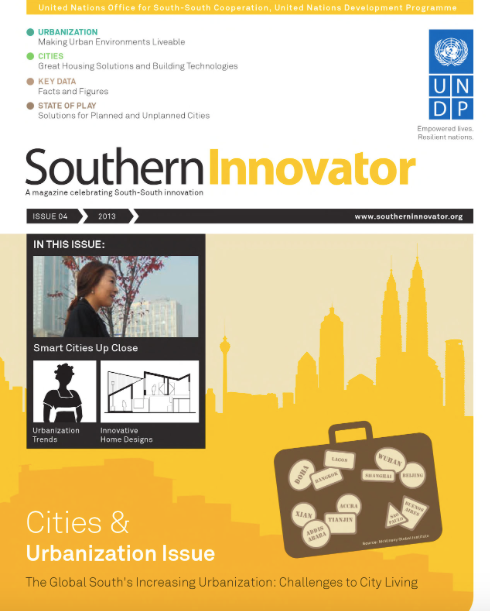
Smart Cities Up Close in Southern Innovator Issue 4.An infographic from Issue 4. Southern Innovator Issue 4 contents.Meet Southern Innovator.Southern Innovator Issue 4: Cities and Urbanization is published by the United Nations Office for South-South Cooperation (UNOSSC). Editor and Writer, David South. Graphic Designer and Illustrator, Solveig Rolfsdottir.
Publication: Southern Innovator Issue 4: Cities and Urbanization
Publisher: United Nations Office for South-South Cooperation (UNOSSC)
Date: 2013
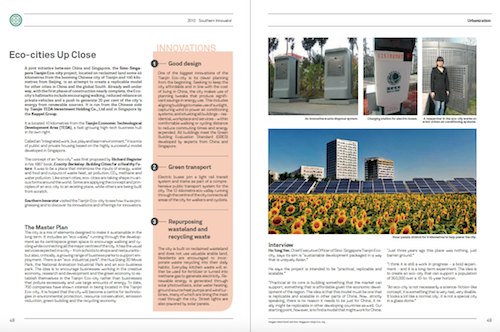
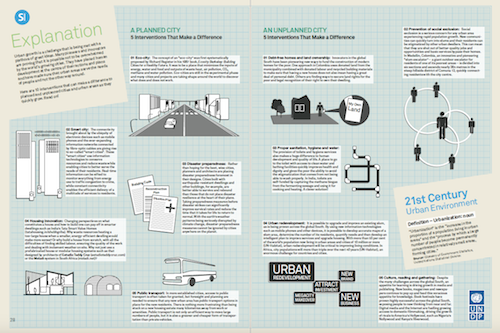
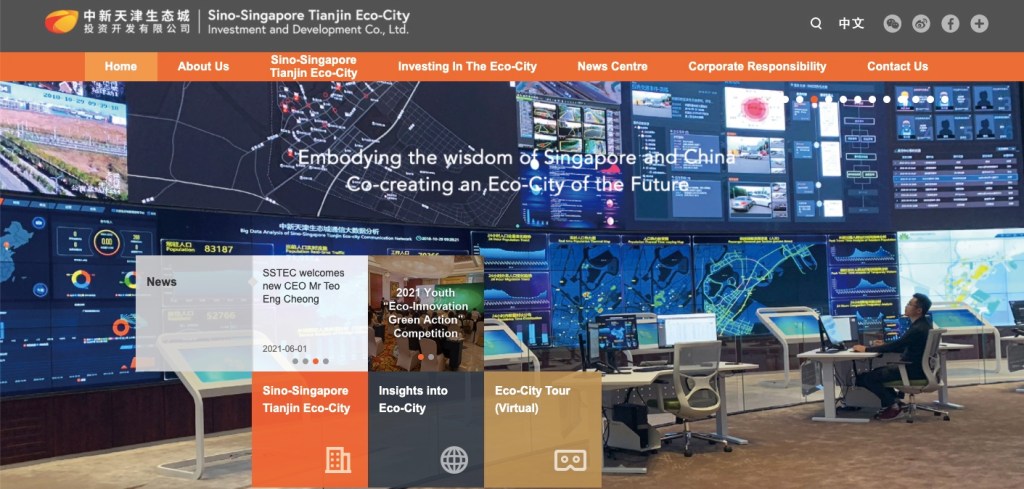
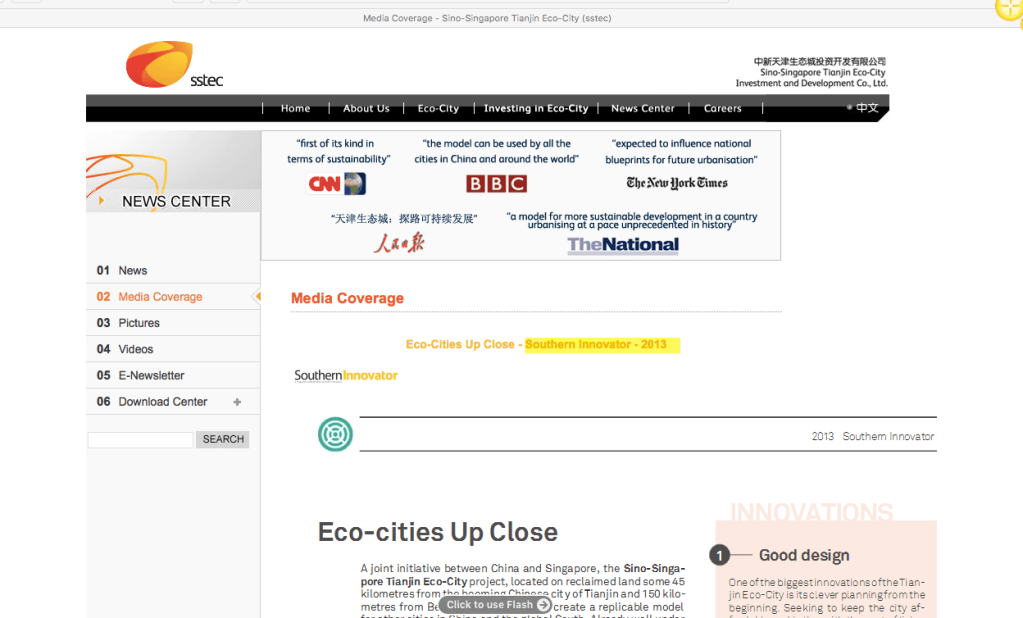
Eco-cities Up Close in Southern Innovator Issue 4.An infographic showing planned and unplanned cities.Meet Southern Innovator.Southern Innovator Issue 4: Cities and Urbanization is published by the United Nations Office for South-South Cooperation (UNOSSC).Big screens watch over the eco city. By harnessing big data, the eco city can keep a close watch on the city and the needs of its residents. If resources are to be used efficiently, then big data is required to make this happen. The eco city has broad streets and the air is clean and free of pollution. Dedicated routes for walking and cycling ensure people can safely move around the city. “Southern Innovator, United Nations Development Program (UNDP)’s quarterly magazine focusing on creativity and innovation emerging from the global South, published an article on the Eco-City entitled “Eco-Cities Up Close”. The article featured the Eco-City’s masterplan, green transport, efforts on waste water treatment and waste management, calling it “a replicable model for other cities in China and the global South”.”
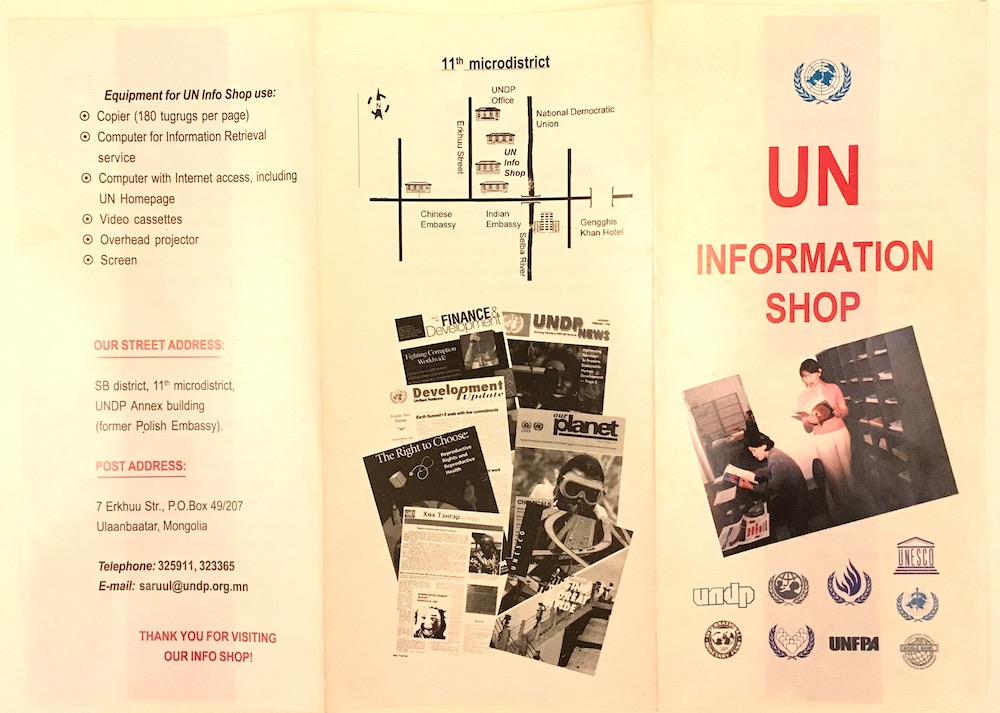
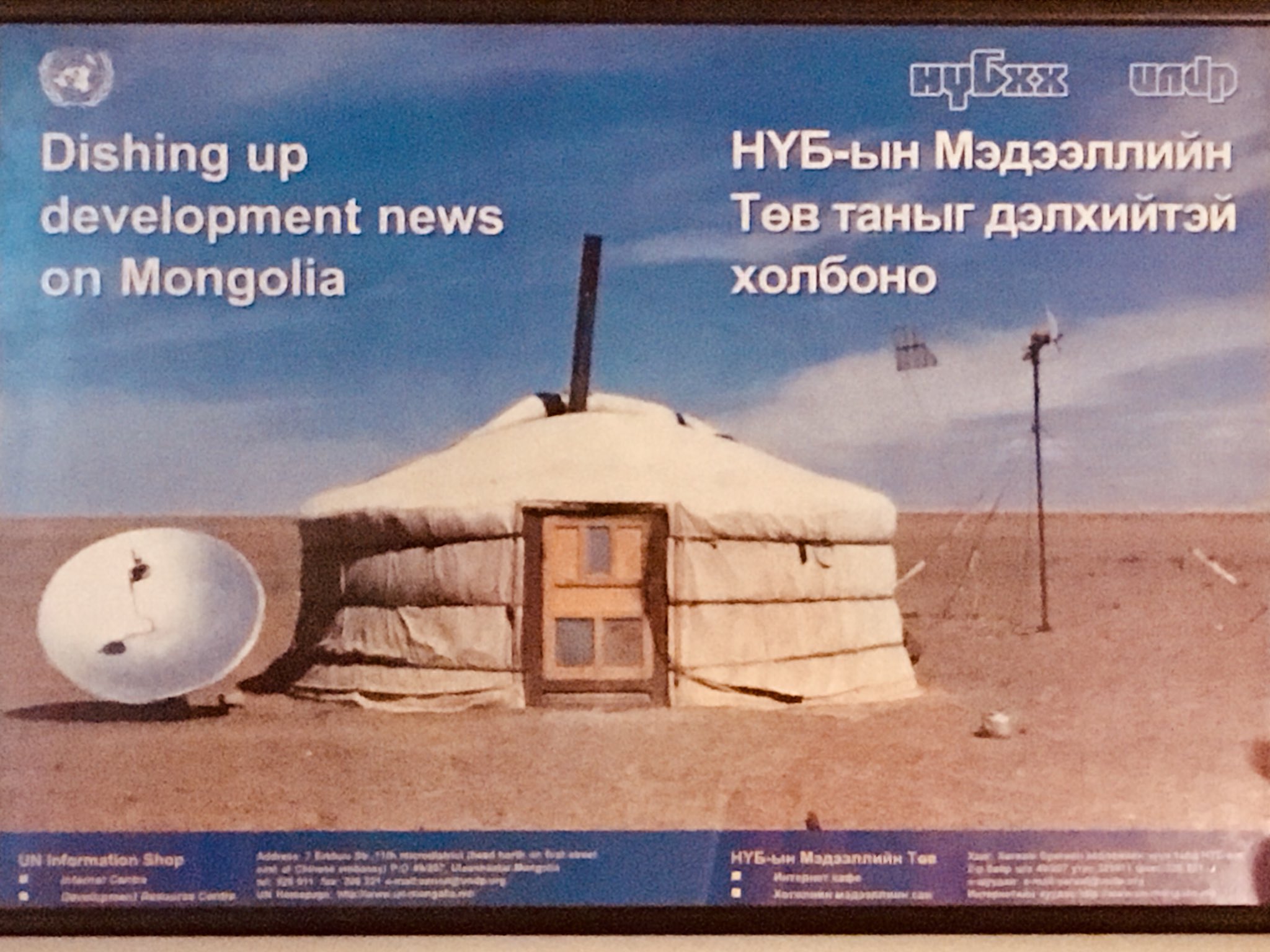
The United Nations Information (UN Info Shop) was established by UNDP Mongolia in 1997 and was managed by the UNDP Mongolia Communications Office. Context is everything. At this time, Mongolia was still recovering from the chaotic and turbulent transition from Communism to free markets and democracy begun at the start of the 1990s, called by some “one of the biggest peacetime economic collapses ever (Mongolia’s Economic Reforms: Background, Content and Prospects, Richard Pomfret, University of Adelaide, 1994)”. There was a thirst for information: access to the Internet was still limited and access to mobile phones was just the preserve of the rich. As a legacy of the past, information, especially that about the outside world and the country’s true economic and social conditions, was restricted. During the years of Communism, even simple travel from one place to the next was strictly regulated.
While today we can take it for granted that the Internet, and mobile and smart phones, deliver the world’s information in seconds, this just was not the case in the late 1990s in Mongolia.
The UN Info Shop quickly became a crucial resource for students (many schools and universities were nearby) and it became a first stop for many wishing to access the Internet. It also substantially raised the profile of the UN in the country as the public could, for the first time, enter the UN building and discover what the UN was doing in the country. They could also visit the UNDP Mongolia Communications Office and meet its team.
P. Dagmidmaa reads the Human Development Report Mongolia 1997 in the UN Info Shop.
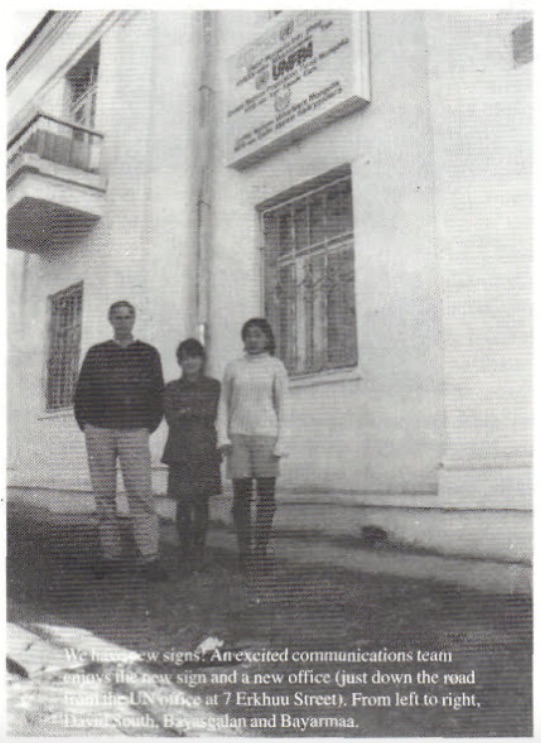
The UNDP Mongolia Communications Office Team 1998 outside the UN Info Shop in the capital, Ulaanbaatar: David South, Bayasgalan and Bayarmaa.
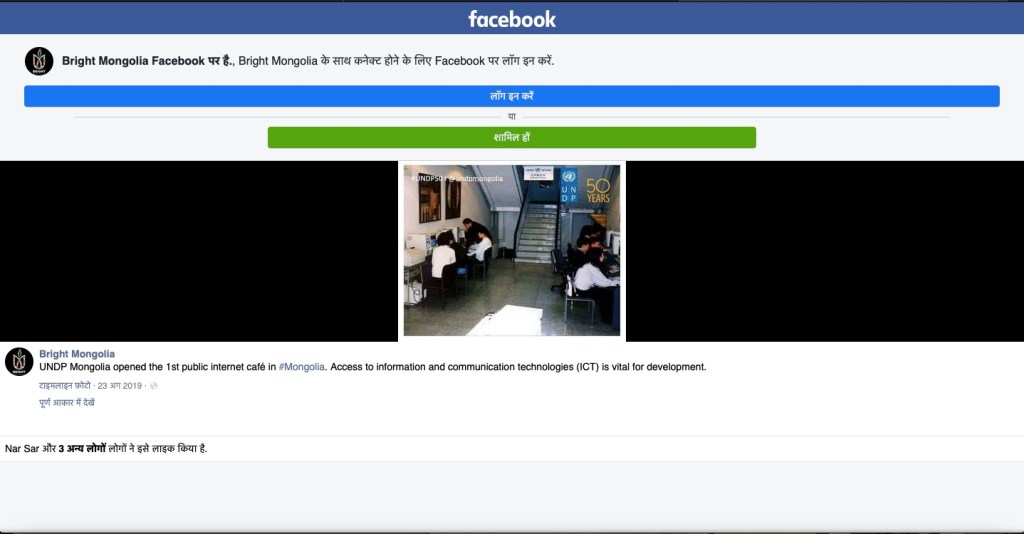
“UNDP Mongolia opened the 1st public internet cafe in Mongolia.” The internet cafe was part of the UN Mongolia Info Shop.
Many initiatives grew from the talented and dynamic UNDP Mongolia Communications Office team. Here are links to some of them:
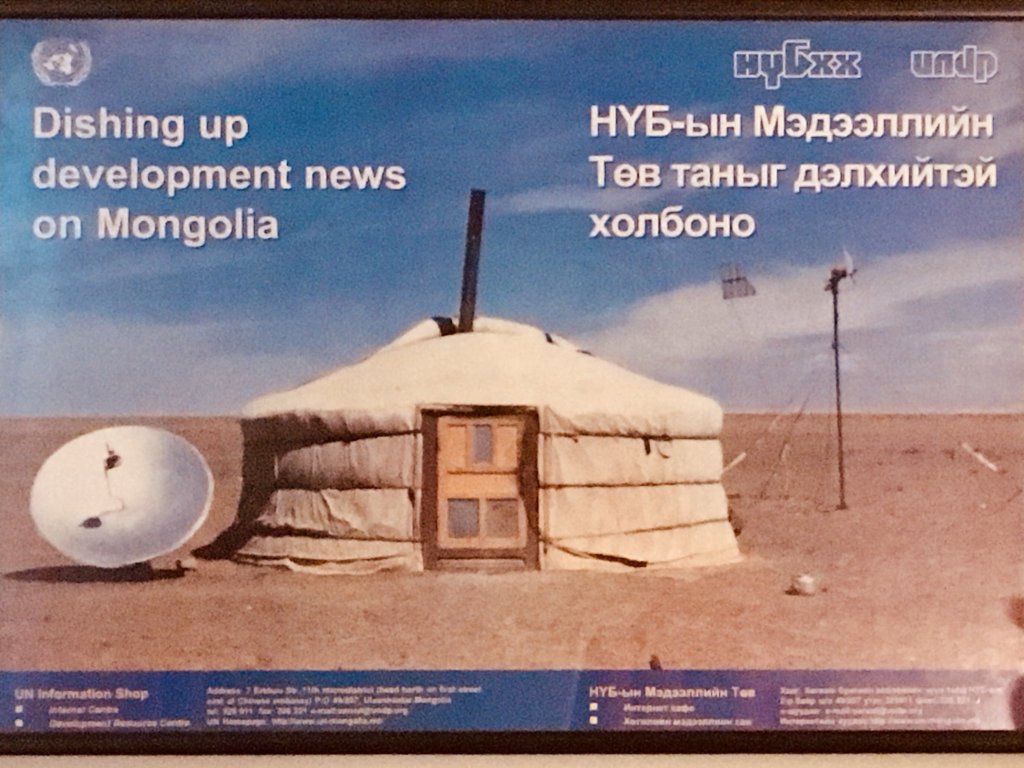
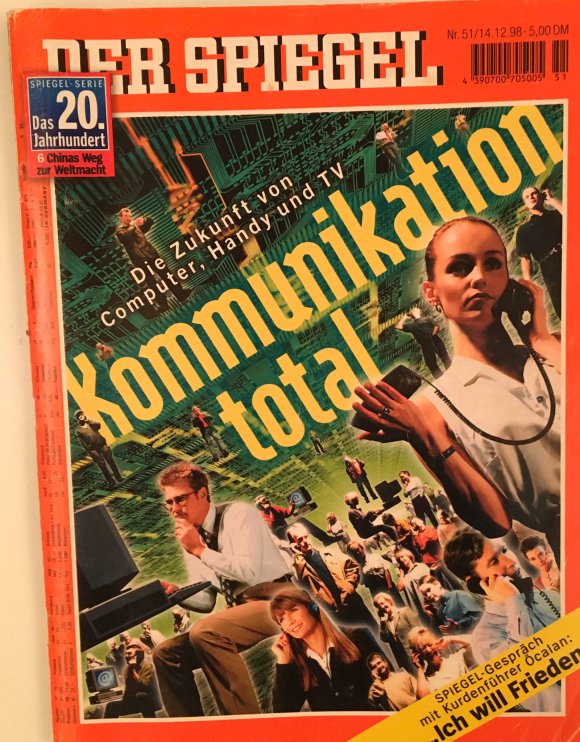
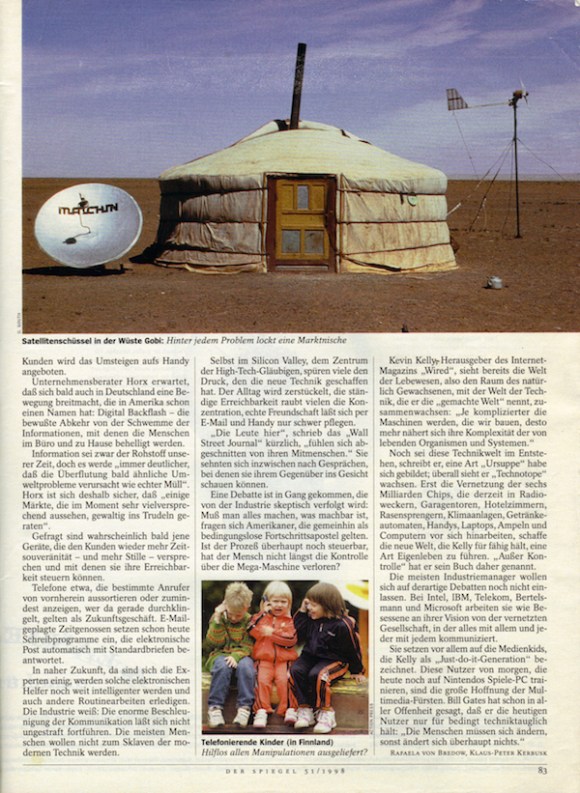
In 1998 Der Spiegel’s “Kommunikation total” issue profiled the global connectivity revolution underway and being accelerated by the Internet boom of the late 1990s. It chose my picture of a satellite dish and a ger in the Gobi Desert to symbolise this historic event.












 David South Consulting
You must be logged in to post a comment.