Tag: David South

  • Putting Quality and Design at the Centre of Chinese Fashion

    Putting Quality and Design at the Centre of Chinese Fashion

    By David SouthDevelopment Challenges, South-South Solutions

    SOUTH-SOUTH CASE STUDY

    Awareness of the sourcing of materials for fashion has been on the rise in the past decade. Concerns about how the global fashion industry functions and its impact on the environment have given rise to savvy retailers who take care over the sourcing of their materials and the working conditions of their employees. Consumers have shown a willingness to pay a little more to know that a garment is sustainably produced and has the lowest possible impact on the environment.

    The global textile industry is the second biggest consumer of water in the world. The dyeing processes used by these manufacturers do extensive damage to the water table that is used for drinking water.

    In China, there have been violent demonstrations over working conditions and increasing concern over the health consequences of many modern manufacturing methods. In order to get change, new business models need to emerge, and consumers and customers need to be educated and to demand better-quality, low- or non-polluting products.

    One business has accomplished something remarkable: it has succeeded in producing high-quality, ethically sourced products while also employing vulnerable people who have significant care duties and need a flexible and understanding employer.

    NuoMi (http://www.nuomishanghai.com) has three stores and a store/design studio in Shanghai, China. NuoMi means “sticky rice” in Mandarin (http://en.wikipedia.org/wiki/Mandarin_Chinese). It was founded by Filipino fashion designer Bonita Lim, a mother of four, who uses her business to help single mothers and the less fortunate.

    NuoMi is also pioneering sustainable and green goods for the Chinese market. This is unusual in a country more known for its sweatshop, low-wage manufacturing industries that have propelled the country into an economic powerhouse.

    NuoMi sells women’s clothing made from sustainable sources while creating jobs for people from disadvantaged communities. There are organic cotton, bamboo, silk and wool garments, and no artificial dyes or synthetic materials are used.

    The design team works on colourful knitwear, dresses and baby clothes. They also offer a custom order service.

    “When I was 13 or 14 years old, I dreamed of building a special company that could help people who have trouble finding a job,” Lim told the Global Times.

    “I called the name of my brand NuoMi, which is (the) Chinese name for sticky rice … Our company works like sticky rice; we support and love each other.”

    Born in the Philippines and educated in Canada, Lim had become frustrated while working with the Filipino government and wanted to help the poor. She started NuoMi in 2006 in Shanghai, a city booming as China’s economy continues to grow. It is also a city with a population with long-standing sophisticated consumer tastes. Shanghai had been home to various foreign concessions before the Communists took power and its population was exposed to foreign languages, cultures and tastes.

    Lim became a single mother after she divorced, and this experience made her sympathetic to how hard life is for single mothers. Drawing on her passion for fashion, she hired a designer to work with her on designing a line of clothing.

    “I was surprised that many of my friends really liked my designs, so they asked me to design clothes for them and introduced some clients to me,” Lim told Global Times. “I tried to design and sell clothes abroad. I got a lot of good feedback, but it exhausted me so I decided to work in Shanghai.”

    Despite starting out as a hobby, the business had built a network of 20 clients. It had become impossible to just do it part-time so she formalised the business as NuoMi.  She began hiring single mothers in prison in the Philippines and designed clothing that could be easily made by them.

    “Those single mothers in prison were very anxious because they had no way to help their children. Most of them committed crimes because they needed money for their kids,” Lim said.

    By 2008 she had built a professional design team and now had 60 clients. With the brand NuoMi growing, she opened its first store. This has grown to four stores in Shanghai. Most of the company’s workforce is now in Shanghai but they are still people living in a vulnerable situation.

    Nuomi’s newly opened store in 2008 carried a spring and summer collection of long dresses made from bamboo, cotton and soya. These fabrics were chosen for their breathability in the hot, steamy Shanghai weather.

    One of the employees is 52-year-old Zhu Linfang, who takes care of a stroke-damaged father and a mother with liver cancer. “I was introduced through a friend. They paid me more than other companies. At my age almost no company wants to hire me, but working for NuoMi, I earn between 2,000 yuan (US $300) and 3,000 yuan per month,” she said.

    Other employees look after ill children and have care duties that occupy much of their time. They do sewing and make toys for NuoMi.

    Lim takes the time to train the employees to make sure they can do the work to a high standard.

    “I tried to design products that were both suitable for them to make and could be sold in the market,” she said.

    NuoMi also sells environmentally friendly glycerine soaps in flavours from mango to chocolate, jewellery made from recycled industrial materials and bathwear, pillows, and purses. The stores even carry matching mother-daughter and father-son clothing.

    Wisely, service is offered in Chinese and English to customers – Shanghai is a popular destination for tourists. NuoMi is clearly a trail-blazer and a business to watch.

    Published: October 2011

    Resources

    1) Ecodesignfair: Eco Design Fair is a bi-annual grass-roots community event whose purpose is to showcase eco-conscious designers and products to general consumers. Website: http://www.ecodesignfair.cn

    2) Nest: Another eco-conscious design company in Shanghai. Its motto is “design with a conscience”. Website: http://www.nestshanghai.com/nest.html

    https://davidsouthconsulting.org/2021/02/09/african-fashions-growing-global-marketplace-profile/

    https://davidsouthconsulting.org/2021/01/05/afropolitan-african-fashion-scene-bursting-with-energy/

    https://davidsouthconsulting.org/2021/01/25/creating-green-fashion-in-china/

    https://davidsouthconsulting.org/2022/10/09/fashion-closes-gap-between-catwalk-and-crafts/

    https://davidsouthconsulting.org/2022/11/17/fashion-recycling-how-southern-designers-are-re-using-and-making-money/

    https://davidsouthconsulting.org/2022/11/16/favela-fashion-brings-women-work/

    https://davidsouthconsulting.org/2020/04/30/local-fashions-pay-off-for-southern-designers/

    https://davidsouthconsulting.org/2021/03/05/southern-innovator-issue-2/

    Development Challenges, South-South Solutions was launched as an e-newsletter in 2006 by UNDP’s South-South Cooperation Unit (now the United Nations Office for South-South Cooperation) based in New York, USA. It led on profiling the rise of the global South as an economic powerhouse and was one of the first regular publications to champion the global South’s innovators, entrepreneurs, and pioneers. It tracked the key trends that are now so profoundly reshaping how development is seen and done. This includes the rapid take-up of mobile phones and information technology in the global South (as profiled in the first issue of magazine Southern Innovator), the move to becoming a majority urban world, a growing global innovator culture, and the plethora of solutions being developed in the global South to tackle its problems and improve living conditions and boost human development. The success of the e-newsletter led to the launch of the magazine Southern Innovator.

    Creative Commons License

    This work is licensed under a
    Creative Commons Attribution-Noncommercial-No Derivative Works 3.0 License.

    ORCID iD: https://orcid.org/0000-0001-5311-1052.

    © David South Consulting 2023

  • Civet Cat Coffee Brews Filipino Opportunity

    Civet Cat Coffee Brews Filipino Opportunity

    By David SouthDevelopment Challenges, South-South Solutions

    SOUTH-SOUTH CASE STUDY

    In the Philippines, one animal’s call of nature has become a business opportunity.

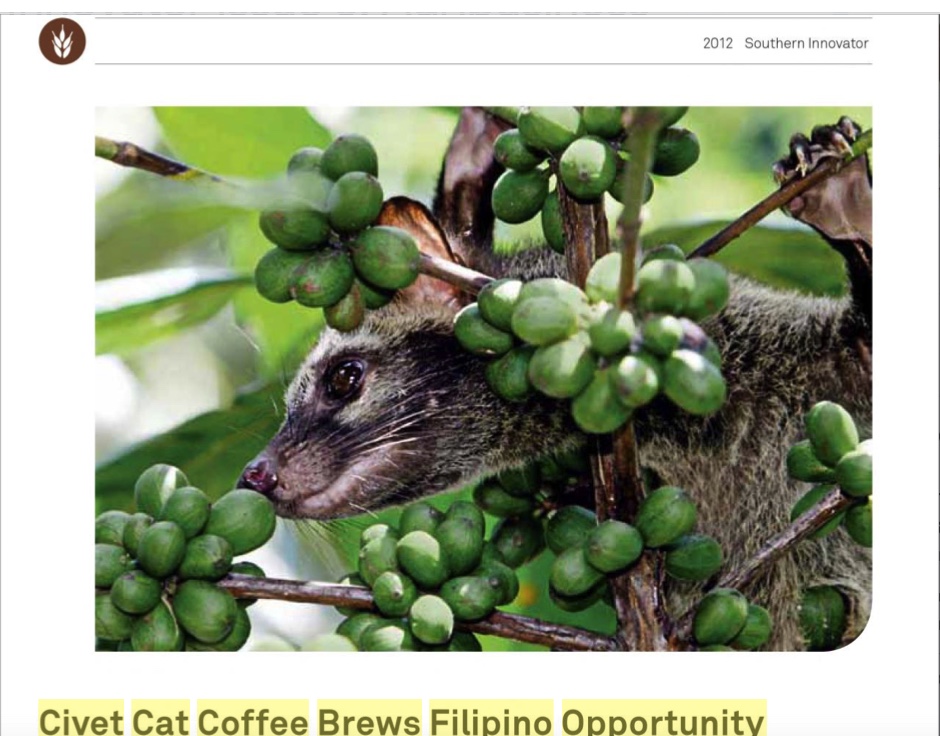
    The civet cat, a member of the mongoose family, ingests the fruit of coffee plants, and expels the beans. This has created an unexpected by-product – a prized beverage for the world’s savvy coffee drinkers seeking the next taste sensation. The partially digested coffee beans are gathered from the faeces of the cat and used to make a much-coveted, smooth-flavoured cup of coffee.

    It is a good example of how value can be added to a product, in this case coffee beans, producing a substantially higher income. The coffee is startlingly expensive: 50 grams cost US $70, 100 grams US $90, and 1 kilogram is a whopping US $870. The coffee is a blend of Arabica, Liberica and Exelsa beans, all of which have passed through the civet cats.

    The highly prized coffee is driving a growing market for these rare beans around the world. But as demand rises, it becomes clear it is a market needing quality control and ethical practices.

    One business that is trying to do this is Coffee Alamid (www.arengga.com), based in Las Pinas in the Philippines. It bills the coffee as the “World’s Rarest Brew. The Philippines’ Pride.”

    Coffee Alamid’s founders, Basil and Vie Reyes, call themselves “coffee entrepreneurs” who started in the business from scratch.

    “When we started Cafe Alamid, we were not even coffee drinkers,” they explain on the company’s website. “We didn’t know anything about coffee at all!”

    Experienced in making Arengga vinegar (http://www.arengga.com/index.php/arengga-pinnata-its-not-just-a-vinegar.mpc), they discovered the civet cats that lived among the sugar palm trees used for making the vinegar. They did some research and were inspired by the Kopi Luwak, the Indonesian variety of civet cat coffee and wondered why they couldn’t do the same thing in the Philippines.

    They consulted with the local forest-dwellers of Indang, Cavite and Batangas, who confirmed they gathered the civet cat droppings to make into coffee, part for personal consumption, with the rest sold in local markets. Gathering the civet droppings provides an income to the forest residents, who collect an average of one kilogram a day.

    Some were sceptical of the idea: why bother with such a time-consuming product? But the Reyeses were inspired by the success of civet coffee in Indonesia and it inspired them to try it in the Philippines. They see themselves as “enlightened entrepreneurs” who believe in marrying business with social development.

    The coffee is made from the wild civet cat droppings harvested from the forest floors of mountains in Malarayat, Lipa, Batangas and Mount Matutum, General Santos and South Cotabato in the Philippines. The beans are roasted and exported to Japan, Taiwan, Korea, Australia, the United States and Italy. The company produces between 1 and 1.5 tons of beans a year.

    A proud moment for the business was becoming the first Filipino firm to participate in the Tea and Coffee World Cup in Geneva, Switzerland in 2007.

    The brand’s name, Alamid, is the local name for the civet cat (Paradoxorus Philippinensis). It belongs to the mongoose family and forages for food at night, eating the ripest and sweetest coffee cherries during the coffee season.

    By morning the civet cats excrete the undigested beans. While inside the cat’s stomach, enzymes and stomach acids go to work on the beans, altering their structure. The beans ‘ferment’ in the cat’s stomach, a process that has been analyzed by Dr. Massimo Marcone, a scientist from Canada’s University of Guelph.

    Marcone traveled to Ethiopia and Indonesia in 2003 to collect the rare coffee beans. He found the beans’ taste – described as “earthy, musty, syrupy, smooth and rich with jungle and chocolate undertones” – was due to the lack of protein in the bean.

    “The civet beans are lower in total protein, indicating that during digestion, proteins are being broken down and are also leaked out of the bean,” Marcone told the Luwak Kopi website. “Since proteins are what make coffee bitter during the roasting process, the lower levels of proteins decrease the bitterness of Kopi Luwak coffee.”

    “Civet beans are typically extensively washed under running water after collection, which dislodges bacteria,” he said.

    Marcone published his research into the beans in the paper “Composition and properties of Indonesian palm civet coffee (Kopi Luwak) and Ethiopian civet coffee.” (http://www.sciencedirect.com/science/article/pii/S0963996904001309)

    The beans are greenish-brown when they come out in the cat faeces. Marcone found the process in the civet cat removes some of the caffeine, giving a strong cup of coffee less kick; this also makes the flavour smoother.

    Supply is tight and this has led to some people forging the coffee or using unethical practices to get their hands on the beans. It is a business that needs to be run in an ethical way to ensure the rich profits are shared with everyone involved.

    Marcone warns against imitations. “About 42 percent of all the kopi luwaks that are presently on sale are either adulterated or complete fakes, unfortunately,” he told the Los Angeles Times.

    Coffee Alamid’s parent company, Bote Central, started as a family-owned company in 2002, with the idea of using agro-forestry products to create sustainable livelihoods and help preserve the environment. It wanted to introduce Fair Trade principles to the Philippines coffee industry.

    Structurally, the company uses community roasting business units (CRBU) across the Philippines, in particular the countryside, to improve the way coffee is sold and make it more profitable for local economies. There are currently 12 such units, and more are planned. The company has put together a guide book on best practice for harvesting Arabica coffee beans based on their first-hand experience. It also explains how they maintain quality control (http://www.scribd.com/doc/19991462/Production-Guide-for-Arabica-Coffee-by-Bote-Central-Inc-Maker-of-Coffee-Alamid).

    The company deals directly with farmers to avoid middlemen gouging profits, and tries to use technology to make the business more efficient and sustainable.

    To keep quality improving, the company has also produced a manual on how to grow and harvest Arabica coffee beans. It is designed to tackle the practical realities of coffee production and show how to improve current methods to produce a better-quality bean. This is critical for the overall business as competition is fierce and quality has to constantly be improved.

    Coffee Alamid has successfully positioned itself as a high-end, high-cost product. It is sold by Japan Airlines and by department stores in Japan and specialty coffee shops around the world.

    Civet cat coffee continues to develop new fans. In Britain, the Birmingham-based Urban Coffee Company (http://www.urbancoffee.co.uk) has started selling the coffee.

    ‘It’s actually really nice,” sales manager Mark Bridgens told the Daily Mail newspaper. “It has a unique, soft taste. I’d definitely buy a cup of it, it’s very different.”

    Published: June 2011

    Resources

    1)Fair Trade Foundation: Fairtrade is about better prices, decent working conditions, local sustainability, and fair terms of trade for farmers and workers in the developing world. Website: http://www.fairtrade.org.uk/

    2) The red dot logo stands for belonging to the best in design and business. The red dot is an internationally recognized quality label for excellent design that is aimed at all those who would like to improve their business activities with the help of design. Website: http://www.red-dot.de

    3) Small businesses looking to develop their brand can find plenty of free advice and resources here. Website: www.brandingstrategyinsider.com

    4) Brandchannel: The world’s only online exchange about branding, packed with resources, debates and contacts to help businesses intelligently build their brand. Website: www.brandchannel.com

    Development Challenges, South-South Solutions was launched as an e-newsletter in 2006 by UNDP’s South-South Cooperation Unit (now the United Nations Office for South-South Cooperation) based in New York, USA. It led on profiling the rise of the global South as an economic powerhouse and was one of the first regular publications to champion the global South’s innovators, entrepreneurs, and pioneers. It tracked the key trends that are now so profoundly reshaping how development is seen and done. This includes the rapid take-up of mobile phones and information technology in the global South (as profiled in the first issue of magazine Southern Innovator), the move to becoming a majority urban world, a growing global innovator culture, and the plethora of solutions being developed in the global South to tackle its problems and improve living conditions and boost human development. The success of the e-newsletter led to the launch of the magazine Southern Innovator.  

    Follow @SouthSouth1

    Google Books: https://books.google.co.uk/books?id=JIKYBgAAQBAJ&dq=development+challenges+june+2011&source=gbs_navlinks_s

    Slideshare: http://www.slideshare.net/DavidSouth1/development-challengessouthsouthsolutionsjune2011issue

    Southern Innovator Issue 1: https://books.google.co.uk/books?id=Q1O54YSE2BgC&dq=southern+innovator&source=gbs_navlinks_s

    Southern Innovator Issue 2: https://books.google.co.uk/books?id=Ty0N969dcssC&dq=southern+innovator&source=gbs_navlinks_s

    Southern Innovator Issue 3: https://books.google.co.uk/books?id=AQNt4YmhZagC&dq=southern+innovator&source=gbs_navlinks_s

    Southern Innovator Issue 4: https://books.google.co.uk/books?id=9T_n2tA7l4EC&dq=southern+innovator&source=gbs_navlinks_s

    Southern Innovator Issue 5: https://books.google.co.uk/books?id=6ILdAgAAQBAJ&dq=southern+innovator&source=gbs_navlinks_s

    Creative Commons License

    This work is licensed under a
    Creative Commons Attribution-Noncommercial-No Derivative Works 3.0 License.

    ORCID iD: https://orcid.org/0000-0001-5311-1052.

    © David South Consulting 2023

  • A New House Kit for Slum Dwellers that is Safe and Easy to Build

    A New House Kit for Slum Dwellers that is Safe and Easy to Build

    By David SouthDevelopment Challenges, South-South Solutions

    SOUTH-SOUTH CASE STUDY

    By 2030, some 5 billion people around the world will live in cities. Next year, 2008, is predicted to be the tipping point, when urban dwellers (3.3 billion people) will outnumber rural residents for the first time. These are the conclusions of UNFPA’s State of the World Population 2007 Report. Even more strikingly, the cities of Africa and Asia are growing by a million people a week. And 72 percent of the population in sub-Saharan Africa live in slum conditions.

    But as populations grow — and most will be poor, unemployed and under 25 — it becomes critical that effective solutions are found to ensure people can live with dignity and comfort. And design is being used more and more to overcome this challenge.

    George Martine, author of the UNFPA report, is blunt: “We’re at a crossroads and can still make decisions which will make cities sustainable. If we don’t make the right decisions the result will be chaos,” he told the UK newspaper The Independent.

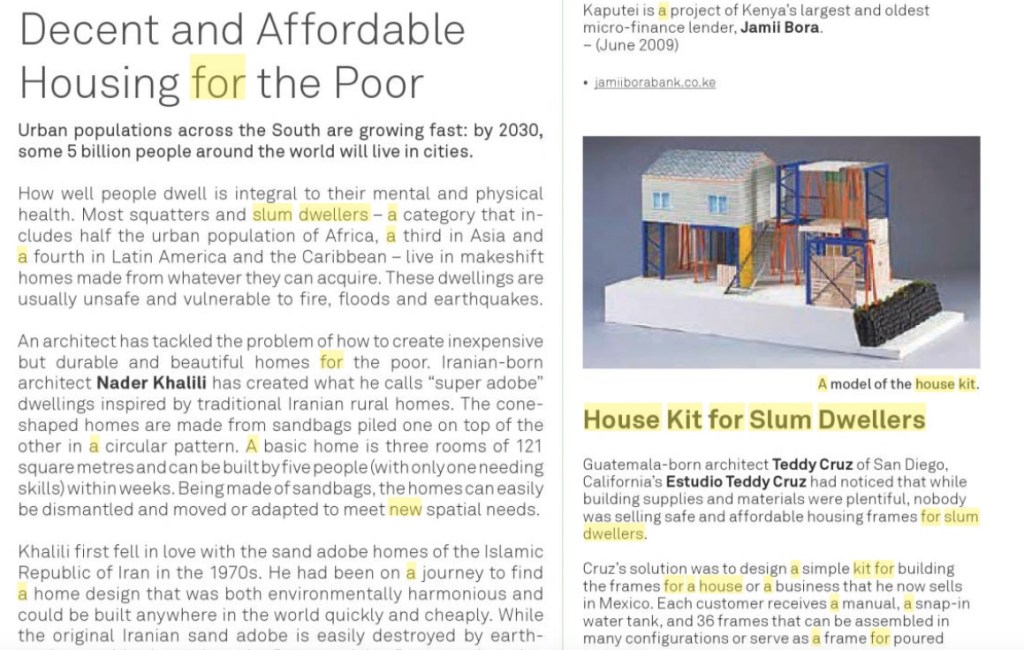
    Guatemala-born architect Teddy Cruz of Estudio Teddy Cruz in San Diego, California, joins a small but growing number of socially responsible architects. He applies a concept more associated with middle class shoppers at the furniture design emporium Ikea to the world’s estimated one billion urban slum dwellers (UN-Habitat). Without legal title to the land they live on, packed tightly into densely overcrowded shantytowns, most squatters and slum dwellers live in makeshift homes made from whatever they can get their hands on. This is estimated to include half the urban population of Africa, a third of Asia and a fourth of Latin America and the Caribbean (Click here for more information).

    The ad-hoc shelters and houses they build can be dangerously unstable, and vulnerable to natural disaster from flash floods to earthquakes. Cruz had noticed that while building supplies and materials were plentiful, nobody was selling safe and affordable housing frames for slum dwellers. According to the International Labor Organization, formal housing markets in developing countries rarely supply more than 20 percent of housing stock.

    Cruz’s solution was to design a simple kit for building the frames for a house or a business that he now sells in Mexico. Each customer receives a manual, a snap-in water tank, and 36 frames that can be assembled in many configurations, or serve as a frame for poured concrete. These sturdy frames can also be added to with locally found materials. Cruz said he was inspired by “the resourcefulness of poverty” and by the cheap and affordable pre-fabricated homes that once were sold by catalogue by the American retailer Sears.

    Cruz has been testing the structures in Tijuana, Mexico – a rapidly growing city on the border with the United States and a destination for Mexico’s poor. His work as an architect has centred on exploring how informal settlements grow faster than the cities they surround. These settlements, he says, break the rules and blur the boundaries between what is urban, suburban and rural. Cruz’s frame kits can be used to build a home, or combination of home and business, acknowledging the fact many people need to use their home as a business for a livelihood.

    “These start-up communities gradually evolve,” said Cruz., ”or violently explode out of conditions of social emergency, and are defined by the negotiation of territorial boundaries, the ingenious recycling of materials, and human resourcefulness.”

    Published: July 2007

    Resources

    There are many ways to play around with your dwelling and architecture ideas. Here are some products available online:

    1. Arckit: Arckit is a tangible and hands-on design tool for spontaneously bringing your architectural ideas to life right before your eyes. Website: https://www.arckit.com
    2. SmartLab Archi-TECH Electronic Smart House: Build your house and power it up! This creative STEAM toy allows aspiring architects and engineers to design and build modular structures – and then power them up with lights, sounds, sensors, and motorized parts! Website: https://www.mastermindtoys.com/products/smart-lab-archi-tech-electronic-smart-house

    Development Challenges, South-South Solutions was launched as an e-newsletter in 2006 by UNDP’s South-South Cooperation Unit (now the United Nations Office for South-South Cooperation) based in New York, USA. It led on profiling the rise of the global South as an economic powerhouse and was one of the first regular publications to champion the global South’s innovators, entrepreneurs, and pioneers. It tracked the key trends that are now so profoundly reshaping how development is seen and done. This includes the rapid take-up of mobile phones and information technology in the global South (as profiled in the first issue of magazine Southern Innovator), the move to becoming a majority urban world, a growing global innovator culture, and the plethora of solutions being developed in the global South to tackle its problems and improve living conditions and boost human development. The success of the e-newsletter led to the launch of the magazine Southern Innovator.  

    Follow @SouthSouth1

    Like this story? Here is a dirty secret: this website is packed with stories about global South innovators. We spent 7 years researching and documenting these stories around the world. We interviewed the innovators to learn from them and we visited them to see how they did it. Why not use the Search bar at the top and tap in a topic and see what stories come up? So, stick around and read some more!    

    Archive.org: https://archive.org/details/Httpwww.slideshare.netDavidSouth1development-challengessouthsouthsolutionsjuly2007issue

    Slideshare: http://www.slideshare.net/DavidSouth1/development-challengessouthsouthsolutionsjuly2007issue

    Southern Innovator Issue 1: https://books.google.co.uk/books?id=Q1O54YSE2BgC&dq=southern+innovator&source=gbs_navlinks_s

    Southern Innovator Issue 2: https://books.google.co.uk/books?id=Ty0N969dcssC&dq=southern+innovator&source=gbs_navlinks_s

    Southern Innovator Issue 3: https://books.google.co.uk/books?id=AQNt4YmhZagC&dq=southern+innovator&source=gbs_navlinks_s

    Southern Innovator Issue 4: https://books.google.co.uk/books?id=9T_n2tA7l4EC&dq=southern+innovator&source=gbs_navlinks_s

    Southern Innovator Issue 5: https://books.google.co.uk/books?id=6ILdAgAAQBAJ&dq=southern+innovator&source=gbs_navlinks_s

    Creative Commons License

    This work is licensed under a
    Creative Commons Attribution-Noncommercial-No Derivative Works 3.0 License.

    ORCID iD: https://orcid.org/0000-0001-5311-1052.

    © David South Consulting 2023
  • David South Consulting Books | 1997 – 2014

    David South Consulting Books | 1997 – 2014

    Southern Innovator Magazine Issue 5: Waste and Recycling, Editor and Writer: David South (ISBN 978-0-9920217-1-9) (ISSN 2222-9280) (Online: ISSN 2227-0523): Southern Innovator’s fifth issue tackles the theme of waste and recycling in the global South. It has unearthed radical new ways to use the Earth’s resources while efficiently raising living standards for the world’s majority. Waste no longer needs to pile up and pollute the environment and communities; it can be a source of wealth and provide sustainable livelihoods.
     
    Radical ways to alter how things are made, such as the production model called cradle-to-cradle, have the potential to meet human needs without harming the environment and human health. Effective use of renewable energy technologies and sources also could eliminate energy poverty in the global South, dramatically raising living standards and boosting human development.

    “We are proud to present our first book entry in David South’s 5th Issue of the Southern Innovator Magazine. The general focus of this paper is to show the rise of the south as a strong economic power, this year’s issue is focussing on the dilemma of strong population growth and limited resources with the focus on waste and recycling issues for example the elephant dung paper production in Thailand, the banning of plastic bags in Uganda or the creation of green fashion in China.”NEEMIC

    “@SouthSouth1 is one of the best sources out there for news and info on #solutions to #SouthSouth challenges.” Adam Rogers, Assistant Director, Regional Representative, Europe, United Nations Office for South-South Cooperation (UNOSSC)

    “Btw, I really enjoyed reading them, impressive work & a great resource. Looking forward to Issue 6. My best wishes to you & your team at SI.”

    “… great magazine, nice design.”

    On Google Books: https://books.google.co.uk/books?id=6ILdAgAAQBAJ&dq=southern+innovator&source=gbs_navlinks_s

    Designed in Iceland

    Follow @SouthSouth1

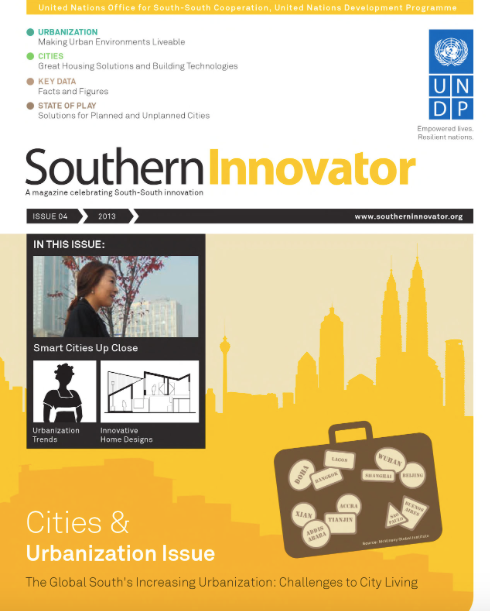
    Southern Innovator Magazine Issue 4: Cities and Urbanization, Editor and Writer: David South (ISBN 978-0-9920217-0-2) (ISSN 2222-9280) (Online: ISSN 2227-0523): Southern Innovator’s fourth issue tackled the theme of cities and urbanization in the global South and how innovators are grappling with one of the biggest challenges of our time: the largest migration in history as the world becomes a majority urban place. Southern Innovator profiles new building technologies and innovative designs and also offers social solutions to make living urban better, while improving human development.

    “I liked your latest Southern innovator! Always inspiring.” Joana Breidenbach, betterplace.org, Berlin, Germany

    “The magazine looks fantastic, great content and a beautiful design!”

    On Google Books: https://books.google.co.uk/books?id=9T_n2tA7l4EC&dq=southern+innovator&source=gbs_navlinks_s

    Designed in Iceland

    Follow @SouthSouth1

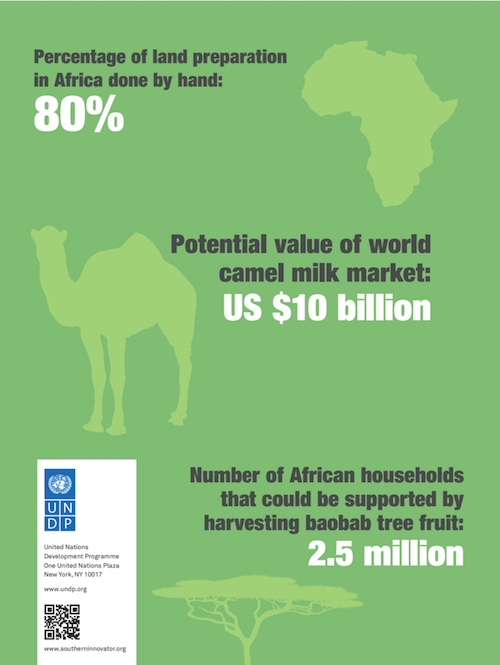
    Southern Innovator Magazine Issue 3: Agribusiness and Food Security, Editor and Writer: David South (ISSN 2222-9280) (Online: ISSN 2227-0523): Southern Innovator’s third issue tackled the theme of agribusiness and food security in the global South. It found innovators were proving it is possible to boost farm yields with new techniques that are not costly nor harmful to the environment. It also found the rise of new information technologies, such as mobile phones, offers unlimited options to make farming and food distribution more efficient, profitable and food secure. These information technologies can turn small-scale farmers into agribusinesses if applied correctly.

    On Google Books: https://books.google.co.uk/books?id=AQNt4YmhZagC&dq=southern+innovator&source=gbs_navlinks_s

    Designed in Iceland

    Follow @SouthSouth1

    Southern Innovator Magazine Issue 2: Youth and Entrepreneurship, Editor and Writer: David South (ISSN 2222-9280) (Online: ISSN 2227-0523): Southern Innovator’s second issue tackled the theme of youth and entrepreneurship in the global South. It discovered a growing youth population across the global South and found a disconnect between the enthusiasm and talent of youth and their ability to connect with local economies. This was causing systemic unemployment among youth and wasting a great opportunity to spur growth and innovation in poor countries.
     
    Southern Innovator chronicled various business models that were applicable to young entrepreneurs. Importantly, the business models have been proven to work in developing countries.

    “Thank you David – Your insight into the issues facing us a “global Village” is made real in the detail of your article – 10 out of 10 from the moladi team.” Moladi: Building Communities

    On Google Books: https://books.google.co.uk/books?id=Ty0N969dcssC&dq=southern+innovator&source=gbs_navlinks_s

    Designed in Iceland

    Follow @SouthSouth1

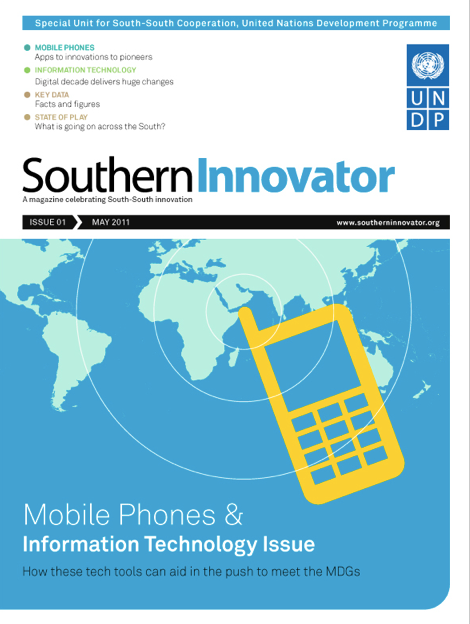
    Southern Innovator Magazine Issue 1: Mobile Phones and Information Technology, Editor and Writer: David South (ISSN 2222-9280) (Online: ISSN 2227-0523): Launched in May 2011, the new global magazine Southern Innovator profiles the people across the global South shaping our new world, eradicating poverty and working towards the achievement of the Millennium Development Goals (MDGs). They are the innovators. It chronicles what has been called the Development 2.0 Revolution: the use of innovative new technologies to radically alter the dynamics of development.
                   
    Southern Innovator’s first issue tackled the theme of mobile phones and information technology in the global South. It identified mobile phone pioneers and transformative information technologies reducing poverty and boosting human development in the global South. It was one of the first publications to document and capture this trend.

    “What a tremendous magazine your team has produced! It’s a terrific tour de force of what is interesting, cutting edge and relevant in the global mobile/ICT space… Really looking forward to what you produce in issues #2 and #3. This is great, engaging, relevant and topical stuff.” Rose Shuman, Founder & CEO, Open Mind and Question Box

    “Looks great. Congratulations. It’s Brill’s Content for the 21st century!” Conan Tobias, Managing Editor, Canadian Business

    What they are saying about SI on Twitter: From “@CapacityPlus Nice job RT @ActevisCGroup: RT @UNDP: Great looking informative @SouthSouth1 mag on South-South Innovation; @UNDP Great looking informative @SouthSouth1 mag on South-South Innovation; @JeannineLemaireGraphically beautiful & informative @UNDP Southern Innovator mag on South-South Innov.”

    “Beautiful, inspiring magazine from UNDP on South-South innovation. Heart is pumping adrenaline and admiration just reading it” Peggy Lee on Pinterest 

    On Google Books: https://books.google.co.uk/books?id=Q1O54YSE2BgC&dq=southern+innovator&source=gbs_navlinks_s

    Designed in Iceland

    Follow @SouthSouth1 

    Designed in Canada

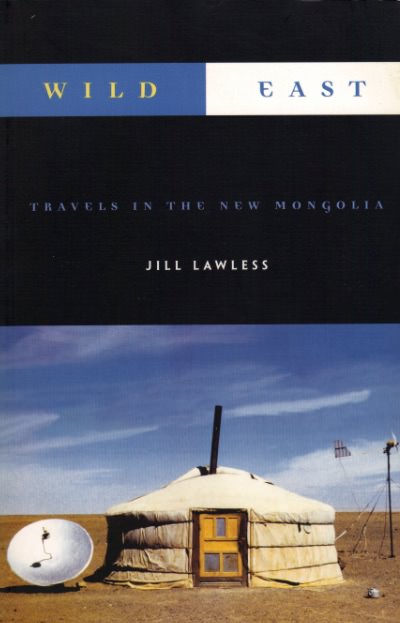
    Wild East: Travels in the New Mongolia by Jill Lawless (ISBN 1-55022-434-4): Covering the period of the late 1990s, with Mongolia embroiled in a major economic, social and political crisis, Wild East gives an insightful snapshot of life lived in a country undergoing significant turbulence.

    “Jill Lawless’ book is not a scholarly tome per se, yet it is of definite value to the contemporary Mongolian scholar, because it captures a mood flushed out by anecdotal detail of a specific period – detail that only a resident, not a visitor, can really discover. Thus the book provides the researcher with all-important firsthand observations of key social and political events, which give life and context to historical analysis.

    “Lawless’ period is 1997-1999, the heart of the tumultuous and ill-spent years of Democratic Coalition Government. These years, not fully representative of Mongolia in the 1990s, were a period of great hopes for democratic flowering and free market enterprise leading the nation to prosperity and progress. The pipe dream was dashed by the immaturity and selfishness of the Coalition party members. Still, those were heady years, and Lawless, as editor of the English language independent newspaper the UB [Ulaanbaatar] Post, was … “ Alicia J. Campi, Mongolian Studies, Vol. 25 (2002), pp. 112-114

    “As Canadian journalist Jill Lawless points out in the introduction to this engaging portrait of modern Mongolia, the short version of the country’s history is simple: They came thundering out of nowhere, terrorized and conquered most of the known world, and then they went home.

    It’s probably not too much of an exaggeration to imagine Mongol warlords at the peak of their power in the 13th century sitting around with Genghis Khan debating the merits of attacking Russia or sacking Burma. Within a space of a few decades they had subdued an area stretching from Korea to Hungary and Vietnam to Afghanistan.

    But the empire of the Khan imploded and the world’s consciousness of these fascinating people, and the great grasslands and deserts of their homeland, faded as they disappeared for centuries under the iron-fisted domination of first China and then the Soviet Union.

    In Wild East, Lawless brings us up to date. Yes, more than half the population of this Europe-sized country still lives on the steppes in felt tents with their horses, sheep and yaks.

    But now you can surf the Internet in Ulan Bator, find Mercedes in the streets, party in Western-style nightclubs and see trendy teens rollerblading around Soviet-era apartment blocks.

    Lawless gives us a revealing, and often amusing, account of her journeys through a beautiful country awakening from a tumultuous era that saw it wrenched from feudalism to communism and then into the uncharted future of rampant capitalism, searching for its future in the new millennium.” The Globe and Mail, Laszlo Buhasz, 25 November 2000 

    Designed in Mongolia

    Environmental Public Awareness Handbook: Case Studies and Lessons Learned in Mongolia by Robert Ferguson (ISBN 9992950137): The Environmental Public Awareness Handbook was published in 1999 and features the case studies and lessons learned by UNDP’s Mongolian Environmental Public Awareness Programme (EPAP). The handbook draws on the close to 100 small environmental projects the Programme oversaw during a two-year period. These projects stretched across Mongolia, and operated in a time of great upheaval and social, economic and environmental distress. The handbook is intended for training purposes and the practice of public participation in environmental protection.

    In its 2007 Needs Assessment, the Government of Mongolia found the EPAP projects “had a wide impact on limiting many environmental problems. Successful projects such as the Dutch/UNDP funded Environmental Awareness Project (EPAP), which was actually a multitude of small pilot projects (most costing less than $5,000 each) … taught local populations easily and efficiently different ways of living and working that are low-impact on the environment.” Many of these ideas live on in the work of both the World Bank and UNEP in Mongolia. 

    Designed in Mongolia

    Mongolian Rock Pop by Peter Marsh (ISBN 99929-5-018-8): In the Mongolian language, the book explores how Mongolia’s vibrant rock and pop music scene led on business innovation and entrepreneurship in the country during the transition years (post-1989). Written by an ethnomusicologist, it details the key moments and events in this story, while splicing the narrative with first-person interviews with the major players. 

    David South, Editor-in-Chief, Julie Schneiderman, Research Editor.

    Designed in Mongolia

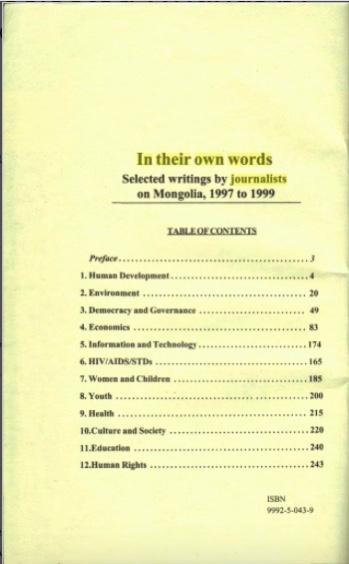
    In Their Own Words: Selected Writings by Journalists on Mongolia, 1997-1999, Editor-in-Chief: David South, Research Editor: Julie Schneiderman (ISBN 99929-5-043-9): In their own words compiles by theme the vast number of stories and features by journalists on Mongolia’s transition experience from 1997 to 1999. A rich and unusual resource for a developing country, this book offers the reader a one-stop snapshot of how a country handles the wrenching social, political, cultural, economic and environmental challenges of changing from one political and economic system to another.

    An excellent resource for scholars of austerity crises and for those seeking understanding on how to plot a path out of an austerity crisis. In particular, the collection of articles and stories show the impact austerity has on people and their lives. Unadorned by backward-looking historical narratives, these are accounts fizzing with the energy of the moment: a first draft of a tough time for most Mongolians. 

    Read online at Google Books or visit the University of Toronto’s Library Catalogue: http://search.library.utoronto.ca/details?3403065

    Designed in Mongolia

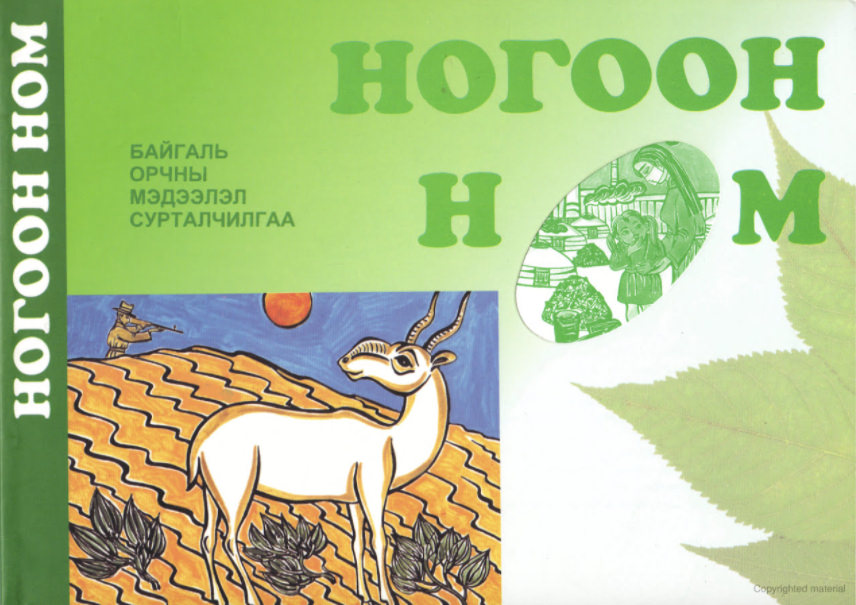
    Mongolian Green Book by Robert Ferguson: In the Mongolian language, the book details effective ways to live in harmony with the environment while achieving development goals. Based on three years’ work in Mongolia – a Northeast Asian nation coping with desertification, mining, and climate change – the book presents tested strategies. 

    Mongolia Update 1998 Book, Editor and Writer: David South, Researcher: G. Enkhtungalug: Whilst in Mongolia as head of the United Nations’ communications (1997-1999), I wrote an update on how Mongolia was coping with hyperinflation, shock therapy, austerity and the Asian economic crisis. The mission simultaneously had to deal with the 1997 Asian Crisis and the worst peacetime economic collapse in post-WWII history.

    This work is licensed under a Creative Commons Attribution 4.0 International License.

    ORCID iD: https://orcid.org/0000-0001-5311-1052.

    © David South Consulting 2017