Tag: David South

  • African Breakthroughs To Make Life Better

    African Breakthroughs To Make Life Better

    By David SouthDevelopment Challenges, South-South Solutions

    SOUTH-SOUTH CASE STUDY

    In the last 50 years, the domestication of high technology – bringing cheaper access to everything from personal computers to digital cameras and applications like global positioning systems (GPS) – has transformed millions of lives and the way business is done. In the next 50 years, biotechnology is set to do the same.

    One aspect of biotechnology, genetic engineering (GE), has been lambasted by protest groups for being “unnatural” and driven by profit and the privatisation of nature. It has been seen as the domain of the big and powerful and remote from everyday needs. But now Africa is pioneering new approaches that are rooted in the real challenges faced by African people – and proving world-class scientific research can take place in Africa.

    One initiative in South Africa aims to help small and medium sized farmers save their maize (corn) crops. The Food and Agriculture Foundation estimates that 854 million people in the world do not have sufficient food for an active and healthy life, and food security is a serious issue in Africa.

    Maize streak viruses (MSV) are geminiviruses that destroy maize crops, and are a big problem throughout sub-Saharan Africa and the Indian Ocean islands. It leaves characteristic yellow-white streaks across the plant’s leaves, and produces deformed corn cobs, often severely dwarfed. Over half of the food supply for people in sub-Saharan Africa comes from maize, but MSV can wipe out an entire farmer’s crop.

    Scientists at the University of Cape Town (www.uct.ac.za), South Africa, and the South African seed company PANNAR Pty Ltd have developed a resistant variety of maize that they hope will alleviate food shortages as well as promote the reputation of genetically engineered (GE) foods in Africa.

    The MSV-resistant maize is the first GE crop developed and tested solely by Africans. Field trials will soon begin to make sure there are no unintended consequences on the environment and animal life dependent on maize.

    Maize arrived in Africa in the 1500s from Mexico, and quickly displaced native food crops like sorghum and millet. Maize streak virus is an endemic pathogen of native African grasses, and is passed on to maize plants by leaf hopping insects.

    The technology being developed can also be applied to other geminiviruses, like Wheat dwarf virus (WDV), sugarcane streak virus, barley, oats and millet. The scientists hope this development will prove the safety of GE foods, and address the criticism it is only a profit-driven technology by selling the seeds for minimal profit to subsistence farmers.

    “If the GE maize turns out to be as hardy in the field as in the greenhouse,” said Dr Dionne Shepherd, who leads the research, “it could have a great impact on small and medium sized farmers. These are the farmers who need it the most, since they can’t afford preventative measures such as insecticides to control the leafhopper which transmits the disease. When small scale farmers lose 100 per cent of their crop (which they often do) due to maize streak disease, they not only lose any income they would have obtained selling their excess maize, but they also lose a massive chunk of their annual food supply.”

    Other African institutions are working on GE crops with international partners, but, Shepherd, says, “The reason the MSV-resistant maize could improve the reputation of GE in Africa, is that international biotech partners, especially in the private sector, are generally not interested in solving problems that are unique to Africa, and Africans are therefore suspicious of their motives when they try to sell or even give away GE food.”

    “MSV is endemic to sub-Saharan Africa, and our MSV-resistant maize was developed by Africans for Africa with no ulterior motives, which will hopefully make Africans accept the technology.”

    “I think it should attract more funding, because once international funders see that world-class research can happen in Africa, they may be more willing to commit funds.”

    In another development, African science is tackling the scourge of malaria on the continent. Caused by a parasite carried by mosquitoes, it kills more than a million people a year and makes 300 million more seriously ill (World Health Organisation). Ninety per cent of the deaths are in Africa south of the Sahara, and most are children.

    While bed nets, insecticides and anti-malarial drugs are effective, the disease has become resistant to some drugs and work on a vaccine is slow.

    Research in Kenya has found an effective way to both provide food and destroy mosquito larvae. The Nile tilapia – a highly nutritious fish – has long been known to feed on mosquito larvae. But nobody has made the connection between this fact and the fight against malaria. Francois Omlin, a researcher at the International Centre of Insect Physiology and Ecology in Nairobi, Kenya (www.icipe.org), has conducted the first field tests to prove this approach.

    “The tilapia species was never tested in the field for its ability to eat mosquito larvae,” he told Reuters.

    Ten days after introducing the tilapia to a pond, they had destroyed most of the larvae and after 41 weeks the number of mosquitoes fell by 94 per cent, according to Omlin.

    This means two important goals can be served by harvesting tilapia fish: greater access for Africans to the nutritious fish, and a dramatic reduction in mosquito-borne malaria.

    Published: September 2007

    Resources

    Development Challenges, South-South Solutions was launched as an e-newsletter in 2006 by UNDP’s South-South Cooperation Unit (now the United Nations Office for South-South Cooperation) based in New York, USA. It led on profiling the rise of the global South as an economic powerhouse and was one of the first regular publications to champion the global South’s innovators, entrepreneurs, and pioneers. It tracked the key trends that are now so profoundly reshaping how development is seen and done. This includes the rapid take-up of mobile phones and information technology in the global South (as profiled in the first issue of magazine Southern Innovator), the move to becoming a majority urban world, a growing global innovator culture, and the plethora of solutions being developed in the global South to tackle its problems and improve living conditions and boost human development. The success of the e-newsletter led to the launch of the magazine Southern Innovator. 

    Creative Commons License

    This work is licensed under a
    Creative Commons Attribution-Noncommercial-No Derivative Works 3.0 License.

    ORCID iD: https://orcid.org/0000-0001-5311-1052.

    © David South Consulting 2023

  • Brazilian Restaurant Serves Amazonian Treats

    Brazilian Restaurant Serves Amazonian Treats

    By David SouthDevelopment Challenges, South-South Solutions

    SOUTH-SOUTH CASE STUDY

    The vast Amazon rainforest has inspired a cuisine pioneer in Brazil. Combining the sensual pleasures of fine dining and the joy of tasting new flavours with a pursuit of sustainable and profitable local farming, a chef is inventing a new Brazilian cuisine and showing the way to create sustainable incomes.

    The kitchens of chef Alex Atala are as much a laboratory of food experimentation as a place to cook meals. He applies French and Italian cooking styles to traditional Brazilian dishes and ingredients. Since opening his restaurant D.O.M in 1999 in Sao Paulo, Atala has relentlessly pursued – through adventurous journeys around Brazil and into the Amazon rainforest – new flavours, foods and cuisines native to the country. When he started out, he was surprised to discover the lack of knowledge about native Brazilian ingredients, both within the country and outside. He has turned himself into a champion for local communities, helping them turn local foods into sources of income.

    Brazil, home to the largest portion of the Amazon rainforest, is hoping to become the world’s biggest food producer – it is currently second after the United States – addressing a major global problem and providing income for Brazil’s farmers.

    The challenge is to increase food production – providing income for Brazil’s farmers and helping address a major global problem – without destroying the Amazon’s complex ecosystem.

    Amazonia, the region that takes in the mighty Amazon River and the vast Amazon rainforest, is home to the most diverse range of plant and animal species in the world (http://en.wikipedia.org/wiki/Amazon_Rainforest).
    Brazil is currently debating legislation to ease restrictions on how small farmers can use land in the Amazon rainforest. It would loosen regulations on farming near river banks and hilltops. Many working in Brazil’s agricultural industry believe the country is not living up to its potential. They say Brazil could surpass the United States as an agricultural producer if allowed to use all its arable land.

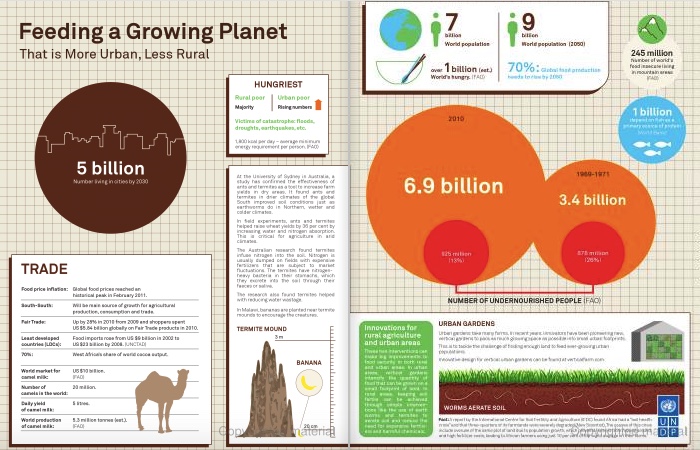
    This is a crucial debate not only for the future of the environment, but also for humanity. World demand for food keeps rising as populations increase and living standards rise in many countries, such as China. Another trend at work is increasing global urbanization, where more people are leaving agriculture as a business to live in cities and peri-urban areas to pursue a better quality of life. These growing megacities will need vast amounts of food to feed their populations.

    Brazil has, in recent years, increased the amount of territory designated as a protected area in the Amazon forest.

    The National Institute for Space Research in Brazil (http://www.inpe.br/ingles/index.php) has satellite photographs showing deforestation in the Amazon at its slowest pace for two decades. But more recent reports show deforestation accelerating again in 2011.

    Sao Paulo’s D.O.M. Restaurante (http://www.domrestaurante.com.br) – the name is an acronym for the Latin phrase “God, the best and greatest” – has used the rainforest’s rich harvest of foods to create an award-winning destination restaurant that prioritises sustainable sources. It was ranked seventh in this year’s S. Pellegrino World’s 50 Best Restaurants list.

    Atala says on his website he “is bringing a new sustainable Brazilian cuisine to the world’s attention.” His motto is “It is necessary to cook and eat as a citizen.”

    The restaurant celebrates small-scale producers when sourcing food products (http://www.domrestaurante.com.br/#/en-us/menu/ingredientes).  One pioneering food producer Atala works with is DRO Ervas e Flores (herbs and flowers) (http://www.droervaseflores.com). Located in the city of Cequilho, it grows edible herbs and flowers for restaurants. The flowers cultivated by DRO serve mainly to decorate plates, but can also be eaten. At the company farm, the flowers produced include violas, begonias, borago, monks cress, chrysanthemums, pumpkin flowers, coriander flowers, sweet alyssum, mini roses, basil flowers, roses, rockets and violets.

    One notable success has been the Amazonian root priprioca. Once it was used only for cosmetics, but Atala has turned it into an essence for cooking. He has conducted original research into uses for the root, which is produced by small communities in the Amazon.

    Other Brazilian foods he champions include black rice, an unusual variety sought after for its health benefits. It has 30 percent more fibre and 20 percent more protein than white rice, and less fat and calories than brown rice. The black rice used at D.O.M is produced in the Paraiba Valley in Sao Paulo state by Chicao Ruzene (http://www.arrozpreto.com.br), who researches new varieties on the rice farm.

    Jambu, a herb from the Amazon, gives an electrical sensation when it is chewed. Tucupi, a yellowish liquid from pressed wild manioc tuber, is used to season typical Amazonian dishes made with fish, fowl and ducks.

    Already well known in his native Brazil, Atala has become the country’s first internationally known celebrity chef and standard-bearer for the “New Brazilian Gastronomy.”

    His origins are inspiring: a former DJ and punk, he sold his records and went on a trip backpacking in Europe when he was 18. He made a living as a painter and dishwasher until a friend convinced him to go to catering school. Upon graduation, he worked in some of the top restaurants in Italy and France. This apprenticeship left Atala skilled in the techniques of French cuisine – considered one of the most disciplined and methodical in the world – and he returned in 1994 to Brazil.

    The restaurant has ultra-modern design and the sleek kitchen is home to a collection of Amazonian art. Atala acts as an ambassador for the country’s cuisine and flavours to the world. He opened a second restaurant in 2009, Dalva e Dito (http://www.dalvaedito.com.br), which celebrates home cooking by mothers and grandmothers and features only local produce.

    Atala’s inclusion of ‘wild’ ingredients has inspired other chefs. His expeditions into the Amazon continue to discover and study the biodiversity of the rainforest and the culinary culture of its inhabitants.

    His long-term agenda is to boost local farmers and food production and to increase the availability of ‘wild’ foods in the nation’s supermarkets. If he gets his way, people around the world will be eating the Brazilian way.

    “French, Italian, Spanish and Japanese chefs, for example, have their own cuisine and give value to their terroir (local) produce,” Atala explained his passion to The World’s 50 Best Restaurants. “We have to do the same in Brazil! Our ingredients are exotic now, but can become popular in the near future.”

    Published: June 2011

    Resources

    1) Brazilian Exporters and Importers website. Website:http://www.brazilianexportersandimporters.com/index.aspx

    2) Por uma Gastronomia Brasileira by Alex Atala – ISBN 8586518352 Website:http://www.submarino.com.br/produto/1/220365/por+uma+gastronomia+brasileira

    3) Winner of a UN Habitat award, the Brazilian farmer’s cooperative Cooperhaf: Cooperativa de Habitacao dos Agricultores Familiares has put together what it calls a “social technology” combining housing and farm diversification to support family farmers. Website:http://www.cooperhaf.org.br

    4) Eat Smart in Brazil: How to Decipher the Menu, Know the Market Foods and Embark on a Tasting Adventure by Joan Peterson, Publisher: Ginko Press. Website:http://www.ginkgopress.com/

    https://davidsouthconsulting.org/2022/11/21/agribusiness-food-security/

    https://davidsouthconsulting.org/2021/01/26/aid-organization-gives-overseas-hungry-diet-food-diet-giant-slim-fast-gets-tax-write-off-for-donating-products/

    https://davidsouthconsulting.org/2022/09/27/avoiding-wasting-food-and-human-potential-with-icts/

    https://davidsouthconsulting.org/2022/08/14/brazil-preserves-family-farms-keeping-food-local/

    https://davidsouthconsulting.org/2022/10/05/cool-food-for-the-poor/

    https://davidsouthconsulting.org/2021/03/04/food-diplomacy-next-front-for-souths-nations/

    https://davidsouthconsulting.org/2022/11/11/havanas-restaurant-boom-augers-in-new-age-of-entrepreneurs/

    https://davidsouthconsulting.org/2022/11/01/indonesian-food-company-helps-itself-by-making-farmers-more-efficient/

    https://davidsouthconsulting.org/2022/05/04/insects-can-help-in-food-crisis/

    https://davidsouthconsulting.org/2022/11/21/latin-america/

    https://davidsouthconsulting.org/2022/10/24/latin-american-food-renaissance-excites-diners/

    https://davidsouthconsulting.org/2022/11/17/sos-shops-keep-food-affordable-for-poor-unemployed/

    https://davidsouthconsulting.org/2021/03/05/southern-innovator-issue-3/

    https://davidsouthconsulting.org/2022/10/14/staple-foods-are-becoming-more-secure-in-the-south/

    https://davidsouthconsulting.org/2021/03/20/texting-for-cheaper-marketplace-food-with-sokotext/

    https://davidsouthconsulting.org/2022/11/11/urban-farming-to-tackle-global-food-crisis/

    https://davidsouthconsulting.org/2022/11/11/woman-restaurant-entrepreneur-embraces-brand-driven-growth/

    Development Challenges, South-South Solutions was launched as an e-newsletter in 2006 by UNDP’s South-South Cooperation Unit (now the United Nations Office for South-South Cooperation) based in New York, USA. It led on profiling the rise of the global South as an economic powerhouse and was one of the first regular publications to champion the global South’s innovators, entrepreneurs, and pioneers. It tracked the key trends that are now so profoundly reshaping how development is seen and done. This includes the rapid take-up of mobile phones and information technology in the global South (as profiled in the first issue of magazine Southern Innovator), the move to becoming a majority urban world, a growing global innovator culture, and the plethora of solutions being developed in the global South to tackle its problems and improve living conditions and boost human development. The success of the e-newsletter led to the launch of the magazine Southern Innovator. 

    Creative Commons License

    This work is licensed under a
    Creative Commons Attribution-Noncommercial-No Derivative Works 3.0 License.

    ORCID iD: https://orcid.org/0000-0001-5311-1052.

    © David South Consulting 2023

  • Açaí Berry Brazil’s Boon

    Açaí Berry Brazil’s Boon

    By David SouthDevelopment Challenges, South-South Solutions

    SOUTH-SOUTH CASE STUDY

    A formerly obscure berry from the Amazon rainforest in Brazil has become a global marketing success. The açaí berry – a dark, small fruit similar in appearance to blueberries – has surged in popularity around the world and brought newfound prosperity to poor communities.

    The açaí berry (http://en.wikipedia.org/wiki/Açaí_Palm) has seen its popularity take off because of its purported antioxidant properties (http://en.wikipedia.org/wiki/Antioxidants). It is marketed as a way to reduce cancer and heart disease, although hype has sometimes portrayed the benefits to be higher than scientific studies have found. But whatever the truth of the berry’s overall health-giving properties, it has become an economic success story in Brazil.

    A rapid success story – açaí was first exported from Brazil after 2000 – the berry is now sought by health-conscious consumers and the diet industry for its antioxidant properties and slimming effects.

    Harvesting the berries is providing poor communities with an alternative source of income in the Amazon rainforest (http://en.wikipedia.org/wiki/Amazon_Rainforest). And the successful marketing and selling of the berries offers a good example to others trying to improve profits for agricultural products from the South.

    Prior to its global popularity, a bowl of açaí berries was a staple for poor families in some parts of Brazil. The pulp is traditionally eaten as a side dish. It is a common sight in Brazil to see street vendors or shops selling crushed açaí pulp. Trendier places in Rio de Janerio sell sweetened açaí berry smoothies. In Belem, the capital of Para State, two ice cream chains sell açaí flavoured ice cream. A white and purple swirl of açaí and tapioca is a common favourite. Other treats include açaí candy and açaí tarts in bakeries.

    Some claim the taste of the berry when sweetened is earthy, while left in a natural state it is more grassy. The berry grows wild on palm trees lining rivers or on farms.

    Orisvaldo Ferreira de Souza is an açaí farmer on the island of Itanduba, an hour by boat from the town of Cametá, population 117,000. Açaí harvesting has become the main livelihood for many families in the area. Orisvaldo harvests açaí from 8,000 palm trees on a 14 hectare farm.

    “Two or three years ago, we had a lot of trouble selling the product,” he told the New York Times. “We had to bring it to town, and sometimes we came back without selling it.”

    But times have changed and the buyers now come to the farmers.
    “Just yesterday, six buyers came by,” he said. “We sold 10 baskets each to two of them.”

    At the CAMTA cooperative (http://www.camta.com.br/companyE.htm) in Tomé-Açu, a town with a population of 40,000, the berry is a significant source of income. The co-op’s director, Ivan Saiki, notes the boost to local incomes: “Before the boom, the harvest came and the açaí was worth practically nothing. Before, nobody had television, nobody had a motorized canoe. Now many have their own electricity at home. It’s greatly improved the life of the river communities.”

    The co-op has a fruit pulp processing factory to improve the profits for the farmers and, by controlling quality, raise the reputation for their products. In order to avoid over-dependence on one commodity, the co-op members grow many other fruits as well, including papaya, mango, lemons, and local favourites abrico, uxi and bacuri.

    Another initiative is Sambazon (Sustainable Management of the Brazilian Amazon) (www.sambazon.com). This small company, founded in 2000, combines business with a partnership to ensure local communities benefit from the berry’s success story. Sambazon buys the berries from over 10,000 people in the Amazon and is certified organic (http://www.organicfarmers.org.uk). Through its SAP (Sustainable Amazon Partnership), over 1,100 local family farmers are able to harvest açaí berries as an alternative income source to logging, cattle ranching and monoculture plantations – all of which are threats to the Amazon rainforest. The company sells a range of products, from sorbet to supplements to juices and energy drinks. It also uses athletes to promote the products and encourage a healthy lifestyle.

    Other companies like Açaí Roots (www.acairoots.com) – founded by three Brazilians in Rio de Janerio – also associate the product with an overall healthy lifestyle. It sells drinks, smoothies, energy shots and liquid concentrate. Founded in 2005, it is selling the concept of the healthy Brazilian lifestyle and proudly claims its founders “were born and raised on açaí.”

    Published: May 2010

    Resources

    1) Just Food is a web portal packed with the latest news on the global food industry and packed with events and special briefings to fill entrepreneurs in on the difficult issues and constantly shifting market demands. Website: www.just-food.com

    2) International Cooperative Agricultural Organisation: The ICAO is the democratic organisation representing agricultural co-operatives and farmers worldwide. Website: http://www.agricoop.org

    3) Waitrose Supermarket: It regularly sources fair trade and organic food products from the global South. Website: http://www.waitrose.com/index.aspx

    4) Food Safety – From the Farm to the Fork is the European Commission’s guidelines on food safety and how to prepare food for import into the European Community. Website: http://ec.europa.eu/food/international/trade index_en.htm

    5) An article about research into the berry. Website: http://www.sciencedaily.com/releases/2008/10/081006112053.htm

    Development Challenges, South-South Solutions was launched as an e-newsletter in 2006 by UNDP’s South-South Cooperation Unit (now the United Nations Office for South-South Cooperation) based in New York, USA. It led on profiling the rise of the global South as an economic powerhouse and was one of the first regular publications to champion the global South’s innovators, entrepreneurs, and pioneers. It tracked the key trends that are now so profoundly reshaping how development is seen and done. This includes the rapid take-up of mobile phones and information technology in the global South (as profiled in the first issue of magazine Southern Innovator), the move to becoming a majority urban world, a growing global innovator culture, and the plethora of solutions being developed in the global South to tackle its problems and improve living conditions and boost human development. The success of the e-newsletter led to the launch of the magazine Southern Innovator. 

    Creative Commons License

    This work is licensed under a
    Creative Commons Attribution-Noncommercial-No Derivative Works 3.0 License.

    ORCID iD: https://orcid.org/0000-0001-5311-1052.

    © David South Consulting 2023

  • African Online Supermarket Set to Boost Trade

    African Online Supermarket Set to Boost Trade

    By David SouthDevelopment Challenges, South-South Solutions

    SOUTH-SOUTH CASE STUDY

    Online retailing and marketing strategies are revolutionizing how people around the world buy products and services – but so far they have not benefited most of Africa’s small businesses and traders. On a continent where trading for survival is the norm, very few people are reaping the benefits of selling on the Internet.

    Not only has limited access to the Internet and the lack of high bandwidth in Africa impeded communication within the continent, it has restricted African businesses from taking advantage of the most profound change in global business for decades: e-retailing (also known as e-tailing or e-commerce).

    But the African information technology pioneers of Ghana – a country that has already gained a reputation as an IT leader in West Africa (www.ghanaictawards.com) – are setting out to change this situation, and in turn to change the way people access African goods and services.

    Pledging in its motto to reach “every African nook and cranny,” ShopAfrica53 is an online shopping portal similar to famous brands like Amazon or eBay, but focused entirely on giving African traders the ability to sell across the continent and to the world online.

    The one-stop shopping site – taking its name from the 53 countries on the continent – can be accessed by Internet users, or better still, by the enormous number of mobile phone users not only in Africa but around the world.

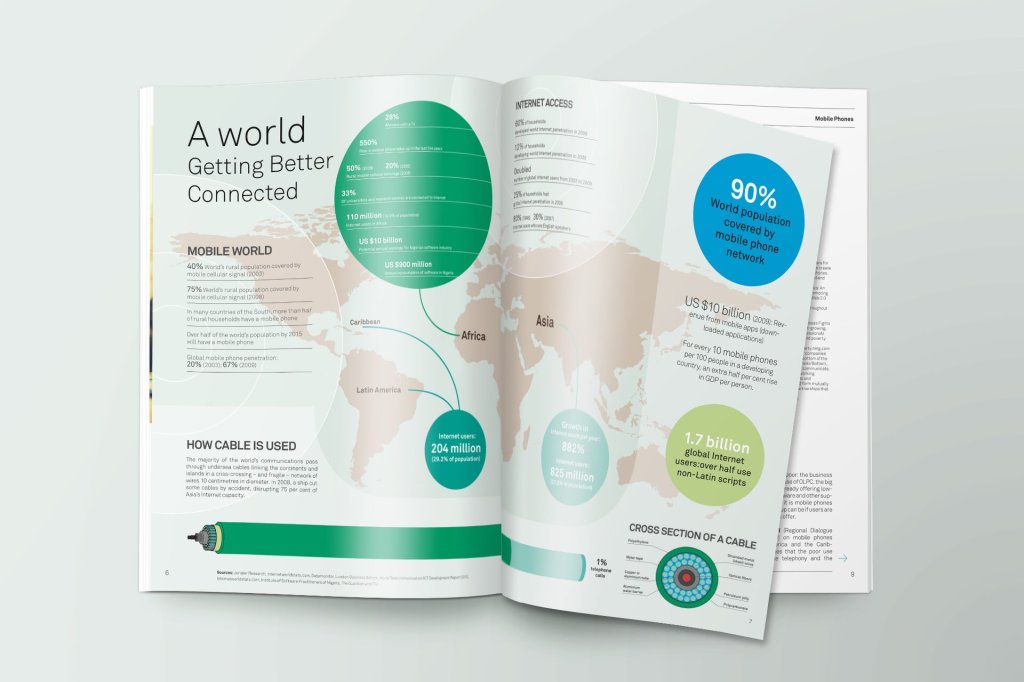
    The number of mobile phone subscribers in Africa surpassed 300 million in 2008 (ITU), representing a significant market in their own right. Research group Informa Telecoms and Media estimates mobile networks now cover 90 per cent of the world’s population – 40 per cent of whom are covered but not connected.

    ShopAfrica53 works like this: merchants first fill out an online form on the ShopAfrica53 website. They are then contacted by ShopAfrica, and an account is set up.

    People wanting to buy goods and services on the website use the African Liberty Card to ensure the transactions are safe and not at risk from hackers and fraudsters. The disposable pre-paid scratch card can be used on mobile phones and the Internet and is purchased from store outlets.

    ShopAfrica handles the logistical hassles of shipping to customers around the world, facilitates payment transfers, and helps with record keeping for merchants.

    ShopAfrica offers an eclectic selection of goods: apparel and accessories, books and stationery, groceries, handicraft, health and personal care, home and garden, machinery and tools, technology and entertainment. It promises to offer the “best selection of African products, anywhere, worldwide” – everything from building supplies, household items and electronics to processed foods and fabrics.

    One Ghanaian merchant, Mohammed Salifu, promises to deliver in two days a “large brown cow for delivery or collection. The size, colour and weight of animal will vary. This merchant provides live goats, sheep, cattle for special occasions and festivities and can also provide a slaughtering service for clients.”

    Then there is Vera Ami Kpogli, who is selling a ‘Beyonce’ Electric Blue necklace. Tse-Lee Fashions offers Batik/Tie and Dye Print Shirt in aqua and navy. And for the ‘king’ of the house, Ama Afrique Designs is selling Men’s Royal Rulers, sandals “worn many centuries ago by African kings.”

    The potential of this service to boost incomes is considerable: in the United Kingdom, online sales now make up 15 percent of all retail spending, reaching £43.8 billion (US $66.12 billion) in 2008 (IMRG).

    As has been seen with other countries of the Global South, trade in high quality goods boosts incomes. South-South trade grew by an average of 13 percent per year between 1995 and 2007. By 2007, South-South trade made up 20 percent of world trade. And over a third of South-South commerce is in high-skill manufacturing. Making finished goods, rather than just selling raw materials, improves workers’ skill levels and increases the return on trade.

    The rapid changes to African countries – the tilt to being more urban than rural, and being home to a larger urban population than North America, with 25 of the world’s fastest growing cities (International Institute for Environment and Development) – means there is an urgent need to boost incomes and better connect traders and manufacturers to the global economy.

    ShopAfrica53 could be the start of a very big thing for African trade.

    Published: May 2009

    Resources

    • The red dot logo stands for belonging to the best in design and business. The red dot is an internationally recognised quality label for excellent design that is aimed at all those who would like to improve their business activities with the help of design.
      Website: www.red-dot.de
    • BOP Source is a platform for companies and individuals at the BOP (bottom of the pyramid) to directly communicate, ultimately fostering close working relationships, and for NGOs and companies to dialogue and form mutually valuable public-private partnerships that serve the BOP.
      Website: http://bopsource.ning.com/
    • Business Fights Poverty: Business Fights Poverty is the free-to-join, fast-growing, international network for professionals passionate about fighting world poverty through good business.
      Website: businessfightspoverty.ning.com
    • Dutch Design in Development: As a matchmaker, DDiD puts together European clients, Dutch designers and small and medium-sized enterprises in developing countries. The designers share their knowledge of European consumer tastes, product development, design and quality standards
      Website: www.ddid.nl
    • Afriville is a Web 2.0 service and an African Caribbean social network. Afriville is a community website along the lines of the famous MySpace. Users are free to message and post profiles. The difference is that the user is able to choose how closed or open the networks are. The site features a state of the art music management system which allows African and Caribbean artists to get straight in touch with their fans.
      Website: www.afriville.com
    • Business Action for Africa: Business Action for Africa is an international network of businesses and business organisations from Africa and elsewhere, coming together in support of three objectives: to positively influence policies for growth and poverty reduction, to promote a more balanced view of Africa, and to develop and showcase good business practice in Africa
      Website: www.businessactionforafrica.org
    • Interactive Media in Retail Group (IMRG) is a membership community for the e-retail industry, whose vision is to maximise the commercial potential of online shopping
      Website: www.imrg.org

    https://davidsouthconsulting.org/2021/03/20/accessing-global-markets-via-design-solutions/

    https://davidsouthconsulting.org/2022/06/02/afghanistans-juicy-solution-to-drug-trade/

    https://davidsouthconsulting.org/2022/10/26/african-trade-hub-in-china-brings-mutual-profits-2/

    https://davidsouthconsulting.org/2021/03/20/carbon-markets-need-to-help-the-poor/

    https://davidsouthconsulting.org/2022/11/21/chinese-trade-in-angola-helps-recovery/

    https://davidsouthconsulting.org/2021/03/20/computer-gold-farming-turning-virtual-reality-into-real-profits/

    https://davidsouthconsulting.org/2022/04/12/djibouti-re-shapes-itself-as-african-trade-hub/

    https://davidsouthconsulting.org/2021/07/19/global-south-trade-boosted-with-increasing-china-africa-trade-in-2013/

    https://davidsouthconsulting.org/2020/12/12/mobile-phone-shopping-to-create-efficient-markets-across-borders/

    https://davidsouthconsulting.org/2021/12/08/new-media-markets-and-screen-finance/

    https://davidsouthconsulting.org/2022/10/26/perfume-of-peace-helps-farmers-switch-from-drug-trade/

    https://davidsouthconsulting.org/2022/10/04/popular-chinese-social-media-chase-new-markets/

    https://davidsouthconsulting.org/2021/07/19/south-south-trade-helping-countries-during-economic-crisis/

    https://davidsouthconsulting.org/2022/11/17/sos-shops-keep-food-affordable-for-poor-unemployed/

    https://davidsouthconsulting.org/2022/11/16/thai-organic-supermarkets-seek-to-improve-health/

    https://davidsouthconsulting.org/2022/10/20/trade-to-benefit-the-poor-up-in-2006-and-to-grow-in-2007/

    https://davidsouthconsulting.org/2020/04/17/virtual-supermarket-shopping-takes-off-in-china/

    https://davidsouthconsulting.org/2022/10/05/women-empowered-by-fair-trade-manufacturer/

    https://davidsouthconsulting.org/2022/06/16/women-mastering-trade-rules/

    Development Challenges, South-South Solutions was launched as an e-newsletter in 2006 by UNDP’s South-South Cooperation Unit (now the United Nations Office for South-South Cooperation) based in New York, USA. It led on profiling the rise of the global South as an economic powerhouse and was one of the first regular publications to champion the global South’s innovators, entrepreneurs, and pioneers. It tracked the key trends that are now so profoundly reshaping how development is seen and done. This includes the rapid take-up of mobile phones and information technology in the global South (as profiled in the first issue of magazine Southern Innovator), the move to becoming a majority urban world, a growing global innovator culture, and the plethora of solutions being developed in the global South to tackle its problems and improve living conditions and boost human development. The success of the e-newsletter led to the launch of the magazine Southern Innovator. 

    https://davidsouthconsulting.org/2021/03/05/southern-innovator-issue-2/

    Creative Commons License

    This work is licensed under a
    Creative Commons Attribution-Noncommercial-No Derivative Works 3.0 License.

    ORCID iD: https://orcid.org/0000-0001-5311-1052.

    © David South Consulting 2023