Tag: David South Consulting

  • Carbon Markets Need to Help the Poor

    Carbon Markets Need to Help the Poor

    By David SouthDevelopment Challenges, South-South Solutions

    SOUTH-SOUTH CASE STUDY

    The global carbon credit trading schemes emanating from the Kyoto Protocol have created a multi-billion dollar market – the global carbon market was worth US $30 billion in 2007 (World Bank) – and represents one of the fastest growing business opportunities in the world. The bulk of this trading is with the European Union’s emissions trading scheme, some US $25 billion. But the big problem to date has been most of this investment is enriching stock brokers, and not the poor.

    And this is a huge opportunity missed, as some point out: “These numbers are relevant because they demonstrate that the carbon market has become a valuable catalyst for leveraging substantial financial flows for clean energy in developing countries,” according to Warren Evans, the World Bank’s director of environment.

    And the way to do this is through the Clean Development Mechanism (CDM) – where wealthy countries can meet their greenhouse gas targets by investing in clean energy projects in the South. But so far, it has been criticised for spending 4.6 billion Euros on projects that would have cost just 100 million Euros if implemented by development agencies.

    But if done right, the CDM could become directly beneficial to the so-called Bottom of the Pyramid (BOP) – the four billion who live on less than US $2 a day. The CDM allows developed countries to offset their greenhouse gas emissions by paying projects targeting the poor to develop clean energy, or to create what are called carbon sinks (planting trees for example), to cut global emissions.

    One mechanism to make all of this work is the CDM Bazaar: officially launched in September 2007, it is about linking together buyers and sellers. This is a place where people with business ideas or projects can go for start-up funding. It is also a place to share information, contacts and learn about how to tap the market.

    And two Southern innovators are showing what can be achieved by tapping the power of the sun to help the poor.

    One such initiative In India, owned by Mr. Deepak Gadhia and Dr Mrs. Shirin Gadhia, is targeting the 63 per cent of the BOP market that is with rural populations. All of these people need affordable and clean energy if their lives are to improve: most currently use firewood and kerosene for cooking and heating. The company Gadhia Solar is building and selling solar steam cook stoves in rural villages. The giant solar dishes which resemble satellite TV dishes, can fry and roast using the sun and come in Do-it-Yourself kits. The enormous silver dishes beam concentrated sunlight on to a black plate on the oven, reaching temperatures of over 450 Celsius.

    In Morocco, the company Tenesol, an electric supply co-operative society, is using solar power to bring electricity to 60,000 poor households in 29 provinces. And it is making Morocco a world leader in the use of solar for rural electricity.

    Each house is equipped with a solar home system comprising a solar panel, battery and controller. It is powerful enough to light four to eight lamps, and support a television, radio or mobile phone charger.

    Customers pay a connection fee of US $80, and then a monthly service fee of between US $7.50 and US $17.50. The fee competes well with what rural households were spending on candles and batteries.

    The initial outlay for equipment is mostly paid for by investors, with the hope that the money will be made back on the service fees.

    Tenesol hopes to bring electricity to 101,500 households, and also wire them up and provide light bulbs.

    Published: March 2008

    Resources

    • More on emissions trading: Click here
    • UNDP has produced a free users guide introduction to the Clean Development Mechanism.
      Website: http://www.undp.org/
    • South South North has also produced a Practitioners’ Practical Toolkit.
      Website: http://www.cdmguide.com/

    Development Challenges, South-South Solutions was launched as an e-newsletter in 2006 by UNDP’s South-South Cooperation Unit (now the United Nations Office for South-South Cooperation) based in New York, USA. It led on profiling the rise of the global South as an economic powerhouse and was one of the first regular publications to champion the global South’s innovators, entrepreneurs, and pioneers. It tracked the key trends that are now so profoundly reshaping how development is seen and done. This includes the rapid take-up of mobile phones and information technology in the global South (as profiled in the first issue of magazine Southern Innovator), the move to becoming a majority urban world, a growing global innovator culture, and the plethora of solutions being developed in the global South to tackle its problems and improve living conditions and boost human development. The success of the e-newsletter led to the launch of the magazine Southern Innovator.  

    Follow @SouthSouth1

    Google Books: https://books.google.co.uk/books?id=DqmXBgAAQBAJ&dq=development+challenges+march+2008&source=gbs_navlinks_s

    Slideshare: http://www.slideshare.net/DavidSouth1/development-challengessouthsouthsolutionsmarch2008issue-44443163

    Southern Innovator Issue 1: https://books.google.co.uk/books?id=Q1O54YSE2BgC&dq=southern+innovator&source=gbs_navlinks_s

    Southern Innovator Issue 2: https://books.google.co.uk/books?id=Ty0N969dcssC&dq=southern+innovator&source=gbs_navlinks_s

    Southern Innovator Issue 3: https://books.google.co.uk/books?id=AQNt4YmhZagC&dq=southern+innovator&source=gbs_navlinks_s

    Southern Innovator Issue 4: https://books.google.co.uk/books?id=9T_n2tA7l4EC&dq=southern+innovator&source=gbs_navlinks_s

    Southern Innovator Issue 5: https://books.google.co.uk/books?id=6ILdAgAAQBAJ&dq=southern+innovator&source=gbs_navlinks_s
    This work is licensed under a Creative Commons Attribution 4.0 International License.

    ORCID iD: https://orcid.org/0000-0001-5311-1052.

    © David South Consulting 2021

  • Province For Sale: Step Right Up For An Opportunity To Buy What You Already Paid For

    Province For Sale: Step Right Up For An Opportunity To Buy What You Already Paid For

    “This is not being driven by fiscal or ideological motivation, though that may seem funny.” Conservative advisor James Small

    By David South

    Id Magazine (Canada), December 12 to December 26, 1996

    It is looking more and more like the Conservative government will launch a massive privatization campaign by the middle of next year. And it is becoming clear how key government assets such as Ontario Hydro, liquor stores and public broadcaster TVO will end up in private hands. The prevailing ideology of key advisors to the Harris government, including influential financial heavyweights at Canada’s top underwriters, is leaning towards a free-for-all where the highest bidder will win. 

    To date, the government has been coy about its plans, occassionally making vague threats that certain services need to be “looked at.” Assets that could go on the block include road maintenance, jails and the Ontario Clean Water Agency. In August, the government appointed former banker Rob Sampson as the minister for privatization. His days as vice-president of corporate finance at Chase Manhattan make him a popular candidate with the suit, tie and blouse crowd on Toronto’s Bay Street. 

    While Sampson is so far surrounded by only a handful of advisors, the plan is to create a privatization agency that will supervise each sell-off after getting the go-ahead from Cabinet. 

    Sampson’s policy advisor James Small, sums up the government’s attitude: “This is not being driven by fiscal or ideological motivation, though that may seem funny. We can do better for less, even though that may sound trite.”

    The government’s taxpayer-is-always-right attitude means it believes the best option is to float the newly privatized companies on the stock market, letting the highest bidder win. 

    “We have sophisticated investors in Ontario,” continues Small. “[Privatization] is not driving us to expand shareholders in Ontario. Can we, as taxpayers, benefit? What will give the best results. It is not ideological. In Canada we have a consumer culture and a very mature social structure. The market will determine what people will pay for things. We didn’t get elected to sell the family silver.

    “There has been 16 years of this happening. But is Margaret Thatcher the way to go? One of the advantages for Ontarians is that we can pick and choose the best approach. It’s difficult to point to one part of the world, one way we could provide better service.”

    Shareholder Democracy

    A concept popularized by British prime minsiter Margaret Thatcher in the 1980s, shareholder democracy actually saw the light of day in British Columbia back in 1979. Then, premier Bill Bennett embarked on an ambitious scheme to give every citizen of the province, including children, five shares in the British Columbia Resources Investment Corporation, a mining and logging company. Out of a population of 2.4 million, 2.07 million applied for the shares. While that idealistic experiment eventually failed as a series of bad deals pushed the share price down and arrogant executives pissed people off, it was a bold initiative. 

    Similar schemes have been used in Eastern Europe to increase private ownership in the economy. 

    But it is looking more and more like the government is going to try and avoid even a semblance of giving Ontarians a fair shake, by selling shares on the stock market to whoever can afford them. While the NDP and unions are opposed to privatization for some very good reasons, they are missing out on an opportunity to push the government to divide the shares up amongst all Ontarians (not necessarily a big stretch for the NDP, who brought us toll highways). 

    Shareholder democracy has developed two broad – and opposing – interpretations. For the left, a shareholder democracy in its truest sense is public ownership. For right-wing idealists, it means a nation of share owners playing the stock market with all the aggressiveness and greed of free-market capitalists. 

    Like any ideal, the reality is far more disappointing. Any small-time stock holder will tell you about arrogant CEOs and board members not listening to them. Ask any Ontarian on the street, and they will tell you about arrogant and incompetent civil servants who aren’t listening to them. 

    There is a more radical and fairer approach to privatization that would suit the populist rhetoric of the Conservatives. It involves selling shares along the lines of WWII war bonds. This solution would satisfy left-wing concerns the rich would run away with all the loot, while massively increasing share ownership in Ontario and raising funds to improve services and infrastructure. By selling millions of shares cheaply, and forbidding the trading of those shares, millions of Ontarians could reap the benefits of profit-making assets. This scheme would be contingent on reorganizing those agencies to become profitable, but could avoid a fire sale of taxpayer-funded agencies to wealthy corporations and investors. If critics of the government took the opportunity to guide the Conservatives, when a privatization is announced, towards mass share ownership, some good would come of it. 

    With all its scandals, bad publicity, grotesque executive salaries and inconsistent service that has turned privatization into a dirty word in the UK, the fact is share ownership did go up. In 1979 when Conservative prime minister Margaret Thatcher was elected, shares were owned by 2.5 million people; by 1992, 11 million people had shares or a quarter of the population. Narrowly defined, that is a success. 

    But the mainstream financial community loathes the idea for obvious reasons. At consultants KPMG, corporate evaluater John Kingston symbolizes the opposition to anything other than a straight sell-off at the stock exchange. “Issuance of shares to employees doesn’t put any new money into the coffers, like in the Eastern European example of gifting shares,” he says. “But selling shares to the public does provide some compensation. They must satisfy taxpayers by getting the right amount.”

    “I think if government is going to privatize then it is a good time to do it,” says Deloitte and Touche’s Jim Horvath, a veteran of privatizations in Argentina, Hungary and Brazil, who supports a quick sell. “The stock market is up. There are a lot of deep pockets looking for investments.”

    The mantra for an open sale will get louder as each privatization approaches. But such a sale does have its disadvantages. 

    Advantages of an open sale: 

    Can get the highest price. Use the funds to pay down debt or a one-time only increase in funds for something like health care. Argue protecting taxpayers’ interests by selling for the best price. The asset could raise funds on the stock market to improve infrastructure/services. Once in private hands, future governments will have a hard time trying to buy assets back. 

    Disadvantages of an open sale: 

    Taxpayers are also consumers; they could get screwed by any increase in rates. There is no guarantee the government will use funds for public good (maybe they will build another casino?). Any pay-off is once only, whereas the LCBO for example, makes money every year. Government could make a mistake and sell for too low a price. 

    Government Agenda

    Two factors could significantly slow down the government’s ability to launch privatizations. The Conservatives have relished making cuts to government services despite labour unrest, but it has shown little skill at the more intellectual task of implementing a new philosophy. Major planks of their Common Sense Revolution, such as workfare, are bogged down and in chaos. Privatization will need a sophisticated sales job to counter-attack the slick television and newspaper ads unions have been running for the past year attacking privatization. Encouraging mass share ownership would show that leadership the government sorely needs. 

    The second liability is its own ambitious agenda. Already the Legislature has had to extend its term to try and deal with a backlog in reforms, including chopping another $3 billion, rearranging how government services are delivered and fighting the province’s doctors. But if it must privatize, then the honourable thing to do is to offer mass ownership. To do otherwise will show Ontario isn’t even capable of the heights of imagination some of Eastern Europe’s new democracies have shown. 

    Note: I debated this topic on CBC TV’s Face Off after this was published. 

    Cover headline: “The Harris Tories have an opportunity to turn Ontario into a shareholder democracy. Will they take it?”

    This work is licensed under a Creative Commons Attribution 4.0 International License.

    ORCID iD: https://orcid.org/0000-0001-5311-1052.

    © David South Consulting 2025

  • Southern Innovator Magazine

    Southern Innovator Magazine

    Estimated Reading Time: 2 mins

    “What a tremendous magazine your team has produced! It’s a terrific tour de force of what is interesting, cutting edge and relevant in the global mobile/ICT space… Really looking forward to what you produce in issues #2 and #3. This is great, engaging, relevant and topical stuff.”

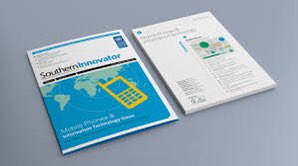
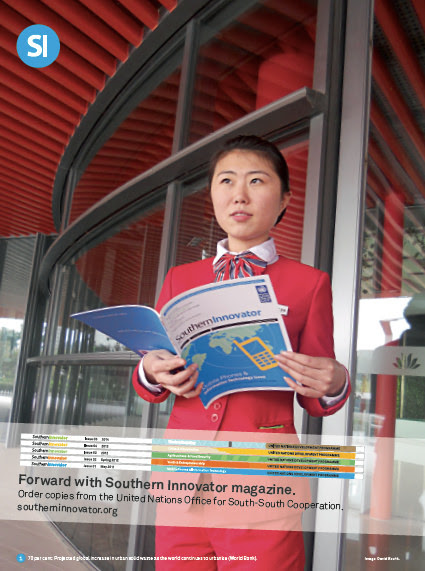
    Southern Innovator was initially launched in 2011 with the goal of inspiring others (just as we had been so inspired by the innovators we contacted and met). The magazine seeks to profile stories, trends, ideas, innovations and innovators overlooked by other media. The magazine grew from the monthly e-newsletter Development Challenges, South-South Solutions published by the United Nations Office for South-South Cooperation (UNOSSC) since 2006.

    https://sites.google.com/davidsouthconsulting.org/southern-innovators/home

    Issue 6’s theme has been decided on: it will focus on Science, Technology and Innovation. For this issue, Southern Innovator is seeking invitations from cutting-edge knowledge and science innovators in the global South to view their work. Time is tight, so don’t miss this opportunity to let the whole global South know about your work. In the past, Southern Innovator has visited green pioneers in Cuba, a smart city in South Korea and an eco-city in China.

    Contact me if you wish to receive a copy/copies of the magazine for distribution. Follow @SouthSouth1.

    Southern Innovator Issue 1

    Southern Innovator Issue 2

    Southern Innovator Issue 3

    Southern Innovator Issue 4

    Southern Innovator Issue 5

    “Beautiful, inspiring magazine from UNDP on South-South innovation. Heart is pumping adrenaline and admiration just reading it”

    Southern Innovator Issue 6

    Innovator Stories and Profiles

    Citing Southern Innovator

    Finding Southern Innovator

    Press Release 1

    Press Release 2

    Press Release 3

    Southern Innovator Impact Summaries | 2012 – 2014

    “The e-newsletter Development Challenges, South-South Solutions proved to be a timely and prescient resource on the fast-changing global South, tracking the rise of an innovator culture driven by the rapid adoption of mobile phones and information technology …

    “In 2010, work began on the development of the world’s first magazine dedicated to the 21st-century innovator culture of the global South. My goal was to create a magazine that would reach across countries and cultures, meet the UN’s standards, and inspire action. Southern Innovator was the result. Mr. [David] South played a vital role in the magazine’s development from its early conception, through its various design prototypes, to its final global launch and distribution.

    “Both the e-newsletter and magazine raised the profile of South-South cooperation and have been cited by readers for inspiring innovators, academics, policy makers and development practitioners in the United Nations and beyond.

    “I highly recommend Mr. [David] South as a thoughtful, insightful, analytical, creative and very amicable person who has the unique ability to not only grasp complex problems but also to formulate a vision and strategy that gets things done. … ” Cosmas Gitta, Former Assistant Director, Policy and United Nations Affairs at United Nations Office for South-South Cooperation (UNOSSC) in UNDP

    “I think you [David South] and the designer [Solveig Rolfsdottir] do great work and I enjoy Southern Innovator very much!” Ines Tofalo, Programme Specialist, United Nations Office for South-South Cooperation

    Team | Southern Innovator Phase 1 Development (2010 – 2015)

    According to zoominfo in 2023, Southern Innovator is one of the Popular Searches online for the United Nations Office for South-South Cooperation (UNOSSC).

    Like our content? Help contribute to the costs of keeping it online. 

    Scan code with your phone and help us out.

    https://davidsouthconsulting.org/southern-innovator-scale-up-fundraiser/

    ORCID iD: https://orcid.org/0000-0001-5311-1052.

    © David South Consulting 2021

  • Southern Innovator Issue 5

    Southern Innovator Issue 5

    Launched in May 2011, the new global magazine Southern Innovator (ISSN 2222-9280) is about the people across the global South shaping our new world, eradicating poverty and working towards the achievement of the Millennium Development Goals (MDGs). 

    Team | Southern Innovator Phase 1 Development (2010 – 2015)

    They are the innovators.

    Follow the magazine on Twitter @SouthSouth1. 

    Southern Innovator Issue 1

    Southern Innovator Issue 2

    Southern Innovator Issue 3

    Southern Innovator Issue 4

    Southern Innovator Issue 5

    If you would like hard copies of the magazine for distribution, then please contact the United Nations Office for South-South Cooperation (UNOSSC)(https://www.unsouthsouth.org/2014/12/25/southern-innovator-magazine/).

    Citations

    Recasting ‘truisms’ of low carbon technology cooperation through innovation systems: insights from the developing world by Alexandra Mallet, Innovation and Development, Volume 5, 2015 – Issue 2: Low-Carbon Innovation and Development

    https://davidsouthconsulting.org/2021/07/30/disrupted-whatever-happened-to-southern-innovator-issue-6/

    https://davidsouthconsulting.org/2021/07/30/issue-6-will-launch-in-autumn-2014-get-on-board-28-july-2014/

    https://davidsouthconsulting.org/2021/12/20/press-release-1-southern-innovator/

    https://davidsouthconsulting.org/2021/12/20/press-release-2-southern-innovator/

    https://davidsouthconsulting.org/2021/12/20/press-release-3-southern-innovator/

    https://davidsouthconsulting.org/2021/03/05/southern-innovator-issue-1/

    https://davidsouthconsulting.org/2021/03/05/southern-innovator-issue-2/

    https://davidsouthconsulting.org/2021/03/05/southern-innovator-issue-3/

    https://davidsouthconsulting.org/2021/03/05/southern-innovator-issue-4/

    https://davidsouthconsulting.org/southern-innovator-scale-up-fundraiser/

    ORCID iD: https://orcid.org/0000-0001-5311-1052.

    © David South Consulting 2023