The transition to a green economy has reached a crossroads: while multilateral global initiatives have been long-running and complex, the idea of a green economy still seems fragile and achieving it far from certain. In the face of the ravages of the global economic crisis that has raged since 2007/2008, countries are now trying to roll back their green pledges or slow the pace of transition.
This exposes a dilemma: a perception that a green economy is in conflict with economic growth, prosperity and the advance of human development, particularly in developing countries seeking to make rapid gains in reducing poverty and building a middle class, consumer society.
Three things need to be foremost in the minds of those who care about creating a global green economy in the 21st century: innovation in design, in market prices and in business models. I think these three factors will be the deciding elements in whether green technologies are taken up quickly and used by large numbers of people to improve their lives.
The green option needs to always be the more appealing, cheaper option that also improves living standards. Happily, many people are doing this all around the world – you just may not have heard of them yet (unless you are reading Southern Innovator magazine that is).
As editor of the magazine Southern Innovator since 2011, I have had the privilege to meet, interview and see first-hand green economy innovators across the global South and profile them in the magazine. What has stood out for me is this: the ones who have achieved sustainable success have put a great deal of effort into design – how the technology is made, what it looks like and how it is used, how efficiently it is made and distributed – while also thinking through the business case for their work and how to make it appealing to others.
We have tried to apply this thinking to the magazine as well, by using clear and modern design with bright, eye-pleasing colours, and by choosing to use 100 per cent renewable energy (much of it from geothermal sources) for the magazine’s design and layout and to have it printed on paper from sustainable forest sources.
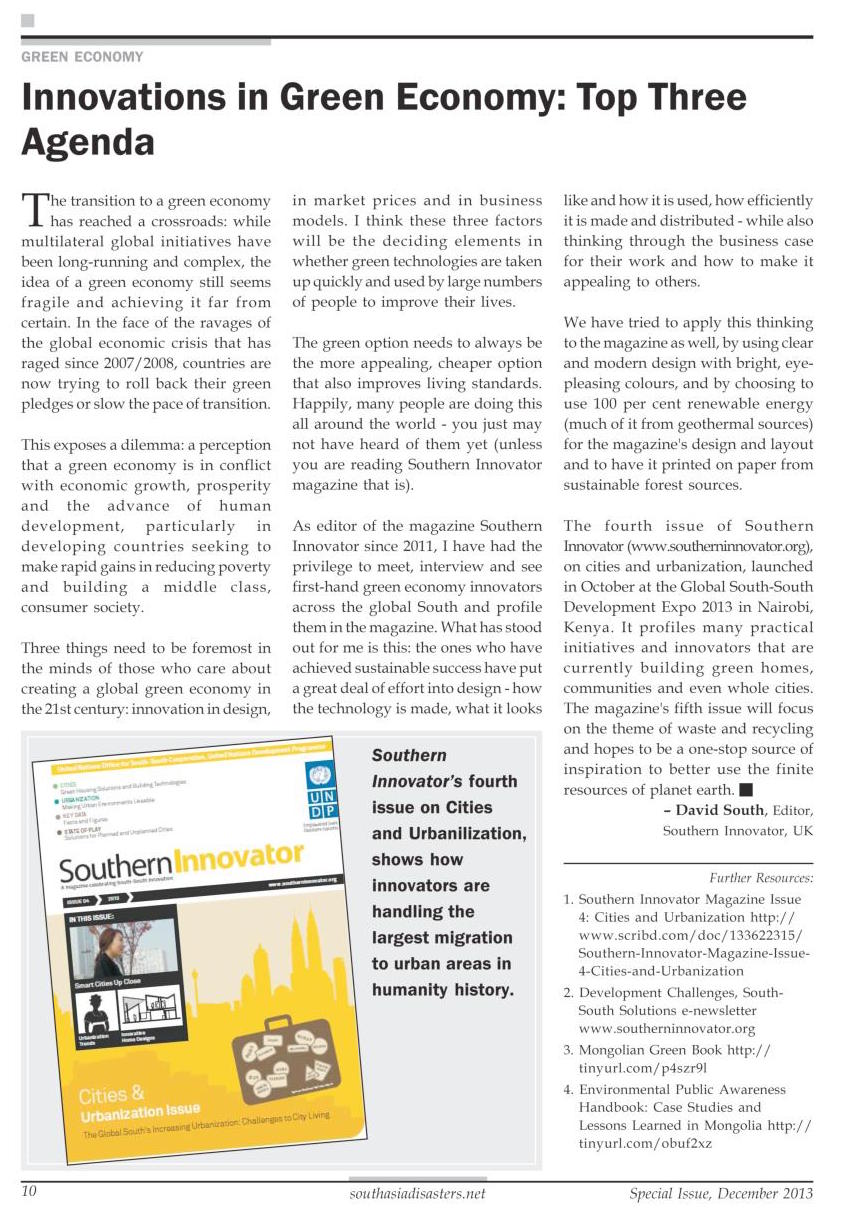
The fourth issue of Southern Innovator (www.southerninnovator.org), on cities and urbanization, launched in October at the Global South-South Development Expo 2013 in Nairobi, Kenya. It profiles many practical initiatives and innovators that are currently building green homes, communities and even whole cities. The magazine’s fifth issue will focus on the theme of waste and recycling and hopes to be a one-stop source of inspiration to better use the finite resources of planet earth.
Cities for All, recently published by Habitat International Coalition, draws together thinkers and innovators in a compilation of case studies addressing the challenges of inclusive cities in the global South. The book seeks to articulate experiences of South-South cooperation and enhance the links between different regions. David South interviews the co-editor, Charlotte Mathivet.
The largest movements of people in human history are occurring right now, as vast populations relocate to urban and semi-urban areas in pursuit of a better quality of life, or because life has become intolerable where they currently live. In Arrival City, Canadian journalist Doug Saunders finds that this movement —
— is creating new urban spaces that are this century’s focal points of conflict and change — centres of febrile settlement that will reshape our cities and reconfigure our economies. These Arrival Cities are where the next great economic and cultural boom will be born, or where the next explosion of violence will occur.
For most, this process is chaotic, unplanned, and fraught with risk, hardship, poverty and stress; yet, because so many are also able to dramatically improve their life chances, many millions will continue to follow this path.
The speed of urbanisation makes the question of how to build liveable cities increasingly urgent. A new book hopes to help people get closer to solutions to these vexing problems.
Cities for All: proposals and experiences towards the right to the city, published by Habitat International Coalition (HIC) in Santiago, Chile, and co-edited by HIC’s Ana Sugranyes and Charlotte Mathivet, was launched during this year’s World Urban Forum in Rio de Janeiro, and highlights ways in which urban residents across the South are defining how they would like their cities to evolve, refusing to accept social exclusion and demanding a “right to the city”.
“A lot of social initiatives based on the right to the city are coming from these ‘new cities of the South’”, says Mathivet. “The book highlights original social initiatives: protests and organising of the urban poor, such as the pavement dwellers’ movements in Mumbai where people with nothing, living on the pavements of a very big city, organise themselves to struggle for their collective rights, just as the park dwellers did in Osaka.”
“Another innovative experience came from the children’s workshops in Santiago, aimed at including children in urban planning in order to make a children-friendly city.”
The cities of Africa and Asia are growing by a million peole a week. If current trends continue, mega-cities and sprawling slums will be the hallmarks of this majority urban world. In sub-Saharan Africa, 72 per cent of the population lives in slum conditions. And by 2015, there will be 332 million slum-dwellers in Africa, with slums growing at twice the speed of cities.
“The consequences have produced a deeper gap between the city and countryside, and also within the city between the rich and poor,” said Mathivet.
Cities for All details African experiences from Nigeria, Cameroon, Ghana and South Africa. Mathivet believes “one common topic affecting these countries is the problem of forced evictions, due to the rural exodus and growing urbanisation. It is therefore very important for the right to the city to include a perspective of linking the struggle between rural and urban movements, because problems in cities and the countryside are closely connected, especially in Africa.”
And the current surge to cities in Africa raises the issue of what type of development will occur. The book argues that cities aren’t automatically a solution to the plight of the poor. Cities need to be worked on, and many of the problems faced by the South’s fast-growing cities stem from a power imbalance.
“A very important thing to realise is that a city life is not a synonym for a better life or a miracle solution for poor people, nor for the ‘capitalist’ way of life,” says Mathivet. “African nations and their people have to find effective solutions on their own to overcome poverty — which they are doing — without copying development models from the North.”
“In my understanding, urban growth is not haphazard or poorly planned in ‘developing’ countries. Rather, I think that urban ‘planning’ or lack of planning is done with a goal of generating more benefits for powerful interests and fewer benefits for poor people.”
The book argues for a two-way relationship with the people who make up the majority of these fast-growing cities. And it says each city will have to customise its solutions.
“It is very difficult to apply social innovations to other countries without understanding the history and the social, economic, cultural and political context,” says Mathivet.
“Hope comes from learning of different experiences. For example, if a social movement in South Africa succsesfully avoided an eviction from a slum, it may help another social movement in Brazil to strengthen its own strategy. One of the book’s goals was to articulate the various South-South experiences and enhance the links between different regions.”
In one chapter, contributor David Harvey argues that “the right to the city is not simply the right to what already exists in the city; it is also the right to transform the city into something radically different.”
“The right to the city itself will not stop the over-whelming phenomenon of urban growth,” believes Mathivet. “The consequences produced by implementing this collective right would rather change people’s daily lives by achieving more equality in cities as well as in the relationship between the city and coutnryside in regards to growing urban populations.”
Cities for All highlights the existence of ‘cities without citizens’: the vast numbers of slum dwellers and the poor who live mostly ignored by authorities (unless they are in the way of commercial development).
“The expression ‘cities without citizens’ means the exact opposite of the right to the city proposal,” Mathivet says. “This alternative to the present global paradigm proposes to allow people to participate in the process of creating the city in terms of urban planning, decision-making, budget, public policies, etc. It is possible for people to influence their own lives and the community.”
“There is no miracle solution, and the right to the city is a banner around which people can organise themselves to articulate their struggles and demand social justice.”
The book concludes by arguing for the advantages of a ‘slow city’ approach. But how does this work in fast-growing urban areas where people are looking to quickly escape poverty, or are seeking rapid improvements to their quality oflife? Would they not find a slow city approach frustrating?
Mathivet believes a leap of imagination is required: “Cities for All is not intended to be a recipe book. The slow city experience was chosen as a conclusion to the book in order to present a different approach, but not to propose a clear solution to follow. Concluding with the slow city experience, which is radically different and difficult to apply in African and Asian cities, where the spread of urbanisation is uncontrollable and leads to major problems, emphasises that the fight for the right to the city involves imagination and the desire for another possible city …
“Moreover, slow city experiences have been developed otuside of wealthy European countries, for example in some small Argentine and South Korean cities.”
And with the coming decade unfolding, what will cities in the South be like? Are we on the cusp of a new, dark age akin to the misery of Europe’s cities during the industrial revolution?
Mathivet acknowledges that “we can see a dark future where the interests of the most vulnerable will not be the priority. However, looking at the experiences by and for the people, we cannot consider them poor, but rich of knowledge, cognitive capital, and with courage to change their lives and their communities, through self-management and autonomy.
“Cities for All aimed to show this richness … the challenges are for civil society to deepen links between different movements to build a stronger global strategy, during events like the next World Social Forum in Dakar, February 2011.”
David South is an international development consultant and writer. He writes the Development Challenges: South-South solutions e-newsletter for UNDP’sSpecial Unit for South-South Cooperation. He led the Communications Office for the UN in Ulaanbaatar from 1997 to 1999 and has worked for the UN in South Africa, Turkmenistan and Ukraine.
The Special Unit for South-South Cooperation is mandated to promote, coordinate and support South-South and triangular cooperation on a global and UN-systemwide basis.
This story is adapted from a piece in the July 2010 edition of Development Challenges.
Development Challenges, South-South Solutions was launched as an e-newsletter in 2006 by UNDP’s South-South Cooperation Unit (now the United Nations Office for South-South Cooperation) based in New York, USA. It led on profiling the rise of the global South as an economic powerhouse and was one of the first regular publications to champion the global South’s innovators, entrepreneurs, and pioneers. It tracked the key trends that are now so profoundly reshaping how development is seen and done. This includes the rapid take-up of mobile phones and information technology in the global South (as profiled in the first issue of magazine Southern Innovator), the move to becoming a majority urban world, a growing global innovator culture, and the plethora of solutions being developed in the global South to tackle its problems and improve living conditions and boost human development. The success of the e-newsletter led to the launch of the magazine Southern Innovator.
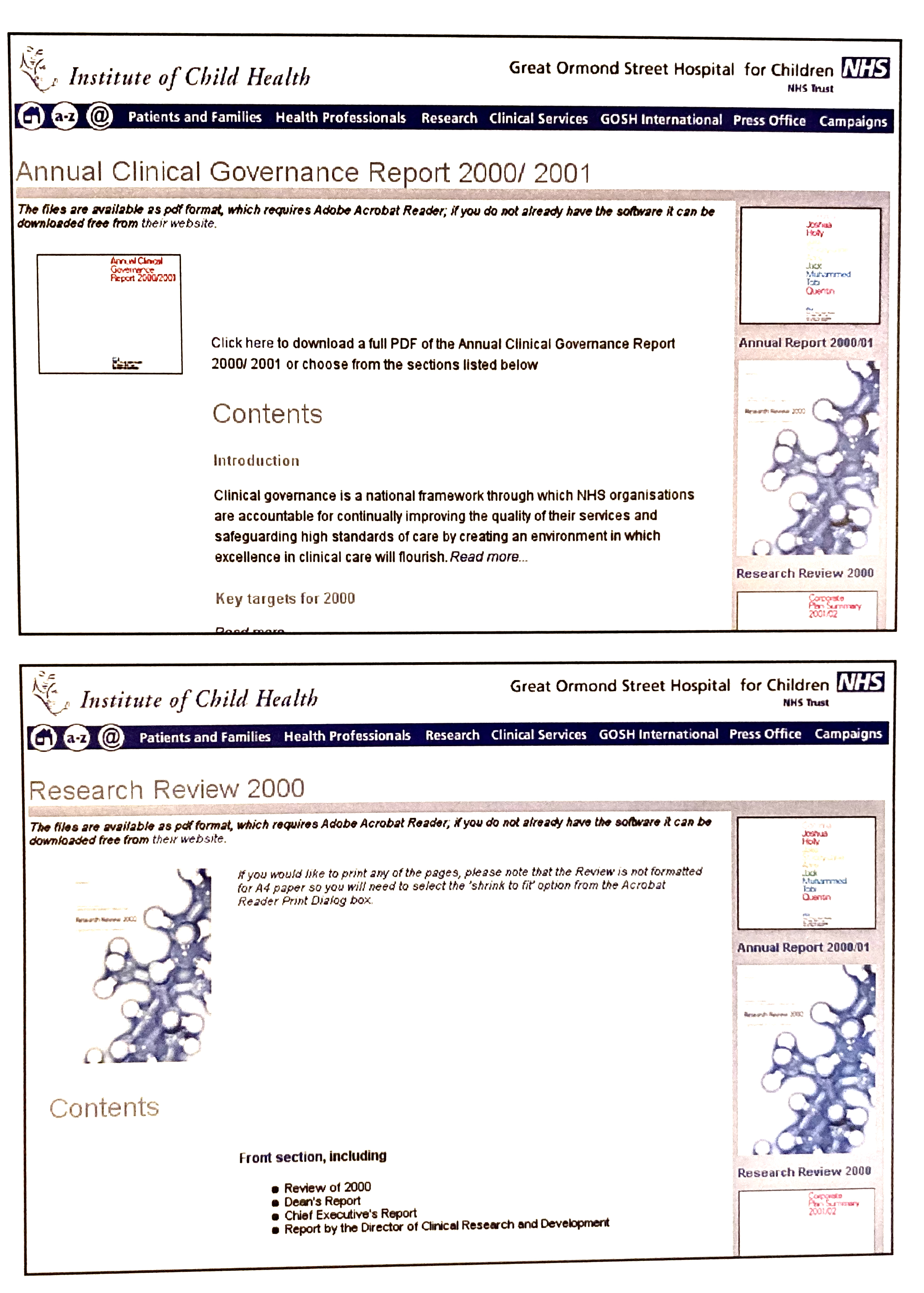
Research Review 2001: A Year of Excellence and Innovation
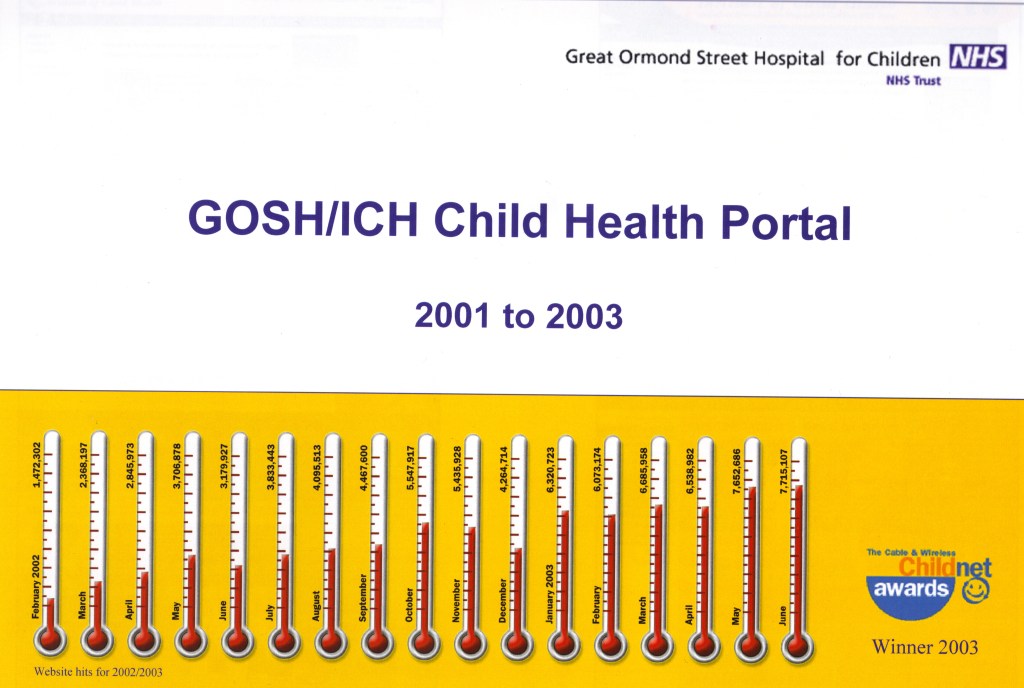
Britain’s best-loved children’s hospital and charity, Great Ormond Street Hospital for Children NHS Trust (GOSH), contracted me to lead a two-year project to modernise the hospital’s web presence and take its brand into the 21st century.
2002
Research Review 2002: Building on Success
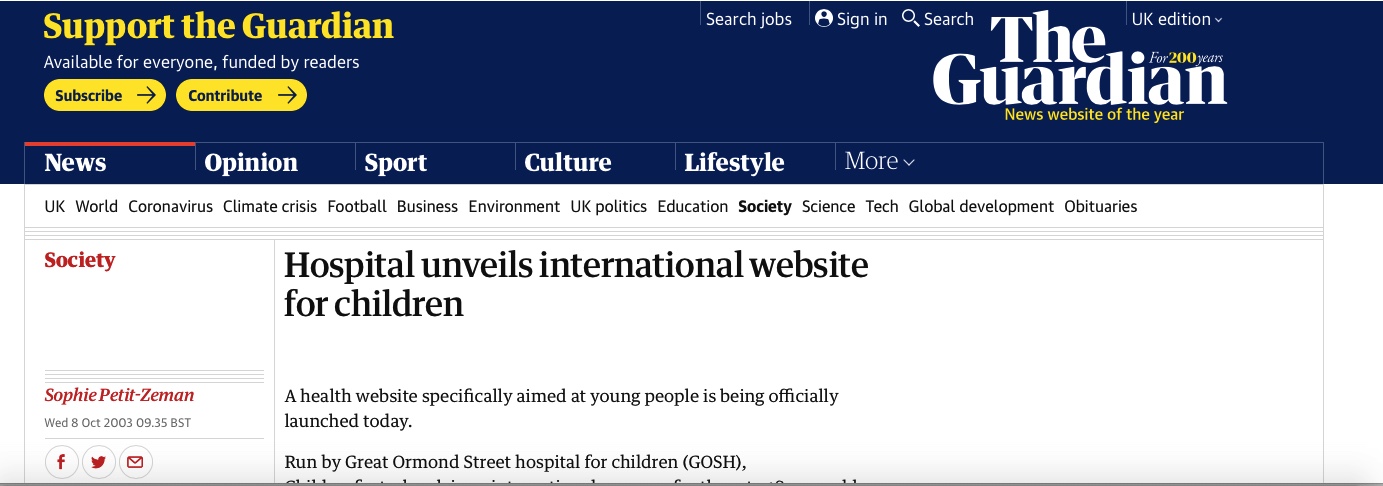
In 2003, the UK’s Guardian newspaper called the Children First website one of the “three most admired websites in the UK public and voluntary sectors,” and a UK government assessment called the overall GOSH child health web portal a role model for the NHS.Content produced for the GOSH Child Health Portal (now MyGOSH) in 2003 on the ketogenic diet and how it can help with the treatment of epilepsy.“A highly attractive website written by and with children at Britain’s biggest specialist hospital for children. The site is carefully segmented for different age groups and provides a powerful platform on which children can reach out from the confines of their hospital wards, share their experiences and learn about a range of medical issues as well as have access to fun interactive resources.”
Awareness of the sourcing of materials for fashion has been on the rise in the past decade. Concerns about how the global fashion industry functions and its impact on the environment have given rise to savvy retailers who take care over the sourcing of their materials and the working conditions of their employees. Consumers have shown a willingness to pay a little more to know that a garment is sustainably produced and has the lowest possible impact on the environment.
The global textile industry is the second biggest consumer of water in the world. The dyeing processes used by these manufacturers do extensive damage to the water table that is used for drinking water.
In China, there have been violent demonstrations over working conditions and increasing concern over the health consequences of many modern manufacturing methods. In order to get change, new business models need to emerge, and consumers and customers need to be educated and to demand better-quality, low- or non-polluting products.
One business has accomplished something remarkable: it has succeeded in producing high-quality, ethically sourced products while also employing vulnerable people who have significant care duties and need a flexible and understanding employer.
NuoMi (http://www.nuomishanghai.com) has three stores and a store/design studio in Shanghai, China. NuoMi means “sticky rice” in Mandarin (http://en.wikipedia.org/wiki/Mandarin_Chinese). It was founded by Filipino fashion designer Bonita Lim, a mother of four, who uses her business to help single mothers and the less fortunate.
NuoMi is also pioneering sustainable and green goods for the Chinese market. This is unusual in a country more known for its sweatshop, low-wage manufacturing industries that have propelled the country into an economic powerhouse.
NuoMi sells women’s clothing made from sustainable sources while creating jobs for people from disadvantaged communities. There are organic cotton, bamboo, silk and wool garments, and no artificial dyes or synthetic materials are used.
The design team works on colourful knitwear, dresses and baby clothes. They also offer a custom order service.
“When I was 13 or 14 years old, I dreamed of building a special company that could help people who have trouble finding a job,” Lim told the Global Times.
“I called the name of my brand NuoMi, which is (the) Chinese name for sticky rice … Our company works like sticky rice; we support and love each other.”
Born in the Philippines and educated in Canada, Lim had become frustrated while working with the Filipino government and wanted to help the poor. She started NuoMi in 2006 in Shanghai, a city booming as China’s economy continues to grow. It is also a city with a population with long-standing sophisticated consumer tastes. Shanghai had been home to various foreign concessions before the Communists took power and its population was exposed to foreign languages, cultures and tastes.
Lim became a single mother after she divorced, and this experience made her sympathetic to how hard life is for single mothers. Drawing on her passion for fashion, she hired a designer to work with her on designing a line of clothing.
“I was surprised that many of my friends really liked my designs, so they asked me to design clothes for them and introduced some clients to me,” Lim told Global Times. “I tried to design and sell clothes abroad. I got a lot of good feedback, but it exhausted me so I decided to work in Shanghai.”
Despite starting out as a hobby, the business had built a network of 20 clients. It had become impossible to just do it part-time so she formalised the business as NuoMi. She began hiring single mothers in prison in the Philippines and designed clothing that could be easily made by them.
“Those single mothers in prison were very anxious because they had no way to help their children. Most of them committed crimes because they needed money for their kids,” Lim said.
By 2008 she had built a professional design team and now had 60 clients. With the brand NuoMi growing, she opened its first store. This has grown to four stores in Shanghai. Most of the company’s workforce is now in Shanghai but they are still people living in a vulnerable situation.
Nuomi’s newly opened store in 2008 carried a spring and summer collection of long dresses made from bamboo, cotton and soya. These fabrics were chosen for their breathability in the hot, steamy Shanghai weather.
One of the employees is 52-year-old Zhu Linfang, who takes care of a stroke-damaged father and a mother with liver cancer. “I was introduced through a friend. They paid me more than other companies. At my age almost no company wants to hire me, but working for NuoMi, I earn between 2,000 yuan (US $300) and 3,000 yuan per month,” she said.
Other employees look after ill children and have care duties that occupy much of their time. They do sewing and make toys for NuoMi.
Lim takes the time to train the employees to make sure they can do the work to a high standard.
“I tried to design products that were both suitable for them to make and could be sold in the market,” she said.
NuoMi also sells environmentally friendly glycerine soaps in flavours from mango to chocolate, jewellery made from recycled industrial materials and bathwear, pillows, and purses. The stores even carry matching mother-daughter and father-son clothing.
Wisely, service is offered in Chinese and English to customers – Shanghai is a popular destination for tourists. NuoMi is clearly a trail-blazer and a business to watch.
Published: October 2011
Resources
1) Ecodesignfair: Eco Design Fair is a bi-annual grass-roots community event whose purpose is to showcase eco-conscious designers and products to general consumers. Website:http://www.ecodesignfair.cn
Development Challenges, South-South Solutions was launched as an e-newsletter in 2006 by UNDP’s South-South Cooperation Unit (now the United Nations Office for South-South Cooperation) based in New York, USA. It led on profiling the rise of the global South as an economic powerhouse and was one of the first regular publications to champion the global South’s innovators, entrepreneurs, and pioneers. It tracked the key trends that are now so profoundly reshaping how development is seen and done. This includes the rapid take-up of mobile phones and information technology in the global South (as profiled in the first issue of magazine Southern Innovator), the move to becoming a majority urban world, a growing global innovator culture, and the plethora of solutions being developed in the global South to tackle its problems and improve living conditions and boost human development. The success of the e-newsletter led to the launch of the magazine Southern Innovator.

















You must be logged in to post a comment.