This is an unofficial publication of UNDP. Views presented in this document do not necessarily reflect those of UNDP. Mongolia Update is provided as a service to those who are interested in the rapid changes taking place in today’s Mongolia. A note about Mongolia Update: The Mongolia Update has proven to be one of the more popular documents produced by the UNDP Mongolia office. Since the autumn of 1997 UNDP has been able to offer two more frequently updated sources of information: the UNDP homepage and our monthly newsletter, the Blue Sky Bulletin (available from our office if you are not already receiving it). Please use the United Nations Homepage at http://www.un-mongolia.mn to keep abreast of the latest political, economic and social developments in Mongolia. Mongolia Update is an unofficial document of UNDP and is designed to periodically keep our partners outside of Ulaanbaatar apprised of issues in the country.
A group of Congolese musicians is using music to overcome obstacles – both economic and social – that come with being disabled in a poor country. Called Staff Benda Bilili, they are on course to be a global sensation and are looking forward to their first European tour. A remarkable achievement for anyone from a war-torn country, let alone for musicians who live as paraplegics in the slums of the Democratic Republic of Congo’s capital, Kinshasa (http://en.wikipedia.org/wiki/Kinshasa).
The South’s disabled are a large population and often suffer more than even the poorest residents. It is estimated that there are 500 million disabled people in the world, with mental, physical or sensory impairment. As many as 80 percent of all disabled people live in isolated rural areas in developing countries, and in some countries more than 20 percent of the population is classed as disabled (UN).
Obstacles are everywhere for the disabled and just being able to economically survive, let alone thrive, can be a superhuman struggle. There are many physical and social barriers in most countries which thwart full participation, and millions of children and adults live lives of segregation and degradation.
The four songwriters and musicians of Staff Benda Bilili use homemade wheelchairs to get around Kinshasa. The ‘wheelchairs’ resemble bicycles, tricycles and motorbikes, and are a testament to the resourcefulness of the band’s members. They sing about contemporary problems, like the importance of polio vaccinations – several of the band members are confined to wheelchairs because of polio (http://www.polioeradication.org/).
When performing, they are joined by a young group of acoustic rhythm musicians to complete their act.
One of the musicians, Roger Landu, just 17, plays a one-string lute called the satonge. He built it from old milk powder tin cans, a discarded fish basket and a single electrical wire. He builds the instruments for sale as well, charging US $20 for each one.
Benda Bilili means “look beyond appearances” in Lingala, a Bantu language spoken in Kinshasa.
Lounging after a recent performance on his hand-built moped wheelchair, Coco Ngambali, the group’s primary songwriter, told The Independent: “We see ourselves as journalists. We’re the real journalists because we’re not afraid of anyone. We communicate messages to mothers, to those who sleep on the streets on cardboard boxes, to the shégués (the disabled homeless).”
The band has a scrappy, street-wise persona. Being disabled, the members have had to fiercely protect their own security and economic position in society. Life on the streets for the band members, who were homeless – living near the city’s zoo – when they started, involved violent attacks and frequent attempts by thieves to rob them of the few possessions they have.
Polio victims were often abandoned by their parents and left on the streets to survive in Congo. It is a double pain: the disabled are seen as possessing demonic powers and are feared by able-bodied people. With this outsider status, the disabled have developed highly creative ways to survive, working as traders on the streets.
Staunchly self-reliant, the band members built up their musical careers with no help from others and have only just recently garnered attention from European world music fans. Prior to their recent success, they would have to busk on the street near the zoo – or even across the street from the United Nations office in Kinshasa – to make money for food.
None of the band members have formal musical training and they have learned what they know by training their ears to the sound of musical notes. Their songs can be decorated with the sounds of animals commonly heard, such as chirping frogs, or just the street noise around the zoo (http://www.youtube.com/watch?v=JtVZhaZp6Ng).
The powerful web video service You Tube has driven awareness of the band, as hundreds of thousands of people have viewed their videos online. Their debut album is called Très Très Fort (Very, Very Strong) and is available from Crammed Discs (http://www.crammed.be/news/index.htm). A feature film about Staff Benda Bilili is about to be completed by film producers Renaud Barrett and Florent de la Tullaye.
Another band with disabled members that is garnering success is Liyana (http://www.youtube.com/watch?v=GLayxPj8OpI) from Zimbabwe. Despite the obstacles of hyperinflation, cholera, hunger and poverty in the country, the band recently completed a US tour. Their song ‘Never Give Up’ says it all: after being rejected from the African Idol television talent contest because of their wheelchairs, they didn’t let it stop them from going on to do a US tour.
Published: April 2009
Resources
E-Scape: E-Scape is a music software for performance and composition which has been developed by Drake Music in response to the needs of disabled musicians or students who cannot be catered for by other technology. Website:http://www.drakemusicproject.org/makepage.asp?page=4d-es-main
SADMA: The Southern African Disabled Musicians Association. Website:http://sadma.org.za/
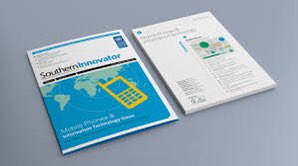
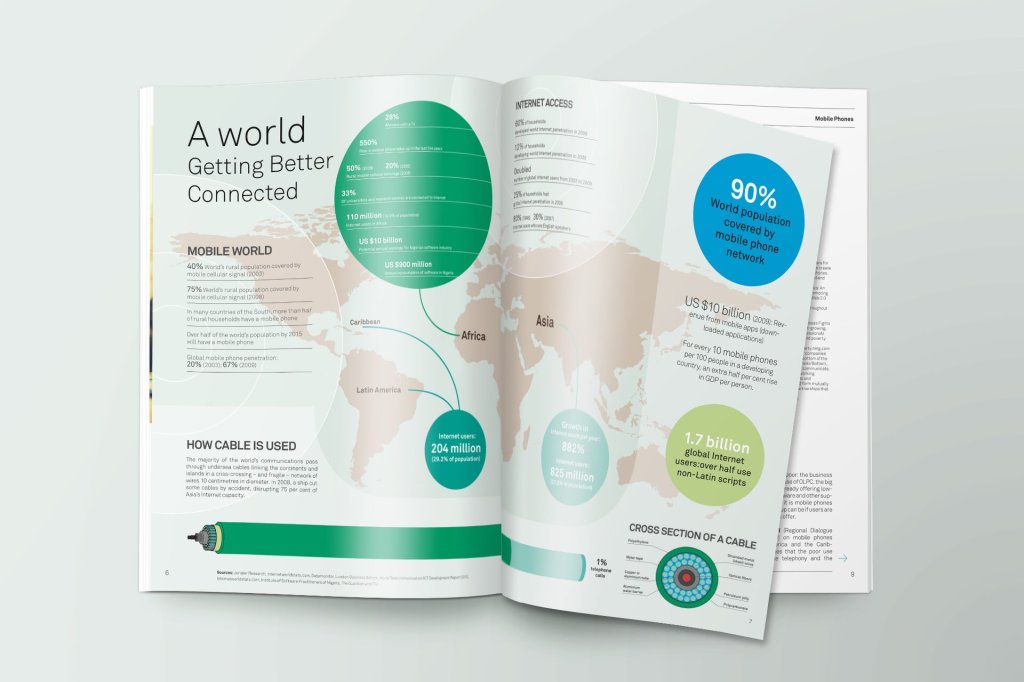
Development Challenges, South-South Solutions was launched as an e-newsletter in 2006 by UNDP’s South-South Cooperation Unit (now the United Nations Office for South-South Cooperation) based in New York, USA. It led on profiling the rise of the global South as an economic powerhouse and was one of the first regular publications to champion the global South’s innovators, entrepreneurs, and pioneers. It tracked the key trends that are now so profoundly reshaping how development is seen and done. This includes the rapid take-up of mobile phones and information technology in the global South (as profiled in the first issue of magazine Southern Innovator), the move to becoming a majority urban world, a growing global innovator culture, and the plethora of solutions being developed in the global South to tackle its problems and improve living conditions and boost human development. The success of the e-newsletter led to the launch of the magazine Southern Innovator.
“What a tremendous magazine your team has produced! It’s a terrific tour de force of what is interesting, cutting edge and relevant in the global mobile/ICT space… Really looking forward to what you produce in issues #2 and #3. This is great, engaging, relevant and topical stuff.”
Rose Shuman, Founder & CEO, Open Mind and Question Box
I had the pleasure of visiting the printing plant to witness the presses rolling with the first issue of new global magazine, Southern Innovator. The magazine has been in careful development and saw its name evolve from Creative Sparks to Southern Innovator. As Shakespeare noted in his play Romeo and Juliet, “What’s in a name? That which we call a rose, by any other name would smell as sweet.” And it is what Southern Innovator is that counts the most.
This first issue is just the beginning of a process, a back-and-forth dialogue with our readers as we refine and improve the magazine to boost its impact. The first issue’s theme – mobile phones and information technology – was chosen because of the sheer dynamism of this area and some jaw-dropping achievements: the growth of mobile phone usage in Africa represents an unprecedented take-up of a new technology, often in some of the poorest places on the planet. That impresses and it seemed right to share information about the amazing people behind this phenomenon and the lessons they learned along the way. It has also become clear in the research behind the monthly e-newsletter Development Challenges, South-South Solutions (published since 2006), that significant future development gains will not happen without the aid of mobile phones and information technology, and, important to note, will need these tools to raise living standards for all the world’s people in an environment of increasing competition and pressure for resources.
Used right, mobile phones and information technology allow the efficient use of resources. But, as anyone who has worked with technology knows, this isn’t a given. Vast sums of money and time can be squandered if technology is not used intelligently, or lessons not learned from past failures. It is hoped Southern Innovator‘s first issue can contribute to a better use of resources, and by taking a broad look at what is happening out there, enlighten readers to new ideas, people and concepts.
Southern Innovator is designed in Iceland by Graphic Designer and Illustrator Solveig Rolfsdottir.
“Question Box was featured in Southern Innovator, a new publication of UNDP that profiles some of the most innovative ideas coming out of the global South. We were pleased to see many friends in the sector profiled as well, such as Ushahidi, Medic Mobile, and TxtEagle. Take a look at the magazine, as it is a great primer on ICT and mobile innovation from around the globe.”
The new global magazine Creative Sparks now has a new name: Southern Innovator. It is off to the printer and shall be released very soon. Keep an eye here for more details as the magazine launches and rolls out across the globe. It is a complex endeavour to pull together a global magazine to a tight budget and this is only the beginning. A small but talented and experienced team have been working on the project and have received cooperation and assistance from many people spanning many countries. It is hoped the magazine will play a helpful role in the push to achieve the Millennium Development Goals as 2015 approaches.






 Southern Innovator is designed in Iceland by Graphic Designer and Illustrator Solveig Rolfsdottir.






 David South Consulting
You must be logged in to post a comment.