Tag: David South Consulting

  • Mountain People: Innovative Ways to Help the World’s Most Vulnerable

    Mountain People: Innovative Ways to Help the World’s Most Vulnerable

    By David SouthDevelopment Challenges, South-South Solutions

    SOUTH-SOUTH CASE STUDY

    Physically isolated and socially and politically marginalized, mountain dwellers are among the most vulnerable in the world, according to the Food and Agriculture Organization. A disproportionate number of the world’s 840 million chronically undernourished people live in highland areas — about 270 million mountain people lack food security, with 135 million suffering chronic hunger. Large numbers of additional people in lowland areas also depend on mountains.

    In October in Rome, more than 60 representatives from mountain countries around the world called for a coherent approach to sustainable agriculture and rural development in the world’s highland areas to address this crisis. First identified as a problem back at the 1992 Earth Summit in Rio, the degradation of mountain eco-systems and the poverty of those living there, has only worsened with increasing conflict and war. Mountain forests are rapidly vanishing across the globe.

    Mountains occupy 24 per cent of the earth’s landscape, and are home to 12 per cent of the world’s people; a further 14 per cent live beside mountains. Most are in the Andes, the Hengduan-Himalaya-Hindu Kush system, and a number of African mountains. Many mountain people are from ethnic minorities, and are often frozen out of political or commercial power. Poverty is common: more than 60 per cent of the rural Andean population lives in extreme poverty, and most of the 98 million Chinese considered to be among the world’s “absolute poor”, are ethnic minorities who live in mountains.

    Mountains make up a quarter of the world’s landscapes, and mountain watersheds are critical to water supply – up to 80 per cent of the planet’s fresh surface water comes from mountains. Over half of the world’s population depend on mountains for water, food, hydro-electricity, timber and mineral resources (UN University Mountain Programme).

    By their way of life, mountain peoples have expertise in small-hold farming, medicinal uses for native plants, and sustainable harvesting of food, fodder and fuel from forests.

    In China, the MinYiYuan company has developed a model to help the millions of impoverished Chinese in the countryside who are being left out of the country’s current economic boom. While many are migrating to the cities to work as labourers, mostly women and children are left behind in villages, with few options to support themselves.

    Cai Tingfen saw an opportunity to help the ethnic minority population of Liupanshui City in Guizhou Province. Founded in 2005, MinYiYuan bridges the handcraft culture of the region with the bigger national economy. Its model is unique: rather than buying ready-made handicrafts from craftspeople, MinYiYuan sets the design standards for the quality of the raw materials and sources them itself. This avoids problems with inconsistencies and guarantees customers get a reliably high-quality product. The craftspeople use these raw materials to make handcrafts in their homes, and the finished goods are bought back by the company.

    The company buys cotton, hemp and Chinese herbs from local farmers, luring them away from livelihoods that cause deforestation. In 2006, the MinYiYuan Folk Art Centre sold 60,000 (batik) wax prints, 8,000 embroideries, and 20,000 ethnic handicrafts. It made 1.13 million yuan (US $149.319). The company is ambitious, and is already looking to building a research and development base to integrate design, manufacturing, packaging and sales.

    Another model that is working is in the Philippines. After the Mount Pinatubo volcano eruptions in the early 1990s, the Aetas people of Luzon found their community was buried under ash and stone. Unable to work the land anymore and live off of the fish and wildlife, the Aetas were close to starvation. Many migrated to the cities to look for work: And without many relevant urban skills, most ended up living in squalor.

    One by-product of the volcanic explosion was vast quantities of pumice stone, used in the garment industry to produce ‘stone-washed’ denim. Entrepreneurs were soon turning up to gather the stones.

    The Asian Institute for Technology helped the Aeta people organize themselves in marketing social enterprises to gather, market and sell the stones to the many garment makers in the Philippines. By forming cooperatives, the Aeta are able to change the power dynamics with the garment companies: where they had to sell very cheaply to middlemen, the cooperatives enable them to charge more and make a liveable income, allowing them to stay in the community and avoid environmentally more harmful ways to make a living.

    In Peru, coffee growers in the mountains have banded together as a social enterprise and use market solutions to increase living standards. The Cepicafe brand in the Piura Mountains, promotes its Fair Trade practices to secure higher prices for the growers. It does this by countering the increasing competition in the coffee market and lower world prices for the beans, with better quality coffee grains and bypassing middlemen to access markets directly.

    Cepicafe raises the skills of the growers by providing education to increase productivity and quality, while reducing the farms ecological impact. The premium that fair trade is able to get is then used to improve the farmers’ lives with better housing, new clothes, shoes, better diets, and access to medicine.

    They have 51 grassroots member organizations, totaling to 4,800 small-scale coffee producers. Over 18 per cent are women. By introducing a business culture and using radio programmes to further spread knowledge, productivity and quality have increased.

    Cepicafe’s access to markets in the US and Europe means it can pay between 60 and 80 per cent more than local buyers.

    Published: November 2007

    Resources

    • Mountain Forum: created in 1995, it is a great resource for sustainable mountain development and conservation.
    • The Mountain Institute: A non-profit organization dedicated to conservation, community development and cultural preservation in the Andean, Appalachian and Himalayan mountain ranges.
    • Adelboden Group: Established in 2002, it exists as a forum to discuss mountain policies, exchange experience and coordinate planning.

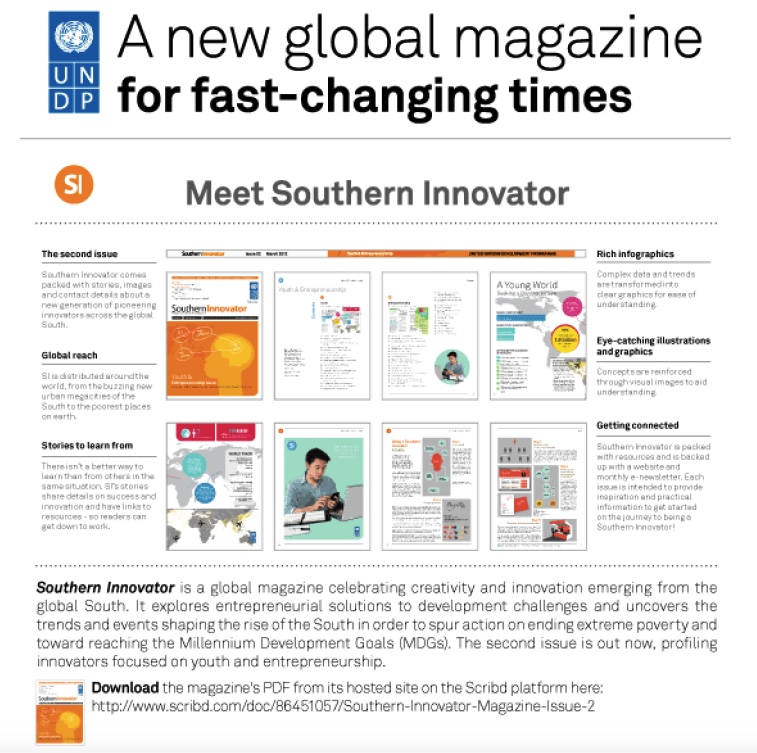
    Development Challenges, South-South Solutions was launched as an e-newsletter in 2006 by UNDP’s South-South Cooperation Unit (now the United Nations Office for South-South Cooperation) based in New York, USA. It led on profiling the rise of the global South as an economic powerhouse and was one of the first regular publications to champion the global South’s innovators, entrepreneurs, and pioneers. It tracked the key trends that are now so profoundly reshaping how development is seen and done. This includes the rapid take-up of mobile phones and information technology in the global South (as profiled in the first issue of magazine Southern Innovator), the move to becoming a majority urban world, a growing global innovator culture, and the plethora of solutions being developed in the global South to tackle its problems and improve living conditions and boost human development. The success of the e-newsletter led to the launch of the magazine Southern Innovator.

    Creative Commons License

    This work is licensed under a
    Creative Commons Attribution-Noncommercial-No Derivative Works 3.0 License.

    ORCID iD: https://orcid.org/0000-0001-5311-1052.

    © David South Consulting 2022

  • Chinese Trade in Angola Helps Recovery

    Chinese Trade in Angola Helps Recovery

    By David SouthDevelopment Challenges, South-South Solutions

    SOUTH-SOUTH CASE STUDY

    Two-way trade between Africa and China has been an outstanding success story of the past decade. It has led to significant new investment in the continent and brought many new job opportunities. The Chinese community in Africa comprises a mix of entrepreneurs and workers. In formerly war-torn Angola, Chinese workers and investors have led an economic boom as the country recovers from decades of conflict.

    The Chinese are generally young, well-educated, English-speaking, ambitious and hard-working. Estimates put the number of Chinese people in Angola at 100,000, and about 1 million across Africa.

    The reason these bright young things need to come to Africa goes back to the essential reality of modern China: despite rapid economic growth, per capita incomes classify it as a poor country. While the outside world sees the glitzy, go-go progress of China’s cities, the country’s rural poor go unseen. Around 400 million of China’s 1.3 billion people have annual per-capita income equivalent to US $8,000, while the remaining 900 million have per-capita incomes as little as one-tenth that amount.

    Some 6.3 million people in China will graduate this year from university, and it is still very hard for a well-educated Chinese person to get a good job right away. More than a quarter of these graduates will be unemployed, according to the Education Ministry.

    There has also been disquiet in parts of Angola over China’s role, with some calling it “neo-colonialism”. But clearly, both Africa and China have much to gain by increasing cooperation.

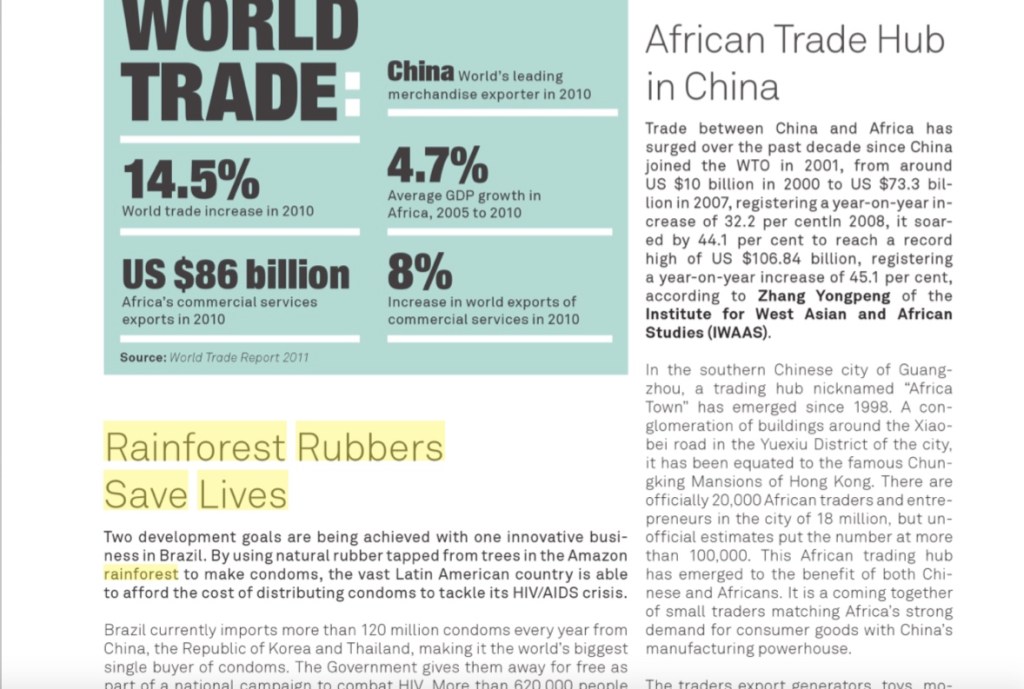
    In the southern Chinese city of Guangzhou (http://en.wikipedia.org/wiki/Guangzhou), a trading hub nicknamed “Africa Town” has emerged since 1998. There are officially 20,000 African traders and entrepreneurs in the city of 18 million, but unofficial estimates put the number at more than 100,000. This African trading hub has emerged to the benefit of both the Chinese and Africans. It is a coming together of small traders matching Africa’s strong demand for consumer goods with China’s manufacturing powerhouse.

    In Angola, the mix of entrepreneurs and workers is having a big impact on the country’s development.

    Betty, a 22-year-old Chinese woman who has various projects in Angola, including the local Chinese language newspaper, is a typical go-getter.

    “I am doing much better here than if I had stayed in China,” she told the BBC.

    Another beneficiary of the two-way trade is Deng, a construction a worker: “I earn twice as much as I would at home and I have got a better job,” he said.

    For most Chinese, foreign travel is still rare and the excitement of going to Africa to work both attracts and repels because of the continent’s reputation.

    “At first I found it frightening, “said Wang. “You hear lots of stories of Chinese people being robbed by the locals.” But he found “there are great opportunities here.”

    Another, Jet, who runs an air conditioning business, came to Angola five years ago.

    “Everything had been destroyed,” he recalled. “There were no roads, railways, shops, nothing. Some Western companies were already here selling their products but I knew I could import things cheaper from China.”

    The large infrastructure projects being undertaken by major Chinese companies are also creating new opportunities. Many Chinese labourers are working on building roads, railways, hospitals and vast housing complexes.

    One of the more visible symbols of Chinese investment in Angola is the restoration of the Benguela Railway (http://en.wikipedia.org/wiki/Benguela_railway), considered one of the great routes of Africa and built by British contractors. An engineering triumph, its 1,344 kilometres (835 miles) of track stretch up the Angolan coast, right into southern Congo. The railway took almost 30 years to build in the late 19th and early 20th centuries, but little remained. Until very recently all but a tiny stretch of the line was closed. Now Chinese investment is rebuilding the railway and bringing economic improvement in its wake.

    “I couldn’t do this before the railway was fixed,” a woman using the train to get to the market to sell her plump red tomatoes told the BBC. “Before, I had to travel by car which was much more expensive.”

    And her income has improved along with the refurbished railway. “I am not rich, but a bit richer,” she said.

    And unlike the British, who used the railway to export copper without paying for the resource, the Chinese labourers are getting paid and the Angolan government is paying back the Chinese loan for the railway repairs by selling oil overseas for a market rate.

    Published: October 2010

    Resources

    https://davidsouthconsulting.org/2022/06/02/afghanistans-juicy-solution-to-drug-trade/

    https://davidsouthconsulting.org/2022/11/02/african-online-supermarket-set-to-boost-trade/

    https://davidsouthconsulting.org/2022/10/26/african-trade-hub-in-china-brings-mutual-profits-2/

    https://davidsouthconsulting.org/2022/04/12/djibouti-re-shapes-itself-as-african-trade-hub/

    https://davidsouthconsulting.org/2021/07/19/global-south-trade-boosted-with-increasing-china-africa-trade-in-2013/

    https://davidsouthconsulting.org/2022/10/26/perfume-of-peace-helps-farmers-switch-from-drug-trade/

    https://davidsouthconsulting.org/2021/07/19/south-south-trade-helping-countries-during-economic-crisis/

    https://davidsouthconsulting.org/2021/03/05/southern-innovator-issue-2/

    https://davidsouthconsulting.org/2022/11/01/southern-innovator-magazine-2010-2014/

    https://davidsouthconsulting.org/2022/10/20/trade-to-benefit-the-poor-up-in-2006-and-to-grow-in-2007/

    https://davidsouthconsulting.org/2022/10/05/women-empowered-by-fair-trade-manufacturer/

    https://davidsouthconsulting.org/2022/06/16/women-mastering-trade-rules/

    Development Challenges, South-South Solutions was launched as an e-newsletter in 2006 by UNDP’s South-South Cooperation Unit (now the United Nations Office for South-South Cooperation) based in New York, USA. It led on profiling the rise of the global South as an economic powerhouse and was one of the first regular publications to champion the global South’s innovators, entrepreneurs, and pioneers. It tracked the key trends that are now so profoundly reshaping how development is seen and done. This includes the rapid take-up of mobile phones and information technology in the global South (as profiled in the first issue of magazine Southern Innovator), the move to becoming a majority urban world, a growing global innovator culture, and the plethora of solutions being developed in the global South to tackle its problems and improve living conditions and boost human development. The success of the e-newsletter led to the launch of the magazine Southern Innovator.

    Creative Commons License

    This work is licensed under a
    Creative Commons Attribution-Noncommercial-No Derivative Works 3.0 License.

    ORCID iD: https://orcid.org/0000-0001-5311-1052.

    © David South Consulting 2023

  • Ecotourism to Heal the Scars of the Past

    Ecotourism to Heal the Scars of the Past

    By David SouthDevelopment Challenges, South-South Solutions

    SOUTH-SOUTH CASE STUDY

    The legacy of underdevelopment during the communist era in parts of Eastern Europe is now being seen as an advantage in the global tourism trade. Well off the beaten path for tourists, areas as diverse as Chechnya and Romania are working to turn their rustic rural hinterlands into a strategic advantage in grabbing the market for ecotourists. Ecotourism – tourism that takes people to fragile and beautiful areas – is one of the tourism industry’s fastest growing areas.At stake is the lucrative and ever-growing world tourism market. Global tourist arrivals passed 800 million in 2006, with tourism in the world up by 5.5 per cent (World Tourism Organization), earning US $680 billion globally. In 1993, just seven per cent of travel was nature tourism; that share has now passed 20 per cent.

    Romania, now a member of the European Union, boasts rural countryside like Europe of old: all hillsides are common land and there are no walls or fences to impede the view. Life is heavily dominated by agriculture and the rhythms of farm life.

    Southern Transylvania is a high plateau of wooded hills and valleys and shielded by the Carpathian Mountains.

    “The Carpathians of central and eastern Europe,” said Achim Steiner, head of the UN Environment Programme, “are among the world’s richest regions in terms of biodiversity and pristine landscapes. I have no doubt that the Carpathians, like the Alps, the Himalayas and the Rocky Mountains, will become world famous for walking, hiking, climbing, wildlife watching, photography and similar leisure pursuits.”

    In order to preserve this way of life and generate income, various schemes are encouraging low-key tourism. This takes the form of renovating decaying farm buildings for guesthouses. The guesthouses are kept clean and simple and the focus is on typical local food like hearty stews and soups and pork sausages.

    Much of this has been paid for by the Mihai Emenescu Trust, a charity seeking to preserve the traditions of the Saxon villages.

    Patrick Holden of the Soil Association, a patron of the Mihai Eminescu Trust, thinks the organic agricultural methods of the local farmers could be a model for the rest of Europe.

    Romania is also part of the Organization for Black Sea Economic Cooperation (BSEC), which is taking the lead in promoting ecotourism as an economic development option.

    Ex-communist nation Bulgaria has also turned to ecotourism, launching its “Ecotourism: Naturally Bulgaria” campaign in September.

    Even the once-war-torn Russian republic of Chechnya is trying to radically re-shape people’s perceptions. It is hard to believe, but the former site of a bitter civil war that left the capital Grozny in ruins now wants to be Russia’s Switzerland.

    Shatoy region in southern Chechnya, during Soviet times, saw 20,000 visitors every month to ski, ride horses, and hike in the Caucasus Mountains. The new government plans to spend UK £40 million on new hotels, reconstructing old holiday camps, building spas and health centres. The region’s head of government, Mr Khasukha Demilkhanov, is confident that natural beauty can compete with the West: in the Argun Gorge, he pointed out to the Guardian newspaper, the scene is reminiscent of a 19th century woodcutting. Stone towers litter the hills, alpine meadows are full of wild flowers, the mountains are snow-capped and new roads have been built.

    The Chechens hope to start with Russian holidaymakers and extreme tourists from the West, before moving more into the mainstream market.

    Published: October 2007

    Resources

    • Ecotourism.org: The International Ecotourism Society.
    • Ecotourism Kazakhstan: Kazakhstan has put together a dedicated website on ecotourism.
    • Planeta: one of the first ecotourism resources to go online (since 1994) and still offers plenty of information for those wanting to start a business.

    https://davidsouthconsulting.org/2022/10/20/african-tourism-leads-the-world-and-brings-new-opportunities/

    https://davidsouthconsulting.org/2022/10/20/africas-tourism-sector-can-learn-from-asian-experience/

    https://davidsouthconsulting.org/2022/02/07/boosting-tourism-in-india-with-surfing-culture/

    https://davidsouthconsulting.org/2022/09/27/caribbean-island-st-kitts-goes-green-for-tourism/

    https://davidsouthconsulting.org/2023/02/03/environmental-public-awareness-handbook-case-studies-and-lessons-learned-in-mongolia/

    https://davidsouthconsulting.org/2022/11/21/from-warriors-to-tour-guides/

    https://davidsouthconsulting.org/2022/11/23/kenyan-safari-begins-minutes-from-airport/

    https://davidsouthconsulting.org/2021/08/07/mongolian-green-book/

    https://davidsouthconsulting.org/2022/10/10/a-solution-to-stop-garbage-destroying-tourism/

    https://davidsouthconsulting.org/2021/03/05/southern-innovator-issue-2/

    https://davidsouthconsulting.org/2021/03/05/southern-innovator-issue-5/

    https://davidsouthconsulting.org/2023/01/17/war-peace-and-development-may-2018/

    Development Challenges, South-South Solutions was launched as an e-newsletter in 2006 by UNDP’s South-South Cooperation Unit (now the United Nations Office for South-South Cooperation) based in New York, USA. It led on profiling the rise of the global South as an economic powerhouse and was one of the first regular publications to champion the global South’s innovators, entrepreneurs, and pioneers. It tracked the key trends that are now so profoundly reshaping how development is seen and done. This includes the rapid take-up of mobile phones and information technology in the global South (as profiled in the first issue of magazine Southern Innovator), the move to becoming a majority urban world, a growing global innovator culture, and the plethora of solutions being developed in the global South to tackle its problems and improve living conditions and boost human development. The success of the e-newsletter led to the launch of the magazine Southern Innovator.

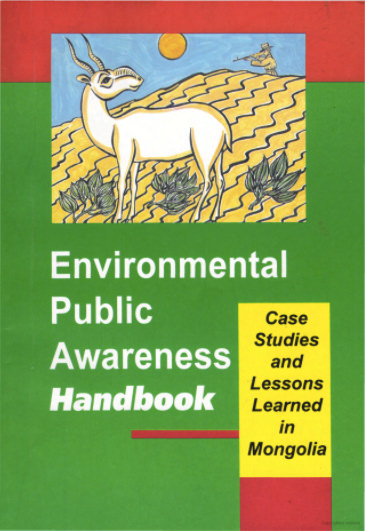
    Environmental Public Awareness Handbook: Case Studies and Lessons Learned in Mongolia by Robert Ferguson.
    Environmental Public Awareness Handbook: Case Studies and Lessons Learned in Mongolia by Robert Ferguson.
    Creative Commons License

    This work is licensed under a
    Creative Commons Attribution-Noncommercial-No Derivative Works 3.0 License.

    ORCID iD: https://orcid.org/0000-0001-5311-1052.

    © David South Consulting 2023

  • Session 4: Political Economy Dimensions of Crisis

    Session 4: Political Economy Dimensions of Crisis

    A Report from the UN Conference on the Social and Political Dimensions of the Global Crisis: Implications for Developing Countries (12-13 November 2009)

    Organised by the United Nations Research Institute for Social Development (UNRISD), Geneva, Switzerland. Held at the Palais des Nations.

    Just as now (2021) 2009 was a year in which the questions revolved around receiving a vaccine (for H1N1) and how best to affirm a person’s identity and citizenship.

    Session 4: Political Economy Dimensions of Crisis

    A message of hope came from Bjorn Beckman of Stockholm University. He believed alternatives lie to the neo-liberal orthodoxy elsewhere, not in welfare capitalism but in places where workers are on the rise. They will provide the backbone to popular movements in the future. And this means new alliances have to be re-defined, the face of the balance of forces being massively against the working class and their organisations.

    The ability of trade unions to defend workers’ rights depends on reaching out to the informal economy, where so many now work.

    The impact of the crisis in South Africa has reinforced opposition to neo-liberalism, where auto and garment workers have suffered greatly. This has led to them pressuring government to introduce more reforms.

    Nigeria chose to push with deregulation in the face of the crisis but found serious opposition. With a government that is corrupt and inefficient, the current crisis intensifies contradictions.

    And he concluded that beleaguered unions in the North can only resist if they ally themselves with the South. The current crisis will not deliver change that is more democratic or increase workers’ rights. Instead, it presents more opportunity to suppress and to extort concessions. In short, no changes to the anti-union logic of neo-liberalism.

    Another country to think it would not be severely affected by the crisis is South Africa. Yet, as Seeraj Mohammed of the University of the Witwatersrand pointed out, this is not the case.

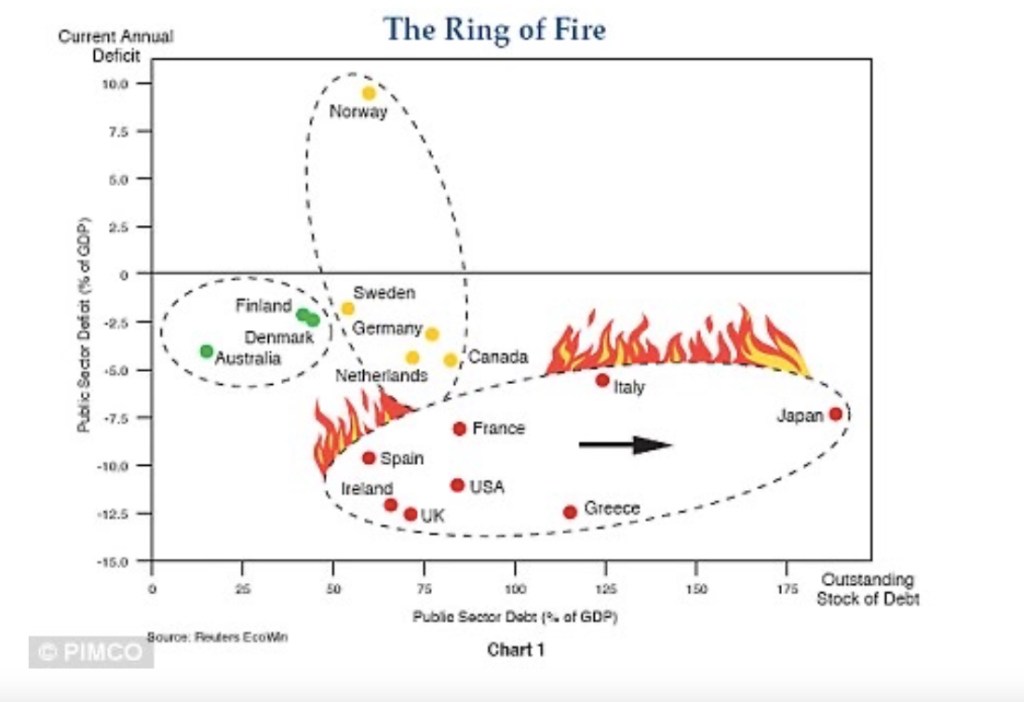
    Conventional wisdom in South Africa thought the economy and the country’s financial institutions were not caught up in the bubble mania. Yet, in reality, the dynamic was the same as was happening in the United States.

    South Africa experienced debt-ridden consumption and the wrong kind of growth. There was limited social and infrastructure investment, property bubbles were allowed to happen, and liberalisation supported the financialisation of the economy. There was a casualisation of jobs, tending towards not high skill. For example, cleaning services rather than manufacturing. And the crisis has just made things worse.

    During the crisis to date, 1 million jobs in manufacturing and services have been lost, many connected to the debt-driven economy. Unemployment is estimated to be between 22 percent and 40 percent.

    There was significant growth in household consumption since 2003. Yet the flow of credit into the country went into financial assets, most of it into mortgages and credit cards. It was not invested.

    Emma Allen from the International Labor Organization (ILO) focused on African cooperatives in the crisis. She found coops, by their structure, were both prescient – they had flagged up systemic problems in the economic system as far back as 2004 – and resilient, continuing to grow their memberships. They were not, however, immune to being hurt. In Africa, many members of financial coops had made the mistake of investing their funds in pyramid schemes/scams that then went bust in the crisis.

    Ying Yu from the University of Durham found Chinese workers were withdrawing from the public pension system in the crisis. The vast number of migrant workers within China have learned protests are effective, and are using the internet to mobilise support.

    Yu suggested new responses are required. These include third way localism and building mutual trust, collaboration between public/private sectors, for intellectuals to go local, and to forge specific action plans based on local characteristics.

    A Report from the UN Conference on the Social and Political Dimensions of the Global Crisis: Implications for Developing Countries (12-13 November 2009)

    Session 2: Social Policy: Country and Regional Perspectives

    Session 3: Social Policy: Global Perspective

    Session 4: Political Economy Dimensions of Crisis

    Relevant stories previously covered in Development Challenges, South-South Solutions:

    Making the World a Better Place for Southern Projects (https://davidsouthconsulting.wordpress.com/south-south-case-studies/development-challenges-south-south-solutions/making-the-world-a-better-place-for-southern-projects/)

    Toilet Malls Make Going Better (https://davidsouthconsulting.wordpress.com/south-south-case-studies/development-challenges-south-south-solutions/toilet-malls-make-going-better/)

    SOS Shops Keep Food Affordable for Poor, Unemployed (https://davidsouthconsulting.wordpress.com/south-south-case-studies/development-challenges-south-south-solutions/sos-shops-keep-food-affordable-for-poor-unemployed/)

    Rainforest Gum Gets Global Market (https://davidsouthconsulting.wordpress.com/south-south-case-studies/development-challenges-south-south-solutions/rainforest-gum-gets-global-market/)

    Disabled Congolese Musicians Become World Hit (https://davidsouthconsulting.wordpress.com/south-south-case-studies/development-challenges-south-south-solutions/disabled-congolese-musicians-become-world-hit/)

    Other articles on the Global Crisis:

    “Prepare for Global Collapse”: http://www.telegraph.co.uk/finance/economics/6599281/Societe-Generale-tells-clients-how-to-prepare-for-global-collapse.html

    This work is licensed under a Creative Commons Attribution 4.0 International License.

    ORCID iD: https://orcid.org/0000-0001-5311-1052.

    © David South Consulting 2021