Categories
Archive data Development Challenges, South-South Solutions Newsletters Southern Innovator magazine

Vietnam Launches Low-cost, High-Quality Video Game

By David SouthDevelopment Challenges, South-South Solutions

SOUTH-SOUTH CASE STUDY

The creative economy offers huge opportunities to the countries of the global South. With the proliferation of new technologies – mobile phones, digital devices, personal computers with cheap or free software, the Internet – the tools to hand for creative people are immense. This begins to level the playing field and allows hardworking and talented people in poor countries to start to compete directly with those in wealthy countries.

One case of this dynamic at work is the computer and video games industry. Once, they were only created by ‘first world’ nations like Japan, the United States and the United Kingdom. And then came South Korea, as its prosperity increased through the 1980s and 1990s. And then China got in on the game. And India.

And now innovators in Vietnam are using the medium to make money, and tell a story from a distinctly Vietnamese perspective. And that story is the long-running Vietnam wars that engulfed the country, from the 1950s through the 1960s until 1975 when the last of the United States’ helicopters left Saigon, then the capital of South Vietnam.

Emobi Games (http://emobigames.vn) from Hanoi, unified Vietnam’s current capital, uses the motto “Enjoy challenges.” Launched in 2011 by founder and director Nguyen Tuan Huy, it has created 7554, a game that places players in the shoes of a Vietnamese soldier during the independence war against the French. Cleverly, it also comes at a competitive price: US $12.

The game’s name refers to May 7, 1954, the day the French army in Dien Bien Phu surrendered to the Vietnamese People’s Army. This led to the end of the European colonial power’s occupation of its Indochinese colonies. The high death toll and sacrifice from the wars with France and the United States still resonate in the country, and the game reflects this.

A young team of 20 developers worked on the project for three years. It cost the company an estimated US $802,748 to complete. It was extensively researched to ensure historical accuracy.

“Dien Bien Phu is a great victory that we are proud of. That day, 7th of May 1954, is a symbol of our strength,” Huy told Ars Technica (http://arstechnica.com).

“I think it is similar to what Americans feel when they celebrate July 4th. Independence is very important and something worth fighting for. It is also something worth honouring.”

The game is the end product of an intense struggle to prove critics and sceptics wrong. Many doubted the company could deliver a product that could compete with the more established players. The video game market for firstperson shooters – where the player uses a weapon to engage in first-person combat – has been transformed in the last decade. Many games are highly sophisticated products akin to major films. The Call of Duty (callofduty.com) franchise is a good example. These games have elaborate graphics and story concepts, often use professional actors and come with high-cost, high-publicity marketing campaigns to back up game launches.

The money at stake is significant: the global video games market is estimated to be worth US $65 billion in 2011 (Reuters). Game makers Activision Blizzard, makers of Call of Duty, had an annual revenue of US $4.8 billion.

On its website, Emobi proudly takes on the doubters: “We are a very young company in Vietnam, currently we focus on one task: Building a successful PC Video Game for the Vietnamese. Most Vietnamese don’t believe that Vietnam can produce (a) PC Video Game.

“We, the young people, think about this as a challenge, and want to overcome that. Maybe we will fail, maybe we will succeed. But that’s not important. (It is) Important that it must be time for the Vietnamese Game.”

Huy admits it was a struggle to make the game.

“Video games, films or any kind of entertainment in our country must adhere to certain standards,” explains Huy. “Entertainment must not be too violent or too sexy. Our government policy is stricter than other countries, especially when compared to Western countries.”

Vietnam regulates gaming in various ways including limiting how long people can play online and the opening hours for Internet cafes.

Out of a population of over 86 million people (World Bank) it is believed Vietnam has 12 million video gamers: a substantial market in the country alone. They play games from around the world and increasingly are willing to pay for legal licenses. This is a key development, since getting gamers to pay represents a revenue stream. With revenue, players in the global South can contribute to the building of their home-grown businesses to become big players.

“The video game industry is just in its infancy,” said Huy. “We only have four studios that develop major games. Most work on online games. There are not many people who work in game development. Those that do are self-taught. There are no universities that provide education in games development. We learn by doing, failing and doing it again until we get it right.”

Viewing warfare through non-Western eyes is part of the game’s unique selling point, Huy says.

“American gamers have not been exposed to many war games where they play as a soldier who is not of American or British background. I think some may find this perspective refreshing.”

Huy said that “7554 may give some gamers a new perspective. But what is most important is that we create a game that is fun to play.

“We think we have created a game that FPS (first person shooter) shooter fans will enjoy. The price point is low so that will hopefully allow more people to play the game. I think gamers understand that a good game can come from anywhere in the world. I think gamers are willing to experience different cultures through games, so long as the experience is enjoyable.”

The 7554 game is scheduled to be launched in the United States and France in February 2012 for personal computers.

In the future, the company hopes to raid history for more battle scenarios to create new games.

“Unfortunately there have been many battles fought, so we have a full history to pull from in order to create games,” Huy said.

Published: January 2012

Resources

1) Animation Xpress Asia Pacific: A website packed with interviews and resources for the animation community.Website: http://www.axapac.com

2) How to make video games: An online website with step-by-step resources to get started. Website:http://www.make-video-games.com

3) Changing Dynamics of Global Computer Software and Services Industry: Implications for Developing Countries:A report from UNCTAD on how computer software can become the most internationally dispersed high-tech industry. Website:http://www.unctad.org/templates/webflyer.asp?docid=1913&intitemid=2529&lang=1

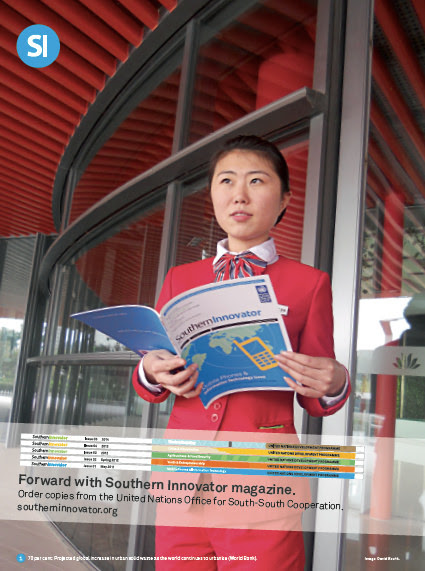
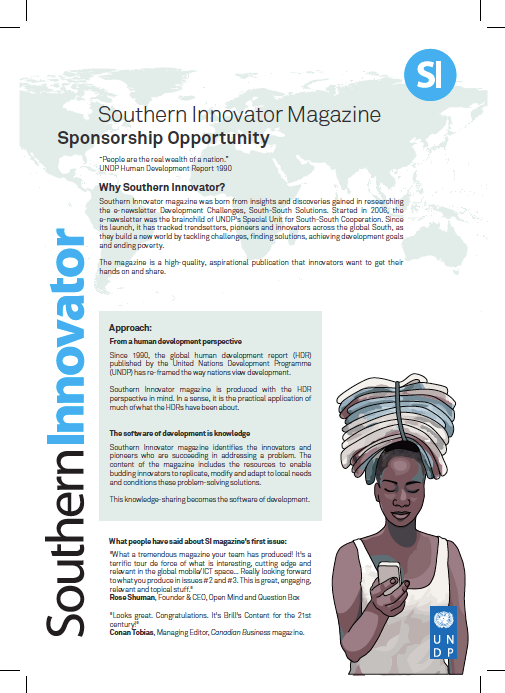
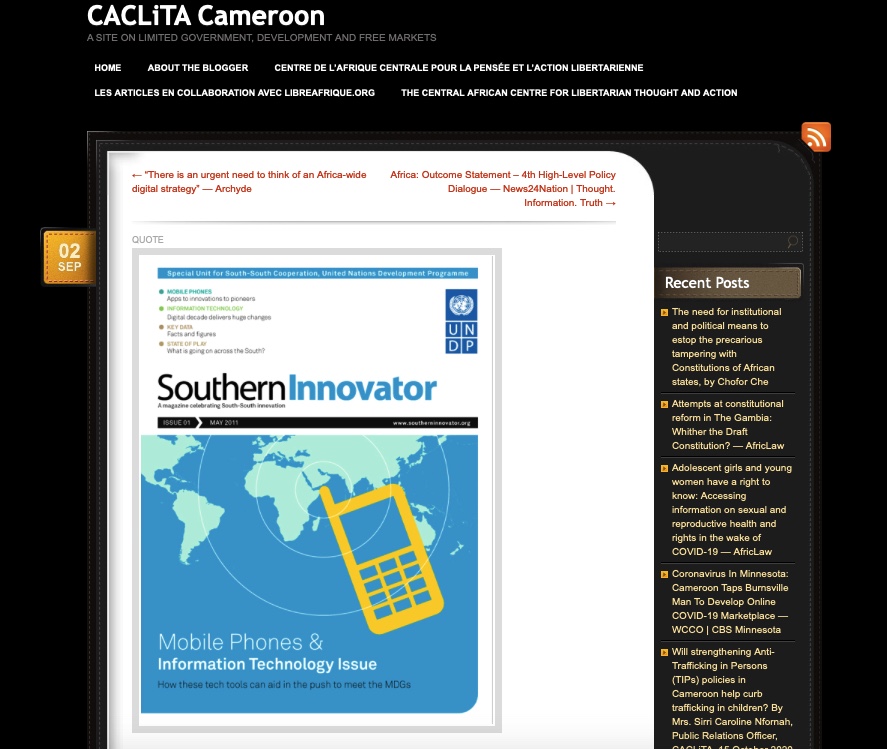
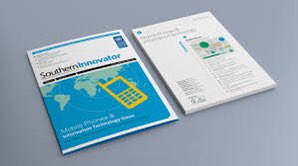
4) Southern Innovator: A new magazine launched by UNDP’s Special Unit for South-South Cooperation. The first issue’s theme is mobile phones and information technology. Website: http://www.southerninnovator.org

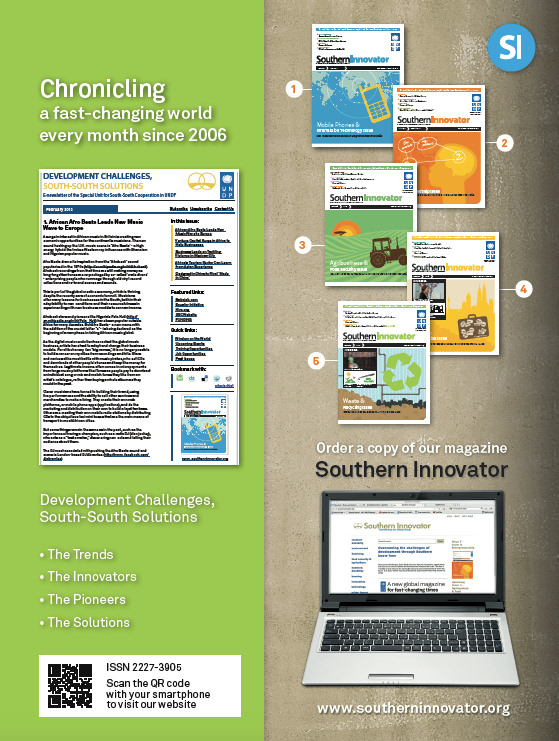
Development Challenges, South-South Solutions was launched as an e-newsletter in 2006 by UNDP’s South-South Cooperation Unit (now the United Nations Office for South-South Cooperation) based in New York, USA. It led on profiling the rise of the global South as an economic powerhouse and was one of the first regular publications to champion the global South’s innovators, entrepreneurs, and pioneers. It tracked the key trends that are now so profoundly reshaping how development is seen and done. This includes the rapid take-up of mobile phones and information technology in the global South (as profiled in the first issue of magazine Southern Innovator), the move to becoming a majority urban world, a growing global innovator culture, and the plethora of solutions being developed in the global South to tackle its problems and improve living conditions and boost human development. The success of the e-newsletter led to the launch of the magazine Southern Innovator. 

Creative Commons License

This work is licensed under a
Creative Commons Attribution-Noncommercial-No Derivative Works 3.0 License.

ORCID iD: https://orcid.org/0000-0001-5311-1052.

© David South Consulting 2023

Categories
Archive Development Challenges, South-South Solutions Newsletters

Frugal Innovation Trend Meets Global South’s Innovation Culture

By David SouthDevelopment Challenges, South-South Solutions

SOUTH-SOUTH CASE STUDY

There is a trend occurring across the global South that some are calling the next great wave of innovation. It has different names but many are dubbing it ‘frugal innovation’. Frugal innovation is basically innovation done with limited resources and investment. In short, innovation on the cheap but packing a big punch.

The phenomenon has several strands. One involves innovators and companies from the developed world setting up in the developing world and beta testing their inventions and innovations there. Another strand involves innovators in companies and governments in the global South increasingly targeting the so-called ‘BOP’ – bottom of the pyramid – market of the poor.

Another strand is focused on capitalizing on innovations for tackling the problems of the poor that are coming from the poor. Many of these innovations are improvised solutions. They may not be slick but they solve a problem.

And finally, there are companies and entrepreneurs in the global South taking their innovations to the markets of the wealthy, developed countries and finding a welcome reception from price-savvy consumers.

In the global South, frugal innovation is transforming lives – and it is finding its way into developed, wealthy countries too. It has been celebrated in the new book Jugaad Innovation: A Frugal and Flexible Approach to Innovation for the 21st Century (http://jugaadinnovation.com/) by Navi Radjou, Jaideep Prabhu and Simone Ahuja. The authors are innovation experts with a wide mix of backgrounds, from an academic to a Silicon Valley “thought leader and strategic consultant” to the founder of a marketing and strategy consultancy specialising in emerging markets innovation.

The authors propose “jugaad innovation” as a solution to the urgent need to innovate quickly and efficiently in a fast-changing world where little can be taken for granted. This breed of frugal innovation comes from India. Jugaad is a Hindi word (http://en.wikipedia.org/wiki/Jugaad) and basically means a work-around, improvised solution to a problem because it is cheaper. This is commonly used to describe makeshift vehicles people construct in India (http://wheels.blogs.nytimes.com/2011/03/25/jugaad-cheaper-than-a-nanobut-watch-for-splinters/).

As champions of the jugaad philosophy, the authors proclaim the old innovation paradigm is obsolete. The idea that throwing more capital and more resources at a problem will boost innovation, no longer works, they contend. Better results can come from being frugal and flexible. Being more creative allows for a fluid and improvised innovation culture to develop.

“In today’s interconnected world powered by social media, top-down R&D (research and development) systems struggle to open up and integrate the bottom-up input from employees and customers,” the authors say on their website.

“Jugaad on the other hand is flexible, frugal and democratic: it is often bottomup rather than top-down and involves a much larger number of people beyond those who are typically tasked with doing innovation in corporations. The strength of jugaad innovators lies in their ability to get more from less,experiment continually, and creatively engage people who are typically left out of the innovation process.”

And they have a message for the Western, developed nations. They must look to “places like India, China, and Africa for a new, bottom-up approach to frugal and flexible innovation,” if they want to experience continuing prosperity in the 21st century.

For global South inventors, entrepreneurs and manufacturers, this will prove a great opportunity. As debt-laden Western consumers deal with their lower spending power and incomes, they will be looking for products that cost less and yet tackle problems and improve their standard of living with minimal expenditure.

The Indian company Mahindra and Mahindra (http://www.mahindra.com/What-We-Do/automotive) sells its small tractors to American hobby farmers. The Chinese company Haier (http://www.haier.net/en/about_haier/haier_global/china/) has a range of frugal products that have become popular sellers. They include air conditioners, washing machines and wine coolers. Haier is so successful with these products it has been able to capture 60 per cent of the market in these categories in the United States.

Some of the hallmarks of frugal products are their efficient production, rapid development cycle, lower price point, and appeal to poorer customers.

The book argues that adopting a “jugaad” mindset will enable people and companies to innovate “faster, better and cheaper,” “generate breakthrough growth” and “outperform competition.”

“Jugaad innovation has three major benefits. First, it is frugal: it enables innovators to get more with less. Second, it is flexible: it enables innovators to keep experimenting and rapidly change course when needed. Third: it is democratic: it can therefore tap into the wisdom of otherwise marginalized customers and employees.”

“In contrast to the traditional structured approach to innovation, jugaad is inherently more customer-centric rather than technology or product centric.

Because jugaad innovators seek to solve a customer problem first and then develop a suitable solution, jugaad is more market-based than more structured approaches (that may be driven by the motivation to develop technology for technology’s sake) are.”

There are so many of these innovations and inventions happening, a culture has emerged to gather and document them and share them with others.

A good advocate of jugaad innovators in India is the Honey Bee Network (http://www.sristi.org/hbnew/). It has been building a database of grassroots innovation and knowledge (http://www.sristi.org/hbnew/augment_innovation.php).

But this dynamic innovators culture is not limited to India. Across Africa,information technology hubs and start-ups have been sprouting up. One of the more well-known is the iHub in Nairobi, Kenya (http://ihub.co.ke/pages/home.php) but there are centres of information technology innovation in Ghana, South Africa, Uganda and Nigeria.

One of the more outstanding and pioneering chroniclers of this frugal innovation culture in Africa has been the Afrigadget website (afrigadget.com).

It is packed with home-grown inventions. These include a young Kenyan boy using a rigged network of light bulbs to ward of lions from the cattle herd, a mobile phone security system for cars, and a home-made remote control toy car for children. Another great way to see this movement in action is at the Maker Faire Africa (http://makerfaireafrica.com/) which has been bringing together every year “handcrafters from Africa’s tiniest villages to her most expansive urban burgs”.

Published: May 2012

https://davidsouthconsulting.org/2022/10/05/african-innovation-eco-system-taking-shape/

https://davidsouthconsulting.org/2022/10/24/flurry-of-anti-poverty-innovations/

https://davidsouthconsulting.org/2022/11/16/housing-innovation-in-souths-urban-areas/

https://davidsouthconsulting.org/2022/11/11/innovation-cairos-green-technology-pioneers/

https://davidsouthconsulting.org/2020/04/27/innovation-from-the-global-south/

https://davidsouthconsulting.org/2022/04/28/innovation-in-the-slums-can-bring-peace-and-prosperity/

https://davidsouthconsulting.org/2021/10/22/innovations-in-green-economy-top-three-agenda/

https://davidsouthconsulting.org/2022/10/27/kenyan-mobile-phone-innovations/

https://davidsouthconsulting.org/2022/10/09/next-generation-of-innovation-for-the-grassroots/

https://davidsouthconsulting.org/2021/03/05/southern-innovator-issue-1/

https://davidsouthconsulting.org/2021/03/05/southern-innovator-issue-2/

https://davidsouthconsulting.org/2021/03/05/southern-innovator-issue-3/

https://davidsouthconsulting.org/2021/03/05/southern-innovator-issue-4/

https://davidsouthconsulting.org/2021/03/05/southern-innovator-issue-5/

Development Challenges, South-South Solutions was launched as an e-newsletter in 2006 by UNDP’s South-South Cooperation Unit (now the United Nations Office for South-South Cooperation) based in New York, USA. It led on profiling the rise of the global South as an economic powerhouse and was one of the first regular publications to champion the global South’s innovators, entrepreneurs, and pioneers. It tracked the key trends that are now so profoundly reshaping how development is seen and done. This includes the rapid take-up of mobile phones and information technology in the global South (as profiled in the first issue of magazine Southern Innovator), the move to becoming a majority urban world, a growing global innovator culture, and the plethora of solutions being developed in the global South to tackle its problems and improve living conditions and boost human development. The success of the e-newsletter led to the launch of the magazine Southern Innovator.  
Follow @SouthSouth1

Google Books: https://books.google.co.uk/books?id=m5GYBgAAQBAJ&dq=development+challenges+may+2012&source=gbs_navlinks_s

Slideshare: http://www.slideshare.net/DavidSouth1/development-challengessouthsouthsolutionsmay2012issue

Southern Innovator Issue 1: https://books.google.co.uk/books?id=Q1O54YSE2BgC&dq=southern+innovator&source=gbs_navlinks_s

Southern Innovator Issue 2: https://books.google.co.uk/books?id=Ty0N969dcssC&dq=southern+innovator&source=gbs_navlinks_s

Southern Innovator Issue 3: https://books.google.co.uk/books?id=AQNt4YmhZagC&dq=southern+innovator&source=gbs_navlinks_s

Southern Innovator Issue 4: https://books.google.co.uk/books?id=9T_n2tA7l4EC&dq=southern+innovator&source=gbs_navlinks_s

Southern Innovator Issue 5: https://books.google.co.uk/books?id=6ILdAgAAQBAJ&dq=southern+innovator&source=gbs_navlinks_s

Creative Commons License
This work is licensed under a
Creative Commons Attribution-Noncommercial-No Derivative Works 3.0 License.

ORCID iD: https://orcid.org/0000-0001-5311-1052.

© David South Consulting 2023

Categories
Archive Blogroll Development Challenges, South-South Solutions Newsletters Southern Innovator magazine

The Power of the Word: African Blogging and Books

By David SouthDevelopment Challenges, South-South Solutions

SOUTH-SOUTH CASE STUDY

“Culture is not a luxury … Culture is the spiritual backbone of society”: with these words Jan Kees van de Werk, the Dutch poet and long-standing advocate of African literature, summed up the importance of culture to Africa’s development. Two trends could significantly alter the prospects for African writers in 2007: the new wave of African bloggers and websites that are now emerging, and the increasing awareness of African literature. More traditional writing is now being joined in 2007 by a surge in African blogging. As internet access has increased, and awareness of free blogging websites like WordPress has also shot up, Africans are jumping online to express themselves (see also Development Challenges, March issue).

African literature is gaining an ever-greater audience through high-profile prize-winning. From veteran Nigerian writer and UNFPA Goodwill Ambassador Chinua Achebe winning this year’s Man Booker International Prize, to best-selling French language authors like Ivorian Ahmadou Kourouma (Allah is not Obliged) and Albert Memmi, winner of the French Academy’s Grand Prix de la Francophonie. They are joined by many others gaining international acclaim, including Uganda’s Monica Arac de Nyeko – winner of the prestigious Caine Prize for African Writing – Nigeria’s Chris Abani (Graceland), Cameroon’s Calixthe Beyala (Lost Honor), Congolese writer Daiel Biyaoula (Alley Without Exit) and Mauritius’s Carl de Souza. The Salon International du Livre et de la Presse de Geneva has established the Ahmadou Kourouma Prize, and the new Book Show for African Literature, Press and Culture is scheduled for 2008.

Increasingly, the creative industries are gaining respect as a key part of a vibrant economy. The power of a successful author or musician to generate awareness and excitement about a country and its products, has gained the respect of many governments. And they are also learning to respect the wealth that can be generated. For example, in Britain the creative industries earn almost as much as the powerful financial sector (Work Foundation). The World Bank’s private sector arm, the International Finance Corporation, has singled out Africa’s creative sector for its future investment.

Blogger Titilayo Soremi in Abuja, Nigeria, is typical of the new wave. A business development officer for an NGO, her blog is a vivid snapshot of life in her country. Obed Sarpongin Accra, Ghana is a budding poet and does not shy away from thorny issues. In his current blog, he tackles domestic politics and writes about the on-again, off-again electricity supply. The secretive Kenyan banker known by the name Bankelele is a lover of new ideas judging by his blog. The content is a mix of financial tip-offs and upcoming business investment opportunities in the region, all stirred up with some rather frank thoughts on politics. He has also gone the extra mile and acquired sponsors for his blog (that banking experience is not going to waste).

The Internet age has also given birth to a new phenomenon: the so-called ”long tail” This is best explained by Kelvin Smith in his paper ‘African Publishers and Writers in British and International Markets’: “What now emerges is that more than half the revenue of Amazon is in the ‘bottom’ two million books on the list.

“So, the ‘Long Tail’ principle goes, we are now looking at a technology that can service the needs not of dozens of markets of millions, but millions of markets of dozens. This has great significance for the small publisher, whether that publisher is in a large publishing nation or in a country where publishing is a smaller scale activity.”

It looks as if getting creative is not only fun, it can be the next goldmine for Africa’s entrepreneurs.

Published: August 2007

Resources

Creative Commons License

This work is licensed under a
Creative Commons Attribution-Noncommercial-No Derivative Works 3.0 License.

Update: There is no better proof of concept than impact.

One of the many African blogs and websites to share content from UN e-newsletter Development Challenges, South-South Solutions (2006-2014) and Southern Innovator Magazine (2011-2014).

“Great economic and business reporting! Very helpful for us.” Africa Renewal, Africa Section United Nations Department of Public Information

The story Nollywood: Booming Nigerian Film Industry, from UNDP e-newsletter Development Challenges, South-South Solutions, cited in Innovation Africa: Emerging Hubs of Excellence edited by Olugbenga Adesida, Geci Karuri-Sebina, Joao Resende-Santos (Emerald Group Publishing, 2016).

Southern Innovator was published from 2011 to 2015 by the United Nations.

Team | Southern Innovator Phase 1 Development (2010 – 2015)

Development Challenges, South-South Solutions was launched as an e-newsletter in 2006 by UNDP’s South-South Cooperation Unit (now the United Nations Office for South-South Cooperation) based in New York, USA. It led on profiling the rise of the global South as an economic powerhouse and was one of the first regular publications to champion the global South’s innovators, entrepreneurs, and pioneers. It tracked the key trends that are now so profoundly reshaping how development is seen and done. This includes the rapid take-up of mobile phones and information technology in the global South (as profiled in the first issue of magazine Southern Innovator), the move to becoming a majority urban world, a growing global innovator culture, and the plethora of solutions being developed in the global South to tackle its problems and improve living conditions and boost human development. The success of the e-newsletter led to the launch of the magazine Southern Innovator.  

Follow @SouthSouth1

Google Books: https://books.google.co.uk/books?id=uXWUyfb4MacC&dq=development+challenges+september+2009&source=gbs_navlinks_s

Slideshare: http://www.slideshare.net/DavidSouth1/development-challengessouthsouthsolutionsseptember2009issue

Southern Innovator Issue 1: https://books.google.co.uk/books?id=Q1O54YSE2BgC&dq=southern+innovator&source=gbs_navlinks_s

Southern Innovator Issue 2: https://books.google.co.uk/books?id=Ty0N969dcssC&dq=southern+innovator&source=gbs_navlinks_s

Southern Innovator Issue 3: https://books.google.co.uk/books?id=AQNt4YmhZagC&dq=southern+innovator&source=gbs_navlinks_s

Southern Innovator Issue 4: https://books.google.co.uk/books?id=9T_n2tA7l4EC&dq=southern+innovator&source=gbs_navlinks_s

Southern Innovator Issue 5: https://books.google.co.uk/books?id=6ILdAgAAQBAJ&dq=southern+innovator&source=gbs_navlinks_s

ORCID iD: https://orcid.org/0000-0001-5311-1052.

© David South Consulting 2023