Categories
Archive Development Challenges, South-South Solutions Newsletters

Popular Characters Re-invent Traditional Carving

By David SouthDevelopment Challenges, South-South Solutions

SOUTH-SOUTH CASE STUDY

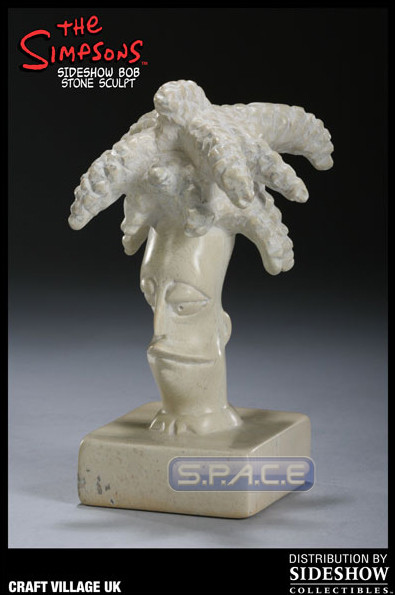
The popular cartoon characters from the long-running series The Simpsons are breathing new life into traditional African stone carvings.

A traditional craft in many cultures, carving adds value to local resources and provides an excellent source of income for local artisans and entrepreneurs. While wood or stone carvings are a popular tourist souvenir throughout Africa, Asia and Latin America, most carvers stick to traditional subjects.

However, a group of villagers in western Kenya have transformed their economy by swapping carvings of elephants and Cleopatra for Homer, Marge and Sideshow Bob.

According to the book Carving out a Future by the Centre for International Forestry Research (CIFOR), carving exports from the island of Bali in Indonesia total US $100 million per year. India’s industry is worth US $65 million. In Oaxaca, Mexico, carvings earn US $2,500 per household, increasing access to education and health. In Kenya, carving involves more than 60,000 people and provides household income for more than 300,000. In some communities in South Africa, households can earn between US $500 and US $2,000 per year from carvings – 80 per cent of a household income.

Research into carving has identified several factors that are critical to maximising profits: quality is critical, and the best woods and stone must be used. Diversity is an important element: too much of the same thing being made available damages the market. And sustainability: the wood and stone resources must not be used up.

It is this novelty and diversity that The Simpsons carvings address. By tapping into the global market for official licensed merchandise, the Tabaka carvers of the Abagusi tribe – well-known carvers in western Kenya – have significantly increased their income. And they are cashing in on the global popularity of the first Simpsons movie released this year.

Tabaka is a village three hours by bus from Kenya’s capital, Nairobi. In Nairobi, the carvers would sell their soap stone carvings to middlemen, often for a pittance compared to what they would in turn charge tourists. Negotiations with these vendors could take days and waste the precious income of the carvers as they waited around for the deal to come through.

Craft Village UK has organised the carvers to produce Simpsons statuettes for the worldwide market. The carvers were able to win the official merchandise license from The Simpsons’ owners, Twentieth Century Fox, after its vice-president saw a video of the carvers. They were initially awarded the license to craft 12 of the show’s characters for the US and UK markets, but last month they gained the worldwide license.

Craft Village’s founder, UK-based Paul Young, had the idea three years ago when his sister returned from living in Uganda with soap stone carvings. Impressed by the quality of the workmanship, he thought they would sell better in a western market if they reproduced popular images from films and TV. In 2005, he made contact with the carvers through a crafts company in Nairobi. He sent initial plastic figurine models and photos to help the carvers get the statues right. He flew to Kenya in 2005 to meet the carvers for the first time and video the carving process.

Initial prototypes were too heavy and some would break. And it took 12 months of trial and error to get the quality high enough to approach Twentieth Century Fox.

“Familiarizing the carvers with The Simpsons was difficult,” said Young. “Making the carvers understand the importance of quality control and the need for benchmark standards and uniform carvings was – and still is – a challenge.”

“I don’t know who they are,” said Pauline Kemunto, who helps her husband with the carvings. “But I like them because I earn from them.”

In a community known for growing bananas, David Atang’a, master carver and former soldier, supports five children. “If this Simpsons project succeeds, I hope to educate my children in university,” he said.

Two groups of 15 members each are divided between Tabaka Master Carvers and Tabaka Classic Carvers. Women take over and wash, polish and shine the pieces. Each piece is numbered and signed (Craft Village UK products).

The carvers now make 450 Kenyan shillings per statue (UK £3) – between four and six times what they would have got for a traditional carving. Where work before was sporadic, it is now regular and employs 80 people. The extra income means the carvers can now send their children to secondary school.

Enosh Onsombi grew up with no electricity and no television. But since the community started carving the Simpsons characters, “Life has changed so much,” he told The Independent newspaper. “The Simpsons has changed everything.”

Published: October 2007

Resources

Development Challenges, South-South Solutions was launched as an e-newsletter in 2006 by UNDP’s South-South Cooperation Unit (now the United Nations Office for South-South Cooperation) based in New York, USA. It led on profiling the rise of the global South as an economic powerhouse and was one of the first regular publications to champion the global South’s innovators, entrepreneurs, and pioneers. It tracked the key trends that are now so profoundly reshaping how development is seen and done. This includes the rapid take-up of mobile phones and information technology in the global South (as profiled in the first issue of magazine Southern Innovator), the move to becoming a majority urban world, a growing global innovator culture, and the plethora of solutions being developed in the global South to tackle its problems and improve living conditions and boost human development. The success of the e-newsletter led to the launch of the magazine Southern Innovator.
Creative Commons License

This work is licensed under a
Creative Commons Attribution-Noncommercial-No Derivative Works 3.0 License.

ORCID iD: https://orcid.org/0000-0001-5311-1052.

© David South Consulting 2022
Categories
Archive Development Challenges, South-South Solutions Newsletters

Ghanaian Coffins Prove Design and Craftsmanship Boost Incomes

By David SouthDevelopment Challenges, South-South Solutions

SOUTH-SOUTH CASE STUDY

In many parts of the world, indigenous ingenuity and craft skills are finally getting the recognition they deserve. The quirky but very inventive gadgets and solutions featured on the Afrigadget blog (http://www.afrigadget.com) never fail to inspire and amaze. The Democratic Republic of the Congo’s (DRC) fashionable gentlemen (http://www.henryherbert.com/gentlemen-of-bacongo/) grabbed the attention of – and inspired – European fashion designers with their creativity and flair. And then there are the Africa Maker Faires, gatherings of clever and innovative thinkers and inventors who get down to work generating solutions to today’s problems.

Beyond the grim stories of development failures and human tragedies, there is another Africa full of creativity and can-do attitude.

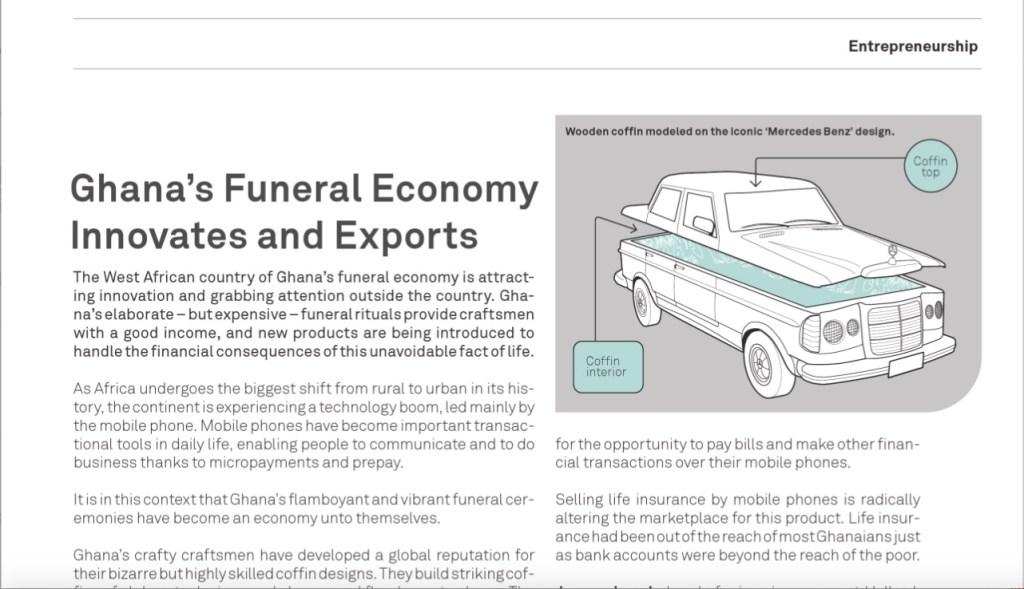
Amongst the Ga people (http://en.wikipedia.org/wiki/Ga_people) of Teshi, Ghana there is a tradition with a twist: custom-designed coffins. A Ghanaian pioneer has been transforming the way people deal with that most sombre and respectful of rituals, the funeral. Coffin-artist Paa Joe is drawing on a modern-day tradition in Ghana dating back to the 1950s. Coffins – which are normally made from wood and follow the standard template of a narrow, body-length box – are transformed into grand and lively statements about the deceased person’s life.

Designs have included a giant pink fish, a Ghana Airways plane, a souped-up Mercedes Benz and an African eagle.

“The Ga people (http://www.ghanaweb.com/GhanaHomePage/tribes/ga.php), from the south-east coast of Ghana, revere their ancestors and give great importance to funeral celebrations,” Jack Bell, a London gallery owner exhibiting the coffins, told The Observer newspaper. “Their tradition of creating beautifully carved figurative coffins originated in the 1950s.”

Paa Joe was born in the Akwapim hills north-east of Accra in 1945. He is considered the top sculpted coffin maker of his generation. He apprenticed with the pioneer of the craft, Kane Kwei (http://www.culturebase.net/artist.php?153) – the man who began this unique vocation in the 1950s. The skill and artistry involved is now recognized in museums around the world, including London’s British Museum.

The community had a history of highly skilled woodwork and elaborate carvings were regularly created for village chiefs – giant eagles or even the surreal spectacle of a giant cocoa pod.

The bespoke coffins are an example of how long-standing skills were applied to a new product. The idea of making custom-sculpted coffins begun by Kane Kwei evolved from being a livelihood for Kwei to an apprenticed craft passed down to younger craftsmen. When Kane Kwei’s grandmother died in 1951, without fulfilling her lifelong wish to fly on a plane, Kane made a plane-shaped coffin for her. This coffin was admired by others and Kane got the idea of setting up a workshop and making custom-designed coffins symbolizing the
deceased’s status and achievements in life.

“Families commission the coffins – sometimes to a brief designed by the deceased – to represent the aspirations or achievements of a deceased relative, or to characterize their personality: a car for a businessman, a cocoa pod for a farmer, a bible, or even a camera,” Bell said.

For people with modest means, there are simpler designs of boats, canoes and books. Prices are negotiated with the coffin maker.

Where there were none, now there are multiple workshops providing custom coffins for funerals. Traditional Ghanaian funerals are lively, colourful events, but the coffin sculptures of Teshi are a modern phenomenon and proof that innovation and good design can transform the most sombre of items into something special.

Published: December 2010

Resources

  • Maker Faire Africa: Flickr photo gallery: A clickable archive of the Maker Faire inventors and their inventions. Website:http://www.flickr.com/groups/makerfaireafrica/pool/
  • Afrigadget: Afrigadget: ‘Solving everyday problems with African ingenuity’: This blog never ceases to amaze and fascinate. Website: http://www.afrigadget.com/
  • E-machine Shop: eMachineShop: This remarkable service allows budding inventors to download free design software, design their invention, and then have it made in any quantity they wish and shipped to them: Amazing! Website: http://www.emachineshop.com/ 4) Maker Faire Africa 2010: Catch up on the last Maker Faire Africa. Website: (http://makerfaireafrica.com)
  • Afrigadget: ‘Solving everyday problems with African ingenuity’: This blog never ceases to amaze and fascinate. Website: http://www.afrigadget.com/
  • International Development Design Summit: The Summit is an intense, hands-on design experience that brings together people from all over the world and all walks of life to create technologies and enterprises that improve the lives of people living in poverty. Website:http://iddsummit.org/

https://davidsouthconsulting.org/2022/10/20/bangladesh-coffin-maker-offers-an-ethical-ending/

https://davidsouthconsulting.org/2022/10/20/ghanas-funeral-economy-innovates-and-exports/

Development Challenges, South-South Solutions was launched as an e-newsletter in 2006 by UNDP’s South-South Cooperation Unit (now the United Nations Office for South-South Cooperation) based in New York, USA. It led on profiling the rise of the global South as an economic powerhouse and was one of the first regular publications to champion the global South’s innovators, entrepreneurs, and pioneers. It tracked the key trends that are now so profoundly reshaping how development is seen and done. This includes the rapid take-up of mobile phones and information technology in the global South (as profiled in the first issue of magazine Southern Innovator), the move to becoming a majority urban world, a growing global innovator culture, and the plethora of solutions being developed in the global South to tackle its problems and improve living conditions and boost human development. The success of the e-newsletter led to the launch of the magazine Southern Innovator. 

https://davidsouthconsulting.org/2021/03/05/southern-innovator-issue-2/

Creative Commons License

This work is licensed under a
Creative Commons Attribution-Noncommercial-No Derivative Works 3.0 License.

ORCID iD: https://orcid.org/0000-0001-5311-1052.

© David South Consulting 2023