Categories
Archive

Development Challenges, South-South Solutions Newsletter

By David SouthDevelopment Challenges, South-South Solutions
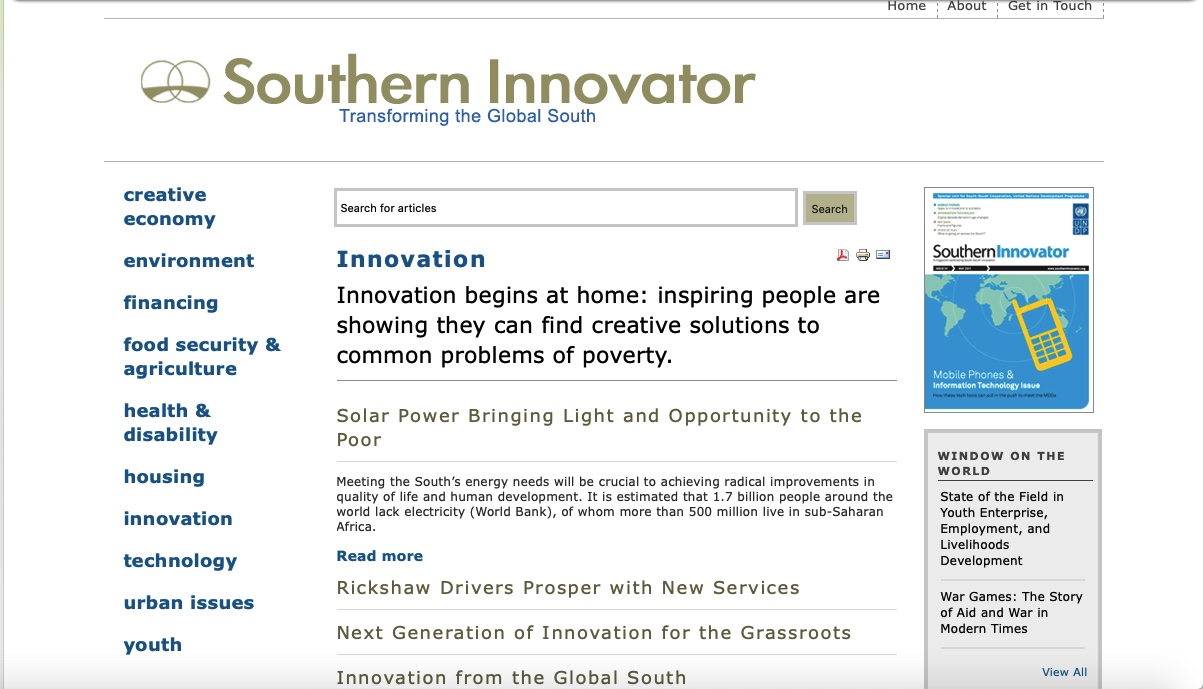
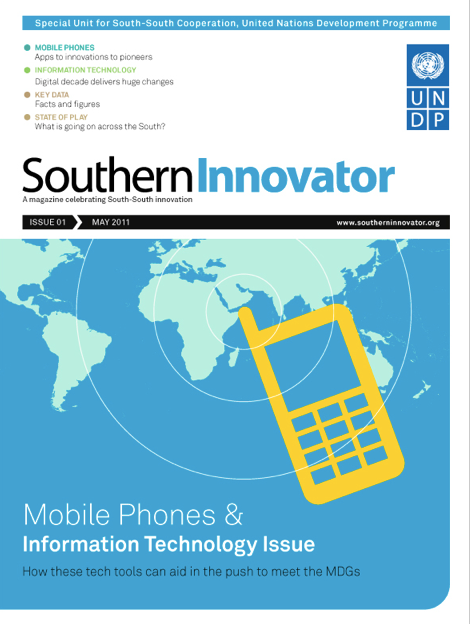
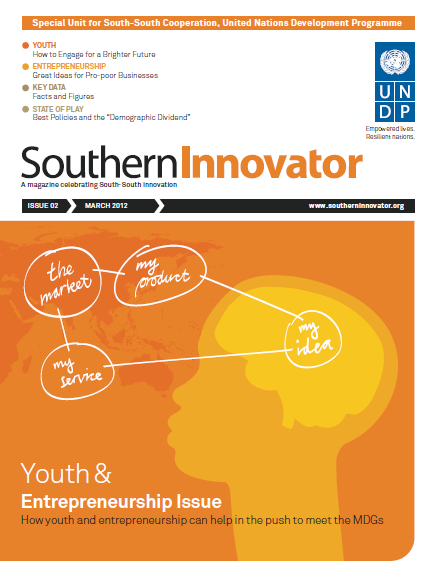
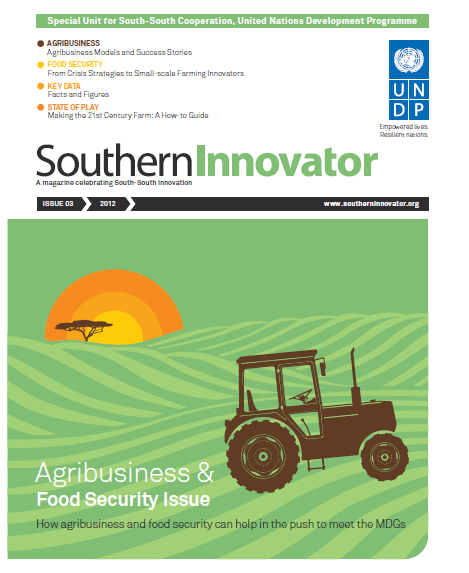
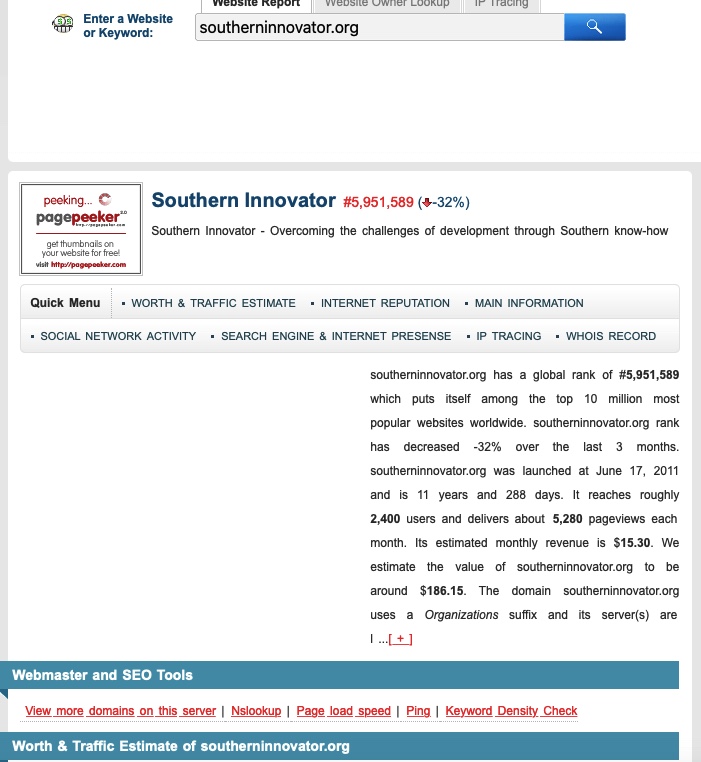
The original southerninnovator.org website launched in 2011, in tandem with the first issue of Southern Innovator Magazine, and ranked midway in the top 10 million most popular websites in the world. Its content has been cited in books, scholarship and strategic plans.

ISSN 2227-3905

Development Challenges, South-South Solutions is the monthly e-newsletter for the United Nations Office for South-South Cooperation in UNDP (formerly the United Nations Development Programme’s South-South Cooperation Unit). I research and write all stories (since January 2007). You can view the original website here. The stories are in English, French and Spanish.
The original WordPress website for Development Challenges, South-South Solutions (southsouthnews.wordpress.com). It was launched in 2006 and eventually became southerninnovator.org in 2011. The magazine Southern Innovator was also launched in New York in 2011.
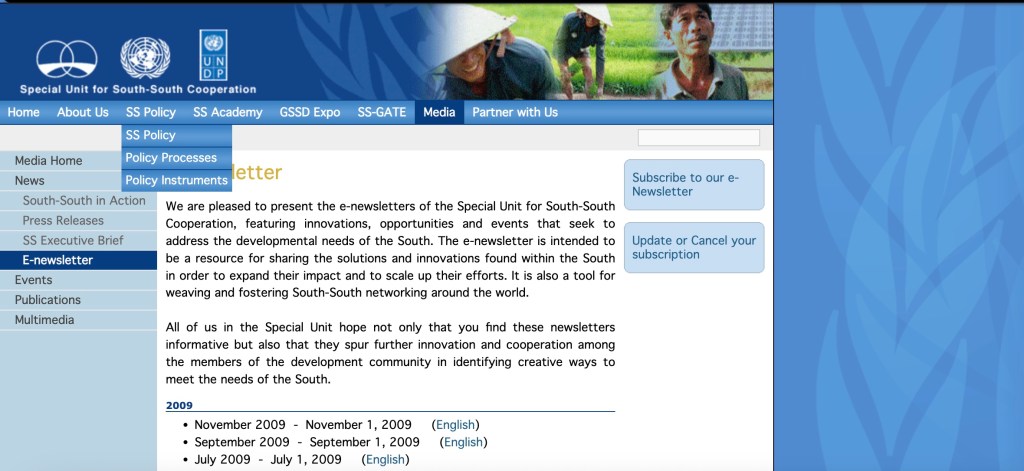
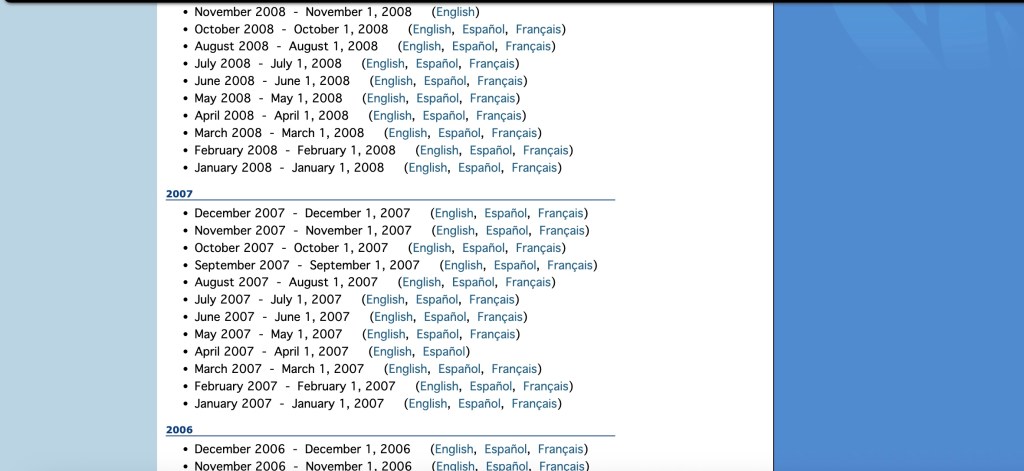
The newsletter archive on the website for UNDP’s Special Unit for South-South Cooperation circa 2011 (including issues in English, French and Spanish). 2011 was an important year as the e-newsletter Development Challenges, South-South Solutions scaled into a dedicated web archive, http://southerninnovator.org, a sister magazine, Southern Innovator (https://unsouthsouth.org/2014/12/25/southern-innovator-magazine/), and pollinated its content across multiple platforms, capitalising on the platform and social media explosion of the time.

Here is a good background article on the rise of South-South cooperation, how it is altering global trade and power relationships, and what the future holds: South-South Cooperation Defies the North. And here is some historical background from Wikipedia: South-South Cooperation.

Development Challenges, South-South Solutions reaches a global audience of influential decision-makers on the frontlines of international development in the South. More than 2,000 subscribers read the newsletter every month (academic institutions, UN agencies, private sector companies, UNDP Country Offices, financial institutions including the IMF and World Bank, inter-governmental organisations, UNDP knowledge networks around the world, and all South-South focal points in West Africa).

Remember to think of Development Challenges, South-South Solutions when you have a Southern innovation to share with the world. You can read our archive of stories online here: http://ssc.undp.org/index.php?id=66

From Special Unit for South-South Cooperation: 2008 Reflections: “As part of the strategy to foster South‐South cooperation within and across regions, the Division has continued to invigorate and re‐enforce a South‐South cooperation focal point system. These efforts included the publication and distribution of a monthly e‐newsletter, Development Challenges: South-South Solutions, which presents a briefing for South‐South focal points, Southern academics and development professionals on practical solutions to development challenges found throughout the South. Over the course of 2008, twelve e‐newsletters were released via e‐mail and published on the website of the Special Unit.”

What are people saying about Development Challenges, South-South Solutions? Read some comments here.

Contact me by email about the newsletter here: developmentchallenges@googlemail.com.

Contact me by email about the new global magazine Southern Innovator here: southerninnovator@yahoo.co.uk

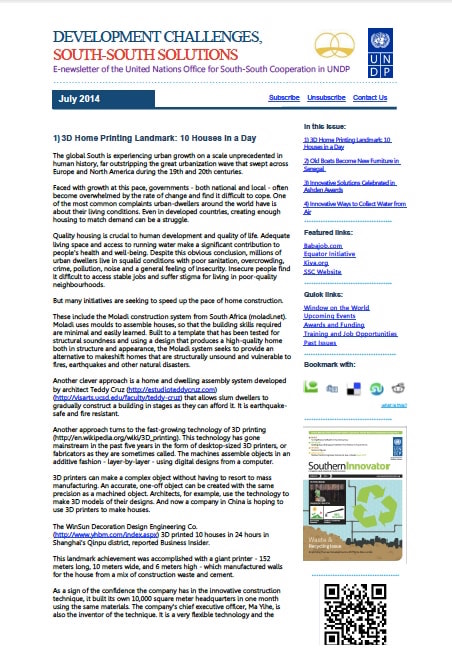
July 2014 issue of Development Challenges, South-South Solutions: The last issue is available online for download. Support the e-newsletter for 2017: we are seeking additional funding so we can improve the reader experience and frequency of the e-newsletter. Since first launching in 2006, we often heard from readers how they valued the stories in the e-newsletter and how it has helped in raising the profile of innovators across the global South (“Congratulations on another great newsletter that’s packed with fascinating information! I really enjoy getting it each month.”). Additional resources would enable us to improve the way readers can access and receive the e-newsletter, enable the e-newsletter’s contributors to travel and report on developments, and allow us to offer daily and weekly updates and a wider range of resources online and on mobile platforms. Additional funds help in maintaining the quality of the e-newsletter, something that has been appreciated by readers (“Great economic and business reporting! Very helpful for us.” Africa Renewal). It will also allow the e-newsletter to spin-off quality resources for innovators, such as the influential magazine Southern Innovator. Contact the United Nations Office for South-South Cooperation if you wish to support the e-newsletter for 2017: UNOSSC.

“What a tremendous magazine your team has produced! It’s a terrific tour de force of what is interesting, cutting edge and relevant in the global mobile/ICT space… This is great, engaging, relevant and topical stuff.” Rose Shuman, Founder & CEO, Open Mind and Question Box, Santa Monica, CA, U.S.A.

“Great economic and business reporting! Very helpful for us.” Africa Renewal, Africa Section, Strategic Communications Division, United Nations Department of Public Information

“The reviewer observed that, although the Policy and UN Coordination Unit had produced all of the reports requested by intergovernmental bodies, especially for the High-level Committee, it had not been able to produce many of the publications (evidence-based analytical reports) that had previously been within its purview. Such publications included Southern Innovator magazine and the monthly e-newsletter “Development Challenges, South-South Solutions”. In the case of Southern Innovator, one issue (No. 5 on waste and recycling) was published during the four-year period of the framework but did not have wide online distribution, and issue No. 6 was awaiting funds for publication. The e-newsletter was last issued in July 2014 even though the reviewer found it a good way to communicate with focal points at the national and inter-agency levels. In fact, the shortage of funds for those knowledge products was the main reason that they had ceased being produced during the evaluation period.”  Final evaluation of the performance of the United Nations Office for South-South Cooperation  under its strategic framework, 2014-2017, in light of the adoption of the 2030 Agenda for Sustainable Development

Note: Unfortunately, the reason for “the shortage of funds” was down to suspension of funding to the UNOSSC in 2015 and 2016 pending two internal UN audit investigations after arrests made in 2015 by the Federal Bureau of Investigation (FBI) revealed a bribery and money laundering network targeting the United Nations via various NGOs, including the UN-based news organisation South-South News. The case eventually made its way to the Supreme Court of the United States.

Back Issues

Development Challenges, South-South Solutions Newsletter | 2011-2014

2014

Development Challenges, South-South Solutions Newsletter | 2007-2010

2013

https://www.slideshare.net/DavidSouth1/development-challenges-july-2013-issue

2012

https://www.slideshare.net/DavidSouth1/development-challenges-july-2012-issue

2011

https://www.slideshare.net/DavidSouth1/development-challengessouthsouthsolutionsdecember2011issue

2010

2009

2008

https://www.slideshare.net/DavidSouth1/development-challenges-may-2008-issue

2007

“Beautiful, inspiring magazine from UNDP on South-South innovation. Heart is pumping adrenaline and admiration just reading it.”

This work is licensed under a Creative Commons Attribution 4.0 International License.

ORCID iD: https://orcid.org/0000-0001-5311-1052.

© David South Consulting 2025

Categories
Archive Development Challenges, South-South Solutions Newsletters Southern Innovator magazine

Two-stroke Engine Pollution Solution

By David SouthDevelopment Challenges, South-South Solutions

SOUTH-SOUTH CASE STUDY

Cities across the South choke on the pollution made by the small two-stroke engines (http://www.howstuffworks.com/two-stroke.htm) powering motor scooters, motorcycles, auto rickshaws, tuk-tuks and other vehicles. People choose these vehicles to get around because they are cheap, powerful and easy to fix. But the environment – and human health – suffers as a result. And as cities balloon and populations grow, the number of journeys and two-stroke engines grows with it.

In large cities across Asia, 1 million three-wheeled auto-rickshaws form an important means of daily transportation, and a source of income for their drivers. And the Asian Development Bank estimates there are over 100 million vehicles using two-stroke engines in Southeast Asia. But these vehicles cause serious air pollution and emissions of carbon dioxide (CO2), which contributes to global warming.

Because two-stroke engines burn an oil-gasoline mixture, they also emit more smoke, carbon monoxide, hydrocarbons and particulate matter than the gas-only, four-stroke engines found in newer vehicles.

In the Philippines, auto rickshaw drivers are pioneering specially adapted two-stroke engines that reduce particulate emissions by 70 percent and carbon dioxide emissions by 76 percent.

Tim Bauer, the 31-year-old American mechanical engineer who developed the technology, said auto rickshaws “play an essential role in the social and economic fabric. But their impact on public health is disastrous.”

Motorized tricycles produce an astonishing amount of pollution: each one is equivalent to 50 cars. In Bangkok, Thailand, two-stroke engines contribute 47 percent of pollution particulates in the air.

The World Health Organization (www.who.org) ranks urban outdoor air pollution as the 13th greatest contributor to disease burden and death worldwide. It has been estimated that the air pollution leads to the deaths of more than half a million people a year. About two-thirds of the residents of Delhi and Calcutta suffer from respiratory symptoms such as common cold and dry and wet cough, much of this caused by two-stroke engine emissions.

Two-stroke engines are highly inefficient users of fuel: up to 40 percent of the fuel and oil goes out of the exhaust pipe unburned. This exhaust is packed with oxides of carbon, nitrogen, sulphur, hydrocarbons and fine dust – all toxic contributors to air pollution.

But the attraction of these engines remains strong. “They are powerful, simple, reliable and robust,” said Bauer, “and spare parts are easy to find. They also have a long lifetime.”

Bauer faced some strict constraints in developing the technology.

“It had to substantially reduce emissions without impairing the engine’s performance. It had to be installed without machining the engine crankcase, and with only a basic tool set. Of course, it also had to be affordable for Filipino drivers.”

Using off-the-shelf components, Bauer developed a kit that turns two-stroke engines into fuel-injection machines. This adjustment reduced particulate emissions by 70 percent and carbon dioxide emissions by 76 percent. He now sells the kits through Envirofit, a non-profit organization (http://www.envirofit.org/). It has been pilot tested at two Filipino holiday resorts, Vigan and Puerto Princesa.

Auto-rickshaw drivers tend to be poor and earn on average US $3 to US $4 a day. The cost of fitting vehicles with Bauer’s new technology is met by microcredit.

“Drivers earn money daily, so it’s easy for them to pay back their loan, and 90 percent of them do it in less than a year,” he said. Over 260 taxi drivers have already installed the new kit.

“These drivers are at the base of the economic pyramid and these tricycles are a testament to their ingenuity and work ethic. At the end of the day, we can improve their lives with a cylinder head, a few brackets and, of course, hard work.”

Bauer pioneered his solution while working on fuel injection in snowmobiles at the Engines and Energy Conservation Lab at Colorado State University. He started to market the solution in Asia in 2004. Bauer has won a Rolex Award for Enterprise to pay for the distribution of the kits throughout Asia.

There is, of course, another solution: an outright ban or measures to push the vehicles off the road. In the Philippines’ San Fernando City, economic incentives were what drove the transition from two-stroke to four-stroke (less polluting) tricycles. In 2001, three-quarters of the city’s 1,600 registered tricycles ran on two-stroke engines. But after a city council mandate to totally phase out the vehicles by 2004, and offers of interest-free loans for down-payments on four-stroke models, more than 400 four-stroke tricycles had replaced the older two-stroke models.

When Bangkok toughened up vehicle inspections and emissions standards in 2000, two-wheelers made up over 96 percent of the city’s traffic. But by March 2004, they made up only 40 percent, according to Supat Wangwongwatana, deputy director general of Thailand’s Pollution Control Department.

Published: December 2008

Resources

  • Tukshop is a website selling auto rickshaws and tuk-tuks.  Website:http://www.tukshop.biz/
  • A wide range of auto rickshaws for sale.  Website: http://www.auto-rickshaw.com/ 
  • The Hybrid Tuk Tuk Battle is a competition to come up with less polluting auto rickshaws, clean up the air in Asian cities, and improve the economic conditions for auto rickshaw drivers. 
    Website:http://hybridtuktuk.com/
  • The Clean Air Initiative for Asian Cities promotes and demonstrates innovative ways to improve the air quality of Asian cities through partnerships and sharing experiences. It is run by the Asian Development Bank together with the World Bank and the US Agency for International Development. 
    Website: http://www.cleanairnet.org/

https://davidsouthconsulting.org/2023/02/03/environmental-public-awareness-handbook-case-studies-and-lessons-learned-in-mongolia/

https://davidsouthconsulting.org/2021/01/02/a-undp-success-story-grassroots-environmental-campaign-mobilizes-thousands-in-mongolia-1998/

https://davidsouthconsulting.org/2022/10/26/tackling-chinas-air-pollution-crisis-an-innovative-solution/

Creative Commons License

This work is licensed under a
Creative Commons Attribution-Noncommercial-No Derivative Works 3.0 License.

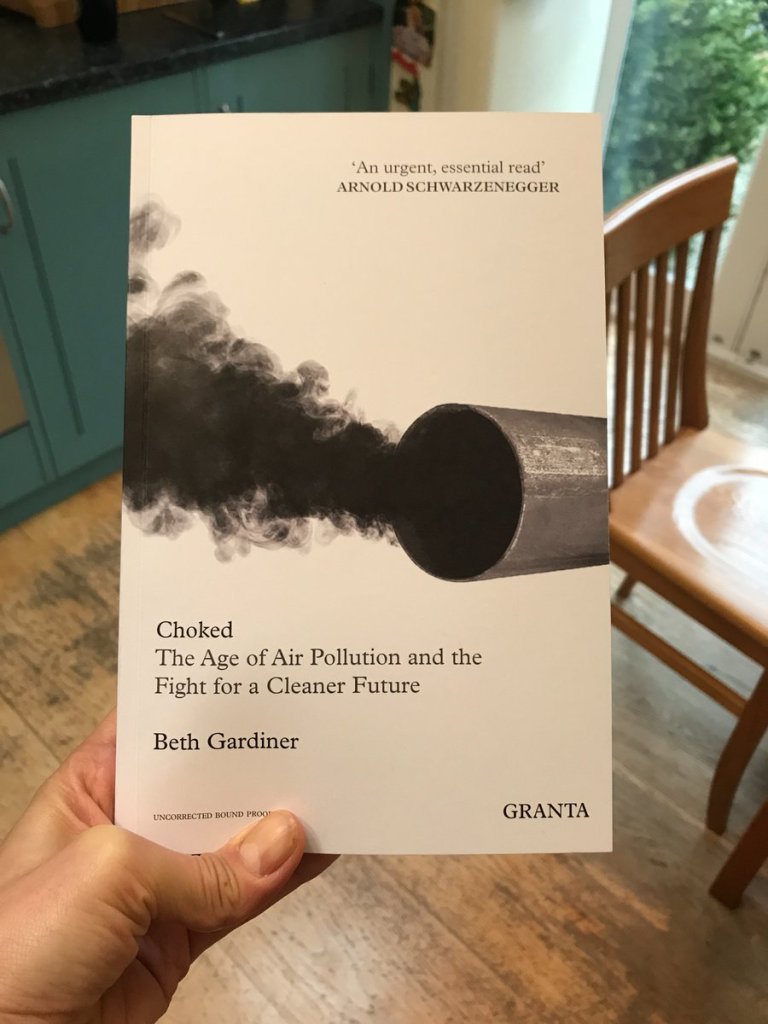
A new book launched in April 2019 by journalist Beth Gardiner (@Gardiner_Beth), “Choked: The Age of Air Pollution and the Fight for a Cleaner Future” (Granta) (University of Chicago Press), explores today’s global air pollution crisis in the world’s cities. Gardiner is an environmental journalist who writes for The New York Times, The Guardian and other publications (bethgardiner.com).  

Called “One of the Guardian’s Best Books of 2019“. The UK cover for Choked: The Age of Air Pollution and the Fight for a Cleaner Future (Granta, 2019).
Creative Commons License

This work is licensed under a
Creative Commons Attribution-Noncommercial-No Derivative Works 3.0 License.

ORCID iD: https://orcid.org/0000-0001-5311-1052.

© David South Consulting 2022