Tag: COP26Glasgow

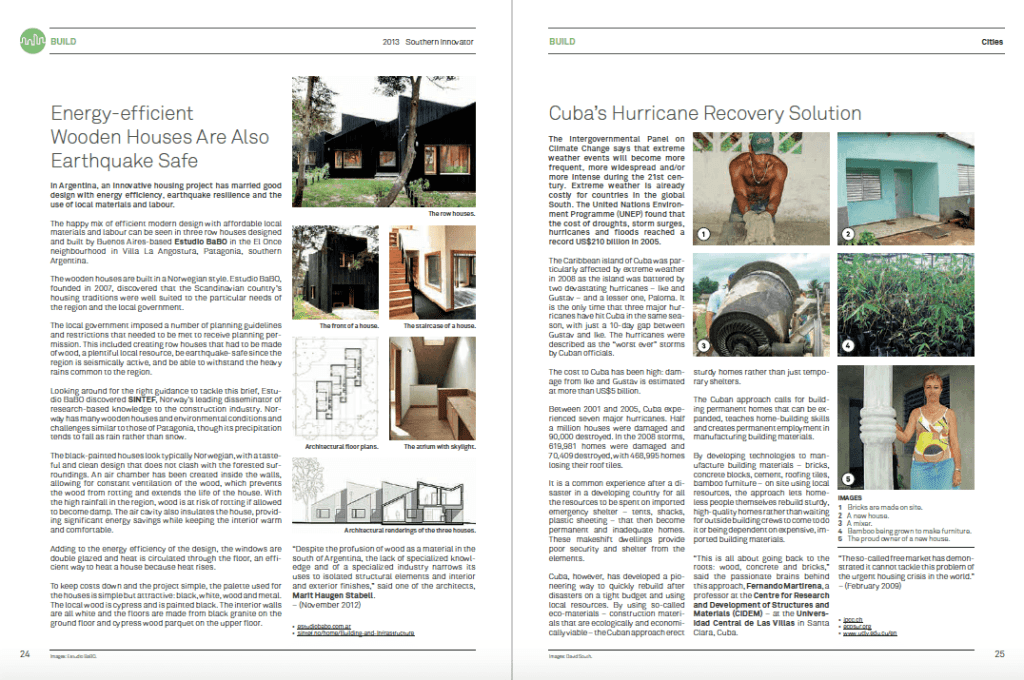
  • Cuba’s Hurricane Recovery Solution

    Cuba’s Hurricane Recovery Solution

    By David SouthDevelopment Challenges, South-South Solutions

    (Havana, Cuba), November 2008

    SOUTH-SOUTH CASE STUDY

    The frequency of extreme weather in the past decade has been attributed to global warming (http://tinyurl.com/5peel). Many scientists believe the future will bring even more turbulent weather events and disasters. The devastation and hardship brought by natural disasters can eradicate development gains, and destroy livelihoods and health. It is critical countries help people to get back to their normal lives as fast as possible.

    The Intergovernmental Panel on Climate Change (http://www.ipcc.ch) says extreme weather events will become more frequent, more widespread and/or more intense during the 21st century. Extreme weather is already costly for countries in the global South. The United Nations Environment Program (UNEP) found that the cost of droughts, storm surges, hurricanes and floods reached a record US$210 billion in 2005.

    The Caribbean island of Cuba (http://en.wikipedia.org/wiki/Cuba) was particularly affected in 2008 by extreme weather, as the island was battered by two devastating hurricanes – Ike and Gustav – and a lesser one, Paloma.  It was the only time that three major hurricanes have hit Cuba in the same season, with just a 10 day gap between Gustav and Ike. The hurricanes were described as the “worst ever” storms by Cuban officials

    The cost to Cuba has been high: Damages from Ike and Gustav are estimated at more than US$5 billion (http://tinyurl.com/ba7xny).

    Between 2001 and 2005, Cuba experienced seven major hurricanes. Half a million houses were damaged, and 90,000 destroyed. In the 2008 storms, 619,981 homes were damaged and 70,409 destroyed, with 468,995 homes losing their roof tiles.

    But Cuba has developed a pioneering way to quickly rebuild after disasters on a tight budget and using local resources. By using so-called ecomaterials – construction materials that are ecologically and economically viable – the Cuban approach erects sturdy homes, rather than just temporary shelters.

    It is a common experience after a disaster in a developing country for all the resources to be spent on imported emergency shelter – tents, shacks, plastic sheeting – that then become permanent and inadequate homes. These makeshift dwellings provide poor security and shelter from the elements. For Cuba, the enormous scale of the repair and reconstruction job is especially difficult because of the fuel shortages and building supply restrictions brought on by the United States’ embargo on the country (http://tinyurl.com/4alwrb). In turn, Cubans are adaptable and creative with their solutions.

    The Cuban approach builds permanent homes that can be expanded, teaches homebuilding skills and creates permanent employment in manufacturing building materials.

    By developing technologies to manufacture building materials – bricks, concrete blocks, cement, roofing tiles, bamboo furniture – on site using local resources, the approach lets homeless people themselves rebuild sturdy, high-quality homes, rather than waiting for outside building crews to come and do it, or being dependent on expensive, imported building materials. By doing this, jobs are created and wealth and gets the community back on its feet after the disaster.

    “This is all about going back to the roots: wood, concrete and bricks,” said the passionate brains behind this approach, Fernando Martirena, a professor at CIDEM  — the Centre for Research and Development of Structures and Materials — at the Universidad Central de Las Villas, in Santa Clara , Cuba (www.ecosur.org).

    “The so-called free market has demonstrated it can not tackle this problem of the urgent housing crisis in the world.”

    At the heart of the Cuban approach are easy-to-use machines that produce the building materials. They range from hand-cranked presses that make mud and clay bricks, to vibrating presses for concrete brick making.

    Training the homeless population to do the building themselves allows reconstruction work to begin straight away, rather than waiting for professional building crews to arrive on the scene. It is also psychologically more empowering for the people to be active participants in the rebuilding of their lives. The pride the people have in their new homes is visible.

    And quality has been critical for the programme so it can become sustainable and long-lasting:

    “The driving force for this project is need,” Martirena said. “If we want to obtain sustainability, we must go beyond need. After disaster, need is the driving force. But after two years, when most things have been completed, it must be a business. Good, beautiful, cheap. Normally, this technology is cheaper than industrial technology.”

    To stay prepared for future natural disasters that destroy or damage homes, the Cubans have established strategic reserves of micro-concrete roofing tiles. The lightweight but strong tiles can be used to quickly erect a small module home, and then the home can be expanded and built on as resources and time allow.

    Martirena, a former UNHABITAT award-winner, believes this approach to building materials brings prosperity back to rural areas and helps stem the flood of people to cities and urban sprawl seen across the global South.

    “You have to go back to the origin of the problem: people are looking for money and better jobs. It is not because they like the cities; they hate the cities!”

    “Bamboo harvesting (for furniture making) can bring people three times more income than they would make in the cities. They are really making money.”

    For Cuba, this has been a journey from a highly centralised and fuel-dependent approach to house building, to a decentralised, low-fuel approach. From 1959, the year of the revolution, until 1988, Cuba built housing using a centralised factory method to make building materials. Prefabricated houses were erected across the country. The materials were delivered by road and rail, all fuelled by cheap oil from the former Soviet Union.

    After the collapse of the Soviet Union in the early 1990s, oil became scarce and the transport network the building industry depended on fell apart. This time was called the “special period.”

    Apart from natural disasters, Cuba’s housing stock has suffered under the US embargo. The country’s housing began to decay as repairs were not happening and new houses were not being built. When people did want to do the repairs themselves, the lack of building supplies made it difficult for them to do so. Cuba realized it had to do things differently: the solutions had to be local, energy-efficient, and easy to use.

    CIDEM oversees workshops, training and building teams across the country. It tests new materials and designs in its labs before they are deployed as building solutions. The ecomaterials are chosen for low energy use and the ability to recycle waste. Being inexpensive, they offer a sustainable solution for the poor.

    In the community of Jatibonico, single mothers make up 40 percent of those who have benefited from the building projects. One woman proudly showed off the home she had built in the Spanish style, complete with Greco-roman columns on the porch. It has a clean, modern bathroom with shower and toilet.

    Martirena is currently working on a book of case studies about CIDEM’s projects helping Cubans cope with reduced oil dependency.

    CIDEM collaborates with universities around the world and has 19 workshops employing over 200 people in Cuba, and 15 in other countries in Latin America and Africa. It works with the Ecosur initiative and all the machines and advice on how to use them is available from the Ecosur website (www.ecosur.org).

    Published: November 2008

    Resources

    • “How Cuba Survived Peak Oil” is an award-winning film on how Cuba transitioned from a highly mechanized, industrial agricultural system to one using organic methods of farming and local, urban gardens. It is an unusual look into the Cuban culture during this economic crisis, which they call “The Special Period.” Website:http://www.powerofcommunity.org/cm/index.php
    • Global Greenhouse Warming is a website that tracks extreme weather events around the world: drought, flooding, severe storms, severe winter, tropical cyclone, wildfires, and extreme heat waves.Website:http://www.global-greenhouse-warming.com/extreme-weather.html
    • Cuba Hurricanes: Real-time reports of current hurricane threats to Cuba provided by an office in Old Havana. Also information on hurricanes of historical significance to Cuba. Website: http://www.cubahurricanes.org/
    • Gerd Niemoeller has developed flat pack, cardboard homes that can be deployed quickly after a disaster and can become permanent homes. Website: http://tinyurl.com/6t6jtf and the company website: http://www.wall.de/en/home
    • CIDEM and Ecosur specialise in building low-cost community housing using eco-materials. They have projects around the world and are based in Cuba. Website: http://www.ecosur.org

    https://davidsouthconsulting.org/2021/10/03/a-new-house-kit-for-slum-dwellers-that-is-safe-and-easy-to-build/

    https://davidsouthconsulting.org/2022/05/23/debt-free-homes-for-the-poor/

    https://davidsouthconsulting.org/2021/11/11/decent-and-affordable-housing-for-the-poor/

    https://davidsouthconsulting.org/2022/11/16/housing-innovation-in-souths-urban-areas/

    https://davidsouthconsulting.org/2021/11/11/housing-solution-for-worlds-growing-urban-population/

    https://davidsouthconsulting.org/2021/02/12/rammed-earth-houses-china-shows-how-to-improve-and-respect-traditional-homes/

    https://davidsouthconsulting.org/2021/02/12/rebuilding-after-chinese-earthquake-beautiful-bamboo-homes/

    https://davidsouthconsulting.org/2022/05/23/solar-bottle-bulbs-light-up-dark-homes/

    https://davidsouthconsulting.org/2022/09/26/3d-home-printing-landmark-10-houses-in-a-day/

    https://davidsouthconsulting.org/2022/11/17/tiny-homes-to-meet-global-housing-crisis/

    https://davidsouthconsulting.org/2021/03/05/southern-innovator-issue-4/

    Sponsored by BSHF. BSHF is now called World Habitat and it aims to seek out and share the best solutions to housing problems from around the world.

    Creative Commons License

    This work is licensed under a
    Creative Commons Attribution-Noncommercial-No Derivative Works 3.0 License.

    ORCID iD: https://orcid.org/0000-0001-5311-1052.

    © David South Consulting 2023

  • Creating Green Fashion in China

    Creating Green Fashion in China

    By David SouthDevelopment Challenges, South-South Solutions

    SOUTH-SOUTH CASE STUDY

    China is the world’s largest manufacturer (Euromonitor) and the largest clothing maker, producing a quarter of all textiles and clothing. It is a global fashion production hub, and many major global clothing brands have their products made there – whether they admit it or not.

    Although most people probably do not give it a second thought, the fashion and clothing industries can be highly polluting and exploitive. The use of toxic fertilizers to boost cotton yields leaves behind a legacy of contaminated soil and water tables. Dyes used to colour clothing also can be toxic and pollute water. For people working in this industry – many of whom are women – conditions can vary widely and include low pay and high stress.

    According to the Ethical Fashion Forum, “it is difficult for companies sourcing from China to be sure of fair working practices. There have been many reports of low wages, long hours, and unfair working conditions in factories in China.”

    But one innovative fashion brand is out to transform the way the garment business works in China and to develop a template that could be used in other places such as Africa.

    The design duo of Hans Martin Galliker and Amihan Zemp has set up their clothing brand’s studio in one of Beijing’s historic hutong (alley) neighbourhoods – narrow streets of low-rise buildings that were the traditional urban dwelling environments for generations of Chinese people. The NEEMIC (neemic.com) brand, founded in 2011, makes sustainable fashions and champions green production methods in China.

    The business’s belief is that the world has enough fabric already to meet the clothing needs of the population. In response, NEEMIC makes its clothing from a mix of recycled natural materials and new organic materials. According to its website, NEEMIC collaborates “with young designers from London to Tokyo to create a particular metropolitan aesthetic.”

    “We use the finest natural fabrics for a perfectly comfortable feel,” Galliker said. “We pick the finest natural materials from leftovers of the industry, recycle used clothes, and strive to order new fabrics only from certified organic producers.”

    Hans Martin Galliker began as a farming apprentice in his native Switzerland, and brings a practical bent to his approach to fashion. He draws on his knowledge of farming and agriculture to create a unique eco-conscious fashion product in China.

    Galliker got his start in fashion working for a brand in Shenzhen, southern China. He worked with the organic farms there, and this inspired him to explore sustainability in fashion design and ways of introducing the principles of fair trade to the fashion and textile industries in China.

    Galliker is passionate about taking a different attitude to fashion: “There are many fashion brands and many of them are … meaningless,” he told the China Daily newspaper. “They do fashion which looks more or less … the same, which has no creativity and does a lot of harm to the environment.

    “Growing cotton is highly chemicals and labour-intensive, which degrades the soil and pays people very low salaries. And the dyeing and colouring processes pollute rivers and people receive low salaries but have to work long hours. The whole textile industry is really bad for the environment.”

    NEEMIC has completed three collections of clothing since it was founded in 2011.

    “We started selling some of our designs at a boutique in Beijing that focuses on upcycling fashion. People like it and want to buy more,” said Galliker.

    Upcycling is the process of converting waste material into new products (http://en.wikipedia.org/wiki/Upcycling).

    And to counter any negative perceptions that organic cotton clothing can only ever be unfashionable, Galliker is out to prove it is possible to create stylish organic clothing.

    On top of building the brand, Galliker also works to educate the industry and change ways. He is also setting up a branch in China of the Hong Kong Organic Textile Association (http://neemic.asia/organic), which encourages fashion designers to jointly buy organic materials. He also publishes a website on sustainable agricultural practices in China, with details on current policies on organic farming.

    “It is very normal for Chinese farmers to use many fertilizers, but the environment is going bad and consumers do not like this kind of farming,” Galliker points out. “For farmers, it’s not meaningful to produce only to make money to live a decent life. It should be more than that.”

    The NEEMIC operation is lean: the Beijing studio does all the designing of the clothes, programming of the multilingual websites and runs the online shopping and payment sites.

    For now, the goal is to not only increase the use of organically grown materials but also to introduce the fair trade concept into China.

    “In two years we want to do fair trade production,” Galliker said.

    And he has Africa in his sights with his green fashion template.

    “In the long term we will have many successful projects here or non-profit companies … a lot of creative force and investment so that we can help rural regions in Africa to do sustainable agriculture projects.”

    Published: December 2012

    Resources

    1) Ethical Fashion Forum: The Ethical Fashion Forum is the industry body dedicated to a sustainable future for fashion. A not for profit organisation, EFF aims to make it easy for fashion professionals to integrate sustainability at the heart of what they do. Website: http://www.ethicalfashionforum.com/

    2) Hong Kong Organic Textile Association: Its mission is to promote organic textiles in Hong Kong Website: http://www.facebook.com/HKOrganicTextileAssociation

    3) Tips on how to upcycle. Website: http://www.independent.co.uk/property/interiors/the-insider–how-to-upcycle-without-much-effort-2343100.html

    4) How to create a Lookbook for a fashion brand. Website: http://noisetteacademy.com/2011/05/creating-a-lookbook/

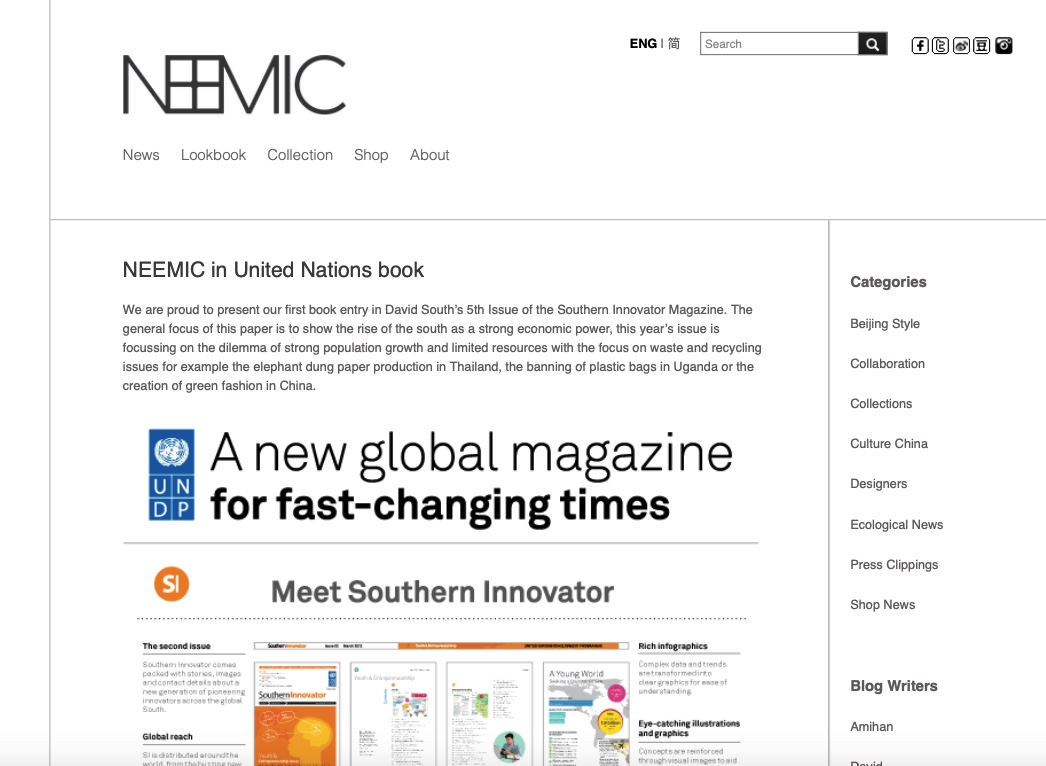
    “We are proud to present our first book entry in David South’s 5th Issue of the Southern Innovator Magazine. The general focus of this paper is to show the rise of the south as a strong economic power, this year’s issue is focussing on the dilemma of strong population growth and limited resources with the focus on waste and recycling issues for example the elephant dung paper production in Thailand, the banning of plastic bags in Uganda or the creation of green fashion in China.” https://neemic.asia/ecological-news/neemic-southern-innovator-book

    https://davidsouthconsulting.org/2021/02/09/african-fashions-growing-global-marketplace-profile/

    https://davidsouthconsulting.org/2021/01/05/afropolitan-african-fashion-scene-bursting-with-energy/

    https://davidsouthconsulting.org/2022/10/09/fashion-closes-gap-between-catwalk-and-crafts/

    https://davidsouthconsulting.org/2022/11/17/fashion-recycling-how-southern-designers-are-re-using-and-making-money/

    https://davidsouthconsulting.org/2022/11/16/favela-fashion-brings-women-work/

    https://davidsouthconsulting.org/2020/04/30/local-fashions-pay-off-for-southern-designers/

    https://davidsouthconsulting.org/2022/10/24/made-in-africa-fashion-brand-pioneers-aim-for-global-success/

    https://davidsouthconsulting.org/2021/10/04/putting-quality-and-design-at-the-centre-of-chinese-fashion/

    https://davidsouthconsulting.org/2021/03/05/southern-innovator-issue-5/

    Development Challenges, South-South Solutions was launched as an e-newsletter in 2006 by UNDP’s South-South Cooperation Unit (now the United Nations Office for South-South Cooperation) based in New York, USA. It led on profiling the rise of the global South as an economic powerhouse and was one of the first regular publications to champion the global South’s innovators, entrepreneurs, and pioneers. It tracked the key trends that are now so profoundly reshaping how development is seen and done. This includes the rapid take-up of mobile phones and information technology in the global South (as profiled in the first issue of magazine Southern Innovator), the move to becoming a majority urban world, a growing global innovator culture, and the plethora of solutions being developed in the global South to tackle its problems and improve living conditions and boost human development. The success of the e-newsletter led to the launch of the magazine Southern Innovator.  

    Follow @SouthSouth1

    Google Books: https://books.google.co.uk/books?id=q1KeBgAAQBAJ&dq=development+challenges+december+2012&source=gbs_navlinks_s

    Slideshare: http://www.slideshare.net/DavidSouth1/development-challengessouthsouthsolutionsdecember2012issue

    Southern Innovator Issue 1: https://books.google.co.uk/books?id=Q1O54YSE2BgC&dq=southern+innovator&source=gbs_navlinks_s

    Southern Innovator Issue 2: https://books.google.co.uk/books?id=Ty0N969dcssC&dq=southern+innovator&source=gbs_navlinks_s

    Southern Innovator Issue 3: https://books.google.co.uk/books?id=AQNt4YmhZagC&dq=southern+innovator&source=gbs_navlinks_s

    Southern Innovator Issue 4: https://books.google.co.uk/books?id=9T_n2tA7l4EC&dq=southern+innovator&source=gbs_navlinks_s

    Southern Innovator Issue 5: https://books.google.co.uk/books?id=6ILdAgAAQBAJ&dq=southern+innovator&source=gbs_navlinks_s

    Creative Commons License

    This work is licensed under a
    Creative Commons Attribution-Noncommercial-No Derivative Works 3.0 License.

    ORCID iD: https://orcid.org/0000-0001-5311-1052.

    © David South Consulting 2023
  • Eco-Cities Up Close | 2013

    Eco-Cities Up Close | 2013

    DS Consulting logo copy

    Story: David South

    Design and Layout: Solveig Rolfsdottir

    Publication: Southern Innovator Issue 4: Cities and Urbanization

    Publisher: United Nations Office for South-South Cooperation (UNOSSC)

    Date: 2013

    Eco-cities feature Issue 4
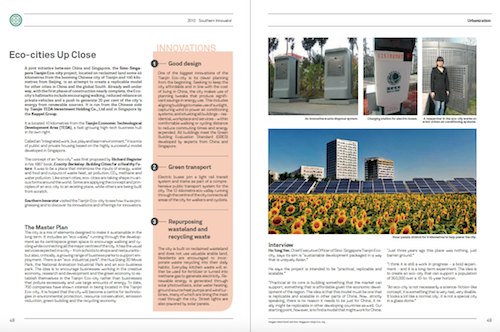
    Eco-cities Up Close in Southern Innovator Issue 4.
    Infographic Issue 4
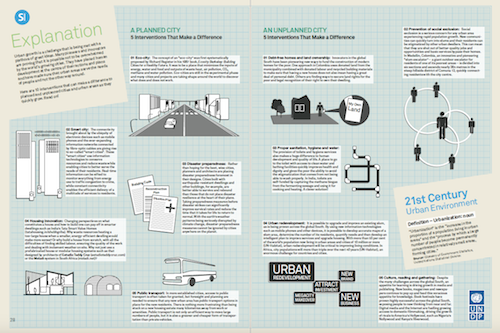
    An infographic showing planned and unplanned cities.
    Meet Southern Innovator Issue 4_mini
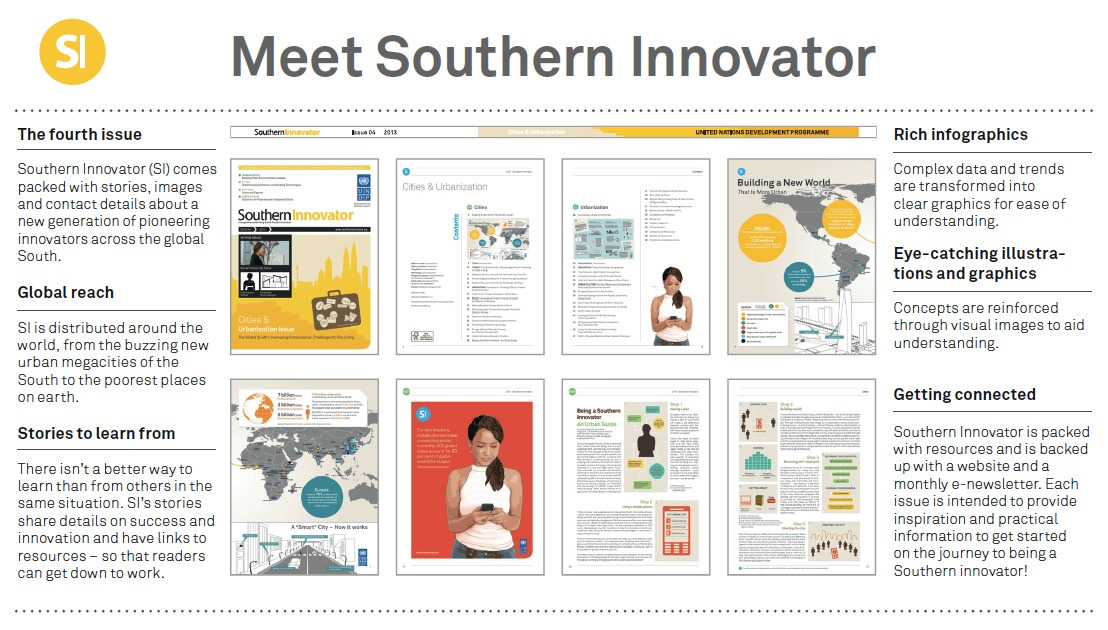
    Meet Southern Innovator.
    Issue 4
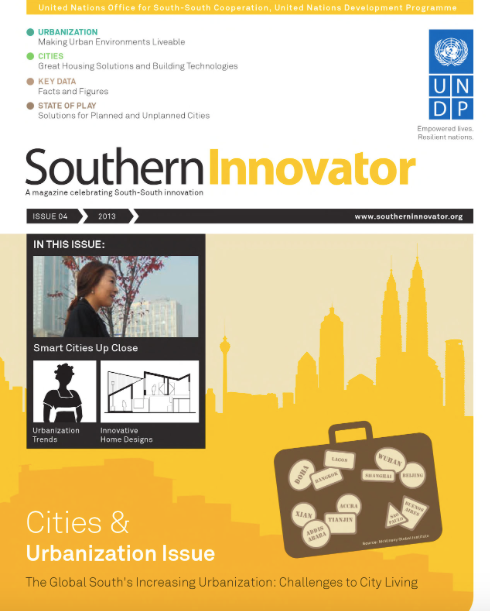
    Southern Innovator Issue 4: Cities and Urbanization is published by the United Nations Office for South-South Cooperation (UNOSSC).
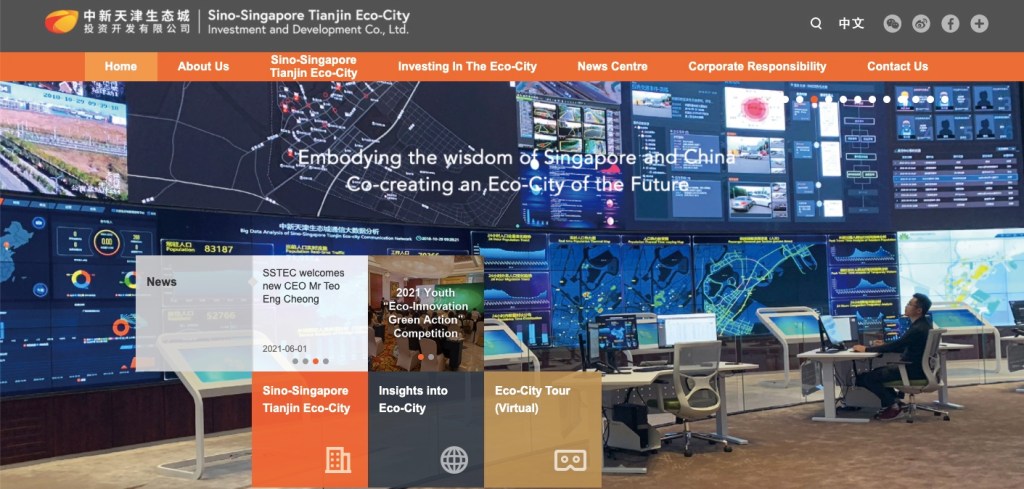
    Big screens watch over the eco city. By harnessing big data, the eco city can keep a close watch on the city and the needs of its residents. If resources are to be used efficiently, then big data is required to make this happen.
    The eco city has broad streets and the air is clean and free of pollution. Dedicated routes for walking and cycling ensure people can safely move around the city.
    Southern Innovator, United Nations Development Program (UNDP)’s quarterly magazine focusing on creativity and innovation emerging from the global South, published an article on the Eco-City entitled “Eco-Cities Up Close”. The article featured the Eco-City’s masterplan, green transport, efforts on waste water treatment and waste management, calling it “a replicable model for other cities in China and the global South”.”

    © David South Consulting 2017