Tag: consumers

  • Venezuela’s Currencies Promote Cooperation Not Competition

    Venezuela’s Currencies Promote Cooperation Not Competition

    By David SouthDevelopment Challenges, South-South Solutions

    SOUTH-SOUTH CASE STUDY

    The global economic crisis has spread around the world and is bringing many problems in its wake.  As global currency markets gyrate wildly, and people find they can go from having wealth to being poor almost overnight, the question is being asked: “is there another way?”

    The global economy is slowing rapidly. Even Iceland – a country recently named as having the best quality of life in the world (Human Development Index) (HDI) – has gone broke, and many other nations around the world will face serious economic crises. People will need to protect themselves from the worst effects of the fallout from various economic bubbles bursting.

    Runaway inflation, as is occurring in Zimbabwe – reaching 231 million percent in October, 2008 according to official sources – shows faith in a country’s currency can be sorely tested. But do people and the poor in particular, need to be prisoners of the economy managed by a national currency?

    The ‘prosumer’ movement (http://en.wikipedia.org/wiki/Prosumer), where consumers take an active role in re-shaping markets and economies to their benefit, around the world is looking for ways to bypass national currencies and make food, goods and services more affordable and stable, improving the lives of the poor. One way this is done is through alternative currencies (http://en.wikipedia.org/wiki/Alternative_currency).

    Cimarrones, or the Cimarron, joins 10 other alternative currencies currently in operation across Venezuela. They are circular cardboard tokens with a picture of a runaway slave on them.

    Supported by Hugo Chavez, the country’s president, the new currencies are aimed at tackling poverty and establishing new economies. The currencies can’t be exchanged for the Venezuelan currency, the bolivar.

    It works like this: to be a prosumer, you must first bring something to sell before you can buy anything. The range of products for sale at prosumer markets is not vast, but that isn’t the point.

    “It’s magic,” Pablo Mayayo, an Argentinian advising Venezuela on prosumer schemes, told The Economist. “ When you take away money, which is the cause of almost all the great evils in the world, people relate to each other in a different way, by cooperating, not competing.”

    Argentina pioneered so-called “barter markets” in response to its economic crises, helping people avoid starvation, looting and perhaps a revolution. By the end of 2002, there were 4,500 barter markets being used by half a million people producing 600 million credits.

    “They were organized geographically around church halls, car parks and baseball courts,” recalled Peter North, a Liverpool University geographer. “They offered a wide range of products and services, supplied by professionals, trades people and farmers, as well as housewives and the unemployed. Stalls attracted ‘prosumers’ in their thousands, who paid with credit coupons issued by one or more barter markets. Everyone involved was both a prosumer and a producer, since you couldn’t purchase credits or exchange them for pesos.”

    In Rio Chico, a small town in the Venezuelan coastal region of Barlovento, the prosumer currency market has people happy with the prices.

    “I grow coconuts,” said Angenia Hernandez. “In the shops they cost 3.5 bolivares each (US $1.63) at the official exchange rate), but we we’re going to sell them at [the equivalent of] 1.5.” She calls it an end to “commercial fascism.”

    Because of global currency speculation and investment flows, national currencies are not entirely at the control of national governments. High inflation seriously hurts the poor and low-waged, and national currencies can hurt the rural poor, who become prisoners to high interest rates charged by urban lenders.

    Turning to a local, alternative currency has many advantages: it stops currency speculation, stops the flow of wealth to urban areas, preserves purchasing power, keeps trading local. Avoiding the draining away of wealth to middlemen, it addresses currency scarcity, and fosters greater awareness of how economies function and the mechanisms of trade

    Criticism of these schemes say it is just a re-run of regressive company currencies and feudal tokens that were used in the past to control people and force them to only buy products from the landowner or boss.

    In Papua New Guinea , shells are used for money and are called Tabu.  It is an ancient currency system used by the Tolai people of East New Britain Island . Stephen Demeulenaere (www.network-economies.com), who has worked on alternative currencies around the world and helped with the re-introduction of the Tabu in Papua New Guinea , sees it playing a key role in the local economy.

    “Tabu was very effective at addressing poverty,” he said, “because anything could be purchased with it, from a handful of peanuts up to a piece of land or even a car, without needing national currency.  Tabu is produced traditionally by women, so theoretically nobody would suffer from a lack of it.  The advantage over the national currency is that it has a very long history of use, and people trust it more than the national currency.

    “Tabu builds wealth by facilitating the exchange of locally-produced goods and services which may not circulate in a ‘national-currency only’ economy, and values activities that may not be considered to be economically viable if the use of national currency was the only option.  In the west we see this where ‘mother’s work’, hobbies, mutual-aid and other traditional under-valued but economically important activities are not valued monetarily.

    “By encouraging the exchange of locally-produced goods and services, wealth is built in the community from the ground up.”

    Over 75,000 people now use the shells, usually traded in great rings.

    Getting the introduction of an alternative currency right is critical. In Argentina, such currencies were criticised for being manipulated by criminal gangs and political forces.

    “The main advice I have is to study the community closely, and our website at http://www.complementarycurrency.org, provides free resources for people wishing to start their system,” Demeulenaere said.

    “The system must be transparent so that people trust it and participate in maintaining its health and stability; democratic, so that it can not be abused by those in power; appropriate, so that it achieves general social and economic goals and aspirations of the community; and to be complementary to the regular economy so that the system helps its members to improve their lives economically.”

    At the Jai Marketplace in Thailand , all of the goods in the market can be bought entirely in the local currency called “Jai’. Jai is convertible to Thai Baht or to organic, locally made cow fertilizer, and is designed to improve the local economy and the climate for micro, small and medium enterprises through the local exchange network.

    Published: January 2009

    Resources

    https://davidsouthconsulting.org/2022/10/26/african-trade-hub-in-china-brings-mutual-profits-2/

    https://davidsouthconsulting.org/2022/10/14/cash-machines-for-the-poor/

    https://davidsouthconsulting.org/2020/12/15/development-challenges-south-south-solutions-newsletter-2007-2010-2/

    https://davidsouthconsulting.org/2020/12/15/development-challenges-south-south-solutions-newsletter-2011-2014-2/

    https://davidsouthconsulting.org/2022/04/12/djibouti-re-shapes-itself-as-african-trade-hub/

    https://davidsouthconsulting.org/2022/02/10/food-inflation-ways-to-fight-it/

    https://davidsouthconsulting.org/2022/10/20/global-souths-rising-economies-gain-investor-spotlight-2/

    https://davidsouthconsulting.org/2021/07/19/global-south-trade-boosted-with-increasing-china-africa-trade-in-2013/

    https://davidsouthconsulting.org/2022/07/01/poorest-countries-being-harmed-by-euro-currency-crisis/

    https://davidsouthconsulting.org/2022/11/17/sos-shops-keep-food-affordable-for-poor-unemployed/

    https://davidsouthconsulting.org/2021/07/19/south-south-trade-helping-countries-during-economic-crisis/

    https://davidsouthconsulting.org/2021/01/23/the-sweet-smell-of-failure-the-world-bank-and-the-persistence-of-poverty/

    https://davidsouthconsulting.org/2022/10/20/trade-to-benefit-the-poor-up-in-2006-and-to-grow-in-2007/

    https://davidsouthconsulting.org/2022/10/05/women-empowered-by-fair-trade-manufacturer/

    https://davidsouthconsulting.org/2022/06/16/women-mastering-trade-rules/

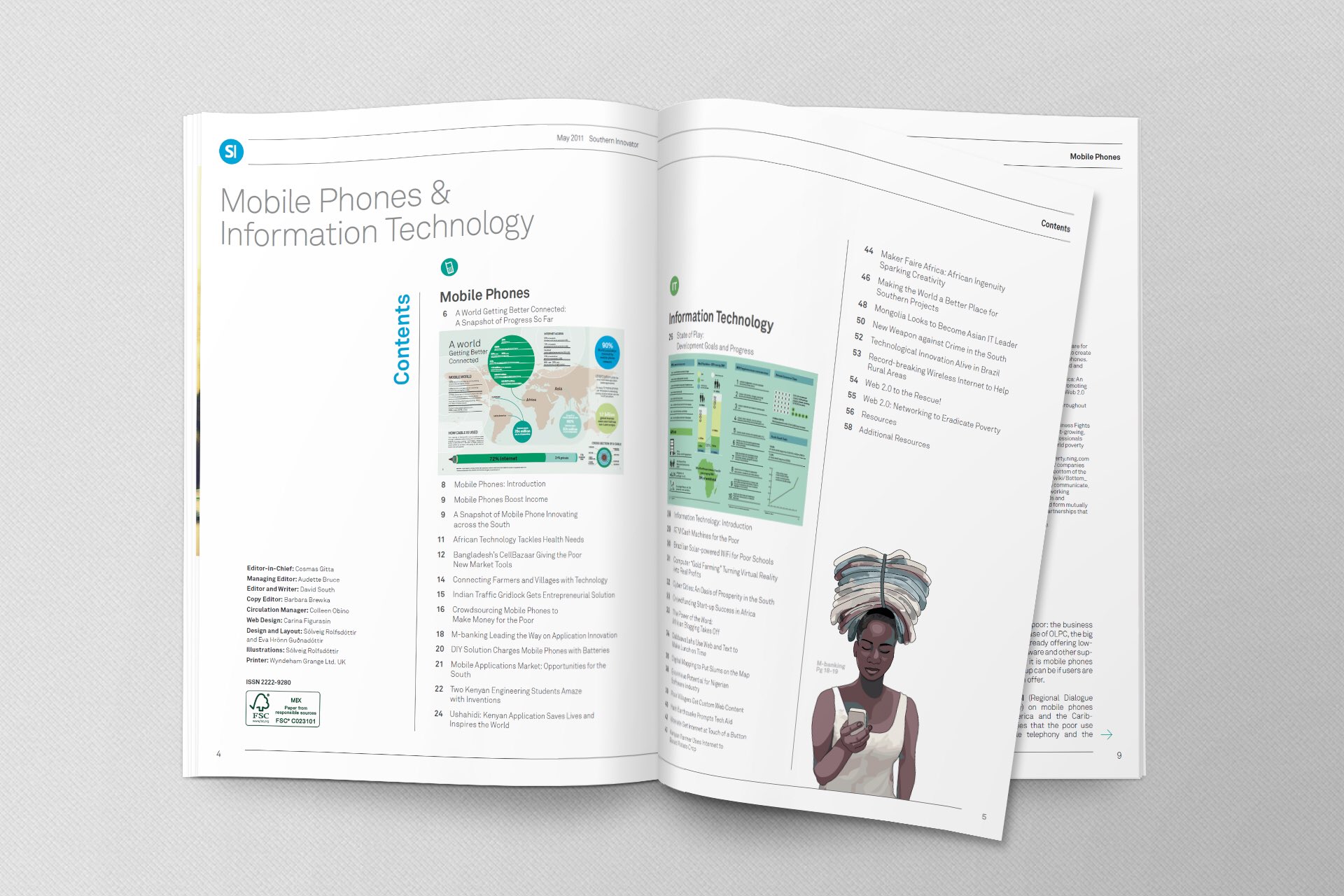
    Development Challenges, South-South Solutions was launched as an e-newsletter in 2006 by UNDP’s South-South Cooperation Unit (now the United Nations Office for South-South Cooperation) based in New York, USA. It led on profiling the rise of the global South as an economic powerhouse and was one of the first regular publications to champion the global South’s innovators, entrepreneurs, and pioneers. It tracked the key trends that are now so profoundly reshaping how development is seen and done. This includes the rapid take-up of mobile phones and information technology in the global South (as profiled in the first issue of magazine Southern Innovator), the move to becoming a majority urban world, a growing global innovator culture, and the plethora of solutions being developed in the global South to tackle its problems and improve living conditions and boost human development. The success of the e-newsletter led to the launch of the magazine Southern Innovator.
    https://davidsouthconsulting.org/2021/03/05/southern-innovator-issue-2/

    Creative Commons License

    This work is licensed under a
    Creative Commons Attribution-Noncommercial-No Derivative Works 3.0 License.

    ORCID iD: https://orcid.org/0000-0001-5311-1052.

    © David South Consulting 2023

  • Africa’s Consumer Market in Spotlight for 2011

    Africa’s Consumer Market in Spotlight for 2011

    By David SouthDevelopment Challenges, South-South Solutions

    SOUTH-SOUTH CASE STUDY

    While other parts of the world will spend 2011 worrying about their debt levels and how to spur economic growth, many factors are pointing to Africa potentially following a different story. A frenzy of activity has been building around Africa’s market opportunities and its growing middle class consumer population. Years of steady growth rates up to 2008 and the vast, untapped opportunities on the continent have sparked interest from investors and businesses alike.

    Foreign direct investment (FDI) to developing economies rose by 10 percent in 2010 due to fast economic recovery and increasing South-South flows. Africa peaked in 2008 because of the resource boom and fell by 14 percent to US $50 billion in 2010 (UNCTAD). Rising FDI from Asia and Latin America has still yet to match the decline from developed countries – still the majority of FDI to Africa.

    However, foreign direct investment to Africa had risen sixfold to US $58.56 billion between 2000 and 2009 (UNCTAD). The amount going to manufacturing and services has been growing, despite the slow down in 2009 because of the global economic downturn. Africa’s 11 largest economies are now being seen as the next to match Brazil and Russia, economic stars of the last few years.

    The continent as a whole forms the 10th largest economy in the world. Of Africa’s more than 1 billion people, 900 million can be classified as part of the consumer economy. Out of this group, there is a third – approximately 300 million people – who make modest sums by Western standards, about US $200 a month, but have spare cash to buy things like mobile phones, DVDs and new clothes, or pay for better schools. They are the population that is overlooked when attention is focused only on the very poor living on less than US $2 a day.

    This vast group is captured in the book Africa Rising by University of Texas professor Vijay Mahajan, which details the phenomenon of Africa’s middle class consumer society. He calls this group of middle class consumers “Africa 2,” with the desperately poor called Africa 3s, and the extremely rich Africa 1s.

    This new group has expanded far beyond ruling elites and government workers. Many of its members work in the private sector, as secretaries, computer entrepreneurs, merchants and others who have benefited from consistent growth rates in many African countries.

    The portion of African households with discretionary spending power rose from 35 percent in 2000 to 43 percent in 2008. The challenge will be to turn this wealth to the benefit of made-in-Africa businesses and to create stable, high-quality jobs to ensure this wealth effect lasts.

    The new wealth effect can give Africa the tools needed to tackle its long-standing development challenges and lift more and more people out of poverty and misery while reducing dependence on foreign aid. And this can add rocket fuel to the surge toward meeting the Millennium Development Goals deadline in 2015 (http://mdgs.un.org/unsd/mdg/Default.aspx).

    The rapidly rising profile of Africa is reflected by the prestigious business newspaper the Wall Street Journal recently running a series titled “Africa’s Growing Consumer Class Lures Multinationals” (http://online.wsj.com/article/SB10001424052748704720804576009672053184168.html).

    Consulting firm McKinsey (http://www.mckinsey.com/) believes Africa’s billion citizens should be seen as consumers and says the continent’s growing number of middle-income consumers now outstrips India’s. It boldly claims consumer spending will reach US $1.4 trillion in Africa by 2020, up from US $860 billion in 2008. Consumer spending rose by 16 percent a year from 2005 to 2008 before the global economic crisis.

    It is forecast that 220 million Africans now frozen out of this consumer wave will become consumers by 2015 if current trends continue.

    The IMF believes the steady growth will continue, with 5.5 percent growth for the 47 sub-Saharan countries this year.

    That’s the good news. But many African countries still rank at the bottom in the World Bank’s Ease of Doing Business survey (http://www.doingbusiness.org/rankings). Africa remains a logistical nightmare for companies. Poor quality roads, inadequate harbours and inefficient rail systems, all make it difficult to move goods around the continent and across borders.

    This makes distribution in Africa costly. Companies also often have to import building supplies and equipment to construct factories and plants. Then there is the unreliable electricity supply. Unable to trust local power supplies, many companies use their own electricity generators.

    If handled right, new brands and companies are set to join African global success stories like Mo Ibrahim (http://en.wikipedia.org/wiki/Mo_Ibrahim), who founded the mobile telecommunications company Celtel.

    Some of the new success stories include African companies pairing up with global firms as they seek local knowledge and experience. This will be a substantial opportunity for companies wise enough to organise themselves for global competition. In 2010, Sweden’s Electrolux – one of the world’s largest makers of home appliances – bought Egypt’s Olympic Group (http://www.ameinfo.com/145039.html), a North African powerhouse for household goods.

    In the Ivory Coast, Nouvelle Parfumerie Gandour (http://www.npgandour.com/english/index.html) – makers of perfume, cologne, cosmetics and talcs – is an African cross-border success story. It has factories in Ivory Coast, Senegal, Morocco and Cameroon. Thirty percent of its profits come from exports, some of which are to the United States and Europe.

    Sonatrach (http://www.sonatrach-dz.com/NEW/) in Algeria is the largest oil and gas company in Algeria and Africa. Is using its base in oil and gas exploration, production, pipeline transportation and marketing of hydrocarbons and by products, to move into other areas. It is increasing its investments in power generation, new and renewable energies, water desalination, and mining exploration and exploitation. Looking to grow its business with 30 percent coming from exports by 2015, it has spread across Africa ( Mali , Niger , Libya , Egypt ), to Spain , Italy , Portugal , United Kingdom , Peru and the United States.

    Marwa (http://www.marwa.es/) from Casablanca, Morocco, is an African fashion success story. The brand started by Karim Tazi in 2003 began with just two stores in Casablanca and Rabat. It identified the niche of very fashionable but good quality and inexpensive clothing. It blends international trends with subtle influences from Moroccan tradition. Its prices hover between six euros for a t-shirt and 100 euros for a coat. It has successfully created a Moroccan high-street fashion look that can be exported. It has opened a branch in Zaragoza, Spain and is expanding to Riyadh, Saudi Arabia, Paris, France, Beirut, Lebanon and Istanbul, Turkey.

    A survey by consultants AT Kearney (http://www.atkearney.com) found eight out of nine West African subsidiaries of global consumer goods companies discovered quicker revenue growth than their parent companies.

    All this new wealth and growth provides substantial opportunities to African brands to build their businesses and markets. The big issue will be who will rise to the occasion and who will be clever enough to learn from existing African brands that are already thriving and have shown the way.

    Two trends will also power this growth: urbanization and large youth populations. Africa’s youthful, urban population has already been reached by the telecoms sector through the rapid growth of mobile phones. More than 500 million subscribers have been signed up since 2000 (Informa Telecom and Media), a user base greater than the entire US population.

    “By 2040, the continent will be home to one in five of the planet’s young people and will have the world’s largest working-age population,” according to Charles Roxburgh and Susan Lund, authors of a study for the McKinsey Global Institute.

    “If Africa can give its young people sufficient education and skills, they could be a substantial source of consumption and production in years ahead.”

    Published: January 2011

    LINKS:

    1) Afrique Avenir: Inspiring blog tracking Africa’s rising middle class and their global economic impact. Also great photo gallery The Other Africa, a photographic journey through all 54 African countries featuring the rising middle class. Website: http://www.afriqueavenir.org/en/

    2) Afrocoffee: A design-savvy South African coffee shop chain that has expanded to Europe. It uses a modern African-themed design in its shops and product range. Website: https://www.afrocoffee.com/index.php?id=4&menustate=&L=1

    3) Africa Rising: A book by Professor Vijay Mahajan on how Africa’s consumer economy is growing and growing. Website: http://tinyurl.com/2vk3m9n

    4) Arise Magazine: Arise is a Nigerian style monthly started by Nigerian media mogul Nduka Obaigbena, who also publishes Nigeria’s leading newspaper, This Day. Website: http://www.arisemagazine.net/

    5) A video on the rising African consumer market. Website:http://annansi.com/blog/2010/12/growth-and-spending-of-african-consumer-video/

    6) Annansi Chronicles: A blog packed with the latest news and media on African business and culture trends. Website: http://annansi.com/blog/

    7) An interactive map of Africa’s new wealth and where to find it. Website:http://online.wsj.com/article/SB10001424052748704720804576009672053184168.html#project%3DAFRICAMAP0111%26articleTabs%3Dinteractive

    https://davidsouthconsulting.org/2021/10/30/2011-development-challenges-south-south-solutions/

    https://davidsouthconsulting.org/2022/10/25/2011-trends-for-the-south/

    https://davidsouthconsulting.org/2020/12/15/development-challenges-south-south-solutions-newsletter-2011-2014-2/

    https://davidsouthconsulting.org/2021/09/20/southern-innovator-and-the-gssd-expo-2011-2014/

    https://davidsouthconsulting.org/2022/12/01/southern-innovator-goes-to-south-south-expo-13-december-2011/

    https://davidsouthconsulting.org/2022/12/01/southern-innovator-magazine-is-printed-and-readied-for-distribution-31-may-2011/

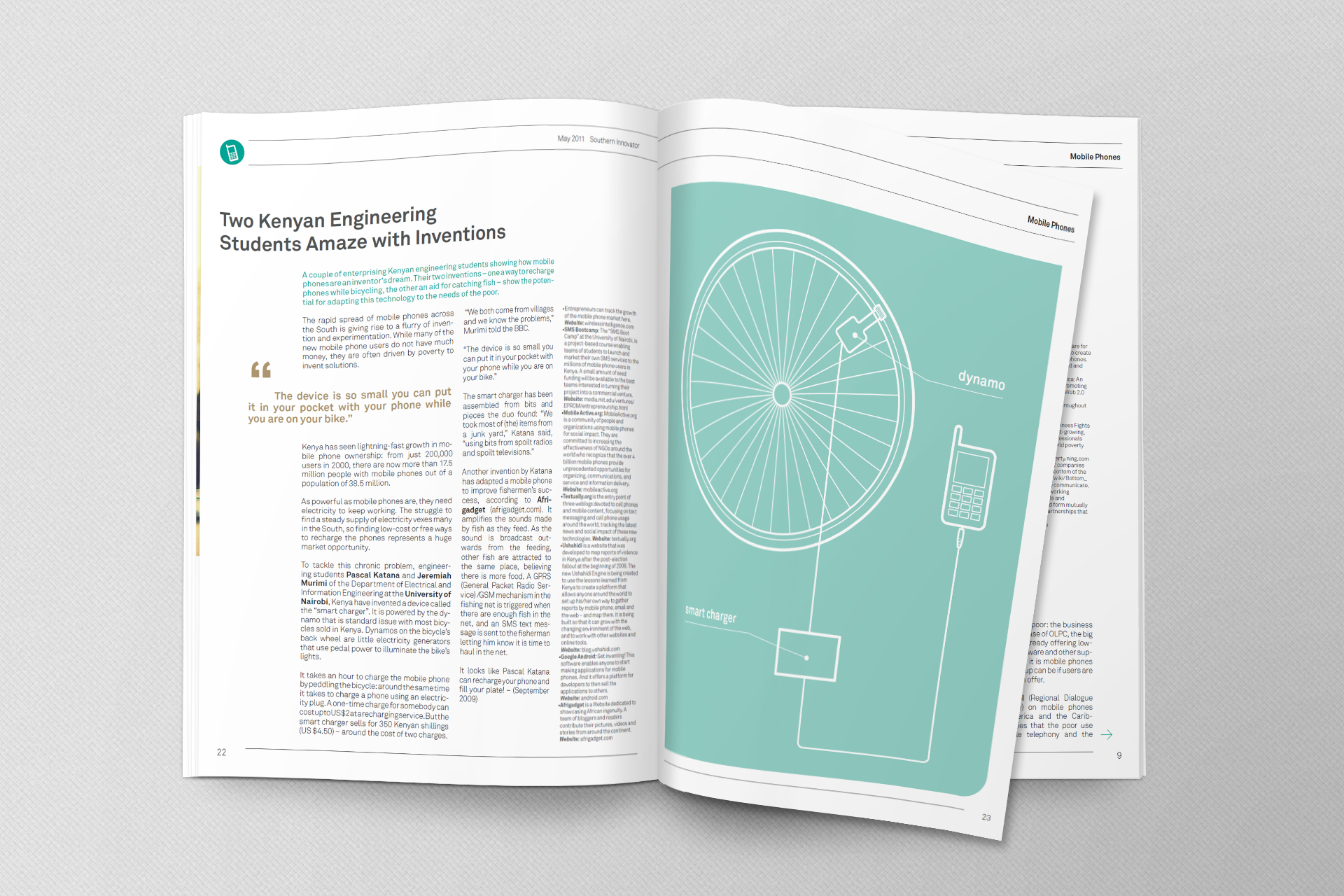
    Development Challenges, South-South Solutions was launched as an e-newsletter in 2006 by UNDP’s South-South Cooperation Unit (now the United Nations Office for South-South Cooperation) based in New York, USA. It led on profiling the rise of the global South as an economic powerhouse and was one of the first regular publications to champion the global South’s innovators, entrepreneurs, and pioneers. It tracked the key trends that are now so profoundly reshaping how development is seen and done. This includes the rapid take-up of mobile phones and information technology in the global South (as profiled in the first issue of magazine Southern Innovator), the move to becoming a majority urban world, a growing global innovator culture, and the plethora of solutions being developed in the global South to tackle its problems and improve living conditions and boost human development. The success of the e-newsletter led to the launch of the magazine Southern Innovator. 
    https://davidsouthconsulting.org/2021/03/05/southern-innovator-issue-1/

    Creative Commons License

    This work is licensed under a
    Creative Commons Attribution-Noncommercial-No Derivative Works 3.0 License.

    ORCID iD: https://orcid.org/0000-0001-5311-1052.

    © David South Consulting 2023

  • Haitian Coffee Becoming a Hit with American Connoisseurs

    Haitian Coffee Becoming a Hit with American Connoisseurs

    By David SouthDevelopment Challenges, South-South Solutions

    SOUTH-SOUTH CASE STUDY

    The Caribbean country of Haiti has had to deal with the twin challenges of recovering from a devastating earthquake in 2010 while also pulling itself out of the economic and social chaos that has resulted in its status as the poorest place in the Western hemisphere.

    Violence has also led to a number of UN peacekeeping missions in Haiti over the years, and there is now a substantial international presence in the country to aid in stabilization and economic recovery (http://www.un.org/en/peacekeeping/missions/minustah/).

    Haiti has a lot of potential when it comes to agriculture, but this would require substantial changes in the way land and agriculture are managed.

    Haiti is ranked 77 out of 79 countries in the 2012 Global Hunger Index. Access to sufficient quantities of nutritious food remains an issue for millions of Haitians. An estimated 3.8 million Haitians, or 38 per cent of the population, is food insecure (WFP 2012). Despite its fertile potential, Haiti is dependent on food aid and imports to meet its food security needs.

    Fifty per cent of the country’s food requirements are imported, and food prices have been rising since the end of 2010, the year of Haiti’s devastating earthquake. This increase has led to an overall loss of purchasing power for the majority of Haitians. Low agricultural productivity and urban encroachment on arable land provide additional challenges for Haiti’s rural populations. Eighty per cent of farms fail to produce enough to feed their households (http://www.foodsecurityportal.org/haiti/resources).

    But some are trying to create a new market for Haiti’s agricultural products to help boost farmers and farming as an occupation and an industry.

    It’s hard to imagine now, but Haiti was once the world’s largest producer of coffee in the 18th century when it was a French colony. Today Haiti produces less than 1 per cent of the world’s coffee.

    The targeting of niche coffee drinkers in the United States has introduced a new market to the special taste of the Haitian brew. While the market at present is small, some are hoping, with the right measures, it could be grown significantly, boosting both the country’s revenue from agricultural exports and incomes for coffee farmers.

    Several US-based companies are carving out a market for Haitian coffee and boosting awareness about the country’s unique coffee beans. La Colombe Coffee Roasters (http://lacolombe.com/), based in the city of Philadelphia, has already been able to export four shipping containers of Haitian coffee to the United States since 2010. The company supplies high-end chefs such as Eric Ripert and Daniel Boulud.

    In Florida, Kafe Pa Nou (kafepanou.com) – “our coffee” in Haitian Creole – is owned by Haitian-American Jean René Faustin and sells online coffee from Haitian suppliers Rebo and Cafe Selecto.

    So far, Haitian coffee has not been able to gain wider distribution through mass buyers such as Starbucks because it has not been possible to supply the quantities required to fulfill such a contract.

    Haiti would need to boost its current average coffee yield of 250 kilograms per hectare to double or triple that yield to gain large-scale contracts.

    “Haiti was for a brief moment in time the biggest producer of coffee for export in the world,” Gilbert Gonzales, Vice President of coffee exporter Rebo (http://rebo.ht/The%20Technics.htm), told Medium for Haiti (https://medium.com/medium-for-haiti). But “right now, most people would say it’s impossible” for Haiti’s coffee sector to return to international prominence.

    “We’re not saying that it’s possible in the next two years, maybe not even in the next 12 years,” he said. “But it is possible.”

    The coffee cherries used to make the popular beverage are processed in one of two ways: a dry process and a wet process. In Haiti, the dry process is more commonly used to form a hard cocoon on the outside of the coffee cherries to help preserve them for a year or more.

    This enables farmers to preserve the coffee cherries so they can keep a portion of the crop back as a safety reserve.

    The wet processed beans are first immersed in water and then the pulp is washed away before the beans are dried (http://coffee.wikia.com/wiki/Wet_process). The superior flavor this creates has attracted fans in the United States, especially in the trendy neighbourhoods of Brooklyn, New York and San Francisco, California. By bucking the traditional Haitian dry processing method for the beans, it is possible to earn three times the market price by selling wet-processed beans.

    Haiti’s history of coffee growing goes back to the 1700s. At the time, the country grew half the world’s coffee. This helped to make the French colony highly profitable.

    This long heritage has left the country with a unique asset: original Arabica typica coffee trees first imported by Europeans to Haiti. These coffee trees are considered to be heirloom because they are so old and untainted by modern breeding methods. According to Douglas Weiner in Medium for Haiti, “when you drink coffee from Haiti, it’s like drinking coffee from 200 years ago.”

    Weiner is part of a family business, Geo Weiner (http://selectohaiti.com/home/), which has been selling Haitian coffee for four generations and is one of the few surviving coffee exporters in the country.

    The country has an estimated 200,000 coffee farmers. Because their methods have not changed much, they are effectively organic (https://en.wikipedia.org/wiki/Organic_food). Most farmers can not afford chemical fertilizers and pesticides.

    The coffee farms are located in mountain areas with a rich biodiversity of plants and trees. This stands in stark contrast with much of the rest of the country, where deforestation has left the country with just 2 per cent of virgin forest left. Coffee-producing areas are lush and green because coffee is one of the few cash crops that makes enough money to keep it worthwhile to preserve the trees and foliage. In other parts of the country, many are making money from turning trees into charcoal for cooking fuel, the most common fuel for most of the country’s population.

    Haiti’s coffee growers have had a hard time coping with the rise and fall of world coffee prices. The world market price for coffee dropped in the early 2000s as the markets were flooded with coffee from Brazil and Vietnam. In response, farmers then cut down the coffee trees and replaced them with subsistence crops such as corn and beans.

    With the amount of coffee grown in Haiti dropping quickly, the number of exporters in the country plummeted from 20 companies to two companies today, Geo Weiner and Rebo.

    Jobert Angrand, Executive Coordinator of the National Institute of Coffee (http://www.icefda.org/), believes coffee production declined in Haiti because of a wide range of problems, from diseases and pests to aging trees, too-small plots and inefficient production methods. Per-hectare coffee yields are as low as one-tenth of production in Latin America.

    The Vice President of coffee exporter Rebo says these problems are holding things back. “I don’t think today we’re looking into going mainstream,” said Gilbert Gonzales. “We can’t. There is not enough volume for that.”

    Because production will be small, Gonzales believes Haiti would be wise to target the higher end of the marketplace with American grocery stores such as Trader Joe’s and Whole Foods: “It’s looking into the higher-end gourmet shops, things like that,” he said, “so that we could really share with the rest of that world the quality available from Haiti.”

    Significant purchases of Haitian coffee have been made by various overseas companies, which does give hope that this plan could work. Irish coffee company Java Republic bought 97 tonnes of Haitian coffee from the Rebo exporter in 2010.

    Published: August 2013

    Resources

    1) National Coffee Association: Ten Steps to Coffee. Website: http://www.ncausa.org/i4a/pages/index.cfm?pageid=69

    2) International Coffee Organization: The International Coffee Organization (ICO) is the main intergovernmental organization for coffee, bringing together exporting and importing governments to tackle the challenges facing the world coffee sector through international cooperation. Its member governments represent 97 per cent of world coffee production and over 80 per cent of world consumption. Website: http://www.ico.org/

    3) Coffee Research: Growing Coffee Beans at Home. Website: http://www.coffeeresearch.org/coffee/homegrowing.htm

    4) Puro Fairtrade Coffee: Puro is a leading brand of Fairtrade and Fair Trade Organic coffee that works in partnership with the World Land Trust to purchase and protect areas of precious rainforest in South America. Website: http://www.purocoffee.com/

    More on Haiti here: State Of Decay: Haiti Turns To Free-Market Economics And The UN To Save Itself

    https://davidsouthconsulting.org/2021/10/28/ending-gang-violence-while-cleaning-the-streets-in-haiti/

    https://davidsouthconsulting.org/2021/09/01/haiti-earthquake-prompts-tech-aid/

    https://davidsouthconsulting.org/2021/10/28/milk-co-operatives-help-hungry-haiti/

    https://davidsouthconsulting.org/2020/04/22/state-of-decay-haiti-turns-to-free-market-economics-and-the-un-to-save-itself/

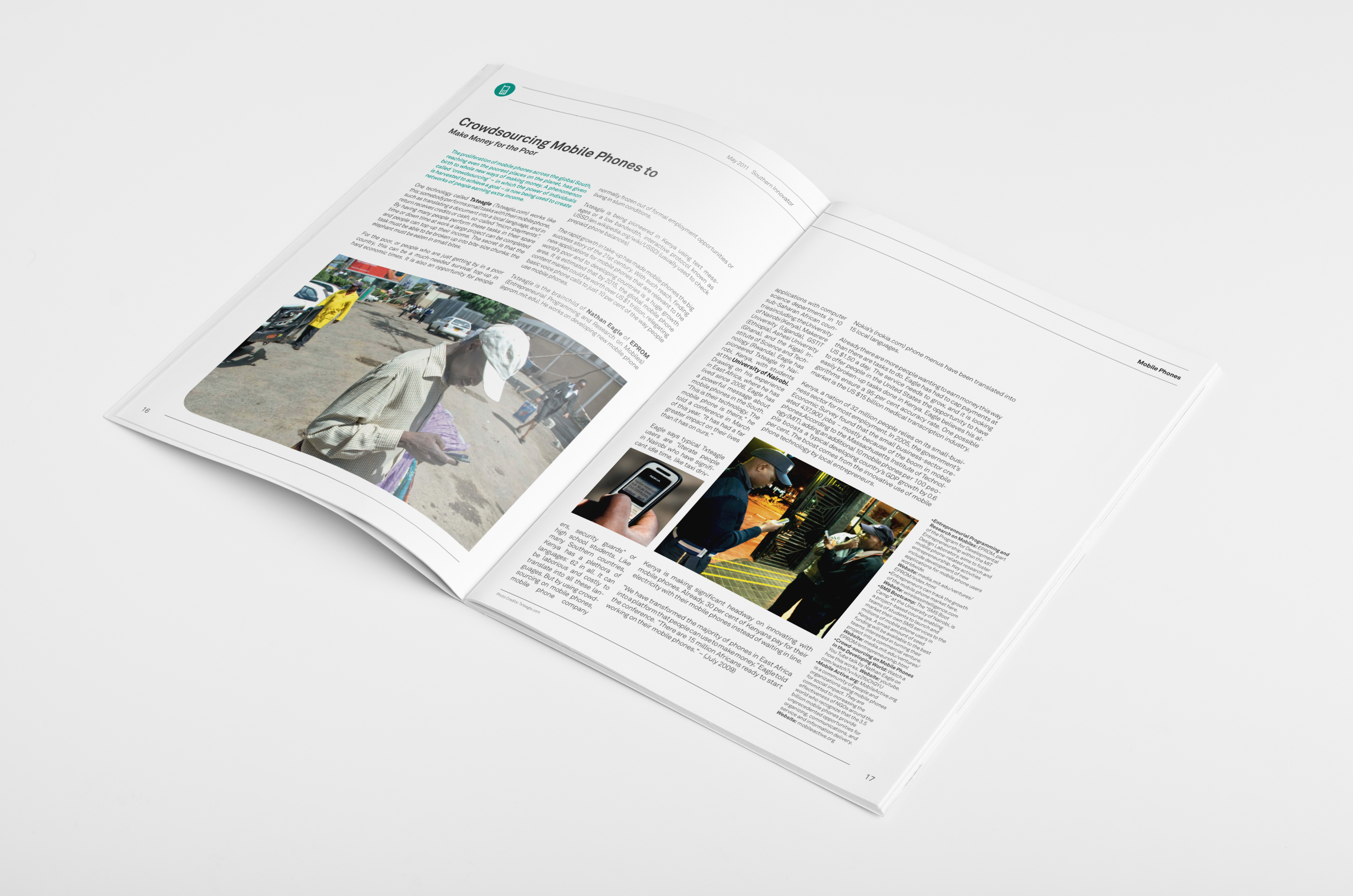
    Development Challenges, South-South Solutions was launched as an e-newsletter in 2006 by UNDP’s South-South Cooperation Unit (now the United Nations Office for South-South Cooperation) based in New York, USA. It led on profiling the rise of the global South as an economic powerhouse and was one of the first regular publications to champion the global South’s innovators, entrepreneurs, and pioneers. It tracked the key trends that are now so profoundly reshaping how development is seen and done. This includes the rapid take-up of mobile phones and information technology in the global South (as profiled in the first issue of magazine Southern Innovator), the move to becoming a majority urban world, a growing global innovator culture, and the plethora of solutions being developed in the global South to tackle its problems and improve living conditions and boost human development. The success of the e-newsletter led to the launch of the magazine Southern Innovator.
    https://davidsouthconsulting.org/2021/03/05/southern-innovator-issue-1/

    https://davidsouthconsulting.org/2021/03/05/southern-innovator-issue-3/

    Creative Commons License

    This work is licensed under a
    Creative Commons Attribution-Noncommercial-No Derivative Works 3.0 License.

    ORCID iD: https://orcid.org/0000-0001-5311-1052.

    © David South Consulting 2023