Categories
Archive id magazine

Province For Sale: Step Right Up For An Opportunity To Buy What You Already Paid For

“This is not being driven by fiscal or ideological motivation, though that may seem funny.” Conservative advisor James Small

By David South

Id Magazine (Canada), December 12 to December 26, 1996

It is looking more and more like the Conservative government will launch a massive privatization campaign by the middle of next year. And it is becoming clear how key government assets such as Ontario Hydro, liquor stores and public broadcaster TVO will end up in private hands. The prevailing ideology of key advisors to the Harris government, including influential financial heavyweights at Canada’s top underwriters, is leaning towards a free-for-all where the highest bidder will win. 

To date, the government has been coy about its plans, occassionally making vague threats that certain services need to be “looked at.” Assets that could go on the block include road maintenance, jails and the Ontario Clean Water Agency. In August, the government appointed former banker Rob Sampson as the minister for privatization. His days as vice-president of corporate finance at Chase Manhattan make him a popular candidate with the suit, tie and blouse crowd on Toronto’s Bay Street. 

While Sampson is so far surrounded by only a handful of advisors, the plan is to create a privatization agency that will supervise each sell-off after getting the go-ahead from Cabinet. 

Sampson’s policy advisor James Small, sums up the government’s attitude: “This is not being driven by fiscal or ideological motivation, though that may seem funny. We can do better for less, even though that may sound trite.”

The government’s taxpayer-is-always-right attitude means it believes the best option is to float the newly privatized companies on the stock market, letting the highest bidder win. 

“We have sophisticated investors in Ontario,” continues Small. “[Privatization] is not driving us to expand shareholders in Ontario. Can we, as taxpayers, benefit? What will give the best results. It is not ideological. In Canada we have a consumer culture and a very mature social structure. The market will determine what people will pay for things. We didn’t get elected to sell the family silver.

“There has been 16 years of this happening. But is Margaret Thatcher the way to go? One of the advantages for Ontarians is that we can pick and choose the best approach. It’s difficult to point to one part of the world, one way we could provide better service.”

Shareholder Democracy

A concept popularized by British prime minsiter Margaret Thatcher in the 1980s, shareholder democracy actually saw the light of day in British Columbia back in 1979. Then, premier Bill Bennett embarked on an ambitious scheme to give every citizen of the province, including children, five shares in the British Columbia Resources Investment Corporation, a mining and logging company. Out of a population of 2.4 million, 2.07 million applied for the shares. While that idealistic experiment eventually failed as a series of bad deals pushed the share price down and arrogant executives pissed people off, it was a bold initiative. 

Similar schemes have been used in Eastern Europe to increase private ownership in the economy. 

But it is looking more and more like the government is going to try and avoid even a semblance of giving Ontarians a fair shake, by selling shares on the stock market to whoever can afford them. While the NDP and unions are opposed to privatization for some very good reasons, they are missing out on an opportunity to push the government to divide the shares up amongst all Ontarians (not necessarily a big stretch for the NDP, who brought us toll highways). 

Shareholder democracy has developed two broad – and opposing – interpretations. For the left, a shareholder democracy in its truest sense is public ownership. For right-wing idealists, it means a nation of share owners playing the stock market with all the aggressiveness and greed of free-market capitalists. 

Like any ideal, the reality is far more disappointing. Any small-time stock holder will tell you about arrogant CEOs and board members not listening to them. Ask any Ontarian on the street, and they will tell you about arrogant and incompetent civil servants who aren’t listening to them. 

There is a more radical and fairer approach to privatization that would suit the populist rhetoric of the Conservatives. It involves selling shares along the lines of WWII war bonds. This solution would satisfy left-wing concerns the rich would run away with all the loot, while massively increasing share ownership in Ontario and raising funds to improve services and infrastructure. By selling millions of shares cheaply, and forbidding the trading of those shares, millions of Ontarians could reap the benefits of profit-making assets. This scheme would be contingent on reorganizing those agencies to become profitable, but could avoid a fire sale of taxpayer-funded agencies to wealthy corporations and investors. If critics of the government took the opportunity to guide the Conservatives, when a privatization is announced, towards mass share ownership, some good would come of it. 

With all its scandals, bad publicity, grotesque executive salaries and inconsistent service that has turned privatization into a dirty word in the UK, the fact is share ownership did go up. In 1979 when Conservative prime minister Margaret Thatcher was elected, shares were owned by 2.5 million people; by 1992, 11 million people had shares or a quarter of the population. Narrowly defined, that is a success. 

But the mainstream financial community loathes the idea for obvious reasons. At consultants KPMG, corporate evaluater John Kingston symbolizes the opposition to anything other than a straight sell-off at the stock exchange. “Issuance of shares to employees doesn’t put any new money into the coffers, like in the Eastern European example of gifting shares,” he says. “But selling shares to the public does provide some compensation. They must satisfy taxpayers by getting the right amount.”

“I think if government is going to privatize then it is a good time to do it,” says Deloitte and Touche’s Jim Horvath, a veteran of privatizations in Argentina, Hungary and Brazil, who supports a quick sell. “The stock market is up. There are a lot of deep pockets looking for investments.”

The mantra for an open sale will get louder as each privatization approaches. But such a sale does have its disadvantages. 

Advantages of an open sale: 

Can get the highest price. Use the funds to pay down debt or a one-time only increase in funds for something like health care. Argue protecting taxpayers’ interests by selling for the best price. The asset could raise funds on the stock market to improve infrastructure/services. Once in private hands, future governments will have a hard time trying to buy assets back. 

Disadvantages of an open sale: 

Taxpayers are also consumers; they could get screwed by any increase in rates. There is no guarantee the government will use funds for public good (maybe they will build another casino?). Any pay-off is once only, whereas the LCBO for example, makes money every year. Government could make a mistake and sell for too low a price. 

Government Agenda

Two factors could significantly slow down the government’s ability to launch privatizations. The Conservatives have relished making cuts to government services despite labour unrest, but it has shown little skill at the more intellectual task of implementing a new philosophy. Major planks of their Common Sense Revolution, such as workfare, are bogged down and in chaos. Privatization will need a sophisticated sales job to counter-attack the slick television and newspaper ads unions have been running for the past year attacking privatization. Encouraging mass share ownership would show that leadership the government sorely needs. 

The second liability is its own ambitious agenda. Already the Legislature has had to extend its term to try and deal with a backlog in reforms, including chopping another $3 billion, rearranging how government services are delivered and fighting the province’s doctors. But if it must privatize, then the honourable thing to do is to offer mass ownership. To do otherwise will show Ontario isn’t even capable of the heights of imagination some of Eastern Europe’s new democracies have shown. 

Note: I debated this topic on CBC TV’s Face Off after this was published. 

Cover headline: “The Harris Tories have an opportunity to turn Ontario into a shareholder democracy. Will they take it?”

This work is licensed under a Creative Commons Attribution 4.0 International License.

ORCID iD: https://orcid.org/0000-0001-5311-1052.

© David South Consulting 2025

Categories
Archive Blogroll id magazine

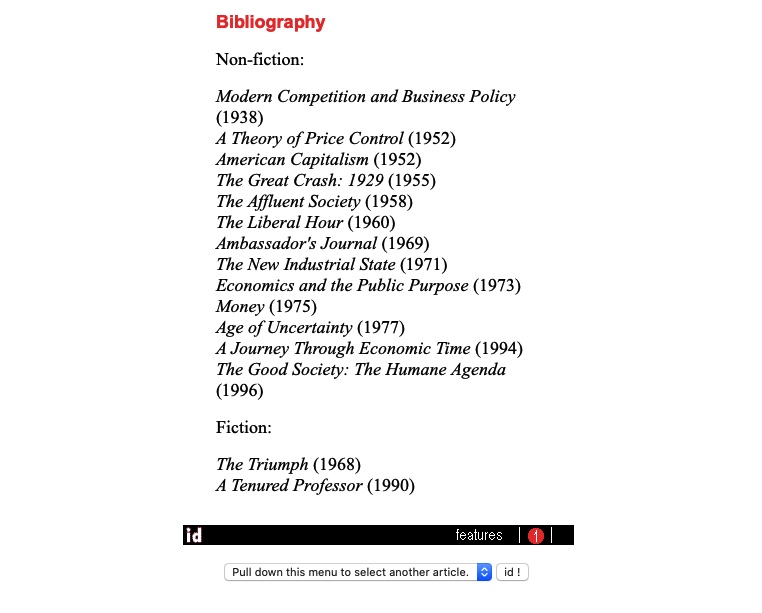
Man Out Of Time: The World Once Turned On The Ideas Of This Guelph Grad, But Does The Economist John Kenneth Galbraith Know The Way Forward?

By David South

Id Magazine (Canada), January 23 to February 5, 1997

John Kenneth Galbraith was photographed by David South at the University of Toronto.

It was with hungry enthusiasm that I rushed to hear the great liberal economist John Kenneth Galbraith speak. It was with enormous disappointment that I found a genius emptied of solutions to the current political battles in today’s Ontario.

For those unfamiliar with Galbraith, think of him as a hybrid of the liberalism of former prime minister Pierre Trudeau and the manner of Jimmy Stewart. Now 88, the former Guelph agricultural economist became a servant of the US government just as president Franklin Roosevelt was beginning to introduce the New Deal – today’s rusting welfare state – as a solution to the cruel hardships imposed on Americans as a result of the Great Depression. Galbraith rode out the Second World War in a senior government position as Roosevelt’s price-control czar. He later advised Democratic presidents John F. Kennedy and Lyndon Johnson, before seeing his influence in American economic thought wane under Ronald Reagan’s Republicans.

Galbraith has long followed the ideas of British economist John Maynard Keynes, who believed goverments should keep money tight in good times, but should spend their way out of bad times to avoid undue hardship. Galbraith also made the plight of the poor one of the pillars of his economic theory, and criticized the unnecessary appetites and demands created by the goliath American advertizing industry. He has supported wage and price controls and once, in the 1930s, even wanted to join the American Communist Party.

Last week, Galbraith breezed into Toronto with his ivy league roadshow. Speaking to a stodgy crowd of liberals (and Liberals, including former prime minister Pierre Trudeau and failed Ontario leadership candidate Gerrard Kennedy) at the University of Toronto, Galbraith was at an institution that comes as close as Canada gets to his current stomping ground, Harvard.

Symbolically, Galbraith couldn’t have visited Ontario at a better time. The Conservative government of Mike Harris is in the middle of an ambitious campaign to reverse everything that Galbraith has stood for: budget deficits to avoid depressions; social programmes to prevent poverty; taxes on the rich to fund those programmes; government policy subservient to public good. Harris oozes contempt out of every pore for the pillars of Galbraith’s thinking. In fact Ontario, once the bedrock of Canadian liberalism, is now joining Alberta in dismantling the welfare state.

A graduate of the University of Guelph when it was still the Ontario Agricultural School, Galbraith took his bitter memories of farming in southern Ontario to the University of California, Berkeley and subsequently to the Roosevelt government.

In his day, Galbraith was amongst a rare species of mainstream economists that earned respect from the once-abundant Marxists who cluttered universities. Not that the Marxists liked his compromises and complicity with the American government, or his assertions that he could save capitalism. But they thought he softened up the system for some body blows to be delivered by the workers’ revolution.

I am a member of a generation that grew up on government largesse, well-funded public schools, family allowance, university grants, and make-work progammes. But we have seen a lot of that eroded over the past eight years, during a period of high unemployment not seen since the Depression. It was time to see if this titan of liberal thought had something new to say.

Galbraith’s talk had two main points: the market economy is the best system going; he supports a guaranted minimum salary to prevent poverty. Other than that, Galbraith’s speech was a rehash of the same ideas he has been mulling over for the past 50-plus years. It could be called Liberalism 101.

His speech was peppered with euphamisms like the “socially concerned.” Perhaps he was pulling his punches so as not to offend the “distinguished” audience. The most exciting moments displayed his dry wit: “In the United States , the war against the poor having now been won,” or “We, the socially concerned, do not seek the euthanasia of the rentier class.”

He struck out against annual balanced budgets because they have been used as an excuse in the US to cut off benefits to the poor. He also slammed the globalization-uber-alles philosophy that sees welfare policies as uncompetitive – a sentiment that doesn’t seem to be in vogue these days with liberals. Last week, Prime Minister Jean Chretien told the South Koreans they need to remove jobs-for-life provisions to join the global marketplace.

His ideas and his approach to communicating those ideas come from a special historical time. A time when governments under pressure from trade unions and the far-left and right political parties decided to make capitalism a little friendlier. But they needed advisers who could speak the language of the elite. Eloquent, confident, pragmatic – advisers who felt comfortable in the courts of the democratic government. They didn’t want hot-headed union guys or hectoring left-wing demagogues.

Galbraith takes credit for civilizing capitalism and ensuring its survival: “It would not have survived had it not been for our successful civilizing efforts. We, the socially concerned, are the custodians of the political tradition and action that saved classical capitalism from itself. We are frequently told to give credit where credit is due. Let us accept it when it is ours.”

Galbriath’s economic theories have always been grounded by morality, preferring to avoid being a servant to flow charts. It is his most insightful side. When many fear to speak in broad terms about current economic problems, where many fear to make connections, Galbraith has pieced the complex puzzle together, much to the frustration of those who believe capitalism should be left unfettered. It is his worthiest legacy.

The Galbraith Interview

You point out it is reforms that have given capitalism a new lease on life. What policies would alleviate the worst aspects of today’s capitalism?

We still have the oldest problem. (That is) to eliminate the cruelties that are inherent in the system. In the United States, and I imagine also in Canada, we still have the terrible problems of the urban poor, of the people who do not make it. I see one of the central tasks of our time is to do two things: to provide a safety net so that in a modern rich society we don’t let people starve, and that we provide the means for escape from urban poverty.

How would you elliminate poverty?

No novelty about that. Two things are absolutely essential. One, that there be a basic safety net. That we accept in a modern society that there has to be a level of income below which people are not allowed to go. I do not join this attack on welfare, this notion the poor should be allowed to starve. Another thing is a strong educational system, which allows people to escape from poverty in the next generation. Those are the two absolute essentials.

Should government just concentrate on ending poverty and abandon universal programmes like public health care?

You can always have a conversation that separates itself from the reality. I think in Canada if some politician or some political group wanted to repeal the health system, they would soon find themselves in considerable disfavour. If they were committed to allowing the poor to starve, they would get a reputation for cruelty that no civilized society would tolerate. And if they started saving money on the schools, as some already have, we would find out how absolutely essential good education is for economic and social well-being. So we have a difference between what is possible in oratory and what is possible in reality … When the axing comes, it is a good deal less popular than it is in the previous rhetoric.

Who do you think, within or outside political movements, represents the socially concerned today?

I don’t speak generally on this. There is in all countries a substantial voting and politically expressive group. In the United States it is the political left, in Britain it is the Labour Party, in France it is the socialists, in Germany the social democrats. They are broadly committed to the welfare state and I think will remain so.

Would you include the Liberal Party in Canada amongst those?

I would include a substantial part of the Liberal Party in the United States. The Liberal Party in Canada, like the Democrats in the United States, have a double orientation, on one hand to the welfare state and on the other hand a more centrist attitude. Both parties have an internal problem to resolve.

Do you think they have lost interest in the welfare state?

To some extent I regret that. We must take some responsibility for human suffering and human well-being.

You don’t see that with the Democrat Party?

I prefer it to the Republicans.

Are some of these policies like welfare reform in the US making it harder for the poor?

I was not in favour of welfare reform.

I grew up in a very poor household but was able to go to the University of Toronto because of various government policies. In fact, they have kept me from destitution. You have written about a culture of contentment that prevents further social reforms. Will it whither?

Those of us who have been associated with the welfare state have made a lot of people comfortable, happy and conservative. We have undermined our own political influence by our success.

Do you think current levels of high unemployment and economic stagnation might erode that contentment?

No, if we suffer another recession there will be a desperate effort to have the government do something about it. The present conservatism is an aspect of good times. We had it in the 1980s under Reagan.

Are we still in good times?

We still have a lot of people who have a problem. We should have sympathy.

Do you see any political parties in Canada who defend the welfare state?

I’ve lived all my life in the the United States and I’ve always avoided coming back to give Canada advice. As I said in my lecture, anybody who does that should have stayed in Canada for his own lifetime. Let Canadians look after their affairs in Canada.

You said the socially concerned don’t seek income equality. I guess that is where you split with socialists?

I accept the inevitable, that people are going to be different in aspirations, ability and luck and probably different in parentage. All of this is going to mean differences in income.

Citations

Political Governance of Capitalism: A Reassessment Beyond the Global Crisis by Helmut WillkeGerhard Willke, Edward Elgar, 2012

https://davidsouthconsulting.org/2021/07/20/case-study-3-id-magazine-1996-1997-2/

https://davidsouthconsulting.org/2022/11/16/canadian-magazines-newspapers-1990s/

This work is licensed under a Creative Commons Attribution 4.0 International License.

ORCID iD: https://orcid.org/0000-0001-5311-1052.

© David South Consulting 2023

Categories
Archive Blogroll id magazine

Casino Calamity: One Gambling Guru Thinks The Province Is Going Too Far

By David South

Id Magazine (Canada), May 16-29, 1996

Will Ontario become saturated with gambling? It is a question being asked more and more as the provincial government moves to allow unprecedented choice for gamblers.

Bars and hotels will soon have video one-armed bandits (known as video lottery terminals and slammed by the Addiction Research Foundation as video crack) and permanent charity casinos will be set up throughout the province.

Finance minister Ernie Eves’ budget may have brought joy to the hearts of the province’s gambling fanatics, but whether this is sound economic policy is less certain. Eves hopes to reap $60 million this year from the VLTs, or fruit machines.

Speaking to id under anonymity due to the sensitivity of his work, a private gambling consultant to the provincial government says the extended gambling could monkey-wrench the government’s on-going plans to build casinos to attract American tourists.

He says, “There is a maximum to any market area, to the number of people who will come. In Ontario, the idea was to have monopoly markets to create jobs and revenue for government. Spreading casinos out on the border areas would maximize jobs. But the introduction of VLT machines and permanent charity casinos means there will be a narrowing of the market. As soon as you set up the VLTs, there will be a permanent impact.”

He believes littering the province with casinos – both large and small – and VLTs, will be the equivalent of pissing in the wind for the government, arguing tourists will only be attracted to Ontario casinos if they consist of only a few, flashy must-see attractions based on the Las Vegas model.

Tourist temptation

The focus on tourists is key. Research has shown that gambling aimed at residents living near casinos can actually harm other local businesses like restaurants and movie theatres, as people spend more of their entertainment budgets on gambling. Add to this equation the fact that most of the profits go out of the community to Queen’s Park, and a casino can hurt local economies.

Knowing this, the government has instead focused on attracting tourists. In the case of the Windsor casino, it has worked – 80 per cent of gamblers there come from the US. The economic equation is simple: every dollar sucked in by the casino is a net gain for Canada that doesn’t hurt any other Canadian businesses (as for Detroit, that is anther story).

If the government keeps on its current course, Ontario could have 10 working government-owned casinos in the near future. By year’s end, the Windsor casino will be joined by Niagara Falls and the Rama First Nations casino near Orillia.

According to Anne Rappe of the government-owned Ontario Casino Corporation public outrage could change plans. “The government has been clear in its commitment to letting voters voice their view on casinos for other sites.”

Just a fad

Governments, like people, follow fads. The trend towards harder forms of gambling, like casinos and VLTs, as opposed to softer gambling like lotteries, represents a desperate move by local governments to hang on to tax revenues.

Even more than flashy schemes to build theme parks, art galleries and museums, casinos are seen as a sure-fire way to revive ailing communities by attracting tourists. Throughout North America, consultants and casino companies are telling government to turn to gambling if they hope to boost public treasuries and generate jobs. The pitch in these hard economic times goes down a treat with governments beseiged by voters to, on the one hand, reduce debt and deficits, and on the other be seen to be creating economic opportunity in the age of downsizing.

Casinos also serve another purpose. While taxes seem punitive, making money off of gamblers appears on the surface to be a win-win situation. The government gets the money it wants,while gamblers get the adrenaline rush they crave, and maybe some cash. The whole arrangement seems to be victimless – if you want to gamble, you pay the price.

For their part, gambling advocates envision Ontario as a Mecca for American gamblers chasing our low dollar, low crime, no tax casinos. They say we can have it both ways: a safe, low-crime Ontario in which islands of gambling fever suck in much-needed American dollars to prop up the provincial government treasury.

Gambling has been legal in Canada since 1969 (though the oldest casino is the gold rush-era Diamond Gerties in Dawson City, Yukon), but it wasn’t until the New Democrat government of Bob Rae that the idea of government-run or sanctioned permanent casinos became an option in Ontario.

The gambling consultant says the appeal of casinos is that they offer a sure-fire anchor to a local economy. He criticizes other developments like theme parks for being “too risky.” To make the most money, he says, casinos should avoid any pretensions to be slick, high-society affairs and instead go after the folks with “the family restaurant-style dress code.”

While the casino in Windsor is a lucrative success for the government – taking in a “win” of $500 million – local businesses have yet to report any of that money coming their way. Gambling experts say that isn’t about to change. With $400 million going directly to the government, and the rest covering expenses and the management fee paid to an American consortium running the casino, there will be little left for anyone else.

The Windsor casino is also drawing criticism for being a social parasite on Detroit, which supplies 80 per cent of the casino users. The influx of $1 million into Windsor means between 2,000 and 3,000 jobs are lost in Detroit, according to gambling expert William Thompson of the University of Nevada. Because of this, it is believed Detroit will soon set up a casino if voters say so.

A 1993 Coopers and Lybrand study commissioned by the government estimated Windsor’s win would be reduced by 60 per cent if Detroit were to open a casino.

That same study strangely found comfort in its findings that the average “pathological gambler” is male, under 30, non-Caucasian, unmarried and without a high school diploma.

It then goes on to say, “The typical US casino gaming patron earns thirty per cent more than the average of the US population, is between the ages of 40-64, is college educated and lives in a household of two or more members.” Just the kind of market that sends corporations into ecstasy.

Quebec example

The Quebec experience offers some valuable lessons for Ontario. Quebec’s three casinos were also looking to be a success until recently. The Quebec government and gambling advocates maintained the casinos (located in Montreal, Pointe-au-Pic and Ottawa’s sin-bin, Hull) were squeaky clean. Just like in Ontario, they remarked upon the impressive revenues – $1 million a day – and the huge influx of tourists. But closer scrutiny reveals the three casinos have not come without a cost.

Both Montreal and Pointe-au-Pic casinos have been criticized for preying on poor locals who spend the pittance out of their entertainment budgets on gambling. The casinos have also been involved in high-profile drug busts, money laundering scams and even murders committed by gambling addicts trying to extort money from relatives. At the Montreal casino, enterprising youth gangs targeted winners as they left the casino when it closed at three am. The robberies worked like this: A confidant would spot winners in the casino and then use a cellphone to tell accomplices waiting outside to mug the unsuspecting “lucky” ones still intoxicated by their good fortune.

All the rosy projections about casinos reviving the Ontario economy are based on several key assumptions: Americans will be the main users of the casinos, casinos in Ontario will not compete with each other or other sectors of the economy (restaurants, movie theatres, etc.), the social costs will be low and crime will not increase significantly, and most importantly, American casinos won’t lure away gamblers.

As for the gambling consultant, he doesn’t think the casinos slated to open later this year in Niagara Falls will drag the city down any farther. “Niagara Falls isn’t the nicest place now. The casino will finally give an economic reason to upgrade these places (hotels, motels and restaurants).”

And while the Niagara Falls casino will most certainly be popular, it will not be able to operate free of competition for long. Across the Rainbow Bridge at Niagara Falls, New York, preparations are being made to open a casino by 1997.

Windsor will also face competition from the American side. Voters in the state of Michigan will be asked to vote on whether to allow casinos at the next state elections. Several groups, including a local Indian band, have been pushing for a casino to be located in downtown Detroit. Canadian casinos must also compete with river boats from Illinois and Indiana.

The government has reached a watershed in its gambling policy, leaving it with few choices. It can either allow unfettered growth in casinos as more and more communities scramble to find any means necessary to generate jobs and tax revenues, or it can recognize there is a limit to gambling as a solution to economic woes.

As the source says, “The government is in a quandry: they like the revenue but hate the way it is raised.”

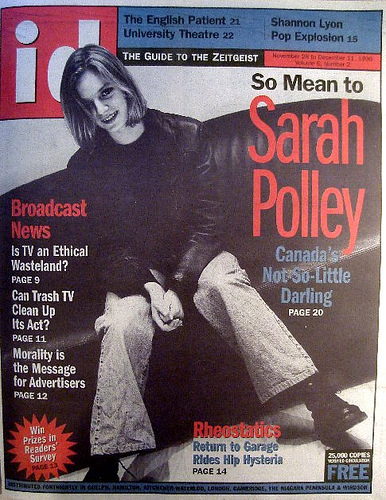
Id Magazine was published in the mid to late 1990s in Canada.

https://davidsouthconsulting.org/2021/07/20/case-study-3-id-magazine-1996-1997-2/

Citations

Story cited in Schizophrenia: A Patient’s Perspective by Abu Sayed Zahiduzzaman (Author House), 2013. 

https://davidsouthconsulting.org/2020/11/17/land-of-the-free-home-of-the-bored/

https://davidsouthconsulting.org/2020/12/22/man-out-of-time-the-world-once-turned-on-the-ideas-of-this-guelph-grad-but-does-the-economist-john-kenneth-galbraith-know-the-way-forward/

https://davidsouthconsulting.org/2022/06/24/professor-puts-chronic-fatigue-into-historical-perspective/

https://davidsouthconsulting.org/2021/03/17/province-for-sale-step-right-up-for-an-opportunity-to-buy-what-you-already-paid-for/

https://davidsouthconsulting.org/2020/06/14/psychiatric-care-lacking-for-institutionalised-seniors/

https://davidsouthconsulting.org/2021/01/20/pulling-the-plug-on-hate-rock-1996/

https://davidsouthconsulting.org/2021/01/16/redneck-renaissance-a-coterie-of-journalists-turn-cracker-culture-into-a-leisure-lifestyle/

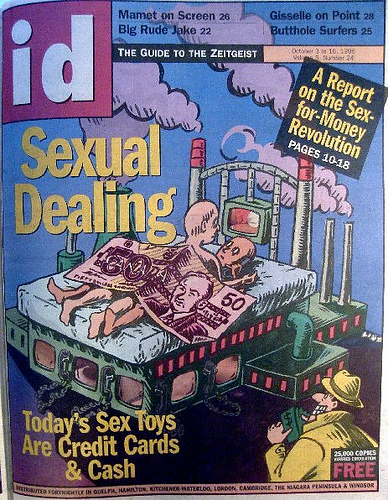
https://davidsouthconsulting.org/2021/01/14/from-special-report-sexual-dealing-todays-sex-toys-are-credit-cards-cash-a-report-on-the-sex-for-money-revolution/

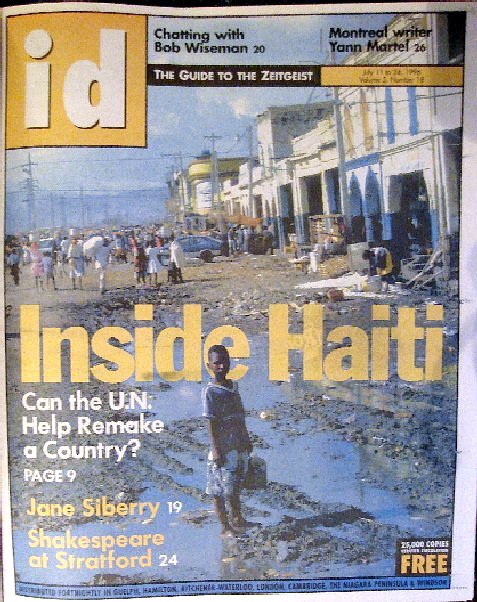
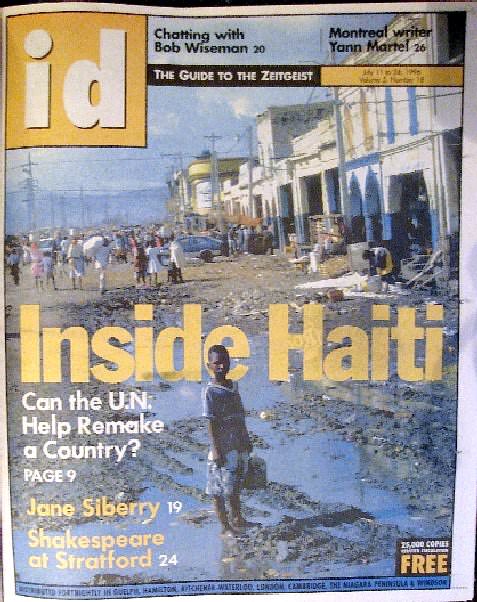
https://davidsouthconsulting.org/2020/04/22/state-of-decay-haiti-turns-to-free-market-economics-and-the-un-to-save-itself/

https://davidsouthconsulting.org/2021/02/03/swing-shift-sexual-liberation-is-back-in-style/

https://davidsouthconsulting.org/2022/08/13/truckus-maximus-the-big-boys-with-the-big-toys-do-some-hardcore-pogo-at-monster-truck-show/

https://davidsouthconsulting.org/2020/12/11/tvs-moral-guide-in-question-again/

https://davidsouthconsulting.org/2021/09/13/will-niagara-falls-become-the-northern-vegas/

Creative Commons License

This work is licensed under a
Creative Commons Attribution-Noncommercial-No Derivative Works 3.0 License.

ORCID iD: https://orcid.org/0000-0001-5311-1052.

© David South Consulting 2023