Categories
Archive Development Challenges, South-South Solutions Newsletters

African Ingenuity Attracting Interest

By David SouthDevelopment Challenges, South-South Solutions

SOUTH-SOUTH CASE STUDY

The tide of science and innovation from the South is grabbing the world’s attention. While the big giants of India, China and Brazil are well-established hubs of invention, it is the once-overlooked continent of Africa that is generating current excitement. The atmosphere can be equated to the flush of innovation in the late 19th and early 20th centuries, as inventors tackled the budding new technologies of the combustion engine, flight, electricity and radio waves. These days, it’s the challenges of development, rapid urbanization and finding ways to ‘hack’ (http://en.wikipedia.org/wiki/Hack_%28technology%29), like adapting existing  technology such as mobile phones or bicycles to new purposes.

That previous period of invention had a spirit of pioneering and making-do, of dreams and adaptability triumphing over poverty, and it laid the path for many new companies to sprout up and create wealth and jobs for millions. At this August’s Maker Faire Africa gathering (http://makerfaireafrica.com/) in Accra, Ghana, African pioneers in grassroots innovation offered inspiring inventions.

The rapid changes happening in African countries – especially the tilt to having a larger urban population than a rural one – means there is an urgent need to boost incomes.

Handled right, these grassroots inventors could grow to become part of the already expanding South-South trade, which grew by an average of 13 percent per year between 1995 and 2007, to make up 20 percent of world trade.

Inspired by the US magazine Make (http://makezine.com/) – a do-it-yourself technology magazine written by makers of computers, electronics and robotics – the first Maker Faire gathering was held in 2006 in the San Francisco area of the United States.

The African Maker Faire modelled itself on this approach and has tapped into Africa’s well-entrenched do-it-yourself development culture. It went looking for more inventors like those celebrated on the website AfriGadget (http://www.afrigadget.com/), with its projects that solve “everyday problems with African ingenuity.” The Faire works with the participants to share their ideas and to find ways to make money from their ideas.

The Faire in Accra ran in parallel with the International Development Design Summit (http://2009.iddsummit.org/),which came to Ghana from its home at the Massachusetts Institute of Technology (http://web.mit.edu/) in the United States. Its aim was to bring technology closer to “potential end users of the projects.”

“It is part of the revolution in design that aims to create equity in the distribution of research and development resources by focusing on the needs of the world’s poor,” organizers said.

This spirit of African invention is about breaking the perception that invention is a purely Northern phenomenon that requires complex and expensive materials. African ingenuity is about taking whatever is available and tackling common problems. It is an empowering approach that celebrates local initiative and seeks to find ways to turn these inventions into sustainable incomes.

“What’s different about African mechanics and gadgets is that it’s generally made with much fewer, and more basic, materials,” said Afrigadget founder Erik Hersman. “Where you might find a story on how to make hi-tech robots at home in Make, its counterpart in Africa might be how to create a bicycle out of wood. No less ingenuity needed, but far more useful for an African’s everyday life.”

The African Maker Faire featured a wide range of solutions, from a low-power radio station to a bicycle-powered saw and a simple corn planter.

Shamsudeen Napara, from northern Ghana, brought a US $10 corn planter that looks like a pill dispenser to help speed up crop planting. He also has invented a cheap shea nut (http://en.wikipedia.org/wiki/Shea_butter) roaster. These inventions are cooked up in his metal fabrication shop which builds tools for agricultural use. Shea nut processing is a lucrative task for women in Northern Ghana. Napara’s roaster costs US $40 and reduces the energy and time to process the nuts. He has also made a soap cutter using piano wires and guitar screws.

Bernard Kiwia, a bicycle mechanic from Arusha, Tanzania, is a pioneer working with windmills, water pumps, mobile phone chargers and pedal-powered hacksaws – all made from old bike parts.

Hayford Bempong, David Celestin and Michael Amankwanor from Accra Polytechnic (http://www.accrapolytechnic.edu.gh/), built a low-power radio station. Made from scrap electronic parts and an antenna from copper pipe, the radio was put straight to use to broadcast announcements at the event over a range of a few thousand metres.

Suprio Das, Killian Deku, Laura Stupin and Bernard Kiwia brought a method to produce chlorine from salt water and other common materials. It can then be used to purify water. Their method can clean vast quantities of water using no moving parts (avoiding breakdowns). It does this by dripping chlorine into the water until a level has been reached, and then the purified water is released. By using a 5 litre bag of chlorine, and a US $3 valve, 100,000 litres of water can be purified.

Electricity was also being made using low-cost batteries from aluminum cans and plastic water bottles. Applying salt water as an electrolyte (http://en.wikipedia.org/wiki/Electrolyte),electricity is created by the oxidation of the aluminum can – a cheaper approach and less toxic than commercial batteries.

A group called Afrobotics (http://www.afrobotics.com) gave a presentation to encourage more African students to go into engineering, science and technology. Afrobotics is set up as a competition to “fuel engineering, science, innovation, and entrepreneurship on the African continent, utilizing robotics.” They have some excellent videos of African robots in action: http://www.afrobotics.com/videos.

Published: October 2009

Resources

1) Fab Labs: Like the futuristic “replicator” in the TV show Star Trek, Fab Labs allow people to design and produce what they need there and then. The labs are mushrooming throughout the South as people get the innovation bug. The Fab Lab program is part of the MIT’s Center for Bits and Atoms (CBA) which broadly explores how the content of information relates to its physical representation. Website: http://fab.cba.mit.edu/

2) id21 Insights: A series of articles by the UK ’s Institute of Development Studies on how to make technology and science relevant to the needs of the poor. Website: http://www.id21.org/insights/insights68/art00.html

3) eMachineShop: This remarkable service allows budding inventors to download free design software, design their invention, and then have it made in any quantity they wish and shipped to them: Amazing! Website: http://www.emachineshop.com/

4) The red dot logo stands for belonging to the best in design and business. The red dot is an internationally recognised quality label for excellent design that is aimed at all those who would like to improve their business activities with the help of design. Website: www.red-dot.de

5) Institute for the Future: It identifies emerging trends that will transform global society and the global marketplace. It provides insight into business strategy, design process, innovation, and social dilemmas. Its website helps budding inventors to identify new areas of invention.Website: http://www.iftf.org/

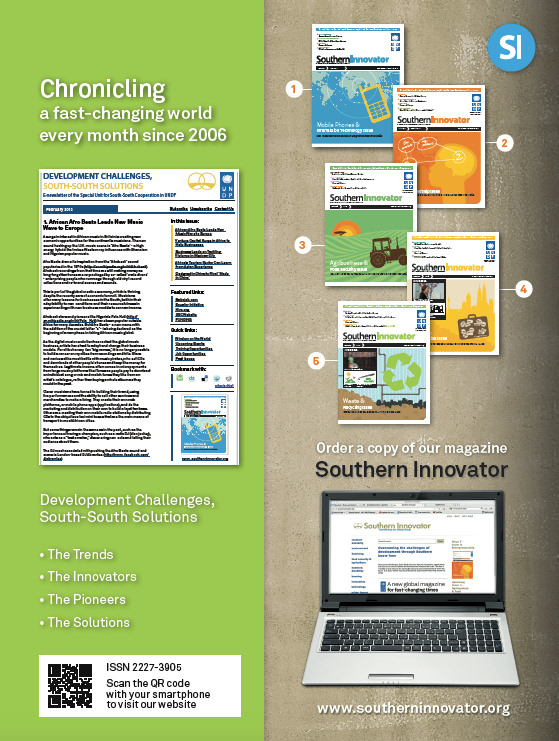
Development Challenges, South-South Solutions was launched as an e-newsletter in 2006 by UNDP’s South-South Cooperation Unit (now the United Nations Office for South-South Cooperation) based in New York, USA. It led on profiling the rise of the global South as an economic powerhouse and was one of the first regular publications to champion the global South’s innovators, entrepreneurs, and pioneers. It tracked the key trends that are now so profoundly reshaping how development is seen and done. This includes the rapid take-up of mobile phones and information technology in the global South (as profiled in the first issue of magazine Southern Innovator), the move to becoming a majority urban world, a growing global innovator culture, and the plethora of solutions being developed in the global South to tackle its problems and improve living conditions and boost human development. The success of the e-newsletter led to the launch of the magazine Southern Innovator. 
Creative Commons License

This work is licensed under a
Creative Commons Attribution-Noncommercial-No Derivative Works 3.0 License.

ORCID iD: https://orcid.org/0000-0001-5311-1052.

© David South Consulting 2023

Categories
Archive Blogroll data Development Challenges, South-South Solutions Newsletters digital ID Southern Innovator magazine

Digital Mapping to put Slums on the Map

By David SouthDevelopment Challenges, South-South Solutions

SOUTH-SOUTH CASE STUDY

Mobile phones are more and more part of daily life in the South’s slums – even for the poorest people. One result is that it has now become possible to undertake digital mapping initiatives to truly find out who is where and what is actually going on.

About one-third of the world’s urban dwellers live in slums, and the United Nations estimates that the number of people living in such conditions will double by 2030 as a result of rapid urbanization in developing countries. How to improve their living conditions and raise their standard of living is the big challenge of the 21st century.

With just over five years until the 2015 deadline to meet the Millennium Development Goals (http://www.undp.org/mdg/), and the current economic downturn reversing some gains, any tool that can make development decisions more precise has to be a benefit.

People are now turning to the growing penetration of digital technologies into slums and poor areas to find solutions. With mobile phones available across much of the global South, and plans underway to expand access to broadband internet even in poorly served Africa, it is becoming possible to develop a digital picture of a slum area and map its needs and population.

Put to the right use, this powerful development tool can fast-track the delivery of aid and also better connect people to markets and government services.

In November, an NGO called Map Kibera (www.mapkibera.org) began work on an ambitious project to digitally map Africa’s largest slum, Kibera in Nairobi, Kenya .

The partners behind Map Kibera are Humanitarian OpenStreetMap, JumpStart International, WhereCampAfrica, the Social Development Network, Pamoja Trust, Hands on Kenya and others.

Estimates place the number of residents in Kibera at one million, but nobody really knows how many live there (UN-HABITAT). The slum is typical of such deprived areas, lacking in health and water resources and plagued by chaotic traffic and housing. Few fully grasp where everything is in the sprawl.

While data does exist on the slum, it is not shared or collated into one source. The Map Kibera project uses an open-source software programme, OpenStreetMap (http://www.openstreetmap.org/), to allow users to edit and add information as it is gathered. This information is then free to use by anybody wanting to grasp what is actually happening in Kibera: residents, NGOs, private companies and government officials.

This will literally put Kibera on Kenya’s map.

The mapping team started with 12 young people recruited in Kibera to start the work in November of this year. They will be trained and also receive support from the growing Nairobi technology community.

“The project will provide open-source data that will help illustrate the living conditions in Kibera,” said Map Kibera’s Mikel Maron. “Without basic knowledge of the geography of Kibera it is impossible to have an informed discussion on how to improve the lives of residents of Kibera.”

Workshops will communicate with local residents and show them the findings available from the map. Paper maps will be distributed to residents and then updated as new information comes in. It is critical local people are kept informed to build trust and avoid conflict. As can be seen from the Google Street Views (http://www.google.co.uk/help/maps/streetview/) controversy, nobody likes to be mapped without their permission or consent.

Like Kenya, Brazil has a long history of sprawling slums sprouting around its cities. Called favelas, they are complex places, with both rudimentary dwellings and elaborate mansions. Walking into a favela can be a journey through the dreams and aspirations of generations of people, often reflected in their dwellings. Favelas have many services, including hospitals, and there are restaurants and coffee shops. In short, while they are not in the official development plans, the favelas are vibrant economic entities and home to hundreds of thousands of people.

But since they are chaotic and undocumented by official maps, the economic and social development of the favelas is hindered as even basic services like mail delivery are difficult to provide.

An NGO called Rede Jovem (http://www.redejovem.org.br/) is deploying youths armed with GPS (global positioning system)-equipped (http://en.wikipedia.org/wiki/Global_Positioning_System) mobile phones to map the favelas of Rio de Janerio. To start with, they are mapping five favelas: Complexo do Alemão, Cidade de Deus, Morro do Pavão-Pavãozinho, Morro Santa Marta and Complexo da Maré.

“The main goal was to mark public interest spots on a map and show places like schools and institutions and hospitals and restaurants,” Natalia Santos, the executive coordinator for Rede Jovem, told MobileActive (www.mobileactive.org) . “We wanted to spread the news about what slums do have, so all the people can get to know that the slum is not just a place for violence and marginality and robbery.”

The mapping process works like this: the mappers physically travel around the favela and upload information on each, individual landmark (restaurants, roads etc.) as they go. They use Nokia N95s mobile phones that are connected to Google Maps (www.maps.google.com).

According to Santos, reporters enter the information on the map displayed on the phone, and they can video or photograph to add more detail. They are using Wikimapa (www.wikimapa.org.br), and Twitter (www.twitter.com) to log the information.

As Rede Jovem recruited young mappers, they discovered an interesting fact: the male reporters (aged between 17 and 25) were frightened to enter a favela with a mobile phone for fear of either being mugged or being stopped by the police. Because of this fact, all the mappers are young women.

They are ambitious for the future despite their funds running out in December. “We want everyone who has a cell phone with GPS to be a wikireporter,” said Santos .

How important it is to the favela residents to be recognised like this can’t be overstated. “I think they are very happy because they’re seeing that they exist,” said Santos. “And the mailman says that now he can deliver the mail.”

Published: December 2009

Resources

  • Mobile Active.org: MobileActive.org is a community of people and organizations using mobile phones for social impact. They are committed to increasing the effectiveness of NGOs around the world who recognize that the over 4 billion mobile phones provide unprecedented opportunities for organizing, communications, and service and information delivery. Website: http://www.mobileactive.org
  • Google Android: Get inventing! This software enables anyone to start making applications for mobile phones. And it offers a platform for developers to then sell the applications to others. Website: http://www.android.com/
  • Ushahidi: is a website that was developed to map reports of violence in Kenya after the post-election fallout at the beginning of 2008. The new Ushahidi Engine is being created to use the lessons learned from Kenya to create a platform that allows anyone around the world to set up their own way to gather reports by mobile phone, email and the web – and map them. It is being built so that it can grow with the changing environment of the web, and to work with other websites and online tools. Website: http://blog.ushahidi.com/
  • Textually.org: is the entry point of three weblogs devoted to cell phones and mobile content, focusing on text messaging and cell phone usage around the world, tracking the latest news and social impact of these new technologies. Website: http://www.textually.org/
  • Betavine Social Exchange has launched. It’s a matching site for NGOs looking for mobile solutions, and developers who can help build them, all brought to you by Vodafone. Website: http://www.betavine.net

Citations

Resilient Urban Regeneration in Informal Settlements in the Tropics: Upgrading Strategies in Asia and Latin America, Publisher: Springer Singapore (2020)

The story first appeared in the UN e-newsletter Development Challenges, South-South Solutions in 2009. It was simultaneously published on the Vancouver, Canada-based crowd-powered news website, NowPublic. It was then published in the UN magazine Southern Innovator.

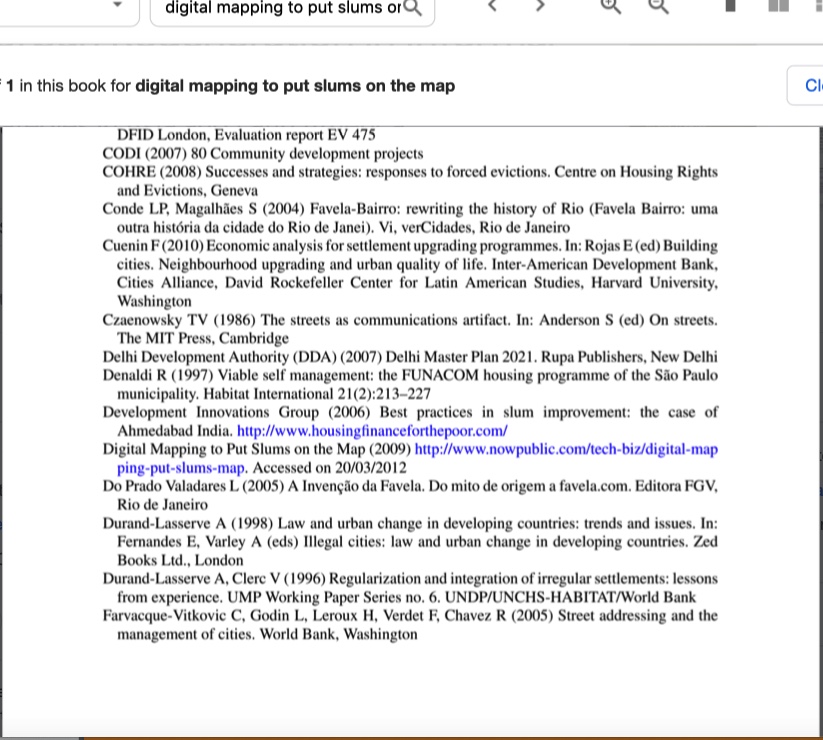
Streets as Tools for Urban Transformation in Slums: A Street-led Approach to Citywide Slum Upgrading, Publisher: United Nations Human Settlements Programme (UN-Habitat) (2012)

Other Stories on Mapping

https://davidsouthconsulting.org/2021/08/28/african-entrepreneur-wants-to-bring-order-to-urban-chaos/

https://davidsouthconsulting.org/2020/12/04/big-data-can-transform-the-global-souths-growing-cities/

https://davidsouthconsulting.org/2021/03/04/indian-id-project-is-foundation-for-future-economic-progress/

https://davidsouthconsulting.org/2022/10/31/mapping-beirut-brings-city-to-light/

https://davidsouthconsulting.org/2022/10/17/mapping-to-protect-kenyas-environment-the-emazingira-solution/

https://davidsouthconsulting.org/2021/03/31/new-weapon-against-crime-in-the-south/

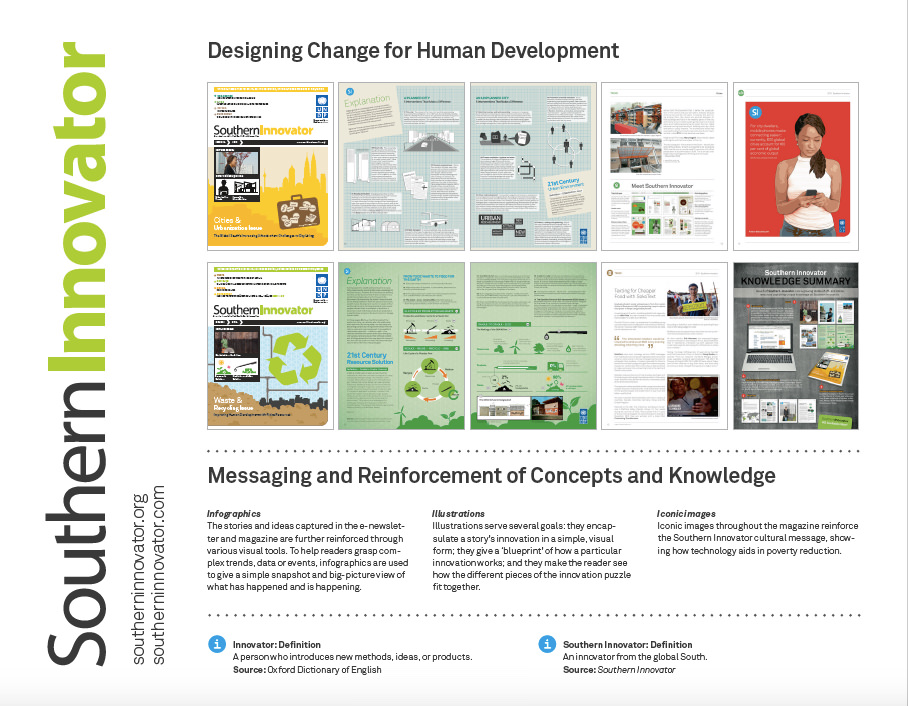
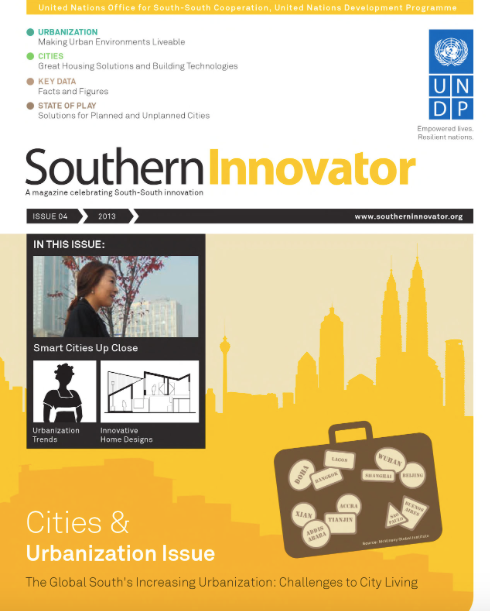
By 2014, Southern Innovator had published five issues and become a recognised global innovation brand.

https://davidsouthconsulting.org/2021/03/05/southern-innovator-issue-4/

Follow @SouthSouth1

Slideshare: http://www.slideshare.net/DavidSouth1/development-challengessouthsouthsolutionsnovember2010issue

Southern Innovator Issue 1: https://books.google.co.uk/books?id=Q1O54YSE2BgC&dq=southern+innovator&source=gbs_navlinks_s

Southern Innovator Issue 2: https://books.google.co.uk/books?id=Ty0N969dcssC&dq=southern+innovator&source=gbs_navlinks_s

Southern Innovator Issue 3: https://books.google.co.uk/books?id=AQNt4YmhZagC&dq=southern+innovator&source=gbs_navlinks_s

Southern Innovator Issue 4: https://books.google.co.uk/books?id=9T_n2tA7l4EC&dq=southern+innovator&source=gbs_navlinks_s

Southern Innovator Issue 5: https://books.google.co.uk/books?id=6ILdAgAAQBAJ&dq=southern+innovator&source=gbs_navlinks_s

Creative Commons License

This work is licensed under a
Creative Commons Attribution-Noncommercial-No Derivative Works 3.0 License.

ORCID iD: https://orcid.org/0000-0001-5311-1052.

© David South Consulting 2022

Categories
Archive data Development Challenges, South-South Solutions Newsletters digital ID

African Entrepreneur Wants to Bring Order to Urban Chaos

By David SouthDevelopment Challenges, South-South Solutions

SOUTH-SOUTH CASE STUDY

All over the global South, urban and semi-urban areas are growing at a furious pace. Great swathes of mega-regions – places where large cities blend seamlessly into smaller towns and villages creating a giant economic hub – are becoming key economic and opportunity drivers in developing countries. One of the downsides of this rapid growth and economic vitality is the chaos and confusion brought by frenetic change. Into this busy landscape steps the fast-moving new world of everywhere computing, where computers exchange information with almost everything in the environment. A Ghanaian information technology pioneer and entrepreneur is changing perceptions about Africa by using the new technology of Semacodes – and proving a semblance of order can arise from the chaos and bustle of the street.

Semacode – a smart 2D barcode – was developed by Canadian Simon Woodside and is a tool to make everywhere computing a possibility. It works by embedding a web address into a 2D barcode called a tag which can be affixed to buildings, street lamps, and other landmarks. If one would like to know more information regarding the area they are in, all they need to do is find the nearest Semacode and use their internet-enabled camera phone to scan and read the code. A camera phone containing the Semacode’s Software Development Kit (SDK) detects and decodes the tag and sends the user the web address using the phone’s built-in browser. The user quickly learns what businesses and services are in the area and what the current street name is.

With code developed in Ghana called Semafox, one can create Semacodes for objects and contexts using a web browser – (http://sohne.net/semafox/). It is now being adapted by Ghanaian entrepreneur Guido Sohne to solve the common African problem of chaotic cityscapes brought about by rapid change, high turnover of businesses and changing street names. This handy tool has the power to revolutionise how people communicate and do business in the South, and a rival technology using a similar concept – QR code – is already widespread in Japan. Semacode also has its own user-contributed community website, Semapedia, to produce semacodes for any object or building.

*~~~~~~~~~~~~~~~~~~~~~*

Sohne is a computer code developer working for CoreNett – a Ghanaian electronic transaction processing company – and has been working on developing the code underlying the semacodes, and also piloting its application on the streets of Accra, the capital. Sohne (a former Kofi Annan ICT Centre for Excellence developer-in-residence), is an excellent example of how an IT innovator in the South is linking up early in a new technology’s development to help develop and evolve it.“It is rare to find African-created technology being used today in Western cyberspace,” concludes Sohne. It “is indeed a step forward for African technology as well as an indication of the benefits of collaborative development based on liberal software licensing such as open source software.”

Published: June 2007

Resources

  • You can download the Semacode reader software, here. This includes software for mobile phones and computer servers.
  • The latest stories and updates on Semacode can be found here.
  • A thorough explanation of rival technology QR Codes and their impact in Japan and how they work, can be found here. At present, QR Codes are used in a variety of ways, from linking to content and advertising in magazines and newspapers, to food product labels, public transportation signage, and as a way to communicate between people on the street.

https://davidsouthconsulting.org/2020/12/04/big-data-can-transform-the-global-souths-growing-cities/

https://davidsouthconsulting.org/2020/12/11/cyber-cities-an-oasis-of-prosperity-in-the-south/

https://davidsouthconsulting.org/2020/12/04/data-surge-across-global-south-promises-to-re-shape-the-internet/

https://davidsouthconsulting.org/2022/02/17/digital-mapping-to-put-slums-on-the-map/

https://davidsouthconsulting.org/2022/10/09/entrepreneurs-use-mobiles-and-it-to-tackle-indian-traffic-gridlock/

https://davidsouthconsulting.org/2022/09/27/india-2-0-can-the-country-make-the-move-to-the-next-level/

https://davidsouthconsulting.org/2021/03/04/indian-id-project-is-foundation-for-future-economic-progress/

https://davidsouthconsulting.org/2021/03/31/new-weapon-against-crime-in-the-south/

https://davidsouthconsulting.org/2021/02/18/what-is-the-un-doing-with-your-data/

Creative Commons License

This work is licensed under a
Creative Commons Attribution-Noncommercial-No Derivative Works 3.0 License.

ORCID iD: https://orcid.org/0000-0001-5311-1052.

© David South Consulting 2023