Categories
Archive Blogroll Development Challenges, South-South Solutions Newsletters

Popular Chinese Social Media Chase New Markets

By David SouthDevelopment Challenges, South-South Solutions

SOUTH-SOUTH CASE STUDY

China has a vast and growing market for the Internet and mobile devices. Over the past decade that market has been largely confined to China –  most businesses have had enough domestic demand and opportunities inside the country to keep them busy.

But now companies in China’s dynamic Internet and mobile sector are seeking out new markets outside the country. Both online shopping service Alibaba (alibaba.com) and Weibo (weibo.com), the Chinese version of Twitter (twitter.com), are seeking to list on the New York Stock Exchange. The excitement this news has generated shows how many people want to get a piece of the large Chinese market for technology, social networks and online shopping. It is also sending a chill through America’s Silicon Valley – home to the country’s innovative high technology sector – that they are missing out on China’s fast-growing marketplace. Many American services are banned from operating in China. Even more worrying for Silicon Valley, these home-grown Chinese companies, with the market sewn up at home, are now set to compete globally for customers using their increasingly deep pockets.

One example is Tencent (http://www.tencent.com/en-us/index.shtml), owner of popular Chinese social messaging application (app) Weixin (weixin.qq.com), known as WeChat (wechat.com) outside China. Used on mobile phones and smartphones, Weixin has gained 300 million users in just three years, becoming the dominant social messaging service in the world’s largest smartphone market. Its has been so successful that many rivals are trying to chip away at its customer base.

Weixin, pronounced way-shin, allows smartphone users to send messages and share news, photos, videos and web links with friends. One of its selling points is its claim to not store messages on its servers.

Building on its success in social networking in China, it is looking to expand in other markets, including Southeast Asia, Europe and Latin America. It also wants to grow its offerings in online payment and e-commerce.

One factor in Weixin’s success is the ability to send messages by recording a voice message rather than just typing in characters: very useful for non-Latin script users, and especially for Chinese-language users, who use thousands of characters in everyday communication.

One ambitious forecast claims Weixin could reach 400 million users and make US $500 million revenue within a year.

Cosmetics marketer Jenny Zhao, who uses an iPhone 5, told The New York Times: “I’m probably on Weixin six hours a day. A lot of what I do revolves around it.”

“I use Weixin every day,” said Zhang Shoufeng, a food and drinks seller. “My friends are on it and my boss is on it. We are talking about where to eat, where to hang out and where to meet for company conferences. This is how we communicate.”

Analysts believe Weixin has benefitted from not having to compete with banned-in-China American company Facebook (facebook.com).

“Even if Facebook had permission, it’s probably too late,” said Wang Xiaofeng, an analyst at Forrester Research. “Weixin has all the functionality of Facebook and Twitter, and Chinese have already gotten used to it.”

Tencent is an example of a wider trend: As Chinese companies and offerings have become stronger, wealthier and more innovative, they increasingly look to build their customer base outside China.

Founded in November, 1998, Tencent, Inc. has grown into China’s largest and most used Internet service portal. Its most popular services include QQ (QQ Instant Messenger), WeChat, QQ.com, QQ Games, Qzone, 3g.QQ.com, SoSo, PaiPai and Tenpay, as well as Weixin.

The company claims to put innovation at the heart of its business, with more than half of its employees devoted to research and development. The Tencent Research Institute, established in 2007 with RMB 100 million (US $16 million), calls itself “China’s first Internet research institute, with campuses in Beijing, Shanghai, and Shenzhen.” It has patents for technologies it has developed for instant messaging, e-commerce, online payment services, search, information security, and gaming.

Tencent was driven to innovate by a fear it could quickly become irrelevant in the information technology space. Weixin is also pioneering ways to book taxis, hotels and airline flights through the service and even ways to control home appliances.

“Chinese Internet companies are no longer behind,” said William Bao Bean, a managing director at the venture capital firm SingTel Innov8 (http://innov8.singtel.com/). “Now in some areas, they’re leading the way.”

Published: April 2014

Resources

1) Weibo: Sina Weibo is a Chinese microblogging (weibo) website. Akin to a hybrid of Twitter and Facebook, it is one of the most popular sites in China, in use by well over 30 per cent of Internet users, with a market penetration similar to what Twitter has established in the USA. Website: weibo.com

2) Laiwang: A variation on the WeChat service, its biggest competitor. Website: laiwang.com

3) WhatsApp: WhatsApp Messenger is a cross-platform mobile messaging app which allows you to exchange messages without having to pay for SMS. Website: whatsapp.com

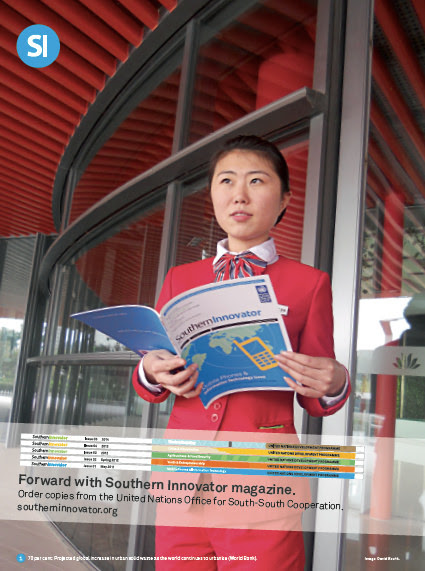
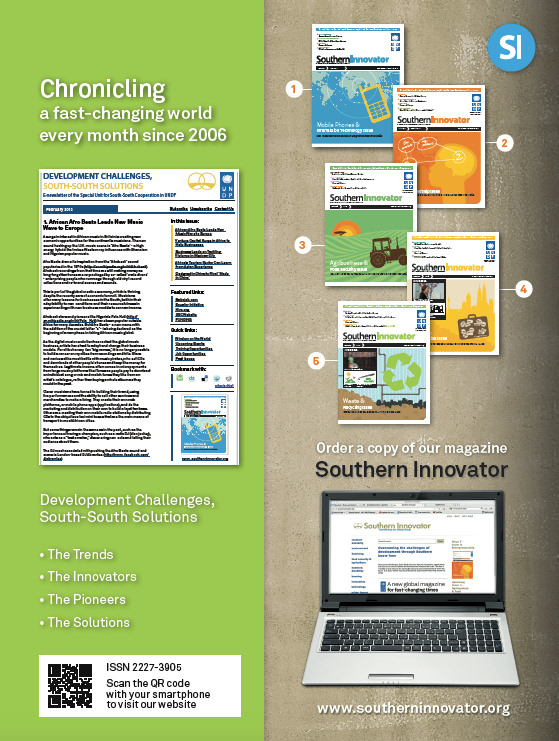
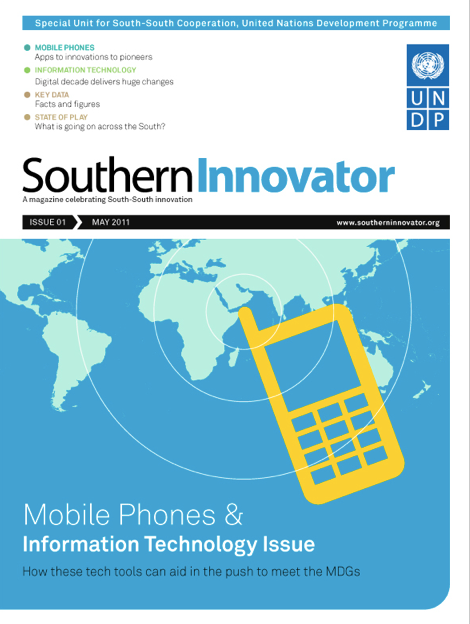
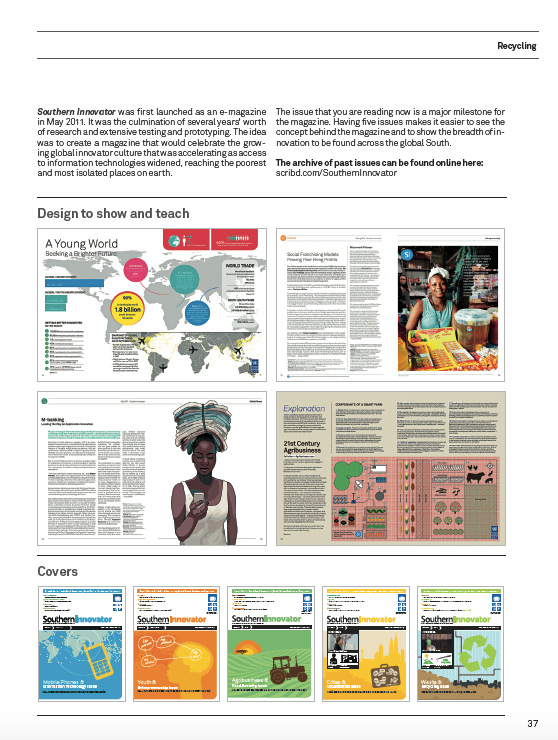
4) Southern Innovator Issue 1: Mobile Phones and Information Technology: Pioneering and innovative ways to deploy mobile phones and information technology to tackle poverty. Website: http://www.scribd.com/doc/57980406/Southern-Innovator-Magazine-Issue-1 and here: http://tinyurl.com/q6bfnpz

https://davidsouthconsulting.org/2022/10/20/china-consumer-market-asian-perspective-helps/

https://davidsouthconsulting.org/2020/12/10/china-sets-sights-on-dominating-global-smartphone-market/

https://davidsouthconsulting.org/2021/03/20/computer-gold-farming-turning-virtual-reality-into-real-profits/

https://davidsouthconsulting.org/2021/01/26/designed-in-china-to-rival-made-in-china/

https://davidsouthconsulting.org/2022/10/26/tackling-chinas-air-pollution-crisis-an-innovative-solution/

https://davidsouthconsulting.org/2020/04/17/virtual-supermarket-shopping-takes-off-in-china/

Citation

Qianyu, Ji (2014) “Exploring the Concept of QR Code and the Benefits of Using QR Code for Companies,” Lapland University of Applied Sciences, School of Business and Culture Degree Programme in Business Information Technology, 2014.

Development Challenges, South-South Solutions was launched as an e-newsletter in 2006 by UNDP’s South-South Cooperation Unit (now the United Nations Office for South-South Cooperation) based in New York, USA. It led on profiling the rise of the global South as an economic powerhouse and was one of the first regular publications to champion the global South’s innovators, entrepreneurs, and pioneers. It tracked the key trends that are now so profoundly reshaping how development is seen and done. This includes the rapid take-up of mobile phones and information technology in the global South (as profiled in the first issue of magazine Southern Innovator), the move to becoming a majority urban world, a growing global innovator culture, and the plethora of solutions being developed in the global South to tackle its problems and improve living conditions and boost human development. The success of the e-newsletter led to the launch of the magazine Southern Innovator.  

Creative Commons License

This work is licensed under a
Creative Commons Attribution-Noncommercial-No Derivative Works 3.0 License.

ORCID iD: https://orcid.org/0000-0001-5311-1052.

© David South Consulting 2025

Categories
Archive Development Challenges, South-South Solutions Newsletters

Putting Quality and Design at the Centre of Chinese Fashion

By David SouthDevelopment Challenges, South-South Solutions

SOUTH-SOUTH CASE STUDY

Awareness of the sourcing of materials for fashion has been on the rise in the past decade. Concerns about how the global fashion industry functions and its impact on the environment have given rise to savvy retailers who take care over the sourcing of their materials and the working conditions of their employees. Consumers have shown a willingness to pay a little more to know that a garment is sustainably produced and has the lowest possible impact on the environment.

The global textile industry is the second biggest consumer of water in the world. The dyeing processes used by these manufacturers do extensive damage to the water table that is used for drinking water.

In China, there have been violent demonstrations over working conditions and increasing concern over the health consequences of many modern manufacturing methods. In order to get change, new business models need to emerge, and consumers and customers need to be educated and to demand better-quality, low- or non-polluting products.

One business has accomplished something remarkable: it has succeeded in producing high-quality, ethically sourced products while also employing vulnerable people who have significant care duties and need a flexible and understanding employer.

NuoMi (http://www.nuomishanghai.com) has three stores and a store/design studio in Shanghai, China. NuoMi means “sticky rice” in Mandarin (http://en.wikipedia.org/wiki/Mandarin_Chinese). It was founded by Filipino fashion designer Bonita Lim, a mother of four, who uses her business to help single mothers and the less fortunate.

NuoMi is also pioneering sustainable and green goods for the Chinese market. This is unusual in a country more known for its sweatshop, low-wage manufacturing industries that have propelled the country into an economic powerhouse.

NuoMi sells women’s clothing made from sustainable sources while creating jobs for people from disadvantaged communities. There are organic cotton, bamboo, silk and wool garments, and no artificial dyes or synthetic materials are used.

The design team works on colourful knitwear, dresses and baby clothes. They also offer a custom order service.

“When I was 13 or 14 years old, I dreamed of building a special company that could help people who have trouble finding a job,” Lim told the Global Times.

“I called the name of my brand NuoMi, which is (the) Chinese name for sticky rice … Our company works like sticky rice; we support and love each other.”

Born in the Philippines and educated in Canada, Lim had become frustrated while working with the Filipino government and wanted to help the poor. She started NuoMi in 2006 in Shanghai, a city booming as China’s economy continues to grow. It is also a city with a population with long-standing sophisticated consumer tastes. Shanghai had been home to various foreign concessions before the Communists took power and its population was exposed to foreign languages, cultures and tastes.

Lim became a single mother after she divorced, and this experience made her sympathetic to how hard life is for single mothers. Drawing on her passion for fashion, she hired a designer to work with her on designing a line of clothing.

“I was surprised that many of my friends really liked my designs, so they asked me to design clothes for them and introduced some clients to me,” Lim told Global Times. “I tried to design and sell clothes abroad. I got a lot of good feedback, but it exhausted me so I decided to work in Shanghai.”

Despite starting out as a hobby, the business had built a network of 20 clients. It had become impossible to just do it part-time so she formalised the business as NuoMi.  She began hiring single mothers in prison in the Philippines and designed clothing that could be easily made by them.

“Those single mothers in prison were very anxious because they had no way to help their children. Most of them committed crimes because they needed money for their kids,” Lim said.

By 2008 she had built a professional design team and now had 60 clients. With the brand NuoMi growing, she opened its first store. This has grown to four stores in Shanghai. Most of the company’s workforce is now in Shanghai but they are still people living in a vulnerable situation.

Nuomi’s newly opened store in 2008 carried a spring and summer collection of long dresses made from bamboo, cotton and soya. These fabrics were chosen for their breathability in the hot, steamy Shanghai weather.

One of the employees is 52-year-old Zhu Linfang, who takes care of a stroke-damaged father and a mother with liver cancer. “I was introduced through a friend. They paid me more than other companies. At my age almost no company wants to hire me, but working for NuoMi, I earn between 2,000 yuan (US $300) and 3,000 yuan per month,” she said.

Other employees look after ill children and have care duties that occupy much of their time. They do sewing and make toys for NuoMi.

Lim takes the time to train the employees to make sure they can do the work to a high standard.

“I tried to design products that were both suitable for them to make and could be sold in the market,” she said.

NuoMi also sells environmentally friendly glycerine soaps in flavours from mango to chocolate, jewellery made from recycled industrial materials and bathwear, pillows, and purses. The stores even carry matching mother-daughter and father-son clothing.

Wisely, service is offered in Chinese and English to customers – Shanghai is a popular destination for tourists. NuoMi is clearly a trail-blazer and a business to watch.

Published: October 2011

Resources

1) Ecodesignfair: Eco Design Fair is a bi-annual grass-roots community event whose purpose is to showcase eco-conscious designers and products to general consumers. Website: http://www.ecodesignfair.cn

2) Nest: Another eco-conscious design company in Shanghai. Its motto is “design with a conscience”. Website: http://www.nestshanghai.com/nest.html

https://davidsouthconsulting.org/2021/02/09/african-fashions-growing-global-marketplace-profile/

https://davidsouthconsulting.org/2021/01/05/afropolitan-african-fashion-scene-bursting-with-energy/

https://davidsouthconsulting.org/2021/01/25/creating-green-fashion-in-china/

https://davidsouthconsulting.org/2022/10/09/fashion-closes-gap-between-catwalk-and-crafts/

https://davidsouthconsulting.org/2022/11/17/fashion-recycling-how-southern-designers-are-re-using-and-making-money/

https://davidsouthconsulting.org/2022/11/16/favela-fashion-brings-women-work/

https://davidsouthconsulting.org/2020/04/30/local-fashions-pay-off-for-southern-designers/

https://davidsouthconsulting.org/2021/03/05/southern-innovator-issue-2/

Development Challenges, South-South Solutions was launched as an e-newsletter in 2006 by UNDP’s South-South Cooperation Unit (now the United Nations Office for South-South Cooperation) based in New York, USA. It led on profiling the rise of the global South as an economic powerhouse and was one of the first regular publications to champion the global South’s innovators, entrepreneurs, and pioneers. It tracked the key trends that are now so profoundly reshaping how development is seen and done. This includes the rapid take-up of mobile phones and information technology in the global South (as profiled in the first issue of magazine Southern Innovator), the move to becoming a majority urban world, a growing global innovator culture, and the plethora of solutions being developed in the global South to tackle its problems and improve living conditions and boost human development. The success of the e-newsletter led to the launch of the magazine Southern Innovator.

Creative Commons License

This work is licensed under a
Creative Commons Attribution-Noncommercial-No Derivative Works 3.0 License.

ORCID iD: https://orcid.org/0000-0001-5311-1052.

© David South Consulting 2023

Categories
Archive Development Challenges, South-South Solutions Newsletters

South-South Trade Helping Countries During Economic Crisis

By David SouthDevelopment Challenges, South-South Solutions

SOUTH-SOUTH CASE STUDY

Weathering the global economic crisis is testing the stability of countries across the global South. But many countries are finding South-South trade and catering to their domestic middle classes can lift incomes and maintain growth rates despite the global turmoil.

A decade of boom in global markets as they became more integrated has brought rising incomes and created growing economies in the so-called emerging markets of the global South. Finance and investment from developed countries flowed into the global South and helped bolster growing economies, boosting incomes and bringing millions of people into the middle classes. But since the start of the global economic crisis in 2008, more and more countries in the global South have experienced turmoil, chaos and crisis.

The export-driven model that had served many Asian countries well – creating products for developed Western markets – is being tested by high unemployment in developed economies and declining purchasing power for the Western middle classes. Two trends that have grown in the past 10 years may offer a solution to this economic crisis. One is to build on the growth in South-South trade, and the other is to tap the growing middle classes of the global South by expanding the products and services available to them and further improving their quality of life.

It is well established that one of the key elements to securing sustainable prosperity is a thriving middle class. Middle classes in many countries in the global South are still classified as vulnerable – at risk of returning to poverty if the economy experiences a short-term crisis. Their resilience to an economic downturn needs to be strengthened, and this can be done by improving the quality of products and services available to them.

Building this market can also strengthen domestic job growth and help reduce a country’s dependence on imports.

One country facing up to this challenge is Indonesia. The New York Times recently reported that ports in Indonesia and other resource-exporting countries are quiet, as China’s demand for resources slows.

But while export markets are experiencing a slowdown, investment is going into Indonesia’s agricultural food-processing industry. Agricultural multinational Cargill (cargill.com) is building a cocoa-bean processing plant in the country, and the PT. Suprama (suprama.co.id/en/) instant-noodle factory is running at full capacity to meet the needs of the country’s growing middle class.

Many countries have experienced significant inflows of investment money as a result of stimulus measures led by the United States Federal Reserve (http://www.federalreserve.gov/faqs/about_12594.htm) to counter the economic contraction caused by the global economic crisis. This money, however, is uncertain and can just as easily disappear as it leaves to chase the next opportunity. Wise countries take measures to avoid being dependent on this fickle and fast investment funding.

Unlike in the Asian Crisis of 1997-1998 (http://en.wikipedia.org/wiki/1997_Asian_financial_crisis), many emerging-market countries now have large foreign currency reserves and robust stock markets. They have also built up their middle classes and increased consumption. Trade links with other countries in the global South have grown enormously since the late 1990s. For example, the trade between China and Africa, as announced by Chinese President Xi Jinping (http://en.wikipedia.org/wiki/Xi_Jinping) in early 2014, has surpassed US $200 billion for the first time, turning China into Africa’s largest trading partner

The relationship between trade and poverty reduction, the case of China.

Despite a raging global crisis, in many emerging economies domestic spending is holding up and, in some cases, has never been stronger.

China now plays a key role in maintaining global economic demand. According to the global bank HSBC, Chinese growth adds “twice as many dollars to annual global demand as growth in the United States economy and far more than the economies of the European Union.”

An article in The New York Times (http://www.nytimes.com/2014/02/13/business/emerging-markets-in-asia-in-a-delicate-limbo.html?_r=0) suggested that global South countries can benefit from these trends by becoming an alternative to China’s “own increasingly high-cost producers of coal, aluminum, and other minerals” – as well as of clothing, shoes and electronics.

China is also in the process of altering its economy, from being the low-wage workshop of the world to an increasingly high-tech, high-value economy with growing science, technology and innovation sectors buoyed by heavy investment in research and development, for example China’s Xi’an Hi-tech Industries Development Zone (xdz.com). As China changes, other countries can step in and replace the industries that no longer find China an affordable place to manufacture their goods.

As an example, the Indonesian vice minister of trade, Bayu Krisnamurthi, announced that the Foxconn Technology Group of Taiwan (foxconn.com), which makes components and assembles devices for the popular Apple (apple.com) computer brand, is looking to set up a large factory in Indonesia.

“The other brands will come in their footsteps,” Krisnamurthi told The New York Times.

Other countries are bucking the crisis trend and using greater freedom to boost economic growth.

Cuba has been able to bounce back with free-market reforms. The Caribbean island has had its ups and downs economically since its revolution in the late 1950s. After the revolution, the country had several decades of impressive human development gains and built up enviable education and health care systems. But with the collapse of the Soviet Union in the early 1990s, the country lost its trade relationships and subsidies and was pitched into a major economic crisis.

During the Cold War, the USSR hoovered up almost all of Cuba’s exports of sugar, nickel and citrus fruit, and sold Cuba two-thirds of its food and 98 per cent of its fuel.

What was termed the “special period” after the collapse of the Soviet Union saw petrol become scarce. Many had to turn to cycling and walking to get around. Factories closed and food production declined.

One estimate by Hal Klepak of the Royal Military College of Canada, reported in The Observer newspaper, found the economy collapsed by 50 per cent in the five years to 1993.

Since then, Cuba has endured significant austerity and has struggled to regain its trade relationships and restore economic growth. Tourism has played a key role in keeping the country going.

And since 2008, various economic reforms have started to shift the economy away from over-dependence on the state and towards a more mixed market model.

Its capital, Havana, is a UNESCO world heritage site and is a popular tourist destination with one of the best-preserved former Spanish colonial architecture in the Caribbean.

When President Raul Castro took over from his brother Fidel, he began to slowly experiment with reforms to test how much market freedom could boost the economy and increase incomes. This has included allowing paladares, or privately-run restaurants, which are now flourishing and benefiting from the steady flow of tourists to the island.

The state now allows people to set up as independent traders in 200 occupations. Some have established entertainment businesses such as paint balling, others are running bars, or bookshops. It is now possible to easily change money in Havana and to find accommodation in private homes. Cash machines are spreading throughout the capital and more and more businesses will accept credit cards.

Registered businesspeople rose from 157,000 in October 2011 to more than 442,000 in 2013.

By being flexible, it is possible to discover new ways to grow economies and increase incomes, even in hard times. And increasing South-South trade is the way to go.

Published: June 2014

Resources

1) The China Africa Project: The China Africa Project is a multimedia resource dedicated to exploring every aspect of China’s growing engagement with Africa. Website: chinaafricaproject.com

2) China’s trade and investment in Africa: Resources to contribute to more informed investment and trade policies and decision making in sectors and locations where China is emerging as a major player. Website: http://www.cifor.org/china-africa/home.html

Made-in-China.com: With the continuous and explosive growth of Chinese exports, trade and the number of internet users, Focus Technology launched its online trade platform, Made-in-China.com. Made-in-China.com provides the most complete, accurate and up-to-date information on Chinese products and Chinese suppliers available anywhere on the web. Nowadays, Made-in-China.com is a world-leading B2B portal, specializing in bridging the gap between global buyers and quality Chinese suppliers. Website: made-in-china.com

4) Southern Innovator Issue 2: Youth and Entrepreneurship: Called “Graphically beautiful & informative”, Issue 2 features entrepreneurial solutions for escaping poverty relevant to youth. Website: http://books.google.co.uk/books?id=Ty0N969dcssC&dq=southern+innovator+issue+2&source=gbs_navlinks_s

Development Challenges, South-South Solutions was launched as an e-newsletter in 2006 by UNDP’s South-South Cooperation Unit (now the United Nations Office for South-South Cooperation) based in New York, USA. It led on profiling the rise of the global South as an economic powerhouse and was one of the first regular publications to champion the global South’s innovators, entrepreneurs, and pioneers. It tracked the key trends that are now so profoundly reshaping how development is seen and done. This includes the rapid take-up of mobile phones and information technology in the global South (as profiled in the first issue of magazine Southern Innovator), the move to becoming a majority urban world, a growing global innovator culture, and the plethora of solutions being developed in the global South to tackle its problems and improve living conditions and boost human development. The success of the e-newsletter led to the launch of the magazine Southern Innovator.  

Follow @SouthSouth1

Google Books: https://books.google.co.uk/books?id=m5GYBgAAQBAJ&dq=development+challenges+may+2012&source=gbs_navlinks_s

Slideshare: http://www.slideshare.net/DavidSouth1/development-challengessouthsouthsolutionsmay2012issue

Southern Innovator Issue 1: https://books.google.co.uk/books?id=Q1O54YSE2BgC&dq=southern+innovator&source=gbs_navlinks_s

Southern Innovator Issue 2: https://books.google.co.uk/books?id=Ty0N969dcssC&dq=southern+innovator&source=gbs_navlinks_s

Southern Innovator Issue 3: https://books.google.co.uk/books?id=AQNt4YmhZagC&dq=southern+innovator&source=gbs_navlinks_s

Southern Innovator Issue 4: https://books.google.co.uk/books?id=9T_n2tA7l4EC&dq=southern+innovator&source=gbs_navlinks_s

Southern Innovator Issue 5: https://books.google.co.uk/books?id=6ILdAgAAQBAJ&dq=southern+innovator&source=gbs_navlinks_s

China has been a member of the WTO (World Trade Organization) since 11 December 2001.
Creative Commons License

This work is licensed under a
Creative Commons Attribution-Noncommercial-No Derivative Works 3.0 License.

ORCID iD: https://orcid.org/0000-0001-5311-1052.

© David South Consulting 2023

Categories
Archive data Development Challenges, South-South Solutions Newsletters Southern Innovator magazine

Radical Drone Solution To Woeful Infrastructure In Poor Countries

By David SouthDevelopment Challenges, South-South Solutions

SOUTH-SOUTH CASE STUDY

Drones – unpiloted aircraft, formally called Unmanned Aerial Vehicles (UAV) or Unmanned Aircraft Systems (UAS) – have long been used for military purposes. The U.S. military claims to have 7,500 drones – a massive growth from just 50 a decade ago – and has used them for surveillance and combat in conflicts from Afghanistan to Iraq.

Drones can cost anywhere between a few thousand and millions of dollars depending on their size and sophistication. Some weigh as little as half a kilogram, and the largest can reach 18,000 kilograms (19 tons).

It is estimated 40 countries around the world are working on drones in one capacity or another.

Military drones come with ominous-sounding names such as Predator, Fire Scout, Global Hawk and Hunter. But many pioneers and innovators are setting out to prove drones can be a technology of peace and development and not just of fear and war.

YouTube provides many examples of drones being tested out as a delivery method. SF Express (http://www.sf-express.com/cn/en/product_service/product_intro/airline_delivery.html), a courier service in Dongguang, China has tried delivering parcels by drone. It is using a drone with eight rotor blades, called an octocopter (http://www.steadidrone.eu/octocopter-ei8ht/).

In Shanghai, the InCake bakery has used drones to deliver cakes (http://www.youtube.com/watch?v=fXwgwSkujOY). The service was brought to a halt after complaints from citizens, worried the drone would crash into someone.

The American pizza chain Domino’s has been testing drones for delivering pizza in the United Kingdom (http://www.youtube.com/watch?v=ZDXuGQRpvs4). A British company has used drones to deliver sushi to restaurant tables in London (http://www.youtube.com/watch?v=WV0yQYXLU34).

These may prove to be novelty experiments – or the early days of a revolution. Time will tell.

But serious thinking about drones is taking place in the area of development.

One pioneering company thinks it has a solution for two big problems common to many developing countries: the chaos, congestion and crowding that clog urban areas; and the poor or non-existent infrastructure in rural areas. Both problems make it expensive and time-consuming to move goods around.

A billion people in the world do not have access to all-weather roads, says the World Bank. Some roads are being upgraded in parts of sub-Saharan Africa but many are in worse shape than they were decades ago. Modern infrastructure is expensive to build, and the funds to do it often must be borrowed.

A startup called Matternet thinks it has the solution to getting around this problem in Africa, and in rapidly growing cities of the global South. It believes drones can come to the rescue where infrastructure is poor or non-existent, and save valuable wealth that can be diverted to real improvements in human development, or used to reduce congestion in crowded urban areas.

The Matternet (http://matternet.us/) is billed as “the next paradigm for transportation.” Matternet is offering a system and a concept for deploying drones as a scalable solution to overcome the problem of poor transportation networks in developing countries.

The artist’s vision on Matternet’s website shows drones buzzing their way through an urban high-rise landscape as they go about their business.

The Matternet drone design has two wings with three fans in each wing to allow it to take off and land vertically as well as flying in a straight line. There is a 10 litre space for packages and a rechargeable battery at the bottom of the drone. The drones can fly at 40 kilometres an hour, at an altitude of up to 121 metres and are guided by GPS (Global Positioning System) (http://en.wikipedia.org/wiki/Global_Positioning_System).

The drone moves in and out of a ground-station landing pod, where it is recharged, picks up new packages to deliver, and connects electronically to receive instructions. An entry and exit slot sits on top of the pod while there is a place at ground level for people to pop in packages for delivery.

Each vehicle costs US $1,000 and can last 10 years, the makers claim. Matternet believes the drones could transport 2 kilograms over 10 kilometres for just 24 US cents a trip.

Matternet’s Andreas Raptopoulos (https://www.solveforx.com/moonshots/physical-transport) hopes to push Africa away from simply upgrading its infrastructure along the lines of what is already in existence in developed countries. It is estimated it will take Africa another 50 years to have an infrastructure equal to North America. But why wait so long? Why not, he argues, just use drones or UAVs to knit a transport infrastructure criss-crossing the continent delivering goods and services to people?

Radical drone advocates like Matternet are very ambitious. They believe drones are to infrastructure what mobile phones have been to telecommunications: an advanced, 21st-century technology that enables countries to leapfrog ahead of old-school 20th century infrastructure and connect people up for much less cost and effort.

Imagine a city in the global South 15 years from now: canyons of high-rise buildings stretch from the central business district out to the suburbs where apartment towers replace office buildings. And whooshing through these canyons will be the drones carrying everything from takeaway food to medical supplies to the latest fashion items.

Anywhere in Africa can currently contact Matternet to arrange a trial of the technology (http://matternet.us/get-matternet/). The concept had field trials in the Dominican Republic and Haiti in the Caribbean. A large field test trial is being arranged for Lesotho, where the drones will help with delivering supplies to clinics serving patients with HIV/AIDS. The 47 clinics are spread out over a 138 square kilometre area and will be served by 50 ground stations and 150 drones at a cost of US $900,000. In comparison, building 2 kilometres of a single lane road would cost US $1 million.

Matternet is based in Palo Alto, California and founded by partners Andreas Raptopoulos, Paola Santana, Dimitar Pachlov and Darlene Damm.

It was conceived at the Singularity University (http://singularityu.org/) whose mission is to educate, inspire and empower leaders to apply exponential technologies to address humanity’s grand challenges.

By David South, Development Challenges, South-South Solutions

Published: October 2013

Development Challenges, South-South Solutions was launched as an e-newsletter in 2006 by UNDP’s South-South Cooperation Unit (now the United Nations Office for South-South Cooperation) based in New York, USA. It led on profiling the rise of the global South as an economic powerhouse and was one of the first regular publications to champion the global South’s innovators, entrepreneurs, and pioneers. It tracked the key trends that are now so profoundly reshaping how development is seen and done. This includes the rapid take-up of mobile phones and information technology in the global South (as profiled in the first issue of magazine Southern Innovator), the move to becoming a majority urban world, a growing global innovator culture, and the plethora of solutions being developed in the global South to tackle its problems and improve living conditions and boost human development. The success of the e-newsletter led to the launch of the magazine Southern Innovator.  

Other stories from Development Challenges, South-South Solutions:

African Digital Laser Breakthrough Promises Future Innovation

China Looking to Lead on Robot Innovation

Digital Mapping to put Slums on the Map

New Weapon Against Crime in the South

Follow @SouthSouth1

Google Books: https://books.google.co.uk/books?id=I_hcAwAAQBAJ&dq=development+challenges+october+2013&source=gbs_navlinks_s

Slideshare: http://www.slideshare.net/DavidSouth1/development-challenges-october-2013-issue

Southern Innovator Issue 1: https://books.google.co.uk/books?id=Q1O54YSE2BgC&dq=southern+innovator&source=gbs_navlinks_s

Southern Innovator Issue 2: https://books.google.co.uk/books?id=Ty0N969dcssC&dq=southern+innovator&source=gbs_navlinks_s

Southern Innovator Issue 3: https://books.google.co.uk/books?id=AQNt4YmhZagC&dq=southern+innovator&source=gbs_navlinks_s

Southern Innovator Issue 4: https://books.google.co.uk/books?id=9T_n2tA7l4EC&dq=southern+innovator&source=gbs_navlinks_s

Southern Innovator Issue 5: https://books.google.co.uk/books?id=6ILdAgAAQBAJ&dq=southern+innovator&source=gbs_navlinks_s

Creative Commons License
This work is licensed under a
Creative Commons Attribution-Noncommercial-No Derivative Works 3.0 License.

ORCID iD: https://orcid.org/0000-0001-5311-1052.

© David South Consulting 2023