Tag: Canada

  • Technological Innovation Alive in Brazil

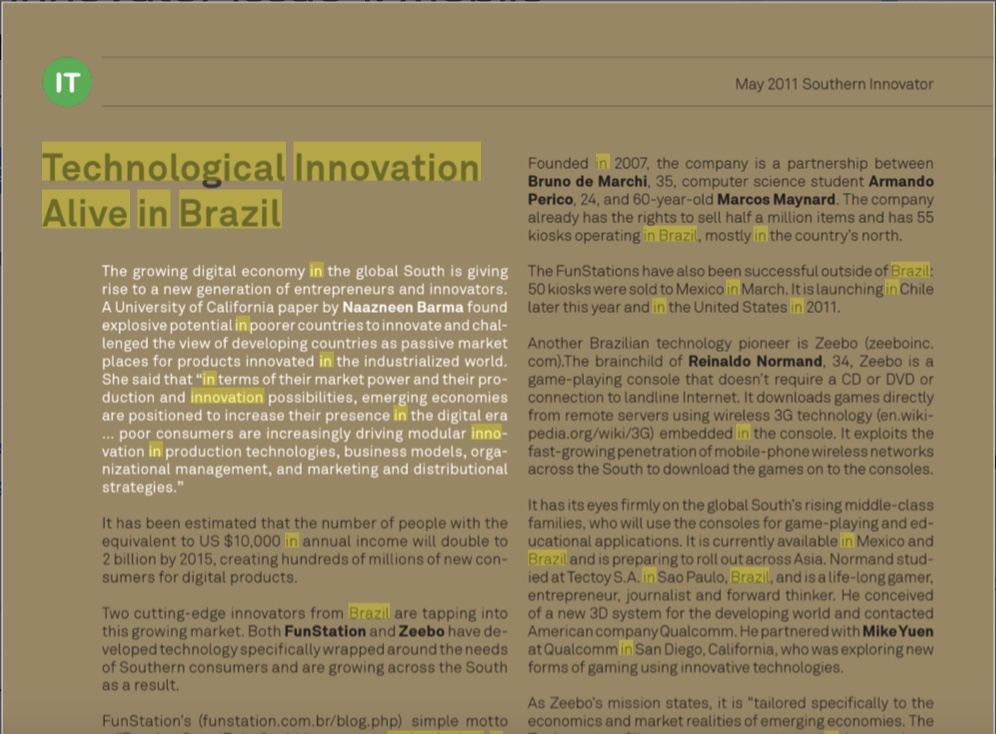
    Technological Innovation Alive in Brazil

    By David SouthDevelopment Challenges, South-South Solutions

    SOUTH-SOUTH CASE STUDY

    The growing digital economy in the global South is giving rise to a new generation of entrepreneurs and innovators.

    A University of California paper by Naazneen Barma found explosive potential in poorer countries to innovate, and challenged the view of developing countries as passive market places for products innovated in the industrialized world. She said that “in terms of their market power and their production and innovation possibilities, emerging economies are positioned to increase their presence in the digital era … poor consumers are increasingly driving modular innovation in production technologies, business models, organizational management, and marketing and distributional strategies.”

    It has been estimated that the number of people with equivalent to US $10,000 in annual income will double to 2 billion by 2015, creating hundreds of millions of new consumers for digital products.

    Two cutting-edge innovators from Brazil are tapping into this growing market. Both FunStation and Zeebo have developed technology specifically wrapped around the needs of Southern consumers and are growing across the South as a result.

    FunStation’s (http://www.funstation.com.br/blog.php)simple motto – “Touch – Get – Enjoy” – hides a savvy technological innovation aimed at the growing army of digital downloaders on the march across the South. Sao Paulo’s FunStation entertainment kiosk system serves up video, audiobooks, songs, and ringtones to mobile phones and MP3 (http://en.wikipedia.org/wiki/MP3) players. Customers just need to plug into one of the large futuristic white kiosks, scroll through the choices, select what they want, pay and download. By going to the kiosk, customers avoid the need to download from the internet, which can take a lot of time depending on the connection and bandwidth. The kiosk is speedy, with 14 musical tracks downloaded to a device in 10 seconds.

    Apart from the convenience and speed of the kiosks, they also have other benefits: customers do not need to register with a download site like iTunes on the internet. This means they do not have to run the risks of giving away bank details or other personal information.

    Customers buy something called a Funcard which is similar to a pre-pay phone plastic phone card, with a PIN number. Cards are sold with values ranging from US $2 to US $50. The user just punches the number into the kiosk to pay for the download.

    The kiosks are being located in high-traffic places like festivals, airports, universities, retail shopping centres and transport systems.

    Founded in 2007, the company is a partnership between Bruno de Marchi, 35, computer science student Armando Perico, 24, and 60-year-old Marcos Maynard. The company already has the rights to sell half a million items and has 55 kiosks operating in Brazil, mostly in the country’s north. “People are poorer in those places,”de Marchi told Monocle magazine. “Usually they have an MP3 player but no computer.”

    The FunStations have also been successful outside of Brazil: 50 kiosks were sold to Mexico in March. It is launching in Chile later this year and in the United States in 2011. Always evolving, the business is also working with the University of Lugano in Switzerland to develop new software and keep the kiosks fresh and lively.

    Another Brazilian technology pioneer is Zeebo (http://www.zeeboinc.com). The brainchild of Reinaldo Normand, 34, Zeebo is a game-playing console that doesn’t require a CD or DVD, or connection to landline internet. It downloads games directly from remote servers using wireless 3G technology (http://en.wikipedia.org/wiki/3G)embedded in the console. It exploits the fast-growing penetration of mobile phone wireless networks across the South to download the games on the consoles.

    It has its eyes firmly on the global South’s rising middle-class families, who will use the consoles for game-playing and educational applications. It is currently available in Mexico and Brazil and is preparing to roll out across Asia. Normand studied at Tectoy S.A. in Sao Paulo, Brazil, and is a life-long gamer, entrepreneur, journalist and forward thinker. He conceived of a new 3D system for the developing world and contacted American company Qualcomm. He partnered with Mike Yuen at Qualcomm in San Diego, California, who was exploring new forms of gaming using innovative technologies.

    As Zeebo’s mission states, it is “tailored specifically to the economics and market realities of emerging economies. The Zeebo system fills an enormous unmet need in these regions. At the same time it opens an immense new market for interactive content and products.”

    Normand is ambitious and wants to reach a vast market of 340 million Chinese families. “By 2011, I want to close deals in China to manufacture televisions with this technology built in, therefore entering the homes of millions of families,” he told Monocle.

    Zeebo makes some games for the console and also buys in other games from big-name game makers like Electronic Arts and Activision. The games are downloaded from the internet using a 3G mobile chip already built in to the consoles. The games are priced between US $5 and US $13.

    The Zeebo system will roll out to China, the US and India in 2011, and Eastern Europe in 2012.

    Published: August 2010

    Resources

    • Afrinnovator: Is about telling the stories of African start-ups, African innovation, African made technology, African tech entrepreneurship and entrepreneurs. Their mission is to ‘Put Africa on the Map’ by covering these kinds of stories from all over Africa. As their website says, “if we don’t tell our own story, who will tell it for us?” Website: http://afrinnovator.com
    • AfricaUnsigned: This African alternative way of producing African music started this year. Unsigned artists record their music, funded by fans. Music fans from all over the world listen to the selection of artists, pick their favorite(s) and chip in a minimum of $1 dollar to the recording of a professional EP. The music is then distributed to the fans who backed the artist and sold on all major online stores (incl. Amazon & iTunes). Website: www.AfricaUnsigned.com
    • TechMasai: Pan-African start-up news and reviews. Website: www.techmasai.com
    • The Emerging Economies in the Digital Era: Market Places, Market Players, and Market Makers by Naazneen Barma, University of California. Website: http://tinyurl.com/3xjf2ps

    https://davidsouthconsulting.org/2022/02/17/african-digital-laser-breakthrough-promises-future-innovation/

    https://davidsouthconsulting.org/2022/10/05/african-innovation-eco-system-taking-shape/

    https://davidsouthconsulting.org/2021/05/18/african-innovation-helps-make-banking-transactions-safer/

    https://davidsouthconsulting.org/2022/11/16/brazils-agricultural-success-teaches-south-how-to-grow/

    https://davidsouthconsulting.org/2022/11/10/brazilian-restaurant-serves-amazonian-treats/

    https://davidsouthconsulting.org/2022/10/10/bringing-the-invention-and-innovation-mindset-to-young-kenyans/

    https://davidsouthconsulting.org/2022/11/17/cashing-in-on-music-in-brazil/

    https://davidsouthconsulting.org/2020/04/25/china-looking-to-lead-on-robot-innovation/

    https://davidsouthconsulting.org/2022/10/24/flurry-of-anti-poverty-innovations/

    https://davidsouthconsulting.org/2021/03/24/frugal-innovation-trend-meets-global-souths-innovation-culture/

    https://davidsouthconsulting.org/2017/10/18/innovation-agenda-and-timeline-2007-2015/

    https://davidsouthconsulting.org/2020/04/27/innovation-from-the-global-south/

    https://davidsouthconsulting.org/2020/12/14/innovation-in-growing-cities-to-prevent-social-exclusion/

    https://davidsouthconsulting.org/2022/11/11/innovation-cairos-green-technology-pioneers/

    https://davidsouthconsulting.org/2021/03/04/innovation-villages-tackling-mdgs/

    https://davidsouthconsulting.org/2021/10/22/innovations-in-green-economy-top-three-agenda/

    https://davidsouthconsulting.org/2022/10/27/kenyan-mobile-phone-innovations/

    https://davidsouthconsulting.org/2021/03/02/new-3d-technology-makes-innovation-breakthrough-and-puts-mind-over-matter/

    https://davidsouthconsulting.org/2022/10/09/next-generation-of-innovation-for-the-grassroots/

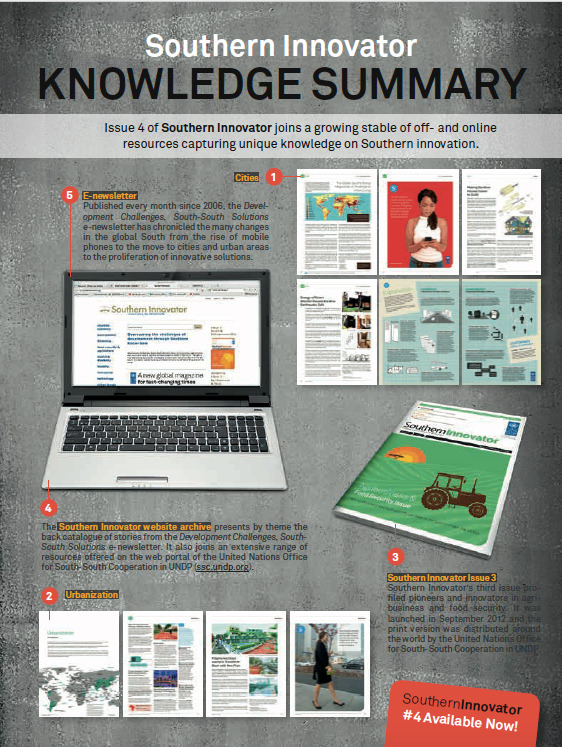
    https://davidsouthconsulting.org/2016/04/14/southern-innovator-and-the-growing-global-innovation-culture-14-april-2016/

    https://davidsouthconsulting.org/2021/03/05/southern-innovator-issue-1/

    Creative Commons License

    This work is licensed under a
    Creative Commons Attribution-Noncommercial-No Derivative Works 3.0 License.

    ORCID iD: https://orcid.org/0000-0001-5311-1052.

    © David South Consulting 2023

  • Human Development Report Mongolia | 1997

    Human Development Report Mongolia | 1997

    This groundbreaking Mongolian Human Development Report – the country’s first – went beyond just chronicling Mongolia’s state of development in statistics and graphs. It placed the story of the Mongolian people during the transition years (post-1989) at its heart, using photographs, stories and case studies to detail the bigger narrative at play.

    Designed, laid out and published in Mongolia, the report broke with the practices of many other international organisations, who would publish outside of Mongolia – denying local companies much-needed work. The report’s costs helped to kick-start a publishing boom in the country and significantly raised standards in design and layout. The foundations laid down by the project producing the report ushered in a new age in publishing for Mongolia.

    The report’s launch was innovative, not only being distributed for free across the country, but also part of a multimedia campaign including television programming, public posters, town hall meetings and a ‘roadshow’ featuring the report’s researchers and writers.

    The initial print run of 10,000 copies was doubled as demand for the report increased. To the surprise of many, once hearing about the free report, herders would travel to the capital, Ulaanbaatar, to pick up their copy. The report proved people cared passionately about the development of their country and that development concepts are not to be the secret domain of ‘development practitioners’.

    You can read the report’s pdf here: books.google.co.uk/books?id=dx7Q-yJot_cC&printsec=fro…

    The MHDR 1997 was so popular it had two print runs. It has been cited in many books, journals and publications. It was the first exhaustive account of the country’s turbulent transition years and mapped the extent of poverty in the country.
    The Human Development Report Mongolia 1997 is available in many library collections around the world. In this case, the Oulu University Library Finland.
    The award-winning UN/UNDP Mongolia Development Portal was launched in 1997. It quickly became the go-to source on Mongolia’s development challenges.
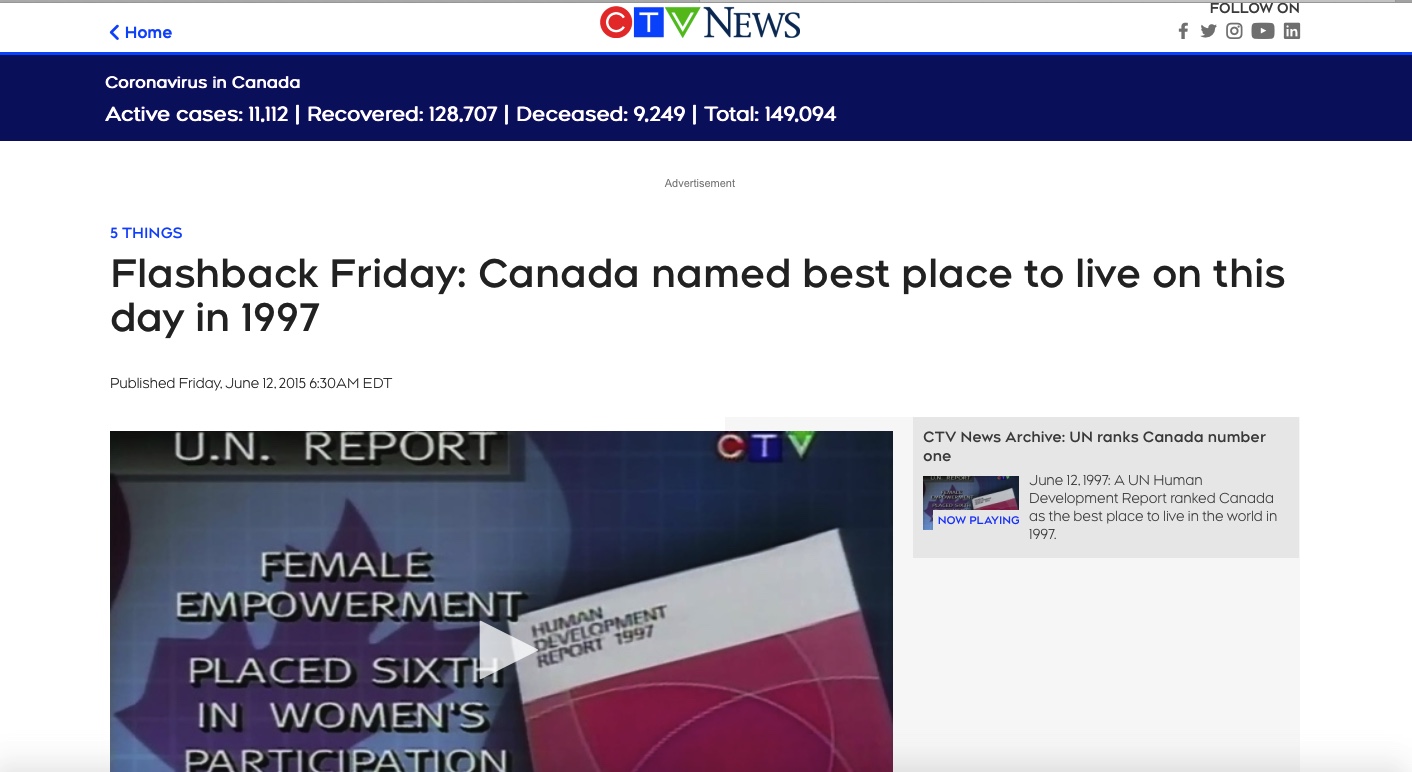
    CTV News: “Canada named best place to live on this day in 1997”. I considered it an enormous privilege to be given the opportunity to work with fellow Canadians on sharing our experiences with Mongolia during the 1990s crisis.

    “On this day in 1997, Canada was on top of the world. Or at least, on top of the United Nations’ annual ranking of the best places to live in the world.

    “CTV News archival footage captured a proud moment for Canada on June 12, 1997, as then-National News anchor Lloyd Robertson hailed the UN ranking as a “report card to be proud of.”

    “It’s not quite straight As but Canada is still at the head of the class,” Robertson said. “In fact, it’s No. 1 in the world.”

    Related Links

    “Canada beat out France, Norway, the United States and Iceland for top spot on the UN human development list, which ranks countries based on a variety of factors linked to quality of life.

    “It was the fourth straight year Canada topped the list.

    “Canada earned top marks in the life expectancy, health, education and income categories, which helped propel the country’s overall Human Development Index score to No. 1 in the world.”

    This work is licensed under a Creative Commons Attribution 4.0 International License.

    ORCID iD: https://orcid.org/0000-0001-5311-1052.

    © David South Consulting 2023

  • Model City to Test the New Urbanism Concept in India

    Model City to Test the New Urbanism Concept in India

    By David SouthDevelopment Challenges, South-South Solutions

    SOUTH-SOUTH CASE STUDY

    India’s phenomenal economic growth rate – forecast to be 7.9 percent this year by the Asian Development Bank, after averaging 7.7 percent per year over the past decade – has been the force behind an expanding middle class population, now estimated at 50 million people (McKinsey). Forecasts see it swelling from 5 percent of the population to 40 percent by 2025.

    India now boasts many fast-growing global companies and booming enterprise zones like the technology hub of Bangalore. But the country still comes in for heavy criticism of the way it has managed the growth of its cities. Poor planning and chaotic growth have left many cities with vast slum areas, congestion, poor hygiene and sanitation services, crumbling infrastructure and poor-quality transportation services. To more and more Indians it has become clear these factors are now serious impediments to economic growth and modernisation of the country and its economy.

    With 30 percent of the population living in urban areas and cities contributing 60 percent of the country’s GDP and 90 percent of government revenues (Wall Street Journal), city-dwellers’ fate is critical to the functioning of the economy.

    According to the 2001 Indian census, slums make up 25 percent of all housing, and 26 percent of urban households lack access to sanitation facilities.

    And as the middle class grows and its members accumulate savings, their desire to be better housed will also grow. They will be on the hunt for new places to live to realise their dreams. Those who can satisfy this strong urge will be those who will also profit.

    This is where the new city concept of Lavasa (www.lavasa.com) comes in. This new community sits nestled in picturesque mountains and features promenades, sidewalk cafes, and ice cream parlours, but none of the clichéd fixtures of today’s Indian cities: rickshaws, noise and pollution, poor sanitation and over-crowding. It has apartment houses in mustard, terra cotta, ochre, olive and beige. It is also going to have a medical campus, luxury hotels, boarding schools, sports academies, a golf course, a space camp, animation and film studios, software-development companies, biotech labs and law and architectural companies. A thoroughly ‘knowledge economy’ mix that India’s aspiring classes wish to see the country embrace for its future development.

    The people behind Lavasa see it as a new model of governance and urban development for India in the 21st century.

    Lavasa is located in Western Ghats, 200 kilometres southeast of Mumbai, India’s financial and entertainment capital, and 65 kilometres west of Pune, a centre for software programming and computer animation.

    Lavasa’s colourful and detailed website boasts it as a “private hill city being developed by Lavasa Corporation Limited where people can live, work, learn and play in harmony with nature.” It’s billed as “an inclusive city, based on the principles of New Urbanism.”

    The master plan is to house more than 300,000 people divided in to five linked towns.

    The first town, Dasve, will be completed in 2011. Its houses are selling well and are almost sold out, according to its developers.

    Lavasa is the concept of Ajit Gulabchand, chairman of Hindustan Construction Company, an Indian company with extensive experience building bridges and dams.

    The development is located in the remote hills along the Varasgaon Lake, a reservoir providing water to Pune. Lavasa Hill City covers “25,000 acres with 60 Kms of lakefront” according to its website. The land had originally been designated for holiday homes, but this seemed too small an aspiration.
    Lavasa will be governed by a private corporation. It is also being planned according to the principles of New Urbanism (www.newurbanism.org) – a belief in cities built around walkability not cars, where business and residential sit side-by-side, with mixed income housing and lots of green space for parks.

    The corporation will take responsibility for providing all major utilities: running water, electricity, sewage treatment, garbage collection and fibre optic connections.

    This thoroughly modern approach has startled prospective buyers of homes, puzzled there weren’t water tanks on the roofs and septic tanks for each house: something they had come to expect with current Indian cities.

    The Lavasa Corporation has hired an American city administrator, Scot Wrighton, to run the new city.

    He told The Atlantic magazine that Lavasa offered him “a chance to build a new governance model for a country where governance at the municipal level does not work.”

    The project seeks to exploit a portion of Maharashtra state law that lets corporations assume many of the responsibilities normally provided by, or in the domain of, the state. These do not include police powers or the ability to raise taxes but take in pretty much everything else.

    Lavasa has private security guards to watch over its residents and funds itself through home sales, renting, and business deals. The prices for apartments in the development range between US $17,000 and US $36,000. While cheap by Western standards, this is still expensive to middle class Indians.

    The project has come in for criticism for being just for the wealthy and being a pipe dream in chaotic India.

    In response to criticism, Gulabchand is introducing cheaper apartments targeting young professionals and starter homes that he claims will rent for US $11 a month. This far lower monthly rent could make the development affordable for more people, including domestic servants and laborers.

    Gulabchand admitted the plan was not without risks. “We’re worried we’ll still get slums,” he said. “Do we have all the answers yet? No. It is still an experiment, okay?”

    As for charges the development doesn’t look much like the ‘real’ India, Gulabchand says: “Why should we look to the past? India is a young society.”

    But Gulabchand doesn’t think India has the time to waste pondering these aesthetic questions: the country has a desperate need for better quality living conditions.

    “We may not get a perfect Singapore-style model city,” he told The Atlantic. “But this is a model for a more vibrant, inclusive, greener place that still has soul.”

    Published: September 2011

    Resources

    1) New documentary Urbanized gives a passionate over-view of the challenges facing the rapidly urbanizing world around us. Website: http://urbanizedfilm.com/

    https://davidsouthconsulting.org/2021/03/05/southern-innovator-issue-4/

    https://davidsouthconsulting.org/2022/09/28/model-cities-across-the-south-challenge-old-ways/

    https://davidsouthconsulting.org/2020/12/04/model-indian-villages-to-keep-rural-relevant/

    Creative Commons License

    This work is licensed under a
    Creative Commons Attribution-Noncommercial-No Derivative Works 3.0 License.

    ORCID iD: https://orcid.org/0000-0001-5311-1052.

    © David South Consulting 2022

  • Austerity And History | 27 November 2015

    Austerity And History | 27 November 2015

    Two historical works I am cited in as a resource both share a connection to austerity crises. The first, Modern Mongolia: From Khans to Commissars to Capitalists by Morris Rossabi (University of California Press), draws on my work for UNDP Mongolia (1997-1999) to show the impact of austerity policies on the country as it peacefully transitioned from Communism to free markets and democracy in the 1990s.

    Modern Mongolia: From Khans to Commissars to Capitalists.
    Modern Mongolia on Google Books.

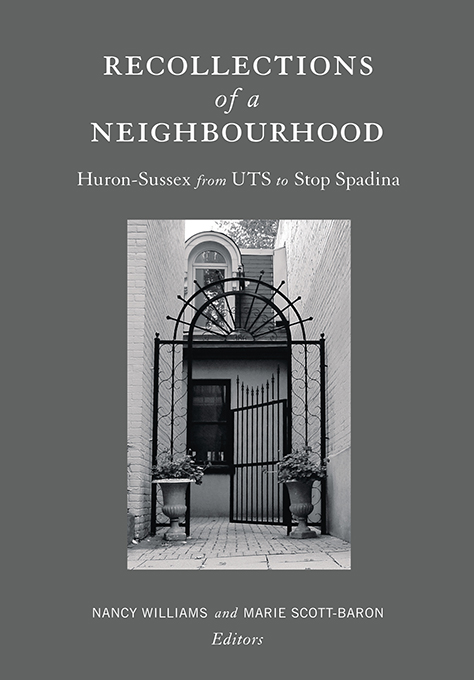
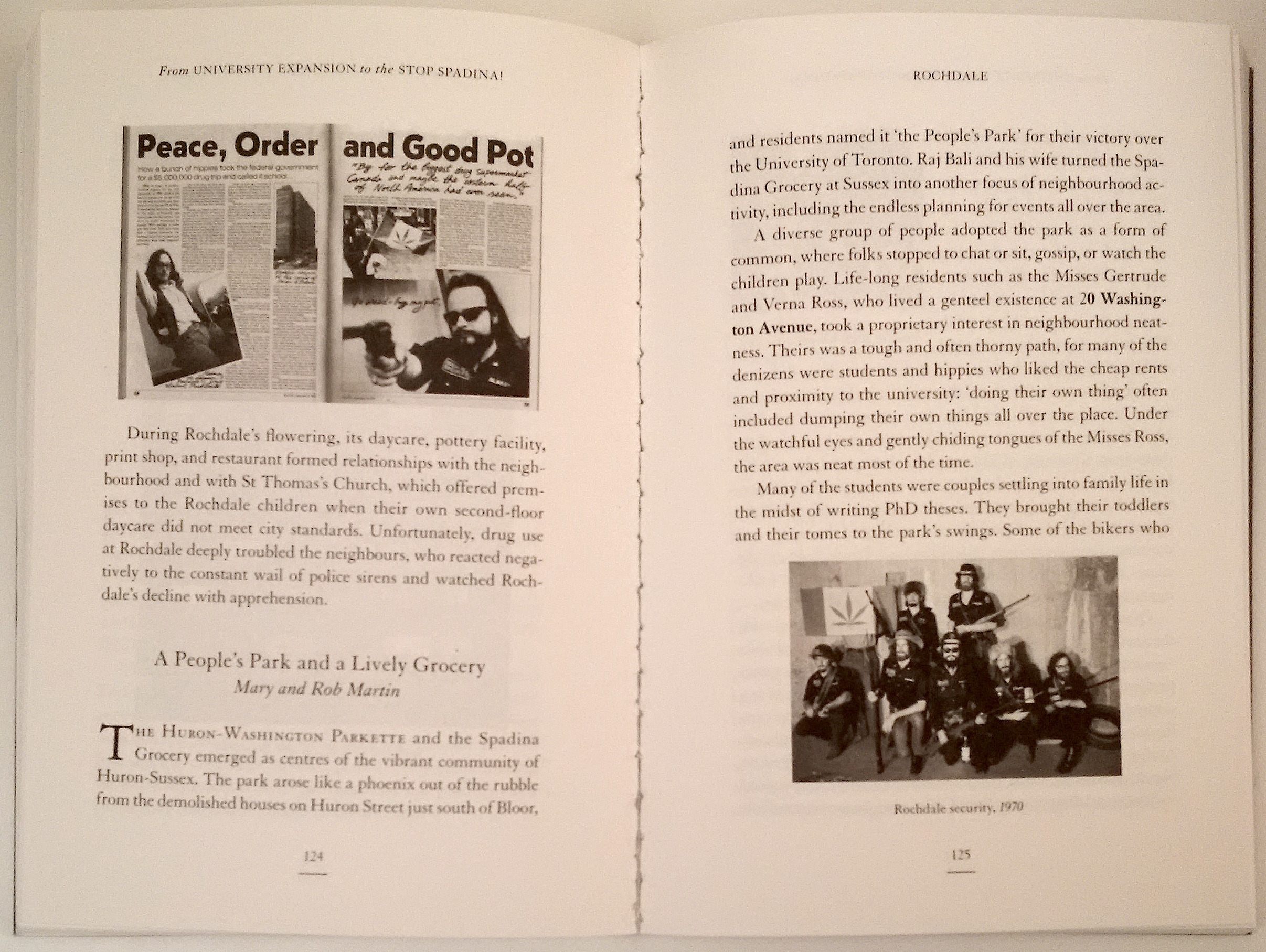
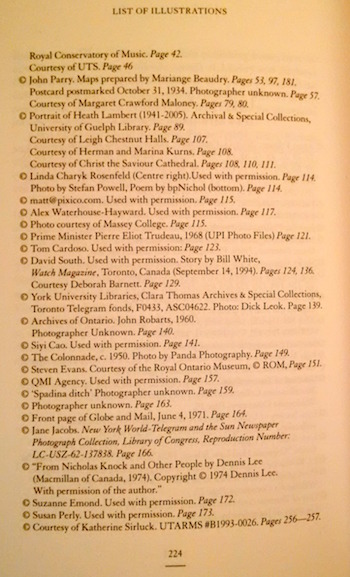
    The second, Recollections of a Neighbourhood: Huron-Sussex from UTS to Stop Spadina by Nancy Williams and Marie Scott-Baron (editors) (Words Indeed Publishing), details the evolution of a remarkable – and bohemian – Toronto, Canada neighbourhood in which I lived in the 1980s and 1990s. It uses an image from Watch Magazine, a youth culture biweekly I edited in 1994 and 1996. The magazine was launched during the depths of Canada’s austerity crisis. Despite the economic gloom, the magazine fizzed with youthful vitality and edge and contributed to Toronto’s resurgence. The particular piece cited is a feature on Rochdale College, a late 1960s experimental college associated with the University of Toronto that lit up the neighbourhood with hippie and alternative cultures, until it went into meltdown as drug gangs took control. It was a bold experiment and a reflection of the counter culture vibe of the time.

    Recollections of a Neighbourhood: Huron-Sussex from UTS to Stop Spadina.
    “Peace, Order and Good Pot” by Bill White.
    List of Illustrations: Sandwiched between Prime Minister Pierre Elliott Trudeau and urbanist Jane Jacobs.

    The Globe and Mail

    Tiny downtown Toronto enclave has a big story to tell

    ORCID iD: https://orcid.org/0000-0001-5311-1052.

    © David South Consulting 2022