Categories
Archive Watch Magazine

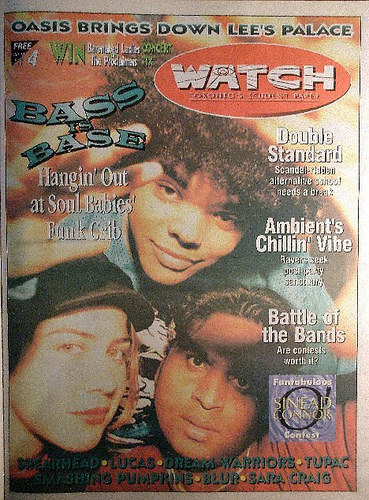
Oasis Has Arrogance, A Pile Of Attitude And The Best Album Of 1994

“You Can’t Have A Bird If You Want To Be The Biggest Band In The World”

By David South

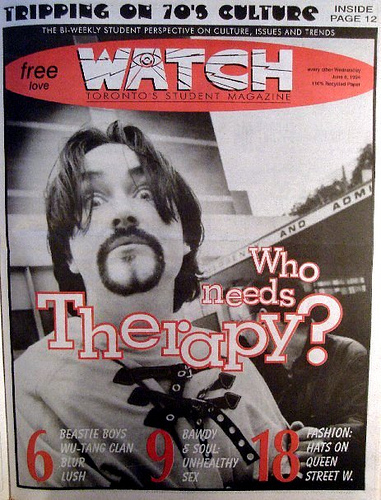
Watch Magazine (Toronto, Canada), October 12, 1994

Preparing to invade Lee’s Palace October 19, supersonically hyped English pop fivesome Oasis have a lot to live up to. The Manchester-based band have experienced a tsunami of media hype reminiscent of The Sex Pistols or The Beatles.

A triple slam of three hit singles in three months – Supersonic, Shakermaker, Live Forevever – and four sold out UK tours preceded their first album, Definitely Maybe. But this clever English pop formula faces its biggest challenge: North America.

The band has developed in less than a year, a reputation for being a ferry-disturbing, hotel-trashing, media-slagging, earth-shattering, shit-disturbing, ego-boosting, self-absorbed, tune-churning, attention-grabbing machine.

And what does an Oasis album sound like?

After you’ve heard all the hype and b.s., approaching 11-track Definitely Maybe should be a disappointing experience. It’s not. The album is craftily tight, with every song great. These guys left the crap at home – a lesson for other bands.

Singer Liam Gallagher’s voice isn’t polished, posh or slick. He drags words out, lets his voice crack, he whines. But this is the charm. Brother Noel Gallagher’s lyrics are cheeky, deliberately oblique at times, pragmatic and just simply entertaining. Gone are the 12-point manifestos of other bands, into the trash goes the primary-school poetry.

Noel writes songs that deliberately pay homage to their influences: The Stone Roses, The Jam, The Beatles, The Rolling Stones, The Sex Pistols. But listen closely. Each one is manipulative – you can’t help feeling the rhythm flow. There’s straight chord-bashing, multi-layered jangle guitar, and a lager-laden freight train ripping through the entire album.

Though it is worth mentioning there are five in Oasis – 22-year-old Liam, 27-year-old songwriter and guitarist Noel, guitarist Paul Arthurs, bassist Paul McGuigan, drummer Tony McCarroll – the band has deliberately served up brothers Liam and Noel as willing fodder for the press.

Hailing from the much-maligned north of England – Burnage, South Manchester to be exact – has meant the band has taken buckets of regional bigotry over their Mancunian accents. It seems the London style gestapo will still let good old fashioned English class and regional prejudices get in the way of a solid analysis of Oasis.

Calling up from Austin, Texas, lead singer Liam’s thick Mancunian accent rips through the telephone line in a firestorm of profanity – it’s refreshing.

The band is on a mission to devour all the “crap bands.” And through a little of Liam and Noel’s own version of the power of positive thinking, or to some, bold-faced arrogance, Oasis are going to give the music business an enema like they’ve never seen before.

“Crap bands. That motivates us to be big,” says Liam confidently. “We were pissed off listening to all the daft bands – blagging the kids that this is what it is all about when it’s not. We are there to prove them all wrong. No bullshit, no strings attached – just simple rock n’ roll.”

Are they the vanguard of a new English invasion, or just another crew of hyped-up, trainer traipsing tossers? North America represents a walled fortress that has buffeted repeated attempts to resurrect the Brit-pack musical and cultural invasion of the 60s. The times have changed in the land where hip-hop, country music and heavy metal rule.

The classic British art-school pop formula of acquiring a very cool one-word name, a pile of trendy clothes, some mega-cool posters – and these days a video – falls flat amongst a population more comfortable in sweatpants and a baseball cap.

But Liam disagrees, and points to their appearance at the New Music Conference in New York.

“Packed-out – the crowd was havin’ it. The gigs have been like at home. Because we’re from England they don’t know much about us – they just come and listen to the music, go home and have a good night.

“We are fucking slick, a big machine! But we’ve not been trained. We know our songs are fucking good. We know we’ve got the best songs on the fucking planet. It ain’t just England – we know our kid (Noel) write the best songs in a long, long time. Since the days of Lennon and McCartney. And he’s doing it on his own.”

Liam’s antics, much to the disappointment of Noel, have gotten some major print in England’s tabloid music press, and has lead to a sleazy prose slug-fest between rivals the New Musicial Express and Melody Maker.

There was the ferry fracas, with Liam san Noel being tossed off for fighting and public drunkenness. Or how about being arrested for some serious hotel trashing with Primal Scream and the Verve while on tour in Sweden.

With the media hyping the scrapper reputation, an ugly element has been attracted to their concerts. During an August 9 concert, a fan punched Noel in the eye during Bring it Down, resulting in a mob of 300 stoning the tour bus.

But the band has never been sedate. They got their first record contract by storming a concert and demanding to be allowed to play or they will tear the place down.

“We’re not hype – I laugh at the English press. They’re stupid. They don’t even understand our music. They like it, that’s about it. Then they’ve got to write about me and our kid fighting, bits about trashing the hotel.”

Talking to Oasis, forget about the nice-boys-next-door routine. In fact, forget about every false face pop musicians had to put on in the puritanical 80s, and the politically correct 90s. Oasis not only admit to using drugs, shock of shock, they like it.

“Our mums know about it. I was doing drugs since I was 13. Sniffing gas, sniffing glue, drinking cider, getting off my face.”

They don’t labour themselves with the soul-consuming indie band angst of worry that if they get big they have somehow sold out.

Depending on the day of the week and who you talk to, the brothers either enjoy a healthy creative conflict, or bloody well hate each other. Certainly, the evidence points to the latter, while Liam says otherwise.

There was the time at a South England gig where Noel punched Liam in the face and chased him off stage. But there is the Noel who returned from being a roadie for the Inspiral Carpets and approached the band in 1992 telling them their songs are “shite” and they should let him write the songs and take over.

“Our kid, he’s a bit of a singer, but he knows he can’t sing. He says I can’t write a song. We are both kind of jealous of each other. That’s how I see it anyway. I don’t know. He thinks he’s the only one who really loves music, and his own brother don’t understand it. And I ant to prove to him I mean it a little more than he does – and it freaks him out. He sings totally different – then I get a grip of it and I bite the head off of it.”

It has been Noel’s discipline and raw talent, Liam admits, that pulled Oasis together.

They believe in total commitment to the cause of being the best band in the world.

“There’s a day when you turn around and say, right “Do you want this to be every Tuesday, Thursday night, like a fucking scout club meeting, or do you want it to be real?” If you want it to be real, you’ve got to be here every Monday, Tuesday, Wednesday, Thursday, Friday, Saturday, Sunday – you can’t go out drinkingwith your mates or doing this with your bird. You can’t have a bird if you want to be the biggest band in the world – this is what it’s about. If you don’t like it, piss off, tell us now.”

They gotten a reputation for being a juicy interview for jaded journalists tired of earnest musicians telling of their next charity album, or wanking on about how their music is deep.

The British press have gorged themselves on a love-hate feast of large portions of Oasis.

For Oasis watchers, the landmark article was the April 23 issue this year of NME. Titled The Bruise Brothers, this was the true beginning of the hype machine. The article immediately focuses in on the duelling brothers, barely touching the fact they are a band.

The stage was set for a punch and judy comedy involving the nasty yet lovable Gallagher brothers. Shakespeare couldn’t have written a better play for the press gang to report.

While Liam denies it, there has been talk of a full-blown conspiracy involving Oasis record label Creation and their buddies within the press – an Oasis hype mafia some have called it.

“If someone likes you and your on their label, they are going to talk about you. We’ve done all the shit gigs man. The reason why we are bigis because we are fucking crafty. We’ve done four sell-out tours within the space of four months. What other band does that? – none. We’ve had a single out every month. People are just tripping. There’s no big mafia working us up. If there is, I don’t fucking know it. No one’s told me.

“They just want to build us up as hype and then see if they can knock us down. But they won’t be able to – ’cause we are writing the best songs – we can rip their papers up and wipe our bums with it and throw it in the fucking bin, they can’t do it with us. They can do it with Suede, ’cause Suede let em. If someone stitches me in the paper and I meet them in London or wherever, they get it, I tell them.

“A couple weeks ago we were on the front cover of the NME, Melody Maker – we didn’t even do an interview with the NME. They just sneaked over and got a picture, the picture that was on the cover of the NME was going to be for VOX.

“They got (freelance photographer) Keving Cummings to sell the VOX picture to the NME. Now Kevin Cummings don’t come near us, if he does I’ll slap him, and I’ve told him. He says this is for VOX, and the next fucking day it’s on the front cover of the NME without even an interview with us.

“They can try and have a backlash – we will release Whatever at xmas with proper Beatles styling, which will sell thousands and thousands of fucking copies and put us in the charts.”

When former Jam powerhouse and English pop icon Paul Weller dropped by an Oasis gig, the meeting was blown into the clash of titan egos by the press.

“He comes to the gig because he likes the music. We chilled out with him. You know how the press works, they just build it up. They made out as if Paul Weller walked in our dressing room and our kid fucking snaps at him. He loves Paul Weller. This is bullshit, I’m not having the NME or the Melody Maker deciding what we are. No way, I’m not having it.”

In fact Liam sees Weller on holy ground. “The other two guys in the band were dicks, I don’t care for them at all. Paul Weller was a diamond. He wrote some mega songs. They are bloody selling groceries, trying to get it together.

“Everyone is going they should form the Jam again – no way man. They look like 50-year-old men, them two now. Paul Weller looks like a young lad now. He’s kept it together, why should he go back, go jamming with them again. He’s still young.”

It took just one tour with Primal Scream for Oasis to determine who is the greatest rock n’ roll band alive. Lead singer Bobby Gillespie’s degenerate 70s roadshow follies didn’t impress Liam.

“They ain’t the rock n’ roll band everybody makes them out to be. There’s only three in Primal Scream – the rest are all hiding. A rock n’ roll band to me is about five people who know each other very well, they are all friends. They ain’t the last rock n’ roll band, we are! Fucking idiots, we are! Well we aren’t the last, but we are the rock n’ roll band to date if there is one about – not Primal Scream.

“Plus he (Gillespie) smells and they don’t wash their clothes. They are too rock n’ roll cliche, you know what I mean. I know for a fact lot of these rock n’ roll types look at us and say we aren’t rock n’ roll because we have trainers. So fucking what! It’s not all about winkle pickers, skin-tight pants and long greasy hair. That’s Guns n’ Roses material!”

Note: This was the first article about Oasis in North America. In October, 2007 Liam Gallagher was named one of the ten wittiest Englishmen in history.

Watch Magazine: Sloan Cover
Sloan’s 1994 release, Twice Removed, was called by Chart magazine one of the “Top 50 Canadian Albums of All Time”.
Mongolian Rock Pop Front Cover
In 1999 I published the first book on Mongolia’s contemporary music scene. Freshly opened up to the wider world, Mongolia’s musicians were leading the way for this youthful, new Asian democracy. By 2020, Mongolian musicians had become a global Internet sensation.
Creative Commons License

This work is licensed under a
Creative Commons Attribution-Noncommercial-No Derivative Works 3.0 License.

ORCID iD: https://orcid.org/0000-0001-5311-1052.

© David South Consulting 2021
Categories
Archive Blogroll Now Magazine

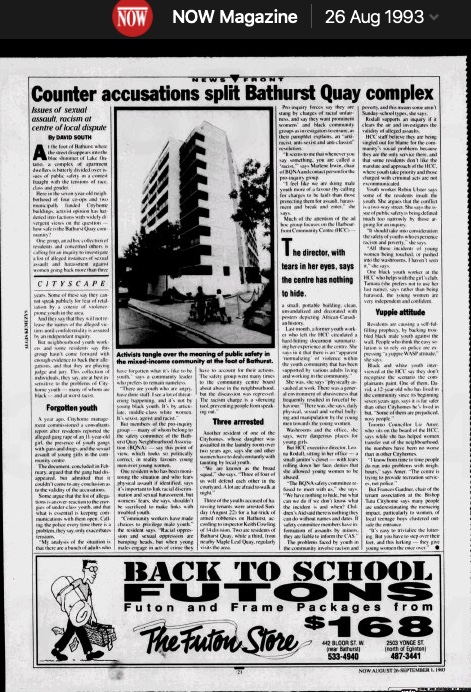
Counter Accusations Split Bathurst Quay Complex: Issues Of Sexual Assault, Racism At Centre Of Local Dispute

By David South

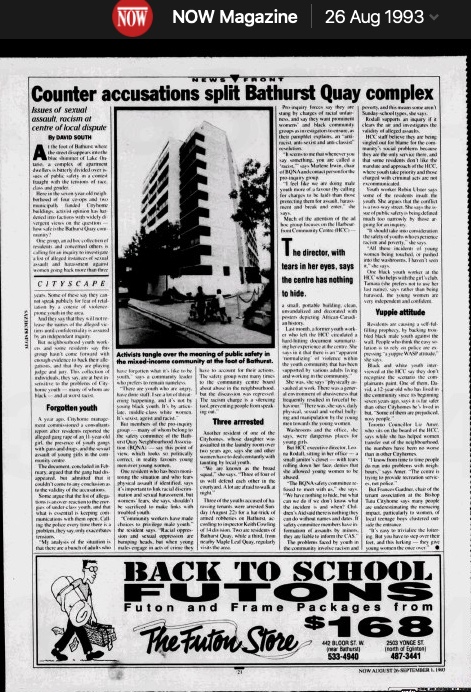
Now Magazine (Toronto, Canada), August 26-September 1, 1993

At the foot of Bathurst where the street disappears into the blue shimmer of Lake Ontario, a complex of apartment dwellers is bitterly divided over issues of public safety in a contest fraught with the tensions of race, class and gender.

Here in the seven-year-old neighbourhood of four co-ops and two municipally funded Cityhome buildings, activist opinion has hardened into factions with widely divergent views on one question – how safe is the Bathurst Quay community?

One group, an ad hoc collection of residents and concerned others is calling for an inquiry to investigate a list of alleged instances of sexual assault and harassment against women going back more than three years. Some of these say they cannot speak publicly for fear of retaliation by a coterie of violence-prone youth in the area.

And they say that they will not release the names of the alleged victims until confidentiality is assured by an independent inquiry.

But neighbourhood youth workers and some residents say this group hasn’t come forward with enough evidence to back their allegations, and that they are playing judge and jury. This collection of individuals, they say, are at best insensitive to the problems of Cityhome youth – many of whom are black – and at worst racist.

Forgotten youth

A year ago, Cityhome management commissioned a consultants report after residents reported the alleged gang rape of an 11-year-old girl, the presence of youth gangs with guns and drugs, and the sexual assault of young girls in the community centre.

The document, concluded in February, argued that the gang had disappeared, but admitted that it couldn’t come to any conclusion as to the validity of the accusations.

Some argue that the list of allegations is an over-reaction to the energies of under-class youth, and that what is essential is keeping communications with them open. Calling the police every time there is a problem, they say, only exacerbates tensions.

“My analysis of the situation is that there are a bunch of adults who have forgotten what it’s like to be youth,” says a community leader who prefers to remain nameless.

“There are youth who are angry, have done stuff, I see a lot of threatening happening, and it’s not by young black youth. It’s by articulate, middle-class white women. It’s sexist, ageist and racist.”

But members of the pro-inquiry group – many of whom belong to the safety committee of the Bathurst Quay Neighbourhood Association (BQNA) – say this point of view, which looks so politically correct, in reality favours young men over young women.

One resident who has been mintoring the situation and who fears physical assault if identified, says it’s important to link racial discrimination and sexual harassment, but women’s fears, she says, shouldn’t be sacrificed to make links with troubled youth.

“Community workers have made choices to privilege male youth,” the resident says. “Racial oppression and sexual oppression are bumping heads, but when young males engage in acts of crime they have to account for their actions. The safety group went many times to the community centre board about abuse in the neighbourhood, but the discussion was repressed. The racism charge is a silencing tool, preventing people from speaking out.”

Three arrested

Another resident of one of the Cityhomes, whose daughter was assaulted in the laundry room over two years ago, says she and other women have to deal constantly with taunting by local youth.

“We are known as the broad squad,” she says. “Three or four of us will defend each other in the courtyard. A lot are afraid to walk at night.”

Three of the youths accused of harassing tenants were arrested Sunday (August 22) for a hat-trick of armed robberies on Bathurst, according to Keith Cowling of 14 Division. Two are residents of Bathurst Quay, while a third, from nearby Maple Leaf Quay, regularly visits the area.

Pro-inquiry forces say they are stung by charges of racial unfairness, and say they want prominent womens’ and black community groups as investigators to ensure, as their pamphlet explains, an “anti-racist, anti-sexist and anti-classist” resolution.

“It seems to me that whenever you say something, you are called a ‘racist’,” says Marlene Irwin, chair of BQNA and contact person for the pro-inquiry group.

“I feel we are doing male youth more of a favour (by calling for charges to be laid) than those protecting them for assault, harassment and break and enter,” she says.

Much of the attention of the ad hoc group focuses on the Harbourfront Community Centre (HCC) – a small, portable building, clean, unvandalized and decorated with posters depicting African-Canadian history.

Last month, a former youth worker who left the HCC circulated a hard-hitting document summarizing her experience at the centre. She says in it that there is an “apparent ‘normalizing’ of violence within the youth community that has been supported by various adults living and working in the community.”

She was, she says “physically assaulted at work. There was a general environment of abusiveness that frequently resulted in forceful behaviour.” There was, she says, daily physical, sexual and verbal bullying and manipulation by the young men towards the young women.

Washrooms and the office, she says, were dangerous places for young girls.

But HCC executive director, Leona Rodall, sitting in her office – a small janitor’s closet – with tears rolling down her face, denies that she allowed young women to be abused.

“The BQNA safety committee refused to meet with us,” she says. “We have nothing to hide, but what can we do if we don’t know what the incident is and when? Children’s Aid said there is nothing they can do without names and dates. If safety committee members have information of assaults by minors, they are liable to inform the CAS.”

The problems faced by youth in the community involve racism and poverty, and this means some aren’t Sunday-school types, she says.

Rodall supports an inquiry if it clears the air and investigates the validity of the alleged assaults.

HCC staff believe they are being singled out for blame for the community’s social problems because they are the only service there, and that some residents don’t like the mandate and approach of the HCC, where youth take priority and those charged with criminal acts are not excommunicated.

Youth worker Robin Ulster says some of the residents insult the youth. She argues that the conflict is a two-way street. She says the issue of public safety is being defined much too narrowly by those arguing for an inquiry.

“It should take into consideration the safety of youths who experience racism and poverty,” she says.

“All these incidents of young women being touched, or pushed into the washrooms, I haven’t seen it,” she says.

One black youth worker at the HCC who helps with the girl’s club, Tamara (she prefers not to use her last name), says rather than being harassed, the young women are very independent and confident.

Yuppie attitude

Residents are causing a self-fulfilling prophecy, by backing troubled black male youth against the wall. People who think the easy solution is to rely on police are expressing a “yuppie WASP attitude”, she says.

Black and white youth interviewed at the HCC say they don’t recognize the scenario the complainants paint. One of them, David, a 12-year-old who has lived in the community since its beginning seven years ago, says it is far safer than other Cityhomes he’s lived in, but “Some of them are prejudiced, nosy people.”

Toronto Councillor Liz Amer, who sits on the board of the HCC, says while she has helped women transfer out of the neighbourhood, the numbers have been no worse than in other Cityhomes.

“I know from time to time people do run into problems with neighbours,” says Amer. “The centre is trying to provide recreation services, not police.”

But Francis Gardner, chair of the tenant association at the Bishop Tutu Cityhome says many people are underestimating the menacing impact, particularly for women, of local teenage boys clustered outside the entrance.

“It’s easy to trivialize the loitering. But you have to step over their feet, and this lurking – they give young women the once over.”

Creative Commons License

This work is licensed under a
Creative Commons Attribution-Noncommercial-No Derivative Works 3.0 License

ORCID iD: https://orcid.org/0000-0001-5311-1052.

© David South Consulting 2022

Categories
Archive Blogroll Now Magazine

New Student Group Seeks 30 Percent Tuition Hike

Coalition hoping to be the “responsible” campus alternative

By David South

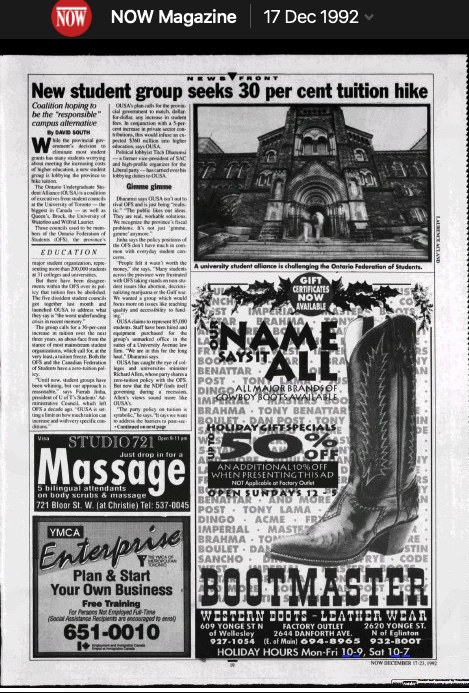
Now Magazine (Toronto, Canada), December 17-23, 1992

While the provincial government’s decision to eliminate most student grants has many students worrying about meeting the increasing costs of higher education, a new student group is lobbying the province to hike tuition.

The Ontario Undergraduate Student Alliance (OUSA) is a coalition of executives from student councils at the University of Toronto – the biggest in Canada – as well as Queen’s, Brock, the University of Waterloo and Wilfred Laurier.

Those councils used to be members of the Ontario Federation of Students (OFS), the province’s major student organization, representing more than 200,000 students at 31 colleges and universities.

But there have been disagreements within the OFS over its policy that tuition fees be abolished. The five dissident student councils got together last month and launched OUSA to address what they say is “the worst underfunding crisis in recent memory.”

The group calls for a 30-per-cent increase in tuition over the next three years, an about-face from the stance of most mainstream student organizations, which call for, at the very least, a tuition freeze. Both the OFS and the Canadian Federation of Students have a zero-tuition policy.

“Until now, student groups have been whining, but our approach is reasonable,” says Farrah Jinha, president of U of T’s Students’ Administrative Council, which left OFS a decade ago. “OUSA is setting a limit on how much tuition can increase and with very specific conditions.”

OUSA’s plan calls for the provincial government to match, dollar-for-dollar, any increase in student fees. In conjunction with a 5-per-cent increase in private sector contributions, this would infuse an expected $360 million into higher education, says OUSA.

Political lobbyist Titch Dharamsi – a former vice-president of SAC and high-profile organizer for the Liberal party – has carried over his lobbying duties to OUSA.

Gimme gimme

Dharamsi says OUSA isn’t out to rival OFA and is just being “realistic.” “The public likes our ideas. They are real, workable solutions. We recognize the province’s fiscal problems. It’s not just ‘gimme, gimme’ anymore.”

Jinha says the policy positions of the OFS don’t have much in common with everyday student concerns.

“People felt it wasn’t worth the money,” she says. “Many students across the province were frustrated with OFS taking stands on non-student issues like abortion, decriminalizing marijuana or the Gulf war. We wanted a group which would focus more on issues like teaching quality and accessibility to funding.”

OUSA claims to represent 85,000 students. Staff have been hired and equipment purchased for the group’s unmarked office in the suites of a University Avenue law firm. “We are in this for the long haul,” Dharamsi says.

OUSA has caught the eye of colleges and universities minister Richard Allen, whose party shares a zero-tuition policy with the OFS. But now that the NDP finds itself governing during a recession, Allen’s views sound more like OUSA’s.

“The party policy on tuition is symbolic,” he says. “It says we want to address barriers to post-secondary education.”

Student quits

One student representative on U of T’s Students’ Administrative Council, Jason Zeidenberg, resigned when SAC decided to join OUSA.

“The process hasn’t involved students,” says Zeidenberg. “It is a policy for student politicians, not students. OUSA has no constitution, no financial structure, no mechanism for individual students to bring questions forward. It is an undemocratic, fly-by-night institution.

“Until they justify their expenditures, they are under suspicion of being a front group to legitimize policies like raising tuition.”

OUSA isn’t legally obliged to incorporate itself or provide a constitution or accountable executive. The group operates much like a club, with member council executives making decisions collectively, and funds coming out of member unions’ budgets.

Joining OFS requires a student referendum, but because of OUSA’s quasi-ad-hoc status, no such vote is needed to join the new group.

Dharamsi says this approach is cost-effective and flexible. He says OUSA has spent around $10,000 to date, but can’t offer a fixed budget.

Zeidenberg hs organized several college and faculty student unions at U of T to demand that SAC hold a referendum about membership in OUSA.

Craft doesn’t feel that OUSA is a threat. “I’m not losing sleep over it,” he says. “We’re considered the representatives of students in Ontario.”

Recently, however, the University of Western Ontario pulled out of OFS and is currently negotiating with OUSA about joining. Western’s departure takes another 20,000 students and precious dollars with them, and funding cuts have led OFS to lay off staff.

This cover is by great Canadian political cartoonist and illustrator Jack Lefcourt. Always funny, Jack captures well the corporate take-over of the country’s universities and the introduction of the catastrophic debt culture that leaves so many students in a financial pickle. It was also Id’s first student issue. Id Magazine: Student Issue, “The guide to the zeitgeist”, Ontario, 1996, Features Editor: David South.

https://davidsouthconsulting.org/2021/01/26/aid-organization-gives-overseas-hungry-diet-food-diet-giant-slim-fast-gets-tax-write-off-for-donating-products/

https://davidsouthconsulting.org/2022/11/16/canadian-magazines-newspapers-1990s/

https://davidsouthconsulting.org/2021/06/01/case-study-2-watch-magazine-1994-and-1996-2/

https://davidsouthconsulting.org/2021/07/20/case-study-3-id-magazine-1996-1997-2/

https://davidsouthconsulting.org/2020/12/18/counter-accusations-split-bathurst-quay-complex-issues-of-sexual-assault-racism-at-centre-of-local-dispute/

https://davidsouthconsulting.org/2020/12/11/false-data-makes-border-screening-corruptible/

https://davidsouthconsulting.org/2020/12/10/one-world-youth-conferences-mongolia-1998-1999/

https://davidsouthconsulting.org/2022/11/11/online-free-knowledge-sharing/

https://davidsouthconsulting.org/2020/12/18/peaceniks-questioning-air-raid-strategy-in-bosnia/

https://davidsouthconsulting.org/2020/12/12/somali-killings-reveal-ugly-side-of-elite-regiment/

https://davidsouthconsulting.org/2021/02/05/study-says-jetliner-air-quality-poses-health-risks-cupe-takes-on-airline-industry-with-findings-of-survey/

https://davidsouthconsulting.org/2020/12/11/top-reporters-offer-military-media-handling-tips/

Creative Commons License

This work is licensed under a
Creative Commons Attribution-Noncommercial-No Derivative Works 3.0 License.

ORCID iD: https://orcid.org/0000-0001-5311-1052.

© David South Consulting 2023

Categories
Archive Blogroll Now Magazine

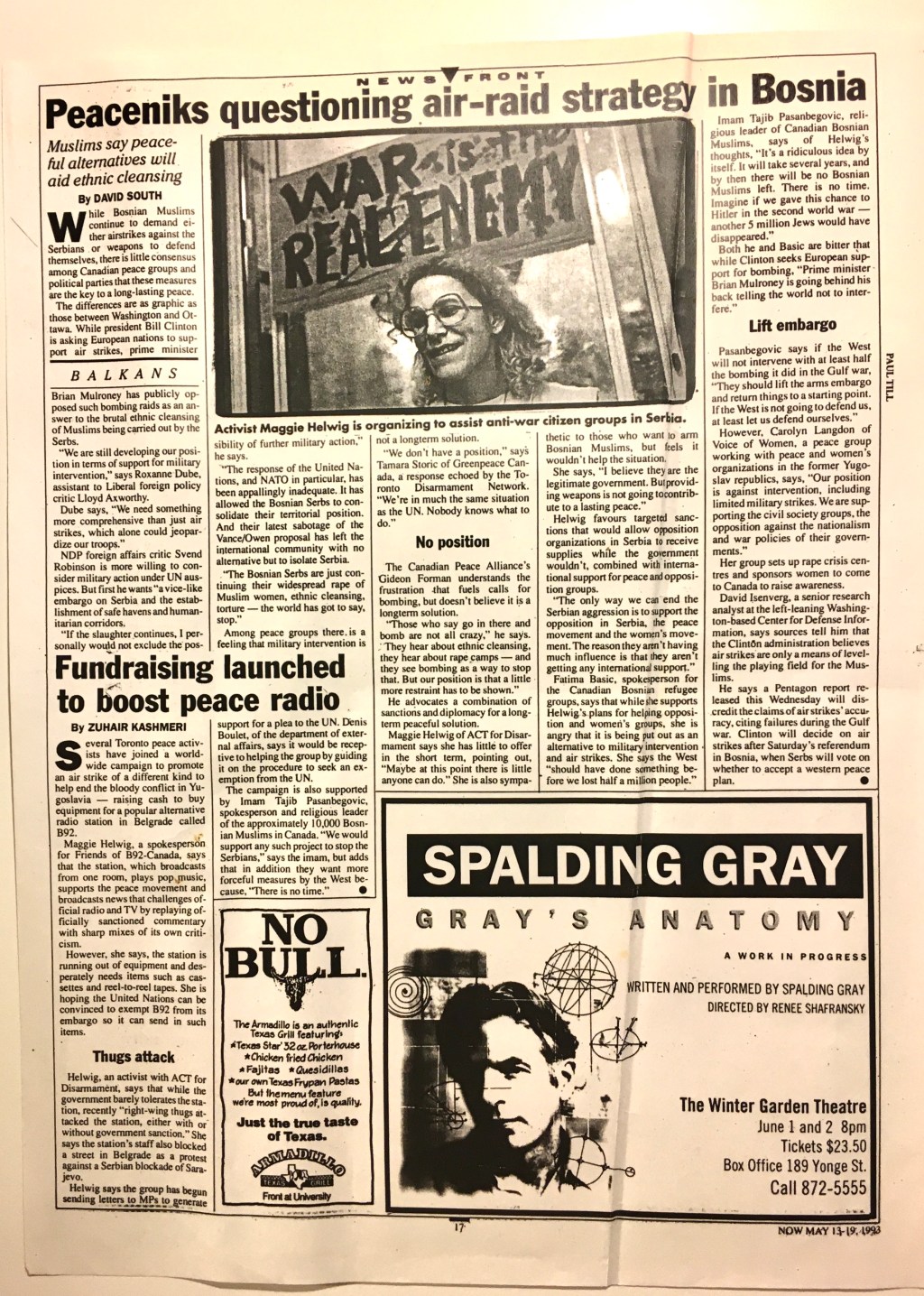
Peaceniks Questioning Air-Raid Strategy In Bosnia

Muslims say peaceful alternatives will aid cleansing

By David South

Now Magazine (Toronto, Canada), May 13-19, 1993

While Bosnian Muslims continue to demand either airstrikes against the Serbians or weapons to defend themselves, there is little consensus among Canadian peace groups and political parties that these measures are the key to a long-lasting peace.

The differences are as graphic as those between Washington and Ottawa. While president Bill Clinton is asking European nations to support air strikes, prime minister Brian Mulroney has publicly opposed such bombing raids as an answer to the brutal ethnic cleansing of Muslims being carried out by the Serbs.

“We are still developing our position in terms of support for military intervention,” says Roxanne Dube, assistant to Liberal foreign policy critic Lloyd Axworthy.

Dube says, “We need something more comprehensive than just airstrikes, which alone could jeopardize our troops.”

NDP foreign affairs critic Svend Robinson is more willing to consider military action under UN auspices. But first he wants “a vice-like embargo on Serbia and the establishment of safe havens and humanitarian corridors.

“If the slaughter continues, I personally would not exclude the posibility of further military action,” he says.

“The response of the United Nations, and NATO in particular, has been appallingly inadequate. It has allowed the Bosnian Serbs to consolidate their territorial position. And their latest sabotage of the Vance/Owen proposal has left the international community with no alternative but to isolate Serbia.

“The Bosnian Serbs are just continuing their widespread rape of Muslim women, ethnic cleansing, torture – the world has got to say, stop.”

Among peace groups there is a feeling that military intervention is not a longterm solution.

“We don’t have a position,” says Tamara Storic of Greenpeace Canada, a response echoed by the Toronto Disarmament Network. “We’re in much the same situation as the UN. Nobody knows what to do.”

No position

The Canadian Peace Alliance’s Gideon Forman understands the frustration that fuels calls for bombing, but doesn’t believe it is a longterm solution.

“Those who say go in there and bomb are not all crazy,” he says. “They hear about ethnic cleansing, they hear about rape camps – and they see bombing as a way to stop that. But our position is that a little more restraint has to be shown.”

He advocates a combination of sanctions and diplomacy for a longterm peaceful solution.

Maggie Helwig of ACT for Disarmament says she has little to offer in the short term, pointing out, “Maybe at this point there is little anyone can do.” She is also sympathetic to those who want to arm Bosnian Muslims, but feels it wouldn’t help the situation.

She says, “I believe they are the legitimate government. But providing weapons is not going to contribute to a lasting peace.”

Helwig favours targeted sanctions that would allow opposition organizations in Serbia to receive supplies while the government wouldn’t, combined with international support for peace and opposition groups.

“The only way we can end the Serbian aggression to to support the opposition in Serbia, the peace movement and the women’s movement. The reason they aren’t having much influence is that they aren’t getting any international support.”

Fatima Basic, spokesperson for the Canadian Bosnian refugee groups, says that while she supports Helwig’s plans for helping opposition and women’s groups, she is angry that it is being put out as an alternative to military intervention and air strikes. She says the West “should have done something before we lost half a million people.”

Imam Tajib Pasanbegovic, religious leader of Canadian Bosnian Muslims, says of Helwig’s thoughts, “It’s a ridiculous idea by itself. It will take several years, and by then there will be no Bosnian Muslims left. There is not time. Imagine if we gave this chance to Hitler in the second world war – another 5 million Jews would have disappeared.”

Both he and Basic are bitter that while Clinton seeks European support for bombing, “Prime minister Brian Mulroney is going behind his back telling the world not to interfere.”

Life embargo

Pasanbegovic says if the West will not intervene with at least half the bombing if did in the Gulf War, “They should life the arms embargo and return things to a starting point. If the West is not going to defend us, at least let us defend ourselves.”

However, Carolyn Langdon of Voice of Women, a peace group working with peace and women’s organizations in the former Yugoslav republics, says, “Our position is against intervention, including limited military strikes. We are supporting the civil society groups, the opposition against the nationalism and war policies of their governments.”

Her group sets up rape crisis centres and sponsors women to come to Canada to raise awareness.

David Isenverg, a senior research analyst at the left-leaning Washington-based Center for Defense Information, says sources tell him that the Clinton administration believes air strikes are only a means of levelling the playing field for the Muslims.

He says a Pentagon report released this Wednesday will discredit the claims of air strikes’ accuracy, citing failures during the Gulf War. Clinton will decide on air strikes after Saturday’s referendum in Bosnia, when Serbs will vote on whether to accept a Western peace plan.

Now Magazine (Toronto, Canada), May 13-19, 1993.
Creative Commons License

This work is licensed under a
Creative Commons Attribution-Noncommercial-No Derivative Works 3.0 License.

ORCID iD: https://orcid.org/0000-0001-5311-1052.

© David South Consulting 2021