Categories
Archive Watch Magazine

Freaky – The 70s Meant Something

By David South

Watch Magazine (Toronto, Canada), June 8, 1994

It was the decade of the happy face, bell-bottoms, avocado fridges, disco and the Bay City Rollers; in short, the 70s was a pimple on the ass of history, better evaporated in a pot haze on a waterbed. Not so says 70s-obsessed author Pagan Kennedy, who believes the much-maligned decade is the victim of a bum rap perpetuated by the idolization of the 60s.

Kennedy says the 70s saw all the radical ideas and culture of the 60s go mainstream and mutate in a way the hippies couldn’t imagine.

Social relations and culture were profoundly reshaped during this decade as the non-traditional family took form, women flooded the workplace and unions became rich monoliths.

The social turmoil spawned blue collar red-necks with Confederate flags customizing fuck trucks – vans complete with waterbed, eight-track stereo, bong and sleazy airbrushed exteriors of naked women –  to cruise the nation’s highways enjoying the liberal sexual values while keeping conservative political views. Sexual liberation for these clowns consisted of bumper stickers saying “Ass, gas or grass – nobody rides for free!”. Kennedy remembers it all too well.

“This was the midst of the energy crisis, so big cars that wasted a lot of gas were really cool,” she says. “I guess it came out of the whole drug culture, sex culture thing. It was like a basement kids have, only it was on wheels – a party on wheels. It’s not just the mattress for the fuck truck, you’re supposed to be doing your bong hits in there – so the police can’t see you.”

Sex holidays

“Our lives are much more constrained than they were in the 70s,” continues Kennedy. “I think the 70s must seem like an exotic time to grow up in. One of my favourite parts in Douglas Coupland’s Generation X is when the characters want to take a sex holiday to 1974.

“There was a lot of obsession in the early 70s with swingers and wife-swapping. It was the one time when suddenly the sexual revolution was kicking in, not just for white, privileged college kids, but for everybody – for the working class. There were discos and orgy clubs. There was Plato’s Retreat in New York City where you would go in and there was an orgy in full progress.”

In music, the 70s rocketed between extremes. There was nauseating soft rock, concept albums and “progressive” rock. There was the outrageous glam, with artists like Slade and Gary Glitter jacked up on elevator shoes in sequin one-piece flare suits. There was disco and punk. But the sickest phenomena says Kennedy was corporate rock.

David Cassidy

“In the 60s, people were just learning how to package rock and make it a big corporate thing. By the 70s they had learned a lot. The Partridge Family was a group that was entirely fabricated. David Cassidy had a bigger fan club than Elvis. This was a guy who didn’t become a rock star until he went on TV. In the 60s, FM was alternative radio – you could play anything. Corporate guys got their hooks into FM by the 70s. They were formatting. It was no longer what the DJ wanted to hear. You were getting playlists. The money came from big rock concerts, so there was a desire to push these mega-groups and superstars.”

Another truly 70s phenomena was TV as social conscience. Before the 70s, TV variety shows focused on pure entertainment. But now writers, directors and producers schooled in the 60s political milieu were in control.

Blaxploitation

“All in the Family, Maude and Good Times were all part of the same world. All in the Family acknowledged the deep rifts in American society – America was at war with itself. Yet it did it in a soft enough way to not offend people.”

US blacks had been ignored until the civil rights struggle of the 1960s woke up a dopey white America. In the 1970s, blacks were being portrayed like never before in the media and popular culture. But all of this awareness took a twisted turn.

“I think what happened among blacks was they saw their leaders either killed or put in jail. And that was devastating. Blacks really turned to electoralism in the 70s. A lot of black people started running for office. While trying to change things from outside the system, they realized the price was too high. A lot of black people were involved in making those blaxploitation movies, but so were a lot of white people. Shaft and Superfly are like the bookends of the genre. They were really made by black filmmakers. But then there were all these ripoff versions starring football players – whitebread ideas of what black culture was like.”

Pagan Kennedy’s latest book, Platforms: A Microwaved Cultural Chronicle of the 1970s, is published by St. Martin’s Press and available in most book shops. She’s got a really cool collection of eight-track tapes and drives a yetch! 1974 Plymouth Valiant.

Her website is here: https://www.pagankennedy.space/
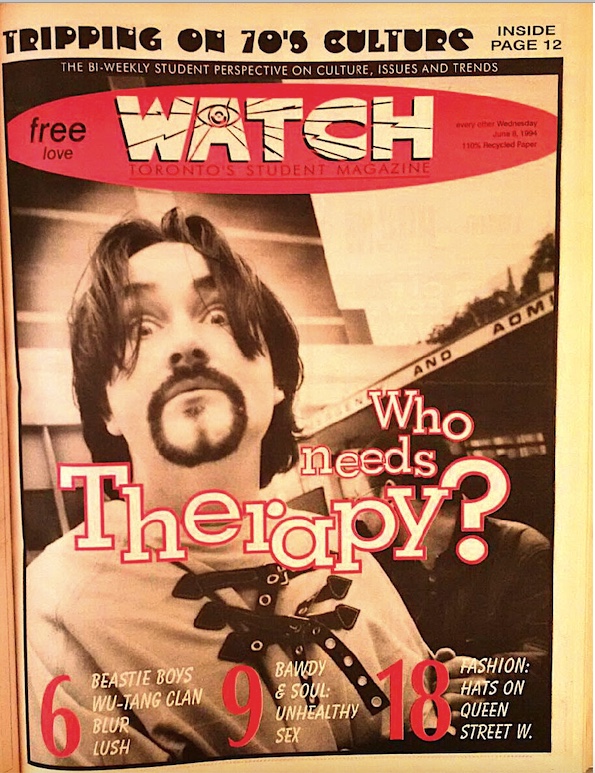
“Tripping on 70s Culture”: Watch Magazine was published in Toronto, Canada in the 1990s. “The Bi-Weekly Student Perspective on Culture, Issues and Trends.”

https://davidsouthconsulting.org/2022/11/16/canadian-magazines-newspapers-1990s/

https://davidsouthconsulting.org/2021/06/14/case-study-1-investigative-journalism-1991-1997-2/

https://davidsouthconsulting.org/2021/06/01/case-study-2-watch-magazine-1994-and-1996-2/

https://davidsouthconsulting.org/2020/12/08/featured-in-new-book-busted-an-illustrated-history-of-drug-prohibition-in-canada-december-2017/

https://davidsouthconsulting.org/2021/03/25/oasis-has-arrogance-a-pile-of-attitude-and-the-best-album-of-1994/

https://davidsouthconsulting.org/2022/10/08/time-machines/

https://davidsouthconsulting.org/2020/11/24/too-black/

Creative Commons License

This work is licensed under a
Creative Commons Attribution-Noncommercial-No Derivative Works 3.0 License.

ORCID iD: https://orcid.org/0000-0001-5311-1052.

© David South Consulting 2023

Categories
Archive Hannah Institute for the History of Medicine

Can we talk? Hannah promotes communication between medical schools

By David South

Hannah Institute for the History of Medicine Newsletter (Toronto, Canada), Number 18, Summer, 1993

The idiosyncracies of Canada’s medical schools can be both a strength and a drawback. An exchange program sponsored by the Hannah Institute hopes to bring the schools a little closer by opening up the communication lines from coast to coast.

The first exchange took place this April between the University of Western Ontario and the University of Calgary. Medical students met at Western for three days of talks and socializing.

“One of the objectives is to have each student work up a talk of ten minutes to stimulate further research,” says UWO Hannah Professor Paul Potter, who helped coordinate the exchange along with Calgary’s Dr. Peter Cruse.

Topics ranged from diseases among the Cree of Alberta to the old medical art of uroscopy.

Professor Potter says he hopes the exchange will become a regular annual affair, possibly with next year’s exchange matching Calgary with Halifax’s Dalhousie University.

Publisher: Hannah Institute for the History of Medicine

Location: Toronto, Canada

Editor and Writer: David South

I worked as Editor and Writer for the newsletter of the Hannah Institute for the History of Medicine (under the direction of the Editor-in-Chief and Hannah Executive Director Dr. J.T. H. Connor) in the early 1990s. Located close to the University of Toronto and within a neighbourhood claiming a long association with medical and scientific discovery (Sir Frederick Banting, co-developer of insulin for the treatment of diabetes, lived at 46 Bedford Road,), the goal was to better connect Canada’s medical history community of scholars and raise the profile of the funding resources available to further the study of medical history in Canada.

“… in recent years it has become a pursuit for a growing number of researchers. … Behind much of this growth has been the Hannah Institute for the History of Medicine which has encouraged writing …”.

Abstracts in Anthropology, Volume 43, Issues 3-4.

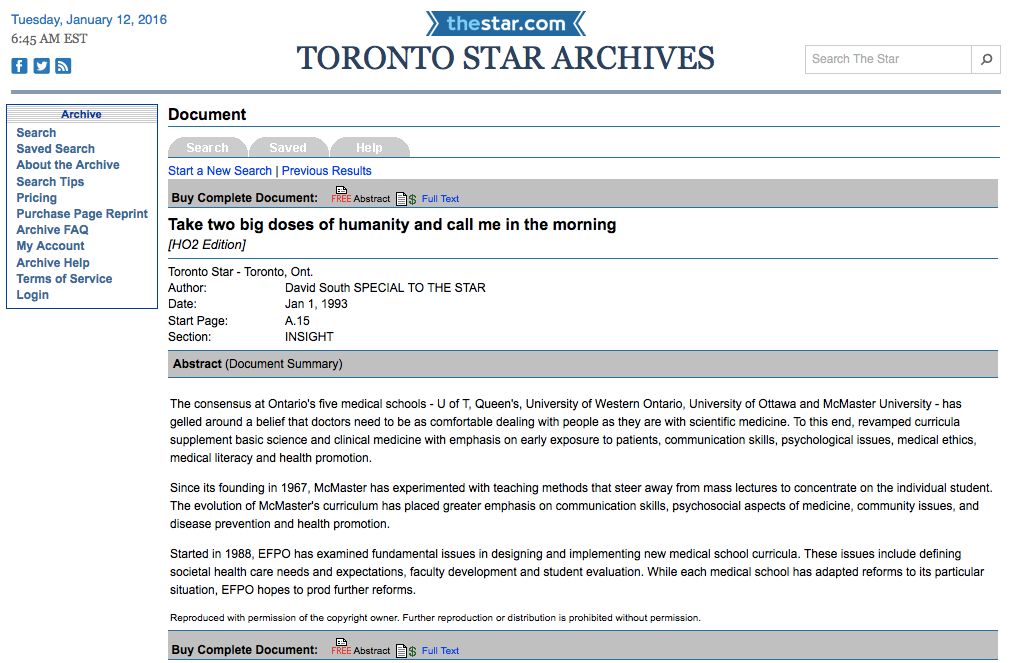
Read more about Canadian innovation in healthcare and medical education here: Take Two Big Doses Of Humanity And Call Me In The Morning

https://davidsouthconsulting.org/2021/06/02/case-study-5-gosh-ich-child-health-portal-2001-2003/

https://davidsouthconsulting.org/2021/03/08/the-dawn-of-the-genetics-revolution-2001-2003/

https://davidsouthconsulting.org/2017/10/18/hannah-institute-for-the-history-of-medicine-1992-1994/

https://davidsouthconsulting.org/2022/09/19/medical-museum-makes-plans-for-future/

https://davidsouthconsulting.org/2022/06/24/professor-puts-chronic-fatigue-into-historical-perspective/

https://davidsouthconsulting.org/2021/10/20/research-reviews-2001-2002/

https://davidsouthconsulting.org/2020/04/20/take-two-big-doses-of-humanity-and-call-me-in-the-morning/

https://davidsouthconsulting.org/2020/04/17/taking-medicine-to-the-people-four-innovators-in-community-health/

Creative Commons License

This work is licensed under a
Creative Commons Attribution-Noncommercial-No Derivative Works 3.0 License.

ORCID iD: https://orcid.org/0000-0001-5311-1052.

© David South Consulting 2023
Categories
Archive Hannah Institute for the History of Medicine

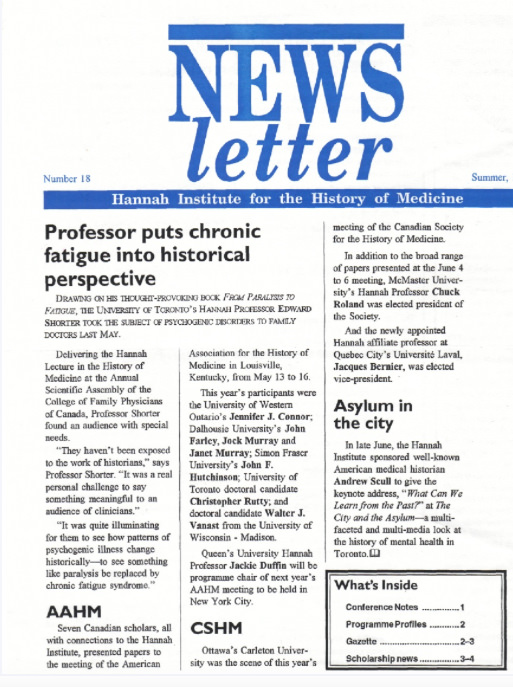
Professor puts chronic fatigue into historical perspective

By David South

Hannah Institute for the History of Medicine Newsletter (Toronto, Canada), Number 18, Summer, 1993

Drawing on his thought-provoking book From Paralysis to Fatigue, the University of Toronto’s Hannah Professor Edward Shorter took the subject of psychogenic disorders to family doctors last May.

Delivering the Hannah Lecture in the History of Medicine at the Annual Scientific Assembly of the College of Family Physicians of Canada, Professor Shorter found an audience with special needs.

“They haven’t been exposed to the work of historians,” says Professor Shorter. “It was a real personal challenge to say something meaningful to an audience of clinicians.

“It was quite illuminating for them to see how patterns of psychogenic illness change historically – to see something like paralysis be replaced by chronic fatigue syndrome.”

Publisher: Hannah Institute for the History of Medicine

Location: Toronto, Canada

Editor and Writer: David South

I worked as Editor and Writer for the newsletter of the Hannah Institute for the History of Medicine (under the direction of the Editor-in-Chief and Hannah Executive Director Dr. J.T. H. Connor) in the early 1990s. Located close to the University of Toronto and within a neighbourhood claiming a long association with medical and scientific discovery (Sir Frederick Banting, co-developer of insulin for the treatment of diabetes, lived at 46 Bedford Road,), the goal was to better connect Canada’s medical history community of scholars and raise the profile of the funding resources available to further the study of medical history in Canada.

https://davidsouthconsulting.org/2022/06/24/can-we-talk-hannah-promotes-communication-between-medical-schools/

https://davidsouthconsulting.org/2021/06/02/case-study-5-gosh-ich-child-health-portal-2001-2003/

https://davidsouthconsulting.org/2021/03/08/the-dawn-of-the-genetics-revolution-2001-2003/

https://davidsouthconsulting.org/2017/10/18/hannah-institute-for-the-history-of-medicine-1992-1994/

https://davidsouthconsulting.org/2022/09/19/medical-museum-makes-plans-for-future/

https://davidsouthconsulting.org/2021/10/20/research-reviews-2001-2002/

https://davidsouthconsulting.org/2020/04/20/take-two-big-doses-of-humanity-and-call-me-in-the-morning/

https://davidsouthconsulting.org/2020/04/17/taking-medicine-to-the-people-four-innovators-in-community-health/

Creative Commons License

This work is licensed under a
Creative Commons Attribution-Noncommercial-No Derivative Works 3.0 License.

ORCID iD: https://orcid.org/0000-0001-5311-1052.

© David South Consulting 2023

Categories
Annex Gleaner Archive

An Abuse Of Privilege?

Police say the wealthy and eccentric owner of a Bedford Road museum and rooming house sexually assaulted young men over a period of 17 years. Others say he is a victim of unfair persecution. Norman Elder isn’t saying anything.

By David South

Annex Gleaner (Toronto, Canada), May 1997

The tattered sign on the door is barely noticeable, and its message gives little away: “Dr Elder has moved to Fort Torrance, Ontario. Sorry no tours.”

I peek in the window of the Norman Elder Museum on Bedford Road and see the eyes of a zebra staring back at me. To the left are formaldehyde jars filled with oddly shaped objects.

While Norman Elder, amateur anthropologist and full-time Annex eccentric, may be hiding at his Muskoka cottage, he has left behind a community stunned by police allegations that he sexually abused young men. His story is one of a man born into wealth who cultivated an image of eccentricity as carefully as he surrounded himself with the things he loved.

According to police, the assaults took place at Elder’s 140 Bedford home – a brooding Victorian mansion that’s one part rooming house, another part museum holding his large collection of artifacts plucked from the world’s tribes.

Detective Robert Mann of Metro’s 32 Division Youth Bureau says Elder has been charged with 12 counts of indecent assault/male, spanning 1972 to 1989.

“Some were minors, some were adults over the age of 16. Most were adolescent and teenage males between the ages of 15 and 19.” While the charges laid were at the end of February, police have still not disclosed the details. Without that information, Elder hasn’t entered a plea.

Last Wednesday, I walked past the gravestone that marks the front yard and approached three young men having a cigarette outside the house. Two of them said they lived in the house. One man with a skinhead hairstyle who looked to be in his mid-20s nervously said, “I don’t want to talk about it.” He admitted he was taking messages for Elder from the answering machine and had passed on my numerous calls. Calls to his cottage weren’t answered, and none of Elder’s friends and acquaintances contacted by The Gleaner wished to comment on the charges.

Mann alleges that Elder’s modus operandi was to offer homeless youths a place to stay in return for sexual favours. The multiple charges stem from men contacting police after reading articles in Toronto’s two dailies about the first charge, which was laid in February.

Elder’s trip to the cottage isn’t a case of spring fever; he is out on bail and has been court-ordered to not return to his house.

Off the record, several sources suspected that some of the young men living at the house were involved in the sex trade and weren’t innocent of trading sexual favours for a place to stay. In the language of the street, they say, Elder was a sugar daddy. Some acquaintances of Elder felt he was being unfairly persecuted by police for sexual acts that took place between consenting adults (though, legally, the homosexual age of consent is 18, while for heterosexuals it’s 16). They also questioned the validity of charges that are in some cases 25 years old and only ferreted out by police during the Maple Leaf Gardens scandal.

Elder may be an eccentric, but he is not a loner; nor did he keep a low profile. Elder was born into wealth and attended Upper Canada College with the likes of Conrad Black, whom he once called a friend. He is listed in the Who’s Who in the World and Who’s Who in Canada. He financed his globe-trotting expeditions by selling artifacts collected in the Amazon, Africa and Borneo to museums, including Ripley’s Believe It or Not. He filled his house with exotic animals, including a 20-foot, 400-pound python called Peter.

As a one-man National Geographic magazine, Elder has self-published several books on his travels and made documentaries. His house served as location for David Cronenberg’s The Naked Lunch. He once told a journalist. “What bothers me most about going to zoos is that I’ve tasted most of the animals in there.”

In 1979, an article in The Toronto Star weekend magazine described Elder as a “slightly balding, surprisingly genial guy, who looks a bit like Jack Nicholson … and speaks a bit mezzo forte for a 20th-century Victorian.”

The former Olympic equestrian rider has had a long association with running rooming houses for youth that dates back to the 60s. When he was a social worker in Yorkville’s hippie days, Elder boasted of having 6,000 kids crash at his place in 1969.

In the 70s, he had political aspirations, running for city council and for the provincial NDP. He was friends with late New Brunswick premier Richard Hatfield, who was also dogged by rumours about his relationships with young men.

Update: “In 1998, Elder pleaded guilty to indecently assaulting 10 young men between 1970 and 1980. On March 12, 1998, Judge Faith Finnestad sentenced Elder to two years less a day in jail.” 

“Elder died on Wednesday, October 15, 2003 in Toronto of an apparent suicide by hanging.” (Source: Wikipedia).

Other stories from the Annex Gleaner

Artists Fear Indifference from Megacity 

https://davidsouthconsulting.org/2020/04/22/artists-fear-indifference-from-megacity/

https://davidsouthconsulting.org/2021/06/14/case-study-1-investigative-journalism-1991-1997-2/

Will the Megacity Mean Mega-Privatization? 

https://davidsouthconsulting.org/2020/04/22/will-the-megacity-mean-mega-privatization/

https://davidsouthconsulting.org/2020/06/11/safety-at-stake/

Creative Commons License

This work is licensed under a
Creative Commons Attribution-Noncommercial-No Derivative Works 3.0 License.

ORCID iD: https://orcid.org/0000-0001-5311-1052.

© David South Consulting 2022