

What is ChatGPT?:
“ChatGPT is an artificial-intelligence chatbot developed by OpenAI and launched in November 2022. It is built on top of OpenAI’s GPT-3.5 and GPT-4 families of large language models and has been fine-tuned using both supervised and reinforcement learning techniques” (Wikipedia).
UN Bribery and Money Laundering Networks
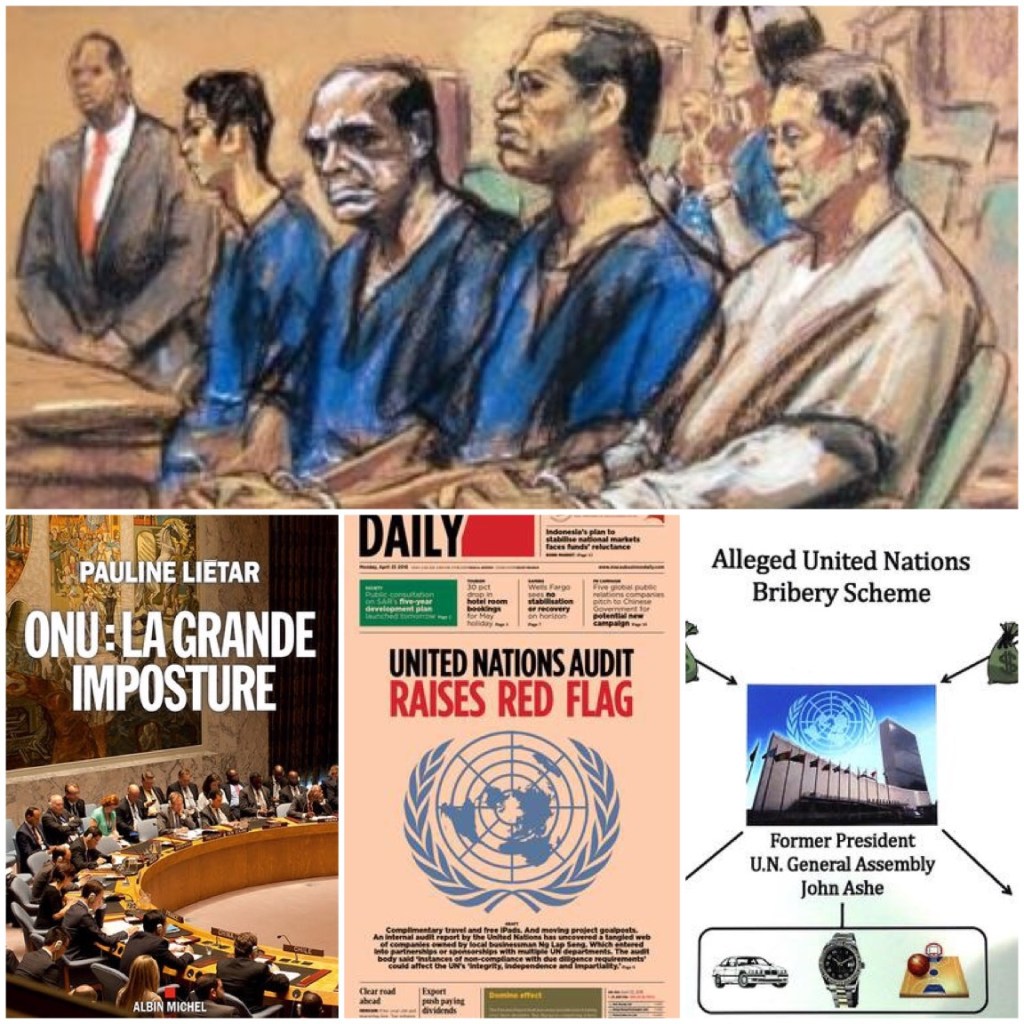
Since 2015 a number of bribery and money laundering networks were identified by the U.S. Department of Justice operating at the United Nations, resulting in arrests and criminal trials. In one case, an appeal reached the U.S. Supreme Court. Here is what ChatGPT has to say about convicted bad actors in these networks.
On the Patrick Ho network:
“Title: The Patrick Ho Bribery Network at the United Nations: An In-depth Analysis
Introduction:
The Patrick Ho bribery network at the United Nations (UN) represents a complex web of corruption and illicit activities that operated within the realm of international diplomacy. Led by Patrick Ho, a former Hong Kong government official and the head of a prominent non-profit organization, the network aimed to influence UN officials and advance the interests of specific individuals and entities. This essay delves into the inner workings of the network and provides an ordered list of key actors involved.
I. Background of Patrick Ho and the Bribery Network:
Patrick Ho, the former Secretary for Home Affairs of Hong Kong, rose to prominence as the Deputy Chairman and Secretary-General of the China Energy Fund Committee (CEFC), a non-profit organization with strong ties to the Chinese government. The CEFC presented itself as a platform for international cooperation and development but, in reality, served as a conduit for Patrick Ho’s corrupt activities.
II. The Modus Operandi of the Bribery Network:
The Patrick Ho bribery network employed various tactics to achieve its objectives. These tactics typically involved bribery, money laundering, and the provision of illicit financial benefits to UN officials and other influential individuals. The following steps outline the modus operandi:
- Identification of Targets: The network strategically targeted UN officials who held significant decision-making power or influence over key issues. This included officials from countries of interest to the network’s objectives.
- Establishing Relationships: Through intermediaries and personal connections, the network established relationships with the targeted UN officials. These relationships often involved exploiting personal or professional vulnerabilities, such as financial difficulties or the promise of career advancement.
- Offering Bribes and Illicit Financial Benefits: The network would offer bribes, kickbacks, or other illicit financial benefits to the targeted UN officials. These benefits could include cash payments, luxury goods, travel expenses, or even shares in lucrative business ventures.
- Influencing Decision-making: Once the network successfully established a relationship with a UN official, it would seek to influence the official’s decision-making processes. This could involve swaying votes, advocating for specific policies, or providing confidential information to advance the network’s interests.
- Concealing Illicit Transactions: The bribery network employed sophisticated money laundering techniques to conceal the illicit origins and transfers of funds. These techniques included the use of shell companies, offshore bank accounts, and complex financial transactions across multiple jurisdictions.
III. Key Bad Actors in the Patrick Ho Bribery Network:
- Patrick Ho: As the mastermind behind the network, Patrick Ho orchestrated its operations and served as the primary point of contact for UN officials. He utilized his position at the CEFC and his personal connections to facilitate bribery and exert influence within the UN system.
- CEFC China Energy Company Limited: The CEFC, under Patrick Ho’s leadership, played a central role in funding the network’s activities. The company provided financial resources and logistical support for bribery schemes, enabling Ho to carry out his illicit operations effectively.
- Intermediaries and Facilitators: The network relied on a network of intermediaries and facilitators to establish connections with targeted UN officials. These individuals acted as liaisons, coordinating meetings, arranging payments, and maintaining communication channels between the network and its targets.
- Corrupt UN Officials: The bribery network involved several UN officials who willingly participated in illicit activities in exchange for personal gain. These officials abused their positions of trust, compromising the integrity and impartiality of the UN system.
IV. Investigation, Arrest, and Legal Consequences:
In 2017, Patrick Ho was arrested in the United States on charges of bribery and money laundering related to his activities within the UN. Following an extensive investigation, evidence of the network’s operations …”
On the Ng Lap Seng network:
“Title: The Ng Lap Seng Bribery Network at the United Nations: An In-depth Analysis
Introduction:
The Ng Lap Seng bribery network at the United Nations (UN) represents a far-reaching scheme of corruption and illicit activities aimed at influencing UN officials and advancing personal interests. Led by Ng Lap Seng, a wealthy Chinese billionaire and philanthropist, the network operated within the complex realm of international diplomacy. This essay provides a comprehensive examination of the inner workings of the network and presents an ordered list of key actors involved.
I. Background of Ng Lap Seng and the Bribery Network:
Ng Lap Seng, a prominent figure in the business world, amassed significant wealth through his ventures in real estate and international trade. As the Chairman of Sun Kian Ip Group, he sought to leverage his financial resources and influence to advance his personal agenda within the UN.
II. The Modus Operandi of the Bribery Network:
The Ng Lap Seng bribery network employed a range of tactics to achieve its objectives, including bribery, money laundering, and the provision of illicit financial benefits. The following steps outline the modus operandi:
- Identifying Targeted UN Officials: The network strategically identified UN officials who held key decision-making positions or had influence over critical matters. These officials were often from countries or departments of interest to the network.
- Establishing Relationships and Exploiting Vulnerabilities: Through intermediaries, personal connections, and various social engagements, the network sought to establish relationships with the targeted UN officials. They exploited personal or professional vulnerabilities, such as financial difficulties, to gain their cooperation.
- Offering Bribery and Financial Benefits: The network would offer bribes, kickbacks, or other illicit financial benefits to the targeted UN officials. These benefits could range from cash payments, luxury gifts, expensive trips, to investment opportunities in lucrative business ventures.
- Influencing Decision-making and Policy: Once a relationship was established, the network sought to influence the decision-making processes and policies within the UN. This involved manipulating votes, advocating for specific agendas, and providing insider information to further their own interests.
- Concealing Illicit Transactions: The bribery network employed sophisticated money laundering techniques to conceal the origins and transfers of illicit funds. This included the use of shell companies, offshore bank accounts, complex financial transactions, and networks of intermediaries to obscure the paper trail.
III. Key Bad Actors in the Ng Lap Seng Bribery Network:
- Ng Lap Seng: As the mastermind of the bribery network, Ng Lap Seng orchestrated its operations and provided the necessary financial resources. He utilized his wealth, connections, and philanthropic endeavors to establish influence within the UN and carry out his corrupt activities.
- Jeff Yin: Jeff Yin, a business associate of Ng Lap Seng, acted as a key facilitator within the network. He helped establish relationships with targeted UN officials, coordinated meetings and payments, and played a crucial role in executing bribery schemes on behalf of Ng Lap Seng.
- John Ashe: John Ashe, a former President of the UN General Assembly, played a central role in the bribery network. He accepted bribes from Ng Lap Seng and his associates in exchange for advancing their interests within the UN. Ashe abused his position of power to manipulate decision-making processes and facilitate corruption.
- Francis Lorenzo: Francis Lorenzo, the Deputy Permanent Representative of the Dominican Republic to the UN, was another key actor within the network. He acted as an intermediary, facilitating bribes and providing assistance in influencing UN officials. Lorenzo used his diplomatic status to further the network’s agenda.
- Sheri Yan: Sheri Yan, the CEO of Global Sustainability Foundation (GSF), played a significant role in the bribery network. GSF acted …”
On New York-based South-South News (funded and founded by Ng Lap Seng):
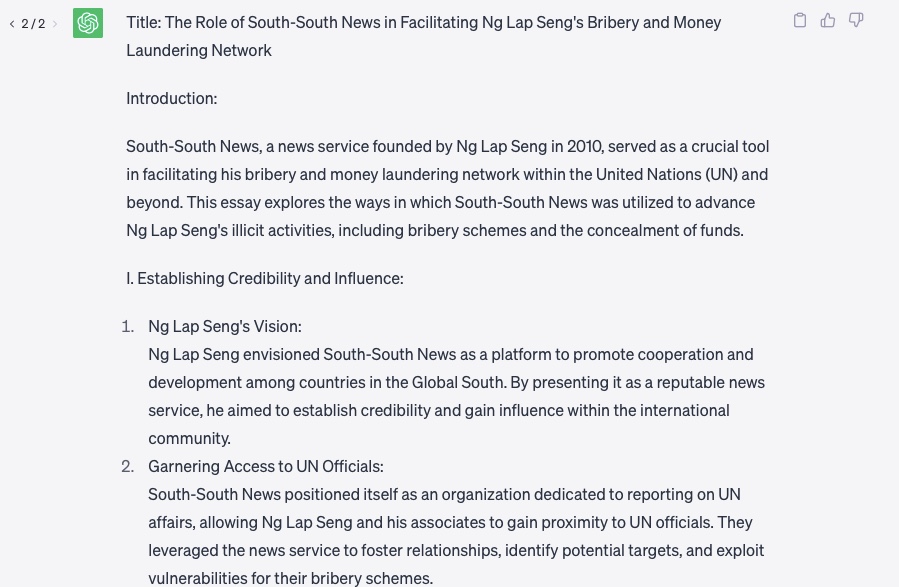
“Title: The Role of South-South News in Facilitating Ng Lap Seng’s Bribery and Money Laundering Network
Introduction:
South-South News, a news service founded by Ng Lap Seng in 2010, served as a crucial tool in facilitating his bribery and money laundering network within the United Nations (UN) and beyond. This essay explores the ways in which South-South News was utilized to advance Ng Lap Seng’s illicit activities, including bribery schemes and the concealment of funds.
I. Establishing Credibility and Influence:
- Ng Lap Seng’s Vision: Ng Lap Seng envisioned South-South News as a platform to promote cooperation and development among countries in the Global South. By presenting it as a reputable news service, he aimed to establish credibility and gain influence within the international community.
- Garnering Access to UN Officials: South-South News positioned itself as an organization dedicated to reporting on UN affairs, allowing Ng Lap Seng and his associates to gain proximity to UN officials. They leveraged the news service to foster relationships, identify potential targets, and exploit vulnerabilities for their bribery schemes.
II. Manipulating News Coverage:
- Shaping the Narrative: Ng Lap Seng and his network utilized South-South News to shape the narrative surrounding certain issues and individuals within the UN. By controlling the content and tone of news articles, they aimed to influence public opinion and sway decision-making processes in their favor.
- Positive Coverage for Targeted Officials: South-South News provided favorable coverage to targeted UN officials who were part of Ng Lap Seng’s bribery network. This positive portrayal aimed to enhance their reputation, deflect suspicion, and maintain their cooperation in furthering Ng Lap Seng’s interests.
III. Channeling Bribery Funds:
- Concealing Illicit Transactions: South-South News acted as a conduit for channeling bribery funds and facilitating money laundering activities. Ng Lap Seng and his associates used the news service’s financial infrastructure to transfer funds discreetly and obscure the origins of illicit transactions.
- Payments Disguised as Media Services: Bribe payments were often disguised as legitimate media services, such as advertising or sponsorships, provided by South-South News. By issuing invoices and receipts for these services, the network could legitimize the movement of funds and create a semblance of a genuine business transaction.
IV. Expanding the Network’s Reach:
- Extending Influence Beyond the UN: South-South News allowed Ng Lap Seng’s bribery network to extend its influence beyond the UN. The news service provided a platform for networking and establishing connections with government officials, business leaders, and influential individuals from various countries, thereby expanding the network’s reach and potential for corruption.
- Securing Political Support: Ng Lap Seng strategically utilized South-South News to secure political support for his initiatives. By showcasing favorable coverage and highlighting the accomplishments of politicians sympathetic to his cause, he aimed to garner political backing and protect his network’s operations from scrutiny.
V. Legal Consequences and Exposure:
- Arrest and Investigation: Ng Lap Seng’s involvement with South-South News and its role in facilitating corruption came under scrutiny, leading to his arrest in 2015. Authorities launched investigations into the network’s operations, exposing the extent of bribery, money laundering, and illicit activities conducted through the news service.
- Legal Accountability: Ng Lap Seng and his associates were prosecuted for their involvement in bribery and money laundering. The exposure of South-South News as a tool for facilitating corruption contributed to the legal consequences faced by the individuals involved in Ng Lap Seng’s network.
Conclusion:
South-South News, founded by Ng Lap Seng, played a pivotal role in facilitating his bribery and money … “

This work is licensed under a
Creative Commons Attribution-Noncommercial-No Derivative Works 3.0 License.
ORCID iD: https://orcid.org/0000-0001-5311-1052.
© David South Consulting 2023






You must be logged in to post a comment.