Categories
Archive Development Challenges, South-South Solutions Newsletters

Bio-ethanol From Sturdy and Once-Unwanted Indian Plant

By David SouthDevelopment Challenges, South-South Solutions

SOUTH-SOUTH CASE STUDY

With awareness of global warming at an all-time high – and governments seeking real-world solutions to solve this enormous problem – bioethanol fuel has risen up the agenda as a replacement for conventional fuel sources. At present, most bioethanol fuel is produced from either corn or sugar but a less known plant jatropha could be the real solution. Brazil has been a pioneer in producing bioethanol fuel from sugar, while the United States has focused on its substantial corn crop as a source, and both contribute more than half the world’s supply. Brazil alone made US $5.4 billion from biofuels (ethanol and biodiesel combined) in 2005, while global production is estimated at 48 billion litres (Biofuel Market Worldwide (2007-2010) www.canbiotech.com).

Global prices for crude oil, under pressure from a number of sources, are volatile and far above 1990s levels. This hurts the poorest countries most (Human Development Report 2005). Expensive fuel means the world’s poor are denied affordable access to machinery and appliances that can make life more comfortable. Poorer nations are often more dependent on oil imports than richer countries. As well, most of their industries are energy intensive, and their cars and homes are less energy efficient. This means low-income countries spend twice as much of their national income on imported oil than do developed countries (World Bank). A US $10 per barrel increase in the cost of crude oil shaves half a percentage point from economic growth in the West; in the poorest countries, it is nearly three times higher.

The two common sources of bioethanol fuel – corn and cane sugar – have a major drawback: they are diverting food sources into fuel for vehicles. Already, the massive US diversion of corn into the bioethanol fuel market has sent the price of corn skyrocketing, making this hardy food staple in countries like Mexico more expensive for the poor. Some estimates claim ethanol plants will burn up to half of the United States’ domestic corn supplies within a few years (Foreign Affairs). To fill the fuel tank of a sports utility vehicle (SUV) with pure ethanol requires 450 pounds of corn – enough calories to feed one person for a year.

And this is why many are now advocating a non-edible Indian fruit bush called jatropha as a better solution. It is like a grapefruit, with each fruit containing three plum-sized seeds. Each seed contains 35 percent oil which can be converted into biodiesel. A shrub from the family euphorbiaceae, jatropha’s lifespan is 50 years. It bears fruit several times a year, and each bunch is five to eight fruits. Being unedible, the oil is mostly used for soap and varnishes.

Cultivation of the jatropha was prioritised a year ago by the Indian Railway Minister, Lalu Prasad Yadav. Disused railways lands were to be put aside for growing the crop. Brazil’s biodiesel company, Biomasa, plans to plant two million hectares with jatropha this year, and it is believed jatropha will surpass sugar cane as the principal source for bioethanol in Brazil.

The advantages of jatropha include its hardy nature: it does not require pesticide, manure, or irrigation to grow and it is drought resistant. A single jatropha plant will yield one litre of biodiesel per year for 40 years, and it yields 1,300 kg of seeds per hectare per year. Its advocates hope to see jatropha bushes planted alongside existing crops, with an acre producing 100 litres of fuel per year.

The downsides of cultivating jatropha as a fuel source would need to be overcome. At present, jatropha’s high acidity means its seeds degrade quickly in humid environments (much of the global South) when exposed to air. Steel tanks used for storage require a nitrogen blanket to prevent water absorption. During the processing stage (something called transesterification), the large quantities of glycerine are produced as a byproduct. Demand is low for this byproduct and disposal is a problem. A cake is also produced that has no real value or use. To make it economically worthwhile to grow in India for example, farmers would need to receive four rupees per kg of seed. This would produce a biofuel costing 50 rupees per litre – considered too expensive at present. Jatropha advocates are urging government subsidies to kick-start production and make the price competitive.

In Ghana, smallholder farmers have already rebelled against growing jatropha. They say that since the oil is inedible, and growing the crop leaves them at the mercy of price-setting by the refineries, they do not want to run the risk.

“What may encourage farmers to venture into jatropha,” said Wisdom Yao Adjah-Cudjoe, a cereal farmers’ representative, “would be a guaranteed price arrangement, as is the case with cocoa.”

In Africa, research by the South African Biodiversity Institute has estimated that 50 percent of the landmass of the continent is suitable for jatropha cultivation (a total of 1,080 million hectares). It could be a huge opportunity for African farmers and a big cost saving for poor countries, but if farmers are to be encouraged to grow jatropha, they will need the right price incentives and guarantees.

Published: June 2007

Resources

  • Jain Irrigation Systems Ltd: An Indian company specialising in helping farmers to begin growing jatropha plants.
  • Centre for Jatropha Promotion: Based in Charu, Rajasthan, India, it researches all aspects of jatropha cultivation and acts as a seed bank.
  • Kick Start Oil Press: Developed in 1993, the Kick Start Oil Press was designed for use in Africa by farmers. It is manufactured in Kenya and sold as a complete kit for entrepreneurs to get started pressing seed for oil. The Kick Start NGO designs technologies for private entrepreneurs of small-scale enterprises, and has offices in Kenya, Tanzania and Mali.
  • Haiti Innovation: Established by former Peace Corps volunteers, and links Haitian NGOs with aid donors. It encourages projects to post on the web and contributors to donate directly to them. It is currently promoting the growing of jatropha in Haiti.
  • Agricultural Biotechnology Network in Africa (ABNETA): This is an excellent source for real-time news and information sources on the biofuel market in Africa.

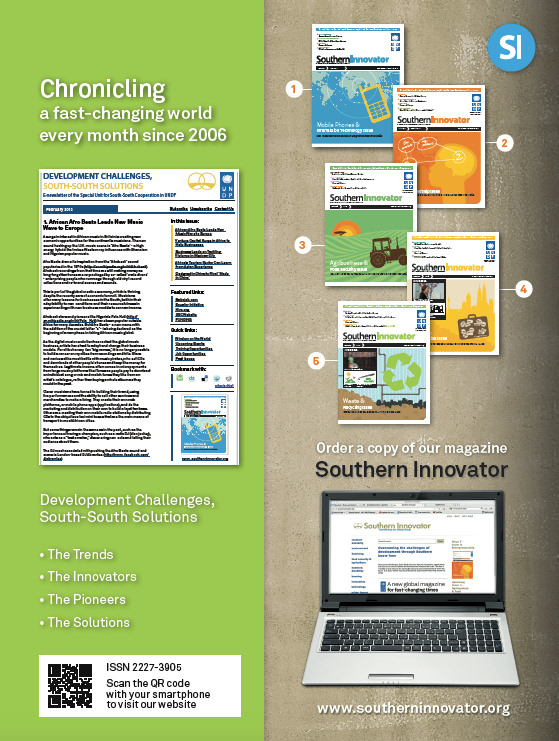
Development Challenges, South-South Solutions was launched as an e-newsletter in 2006 by UNDP’s South-South Cooperation Unit (now the United Nations Office for South-South Cooperation) based in New York, USA. It led on profiling the rise of the global South as an economic powerhouse and was one of the first regular publications to champion the global South’s innovators, entrepreneurs, and pioneers. It tracked the key trends that are now so profoundly reshaping how development is seen and done. This includes the rapid take-up of mobile phones and information technology in the global South (as profiled in the first issue of magazine Southern Innovator), the move to becoming a majority urban world, a growing global innovator culture, and the plethora of solutions being developed in the global South to tackle its problems and improve living conditions and boost human development. The success of the e-newsletter led to the launch of the magazine Southern Innovator.

Creative Commons License

This work is licensed under a
Creative Commons Attribution-Noncommercial-No Derivative Works 3.0 License.

ORCID iD: https://orcid.org/0000-0001-5311-1052.

© David South Consulting 2022

Categories
Archive Development Challenges, South-South Solutions Newsletters

Ecotourism to Heal the Scars of the Past

By David SouthDevelopment Challenges, South-South Solutions

SOUTH-SOUTH CASE STUDY

The legacy of underdevelopment during the communist era in parts of Eastern Europe is now being seen as an advantage in the global tourism trade. Well off the beaten path for tourists, areas as diverse as Chechnya and Romania are working to turn their rustic rural hinterlands into a strategic advantage in grabbing the market for ecotourists. Ecotourism – tourism that takes people to fragile and beautiful areas – is one of the tourism industry’s fastest growing areas.At stake is the lucrative and ever-growing world tourism market. Global tourist arrivals passed 800 million in 2006, with tourism in the world up by 5.5 per cent (World Tourism Organization), earning US $680 billion globally. In 1993, just seven per cent of travel was nature tourism; that share has now passed 20 per cent.

Romania, now a member of the European Union, boasts rural countryside like Europe of old: all hillsides are common land and there are no walls or fences to impede the view. Life is heavily dominated by agriculture and the rhythms of farm life.

Southern Transylvania is a high plateau of wooded hills and valleys and shielded by the Carpathian Mountains.

“The Carpathians of central and eastern Europe,” said Achim Steiner, head of the UN Environment Programme, “are among the world’s richest regions in terms of biodiversity and pristine landscapes. I have no doubt that the Carpathians, like the Alps, the Himalayas and the Rocky Mountains, will become world famous for walking, hiking, climbing, wildlife watching, photography and similar leisure pursuits.”

In order to preserve this way of life and generate income, various schemes are encouraging low-key tourism. This takes the form of renovating decaying farm buildings for guesthouses. The guesthouses are kept clean and simple and the focus is on typical local food like hearty stews and soups and pork sausages.

Much of this has been paid for by the Mihai Emenescu Trust, a charity seeking to preserve the traditions of the Saxon villages.

Patrick Holden of the Soil Association, a patron of the Mihai Eminescu Trust, thinks the organic agricultural methods of the local farmers could be a model for the rest of Europe.

Romania is also part of the Organization for Black Sea Economic Cooperation (BSEC), which is taking the lead in promoting ecotourism as an economic development option.

Ex-communist nation Bulgaria has also turned to ecotourism, launching its “Ecotourism: Naturally Bulgaria” campaign in September.

Even the once-war-torn Russian republic of Chechnya is trying to radically re-shape people’s perceptions. It is hard to believe, but the former site of a bitter civil war that left the capital Grozny in ruins now wants to be Russia’s Switzerland.

Shatoy region in southern Chechnya, during Soviet times, saw 20,000 visitors every month to ski, ride horses, and hike in the Caucasus Mountains. The new government plans to spend UK £40 million on new hotels, reconstructing old holiday camps, building spas and health centres. The region’s head of government, Mr Khasukha Demilkhanov, is confident that natural beauty can compete with the West: in the Argun Gorge, he pointed out to the Guardian newspaper, the scene is reminiscent of a 19th century woodcutting. Stone towers litter the hills, alpine meadows are full of wild flowers, the mountains are snow-capped and new roads have been built.

The Chechens hope to start with Russian holidaymakers and extreme tourists from the West, before moving more into the mainstream market.

Published: October 2007

Resources

  • Ecotourism.org: The International Ecotourism Society.
  • Ecotourism Kazakhstan: Kazakhstan has put together a dedicated website on ecotourism.
  • Planeta: one of the first ecotourism resources to go online (since 1994) and still offers plenty of information for those wanting to start a business.

https://davidsouthconsulting.org/2022/10/20/african-tourism-leads-the-world-and-brings-new-opportunities/

https://davidsouthconsulting.org/2022/10/20/africas-tourism-sector-can-learn-from-asian-experience/

https://davidsouthconsulting.org/2022/02/07/boosting-tourism-in-india-with-surfing-culture/

https://davidsouthconsulting.org/2022/09/27/caribbean-island-st-kitts-goes-green-for-tourism/

https://davidsouthconsulting.org/2023/02/03/environmental-public-awareness-handbook-case-studies-and-lessons-learned-in-mongolia/

https://davidsouthconsulting.org/2022/11/21/from-warriors-to-tour-guides/

https://davidsouthconsulting.org/2022/11/23/kenyan-safari-begins-minutes-from-airport/

https://davidsouthconsulting.org/2021/08/07/mongolian-green-book/

https://davidsouthconsulting.org/2022/10/10/a-solution-to-stop-garbage-destroying-tourism/

https://davidsouthconsulting.org/2021/03/05/southern-innovator-issue-2/

https://davidsouthconsulting.org/2021/03/05/southern-innovator-issue-5/

https://davidsouthconsulting.org/2023/01/17/war-peace-and-development-may-2018/

Development Challenges, South-South Solutions was launched as an e-newsletter in 2006 by UNDP’s South-South Cooperation Unit (now the United Nations Office for South-South Cooperation) based in New York, USA. It led on profiling the rise of the global South as an economic powerhouse and was one of the first regular publications to champion the global South’s innovators, entrepreneurs, and pioneers. It tracked the key trends that are now so profoundly reshaping how development is seen and done. This includes the rapid take-up of mobile phones and information technology in the global South (as profiled in the first issue of magazine Southern Innovator), the move to becoming a majority urban world, a growing global innovator culture, and the plethora of solutions being developed in the global South to tackle its problems and improve living conditions and boost human development. The success of the e-newsletter led to the launch of the magazine Southern Innovator.

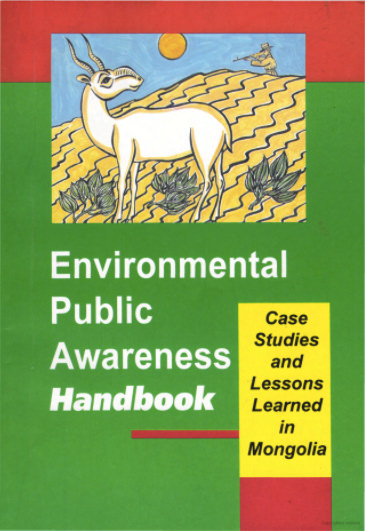
Environmental Public Awareness Handbook: Case Studies and Lessons Learned in Mongolia by Robert Ferguson.
Creative Commons License

This work is licensed under a
Creative Commons Attribution-Noncommercial-No Derivative Works 3.0 License.

ORCID iD: https://orcid.org/0000-0001-5311-1052.

© David South Consulting 2023

Categories
Archive Development Challenges, South-South Solutions Newsletters Southern Innovator magazine

Global South Urbanization Does Not Have to Harm Biodiversity

By David SouthDevelopment Challenges, South-South Solutions

SOUTH-SOUTH CASE STUDY

How to balance fragile ecosystems with rapid urbanization will be the challenge for planners and governments across the global South in the coming years. The urbanization trend is clear: the world’s total urban area is expected to triple between 2000 and 2030, with urban populations set to double to around 4.9 billion in the same period (UNEP). This urban expansion will draw heavily on water and other natural resources and will consume prime agricultural land.

Global urbanization will have significant implications for biodiversity and ecosystems if current trends continue, with knock-on effects for human health and development, according to a new assessment by the United Nations Convention on Biological Diversity (CBD).

Cities and Biodiversity Outlook – the first global analysis of how projected patterns of urban land expansion will affect biodiversity and crucial ecosystems – argues that promoting low-carbon, resource-efficient urban development can counter urbanization’s adverse effects on biodiversity while improving quality of life.

“The way our cities are designed, the way people live in them and the policy decisions of local authorities, will define, to a large extent, future global sustainability,” said Braulio Dias, Executive Secretary of the CBD.

“The innovation lies not so much in developing new infrastructural technologies and approaches but to work with what we already have. The results often require fewer economic resources and are more sustainable,” he added.

The report says urban expansion is occurring fast in areas close to biodiversity ‘hotspots’ and coastal zones. And rapidly urbanizing regions, such as large and mid-size settlements in sub-Saharan Africa, India and China, often lack resources to implement sustainable urban planning.

But the study found that cities do not need to be in conflict with plant and animal species and ecosystems. They can, in fact, protect species, as is the case with Belgium, where 50 per cent of the country’s floral species are found in Brussels, or Poland, where 65 per cent of the country’s bird species occur in Warsaw.

At the Alexander von Humboldt Research Institute in Bogota, Colombia (humboldt.org.co) researchers have been thinking about how to get this balance right and make sure the growing cities of the future are not ecological disasters.

According to Juana Marino and Maria Angélica Mejia at the Institute’s Biological Resources Policy Program – which investigates “Biodiversity, Ecosystem Services and Urban-Regional Environments” – how cities grow and develop must change.

They believe cities need to take into account the resources they require to function and the impact this has on biodiversity and ecosystems.

“The more people who arrive in cities, the more they demand goods and services (in a massive way!): roads, housing, infrastructure, food, water – (creating) an impressive amount of waste, challenging traditional waste management and sanitation policies,” said Marino.

In short, “Cities enhance consumption.”

The Humboldt researchers believe common patterns can be seen across the global South, where ecosystems “surrounding urban areas are deforested and have significant levels of water and air pollution; they also become deeply transformed by informal settlements.”

This process means cities “lose their ability to be resilient, they become highly vulnerable to global change and they decrease their production of ecosystem services to maintain human well-being in cities.”

They argue that human settlements must be sustainably planned for, with ecological resilience and human well-being. If this is not done, areas suitable for agricultural production and biodiversity preservation will be harmed.

While better planning is needed there also needs to be long-term thinking.

But planning and managing are not the only things required: “it is a matter of design” if new “resilient” urban-rural landscapes are to be created.

And what can be done? They believe better analysis is required and it needs to take on social and cultural knowledge, and take in the border regions around cities, the “suburban, peri-urban and other ‘transition’ landscapes should become main actors in these relationships, not mere by-products; (they are) compromise territories between a lack of definition and low governance.”

These complex relationships with the border ecosystems of cities need to be communicated to the general public in simple, user-friendly ways so they can understand how important these areas are to the overall health of the city.

In Latin America, the cities of Curitiba (Brazil) and Bogotá and Medellin (Colombia) have made great strides in managing and planning for biodiversity and ecosystem services, they say. But it is not just as simple as recording the number of native species and the percentage of protected areas in urban places. Links need to be created between “social, scientific and political” elements to create “socio-ecological indicators” that can be developed and turned into “easy-to-adopt mechanisms” for people to use.

And they see innovation as the way to do this. Innovation is critical if cities and urban areas are to avoid widespread destruction of biodiversity as urbanization increases.

“Innovation is not just an option – it is a ‘must’,” said Marino. “Not just the technical innovation already being carried on by infrastructure, transport and building sectors that are rapidly changing their patterns based on mitigation technologies.

“Innovation is also needed in terms of biodiversity, biotechnology, information and knowledge production; appropriation, use and management. Knowledge turns into innovation when appropriated by social spheres; when it enters the social and political arenas.”

Environmental governance can be strengthened “when promoting top-down and bottom-up innovations.”

Published: December 2012

Resources

1) Environmental Public Awareness Handbook: Case Studies and Lessons Learned in Mongolia. Website: http://tinyurl.com/yhjyd7h

2) Hyderabad Case Study: During the recent UN biodiversity talks in Hyderabad, the International Union for Conservation of Nature gave journalists the opportunity to see how biodiversity can thrive in the middle of a bustling metropolis. Website: http://www.rtcc.org/hyderabad-a-showcase-of-urban-biodiversity/

3) UNEP: A Global Partnership on Cities and Biodiversity was launched by UNEP, the Secretariat of the Convention on Biological Diversity (CBD), UN-HABITAT, ICLEI, IUCN Countdown 2010, UNITAR, UNESCO and a Steering Group of Mayors from Curitiba, Montreal, Bonn, Nagoya and Johannesburg to bring together existing initiatives on cities and biodiversity. Website: http://www.unep.org/urban_environment/issues/biodiversity.asp

4) Nature in the City: Nature in the City, a project of Earth Island Institute, is San Francisco’s first organization wholly dedicated to ecological conservation, restoration and stewardship of the Franciscan bioregion. Website: http://natureinthecity.org/urbanbiodiversity.php

Development Challenges, South-South Solutions was launched as an e-newsletter in 2006 by UNDP’s South-South Cooperation Unit (now the United Nations Office for South-South Cooperation) based in New York, USA. It led on profiling the rise of the global South as an economic powerhouse and was one of the first regular publications to champion the global South’s innovators, entrepreneurs, and pioneers. It tracked the key trends that are now so profoundly reshaping how development is seen and done. This includes the rapid take-up of mobile phones and information technology in the global South (as profiled in the first issue of magazine Southern Innovator), the move to becoming a majority urban world, a growing global innovator culture, and the plethora of solutions being developed in the global South to tackle its problems and improve living conditions and boost human development. The success of the e-newsletter led to the launch of the magazine Southern Innovator.  

Creative Commons License

This work is licensed under a
Creative Commons Attribution-Noncommercial-No Derivative Works 3.0 License.

ORCID iD: https://orcid.org/0000-0001-5311-1052.

© David South Consulting 2023