Two historical works I am cited in as a resource both share a connection to austerity crises. The first, Modern Mongolia: From Khans to Commissars to Capitalists by Morris Rossabi(University of California Press), draws on my work for UNDP Mongolia (1997-1999) to show the impact of austerity policies on the country as it peacefully transitioned from Communism to free markets and democracy in the 1990s.
Modern Mongolia: From Khans to Commissars to Capitalists.Modern Mongolia on Google Books.
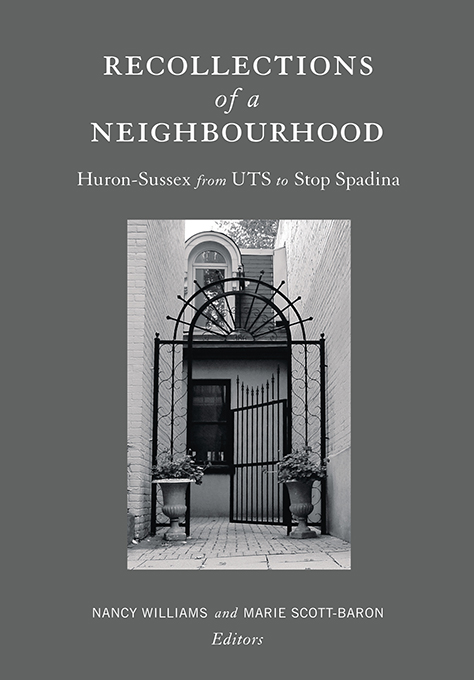
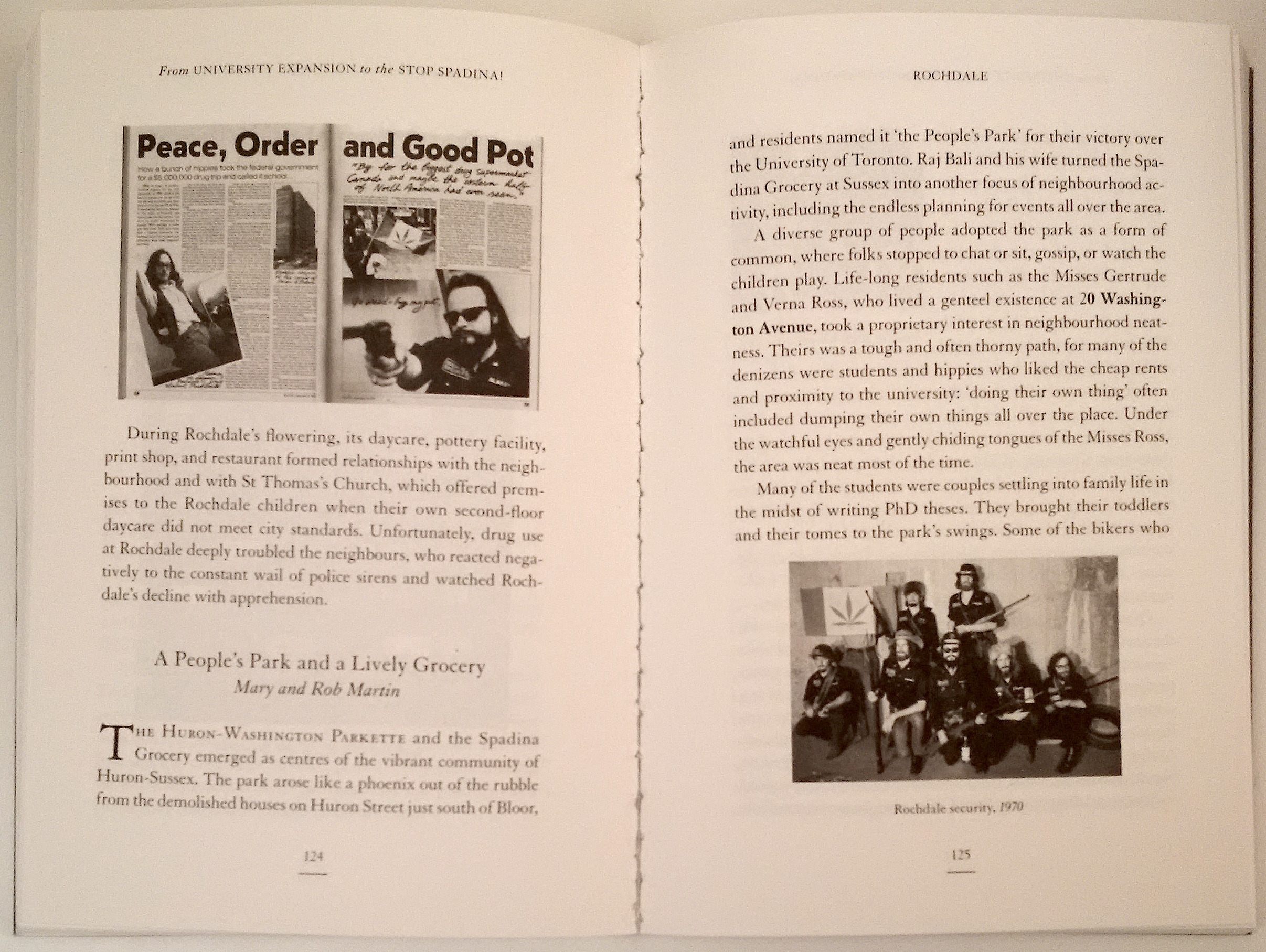
The second, Recollections of a Neighbourhood: Huron-Sussex from UTS to Stop Spadina by Nancy Williams and Marie Scott-Baron (editors) (Words Indeed Publishing), details the evolution of a remarkable – and bohemian – Toronto, Canada neighbourhood in which I lived in the 1980s and 1990s. It uses an image from Watch Magazine, a youth culture biweekly I edited in 1994 and 1996. The magazine was launched during the depths of Canada’s austerity crisis. Despite the economic gloom, the magazine fizzed with youthful vitality and edge and contributed to Toronto’s resurgence. The particular piece cited is a feature on Rochdale College, a late 1960s experimental college associated with the University of Toronto that lit up the neighbourhood with hippie and alternative cultures, until it went into meltdown as drug gangs took control. It was a bold experiment and a reflection of the counter culture vibe of the time.
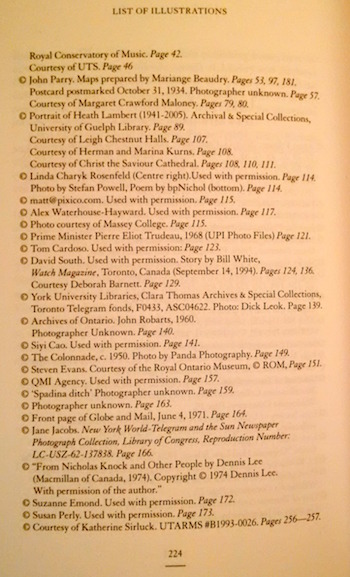
Recollections of a Neighbourhood: Huron-Sussex from UTS to Stop Spadina.“Peace, Order and Good Pot” by Bill White.List of Illustrations: Sandwiched between Prime Minister Pierre Elliott Trudeau and urbanist Jane Jacobs.
Toronto’s innovative crime-fighting and crime-prevention experiments face elimination if and when the city is swallowed up by the monolithic megacity. And the Annex’s status as one of Toronto’s safest neighbourhoods could be destroyed by the resulting tax increases.
Since the late 1980s, thinking about crime in Toronto has focused on public safety rather than just cops in cars. Taking what can be called a holistic approach, the city has poured millions into public health programs, street lighting, safety audits and social services, and it has led the region in putting cops back on foot patrol.
Carolyn Whitzman, coordinator of the Safe City Committee – founded in 1989 and a symbol of that attitude change – worries many of the services will find their funds cut or their street-level approach altered.
“I don’t know if people in Toronto realize how privileged they are,” she says. “All these programs have led us to be one of the safest cities in the world. There is nothing like the Safe City Committee in surrounding municipalities. There is nothing like it at Metro – though they do fund safety initiatives.”
The Safe City Committee was the first of its kind in North America and subsequently has been copied by other cities. Initiatives funded by the committee include pamphlets on ending sibling violence, self-defense tips for volunteer workers, a youth drop-in centre at Dufferin Mall an community safety audits.
Whitzman also worries the new meagcity will follow the advice of government consultants KPMG, who recommended replacing some police duties with volunteer labour.
“They recommended store fronts (community police booths) and reporting of accidents be run by volunteers. What if you want a police officer?”
Whitzman also doesn’t like plans to encourage police to spend more time in their cars filing reports on laptop computers. She would rather see them out on the beat.
She also fears school safety programs, like extra lighting, will be jettisoned as school boards chase savings. This also applies to the TTC and public housing. (Whitzman says some housing projects have already cut security due to provincial funding reductions.)
Another factor could jeopardize the Annex’s status as one of the safest neighbourhoods in the city. Higher taxes may chase out homeowners, and the Annex many once again become a haven for transient populations living in rooming houses, as it was in the 1960s and 1970s.
According to Joe Page, a crime analyst at 52 Division for the past quarter century, the Annex had the dubious reputation in the late 1970s of being the busiest neighbourhood in Toronto for police.
It’s a different story today. For example, in the portion of the Annex between Avenue Road and Spadina Road from Dupont south to Bloor, there was one murder in 1995 and none in 1996, and major assaults were down from nine in 1995 to five in 1996. There was one murder in the Little Italy area west of Bathurst in 1996.
If there is a good side to rising crime rates in the surrounding municipalities, it’s that councillors there can no longer ignore public safety issues. This could mean greater sympathy for Toronto’s plight from once-smug suburban councillors.
Whitzman sees hypocrisy in the attitudes of many of the satellite cities. “Scarborough has a bad reputation and other municipalities are not immune to safety issues.”
The Harris government’s proposed megacity is stirring up fear, rumour and speculation in many quarters, and no group is more worried than Toronto’s artists.
The merger of Toronto into a new megacity will place arts funding in jeopardy. Toronto’s generous contributions to the arts far exceed those of any other municipality in the region, meaning the city’s artists could be devastated if Toronto receives only a sixth of a new mega arts budget.
Currently, Annex-based artists and arts groups can turn to two levels of municipal funding: the City of Toronto and Metro Toronto.
Even at the Metro level, Toronto artists receive the bulk of arts funding, and a healthy share of that money goes to individuals and groups based in the Annex.
Alas, the Annex’s vibrant milieu of resident artists, festivals and respected institutions is small comfort to many arts supporters who fear the indifference of politicians from the satellite cities and the cost-cutting measures of the Tories.
They worry because the budget of the Toronto Arts Council, which will be eliminated under amalgamation, far exceeds the contributions to the arts made by the surrounding cities. In 1996, Toronto’s arts budget was $4.7 million, compared to $325,905 for the five other Metro municipalities combined.
Many fear Toronto’s superior cultural activities will simply be overlooked by philistine councillors from Metro’s satellite cities.
Tarragon Theatre general manager Mallory Gilbert, a former resident of Detroit who witnessed first-hand that city’s decline, worries Toronto could go the same way.
“Once you get a population that doesn’t work or entertain downtown, they will just want an expressway through the city.”
As Gilbert sees it, those voters who never patronize the arts in downtown Toronto are going to pressure politicians not to fund them. Gilbert also worries that suburban councillors will demand quotas to ensure arts funding is redirected away from downtown Toronto.
Anne Bermonte, associate director for the Toronto Arts Council, also fears downtown artists will be lost in the megacity abyss.
“The political make-up will resemble Metro rather than Toronto – the councillors who realize the arts accrue benefits will be out-voted.”
Not surprisingly, officials at Metro don’t think downtown will be neglected. John Elvidge, cultural affairs officer at Metro Parks and Culture, doesn’t believe suburban politicians will pull money out of the core of the city. He says this never happened in the past and sees no reason why it would in the future.
“The 28 councillors from the geographic area understand the core of arts is in the downtown. Look at our almost 40-year-funding history: 90 per cent is based in Toronto organizations. If you are a councillor in Etobicoke, you know people go downtown. (North York councillor) Howard Moscoe is the biggest supporter of the arts.”
Statistics show the Annex has a strong competitive advantage over other areas when it comes to receiving arts grants. Bermonte estimates the Annex area currently receives close to $400,000 in grants in the course of a year, from both Metro and Toronto. While half of the Metro culture budget goes to the “big four” (the Toronto Symphony, the Art Gallery of Ontario, the National Ballet and the Canadian Opera Company), the Annex receives 10 per cent of the remaining $3 million, estimates Elvidge. Out of the combined Metro and Toronto budgets of $10.7 million, the Annex receives just under five per cent. All for a population of 36,000.
“There are a lot of artists who live in the Annex area,” says Bermonte. “And the Annex enjoys the economic impact of the presence of those activities. If the Fringe disappeared, there wouldn’t be the animation in the area.”
Unfortunately for artists, the past five years have seen shrinking arts budgets at all levels of government.
While TAC has held on to its current funding level since 1994, Bermonte is worried this could change. TAC’s highest funding level was in 1991, when the board received $5.5 million. Metro has seen its budget drop from $7.5 million in 1993 to today’s $6 million. Both budgets are up for review, with Metro’s expected to drop by a further five per cent.
If the megacity goes through, Bermonte hopes the new municipality will commit to arts funding levels appropriate for a modern, cultured city. She points out that London, England spends $30 million, while Berlin, Germany spends $930 million on culture.
As Gilbert says, if the arts aren’t funded, the Annex will become less interesting to the many notables living here, such as writers Margaret Atwood, Rick Salutin, Judith Thompson, Stuart Ross and MT Kelly.
Deputations will take place at City Hall on Feb. 17 to defend the Toronto Arts Council’s 1997 budget.








 David South Consulting
You must be logged in to post a comment.