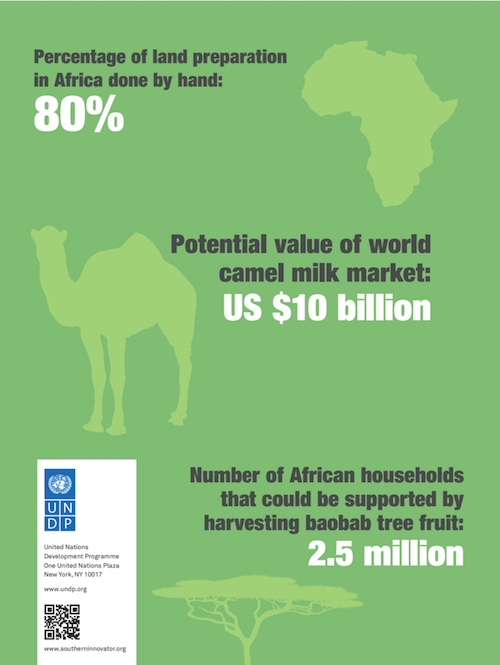
The fruit of the highly revered African baobab tree is being seen as a great new opportunity for the poor, after a recent decision by the European Commission to allow its importation. According to one study, gathering the fruit has the potential to earn an extra US $1 billion a year for Africa, and bring work and income to 2.5 million households, most of them African bush dwellers (Britain’s Natural Resources Institute).
The fruit of the African baobab tree is mostly collected in the wild from the ancient trees, which can live for 500 years, with some as old as 5,000 years. The baobob enjoys the veneration and respect traditionally accorded to age in Africa, and features in many stories and myths.
The fruit is seen as highly nutritious and a new taste option for the European market. This could be a major potential boost to Africa; the European Union is the world’s biggest trader, accounting for 20 percent of global imports and exports, and a major trading partner of most African countries. South Africa alone exports Euro 20.9 billion a year to Europe (2007).
But serious concerns have been raised about how the harvesting of the fruit will be done, and under what conditions. Getting this right is critical if the sustainability of the fruit is to be maintained, local populations are to benefit, and local use of this food source — eaten by both people and animals — does not suffer.
European food and drink companies are looking to use the fruit of the tree to flavour a large range of products, from cereal to drinks.
Baobab fruit is valued for its alleged medicinal properties in treating fevers and diarrhoea, and as a calcium supplement.
“The potential is huge … We’re quite confident that it’s going to represent significant returns for rural producers,” Dr. Lucy Welford, marketing manager of PhytoTrade Africa, a trade organisation that campaigns for the sustainable use of African natural products, told Reuters.
“I’d say it’s somewhere between grapefruit and tamarind as a kind of flavour,” said Welford, who expects baobab fruit to be used at first to flavour smoothies and cereal bars. It could also be used in juices, ice-creams and jams or bakery products.
PhytoTrade works with South African firm Afriplex, which supplies baobab fruit pulp and extracts.
A refreshing juice made from baobab fruit pulp, known as “bouye” is widely served.
“The tart flavour, the interesting vitamin and nutrition profile and the sexy story that goes with it — that it’s wild harvested from a very lovely tree — these things add value to the existing products,” said marketing economist Ben Bennet, who wrote the 2007 Natural Resources Institute’s report.
In the baobab forests around Tandene village in Senegal, local farmers said they looked forward to earning much more from the trees. Prices for a kilo of baobab fruit varied between 40 US cents and a dollar, they said.
“If people know (that European consumers will buy the product) then they’ll look after the trees better and feed them less to their animals,” said farmer Alassane Sy.
Chido Makunike, an active commentator on food and agricultural issues in Africa, raises some serious concerns about how this is handled. “Being a non-cultivated forest product, who ‘owns’ the baobab fruit? Can anybody just take a truck into the forest, collect the fruit and export it? Obviously the sudden dramatic change in the economic importance of the baobab will open up many questions that will need regulation.”
He worries the fruit will just be exported in its raw form, and processed into products in Europe – leaving Africa and Africans the ones who benefit least economically.
“Yet baobab is a dry, not-easily perishable, easy to process fruit,” he said. “It would not be difficult to have the smoothies and cereal bars that are being contemplated for its use made in Africa and exported as finished product, producing many downstream benefits and keeping more of the wealth to be generated within the continent.”
Published: October 2008
Resources
The Chamber of Commerce for Switzerland is specially targeting trade deals with Africa and its entrepreneurs. Website: www.swisscham-africa.ch
EMN Europe is a company that organises all logistics for importing goods into Europe, including making sure all legal requirements are met. Website: www.eurotradeconcept.nl
The Baobab Fruit Company Senegal has been producing organic baobab products for the nutrition and cosmetics industries. Website:http://www.baobabfruitco.com/
The Fairtrade Labelling Organization sets the standards for fair-trade and is the place to go to receive official certification. Website:www.fairtrade.org.uk
Just Food is a web portal packed with the latest news on the global food industry and packed with events and special briefings to fill entrepreneurs in on the difficult issues and constantly shifting market demands. Website: http://www.just-food.com
The global carbon credit trading schemes emanating from the Kyoto Protocol are now creating a multi-billion dollar market – the European carbon market was worth €14.6 billion in 2006 – and represents one of the fastest growing business opportunities in the world. Being green has finally come of age. Yet all the benefits of this are largely bypassing Africa despite more than 70 percent of the continent’s inhabitants earning a living off the land.
The World Agroforestry Centre – whose mission is to advance the science and practice of agroforestry to transform the lives and landscapes of the rural poor in developing countries – in partnership with Michigan State University has developed a method using satellite imagery and infrared sensing that measures carbon storage in African farmland. They have completed a pilot programme in western Kenya and are ready to encourage poor farmers to plant trees as soon as the European Union allows carbon credits under the Kyoto Protocol to be awarded for this kind of scheme. Further pilot projects will be rolled out in 2007 in partnership with CARE International and the WWF.
But European Union policies on carbon credits are holding back this significant opportunity to enhance African livelihoods. Europe’s Emissions Trading Scheme (ETS) is at present not willing to recognize the new method of verifying carbon storage in farmland. The ETS is the largest multi-country, multi-sector greenhouse gas emission trading scheme in the world. The issue of carbon storage, or carbon “sinks” as they are known, is very controversial in the world of Kyoto agreement implementation. Non-government organizations that advocate for forests and indigenous people have worked hard to exclude the use of forestry credits to offset fossil fuel burning, arguing that forestry offsets to date have been for big monoculture plantations of fast-growing eucalyptus or pine trees. It is claimed they are net carbon emitters over their lifetimes and also cause additional environmental and social problems.
But the World Agroforestry Centre’s approach is very different from a monoculture plantation. Their scheme is to help rural Africans to integrate more trees into their agricultural production systems, with benefits besides storing carbon. They argue that the right kinds of trees can increase the productivity and resilience of the land. Trees provide food, fuel, fertilizer, and medicine – medicinal trees are the main source of medication for 80 percent of Africa’s population.
Louis Verchon, the lead scientist for climate change at the World Agroforestry Centre, believes that if the EU would put in place a new scheme to credit farmers who capture carbon in their land, “millions of dollars in carbon credits could begin flowing to the world’s rural poor.” At present, Verchon says two-thirds of the carbon credit business is being captured by Asian countries who are mostly offering industrial solutions. “Africa has something to offer on this – it can’t compete with the likes of South Korea on industrial solutions, but it has plenty of land.”
In order to make the scheme work, two things will need to be improved: Africa’s institutional weakness and the paucity of qualified carbon credit verifiers. A network of verifiers would be required to inspect farm sites and make the calculations required to allocate carbon credits to poor farmers. At present, there are no qualified African-born verifiers in Africa according to Verchon.
The WAC are working with WWF and CARE to build up NGO capacity and start demonstration projects to prove it can work – two pilot projects are already up and running in Kenya. They are also automating much of the process by building a web portal.
Verchon says the WAC “are in it for the long-haul and we will see this grow over the next ten years.”
Kenya’s Greenbelt Movement: Founded by Nobel Peace Prize winner Wangari Maathai, it provides income and sustenance to millions of people in Kenya through the planting of trees.
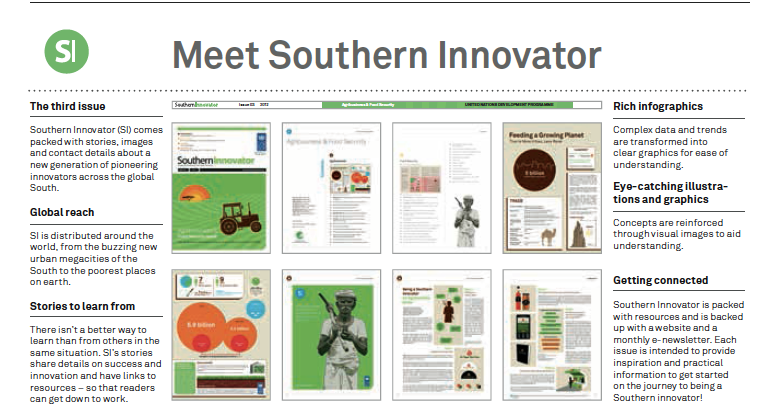
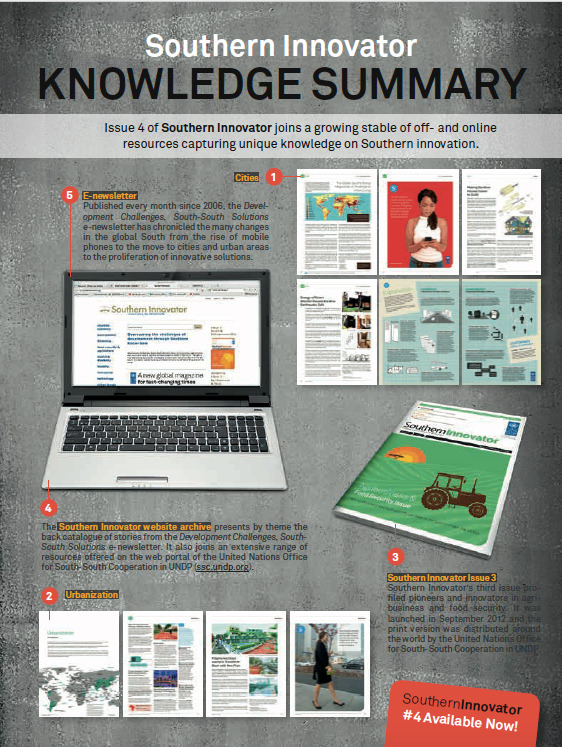
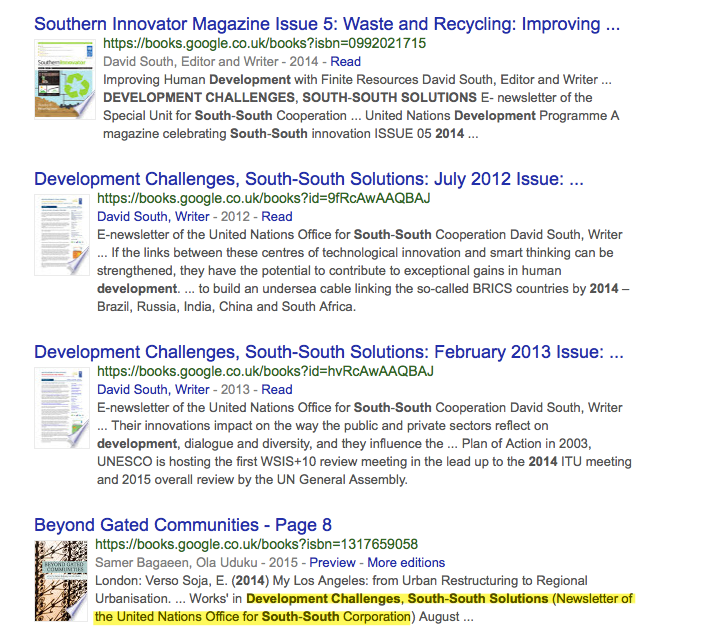
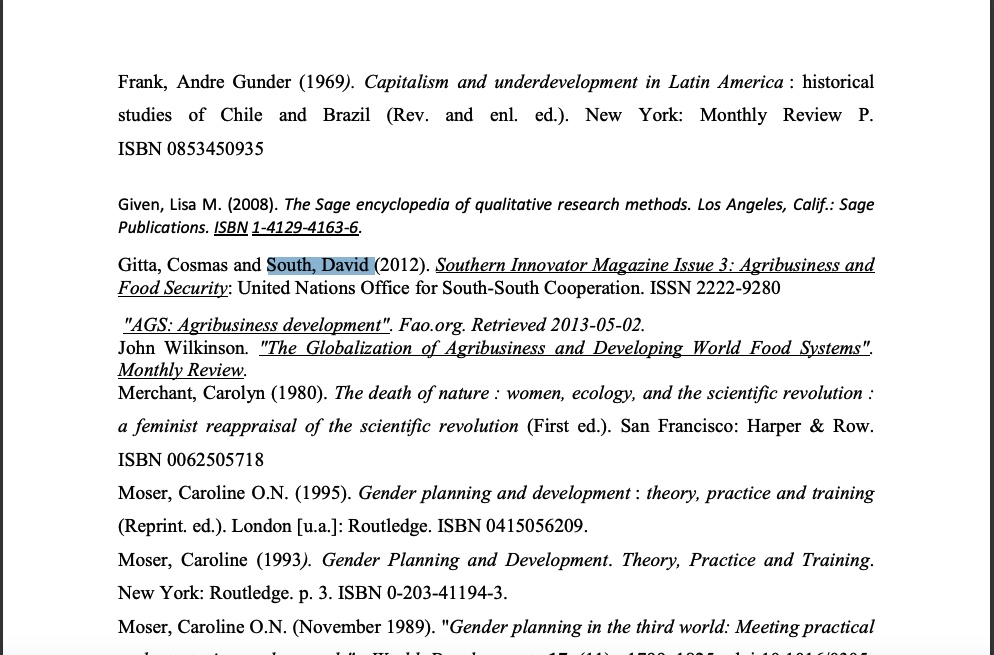
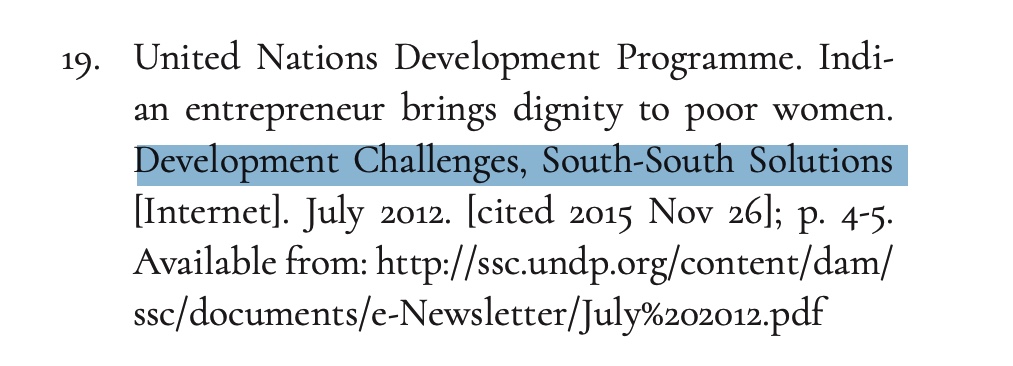
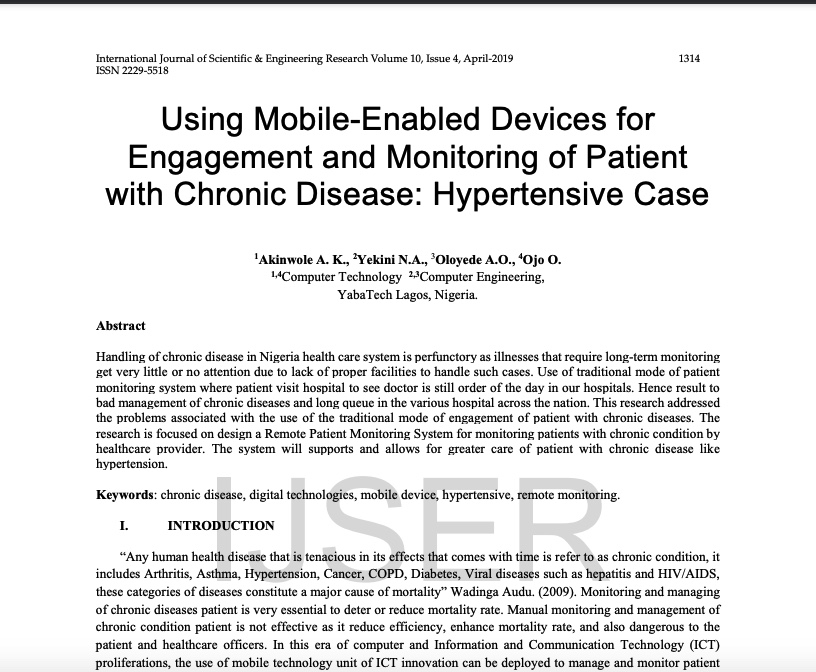
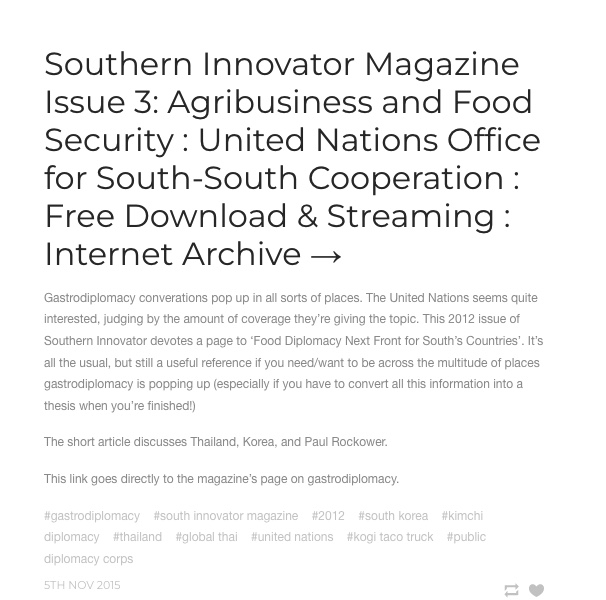
Southern Innovator was initially launched in 2011 with the goal of – hopefully – inspiring others (just as we had been so inspired by the innovators we contacted and met). The magazine seeks to profile stories, trends, ideas, innovations and innovators overlooked by other media. The magazine grew from the monthly e-newsletter Development Challenges, South-South Solutions published by the United Nations Office for South-South Cooperation (UNOSSC) since 2006. A selection of books and papers citing stories from the magazine are featured below to aid researchers, in particular those interested in health and human development and the role of innovators in international development.
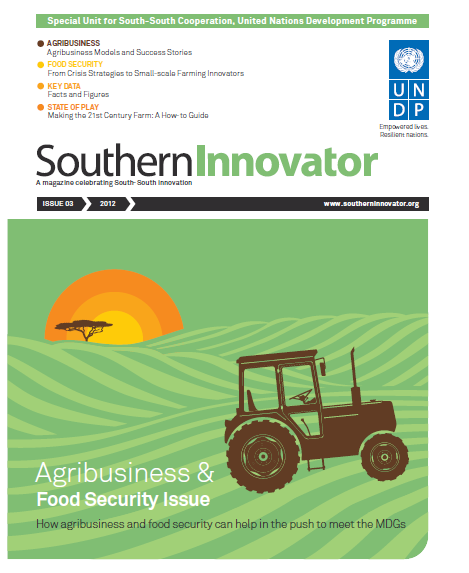
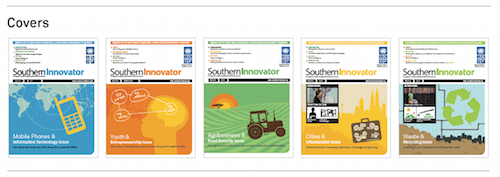
The first five issues of Southern Innovator from 2011 to 2014. Called a “Beautiful, inspiring magazine from UNDP on South-South innovation.”
“Innovation is critical to growth and development in Africa. In the context of a continent characterized by fast growing economies as well as an array of socioeconomic challenges, such as high levels of poverty and inequality, innovation in Africa must be understood in an encompassing manner. Africa needs to support the emergence of its own Silicon Valleys, but it must also foster the invention and adoption of cleaner technologies that limit respiratory illnesses, deforestation and combat climate change. This book contains a number of analytical case studies that examine the nature and origins of emerging high-end innovation hubs in Africa. These “hubs” or ecosystems are both understudied and little known inside and outside the continent. With this analysis, the book highlights and draws lessons from some of the most promising and successful innovation cases in Africa today, exploring the key factors driving their successful emergence, growth and future prospects. Relevant for scholars, policymakers, and business leaders, the book provides both inspiration and useful policy advice that can inform strategies and concrete measures to speed up the pace of innovation in Africa today.”
“Research on gated communities is moving away from the hard concept of a ‘gated community’ to the more fluid one of urban gating. The latter allows communities to be viewed through a new lens of soft boundaries, modern communication and networks of influence.
The book, written by an international team of experts, builds on the research of Bagaeen and Uduku’s previous edited publication, Gated Communities (Routledge 2010) and relates recent events to trends in urban research, showing how the discussion has moved from privatised to newly collectivised spaces, which have been the focal point for events such as the Occupy London movement and the Arab Spring.
Communities are now more mobilised and connected than ever, and Beyond Gated Communities shows how neighbourhoods can become part of a global network beyond their own gates. With chapters on Australia, Canada, Europe, South America, Asia, Africa and the Middle East, this is a truly international resource for scholars and students of urban studies interested in this dynamic, growing area of research.”
“The economic, political and social situation in Chile shows a country in transition. Some observers anticipate a broad “reboot” of the nation. While Chile is still seen by many as an example of progress in South America and of developmental potential in the global South, it faces a complex political constellation, particularly in the aftermath of the re-election of Michelle Bachelet. Many wonder how social and institutional innovations can be incepted without interrupting the country’s remarkable success over the past decades.
This book provides an interdisciplinary analysis of Chile’s situation and perspectives. In particular, it addresses the questions:
What is Chile’s real socio-political situation behind the curtains, irrespective of simplifications?
What are the nation’s main opportunities and problems?
What future strategies will be concretely applicable to improve social balance and mitigate ideological divisions?
The result is a provocative examination of a nation in search of identity and its role on the global stage.
Roland Benedikter, Dr., is Research Scholar at the Orfalea Center for Global and International Studies, University of California, Santa Barbara, Senior Research Scholar of the Council on Hemispheric Affairs Washington D.C., Trustee of the Toynbee Prize Foundation Boston and Full Member of the Club of Rome.
Katja Siepmann, MA, is Senior Research Fellow of the Council on Hemispheric Affairs Washington D.C., Member of the German Council on Foreign Relations, and Lecturer at the Faculty of Interdisciplinary Cultural Sciences of the European University Frankfurt/Oder.
The volume features a Foreword by Ned Strong, Executive Director of the David Rockefeller Center for Latin American Studies, Harvard University, and a Preface by Larry Birns, Director of the Council on Hemispheric Affairs, Washington D.C., and Former Senior Public Affairs Officer of the United Nations’ Economic Commission for Latin America (Santiago, Chile).”
“A Sociological Approach to Health Determinants investigates how the social works in determining health and health inequity. Taking a global perspective, the book shines a light on how experiences of health, illness and health care are shaped by a variety of complex social dynamics. Informed primarily by sociology, the book engages with the WHO’s social determinants of health approach and draws on contributions from history, political economy and policy analysis to examine issues such as class, gender, ethnicity and indigeneity, and the impact they have on health. A Sociological Approach to Health Determinants is a comprehensive resource that provides a new perspective on the influence of social structures on health, and how our understanding of the social can ensure improved health outcomes for people all over the globe. Toni Schofield is Associate Professor at the University of Sydney. She specialises in research and teaching in sociology, and public policy and administration.”
New Directions in Children’s and Adolescents’ Information Behavior Research edited by Dania Bilal and Jamshid Beheshti (Emerald Group Publishing: 2014)”This book comprises innovative research on the information behavior of various age groups. It also looks at special populations such as ethnic minorities, indigenous peoples, and users with disabilities. The book presents research and reflections on designing systems that help the new generation cope with a complex knowledge society.
Economy Reports for APEC Economies on demographics, policies & ICT applications for people with Special Needs (Seniors and People with Disabilities), Asia-Pacific Economic Cooperation, APEC Telecommunications and Information Working Group, January 2013
Taming the Tide: Stories from India by Claire Bentley, Vanessa Brombosz, Sofianne Gabrielli, Ga Eun Lee, Vaidehi Nafade, Lindsay Steele and Muhammad Wali, Global Health Case Studies: A Compilation from PPHS 511 Fundamentals of Global Health, McGill Global Health Programs, Case studies – Fall 2015, pages 23 to 32
If you would like to either sponsor an issue of Southern Innovator or place an advertisement in the magazine, then please contact southerninnovator@yahoo.co.uk.
The global food crisis is forcing people around the world to think differently about how food is produced and what new products can boost the incomes of farmers. U.N. Secretary General Ban Ki-moon has called for food production to increase 50 percent by 2030 just to meet rising demand – and right now there are 862 million people worldwide who are undernourished (FAO).
The world’s over 19.4 million camels (FAO, 2003) are now being tapped for their highly nutritious, healing and tasty milk. Camel milk is three times as rich in Vitamin C as cow’s milk. And it has several unique properties that differ from other milks, like cow and buffalo. It contains enzymes with anti-bacterial and anti-viral properties to fight diseases. The milk also contains insulin (http://en.wikipedia.org/wiki/Insulin), a hormone that regulates blood sugar levels, something that is critical to the survival of diabetics.
With more and more areas of the world suffering from severe drought or desertification, camels’ renowned ability to go without a drink of water for up to three weeks makes them ideal animals. Camels continue to lactate milk even in a dehydrated state.
The current 5.4 million tonnes of camel milk produced every year isn’t enough to meet demand. The Food and Agriculture Organization (FAO) is confident, that with the right investment and innovation, camel milk has a potential market of a minimum 200 million people in the Arab world, and many millions more in Africa, Europe and the Americas.
Fresh camel milk fetches roughly US $1 dollar a litre on African markets. A world market worth US $10 billion is entirely within the realm of possibility, the FAO says.
“The potential is massive,” said FAO dairy and meat expert Anthony Bennett. “Milk is money.”
“No one is suggesting intensive camel dairy farming,” said Bennett. “But just with improved feed, husbandry and veterinary care, daily yields could rise to 20 litres (per camel).”
An Indian NGO – the Lokhit Pashu-Pala Sansthan (LPPS), which supports landless livestock owners and means “welfare organization for livestock keepers” in Hindi – is re-inventing the business model for camel herding in India (http://www.lpps.org/). The LPPS is a canny user of publicity and has created products that are eye-catching and instant conversation starters: camel ice cream and camel-dung paper.
The camel is integral to the traditional way of life in Rajasthan and is the state’s signature animal. India once boasted the third-largest population of camels in the world: over 1 million.
But that number has fallen to just 400,000. Grazing areas once just for camels are now being used by agriculture and wildlife sanctuaries. The camel breeders, the Raika people, have experienced a serious decline in income from camel herding, and many have sold their camels for slaughter.
If there was to be a future for camel herding in Rajasthan, new products had to be developed and the whole business of camel herding re-branded.
The ice cream is part of a two-year project to help camel breeders develop new products using camel milk. Camels are seen as ideal animals to raise in the drought-afflicted climate of Rajasthan, and can produce four to six litres of milk a day.
‘With groundwater levels dropping rapidly, it spells the end of water-intensive agriculture. In this scenario, camel husbandry represents a perfect solution to the chronic water woes of the state,’ said Bagdi Ram Raika, president of the Rajasthan Pastoralist Development Association.
‘We would like to see the camel breeders of Rajasthan make use of their traditional assets and avail themselves of the new marketing opportunities. Our role is to support them in this,’ said Hanwant Singh, director of LPPS.
The highly inventive people at LPPS have also come up with paper made from camel dung. Handmade, the notebooks, diaries and greeting cards are all made from the dung paper. The camel’s dung contains undigested fibre, which makes an excellent material for making paper.
Growing Inclusive Markets, a new web portal from UNDP packed with case studies, heat maps and strategies on how to use markets to help the poor. Website:http://www.growinginclusivemarkets.org/


























 David South Consulting
You must be logged in to post a comment.