As economies grow in Africa, more and more people are conducting their financial transactions electronically. This can be either through mobile phones and digital devices, or through the hole-in-the-wall of the automatic teller machine, or ATM.
These short cuts mean many people no longer have to endure long line-ups at banks to conduct day-to-day financial transactions. This convenience is revolutionizing banking for many millions of people, but there is a risk: fraud and theft. Both are rising, and are costing customers and banks, both in cash and in damage to the reputation of electronic banking.
Criminal gangs and lone individuals alike are behind this crime. Most notorious are the “carding” and “skimming” gangs, who plant devices on ATMs to read plastic bank cards and steal victims’ money. Mobile devices can also be “hacked” by sophisticated criminal gangs and the data stolen and used to plunder bank accounts. Lone thieves also take people hostage and force them to use their card to withdraw money. A crime victim is usually forced to give over his or her Personal Identification Number (PIN), which the thief then uses to withdraw cash from the ATM.
But just as thieves have become cleverer about the new opportunities created by digital financial transactions, enterprising start-ups are developing innovations to improve financial security.
One Kenyan start-up is hoping to be a pioneer in innovative financial safety software for mobile devices and ATMs. Usalama Innovative Systems, LTD. (http://usalama.biz/), co-owned by graduate student and lead programmer Denis Karema (deniskarema.com), has already been singled out for a CIO magazine’s CIO100 Award in Enterprise Innovation in 2011 (http://www.cio.com/cio-awards/cio100).
Karema has been working in information technology since 2008 and has a background in computer science. He has built his experience while working on various information technology projects in East Africa.
The ambitious company says it wants to be “the leading provider of innovative solutions to financial entities in Africa by 2015.” Usalama has developed various systems pending patents and copyrights and has built up experience in deploying enterprise information technology.
Usalama is seeking additional funding from investors for multiple innovations to protect customer financial transactions. One of them is an ATM solution, which the company claims can reduce theft by over 90 per cent. Speaking with the Business Daily Africa website, Karema explained the anti-fraud application, dubbed Safety Pin.
“When someone approaches you or when you are involved in a carjacking, or one of those unfortunate incidences, you give them your card or PIN as they ask for it, but when they get to the machine it does not treat them the same way as it does you,” Karema said.
The thief is presented with what looks like the victim’s bank account but actually only has 10 per cent of their cash on display. The thief will then withdraw this cash and think they have cleaned out the victim’s bank account.
It is a clever solution which doesn’t entirely block the thief from receiving money from the ATM, but just gives them a small portion of the amount in the account. The idea is to fulfil the psychological need of the thief to get some cash in the robbery attempt, so they will then release the hostage and go away.
“We are working on reducing the amounts that can be lost by up to 90 per cent, so it means if I have 100,000 shillings in my account, only 10,000 shillings can be lost through fraud,” Karema said.
The amount that is stolen can be covered by bank insurance policies so that the customer does not suffer a serious financial loss.
“(The) good thing about this application, first of all, is this hasn’t been done before,” Karema said. “People have come close to creating ATM anti-fraud measures, like asking you to put your PIN in reverse. But they don’t seem to work. For each of them, you are ending up having your money stolen and then following up with the fraudster. So our application prevents the money from being stolen in the first place. So our preventative measure is better than a curative one when money is involved. And also the application is applicable globally.
“We intend to have this implemented in each and every commercial bank, not only in Africa, but the rest of the world.
“A bank can recoup investment in our application within the first year [by avoiding the loss of clients and funds from fraud]. Aside from that, the bank is also able to receive complete and detailed reports each and every time a fraud occurs and so it makes it easier for the bank to monitor trends and also to know which of their outlets are having more and more fraud-related cases.”
Other innovations Usalama has been developing include Usalama Pin, which helps commercial banks monitor fraud in real time; Usalama Spy, which gives more detailed fraud reports and analyzes the information; Home Bank, a way to offer 24/7 banking to customers so they can deposit the money directly into savings accounts without delay; and Usalama Mobile, a mobile banking and money service solution.
Usalama believes the suite of solutions will help banks to retain current customers and make their financial transactions safer, attracting so-called “high net worth” clients. Usalama believes this will help banks in Africa grow their number of customers and cash reserves.
“We are always thinking about innovation because we feel that innovation is the key thing to developing sustainable enterprises,” Karema believes.
Published: March 2013
Resources
1) Sinapis: Sinapis’ mission is to empower aspiring entrepreneurs in the developing world with innovative, scalable business ideas by providing them with a rigorous business education, world-class consulting and mentoring services and access to seed capital. Website:http://www.sinapisgroup.org/entrepreneurs.php
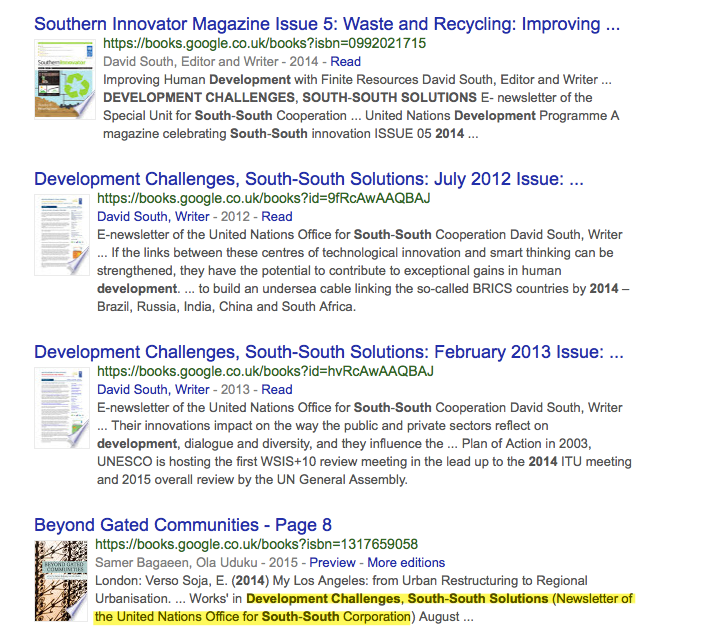
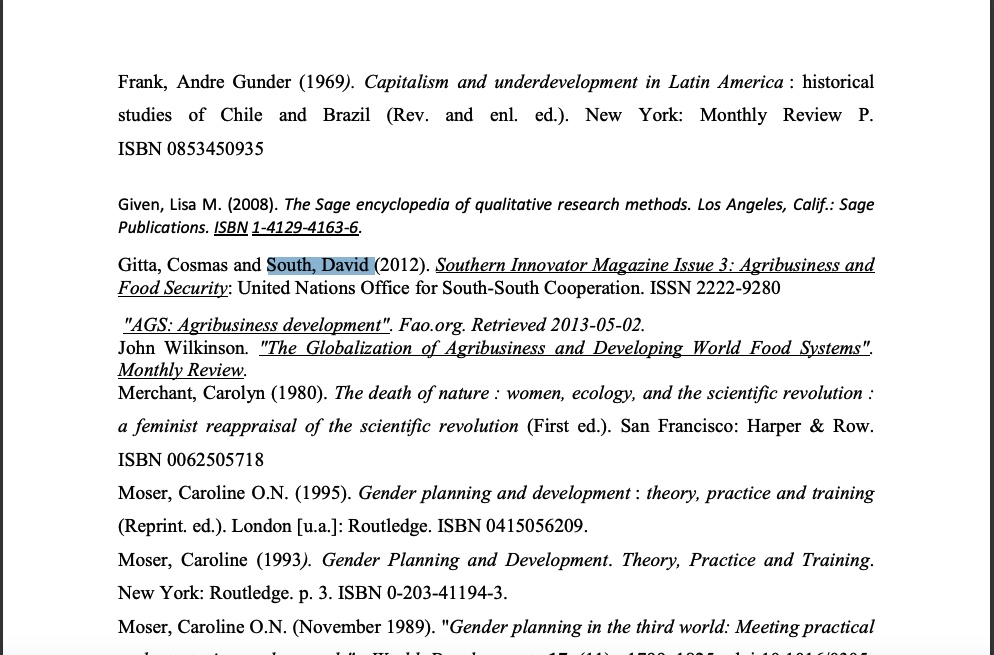
Southern Innovator was initially launched in 2011 with the goal of – hopefully – inspiring others (just as we had been so inspired by the innovators we contacted and met). The magazine seeks to profile stories, trends, ideas, innovations and innovators overlooked by other media. The magazine grew from the monthly e-newsletter Development Challenges, South-South Solutions published by the United Nations Office for South-South Cooperation (UNOSSC) since 2006. A selection of books and papers citing stories from the magazine are featured below to aid researchers, in particular those interested in health and human development and the role of innovators in international development.
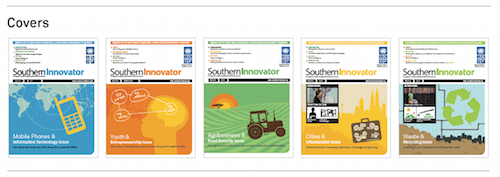
The first five issues of Southern Innovator from 2011 to 2014. Called a “Beautiful, inspiring magazine from UNDP on South-South innovation.”
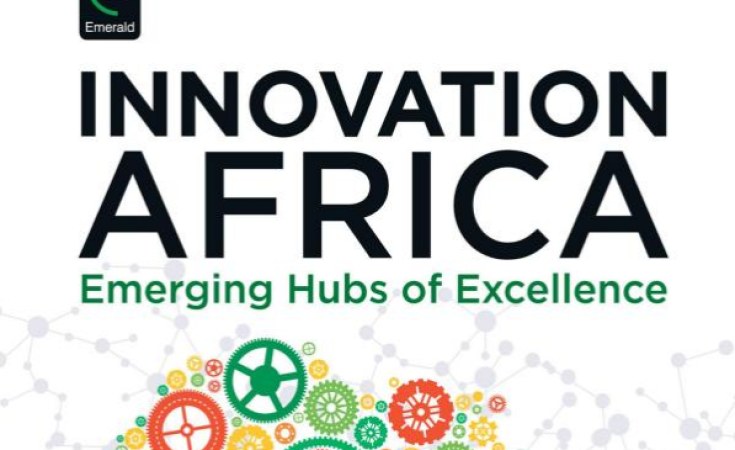
“Innovation is critical to growth and development in Africa. In the context of a continent characterized by fast growing economies as well as an array of socioeconomic challenges, such as high levels of poverty and inequality, innovation in Africa must be understood in an encompassing manner. Africa needs to support the emergence of its own Silicon Valleys, but it must also foster the invention and adoption of cleaner technologies that limit respiratory illnesses, deforestation and combat climate change. This book contains a number of analytical case studies that examine the nature and origins of emerging high-end innovation hubs in Africa. These “hubs” or ecosystems are both understudied and little known inside and outside the continent. With this analysis, the book highlights and draws lessons from some of the most promising and successful innovation cases in Africa today, exploring the key factors driving their successful emergence, growth and future prospects. Relevant for scholars, policymakers, and business leaders, the book provides both inspiration and useful policy advice that can inform strategies and concrete measures to speed up the pace of innovation in Africa today.”
“Research on gated communities is moving away from the hard concept of a ‘gated community’ to the more fluid one of urban gating. The latter allows communities to be viewed through a new lens of soft boundaries, modern communication and networks of influence.
The book, written by an international team of experts, builds on the research of Bagaeen and Uduku’s previous edited publication, Gated Communities (Routledge 2010) and relates recent events to trends in urban research, showing how the discussion has moved from privatised to newly collectivised spaces, which have been the focal point for events such as the Occupy London movement and the Arab Spring.
Communities are now more mobilised and connected than ever, and Beyond Gated Communities shows how neighbourhoods can become part of a global network beyond their own gates. With chapters on Australia, Canada, Europe, South America, Asia, Africa and the Middle East, this is a truly international resource for scholars and students of urban studies interested in this dynamic, growing area of research.”
“The economic, political and social situation in Chile shows a country in transition. Some observers anticipate a broad “reboot” of the nation. While Chile is still seen by many as an example of progress in South America and of developmental potential in the global South, it faces a complex political constellation, particularly in the aftermath of the re-election of Michelle Bachelet. Many wonder how social and institutional innovations can be incepted without interrupting the country’s remarkable success over the past decades.
This book provides an interdisciplinary analysis of Chile’s situation and perspectives. In particular, it addresses the questions:
What is Chile’s real socio-political situation behind the curtains, irrespective of simplifications?
What are the nation’s main opportunities and problems?
What future strategies will be concretely applicable to improve social balance and mitigate ideological divisions?
The result is a provocative examination of a nation in search of identity and its role on the global stage.
Roland Benedikter, Dr., is Research Scholar at the Orfalea Center for Global and International Studies, University of California, Santa Barbara, Senior Research Scholar of the Council on Hemispheric Affairs Washington D.C., Trustee of the Toynbee Prize Foundation Boston and Full Member of the Club of Rome.
Katja Siepmann, MA, is Senior Research Fellow of the Council on Hemispheric Affairs Washington D.C., Member of the German Council on Foreign Relations, and Lecturer at the Faculty of Interdisciplinary Cultural Sciences of the European University Frankfurt/Oder.
The volume features a Foreword by Ned Strong, Executive Director of the David Rockefeller Center for Latin American Studies, Harvard University, and a Preface by Larry Birns, Director of the Council on Hemispheric Affairs, Washington D.C., and Former Senior Public Affairs Officer of the United Nations’ Economic Commission for Latin America (Santiago, Chile).”
“A Sociological Approach to Health Determinants investigates how the social works in determining health and health inequity. Taking a global perspective, the book shines a light on how experiences of health, illness and health care are shaped by a variety of complex social dynamics. Informed primarily by sociology, the book engages with the WHO’s social determinants of health approach and draws on contributions from history, political economy and policy analysis to examine issues such as class, gender, ethnicity and indigeneity, and the impact they have on health. A Sociological Approach to Health Determinants is a comprehensive resource that provides a new perspective on the influence of social structures on health, and how our understanding of the social can ensure improved health outcomes for people all over the globe. Toni Schofield is Associate Professor at the University of Sydney. She specialises in research and teaching in sociology, and public policy and administration.”
New Directions in Children’s and Adolescents’ Information Behavior Research edited by Dania Bilal and Jamshid Beheshti (Emerald Group Publishing: 2014)”This book comprises innovative research on the information behavior of various age groups. It also looks at special populations such as ethnic minorities, indigenous peoples, and users with disabilities. The book presents research and reflections on designing systems that help the new generation cope with a complex knowledge society.
Economy Reports for APEC Economies on demographics, policies & ICT applications for people with Special Needs (Seniors and People with Disabilities), Asia-Pacific Economic Cooperation, APEC Telecommunications and Information Working Group, January 2013
Taming the Tide: Stories from India by Claire Bentley, Vanessa Brombosz, Sofianne Gabrielli, Ga Eun Lee, Vaidehi Nafade, Lindsay Steele and Muhammad Wali, Global Health Case Studies: A Compilation from PPHS 511 Fundamentals of Global Health, McGill Global Health Programs, Case studies – Fall 2015, pages 23 to 32
If you would like to either sponsor an issue of Southern Innovator or place an advertisement in the magazine, then please contact southerninnovator@yahoo.co.uk.
Around the world, innovative thinking is finding new ways of using solar power technology to bring electricity to underserved areas of the global South. Innovators are experimenting with new technologies, new business models and new ways to finance getting solar power into the hands of the poor.
One recently launched new solution is a solar-powered mobile health clinic that is bringing 21st-century medical diagnostic services to rural areas.
A truck packed with medical equipment that draws electricity from solar panels, it is traveling to rural, underserved parts of sub-Saharan Africa.
The truck is seven metres in length and comes packed with medical goodies, including a fully equipped eye and blood clinic and a dental surgery. It hopes to make it easier to reach the six in 10 residents of sub-Saharan Africa who live in rural areas, and who are often very far from affordable medical services. There is a blood analyzer, spectacle repair kit, and a non-contact tonometry test to measure the inside of a person’s eye. People can also be tested for HIV, malaria and many other conditions.
Samsung (samsung.com) developed the truck as part of its efforts to create “Built for Africa” technologies. The truck was built in Johannesburg, South Africa, helping create local jobs and skills.
Samsung hopes to scale the initiative to a million people in Africa by 2015.
The clinics were launched in Cape Town at the 2013 Samsung Africa Forum and are being rolled out by Samsung Electronics Africa (http://www.samsung.com/africa_en/#latest-home) as part of what the company calls a “large-scale medical initiative on the continent”.
The roaming trucks will be staffed by qualified medical professionals and will educate people about the importance of preventive medical screening.
Targeted conditions include diabetes, high blood pressure, tooth decay and cataracts. The clinics will also conduct public health education campaigns about the importance of preventive medicine (http://en.wikipedia.org/wiki/Preventive_medicine).
“What many see as minor health issues will not only get worse over time, but will affect other aspects of quality of life. The child that cannot see properly cannot learn properly,” said Dr. Mandlalele Mhinga, a member of the Nelson Mandela Children’s Hospital (http://nelsonmandelachildrenshospital.org/). “Mobile solutions help address this issue by making medical services accessible to more people in rural areas, and educating them about health care at the same time.”
The mobile clinics hope to reduce the vast difference between the quality of health care available to rural residents and people in urban areas.
Even in countries such as South Africa with the highest level of development in the region, medical care coverage is patchy and unreliable. For those who can afford it, 20 per cent of the population, there are private medical schemes. But everyone else must rely on an over-stretched and under-funded public health sector.
Samsung has based this innovation on its first-hand experience with providing medical services to rural areas in Africa.
“This experience has shown us how desperately medical treatment is needed across the continent, and inspired us to develop a sustainable and innovative solution to reach the people who need it most,” said Ntutule Tshenye, Business-to-Government and Corporate Citizenship Lead for Samsung Africa. “While our CSR (corporate social responsibility) strategy in Africa is largely focused on education, our efforts to enrich lives will not be felt if people’s basic needs, such as access to healthcare, are not met.”
Samsung’s “Built for Africa” product range (http://www.samsung.com/africa_en/africancitizenship/home4.html) also has a wide range of other projects and initiatives to boost health and living standards on the continent. These include education programmes, such as the Samsung Electronics Engineering Academy, Samsung Solar Powered Internet Schools, the Samsung Power Generator, and the Samsung eLearning Centres.
Samsung Electronics Co., Ltd. is a consumer electronics multinational and employs 227,000 people worldwide.
Published: August 2013
Development Challenges, South-South Solutions was launched as an e-newsletter in 2006 by UNDP’s South-South Cooperation Unit (now the United Nations Office for South-South Cooperation) based in New York, USA. It led on profiling the rise of the global South as an economic powerhouse and was one of the first regular publications to champion the global South’s innovators, entrepreneurs, and pioneers. It tracked the key trends that are now so profoundly reshaping how development is seen and done. This includes the rapid take-up of mobile phones and information technology in the global South (as profiled in the first issue of magazine Southern Innovator), the move to becoming a majority urban world, a growing global innovator culture, and the plethora of solutions being developed in the global South to tackle its problems and improve living conditions and boost human development. The success of the e-newsletter led to the launch of the magazine Southern Innovator.
The importance of good design and a strong brand in the success of a business cannot be emphasised enough. That extra effort and thought can take a business from local success to regional and even global success. As consultants KPMG make clear, “For many businesses, the strength of their brands is a key driver of profitability and cash flow “. Yet the majority of small businesses fail to think about their brand values or how design will improve their product or service.
The case of Afro Coffee from Cape Town, South Africa shows how a small and humble café can raise its ambitions and its profits. It re-vamped its modestly successful café into a brand with global ambitions. By undertaking a thorough and comprehensive brand development inspired by the colourful vibe of Africa, Afro Coffee has built a consistent image from the design of its café and shop to its wide range of branded teas, coffees and fashion wear – all sold in the café, on the web and through distribution deals with other shops.
“It started out as a café in downtown Cape Town,” said founder Grant Rushmere. “Our concept was to harness a Pan African view of contemporary urban Africa. The pop art nature of African design inspired us to create our own brand of coffee instead of the usual Italian coffee that most cafes use. Our goal was to refocus people to the origins of coffee – that it in fact originated in Africa before being discovered by the Arabs and from Yemen, exported around the world. Many people don’t know this, so we attempt to capture and celebrate this African spirit in our packaging and all we do.”
Afro Coffee had started out as a simple café. But after a major re-design and adoption of a new concept, the café has become a global brand and expanded into a branch in Europe. By infusing the spirit of Africa and its design aesthetics into all aspects of the café and its products – coffee, tea, fabrics, fashion – Afro Coffee has been able to develop a seamless image that is unforgettable.
Rushmere was joined by two Austrian partners to help with building the new brand and facilitating its global launch. “Design and branding have been a passion of mine,” said Rushmere. “and these are realized through the Afro Coffee brand and the fun merchandising we develop. One of my partners has an international network of advertising agencies and the other has developed and owns a world-leading brand. With their experience, I will continue to guide the development of Afro Coffee.”
Afro Coffee’s website includes a video tour of the café and introduction to the ‘Afro dude’ character and a short cartoon video adventure. To help develop customer loyalty, the café has live bands three times a week from across Africa.
“Our mission is to communicate the joys of Africa through our Afro Cafes and our Afro-branded products. The fact that the African people are so wonderfully not self-conscious at all, with their humour and freedom and their style and design. Hopefully we can convey this spirit and enhance the lives of people who consume our product and sip coffee listening to Afro Tunes at our cafes. For South Africa, we try to show just how cool Afro culture actually is and instil a sense of confidence into people to make them realize what they already are – lofty ideals but we’ll have a go!”
As the brand developed, a range of teas were produced using only African teas like Rooibos, a non-caffeine root. The next to come was fabrics based on West African religious clothing. They became table cloths and were so popular, they moved into combining them with leather to make Afro Bags – all part of expressing the lifestyle that inspires the brand.
Distribution deals have been done to distribute the teas and coffees throughout South Africa and in Europe. The clothing range is now available on their online store (www.afrocoffee.com).
Its African-infused design for its coffee stand won the Design Indaba 2007 Award, South Africa’s design magazine and exhibition. Also designed by Peet Pienaar, it is inspired by Ghanaian woodwork and Kenyan coffee. The stand is a giant stiletto shoe stacked with tins of teas and coffees and an over-sized radio that doubles as a counter top.
Afro Coffee is proof a small business can grasp a bigger concept and in turn become a bigger success. It has been so successful, it has opened a new branch in Austria, begging the question: maybe this once-humble café is on the road to being an African Starbucks?
Brandchannel: The world’s only online exchange about branding, packed with resources, debates and contacts to help businesses intelligently build their brand.
Small businesses looking to develop their brand can find plenty of free advice and resources here: www.brandingstrategyinsider.com
Dutch Design in Development: Dutch designers are able to offer free support to new and small businesses in developing countries looking to export products to Europe.
Each issue of Southern Innovator shows the role design has played in the success of the innovators profiled.
“The e-newsletter Development Challenges, South-South Solutions proved to be a timely and prescient resource on the fast-changing global South, tracking the rise of an innovator culture driven by the rapid adoption of mobile phones and information technology …
“In 2010, work began on the development of the world’s first magazine dedicated to the 21st-century innovator culture of the global South. My goal was to create a magazine that would reach across countries and cultures, meet the UN’s standards, and inspire action. Southern Innovator was the result. Mr. [David] South played a vital role in the magazine’s development from its early conception, through its various design prototypes, to its final global launch and distribution.
“Both the e-newsletter and magazine raised the profile of South-South cooperation and have been cited by readers for inspiring innovators, academics, policy makers and development practitioners in the United Nations and beyond.
“I highly recommend Mr. [David] South as a thoughtful, insightful, analytical, creative and very amicable person who has the unique ability to not only grasp complex problems but also to formulate a vision and strategy that gets things done. … ” Cosmas Gitta, Former Assistant Director, Policy and United Nations Affairs at United Nations Office for South-South Cooperation (UNOSSC) in UNDP
“I think you [David South] and the designer [Solveig Rolfsdottir] do great work and I enjoy Southern Innovator very much!” Ines Tofalo, Programme Specialist, United Nations Office for South-South Cooperation
























 David South Consulting
You must be logged in to post a comment.