Categories
Archive Development Challenges, South-South Solutions Newsletters

African Ingenuity Attracting Interest

By David SouthDevelopment Challenges, South-South Solutions

SOUTH-SOUTH CASE STUDY

The tide of science and innovation from the South is grabbing the world’s attention. While the big giants of India, China and Brazil are well-established hubs of invention, it is the once-overlooked continent of Africa that is generating current excitement. The atmosphere can be equated to the flush of innovation in the late 19th and early 20th centuries, as inventors tackled the budding new technologies of the combustion engine, flight, electricity and radio waves. These days, it’s the challenges of development, rapid urbanization and finding ways to ‘hack’ (http://en.wikipedia.org/wiki/Hack_%28technology%29), like adapting existing  technology such as mobile phones or bicycles to new purposes.

That previous period of invention had a spirit of pioneering and making-do, of dreams and adaptability triumphing over poverty, and it laid the path for many new companies to sprout up and create wealth and jobs for millions. At this August’s Maker Faire Africa gathering (http://makerfaireafrica.com/) in Accra, Ghana, African pioneers in grassroots innovation offered inspiring inventions.

The rapid changes happening in African countries – especially the tilt to having a larger urban population than a rural one – means there is an urgent need to boost incomes.

Handled right, these grassroots inventors could grow to become part of the already expanding South-South trade, which grew by an average of 13 percent per year between 1995 and 2007, to make up 20 percent of world trade.

Inspired by the US magazine Make (http://makezine.com/) – a do-it-yourself technology magazine written by makers of computers, electronics and robotics – the first Maker Faire gathering was held in 2006 in the San Francisco area of the United States.

The African Maker Faire modelled itself on this approach and has tapped into Africa’s well-entrenched do-it-yourself development culture. It went looking for more inventors like those celebrated on the website AfriGadget (http://www.afrigadget.com/), with its projects that solve “everyday problems with African ingenuity.” The Faire works with the participants to share their ideas and to find ways to make money from their ideas.

The Faire in Accra ran in parallel with the International Development Design Summit (http://2009.iddsummit.org/),which came to Ghana from its home at the Massachusetts Institute of Technology (http://web.mit.edu/) in the United States. Its aim was to bring technology closer to “potential end users of the projects.”

“It is part of the revolution in design that aims to create equity in the distribution of research and development resources by focusing on the needs of the world’s poor,” organizers said.

This spirit of African invention is about breaking the perception that invention is a purely Northern phenomenon that requires complex and expensive materials. African ingenuity is about taking whatever is available and tackling common problems. It is an empowering approach that celebrates local initiative and seeks to find ways to turn these inventions into sustainable incomes.

“What’s different about African mechanics and gadgets is that it’s generally made with much fewer, and more basic, materials,” said Afrigadget founder Erik Hersman. “Where you might find a story on how to make hi-tech robots at home in Make, its counterpart in Africa might be how to create a bicycle out of wood. No less ingenuity needed, but far more useful for an African’s everyday life.”

The African Maker Faire featured a wide range of solutions, from a low-power radio station to a bicycle-powered saw and a simple corn planter.

Shamsudeen Napara, from northern Ghana, brought a US $10 corn planter that looks like a pill dispenser to help speed up crop planting. He also has invented a cheap shea nut (http://en.wikipedia.org/wiki/Shea_butter) roaster. These inventions are cooked up in his metal fabrication shop which builds tools for agricultural use. Shea nut processing is a lucrative task for women in Northern Ghana. Napara’s roaster costs US $40 and reduces the energy and time to process the nuts. He has also made a soap cutter using piano wires and guitar screws.

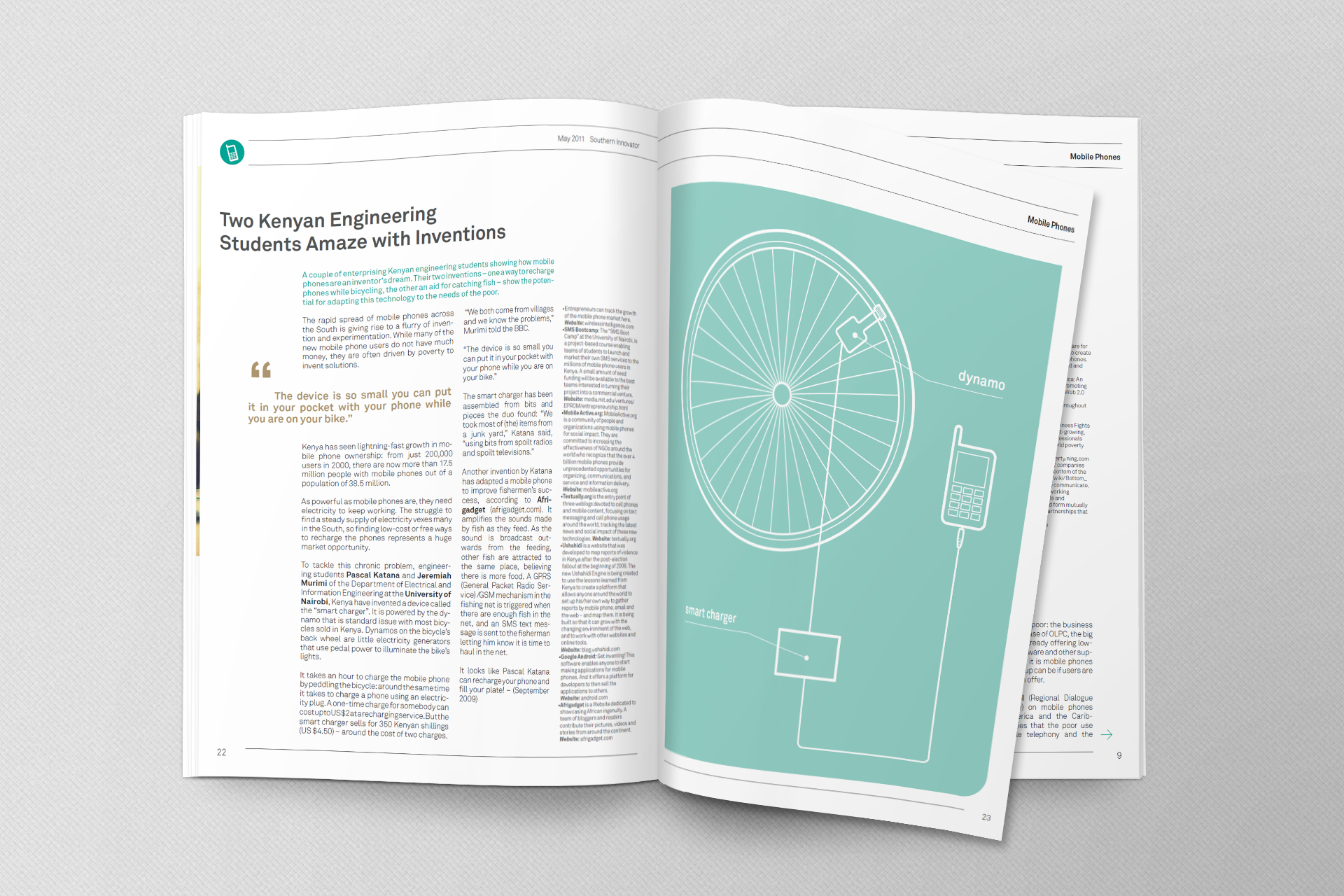
Bernard Kiwia, a bicycle mechanic from Arusha, Tanzania, is a pioneer working with windmills, water pumps, mobile phone chargers and pedal-powered hacksaws – all made from old bike parts.

Hayford Bempong, David Celestin and Michael Amankwanor from Accra Polytechnic (http://www.accrapolytechnic.edu.gh/), built a low-power radio station. Made from scrap electronic parts and an antenna from copper pipe, the radio was put straight to use to broadcast announcements at the event over a range of a few thousand metres.

Suprio Das, Killian Deku, Laura Stupin and Bernard Kiwia brought a method to produce chlorine from salt water and other common materials. It can then be used to purify water. Their method can clean vast quantities of water using no moving parts (avoiding breakdowns). It does this by dripping chlorine into the water until a level has been reached, and then the purified water is released. By using a 5 litre bag of chlorine, and a US $3 valve, 100,000 litres of water can be purified.

Electricity was also being made using low-cost batteries from aluminum cans and plastic water bottles. Applying salt water as an electrolyte (http://en.wikipedia.org/wiki/Electrolyte),electricity is created by the oxidation of the aluminum can – a cheaper approach and less toxic than commercial batteries.

A group called Afrobotics (http://www.afrobotics.com) gave a presentation to encourage more African students to go into engineering, science and technology. Afrobotics is set up as a competition to “fuel engineering, science, innovation, and entrepreneurship on the African continent, utilizing robotics.” They have some excellent videos of African robots in action: http://www.afrobotics.com/videos.

Published: October 2009

Resources

1) Fab Labs: Like the futuristic “replicator” in the TV show Star Trek, Fab Labs allow people to design and produce what they need there and then. The labs are mushrooming throughout the South as people get the innovation bug. The Fab Lab program is part of the MIT’s Center for Bits and Atoms (CBA) which broadly explores how the content of information relates to its physical representation. Website: http://fab.cba.mit.edu/

2) id21 Insights: A series of articles by the UK ’s Institute of Development Studies on how to make technology and science relevant to the needs of the poor. Website: http://www.id21.org/insights/insights68/art00.html

3) eMachineShop: This remarkable service allows budding inventors to download free design software, design their invention, and then have it made in any quantity they wish and shipped to them: Amazing! Website: http://www.emachineshop.com/

4) The red dot logo stands for belonging to the best in design and business. The red dot is an internationally recognised quality label for excellent design that is aimed at all those who would like to improve their business activities with the help of design. Website: www.red-dot.de

5) Institute for the Future: It identifies emerging trends that will transform global society and the global marketplace. It provides insight into business strategy, design process, innovation, and social dilemmas. Its website helps budding inventors to identify new areas of invention.Website: http://www.iftf.org/

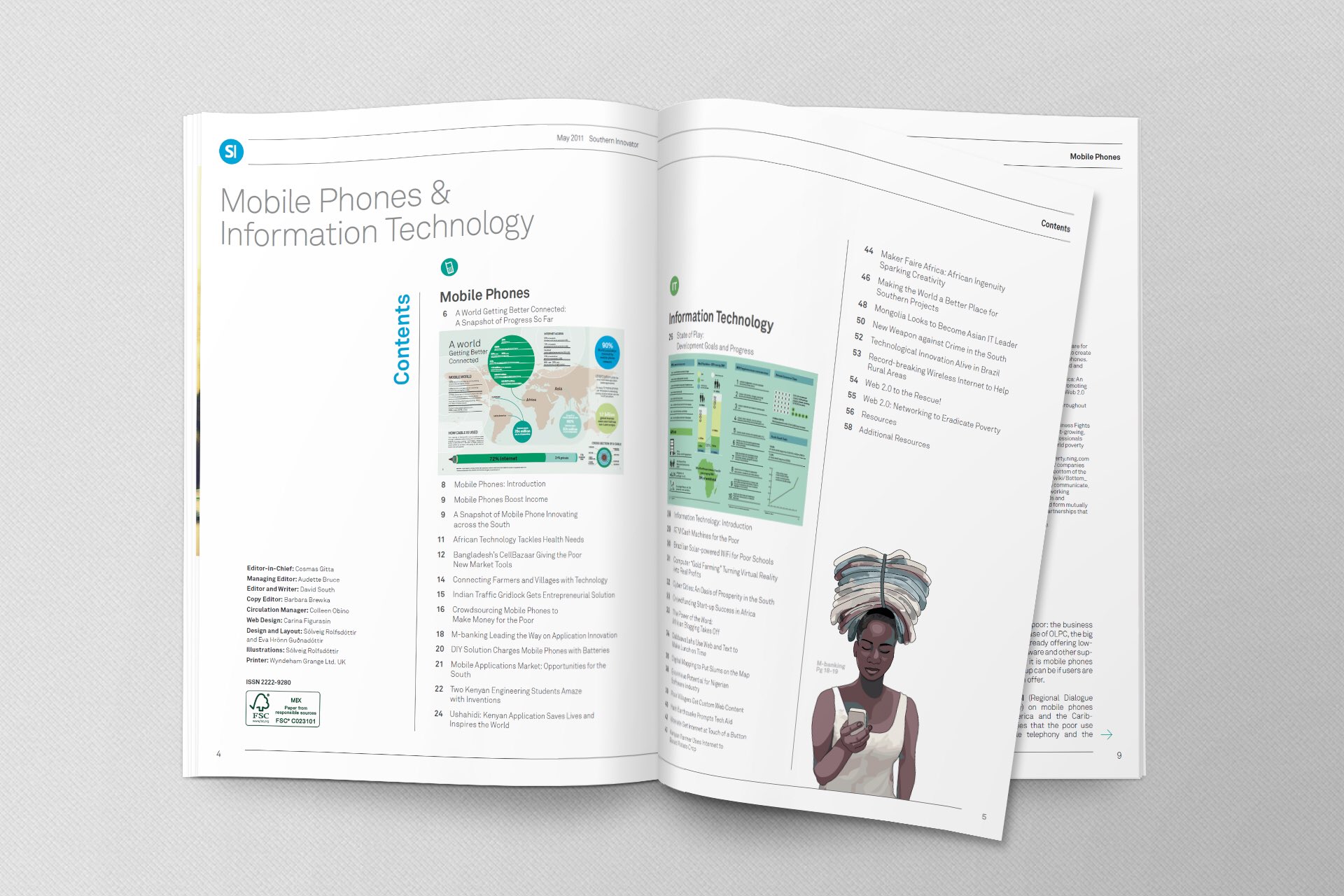
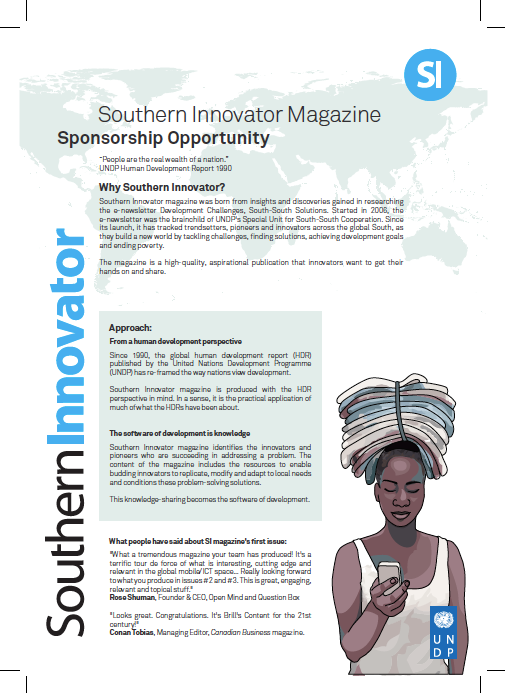
Development Challenges, South-South Solutions was launched as an e-newsletter in 2006 by UNDP’s South-South Cooperation Unit (now the United Nations Office for South-South Cooperation) based in New York, USA. It led on profiling the rise of the global South as an economic powerhouse and was one of the first regular publications to champion the global South’s innovators, entrepreneurs, and pioneers. It tracked the key trends that are now so profoundly reshaping how development is seen and done. This includes the rapid take-up of mobile phones and information technology in the global South (as profiled in the first issue of magazine Southern Innovator), the move to becoming a majority urban world, a growing global innovator culture, and the plethora of solutions being developed in the global South to tackle its problems and improve living conditions and boost human development. The success of the e-newsletter led to the launch of the magazine Southern Innovator. 

Creative Commons License

This work is licensed under a
Creative Commons Attribution-Noncommercial-No Derivative Works 3.0 License.

ORCID iD: https://orcid.org/0000-0001-5311-1052.

© David South Consulting 2023

Categories
Archive Development Challenges, South-South Solutions Newsletters

Africa’s Consumer Market in Spotlight for 2011

By David SouthDevelopment Challenges, South-South Solutions

SOUTH-SOUTH CASE STUDY

While other parts of the world will spend 2011 worrying about their debt levels and how to spur economic growth, many factors are pointing to Africa potentially following a different story. A frenzy of activity has been building around Africa’s market opportunities and its growing middle class consumer population. Years of steady growth rates up to 2008 and the vast, untapped opportunities on the continent have sparked interest from investors and businesses alike.

Foreign direct investment (FDI) to developing economies rose by 10 percent in 2010 due to fast economic recovery and increasing South-South flows. Africa peaked in 2008 because of the resource boom and fell by 14 percent to US $50 billion in 2010 (UNCTAD). Rising FDI from Asia and Latin America has still yet to match the decline from developed countries – still the majority of FDI to Africa.

However, foreign direct investment to Africa had risen sixfold to US $58.56 billion between 2000 and 2009 (UNCTAD). The amount going to manufacturing and services has been growing, despite the slow down in 2009 because of the global economic downturn. Africa’s 11 largest economies are now being seen as the next to match Brazil and Russia, economic stars of the last few years.

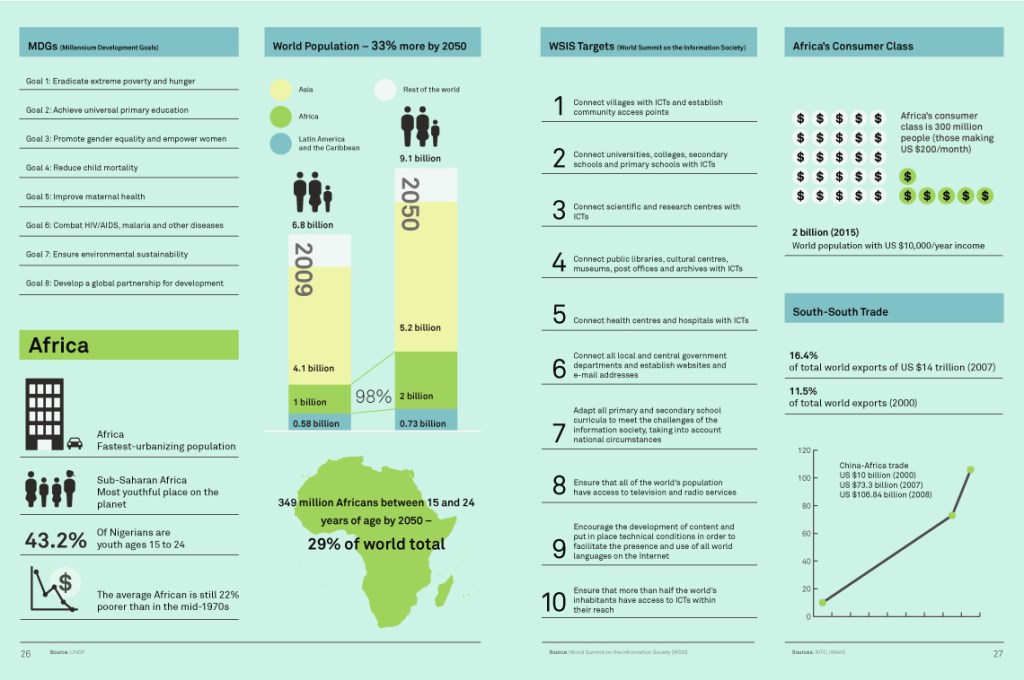
The continent as a whole forms the 10th largest economy in the world. Of Africa’s more than 1 billion people, 900 million can be classified as part of the consumer economy. Out of this group, there is a third – approximately 300 million people – who make modest sums by Western standards, about US $200 a month, but have spare cash to buy things like mobile phones, DVDs and new clothes, or pay for better schools. They are the population that is overlooked when attention is focused only on the very poor living on less than US $2 a day.

This vast group is captured in the book Africa Rising by University of Texas professor Vijay Mahajan, which details the phenomenon of Africa’s middle class consumer society. He calls this group of middle class consumers “Africa 2,” with the desperately poor called Africa 3s, and the extremely rich Africa 1s.

This new group has expanded far beyond ruling elites and government workers. Many of its members work in the private sector, as secretaries, computer entrepreneurs, merchants and others who have benefited from consistent growth rates in many African countries.

The portion of African households with discretionary spending power rose from 35 percent in 2000 to 43 percent in 2008. The challenge will be to turn this wealth to the benefit of made-in-Africa businesses and to create stable, high-quality jobs to ensure this wealth effect lasts.

The new wealth effect can give Africa the tools needed to tackle its long-standing development challenges and lift more and more people out of poverty and misery while reducing dependence on foreign aid. And this can add rocket fuel to the surge toward meeting the Millennium Development Goals deadline in 2015 (http://mdgs.un.org/unsd/mdg/Default.aspx).

The rapidly rising profile of Africa is reflected by the prestigious business newspaper the Wall Street Journal recently running a series titled “Africa’s Growing Consumer Class Lures Multinationals” (http://online.wsj.com/article/SB10001424052748704720804576009672053184168.html).

Consulting firm McKinsey (http://www.mckinsey.com/) believes Africa’s billion citizens should be seen as consumers and says the continent’s growing number of middle-income consumers now outstrips India’s. It boldly claims consumer spending will reach US $1.4 trillion in Africa by 2020, up from US $860 billion in 2008. Consumer spending rose by 16 percent a year from 2005 to 2008 before the global economic crisis.

It is forecast that 220 million Africans now frozen out of this consumer wave will become consumers by 2015 if current trends continue.

The IMF believes the steady growth will continue, with 5.5 percent growth for the 47 sub-Saharan countries this year.

That’s the good news. But many African countries still rank at the bottom in the World Bank’s Ease of Doing Business survey (http://www.doingbusiness.org/rankings). Africa remains a logistical nightmare for companies. Poor quality roads, inadequate harbours and inefficient rail systems, all make it difficult to move goods around the continent and across borders.

This makes distribution in Africa costly. Companies also often have to import building supplies and equipment to construct factories and plants. Then there is the unreliable electricity supply. Unable to trust local power supplies, many companies use their own electricity generators.

If handled right, new brands and companies are set to join African global success stories like Mo Ibrahim (http://en.wikipedia.org/wiki/Mo_Ibrahim), who founded the mobile telecommunications company Celtel.

Some of the new success stories include African companies pairing up with global firms as they seek local knowledge and experience. This will be a substantial opportunity for companies wise enough to organise themselves for global competition. In 2010, Sweden’s Electrolux – one of the world’s largest makers of home appliances – bought Egypt’s Olympic Group (http://www.ameinfo.com/145039.html), a North African powerhouse for household goods.

In the Ivory Coast, Nouvelle Parfumerie Gandour (http://www.npgandour.com/english/index.html) – makers of perfume, cologne, cosmetics and talcs – is an African cross-border success story. It has factories in Ivory Coast, Senegal, Morocco and Cameroon. Thirty percent of its profits come from exports, some of which are to the United States and Europe.

Sonatrach (http://www.sonatrach-dz.com/NEW/) in Algeria is the largest oil and gas company in Algeria and Africa. Is using its base in oil and gas exploration, production, pipeline transportation and marketing of hydrocarbons and by products, to move into other areas. It is increasing its investments in power generation, new and renewable energies, water desalination, and mining exploration and exploitation. Looking to grow its business with 30 percent coming from exports by 2015, it has spread across Africa ( Mali , Niger , Libya , Egypt ), to Spain , Italy , Portugal , United Kingdom , Peru and the United States.

Marwa (http://www.marwa.es/) from Casablanca, Morocco, is an African fashion success story. The brand started by Karim Tazi in 2003 began with just two stores in Casablanca and Rabat. It identified the niche of very fashionable but good quality and inexpensive clothing. It blends international trends with subtle influences from Moroccan tradition. Its prices hover between six euros for a t-shirt and 100 euros for a coat. It has successfully created a Moroccan high-street fashion look that can be exported. It has opened a branch in Zaragoza, Spain and is expanding to Riyadh, Saudi Arabia, Paris, France, Beirut, Lebanon and Istanbul, Turkey.

A survey by consultants AT Kearney (http://www.atkearney.com) found eight out of nine West African subsidiaries of global consumer goods companies discovered quicker revenue growth than their parent companies.

All this new wealth and growth provides substantial opportunities to African brands to build their businesses and markets. The big issue will be who will rise to the occasion and who will be clever enough to learn from existing African brands that are already thriving and have shown the way.

Two trends will also power this growth: urbanization and large youth populations. Africa’s youthful, urban population has already been reached by the telecoms sector through the rapid growth of mobile phones. More than 500 million subscribers have been signed up since 2000 (Informa Telecom and Media), a user base greater than the entire US population.

“By 2040, the continent will be home to one in five of the planet’s young people and will have the world’s largest working-age population,” according to Charles Roxburgh and Susan Lund, authors of a study for the McKinsey Global Institute.

“If Africa can give its young people sufficient education and skills, they could be a substantial source of consumption and production in years ahead.”

Published: January 2011

LINKS:

1) Afrique Avenir: Inspiring blog tracking Africa’s rising middle class and their global economic impact. Also great photo gallery The Other Africa, a photographic journey through all 54 African countries featuring the rising middle class. Website: http://www.afriqueavenir.org/en/

2) Afrocoffee: A design-savvy South African coffee shop chain that has expanded to Europe. It uses a modern African-themed design in its shops and product range. Website: https://www.afrocoffee.com/index.php?id=4&menustate=&L=1

3) Africa Rising: A book by Professor Vijay Mahajan on how Africa’s consumer economy is growing and growing. Website: http://tinyurl.com/2vk3m9n

4) Arise Magazine: Arise is a Nigerian style monthly started by Nigerian media mogul Nduka Obaigbena, who also publishes Nigeria’s leading newspaper, This Day. Website: http://www.arisemagazine.net/

5) A video on the rising African consumer market. Website:http://annansi.com/blog/2010/12/growth-and-spending-of-african-consumer-video/

6) Annansi Chronicles: A blog packed with the latest news and media on African business and culture trends. Website: http://annansi.com/blog/

7) An interactive map of Africa’s new wealth and where to find it. Website:http://online.wsj.com/article/SB10001424052748704720804576009672053184168.html#project%3DAFRICAMAP0111%26articleTabs%3Dinteractive

https://davidsouthconsulting.org/2021/10/30/2011-development-challenges-south-south-solutions/

https://davidsouthconsulting.org/2022/10/25/2011-trends-for-the-south/

https://davidsouthconsulting.org/2020/12/15/development-challenges-south-south-solutions-newsletter-2011-2014-2/

https://davidsouthconsulting.org/2021/09/20/southern-innovator-and-the-gssd-expo-2011-2014/

https://davidsouthconsulting.org/2022/12/01/southern-innovator-goes-to-south-south-expo-13-december-2011/

https://davidsouthconsulting.org/2022/12/01/southern-innovator-magazine-is-printed-and-readied-for-distribution-31-may-2011/

Development Challenges, South-South Solutions was launched as an e-newsletter in 2006 by UNDP’s South-South Cooperation Unit (now the United Nations Office for South-South Cooperation) based in New York, USA. It led on profiling the rise of the global South as an economic powerhouse and was one of the first regular publications to champion the global South’s innovators, entrepreneurs, and pioneers. It tracked the key trends that are now so profoundly reshaping how development is seen and done. This includes the rapid take-up of mobile phones and information technology in the global South (as profiled in the first issue of magazine Southern Innovator), the move to becoming a majority urban world, a growing global innovator culture, and the plethora of solutions being developed in the global South to tackle its problems and improve living conditions and boost human development. The success of the e-newsletter led to the launch of the magazine Southern Innovator. 

https://davidsouthconsulting.org/2021/03/05/southern-innovator-issue-1/

Creative Commons License

This work is licensed under a
Creative Commons Attribution-Noncommercial-No Derivative Works 3.0 License.

ORCID iD: https://orcid.org/0000-0001-5311-1052.

© David South Consulting 2023

Categories
Archive

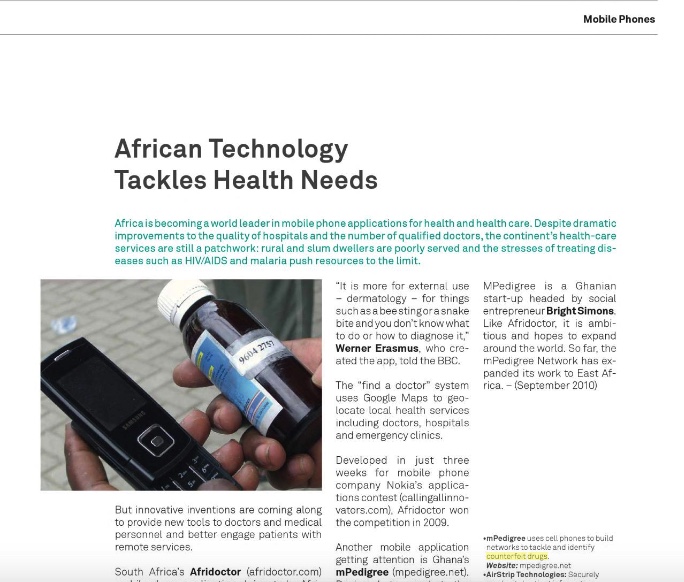
Combating Counterfeit Drugs

By David SouthDevelopment Challenges, South-South Solutions

SOUTH-SOUTH CASE STUDY

Access to good quality drugs is a serious problem across the South. The International Narcotics Control Board estimates that up to 15 per cent of all drugs sold around the world are fake or counterfeit, and in parts of Africa and Asia this figure jumps to 50 per cent. The US Food and Drug Administration estimates counterfeit drugs make up 10 per cent of the global medicine market. The US Centre for Medicines in the Public Interest predicts counterfeit drug sales will reach US $75 billion globally in 2010, an increase of more than 90 per cent from 2005.

Fake drugs are a major cause of unnecessary death and destroy public confidence in medicines and health services. While counterfeit drugs have been on the rise, there is little co-ordinated or effective action to counter this menace afflicted on the sick.

But in Ghana, a solution has emerged that shows a way to guarantee that quality drugs get to the sick who need them. CareShop Ghana uses the franchise model – where licenses are sold to approved vendors who adhere to strict guidelines – to ensure that the quality, accessibility and affordability of essential medicines in and around Accra is guaranteed. CareShop has made deals with close to 300 franchisee pharmacies – often modest operations – who sell over-the-counter drugs.

In Ghana, preventable and curable illnesses like malaria and diarrhoeal diseases are among the leading causes of death. Their treatment pushes many people to financial despair; they can ill afford the extra burden of worrying about counterfeit drugs and the harm they do. Like many countries in the South, Ghana’s public healthcare system is unable to meet these needs and so most people turn to the private sector for help.

An estimated 65 per cent of people turn to licensed pharmacies. But many of these operate haphazard businesses, dispensing expired or counterfeit drugs.

The Ghana Social Marketing Foundation Enterprises Limited (GSMFEL) founded CareShop in 2002, hoping to battle common infectious diseases in poor areas by making sure good drugs get through to the sick.

GSMFEL makes a small profit as the franchisor by selling high-quality drugs to the franchisees. The key to CareShop’s success is imposing standardization on franchisees, so they have to stick to common diagnosis, quality and pricing. They make more money when they adhere to these rules than when they break them. To ensure there is no tampering with the drugs, they are delivered straight to the vendor’s doorsteps, and it is all backed up with health and business training support and branded materials.

The tide can be turned around on fake drugs: in 2002, the WHO reported that 70 per cent of drugs in Nigeria were fake or substandard: by 2004 that figure had fallen to 48 per cent.

Stimulating private sector solutions to African healthcare problems is now receiving an additional boost from a new fund established by the World Bank’s private sector arm, the International Finance Corporation. Launched in 2007, it offers cash and loans totalling US $500 million to commercial healthcare projects in Africa. According to its own statistics, 60 per cent of health expenditure in sub-Saharan Africa is privately funded, and the market, excluding South Africa, is worth US $19 billion.

Published: May 2008

Resources

  • SafeMedicines.org is a website offering the latest reports on fake medicines and is a good place to report incidences.
    Website: http://safemedicines.org/in_the_news/
  • A paper on the global threat of counterfeit drugs: Click here.

Development Challenges, South-South Solutions was launched as an e-newsletter in 2006 by UNDP’s South-South Cooperation Unit (now the United Nations Office for South-South Cooperation) based in New York, USA. It led on profiling the rise of the global South as an economic powerhouse and was one of the first regular publications to champion the global South’s innovators, entrepreneurs, and pioneers. It tracked the key trends that are now so profoundly reshaping how development is seen and done. This includes the rapid take-up of mobile phones and information technology in the global South (as profiled in the first issue of magazine Southern Innovator), the move to becoming a majority urban world, a growing global innovator culture, and the plethora of solutions being developed in the global South to tackle its problems and improve living conditions and boost human development. The success of the e-newsletter led to the launch of the magazine Southern Innovator.  

Creative Commons License

This work is licensed under a
Creative Commons Attribution-Noncommercial-No Derivative Works 3.0 License.

ORCID iD: https://orcid.org/0000-0001-5311-1052.

© David South Consulting 2022

Categories
Archive Development Challenges, South-South Solutions Newsletters Southern Innovator magazine

Solar Solution to Lack of Electricity in Africa

By David SouthDevelopment Challenges, South-South Solutions

SOUTH-SOUTH CASE STUDY

Electricity is critical to improving human development and living standards. Yet, for many in the global South, electricity is either non-existent or its provision is patchy, erratic, unreliable or expensive.

Just as Africa has been able to jump a generation ahead when it comes to communications through the mass adoption of mobile phones – a much cheaper option than trying to provide telephone wires and cables across the continent – so it could also bypass the burdensome costs of providing electricity mains to everyone by turning to smaller electricity generation technologies such as solar power. This is called “off-grid” electricity.

The UN has set the goal of universal access to modern energy services by 2030. A report issued in April 2010 by United Nations Secretary-General Ban Ki-moon’s Advisory Group on Energy and Climate Change (AGECC) calls for expanding energy access to more than 2 billion people (http://www.unido.org/fileadmin/user_media/Publications/download/AGECCsummaryreport.pdf).

The report found that a lack of access to modern energy services represents a significant barrier to development. Some 1.6 billion people still lack access to electricity.

A reliable, affordable energy supply, the report says, is the key to economic growth and the achievement of the anti-poverty targets contained in the Millennium Development Goals.

When a person has electricity and the lighting it powers, it is possible to do business and study late into the night. Electric lighting also makes streets and living areas safer. Electricity can power a plethora of labour-saving and life-enhancing consumer goods: televisions, refrigerators, vacuum cleaners, air conditioners and fans, washing machines, clothes dryers, computers. And electricity recharges that most essential item, the mobile phone, on which millions rely to do their daily business.

After witnessing the struggle African health clinics have to access electricity, a Nairobi, Kenya-based company has developed a simple solution to ensure a steady supply of solar electricity. One Degree Solar’s (http://onedegreesolar.com/) founder, Gaurav Manchanda, developed and sells the BrightBox solar-charging system for lights, mobile phones, tablet computers and radios.

He first gained experience working in the West African nation of Liberia with the Clinton Health Access Initiative (http://www.clintonfoundation.org/main/our-work/by-initiative/clinton-health-access-initiative/about.html). Working at the country’s Ministry of Health, he found most health clinics operated without electricity.

He identified solar power as the only viable energy source. Trying to deliver fuel to power generators by the road network had two impediments: the diesel fuel was expensive and the road conditions were poor.

After seeing that large solar-power systems required significant maintenance and upkeep, he started to explore the possibility of low-cost, and simple-to-use solar electricity products that would be useful to community healthcare workers.

This became the beginning of One Degree Solar and its mission.

The company’s main product is the BrightBox, a cleverly designed solar charger. A bright orange box with a folding, aluminum handle at the top for easy carrying, it switches on and off simply with a bright red button. It has a waterproof solar panel. The BrightBox has USB (universal service bus) (http://en.wikipedia.org/wiki/Universal_Serial_Bus) ports so that mobile phones and radios can be plugged in. It is also possible to plug in four lights at once with the four outports on the side of the box.

It meets the standards set by the Lighting Africa initiative (http://lightingafrica.org/specs/one-degree-brightbox-2-.html) of the International Finance Corporation and the World Bank.

One Degree Solar claim it is possible to set up a BrightBox in 10 minutes. When the indicator light has turned green, the box is fully charged and capable of providing 40 hours of light.

A full charge can power two light bulbs for 20 hours. Manchanda told How We Made It In Africa (http://www.howwemadeitinafrica.com/) that he has sold 4,000 units of the BrightBox since its launch in October 2012.

According to The Nation, the BrightBox is currently retailing in Kenya for Kenyan shillings 7,000 (US $82).

One Degree Solar’s product range is sold to local resellers and distributors. The products are designed to be repaired using locally sourced parts and can be fixed by local electricians.

Most of the sales so far have been in Kenya but the firm has also sold units to other countries.

Testimonials on the BrightBox website tell of the transformation to people’s lives the clean energy source makes: “BrightBox has helped us in so many ways! We used to spend 800 Shillings (US $9.50) a month for two paraffin lanterns. The fumes smelled and always made us feel sick.”

Manchanda is a strong believer in Africa’s potential and its future and dismisses those who are negative about the continent.

“That was not a holistic assessment, but rather, an unnecessary and damaging generalization,” he told How We Made It In Africa. “Fortunately, most news outlets in Africa are now available online and offer a wider range of perspectives. The middle class is booming in certain countries. We have seen the success of mobile phones in enabling people to access other services. I think hope and progress come with innovation. Technology access has helped create entirely new markets and reach populations that otherwise could have taken decades to service with traditional approaches.

“India was in a similar space 15 years ago before the Internet boom, and today parts of Nairobi (Kenya) are just like Delhi (India): people have a cell phone or two, there are large shopping malls, a booming middle class, and new construction everywhere.”

Published: June 2013

Resources

Global Off-Grid Lighting Association: Global Off-Grid Lighting Association (GOGLA) has been established to act as the industry advocate with a focus on small and medium enterprises. It is a neutral, independent, not-for-profit association created to promote lighting solutions that benefit society and businesses in developing and emerging markets. GOGLA will support industry in the market penetration of clean, quality alternative lighting systems. Website: http://globaloff-gridlightingassociation.org/

Solar Sister: Solar Sister eradicates energy poverty by empowering women with economic opportunity. Website: http://www.solarsister.org/

Solarpod: Sunbird Solar/Thousand Suns manufactures, sources and distributes the portable solar generator range. Website: http://www.thousandsuns.com/

4) Little Sun: An attractive, high-quality solar-powered lamp in the shape of a hand-sized sun developed by artist Olafur Eliasson and engineer Frederik Ottesen. Website: http://www.littlesun.com/

Southern Innovator logo

London Edit

31 July 2013

Development Challenges, South-South Solutions was launched as an e-newsletter in 2006 by UNDP’s South-South Cooperation Unit (now the United Nations Office for South-South Cooperation) based in New York, USA. It led on profiling the rise of the global South as an economic powerhouse and was one of the first regular publications to champion the global South’s innovators, entrepreneurs, and pioneers. It tracked the key trends that are now so profoundly reshaping how development is seen and done. This includes the rapid take-up of mobile phones and information technology in the global South (as profiled in the first issue of magazine Southern Innovator), the move to becoming a majority urban world, a growing global innovator culture, and the plethora of solutions being developed in the global South to tackle its problems and improve living conditions and boost human development. The success of the e-newsletter led to the launch of the magazine Southern Innovator.
Creative Commons License

This work is licensed under a
Creative Commons Attribution-Noncommercial-No Derivative Works 3.0 License.

ORCID iD: https://orcid.org/0000-0001-5311-1052.

© David South Consulting 2023