I am an international development consultant with over 25 years’ experience. I specialise in media, health communications, development strategies, project management and publishing. I have led high-profile projects in Asia, Canada and the UK. This work has included a number of groundbreaking, award-winning new media projects.
United Nations Global Marketplace (ungm.org) Vendor.
Economy Reports for APEC Economies on demographics, policies & ICT applications for people with Special Needs (Seniors and People with Disabilities), Asia-Pacific Economic Cooperation, APEC Telecommunications and Information Working Group, January 2013
Financing Renewable Energy in Developing Countries: Analysis of Business Models and Best Practices, Resources Future Publication, Pakistan Office, July 2018
Impact of Digital Strategy in Business for Small and Medium Enterprises in Developing Countries by Malik Mustafa, International Journal for Modern Trends in Science and Technology, 7 (09): 205-210, 2021
Mobilising Finance for Infrastructure: A Study for the UK Department for International Development (DFID), Cambridge Economic Policy Associates Ltd., August 2015
Propagating Gender Struggles Through Nollywood: Towards a Transformative Approach by Nita Byack George Iruobe, Geonita Initiative for Women and Child Development, 17 July 2015
Southern Innovator issues 1 and 5 at the Bangladesh workshop on public service innovation, 9-11 December 2017, and the launch of the South-South Network.
The following blog report does not reflect the views of the UNOSSC or UNDP.
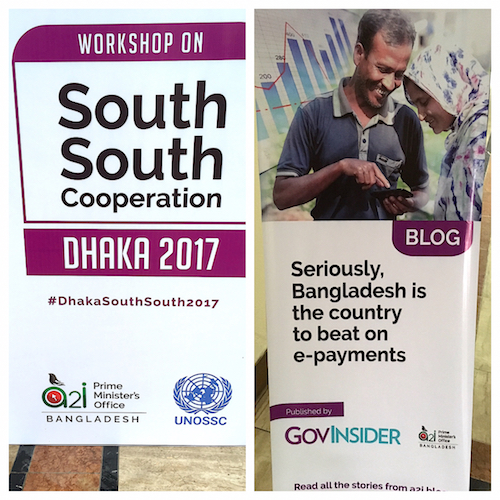
Dateline: Dhaka, Bangladesh (9-11 December 2017) – From 9-11 December 2017, I participated in the Workshop on Innovations in Service Delivery: The Scope for South-South and Triangular Cooperation held in Dhaka, Bangladesh. Hosted by the a2i (access to information) division of the Bangladesh Prime Minister’s Office, the implementing unit for Digital Bangladesh, it was convened by the Government of Bangladesh and the United Nations Office for South-South Cooperation (UNOSSC).
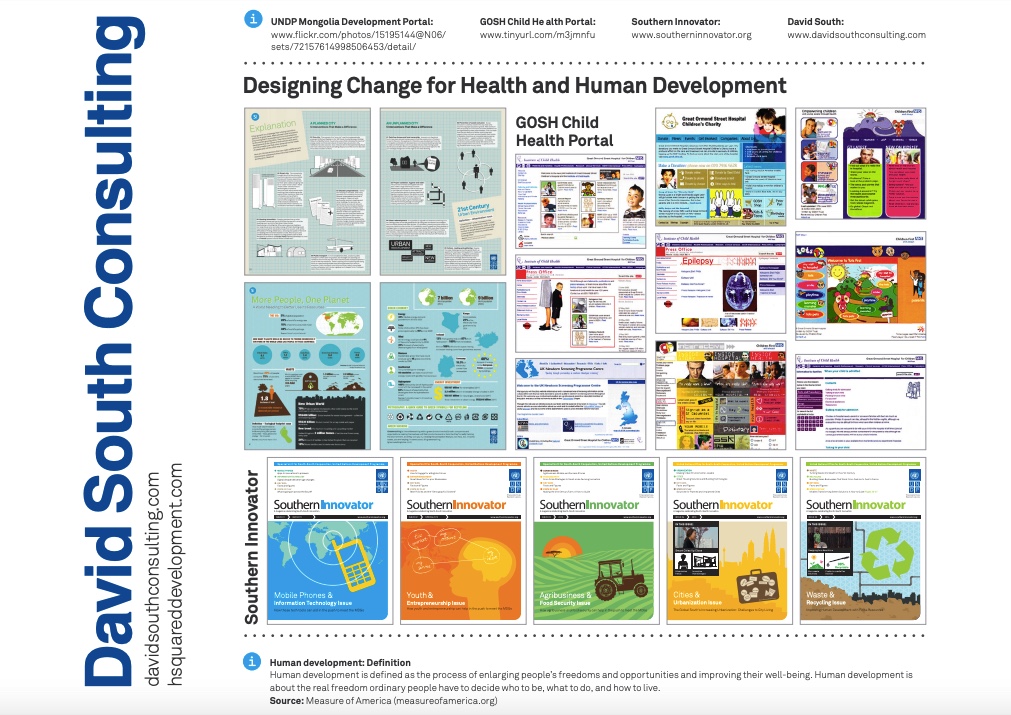
I was asked to do a presentation for the health component of the Workshop on my past experience in public sector digital innovation. This work stretches back to the beginning of the roll out of the Internet in the late 1990s. I chose three projects I have led that had a large and significant impact in the digital public space: the UN Mongolia development web portal I launched and ran for two years (1997-1999), the GOSH Child Health Web Portal I launched and ran for two years (2001-2003) and the Southern Innovator brand I launched for the UNOSSC (2010-2015).
I also joined a panel discussion as Senior Partner representing the David South Consulting/David South International consultancy at the end of the last day (we have worked with the UNOSSC since 2007 and with UNDP since 1997 – a timeframe which saw the rise of the Internet and the mobile and information technology revolution take the global South by storm).
As the Workshop invitation letter says, “The digitization of service delivery, user-centric methodologies, and experimentation geared towards improvement in service delivery, and the data revolution may have originated in developed countries but is now of increasing relevance for the developing world. To respond to rapidly rising expectations of the citizens, governments in both developing and developed countries are embracing approaches and tools to adopt more citizen-centric approaches in their service delivery. These practices are establishing a culture of citizen-centric innovation within governments, breaking silos of operations and helping move towards a whole-of-government planning and execution.”
According to the a2i, Bangladesh has the “world’s largest government web portal” comprising over 25,000 government websites for 43,000 government offices (Bangladesh’s population was over 162 million as of 2016 – World Bank). Bangladesh has one of the highest population densities in the world and is considered the 8th most populace country in the world (Wikipedia). In total, these government websites receive 60 million plus hits a month, according to the a2i, from an online population of 79.7 million people, nearly half the population.
A lot is at stake: According to the World Bank (which has been supporting the country since 1972), “Bangladesh has made substantial progress in reducing poverty, supported by sustained economic growth. Based on the international poverty line of $1.90 per person per day, Bangladesh reduced poverty from 44.2 percent in 1991 to 18.5 percent in 2010, and is projected to decrease to 12.9 percent in 2016.
“The country achieved the MDG 1 on halving poverty five years ahead of time, with 20.5 million people rising out of poverty during the 1991-2010 period. In parallel, life expectancy, literacy rates and per capita food production have increased significantly. Progress was underpinned by strong economic growth, with 6 percent plus growth over the decade and reaching to 7.1 percent growth in 2015/2016. Rapid growth enabled Bangladesh to reach the lower middle-income country status in 2014.
“However, sustained growth has rapidly increased the demand for energy, transport and urbanization. Insufficient planning and investment have resulted in increasingly severe infrastructure bottlenecks.”
Arriving in the capital, Dhaka, on the 9th of December, it was clear to see what the World Bank is highlighting: the “severe infrastructure bottlenecks”. Just like other megacities, Dhaka is clogged with traffic and suffers from the air pollution this causes (one of the worst cities for this in Asia). But these are just the visible signs of success if you think about it (as frustrating as that might be), as booming economies combined with rapid urbanisation, if not planned well, tend to lead to traffic congestion and high levels of air pollution.
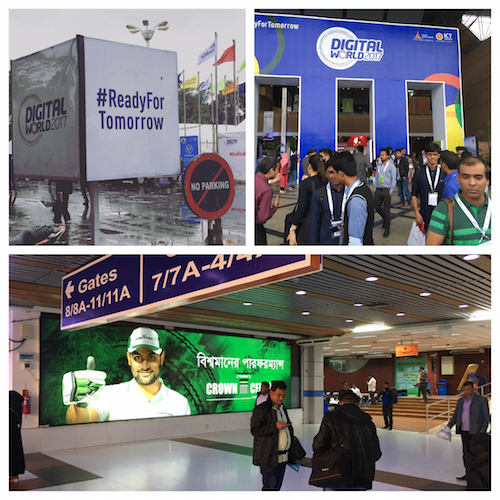
The country’s rising living standards since 2000 and impressive gains in the provision of information and mobile technology services and connectivity, reveal a country brimming with potential and capable of getting a handle on its many development challenges. The streets are visibly lined with small and medium enterprises and there are construction projects in various states of completion all around Dhaka. At the airport, glossy posters advertise many real estate developer’s dreams and show-off the heavy construction equipment for sale or lease from China and Russia.
The population no longer suffers from food crises such as the 1974 famine, which killed 1.5 million people (Christian Science Monitor). According to the UN, Bangladesh cut chronic hunger by half since 2000 and is considered one of the success stories from the past 10 years that the rest of the developing world can look to as they push to eliminate hunger by 2030 as part of the SDGs (Sustainable Development Goals) (https://www.csmonitor.com/USA/Foreign-Policy/2015/0617/From-famine-to-food-basket-how-Bangladesh-became-a-model-for-reducing-hunger). Clearly, Bangladesh is a country that can get things done when it draws on the power of its population.
According to Digital Bangladesh, with a deadline of 2021, it has achieved half its goals to get the population online and its economy and government services online. In 2017, the country made US $800 million from exporting ICT (information and communication technologies) products and services. It is currently building 12 hi-tech parks with the ambitious goal to export US $10 billion in ICT services from them by 2030 and make US $5 billion by 2021.
The streets of Dhaka.
Workshop
Sharing ideas at the Workshop.
Speaking at the Workshop, Anir Chowdhury, Policy Advisor to the Access to Information (a2i) Programme of the Prime Minister’s Office, believes the concept of South-South Cooperation (SSC) is about enlightened self-interest but at present there is no framework for SSC in Bangladesh and most cooperation is ad hoc. If global South countries are not cooperating, then they are just re-inventing the wheel, he added. SSC is about avoiding feeling each country has to make it own their own: SSC can facilitate development leapfrogging and prevent leaving country success to chance. However, there needs to be better ways to communicate Southern solutions.
And Bangladesh has a good story to tell to the global South: To date, Bangladesh’s digital public service delivery has saved the country US $2 billion in cost for government services plus 1 billion man days in time spent trying to carry out tasks using government services, according to the a2i. With this success under their belts, the hope is to market Bangladesh as a world leader in innovation. To go from MDGs poster child to leader of the global South.
UNOSSC Director and Envoy of the UN Secretary-General on SSC, Jorge Chediek (https://www.unsouthsouth.org/about/unossc-director/), emphasised the need to tell stories of how South-South is changing the world; the pressing need to change the narrative around the global South in order to be able to achieve the 2030 agenda.
It was an honour to be invited to present my three case studies on public sector digital innovation (GOSH Child Health Portal, Southern Innovator Magazine and the UN/UNDP Mongolia Development Portal). All three share the same characteristics: a public demand for digital resources and a need to create high-quality content on limited budgets and to build public confidence in those resources. These projects were also engaging with enormous complexity and needed to find a way to simplify this for online readers.
I was impressed by the level of debate at the Workshop, and how Bangladesh’s digital initiatives are communicated (the excellent use of infographics and simple step-by-step explanations), and the overall excitement and energy around digital and the digital economy in Bangladesh. But, importantly, the foresight to give attention to the coming wave of automation and robotics (the so-called fourth industrial revolution) and how this will affect Bangladesh.
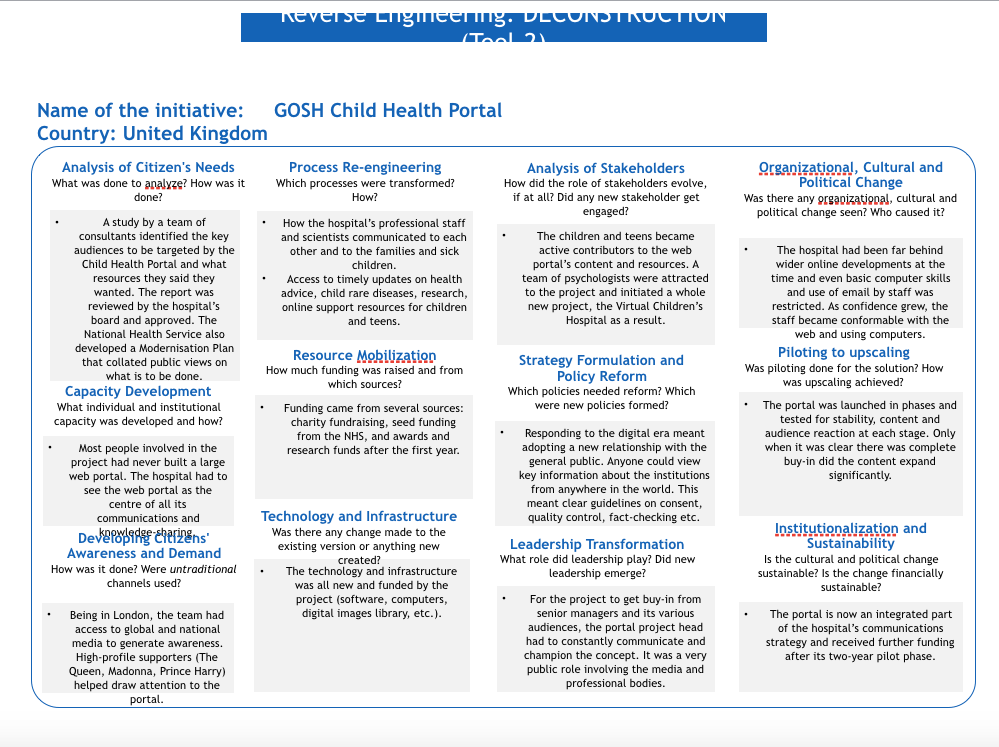
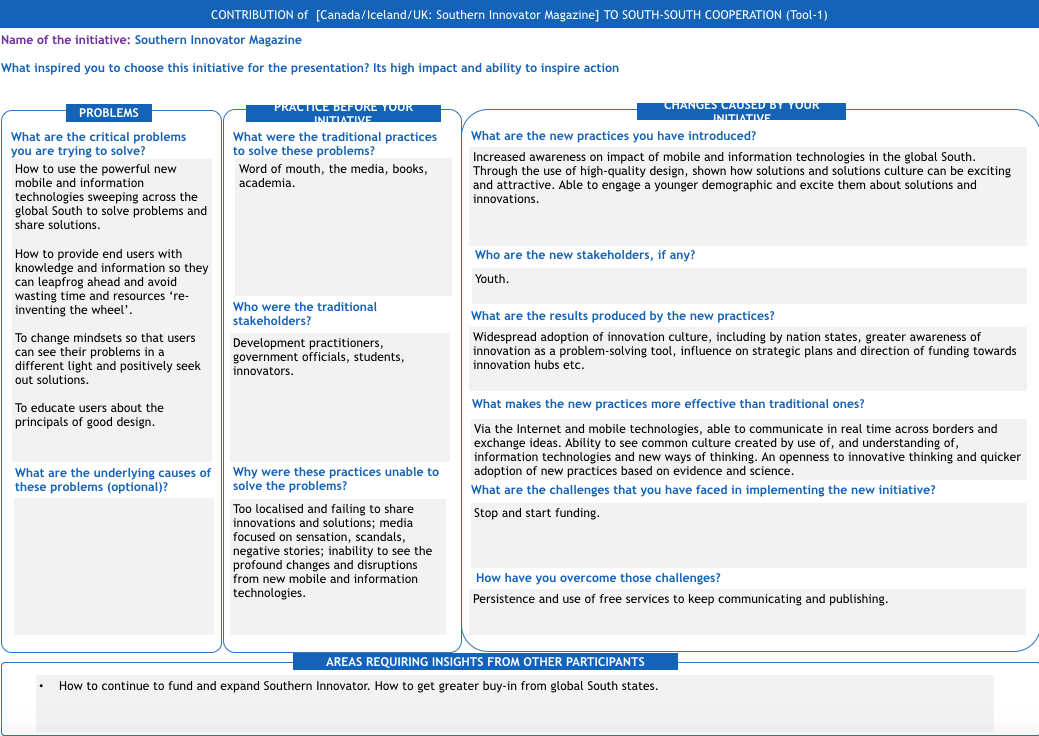
In the health workshop, we shared two projects for the reverse engineering component: the GOSH Child Health Portal and the magazine Southern Innovator (link to PowerPoint). Using the Reverse Engineering tool (see images below), each project was broken down as to how it worked and also what was its contribution to South-South Cooperation.
I shared experience from the early days of digital public innovation in the late 1990s. This has included applying digital to crisis recovery, healthcare modernisation in the early 2000s, and the campaign to achieve the MDGs (Millennium Development Goals), as well as during the mobile/information technology and social media revolution in the global South, which took off after 2007.
Issues discussed here included the recent online fake news scandals and how important it is for the public sector to offer the antidote to this with quality, factual digital information and resources. The GOSH Child Health Portal was one good example, where it entered the crowded online medical and health information marketplace and succeeded in drawing a large online audience by offering high-quality, peer-reviewed resources, thoroughly fact-checked and proofread and presented using high-quality online design. By the end of the project’s two-year timeframe, it was receiving over 7 million hits a month and was acknowledged as a trusted global source in child health. The content is cited in many books and papers, as well.
Reverse engineering GOSH Child Health Web Portal, 2001-2003.
Throughout the Workshop, I heard over and over again about the urgent need for a more cohesive platform for sharing Southern innovations and initiatives. Many complained this was currently very fragmented. While there are many media and development organisations documenting innovations and stories, there is no one-stop shop for countries to go to.
The Southern Innovator brand (incubated and developed by the UNOSSC) is a good example of what can be achieved with a more cohesive and strategic approach. Southern Innovator, first launched in 2011 by the UNOSSC, was able to leverage its limited resources to reach a large global audience via the web and social media. The brand became established with innovators and five issues were published (from 2011 to 2015). An Action Plan for scaling-up the Southern Innovator brand was also developed with the UNOSSC in 2015 (but awaits funding).
The original Southern Innovator website (southerninnovator.org, now southerninnovator.com) did fulfil the role of offering a one-stop shop for stories on global South innovation and these stories were widely cited in websites, papers and books on the global South. But the terrain has shifted radically in the global South – and at the UN – since Southern Innovator’s launch in 2011. With the widespread adoption of mobile and digital technologies, the opportunities to communicate innovator solutions have never been better but require a more sophisticated approach to be effective. In fact, we now exist in a world where the solutions already exist to the major problems affecting the global South (and even the funding is available through many sources). The problem is not the lack of solutions, innovators or technologies and business models to resolve problems (both e-newsletter Development Challenges, South-South Solutions and Southern Innovator proved this) but how people can access these resources and in a format that makes sense to them and is available when they are searching for a solution. With modern computing technologies, this is no longer an unsolvable problem. And the people to connect with to do this also already exist in the global South. What is missing is a coherent and cohesive approach. The multiplicity of development actors in this case are hampering effective action by dissecting and scattering resources, leaving end-users confused and poorly communicated with in many cases. As an example, there was a definite need to assist people in understanding how the 17 SDGs can fit into practical actions and a definite psychological need for simplicity: a problem highlighted by former UNDP head Helen Clark back in 2015 (https://www.theguardian.com/global-development/2015/jul/07/sustainable-development-goals-will-be-hard-sell-for-united-nations).
For UNDP, with its human development approach and presence in most countries, an opportunity exists to rapidly accelerate development gains and shorten the time it takes to recover when disaster or conflict strikes. Something that came out of the Workshop is the presence of excellent examples of global knowledge sharing already underway for decades around the world. Think of the scientific community in general (working on vast projects such as the CERN facility in Switzerland), or aerospace industries, or the global adoption of the principles of air safety managed by IATA in Montreal, Canada, or sport – all proof countries do successfully share knowledge and adopt common, high standards when they feel it is a priority and necessity. No country wants to be frozen out of flight routes, for example.
Reverse engineering the Southern Innovator magazine brand, 2010-2015.
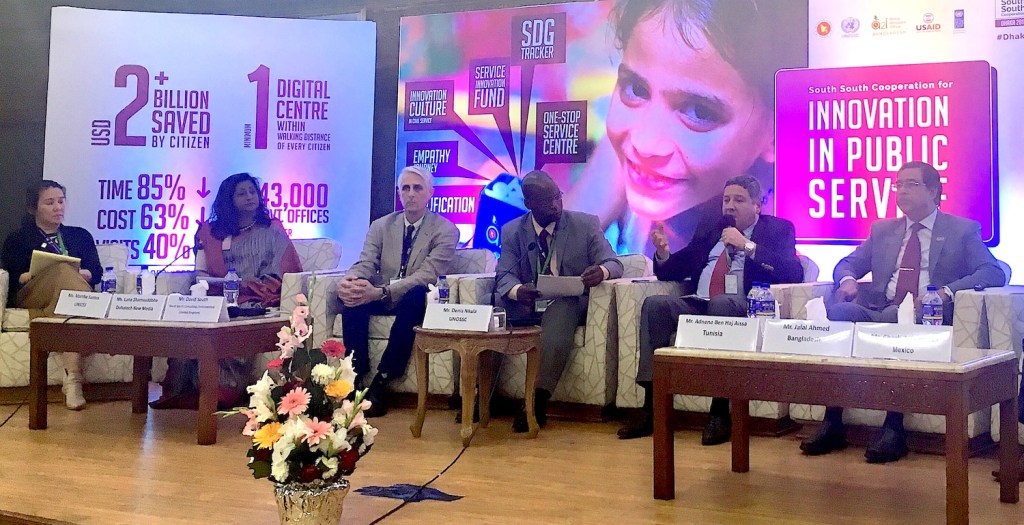
Panel Discussion
At the closing panel discussion, I was asked how to engage more donors to be part of the South-South Network. I said there is a need to get people excited and show why the South-South Network is different; how it is related to the Sustainable Development Goals (SDGs). There needs to be a communications strategy and to establish some ambitious first goals that are original: to show that this is part of a clear trend. International aid and development is a crowded space so there is a need to show how the Network would tackle the challenges of the global South in the 21st century head-on, with a more effective solution. And of course, I championed the existing and successful Southern Innovator brand developed by the UNOSSC since 2010 as, potentially, part of this communications strategy.
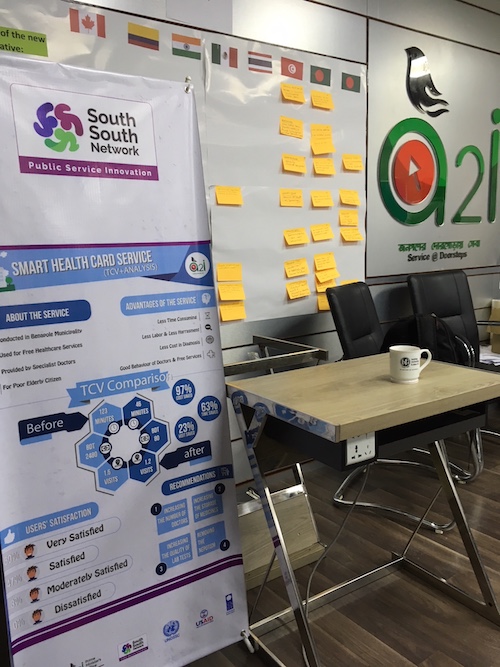
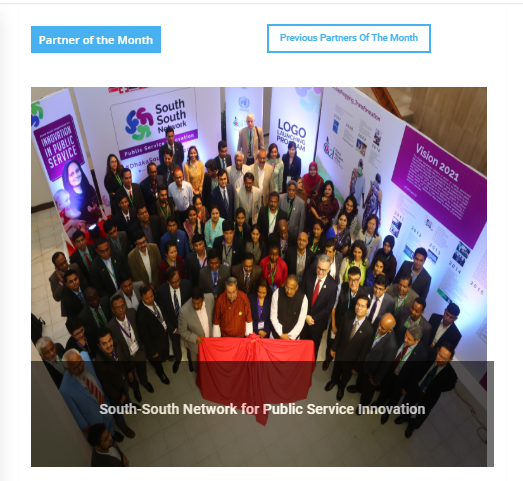
Senior Partner David South is third from the left on the panel. Photo: Yoko Shimura.Senior Partner David South is centre at back with the South-South Network for Public Service Innovation, Dhaka, Bangladesh, 2017.
Finally
This impressive embracing of e-initiatives and all things digital was visibly missing at the airport. On the way in, long lines and then a confusing scramble to buy a visa created confusion for visitors. As the first impression for visitors, this could be a great place to show-off Bangladesh’s digital capabilities.
And finally, as the World Bank says, this all about job creation and increased living standards: “The World Bank has identified job creation as the country’s top development priority. Bangladesh needs to create more and better jobs for the 2.1 million youths entering the job market every year. But to do so, Bangladesh will need to remove the barriers to higher growth posed by low access to reliable and affordable power, poor transportation infrastructure, limited availability of serviced land, rapid urbanization and vulnerability to climate change and natural disasters, among others.”
Bangabandhu International Conference Center hosting Digital World 2017 and Dhaka’s Shahjalal International Airport.
27 Years Contributing as a Health and Human Development Communicator | 1991 – 2017
Preface
Out of the army and off to the University of Toronto in the 1980s.
Whilst studying at the University of Toronto in the 1980s, the seeds were sown for much of the work that followed in the 1990s and 2000s. And what came together was the ability to undertake innovative communications initiatives using media and the latest digital tools. I had a strong interest in what constituted a modern, healthy society, and this eventually led my studies from psychology to sociology to history and eventually medical history. Along the way, I further developed my keen interest in communicating, writing for student media and broadcasting on student radio. I also organised various student organisations, from Erindale College’s first Peace Club, to its Amnesty International chapter, and eventually ran on a reforming ticket for the Students Adminstrative Council (SAC) at U of T. I undertook primary research for a history professor (Sidney Aster) working on a book, looking into the British Government’s efforts to organise food supply shipments during World War II (the biography of Lord Salter, Power, Policy and Personality: the Life and Times of Lord Salter, 1881-1975), and catalogued the CIA (Central Intelligence Agency) collection for the University of Toronto (Robarts Library). Being U of T, I also had the privilege of making amazing contacts and meeting some of the brightest Canadian minds of the time (for example, Professor Edward Shorter, co-author of Shock Therapy: A History of Electroconvulsive Treatment in Mental Illness).
The 1990s were an exciting time because it was possible to blaze new trails with emerging digital technologies. And this led to highly influential work with the United Nations and the UK’s National Health Service (NHS). This included an opportunity to head up the communications office for the UN in Mongolia just at the moment in the late 1990s when the Internet was coming online, and undertaking an influential role heading the launch of a child health portal for the prestigious Great Ormond Street Children’s Hospital (GOSH)/Institute of Child Health (ICH), just as the NHS was undertaking its Modernisation Plan in the early 2000s.
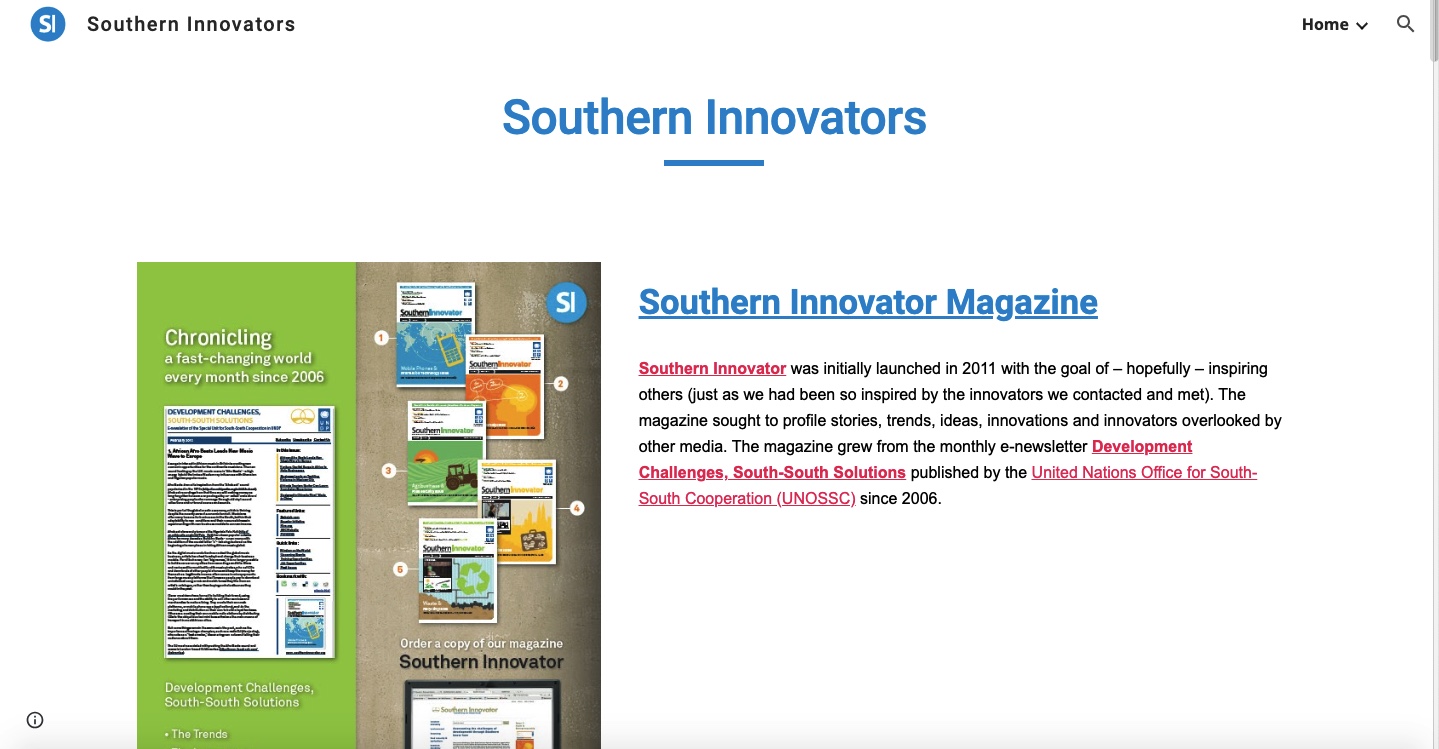
By the mid-2000s, whilst consulting for the United Nations in Africa, Asia and Central Asia, I was offered a new opportunity in 2006/2007 to work with the then-Special Unit for South-South Cooperation (SSC) based in New York. It became clear there was a disconnect between what was happening within the United Nations and what was happening on the ground in the global South. The rapid take-up of mobile phones was transforming how people communicated and led their lives. Elsewhere, the wider mobile and information technologies space was generating new business models and creative ways to use communications tools to do things and make a living. All this was very stimulating and chronicled in the e-newsletter Development Challenges, South-South Solutions and Southern Innovator Magazine for the United Nations Office for South-South Cooperation (UNOSSC).
Timeline
1985/1989: Graduate from the University of Toronto with a BA Honours in History (including medical history) and Political Science. One of my final year papers addressed medical quackery involving the drug laetrile as a cancer cure and how the medical establishment and regulatory authorities, in their attempts to prevent its use, in fact played into the prevailing anti-establishment political climate and distrust of institutions and the government.
1989/1991: Begin work as a Unit Coordinator for a chemotherapy ward of the Princess Margaret Cancer Centre (previously Princess Margaret Hospital/Ontario Cancer Institute) in Toronto. First training in health informatics and witness first-hand new computer initiatives to quantify workload on the ward to better allocate resources.
Report from Miami and Fort Lauderdale for Today’s Seniors in the wake of Hurricane Andrew on medical evacuation coordination measures for Canadian ‘Snowbirds’.
1994/1996: Editor-in-Chief for Watch Magazine, an innovative youth culture and media start-up partly funded by the Government of Canada. Watch Magazine played an important role in Toronto’s recovery from the economic collapse brought about by the combination of the late 1980s crash and government austerity policies. By engaging youth (high school-aged writers, editors and creatives), Watch Magazine showed their energy and perspective could jolt the city back to life, despite the negative media portrayal of youth at the time.
“As one of those high school kids and the guy who wrote (most of) this article, I’d like to say thanks to David [South] for all his hard work on Watch magazine! I learned a lot from him and it was a great experience.” William White
In 1995 I worked as a Senior Media Reporter for the Financial Times‘ newsletters New Media Markets and Screen Finance. I covered the rise of new media, including the Internet and cable and satellite television channels. Also covered new film-financing schemes funded by the European Union and the rise of new media in the Nordic countries. Stories included:
1997/1999: Communcations Coordinator and head of communications for the UN Mongolia mission in Ulaanbaatar, Mongolia (1997-1999) under the Partnership for Progress.
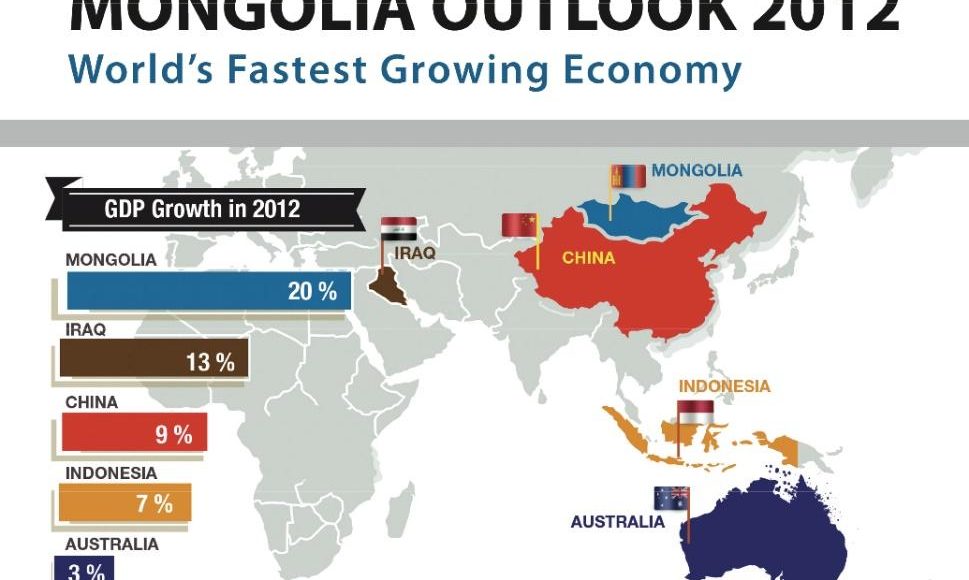
1997: Begin a two-year assignment as head of communications for the UN/UNDP Mongolia mission (1997-1999). Called “one of the biggest peacetime economic collapses ever”, I was thrown into the deep end as part of the UN’s efforts to rescue Mongolia from this severe crisis. I established the award-winning UN/UNDP Mongolia Communications Office (a high-profile and lively hub staffed by media professionals) and quickly developed and launched the award-winning UN Mongolia Development Portal (www.un-mongolia.mn) (called a “role model” for the United Nations). I developed and launched the mission’s first newsletter, Blue Sky Bulletin(distributed by post, online and by email to subscribers), as well as the first Mongolian Human Development Report, the Mongolian AIDS Bulletin(after attending the Fourth International Congress on AIDS in Asia and the Pacificin 1997, and meeting and being inspired by UNAIDS head Dr. Peter Piot, the Bulletin was used to kick-start Mongolia’s response to an unfolding STDs/HIV/AIDS crisis), the UN’s and Mongolia’s first online magazine, Ger, while also overseeing the country’s largest bilingual online and offline publishing operation. In Starting from Scratch: The Challenge of Transition, I document the challenge to re-start Mongolia’s data and statistics collection after it was wiped off the mainframe computers that once stored it during the Communist period (a cautionary tale for our times if there ever was one!). InFreedom of Expression: Introducing Investigative Journalism to Local Media in Mongolia, I give an account of a workshop for Mongolian journalists keen to learn more about the discipline of investigative journalism and how important it is in a democracy. In Partnership for Progress: UNDP in Mongolia, I painted a picture of Mongolia’s country conditions in 1997, what was at stake, and how the UN was responding. Stabilized, by 2012 Mongolia was being called the fastest growing economy in the world, and was contributing troops to UN peacekeeping missions.
Whilst working for a UK-based international development consultancy, I prepared papers for the American Foundation for AIDS Research (AMFAR), the Global Fund to Fight AIDS, Tuberculosis and Malaria, the Harvard Institute for International Development (HIID), for various UN agencies including UNCTAD and UNAIDS, and coordinated the preparation of the report and launch strategy for the World Bank’s Task Force on Higher Education and Society (2000).
2001/2003: Project Manager in charge of Web Strategy for the GOSH Child Health Portal at Great Ormond Street Hospital for Children NHS Trust/Institute of Child Health.
2001: Begin work on the development of the award-winning GOSH Child Health Portal for the National Health Service (NHS). As part of the NHS’ Modernisation Plan, it was called a “role model” for the NHS and one of the “three most admired websites in the UK public and voluntary sectors,” and was developed and launched under heavy public and media scrutiny. Each stage of the Portal’s development would coincide with a high-profile media launch. For example, the Hospital’s 150th birthday celebrations included Her Majesty Queen Elizabeth II and pop star Madonna.
“The GOSH/ICH web site to date has been a notable success. Not only has it met a majority of its objectives … and achieved recognition as ‘exemplary’ among NHS resources, but it has also generated a number of spin-off projects, including Children First (as a successor to GOSHKids) and The Virtual Children’s Hospital. …
“In a context in which less than 25% of all projects realise even 50% of their benefits, the satisfaction of 75% of the original objectives .. must rank as a significant achievement.” Consultant’s evaluation of the GOSH Child Health Portal in 2003.
2003/2004: Live and work in Jerusalem, Israel. Travel extensively around the country during the hudna.
2007/2017: Consultant and Editor and Writer for the United Nations Office for South-South Cooperation (UNOSSC) (formerly the Special Unit for South-South Cooperation). Both an e-newsletter (Development Challenges, South-South Solutions) and a magazine (Southern Innovator) are produced chronicling the impact of mobile and information technologies on the global South, and the rise of a 21st-century innovator culture as a result. Both media substantially raise the profile of the global South, Southern Solutions, and the 21st-century global innovation culture, while also being cited as an influential resource in the UN’s adoption of an innovation and South-South Cooperation agenda for its programming and priorities.
The thinking behind this work can be found in two sources:
1) Innovation: Applying Knowledge in Development by The UN Millennium Project, “commissioned by United Nations Secretary-General Kofi Annan to develop a practical plan of action to meet the Millennium Development Goals. As an independent advisory body directed by Professor Jeffrey D. Sachs, the UN Millennium Project submitted its recommendations to the UN Secretary General in January 2005. The core of the UN Millennium Project’s work has been carried out by 10 thematic Task Forces comprising more than 250 experts from around the world, including scientists, development practitioners, parliamentarians, policymakers, and representatives from civil society, UN agencies, the World Bank, the IMF, and the private sector” (Innovation: Applying Knowledge in Development, UN Millennium Development Library, Taylor & Francis, 17 June 2013).
2) Two editors for the e-newsletter and magazine, Cosmas Gitta and Audette Bruce, authored a paper jointly with Professor Calestous Juma (a well-known scholar and leading figure in the study of innovation at the Belfer Center) in 2005 for the Harvard Kennedy School’s Belfer Center for Science and International Affairs titled, Forging New Technology Alliances: The Role of South-South Cooperation.
2007: David South Consulting begins work on the e-newsletter Development Challenges, South-South Solutions for the then-Special Unit for South-South Cooperation (SSC) at the United Nations. The e-newsletter is distributed by email to an influential global subscriber audience working in international development and the United Nations, as well as distributed online via various platforms.
2008: Reader response experiment begins with crowd-powered news website NowPublic. Initial proposal for the development of book or magazine on innovation. Awarded grant for Cuba study tour by BSHF.
2009: Adjust e-newsletter content based on reader responses. Begin posting content on Twitter platform.
2010: Begin development of the new global magazine Southern Innovator with the then-Special Unit for South-South Cooperation (SSC) at the United Nations and a design team in Iceland led by Solveig Rolfsdottir, one of Iceland’s top graphic designers and illustrators.
The magazine was produced to the UN’s design standards, as well as abiding by the UN’s Global Compact. With production in Iceland, the magazine could be designed and laid out using 100 per cent renewable energy sources.
Launch David South Consulting as Senior Partner working with talented global professionals.
It is called “a terrific tour de force of what is interesting, cutting edge and relevant in the global mobile/ICT space…”. Launch www.southerninnovator.org website (now www.southerninnovator.com) and social media including Twitter account @SouthSouth1.
To avoid censorship and interference, Southern Innovator‘s editorial operations were based in London, UK and its design studio was based in Reykjavik, Iceland (a high-ranking country in the World Press Freedom rankings and a former top place holder in the UNDP Human Development Index). Using a women-led design studio, it developed a design vision that could communicate across borders using clear graphic design and high-quality images. For example, when it launched in 2011, infographics were rare in development publications and at the UN; now they are commonplace. It also tried to be as ‘green’ as possible. The studio was powered on 100 per cent renewable energy (in particular, geothermal energy); the hard copy of the magazine is printed on paper from sustainable forests.
2012: Launch second and third issues of Southern Innovator Magazine at the GSSD Expo in Vienna, Austria.
Called a “Beautiful, inspiring magazine from UNDP on South-South innovation.”
With 201 Development Challenges, South-South Solutions stories posted on the NowPublic platform, a total of 336,289 views by 2012 had occurred, according to the NowPublic counter (Closed in December 2013, the stories published on NowPublic were able to reach a large, global audience, receiving 201,109 views as of 27 June 2010, and reaching 420,151 views by 31 July 2013. The stories were cited in many other media resources and also in books. This includes Export Now: Five Keys to Entering New Markets by Frank Lavin and Peter Cohan (2011) and The Canadian).
2013: Launch fourth issue of Southern Innovator Magazine at the GSSD Expo in Nairobi, Kenya.
Called “fantastic, great content and a beautiful design!” and “Always inspiring.”.
2014: Launch fifth issue of Southern Innovator Magazine at the GSSD Expo in Washington, D.C. U.S.A. The Twitter account @SouthSouth1 called “ one of the best sources out there for news and info on #solutions to #SouthSouth challenges.” Final issues of e-newsletter Development Challenges, South-South Solutions published.
The two publications proved influential on a number of fronts, being early to draw attention to the following: the rising use of mobile phones and information technology in development, the world becoming an urban place, innovative food solutions including the nascent insect food sector (now a big thing), altering perspectives on what is possible in Africa, the use of data science to innovate development, and tracking the growing number of technology hubs and the fast-growing start-up culture in the global South. The publications were cited for shaping the new strategic direction adopted by the United Nations Development Programme (UNDP) (the UN’s leading development organisation) and its first youth strategy, and the development of the Sustainable Development Goals (SDGs). As the world’s first global innovator magazine, Southern Innovator’s design had to be appropriate for a diverse audience. It has drawn praise for being both “beautiful” and “inspiring”, while its use of sharp, modern graphic design and infographics inspired others in the UN to up their game when it comes to design.
Senior Partner David South outside the White House in 2014.
2015: Develop scale-up plan for Southern Innovator Magazine. The UNOSSC was promoted from being a Special Unit to an Office. It also had its budget increased.
South-South cooperation and innovation have now become the key methodology for the UN’s delivery of its programmes and projects. In 2015, China pledged US $2 billion to “support South-South cooperation” and called for the international community to “deepen South-South and tripartite cooperation”. In development parlance, they have been “Mainstreaming South-South and Triangular Cooperation” in their plans.
The current policy vogue for innovation in developing and developed countries can trace its roots back to some of the early work done by these two publications (and which was further amplified by the annual Global South-South Development Expo (GSSD Expo), which often would feature innovators from the two publications, spreading the innovation message around the world). Both publications had set out to inspire and “champion a global 21st century innovator culture”. And they have done this, as can be seen from concrete evidence and anecdotal responses from individuals and organizations alike.
Agribusiness strategy and rural development: A case study of Ihunga Sub County, Ntungamo District by Denis, Simpson Singahache, 2018
Financing Renewable Energy in Developing Countries: Analysis of Business Models and Best Practices, Resources Future Publication, Pakistan Office, July 2018
“A political anthropologist, she uses complex-systems tools to analyze three different databases: Mongolians’ changing ideas on democracy and capitalism, the emergence of early states all over the world, and 19-20th century Cozumel.”
The Santa Fe Institute “is the world’s leading research center for complex systems science.”
Upon my return from a United Nations workshop in Dhaka, Bangladesh, I was delighted to receive a copy of the new book Busted: An Illustrated History of Drug Prohibition in Canada (Fernwood Publishing, 2017, ISBN 978-1-55266-976-1) by Professor Susan Boyd from the Faculty of Human and Social Development at the University of Victoria in British Columbia, Canada.
Busted: An Illustrated History of Drug Prohibition in Canada by Susan Boyd (Fernwood Publishing).
It is a beautifully illustrated book and an excellent introduction to Canada’s unique history surrounding drug use and drug prohibition. As the country embarks on a new phase in its relationship to some drugs, the book gives the bigger picture that many Canadians are probably unaware of. Canada had a period of extensive social experimentation in the late 1960s and early 1970s, defying perceptions the country is ‘boring’ and where excitement doesn’t happen.
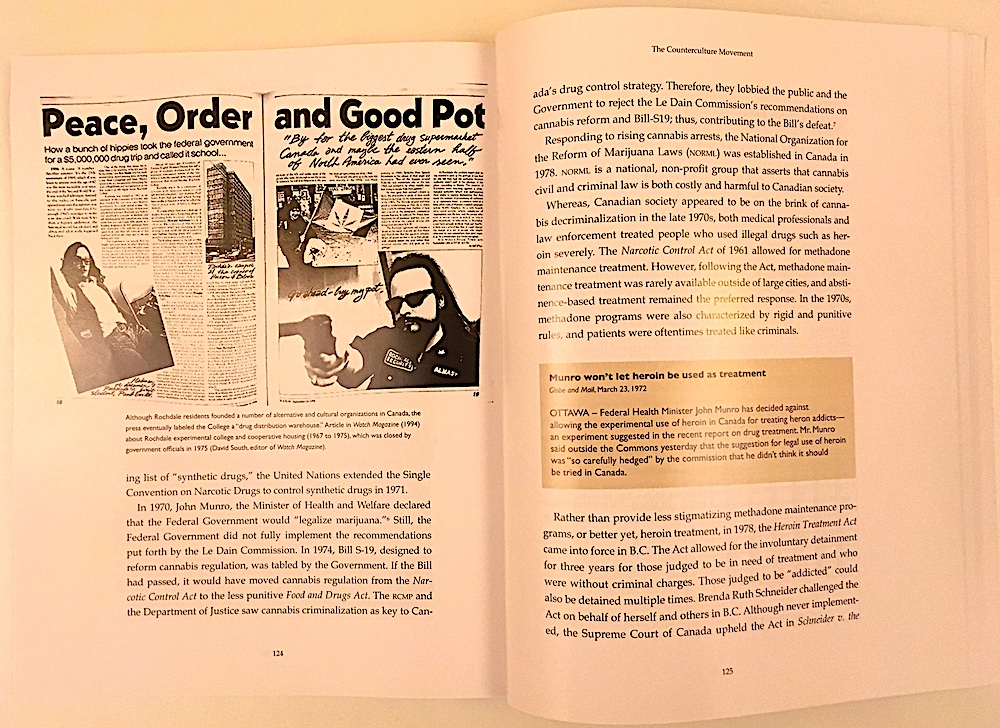
A feature we did for Toronto’s Watch Magazine in 1994 (in which I was Editor-in-Chief) is on page 124 in the chapter on The Counterculture Movement: The 1960s and 1970s.





















 David South Consulting
You must be logged in to post a comment.