Categories
Archive Development Challenges, South-South Solutions Newsletters Southern Innovator magazine

Brazilian Design For New Urban, Middle-Class World

By David SouthDevelopment Challenges, South-South Solutions

SOUTH-SOUTH CASE STUDY

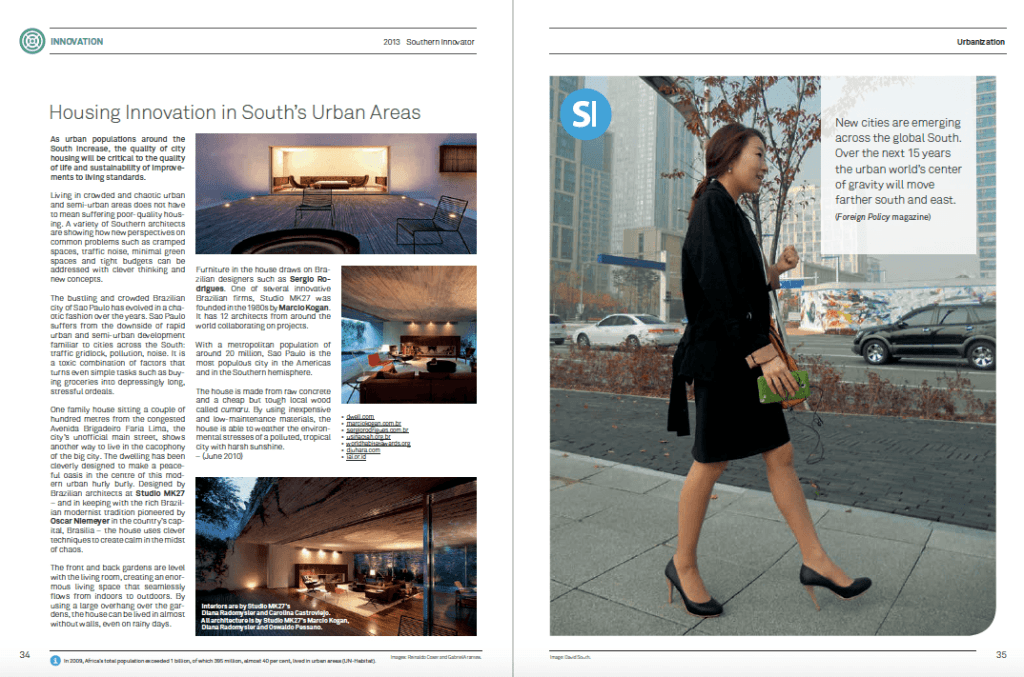
Countries across the global South are experiencing rapid urbanization as people move to cities for better economic opportunities — and this massive social change is creating new business opportunities. Those who recognize how fundamentally people’s lifestyles are changing will be those who will benefit from this big shift in populations.

Finding ways to live well in urban areas will be critical to determining whether this move repeats past urban failures — from the favelas of Brazil to the slums of India — or introduces a new way of living that is exciting and colorful. Design and designers will be critical to this change.

One young design company in Brazil, Sao Paulo-based furniture studio NUUN  (nuun.nu), is attempting to resolve a dilemma common across the rapidly urbanizing global South: How to create a design aesthetic that fits with the new way of living and being?

The company consists of designer and founder João Eulálio Kaarah and architects Renato Périgo and Carolina Sverner.

Périgo specializes in furniture and interior design, while Carolina Sverner worked with respected Japanese architect, Shigeru Ban (shigerubanarchitects.com), who is well known for designing buildings and houses made from paper and for creating easy-to-build homes for people after a disaster has struck (http://www.ted.com/talks/shigeru_ban_emergency_shelters_made_from_paper).

A collaboration among upcoming artists, designers and architects, NUUN tries to infuse its designs with a sense of “brazilianness”. Brazilianness is a modern aesthetic, made for modern lifestyles in the new urban landscape, that draws on aspects of Brazil’s culture and environment.

The young studio’s first collection of furniture offers simplicity. Called Eos, it tries to blend urban cosmopolitanism with raw nature. Brazil is known for its jam-packed urban cities as well as its vast expanse of Amazon rainforest. In practice, NUUN’s look is a mix of contrasts redolent of what used to be called brutalism: concrete mixed with glass, steel, wood and semi-precious gems. NUUN takes inspiration from NASA’s Earth Observation System (EOS): the collection vibes off of space satellites, antennae and the dry soil of the backwoods. NUUN says that “despite its Martian features, [the collection] is as Brazilian as it comes”. There is the modular Panorama sofa (http://nuun.nu/products/panorama) in five colors, capable of being re-shaped to fit a variety of living arrangements. A glass-topped coffee table with a concrete base and a side table with a carbon steel metallic structure to complement the sofa.

Elsewhere in the world of Brazilian design, footwear brand Grendene S.A. (http://ri.grendene.com.br/EN/Company/Profile) has become one of the world’s largest producers of footwear and made one of its founders a billionaire. And Grendene has boosted its international success by turning to another Brazilian success: supermodel Gisele Bündchen (giselebündchen.com.br).

Grendene began in 1971 and owns various successful shoe brands, including Melissa (melissa.com.br/en/), Grendha, Ilhabela, Zaxy, Cartago, Ipanema, Pega Forte, Grendene Kids and Grendene Baby.

It has six industrial zones with 13 footwear factories and can produce 240 million pairs of shoes a year. It undertakes all areas of production— from making its own moulds for the shoes to creating PVC (polyvinyl chloride) (http://en.wikipedia.org/wiki/Polyvinyl_chloride) – and handles its own distribution.

While Grendene is already a well-known shoe brand in Brazil, it wanted to expand its presence overseas to increase profits. Named after the two brothers who founded the company, Alexandre Grendene Bartelle and Pedro Grendene Bartelle, Grendene started working with supermodel Gisele Bündchen in 2002 to help her launch her own line of affordable flip-flops, iPanema (ipanemaflipflops.co.uk). The brightly colored sandals with elaborate patterns became an instant success.

But do celebrity endorsements really work? In the case of Bündchen and Grendene, the answer is yes. According to Forbes, 25 million pairs of the flip-flops and sandals are sold every year, accounting for 60 per cent of Grendene’s annual exports of about US $250 million.

Brazil was able to produce 864 million pairs of shoes in 2012, up 5.5 per cent from 2011.

Of these, 113 million pairs were exported to the United States, Argentina and France.

Brazil, like many other countries, has had to work out how it could compete with cheaper shoe imports from China. The strategy it chose was to target the growing number of middle-class people both in Brazil and elsewhere, as well as the high end of the market.

In 1979, Grendene created the Melissa brand, which has now become a coveted style leader. It collaborates with top design names such as Karl Lagerfeld and architect Zaha Hadid.

Making a partnership with Bündchen is part of the company’s strategy to reach higher-income buyers.

And it is working: Grendene increased its export revenue by 50 per cent in 2013.

Co-founder Alexandre Grendene Bartelle became a billionaire according to Forbes World’s Billionaires list and is worth US $1.4 billion. He owns 41 per cent of Grendene S.A. and close to 40 per cent of the Dell Anno brand.

This is a critical lesson for manufacturers in the global South. Grendene had achieved strong market dominance at home, and was already benefiting from growing wealth among Brazil’s middle classes. But it was the overseas market that had the potential to clinch even more profits for the company.

Bündchen’s high brand profile has enabled the company to compete head-to-head with the well-known Brazilian flip-flop brand, Havaianas (havaianas-store.com).

Another modern design leader owned by Grendene, Dell Anno (lojasdellanno.com.br), is a maker of modernist cabinets and furniture.

Dell Anno only use wood from renewable forest sources, to protect and preserve the Amazon and other native forests. Dell Anno tries to recycle as much as possible: up to 80 per cent of the water used in manufacturing is recycled, and byproducts from the production process such as a sawdust, wood, plastic and cardboard are also reused.

Dell Anno makes a full range of furniture for kitchens, bedrooms, closets, home theatres, home offices, service areas, restrooms and commercial environments. Dell Anno uses research and development to study trends and advise customers on the best options. The brand offers its staff training to help standardize customer service, and also has an excellent blog covering developments in modern design around the world (http://www.lojasdellanno.com.br/blog/).

Published: May 2014

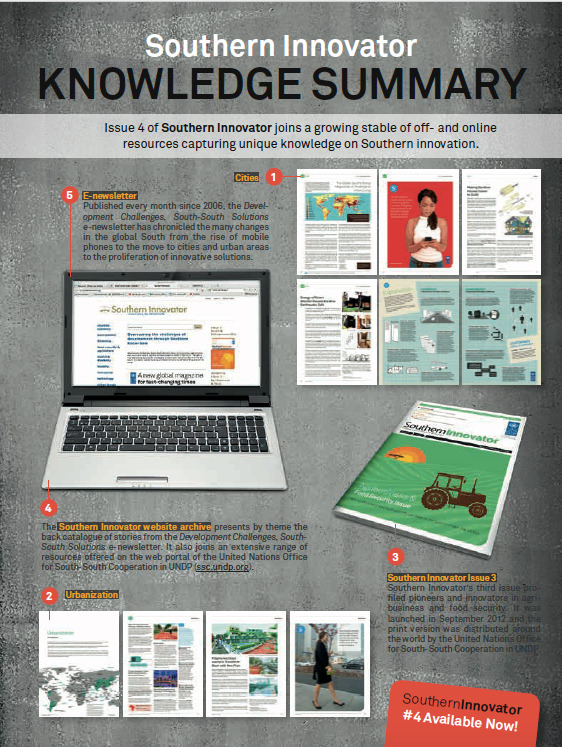
Development Challenges, South-South Solutions was launched as an e-newsletter in 2006 by UNDP’s South-South Cooperation Unit (now the United Nations Office for South-South Cooperation) based in New York, USA. It led on profiling the rise of the global South as an economic powerhouse and was one of the first regular publications to champion the global South’s innovators, entrepreneurs, and pioneers. It tracked the key trends that are now so profoundly reshaping how development is seen and done. This includes the rapid take-up of mobile phones and information technology in the global South (as profiled in the first issue of magazine Southern Innovator), the move to becoming a majority urban world, a growing global innovator culture, and the plethora of solutions being developed in the global South to tackle its problems and improve living conditions and boost human development. The success of the e-newsletter led to the launch of the magazine Southern Innovator.  

Follow @SouthSouth1

Google Books: https://books.google.co.uk/books?id=NhQ9BQAAQBAJ&dq=development+challenges+may+2014&source=gbs_navlinks_s

Slideshare: http://www.slideshare.net/DavidSouth1/may-2014-development-challenges

Southern Innovator Issue 1: https://books.google.co.uk/books?id=Q1O54YSE2BgC&dq=southern+innovator&source=gbs_navlinks_s

Southern Innovator Issue 2: https://books.google.co.uk/books?id=Ty0N969dcssC&dq=southern+innovator&source=gbs_navlinks_s

Southern Innovator Issue 3: https://books.google.co.uk/books?id=AQNt4YmhZagC&dq=southern+innovator&source=gbs_navlinks_s

Southern Innovator Issue 4: https://books.google.co.uk/books?id=9T_n2tA7l4EC&dq=southern+innovator&source=gbs_navlinks_s

Southern Innovator Issue 5: https://books.google.co.uk/books?id=6ILdAgAAQBAJ&dq=southern+innovator&source=gbs_navlinks_s

Creative Commons License
This work is licensed under a
Creative Commons Attribution-Noncommercial-No Derivative Works 3.0 License.

ORCID iD: https://orcid.org/0000-0001-5311-1052.

© David South Consulting 2023

Categories
Archive Development Challenges, South-South Solutions Newsletters

Old Boats Become New Furniture In Senegal

By David SouthDevelopment Challenges, South-South Solutions

SOUTH-SOUTH CASE STUDY

Every country has its fair share of waste and the remnants of past economic activity. Old cars nobody wants, discarded tins of food, old plastic bags, spare copper wire, cast-off clothing – all can have a new life in the right hands.

An intriguing twist on recycling is happening in the West African nation of Senegal. The country has a strong fishing tradition, and plenty of boats are used to haul in the catch every day. These boats are elaborately decorated and dazzle the eye when lined up on the beach awaiting the next journey to sea. But what to do with the boats when they have completed their service?

One ingenious social enterprise is turning the weatherbeaten but colorful boats into highly prized pieces of furniture that sell in the boutiques of Europe. The enterprise Artlantique (slogan “Made in Africa”) (http://artlantique.com) gathered together local craft folk, both masters and young apprentices, to tackle the challenge of re-shaping old fishing boats into furniture.

Artlantique’s founder, Spanish designer Ramon Llonch, then sends the furniture back to his shop in Barcelona, Spain where it is in turn distributed to shops around the world. Llonch ploughs Artlantique’s profits back in to expanding the business and hopes to hire more skilled craft folk in Senegal.

The idea is to create a “contemporary, modern design, which is above all 100 per cent African, as much in the material as in the making.”

Each unique piece of furniture is a riot of color, with planks of wood harvested from the boats creating an original and eye-pleasing pattern. The furniture has the weathered look expected of wood battered by years of exposure to salty sea water, and is streaked and branded with colorful patterns from its previous life as a fishing boat. The furniture items include cabinets, tables, benches, work tables, chairs, picture frames, coffee tables and even a fusball game table for lovers of soccer (football).

The catalogue that accompanies the website shows the families of the fisher folk, their boats, the workshop where the furniture is made, and the finished product. As the catalogue says, the boats “are stylish and elegant, their sides covered by many layers of paint, faded, and affected by rust from the salt and sea air, giving the wood a rich texture of different tones. Attracted by their beauty, and their history, we wondered whether after all the sea faring they had undergone, the wood would still be in good enough condition to begin a new life, to be ‘reincarnated’ into furniture.”

Negotiations are made with the fisher folk to acquire boats when they look like they have reached the end of their work life. The purchased boat is taken to a beach-side workshop and the craft folk discuss what to do with it. Young apprentices work alongside skilled craft folk, gaining the skills to make a high-quality wooden product capable of being exported.

The craft folk draw on their years of experience to add value to the final product. “Their contribution is essential as they suggest which type of furniture would be the most suitable to make,” Artlantique’s website explains. “They discuss their past and that of their forefathers: their cultural heritage, how to take full advantage of the wood, according to the size of the boat, and its color combinations.”

The furniture made from the boat wood has a high value because each piece is unique and can not be replicated. The raw “Samba” wood comes from an African tropical tree (http://en.wikipedia.org/wiki/Triplochiton_scleroxylon) and remains untreated by chemicals. It is seasoned naturally by the sea from its years of service as a fishing boat.

“This wood … has certain limitations, not only because it has a shape but also because it’s very damaged by the salt, the sea, the sun and the lime. But these artisans are very talented,” Llonch told CNN.

“Their creativity is not academic, they are like this by nature because [for them] recycling and reusing is not a fashion, it’s not a trend.”

Artlantique-branded furniture is now on sale in boutiques in Barcelona, Spain, Paris, France and Rome, Italy.

In Brazil, artist Sérgio Dido (http://www.artinsurf.com/art-dido.php), who lives in the dynamic beach resort town of Buzios (http://www.lonelyplanet.com/brazil/the-southeast/buzios), also salvages wood from fishing boats to create art with a surfing theme. The work is featured in the Art in Surf shop (http://www.artinsurf.com/index.php).

Published: July 2014

https://davidsouthconsulting.org/2022/11/21/africa/

https://davidsouthconsulting.org/2022/11/19/african-culture-as-big-business/

https://davidsouthconsulting.org/2022/08/02/design-collaborations-revitalize-traditional-craft-techniques/

https://davidsouthconsulting.org/2022/10/09/fashion-closes-gap-between-catwalk-and-crafts/

https://davidsouthconsulting.org/2022/11/17/fashion-recycling-how-southern-designers-are-re-using-and-making-money/

https://davidsouthconsulting.org/2022/11/16/favela-fashion-brings-women-work/

https://davidsouthconsulting.org/2022/10/20/ghanaian-coffins-prove-design-and-craftsmanship-boost-incomes/

https://davidsouthconsulting.org/2022/10/20/online-education-could-boost-african-development/

https://davidsouthconsulting.org/2022/11/22/popular-characters-re-invent-traditional-carving/

https://davidsouthconsulting.org/2021/03/05/southern-innovator-issue-2/

https://davidsouthconsulting.org/2021/03/05/southern-innovator-issue-5/

Development Challenges, South-South Solutions was launched as an e-newsletter in 2006 by UNDP’s South-South Cooperation Unit (now the United Nations Office for South-South Cooperation) based in New York, USA. It led on profiling the rise of the global South as an economic powerhouse and was one of the first regular publications to champion the global South’s innovators, entrepreneurs, and pioneers. It tracked the key trends that are now so profoundly reshaping how development is seen and done. This includes the rapid take-up of mobile phones and information technology in the global South (as profiled in the first issue of magazine Southern Innovator), the move to becoming a majority urban world, a growing global innovator culture, and the plethora of solutions being developed in the global South to tackle its problems and improve living conditions and boost human development. The success of the e-newsletter led to the launch of the magazine Southern Innovator.  

Follow @SouthSouth1

Google Books: https://books.google.co.uk/books?id=qBU9BQAAQBAJ&dq=development+challenges+july+2014&source=gbs_navlinks_s

Slideshare: http://www.slideshare.net/DavidSouth1/development-challenges-july-2014-published

Southern Innovator Issue 1: https://books.google.co.uk/books?id=Q1O54YSE2BgC&dq=southern+innovator&source=gbs_navlinks_s

Southern Innovator Issue 2: https://books.google.co.uk/books?id=Ty0N969dcssC&dq=southern+innovator&source=gbs_navlinks_s

Southern Innovator Issue 3: https://books.google.co.uk/books?id=AQNt4YmhZagC&dq=southern+innovator&source=gbs_navlinks_s

Southern Innovator Issue 4: https://books.google.co.uk/books?id=9T_n2tA7l4EC&dq=southern+innovator&source=gbs_navlinks_s

Southern Innovator Issue 5: https://books.google.co.uk/books?id=6ILdAgAAQBAJ&dq=southern+innovator&source=gbs_navlinks_s
Creative Commons License
This work is licensed under a
Creative Commons Attribution-Noncommercial-No Derivative Works 3.0 License.

ORCID iD: https://orcid.org/0000-0001-5311-1052.

© David South Consulting 2023

Categories
Archive Development Challenges, South-South Solutions Newsletters Southern Innovator magazine

Indian Business Model Makes Green Energy Affordable

By David SouthDevelopment Challenges, South-South Solutions

SOUTH-SOUTH CASE STUDY

The technology already exists to provide renewable energy and electricity to all the world’s poor. The trick is finding a way to pay for it and to make it sustainable. Many innovators are experimenting with business models to reach the so-called Bottom of the Pyramid (BOP) cohort, and the 1.2 billion poorest people in the world who do not have access to electricity (World Bank) (http://tinyurl.com/n9p3f5x). A further 2.8 billion have to rely on wood or other biomass materials to cook and heat their homes.

The International Energy Agency (iea.org) believes US $48 trillion of investment will be needed between now and 2035 to make sure energy capacity matches rapid population growth.

In the influential book The Fortune at the Bottom of the Pyramid (http://www.amazon.co.uk/Fortune-Bottom-Pyramid-Eradicating-Poverty/dp/8177587765), the late professor C.K. Prahalad (http://en.wikipedia.org/wiki/C._K._Prahalad) advocated seeing the poor as people with needs and assets: consumers who just need the right goods and services designed for them. It was a change from thinking only of the world’s wealthier populations as consumers, and revealed a market worth billions waiting to be tapped.

Energy is key to development and improvements to living standards. Yet energy poverty plagues much of the global South, especially in Africa and particularly in rural areas.

The World Bank has identified 20 countries in developing Asia and sub-Saharan Africa which will require a massive effort to expand access to electricity and safe cooking methods for poor households.

Around 80 per cent of the people without modern energy live in rural areas. While progress has been made since 1990 in expanding access to energy, it has failed to keep pace with population growth. According to the World Bank, the pace of expansion will have to double to meet the 100 percent access target set for 2030.

To avoid increasing global carbon emissions while achieving this goal, many are looking to renewable energy sources and technologies to reach these last groups of people.

As pointed out by the Institute of Development Studies (http://www.ids.ac.uk/news/can-renewable-electricity-reduce-poverty), “The global threat posed by climate change means that we also face the pressing need to use less carbon in existing energy systems. Making progress on both energy poverty and decarbonization requires a sharp increase in renewable electricity production, both on and off-grid.”

The institute identified four necessary factors for access to renewable energy to benefit poor people.

1.         Once electricity is generated, it needs to be reliably fed into the system.
2.         This additional supply must be made accessible, and affordable, for poor people.
3.         Increased electricity consumption then needs to translate into poverty reduction.
4.         Increased electricity supply can indirectly reduce poverty by boosting economic growth.

India’s Simpa Networks (simpanetworks.com), started in 2011, has a business model it believes will do the trick. Simpa has developed a clever way to increase access to home solar power systems for the poor, by allowing customers to purchase the system in gradual “rental” payments over time. The customers eventually come to own the power system outright, and from then on to generate electricity for free. Since the payments are small and incremental, it suddenly becomes within the realm of poor households to afford modern solar energy systems.

This is called the “Progressive Purchase Pricing Model” – similar to “prepaid”, “pay as you go” and “installment plan” models. Under this model, customers make a 10 percent down payment and receive the home solar system. The customer then buys a time-specific amount of energy for between US $1 and US $10 with their mobile phone. The orange lock box on the power system has a keypad on the front. When a code is punched in, it releases electricity (http://simpanetworks.com/our-solution/).

In increments, while the customer purchases energy for home use they also eat away at the cost of the system, until eventually it is paid off, usually at a total of US $300. Systems have an expected life span of 10 years.

With few cash resources, poor households usually are not capable of saving enough cash to purchase a full energy system for their home. Instead, they rely on buying kerosene for lamps or using battery-powered torches and lamps when they can afford it.

In 2012, Simpa teamed up with SELCO India (http://www.selco-india.com/) – a social enterprise providing sustainable energy solutions and services to households – to sell 1,000 home solar power systems, expanding to 5,000 systems in 2013, according to a case study from not-for-profit Synergie pour l’Echange et la Valorisation des Entrepreneurs d’Avenir (SEVEA) (sevea-asso.org). The goal is to reach 25,000 units sold by the end of 2014, proving this business model can scale. Ultimately, Simpa wishes to mega-scale its approach and reach 1 million households over the next five years.

Simpa believes take-up will be quick because this model reduces risk, both for the seller and for the bank that may loan the cash for the 10 per cent down payment. Simpa acts as a go-between for the system sellers such as SELCO and the banks. Simpa believe this business model reduces the risk of non-payment or loan default and has the right incentives in place to encourage the customer to hang in and keep making payments until they own the system outright. Customers enjoy the benefits of clean energy 24/7 from day one and can see clearly the connection between the energy they receive and the small payments they make. For those who default from paying, the system is taken from their home.

When the system was piloted in Karnataka, India, all loans were successfully repaid.

Simpa Networks is a venture capital-backed technology company. It hopes its approach will attract investors, particularly social investors, seeking a low-risk investment in helping expand energy access.

Published: June 2014

Development Challenges, South-South Solutions was launched as an e-newsletter in 2006 by UNDP’s South-South Cooperation Unit (now the United Nations Office for South-South Cooperation) based in New York, USA. It led on profiling the rise of the global South as an economic powerhouse and was one of the first regular publications to champion the global South’s innovators, entrepreneurs, and pioneers. It tracked the key trends that are now so profoundly reshaping how development is seen and done. This includes the rapid take-up of mobile phones and information technology in the global South (as profiled in the first issue of magazine Southern Innovator), the move to becoming a majority urban world, a growing global innovator culture, and the plethora of solutions being developed in the global South to tackle its problems and improve living conditions and boost human development. The success of the e-newsletter led to the launch of the magazine Southern Innovator.  

Follow @SouthSouth1

Google Books: https://books.google.co.uk/books?id=XhU9BQAAQBAJ&dq=development+challenges+june+2014&source=gbs_navlinks_s

Slideshare: http://www.slideshare.net/DavidSouth1/development-challenges-june-2014-published?qid=be364432-b16e-4e07-a9a5-afee35205b96&v=default&b=&from_search=1

Southern Innovator Issue 1: https://books.google.co.uk/books?id=Q1O54YSE2BgC&dq=southern+innovator&source=gbs_navlinks_s

Southern Innovator Issue 2: https://books.google.co.uk/books?id=Ty0N969dcssC&dq=southern+innovator&source=gbs_navlinks_s

Southern Innovator Issue 3: https://books.google.co.uk/books?id=AQNt4YmhZagC&dq=southern+innovator&source=gbs_navlinks_s

Southern Innovator Issue 4: https://books.google.co.uk/books?id=9T_n2tA7l4EC&dq=southern+innovator&source=gbs_navlinks_s

Southern Innovator Issue 5: https://books.google.co.uk/books?id=6ILdAgAAQBAJ&dq=southern+innovator&source=gbs_navlinks_s

Creative Commons License
This work is licensed under a
Creative Commons Attribution-Noncommercial-No Derivative Works 3.0 License.

ORCID iD: https://orcid.org/0000-0001-5311-1052.

© David South Consulting 2023

Categories
Archive Blogroll Southern Innovator magazine

Infographics | 2005 – 2014

Visual Storytelling: Infographic Design in News published by Images Publishing.
The proof flats for inclusion in Visual Storytelling: Infographic Design in News.

News: 

 1) Shortlisted for Infographics Storytelling Book | 2014

https://davidsouthconsulting.org/2021/07/29/shortlisted-for-infographics-storytelling-book-2014/

2) Disrupted! Whatever happened to Southern Innovator Issue 6?

Human Development Infographics: Infographics have proven a useful visual aid for communicating human development concepts.

This example was created for a UNDP Mongolia report during missions undertaken in 2005.

Designed in Mongolia

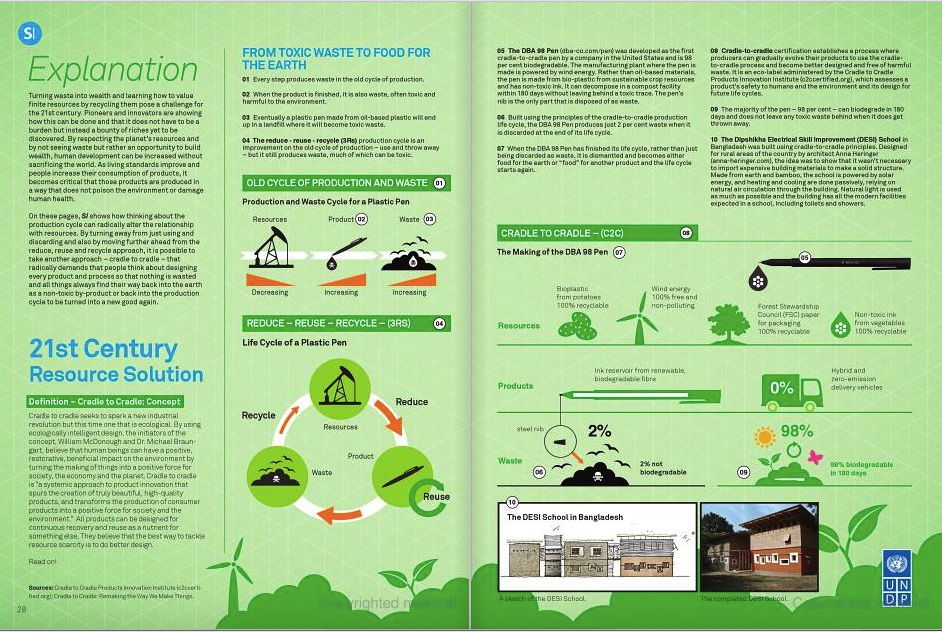
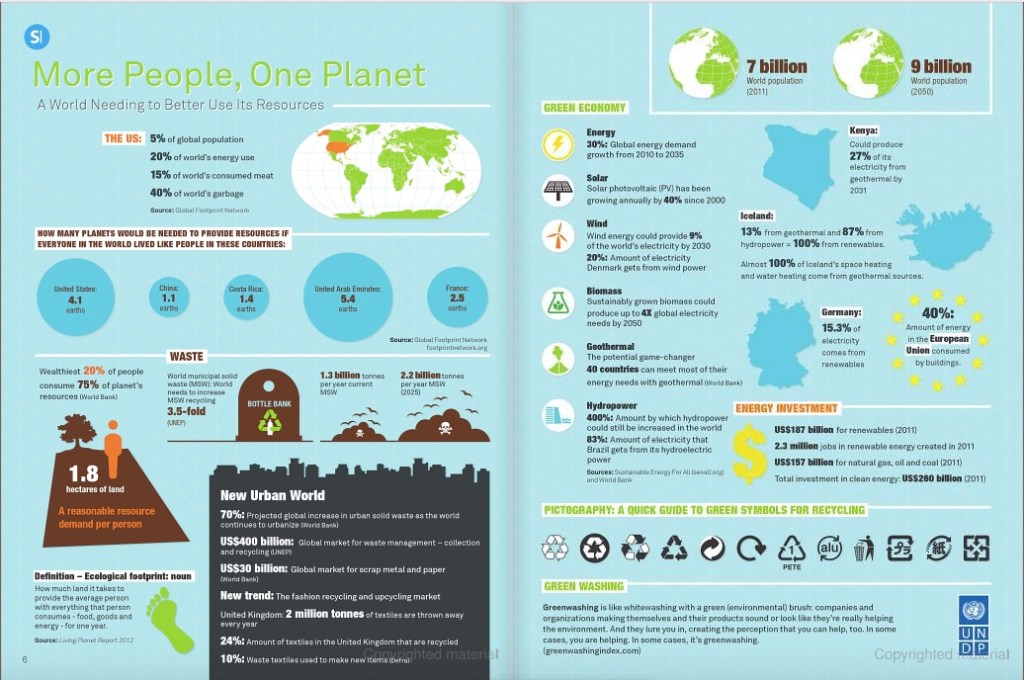
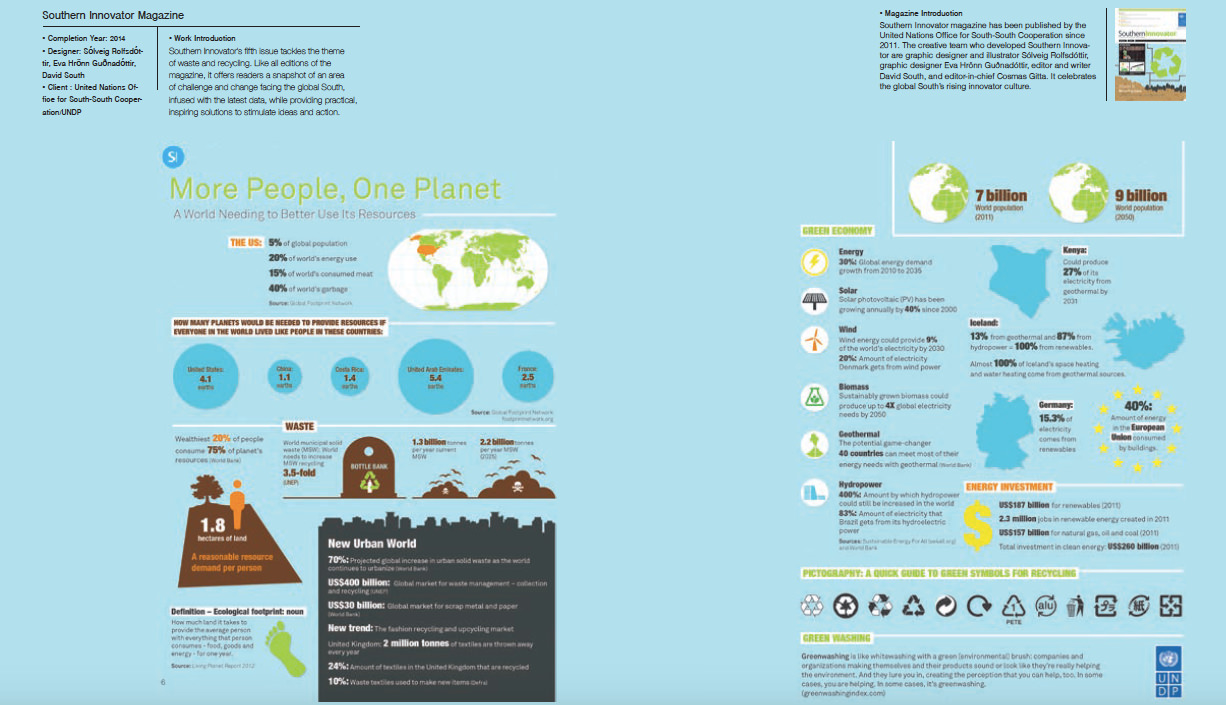
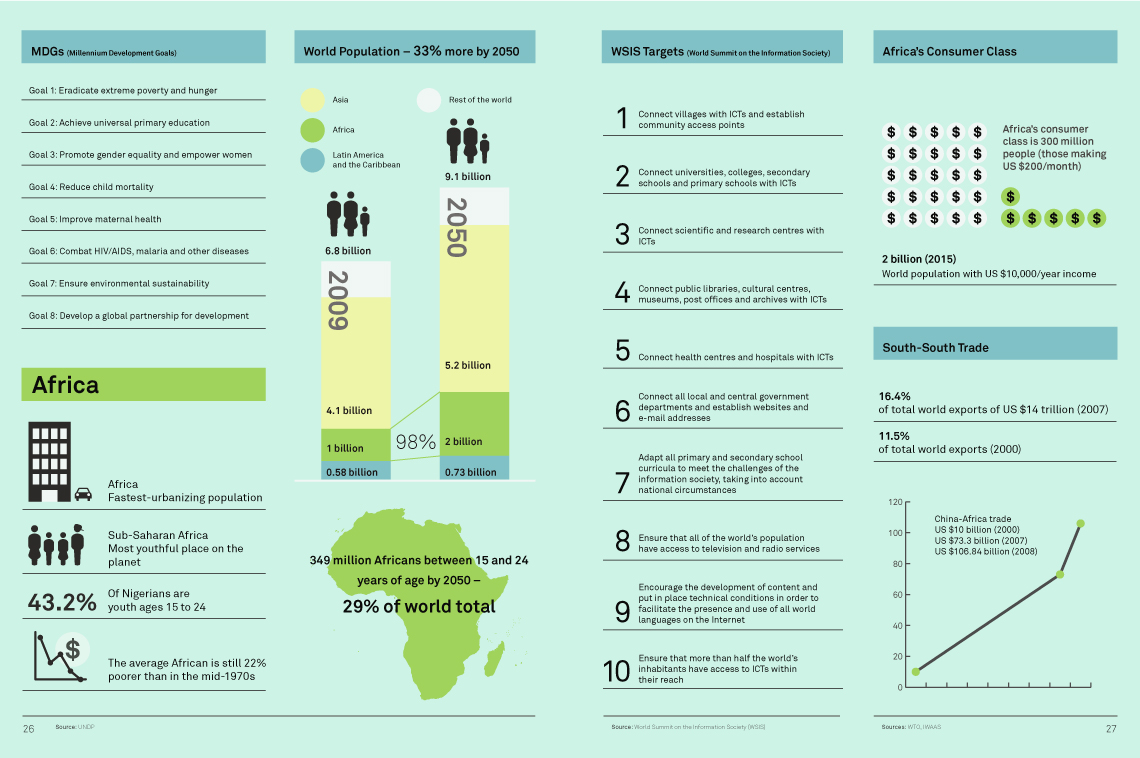
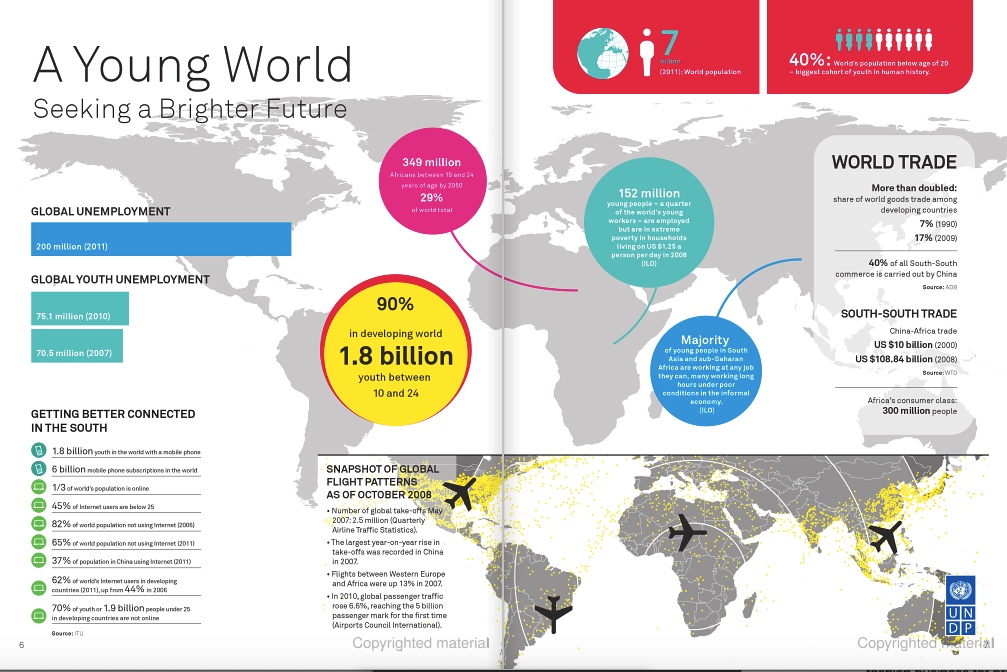
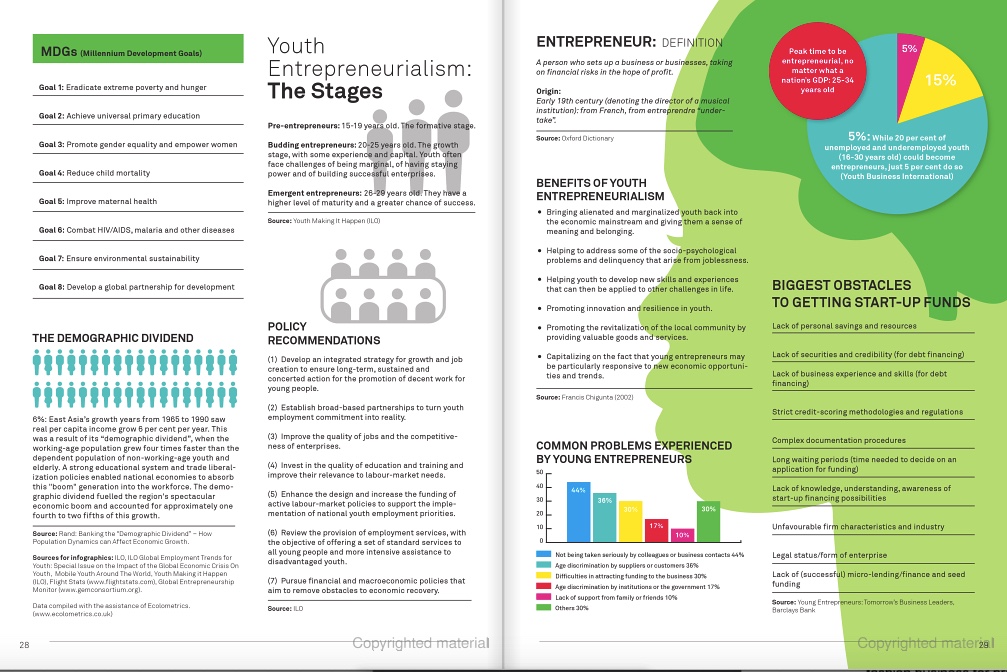
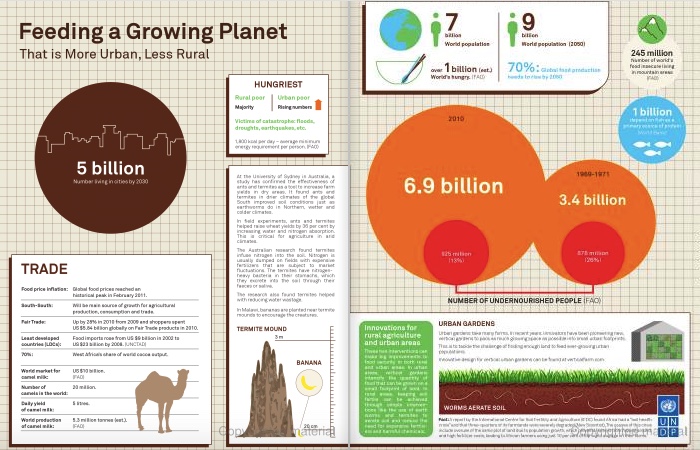
Examples from Southern Innovator magazine between 2011 and 2014 are below:

All infographics designed in Iceland.

Issue 1

Issue 2

Issue 3

Issue 4

Issue 5

Follow @SouthSouth1

Senior Partner David South.
Graphic Designer and Illustrator Solveig Rolfsdottir.

ORCID iD: https://orcid.org/0000-0001-5311-1052.

© David South Consulting 2017