Tag: 2013

  • More Futuristic African Cities in the Works

    More Futuristic African Cities in the Works

    By David SouthDevelopment Challenges, South-South Solutions

    SOUTH-SOUTH CASE STUDY

    It has been well documented that China is undergoing the largest migration in human history from rural areas to cities. But this urbanization trend is occurring across the global South, including in Africa, as well. According to the UN, more than half the world’s population already lives in cities, and 70 per cent will live in urban areas by 2050. Most of the world’s population growth is concentrated in urban areas in the global South.

    These emerging urban areas represent vast opportunities for innovators. Innovators will be needed to build them, and in turn they will provide modern facilities for innovators to operate in and engage with the global economy. And they will connect innovators to 21st-century information technology.

    But while the government in China engages in significant planning and preparation to facilitate movements to urban areas – often building entire cities from scratch (http://www.time.com/time/photogallery/0,29307,1975397,00.html) – that has not been the case in Africa. People in Africa are on the move because they are seeking out opportunities, but much of this movement has been poorly planned and not well thought out.

    But now more and more African governments are grappling with how to call time on chaotic and haphazard development and build sustainable, planned cities that will significantly improve human development and quality of life.

    Across Africa, a host of ambitious new cities and urban developments are in the works.

    Kenya’s Konza Technology City (konzacity.co.ke) is planned as a new centre 60 kilometres from the capital, Nairobi. Calling itself a “world-class technology hub and a major economic driver for the nation”, it offers a high-tech vision full of ultra-modern buildings and houses in order to spur the future growth of Kenya’s technology industry.

    It is hoped Konza will create 100,000 jobs by 2030. There will be a central business district, a university campus for 1,500 students, a residential community, and parks and wildlife in green corridors.

    The groundbreaking ceremony occurred on January 2013 but the Kenyan Ministry of Lands and Housing has halted operations to allow for greater community engagement, according to Urban Africa. A dispute had erupted with the current landowners who wanted to be better consulted about the development and had accused the government of locking them out of the physical planning process.

    Tatu City, Kenya (tatucity.com) bills itself as “by Kenyans, for Kenyans”. It is being built by Rendeavour (rendeavour.com), the urban development division of Moscow-based Renaissance Group (rengroup.com), one of the largest urban developers of land in Africa. It joins Konza Technology City as a flagship project for the government’s Vision 2030, hoping to turn Kenya into a middle-income country and a role model for other countries in East Africa.

    Tatu City is 15 kilometres from Nairobi. It will take up 1,035 hectares and will be completed in 10 phases. Construction began in May 2012 and is scheduled to be completed by 2022.

    It is selling safety and a “beautiful urban environment” just a short journey away from Nairobi’s existing Central Business District. Tatu City wants to be “a model of the African city of the future” as a “dynamic mixed-use, mixed-income environment that will be home to an estimated 70,000 residents and 30,000 day visitors”.

    Just 25 minutes from Jomo Kenyatta International Airport, it promises to be one of “the most modern, well-planned urban developments in East Africa”.

    In Ghana, a number of innovative projects in development reflect the country’s impressive economic growth and information technology achievements in the past decade.

    Two cities are being designed by Rendeavour. One, Appolonia, is being built in the Greater Accra area while the second, King City, is being built on the west coast of the country where there is an oil and gas boom underway.

    Both will have houses, retail and commercial centres, schools, healthcare facilities and other social services.

    “Our objective is to provide the basic infrastructure, planning and necessary management framework in creating satellite cities that reverses the current trend of unplanned development and urban congestion in most of Africa’s growing cities,” Tim Beighton of Rendeavour told CNN.

    These projects are in an advanced stage, with all plans completed and approved by the government, according to their websites.

    Appolonia City of Light near Accra (appolonia.com.gh) – due to break ground in the third quarter of 2013 – capitalizes on Accra’s status as one of Africa’s fastest-growing urban areas. The Appolonia development will be a “planned, sustainable, mixed-use and mixed-income city” to build a “work-live-play” community for 88,000 people living in 22,000 homes.

    It will be built 30 kilometres northeast of Accra’s central business district and will have retail, commercial and industrial space combined with tourism, social and recreation facilities.

    King City in Takoradi (kingcity.com.gh) calls itself “Western Ghana’s new holistic city”. It will offer homes, shops, offices, industries and public places. The plan includes building 25,000 new homes and, importantly, over 30 per cent of the city will be allocated for green space. It will take up 1,000 hectares on the outskirts of Sekondi-Takoradi.

    Elsewhere in Accra, the Hope (Home Office People Environment) City (http://www.rlgghana.com/index.php/2013-02-07-11-25-04.html) is a much more ambitious concept. It is one of a cluster of projects in Africa focused on building the infrastructure for a 21st century, high-tech future. Costing US $10 billion, it will be built outside Accra and is focused on boosting Ghana’s already established reputation in the field of information and communications technology. It will be home to 25,000 people and create jobs for 50,000. There will be six towers including a 75-storey, 270 metre building that hopes to be the highest in Africa.

    It is being financed by RLG Communications, a mix of investors and a stock-buying scheme.

    There will be an assembly plant for high-tech products, business offices an information technology university, a hospital and restaurants, theaters and sports centres.

    The design is hyper-modern and tries to create a vertical office environment that is dense and reduces the amount of time it takes to get around and circulate between businesses in the complex.

    Eko Atlantic on Victoria Island in Lagos, Nigeria (ekoatlantic.com) is a coastal residential and business development that calls itself “The New Gateway to Africa”. To ease pressure in an already crowded city, it is being built on 10 square kilometres of reclaimed land from the Atlantic Ocean. It will be able to house 250,000 people and give work to 150,000.

    The story began in 2003 when the Lagos State government was looking for a solution to protect the Bar Beach area of the city from coastal erosion. Land is being reclaimed from the sea and it will make up an area the equivalent of Manhattan in New York City. Just like Manhattan, it is hoped Eko Atlantic will become the new financial centre for West Africa by the year 2020.

    Kilamba, or Nova Cidade de Kilamba (https://www.facebook.com/media/set/?set=a.231897596836631.80284.228497773843280), 30 kilometres outside Luanda, Angola is being built by the China International Trust and Investment Corporation (http://www.citic.com/wps/portal). It is on a vast scale and is designed to be home to 500,000 people with apartment blocks and commercial spaces. It has cost so far US $3.5 billion and is part of a government pledge to provide a million new homes within four years. Kilamba has come in for criticism for not being affordable enough for ordinary Angolans and for having much of the site unoccupied. With the apartments too expensive for ordinary Angolans, the government has decided to take action and ordered the prices to be reduced and made more affordable, according to Angola Press .

    La Cite du Fleuve in the Democratic Republic of Congo (lacitedufleuve.com) is  a more conventional luxury housing development built on two islands in the capital, Kinshasa. Kinshasa, despite its problems and the turmoil from an ongoing civil war, is one of the continent’s fastest-growing cities. Developed by Hawkwood Properties, La Cite du Fleuve will need to reclaim 375 hectares of sandbanks and swamps to be able to build a collection of riverside villas, offices and shopping centres. It is is planned to take 10 years to complete.

    And finally, Kigali, the capital of Rwanda, wants to transform itself into the “center of urban excellence in Africa”.

    The 2020 Kigali Conceptual Master Plan (http://www.kigalicity.gov.rw/spip.php?article494) hopes to create a regional hub for business, trade and tourism, by building a mix of commercial and shopping districts with glass skyscrapers and modern hotels, parks and entertainment facilities.

    Critics, however, believe these new cities and modern developments are tackling the problems of urban development by bypassing most of the population. They argue they are just developments for those with money who can buy their way out of the chaos and lack of planning of current African cities.

    “They are essentially designed for people with money,” Vanessa Watson, professor of city planning at the University of Cape Town, told CNN. She believes most of the plans are unsustainable “urban fantasies” detached from the reality of African poverty and informal living.

    But while it is easy to criticize these ambitious projects, they reflect not only optimism for the continent’s future but also a clear recognition the continent will not be able to get wealthier without modern cities and infrastructure in keeping with a 21st-century economy.

    Published: August 2013

    Resources

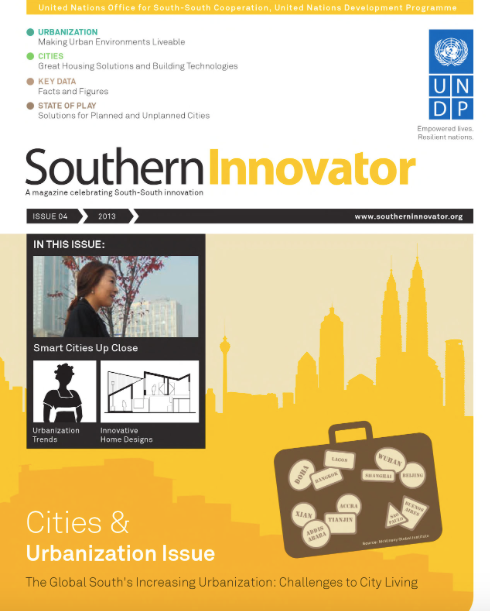
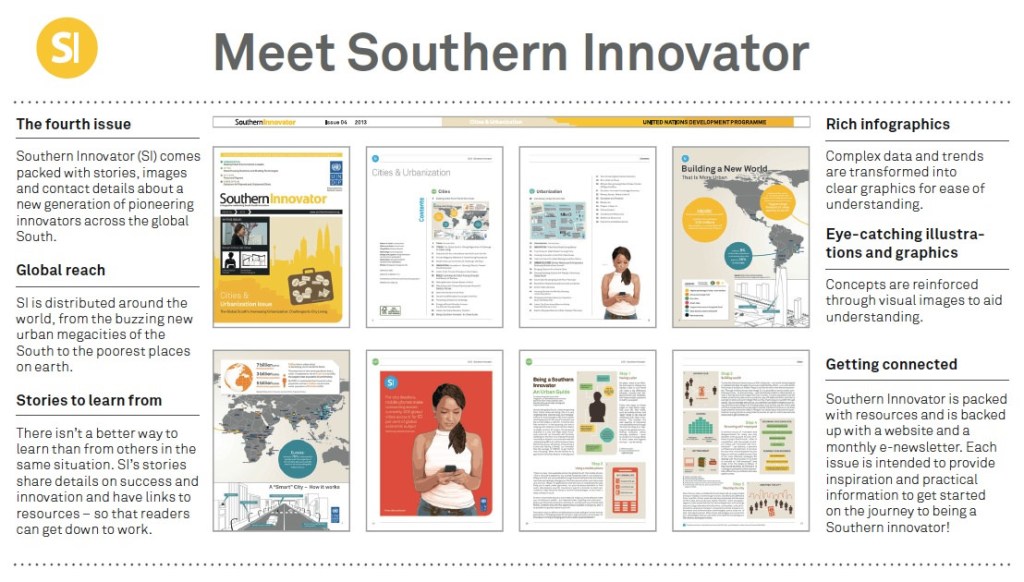
    1) Southern Innovator Issue 4: Cities and Urbanization: SI’s fourth issue goes to the many new cities under construction to build the new 21st century world emerging in the global South. Website: http://www.scribd.com/doc/133622315/Southern-Innovator-Magazine-Issue-4-Cities-and-Urbanization

    2) Urban Africa: Urban Africa is a digital entry point for knowledge sharing, interactive exchange and information dissemination on urbanization in Africa. Website: http://urbanafrica.net/

    3) Arrival City: A third of humanity is on the move. History’s largest migration is creating new urban spaces that are this century’s focal points of conflict and change — unseen districts of rapid transformation and febrile activity that will reshape our cities and reconfigure our economies. Website: http://arrivalcity.net/

    4) Global Urbanist: The Global Urbanist is an online magazine reviewing urban affairs and urban development issues in cities throughout the developed and developing world. Website: globalurbanist.com

    5) Africa Renewal: The Africa Renewal information programme, produced by the Africa Section of the United Nations Department of Public Information, provides up-to-date information and analysis of the major economic and development challenges facing Africa today. Website: http://www.un.org/africarenewal/

    Citations

    Cited in Beyond Gated Communities by Samer Bagaeen and Ola Uduku (2015).
    https://davidsouthconsulting.org/2022/02/09/african-megacity-makeovers-tackle-rising-populations/

    https://davidsouthconsulting.org/2022/10/19/chinese-building-solution-for-rapidly-urbanizing-global-south/

    https://davidsouthconsulting.org/2022/05/23/debt-free-homes-for-the-poor/

    https://davidsouthconsulting.org/2022/10/17/east-africa-to-get-its-first-dedicated-technology-city/

    https://davidsouthconsulting.org/2022/03/20/global-south-eco-cities-show-how-the-future-can-be/

    https://davidsouthconsulting.org/2021/11/12/global-souths-rising-megacities-challenge-idea-of-urban-living/

    https://davidsouthconsulting.org/2022/03/29/model-city-to-test-the-new-urbanism-concept-in-india/

    https://davidsouthconsulting.org/2017/11/08/smart-cities-up-close-2013/

    https://davidsouthconsulting.org/2022/09/26/3d-home-printing-landmark-10-houses-in-a-day/

    https://davidsouthconsulting.org/2022/11/17/tiny-homes-to-meet-global-housing-crisis/

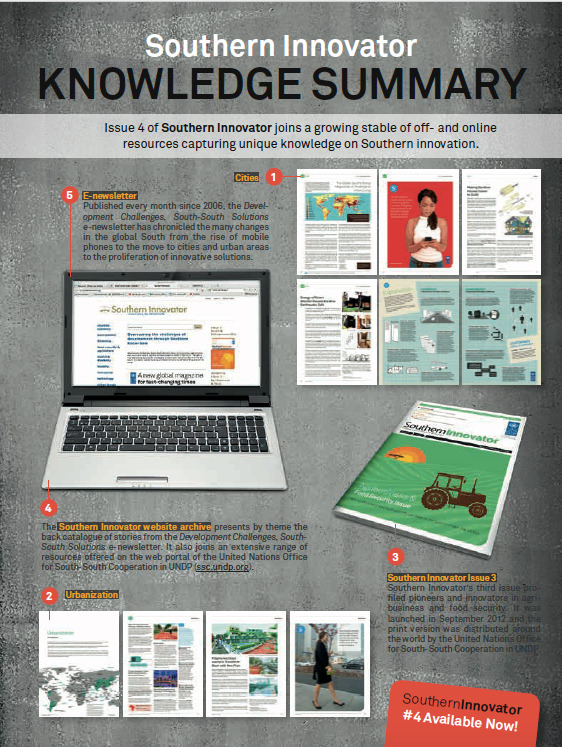
    Development Challenges, South-South Solutions was launched as an e-newsletter in 2006 by UNDP’s South-South Cooperation Unit (now the United Nations Office for South-South Cooperation) based in New York, USA. It led on profiling the rise of the global South as an economic powerhouse and was one of the first regular publications to champion the global South’s innovators, entrepreneurs, and pioneers. It tracked the key trends that are now so profoundly reshaping how development is seen and done. This includes the rapid take-up of mobile phones and information technology in the global South (as profiled in the first issue of magazine Southern Innovator), the move to becoming a majority urban world, a growing global innovator culture, and the plethora of solutions being developed in the global South to tackle its problems and improve living conditions and boost human development. The success of the e-newsletter led to the launch of the magazine Southern Innovator. 

    https://davidsouthconsulting.org/2021/03/05/southern-innovator-issue-4/

    Creative Commons License

    This work is licensed under a
    Creative Commons Attribution-Noncommercial-No Derivative Works 3.0 License.

    ORCID iD: https://orcid.org/0000-0001-5311-1052.

    © David South Consulting 2022

  • Burgeoning African E-commerce Industry Full of Opportunity

    Burgeoning African E-commerce Industry Full of Opportunity

    By David SouthDevelopment Challenges, South-South Solutions

    SOUTH-SOUTH CASE STUDY

    Africa has seen huge change since 2000 in the way people access information and do business electronically. The most championed accomplishment has been the widespread take-up of mobile phones. This has given birth to countless entrepreneurs and innovators who are using  phones to help people, do business and sell goods and services.

    Not as quick to spread, mostly because of high cost and poor infrastructure, is access to the Internet. While Web access is taken for granted in many wealthy countries and is increasingly commonplace in many developing nations, Africa as a whole still suffers from poor infrastructure for access to the Internet. But this is changing by the month as  more undersea cables connect countries and bandwidth is increased (http://www.submarinecablemap.com/).

    Africa’s population can be expected to at least double from 1.1 billion to about 2.3 billion by 2050 – and most will live in urban areas (Population Reference Bureau).

    And incomes are rising. Africa is richer than India on the basis of gross national income (GNI) per capita, and a dozen African countries have a higher GNI per capita than China (Africa Rising).

    According to the McKinsey Global Institute, “The incomes of these new consuming classes are rising even faster than the number of individuals in the consuming classes. This means that many products and services are hitting take-off points at which their consumption rises swiftly and steeply. By 2025 urban consumers are likely to inject around (US) $20 trillion a year in additional spending into the world economy.”

    Research firm Jana (jana.com) – which specializes in emerging markets – studied the consumer preferences of people in Nigeria, Kenya and South Africa. They surveyed 600 consumers in each country, seeking to unearth what their preferences were when it came to using e-commerce services (https://en.wikipedia.org/wiki/E-commerce). E-commerce is the buying and selling of products and services over electronic systems such as the Internet and other computer-enabled systems. This is still a young industry in Africa and one ripe with opportunity for hardworking and innovative players. Many are starting to realize they had better move fast because this is a market that still has much up for grabs and is not – yet – dominated by mature players such as eBay or Amazon.

    The survey uncovered five trends driving e-commerce in Africa. These trends address the unique conditions present in Africa and what challenges need to be met.

    The first trend the firm identified is cash on delivery. This has become the main way people do e-commerce in Africa because of the lack of trust in the security of online payments. Cash is still king in the region. The second trend is having a proprietary logistics network. This comes in response to the poor infrastructure present in much of Africa. This has meant e-commerce companies need to take charge of the whole process of getting a good to the customer’s home. This is, of course, costly and places a big restraint on any new company in the e-commerce market.

    The third big trend is one that reflects the reality of how people communicate electronically in Africa. Mobile phones are king, and this means e-commerce needs to be mobile phone-friendly or lose out on reaching many customers. The fourth trend is related to the fact Africa is still off the logistics route for much world trade. This means e-commerce companies need to set aside space for large warehouses to store the goods so that they are on hand when the customer wants them.

    And, finally, the fifth trend is the importance of good customer service as the clincher for success in the marketplace. Word of mouth gets around if a company is not able to deliver on what is promised so it is important to have high-quality customer service to build trust, keep engaged with consumers and let them know problems are being resolved.

    South Africa has emerged as the continent’s powerhouse when it comes to e-commerce, according to Jana. Successful players in that country include Zando (http://www.zando.co.za/) an online fashion store by Rocket Internet, MIH Internet Africa’s Kalahari online store (http://www.kalahari.com/) and entertainment and consumer electronics online store Takealot.com supported by Tiger Global. Research firm World Wide Worx (http://www.worldwideworx.com/) calculated that online retail in South Africa is growing by 30 per cent a year.

    But South Africa cannot rest on its laurels: the survey found Nigeria is fast overtaking South Africa as its large population takes to the Internet. Impressively, Nigeria’s Government has pledged to expand broadband Internet access to 80 per cent of the country over the next five years.

    In East Africa, Kenya’s Rocket Internet’s service Jumia (http://www.jumia.co.ke/) is now one of the top 100 online destinations in the country.

    Jana also found there were various key areas for improvement for the e-commerce industry in Africa. One, was the importance of explaining to African consumers the basics of online shopping. Many respondents to the survey seemed confused about making purchases on the Internet and through e-commerce. They also showed low levels of understanding about payment methods and available financial products. And finally, one of the big obstacles to expanding the industry is improving delivery reliability.

    But all these problems and challenges spell opportunity for innovators who can solve them and make some money too!

    Published: July 2013

    Resources
     
    1) E-commerce: The latest news from The Guardian newspaper. Website: http://www.guardian.co.uk/technology/efinance

    2) E-commerce Expo: From 2 to 3 October 2013 in London, UK, the eCommerce Expo is the industry event for the UK and, increasingly, Europe. It ranks as one of the largest gatherings of e-commerce professionals in Europe and boasts over 180 exhibiting companies plus a comprehensive conference programme. Website: http://www.ecommerceexpo.co.uk/page.cfm/newSection=Yes

    3) Mashable e-commerce: E-commerce (or electric commerce) refers to the buying and selling of goods and services via electronic channels, primarily the Internet. Online retail is decidedly convenient due to its 24-hour availability, global reach and generally efficient customer service. Website: http://mashable.com/category/e-commerce/

    4) Actinic: An online software system for setting up an online e-commerce website. Website: actinic.co.uk/

    Development Challenges, South-South Solutions was launched as an e-newsletter in 2006 by UNDP’s South-South Cooperation Unit (now the United Nations Office for South-South Cooperation) based in New York, USA. It led on profiling the rise of the global South as an economic powerhouse and was one of the first regular publications to champion the global South’s innovators, entrepreneurs, and pioneers. It tracked the key trends that are now so profoundly reshaping how development is seen and done. This includes the rapid take-up of mobile phones and information technology in the global South (as profiled in the first issue of magazine Southern Innovator), the move to becoming a majority urban world, a growing global innovator culture, and the plethora of solutions being developed in the global South to tackle its problems and improve living conditions and boost human development. The success of the e-newsletter led to the launch of the magazine Southern Innovator.  
    Creative Commons License

    This work is licensed under a
    Creative Commons Attribution-Noncommercial-No Derivative Works 3.0 License.

    ORCID iD: https://orcid.org/0000-0001-5311-1052.

    © David South Consulting 2023

  • Time-Tested Iranian Solutions to Cool and Refrigerate

    Time-Tested Iranian Solutions to Cool and Refrigerate

    By David SouthDevelopment Challenges, South-South Solutions

    SOUTH-SOUTH CASE STUDY

    Keeping food cool is critical for human health. No matter what the climate, a cool environment will prolong food preservation, stave off spoilage and lower the risk of food poisoning. This is crucial for the poor because it means they can reduce food waste and avoid illnesses caused by food poisoning. Diarrhea is a common problem when people do not have access to refrigeration for their food.

    Food security is also enhanced, as more can be stored and less thrown away as waste. Keeping food cool also means less need for preservation techniques, such as using salt, spices or smoke. Salt and smoke both can have adverse affects on human health. Salt increases sodium in the diet, which leads to high blood pressure, and smoke is a carcinogen which can lead to various forms of cancer.

    It is healthier to keep food in its natural state – and keep it cool.

    While the invention of the electric refrigerator was a major breakthrough, it requires a steady supply of electricity, which is expensive and difficult for many people.

    Various pre-electric refrigeration technologies have been developed over the centuries. Among them was a pioneering technology used in Persia (modern-day Iran) as far back as the 11th century (http://en.wikipedia.org/wiki/Avicenna). And now, it is being looked to once again today as a sustainable refrigeration solution that does not damage the environment.

    Iran’s solution involves creating a domed ice house made from earth bricks. Many ancient ice houses have been discovered on the edge of deserts, where ice was scarce and supplies remote. The solution was to create a dugout channel at the rear of a domed house and then flood the channel with water. When the temperature dropped at night in the desert, the water would freeze into ice.

    Rising early in the morning, the resident would break up the ice into blocks and store them inside the ice house. This was repeated night after night until there was enough ice in the house that it could last the summer months.

    The water was drawn from elaborate irrigation systems used for farming.

    The ice houses were cone and dome-shaped and included some with underground structures. To date, a project headed by Dr. Hemming Jorgensen has documented 129 centuries-old ice houses at the fringe areas of large deserts in Iran. Jorgensen, from the University of Copenhagen in Denmark, has documented the use of these structures on his “Ice Houses of Iran” website (http://www.hemmingjorgensen.com/).

    In 18th and 19th century England, ice houses were also common place in country estates to keep food cool in kitchens. Today, there are growing numbers of people around the world who are turning to technologies such as ice houses to find sustainable, non-electric, low-carbon alternatives to electric refrigeration.

    Another environmentally friendly cooling solution from Iran involves using wind catchers to circulate air during the hotter months. Called bagdir wind towers, or windcatchers (http://en.wikipedia.org/wiki/Windcatcher), they have been used in Yadz, Iran since the 19th century.

    Profiled in Green Building Magazine (http://www.greenbuildingpress.co.uk/product_details.php?category_id=10&item_id=235), the wind towers are made of stone, and channel wind down into a shaft to cool or heat the rooms below. It is an air circulation solution that does not take any energy – because it uses the wind – and is carbon neutral. In summer, the wind is drawn down into a stone chimney by low air pressure zones in the ventilation system. It is cooled, and then is circulated through the dwelling, rising as it warms up through the house. This is combined with a strategy of moving rooms depending on how hot or cool they are, adjusting clothing based on the temperature, or even placing water on the floor to cool the air.

    In Nigeria in West Africa, a cooler called the zeer (http://practicalaction.org/zeer-pots) has been developed. It works like this: two ceramic earthenware pots of different sizes are arranged one inside the other. The space between the pots is filled with wet sand and kept moist. The user then places drinks or vegetables inside and covers it with a damp cloth. As the water from the moist sand evaporates (http://en.wikipedia.org/wiki/Evaporation), the air inside the centre pot is cooled several degrees, enough to preserve some foods and drinks.

    Published: June 2013

    Resources

    1) ChotuKool fridge: The ChotuKool fridge is designed to stay cool for hours without electricity and to use half the power of conventional refrigerators. Priced at US $69, it is targeted at India’s poor. Website: (http://www.new.godrej.com/godrej/godrej/index.aspx?id=1)

    2) Ice house designs from the 18th and 19th century in the United Kingdom. Website: http://www.icehouses.co.uk/petworth.htm

    3) The High Desert Chronicles: “Sometimes you need to look back to move forward!”. Details use of contemporary ice houses in the desert for refrigeration. Website: http://www.highdesertchronicles.com/2012/10/ice-in-the-high-desert-without-electricity-or-refrigeration/

    4) History Magazine: The Impact of Refrigeration: The role played by refrigeration throughout human history. Website: http://www.history-magazine.com/refrig.html

    5) Methods of Alternative Refrigeration: Three solutions in detail. Website: http://www.provident-living-today.com/Alternative-Refrigeration.html

    Southern Innovator logo

    London Edit

    31 July 2013

    https://davidsouthconsulting.org/2022/10/05/cool-food-for-the-poor/

    https://davidsouthconsulting.org/2022/06/23/innovative-ways-to-collect-water-from-air/

    https://davidsouthconsulting.org/2022/10/24/iranian-savings-funds-to-tackle-loan-drought/

    https://davidsouthconsulting.org/2021/03/05/southern-innovator-issue-4/

    https://davidsouthconsulting.org/2021/03/05/southern-innovator-issue-5/

    https://davidsouthconsulting.org/2021/02/05/study-says-jetliner-air-quality-poses-health-risks-cupe-takes-on-airline-industry-with-findings-of-survey/

    https://davidsouthconsulting.org/2022/10/26/tackling-chinas-air-pollution-crisis-an-innovative-solution/

    Development Challenges, South-South Solutions was launched as an e-newsletter in 2006 by UNDP’s South-South Cooperation Unit (now the United Nations Office for South-South Cooperation) based in New York, USA. It led on profiling the rise of the global South as an economic powerhouse and was one of the first regular publications to champion the global South’s innovators, entrepreneurs, and pioneers. It tracked the key trends that are now so profoundly reshaping how development is seen and done. This includes the rapid take-up of mobile phones and information technology in the global South (as profiled in the first issue of magazine Southern Innovator), the move to becoming a majority urban world, a growing global innovator culture, and the plethora of solutions being developed in the global South to tackle its problems and improve living conditions and boost human development. The success of the e-newsletter led to the launch of the magazine Southern Innovator.  

    Creative Commons License

    This work is licensed under a
    Creative Commons Attribution-Noncommercial-No Derivative Works 3.0 License.

    ORCID iD: https://orcid.org/0000-0001-5311-1052.

    © David South Consulting 2023

  • African Infrastructure Dreams Back on Agenda

    African Infrastructure Dreams Back on Agenda

    By David SouthDevelopment Challenges, South-South Solutions

    SOUTH-SOUTH CASE STUDY

    Africa’s patchy infrastructure is not keeping pace with the continent’s economic growth.

    Satellite photos of Africa at night show a place where light is concentrated overwhelmingly in the South – primarily South Africa – and in the North, with a sprinkling of lights on the west and east coasts (http://geology.com/articles/satellite-photo-earth-at-night.shtml).

    This is just one visually arresting way to view the much larger problem of the continent lacking 21st-century infrastructure – from roads to airports to sewage and water services to harbors and rail connections. All are in desperate need of an upgrade.

    The World Bank says only one in four people has access to electricity in sub-Saharan Africa. According to the International Energy Agency (IEA), the region will require more than US $300 billion in investment to achieve universal electricity access by 2030.

    This lack of modern infrastructure is clashing with Africa’s impressive economic growth in recent years. The continent will be home to seven of the 10 fastest growing economies in the world by 2015, according to the IMF. Yet still too much of this is a reflection of a booming resource economy, which sounds impressive in numbers, but still leaves much of the continent’s population living in a day-to-day world of underdevelopment and poverty.

    Africa desperately needs further investment in infrastructure. The good news is that a mix of positive developments is coming together to breathe life into efforts to upgrade the continent.

    One is a new campaign to mobilize Africa’s wealthiest to stump up the necessary funds to conduct feasibility studies to lay the groundwork for a big boost to infrastructure spending in the coming years. Another is a flurry of new pledges from the United States to spend more in Africa to increase access to energy – a necessary precondition to improvements to living standards. China, too, is to continue to grow its already substantial investments in Africa.

    For innovators, better infrastructure across Africa will make it easier to export products, connect with markets and customers and gain access to new technologies and products available to others around the world.

    The Made in Africa Foundation (madeinafricafoundation.co.uk) hopes to turn to Africa’s wealthy global community to help with funding the feasibility studies required to unleash a new wave of infrastructure spending and building across the continent.

    Africa takes up 30 million square kilometers (UNEP), is home to approximately 15 per cent of the world’s population and has 60 per cent of the world’s potential agricultural land. Yet, just 34 per cent of Africa can be reached by road and only 30 per cent has access to electricity. One estimate has placed the cost of meeting Africa’s power and transport needs at US $28 trillion by 2050.

    That is a vast amount of money, and nobody will commit those sums unless they know that work has gone into planning for this infrastructure and that people are thinking long-term. This is where the Made in Africa Foundation wants to make a difference: it is hoping to get Africa’s wealthy to contribute US $400 million to fund feasibility studies which in turn will kick-off a US $68 billion first phase in investment into roads, railways, ports and energy.

    “In 2009, there was (US) $150bn (billion) available to spend, but no bankable infrastructure projects in Africa,” that these funds could be directed towards, said the Foundation’s George Brennan. “These figures should make us angry – the problem is not the availability of funding but the fact that projects are not in a condition to be funded.”

    Just as a global diaspora of Indians and Chinese have been instrumental in economic growth and development in India and China in the past two decades, so it is hoped the same formula can be applied to the equally substantial, successful and wealthy African diaspora.

    “African Americans spend (US) $1 trillion every year in their economy, but what do they spend on Africa? About 0.01 percent,” said Chris Cleverly, Director of the Made in Africa Foundation. “They have the wherewithal to make profound differences – personally, and by lobbying their pension funds, investment advisers and government to invest in Africa on the basis that it provides good returns.

    “It was China and India’s diasporas that developed them – it is the same with Africa’s now.”

    Ozwald Boateng (http://ozwaldboateng.co.uk), the dynamic Ghanaian-descended London tailor who built his reputation on a quirky and modern take on traditional British bespoke suits, took the lead along with the Ugandan Prince Hassan Kimbugwe (http://www.cdrex.com/prince-hassan-kimbugwe/1251509.html) and former British barrister Chris Cleverly.

    Boateng’s reputation and fame rose along side the buzzing British capital throughout the 2000s. But now he is reaching back to Africa to lead a campaign to substantially raise the level of investment in the continent’s creaking, antiquated or non-existent infrastructure.

    He is trying to rally Africa’s wealthiest business leaders to contribute to creating a 21st-century African infrastructure of roads, railways, ports and power supplies. Made in Africa is tackling the fact many big global investors are willing to invest in Africa but find it difficult to do so. Much has to be done before an investor can come along and start, for example, building a new road network or airport. Local governments need to do the initial site survey and environmental impact studies and develop a larger vision for where they would like their country to go and how its cities are to develop.

    The campaign got underway with a star-studded gala event earlier this year in Marrakech, Morocco, at the African Banker Awards (http://www.ic-events.net/awards/african_banker_awards_2013/). It also comes with a film, Our Future, Made in Africa, to help explain the campaign and the company.

    Some of the people who attended included Nigerian philanthropist Tony Elumelu, Angola’s richest woman Isabel dos Santos and Sudanese telecoms mogul Mo Ibrahim.

    “This is the start of fully understanding what Africa can do for itself,” said Boateng. “The Chinese managed to build a railway across China; the Japanese have the bullet train – we need to get past thinking about why it’s difficult to create the roads and railways that Africa needs and just get on with it.”

    The Foundation is being supported by the African Development Bank (http://www.afdb.org/en/), a long-time supporter of African infrastructure investment through loans and technical assistance.

    An additional boost to African development comes from a recent U.S. government pledge to spend US $7 billion over the next five years in Africa to improve access to energy. Energy is the needed fuel for any significant improvements to human development over the long-term.

    U.S. President Barack Obama announced “Power Africa” (http://www.whitehouse.gov/the-press-office/2013/06/30/fact-sheet-power-africa) while he was in Cape Town, South Africa on his recent African tour. At the heart of Power Africa is the pledge to double access to power in Africa. According to medical journal The Lancet, 3.5 million Africans die every year due to indoor air pollution – a figure larger than those who die every year from malaria and HIV/AIDS combined. The pollution results from the fumes caused by burning fuel for cooking, warmth and light.

    President Obama promised the funding to help governments in Ethiopia, Ghana, Kenya, Liberia, Nigeria and Tanzania. The funds will be used to boost access to electricity for 20 million households. Funds will also be used to help Angola and Mozambique modernize their energy export sectors.

    Power Africa will act as a go-between to encourage links and deals between American energy companies and African partners.

    On top of this, Power Africa is being supplemented by an additional US $10 billion in private sector contributions, including a commitment from the General Electric Company to bring 5,000 megawatts of affordable energy to Tanzania and Ghana.

    In total, the US estimates it will take US $300 billion in additional funds to bring full power to sub-Saharan Africa.

    For the past decade, the biggest change in Africa’s infrastructure story has come from the growing role played by China. China has become Africa’s largest single trading partner, with bilateral trade reaching US $166 billion in 2011 – a jump of 33 per cent from 2010. The total volume was valued at $198.5 billion in 2012 and is expected to surpass $380 billion by 2015.

    And much, much more has been promised to come: China’s President Xi Jinping (http://en.wikipedia.org/wiki/Xi_Jinping) renewed a pledge to offer US $20 billion in loans to Africa in March 2013 (Reuters). Much of this is going to electricity-generation projects.

    Published: July 2013

    Resources

    1) China in Africa: The Real Story is a blog tracking the relationship and digging up the real numbers on what is happening. Website: http://www.chinaafricarealstory.com/

    2) The China-Africa Development Fund (CADFund) will invest US $2.4 billion in African projects, according to its President Chi Jianxin. Website: http://www.cadfund.com/en/

    3) Map of Africa’s major infrastructure: The image shows how infrastructure in Africa is growing rapidly, but is still largely concentrated in coastal regions and those with large mineral deposits. This means that rural and isolated populations often do not have access to modern energy and the benefits that it can bring. Website: http://www.one.org/us/2011/05/10/map-of-africas-major-infrastructure/

    4) Dead Aid by Dambisa Moyo. In the past 50 years, more than US $1 trillion in development-related aid has been transferred from rich countries to Africa. Website: http://www.dambisamoyo.com/books-and-publications/book/dead-aid

    Find more in Southern Innovator Issue 4: Cities and Urbanization

    https://g.co/kgs/y2K5Hy

    Development Challenges, South-South Solutions was launched as an e-newsletter in 2006 by UNDP’s South-South Cooperation Unit (now the United Nations Office for South-South Cooperation) based in New York, USA. It led on profiling the rise of the global South as an economic powerhouse and was one of the first regular publications to champion the global South’s innovators, entrepreneurs, and pioneers. It tracked the key trends that are now so profoundly reshaping how development is seen and done. This includes the rapid take-up of mobile phones and information technology in the global South (as profiled in the first issue of magazine Southern Innovator), the move to becoming a majority urban world, a growing global innovator culture, and the plethora of solutions being developed in the global South to tackle its problems and improve living conditions and boost human development. The success of the e-newsletter led to the launch of the magazine Southern Innovator.  

    Creative Commons License

    This work is licensed under a
    Creative Commons Attribution-Noncommercial-No Derivative Works 3.0 License.

    ORCID iD: https://orcid.org/0000-0001-5311-1052.

    © David South Consulting 2023