Categories
Archive Development Challenges, South-South Solutions Newsletters

Made-in-Africa Fashion Brand Pioneers Aim for Global Success

By David SouthDevelopment Challenges, South-South Solutions

SOUTH-SOUTH CASE STUDY

African fashion brands have not always been the first place fashionistas turned to when shopping for new clothes or shoes in developed economies. While Africa has long been a source of inspiration in contemporary and traditional fashion, the continent has had a weak reputation for manufacturing and selling mass market global fashion brands.

There are initiatives, such as Origin Africa (http://originafrica.org/), an ongoing campaign working to improve African trade by increasing the trade of textiles and apparels, cut flowers, specialty foods, home décor, and fashion accessories. Origin Africa matches African designers and entrepreneurs with experienced industry leaders to “facilitate, coordinate and advance ‘trade, not aid’ efforts”.

While there are many places in Africa engaged in the global clothing manufacturing outsource industry – often paying very low wages – strong African fashion brands are often absent in most developed countries. Well, at least until now.

Two recent examples have joined the well-publicized success of Ethiopia’s soleRebels, maker of rubber-soled shoes (solerebelsfootwear.co). SoleRebels became an Internet success story, harnessing the power of web-based sales to reach customers around the world.

Now another Ethiopian shoe maker is also pushing its way into the global fashion scene. Ethiopian-made sneaker brand Sawa has just been picked up by the American retailer of preppy clothing J. Crew (jcrew.com). The successful catalogue and online clothing retailer has great clout when it comes to promoting a brand, and this should be a big boost to the reputation of African fashion labels.

Sawa’s headquarters is in Paris, France (the physical home of much of the world’s fashion scene) but all its shoes are sourced and made in Addis Ababa, Ethiopia’s capital, and the company’s website is run from there.

Sawa says the key to its success is to be a business first and foremost – not a charity.

“Sawa project does not have the so-called generosity of brands which use Africa just to glorify themselves,” said Wendesen Birhanu, on the company website.

“Sawa is a fashion brand which has taken the challenge to fabricate shoes in Africa. All the added value benefits the continent.”

The company’s shoe factory is modern and has the workers positioned at their desks making the shoes. The brand logo proudly states “Made in Africa” on all the brown cardboard shoe boxes in a bold, red roundel stamp.

Sawa also uses the slogan “vote with your feet” to show the connection between purchasing the shoes and supporting African business and manufacturing.

The footwear, currently available in the United Kingdom, France and through J. Crew in the United States, has a distinctive rubber sole with the African continent embossed on the bottom – a clever design tweak ensuring the wearers will leave an interesting footprint wherever they walk.

The styles available include Dr Bess, a vintage canvas and leather shoe in a low-cut silhouette. The Tsague is a vintage shoe with a mid cut like that used for basketball shoes.

The shoes have been put through their paces in an independent quality assurance lab and each shoe’s details are explained on the Sawa website (http://www.sawashoes.com/index.php?option=com_content&view=article&id=2&Itemid=8&lang=en).

They retail in Europe for between 75 euros and 115 euros a pair – a middle-market price – and come in eye-pleasing colours, from basic black to white to sand, dark blue, grey, brown, red and light blue.

Small and medium enterprises (SMEs) (http://en.wikipedia.org/wiki/Small_and_medium_enterprises) have been identified as an essential part of Africa’s future prosperity and key to its ability to reduce poverty and achieve development objectives like the Millennium Development Goals (MDGs) (www.un.org/millenniumgoals).

Obstacles to growth for SMEs include poor infrastructure, unreliable power supplies, unscaleable business models, low quality standards and poor quality branding and design.

Developing manufacturing in Africa is key to improving incomes and wealth. Creating unique, branded products for overseas markets makes it possible to earn foreign currency and be able to benefit from consumers in other countries. The math is simple: once you have saturated the local market for your product, the only way to boost sales and profits is to seek new customers elsewhere. By selling to people in a country with a higher national income, it is possible to charge more and in turn earn more money for each product. In time, this can lead to significant income rises and in turn, human development gains as the spare cash can be put to improving local living conditions, acquiring education or better health services and consuming better quality food.

Another important feature of selling to overseas customers is competition. Having to compete with the pick of the world’s top brands means a company must raise its game to stand a chance. The pressure forces the company to sharpen its product line, become more efficient, stick to strict quality control and embrace the latest thinking in design, marketing and information technologies.

In short, an African company that can weather a few years successfully selling to overseas customers is going to be a fierce competitor back home.

And, as has been forecast many times, the rise of Africa’s middle class consumers will be a big driver of economic growth in the next decade. If this middle-income consumer class buys lots of African-made consumer products, then the impact on job and wealth creation on the continent will be significant.

Another fashion initiative boosting brand Africa is a partnership between Italian fashion lifestyle clothing retailer Diesel (diesel.com) and the Edun ethical fashion label (edun.com), founded by Ali Hewson and her husband Bono, singer with rock band U2.

The collaboration offers a contemporary take on retro street wear from Africa’s past, while having all the garments made and sourced from Africa.

In March 2013, Diesel+EDUN launched a 25-piece denim collection drawing its inspiration from African creativity. The collection uses raw, untreated denim sourced and manufactured in Uganda. It mixes up Malian textile prints for linings, with outside embroidery drawing on traditional Zulu weaving patterns. It also includes a denim jacket inspired by street wear from 1970s South Africa.

Edun was originally set up to encourage greater trade with Africa as a way to address poverty and boost incomes. Begun in 2005, the brand has tried to overturn the perception that ethical and ecologically sound fashion can’t be fashionable and desirable too.

Edun has sought to be “a creative force in contemporary fashion”, according to its website. In 2007, it launched a line dedicated to making t-shirts entirely made in Africa called Edun Live. Edun Live t-shirts “are entirely ‘Grow to Sew’ African. From cotton to finished tee, all production takes place in Africa.”

Edun has the goal of producing 40 per cent of its fashion collection in Africa by 2013. It does this by “supporting manufacturers, infrastructure and community building initiatives”.

All of Edun’s cotton is harvested to CCIU cotton standards. The Conservation Cotton Initiative Uganda (CCIU) is a cotton-farming program that helps to build sustainable farming communities in Northern Uganda.

Edun is currently working in Kenya, Morocco, Madagascar, Uganda and Tunisia.

The Diesel+EDUN (http://www.diesel.com/diesel+edun/) collaboration had its start at the beginning of 2012. After trips to East and West Africa by Diesel founder Renzo Rosso and Edun founders Ali Hewson and Bono, the idea was hatched to work together to “further apparel trade and development in Africa”. The goal is “bringing business to the continent and highlighting to the fashion world the possibility for sustainable trade and creative opportunity in Africa.”

More than 5,000 farmers participated in the 2011/2012 CCIU program, and more than 8,000 have already enrolled in the 2012/2013 season, the website states.

Edun is also working with Mikono Knits (Mikonoknits.com) to promote traditional African knitting techniques.  Founded in 2005 by Froydis Dybahl Archer, Mikono makes and sells hand-crocheted sweaters and tank tops from its Nairobi, Kenya workshop. The plan is to use the success of Mikono Knits to expand the number of underprivileged women the firm can hire to work for the business. The business currently employs 10 women and uses locally sourced organic cotton and wool, supporting the local economy.

Beyond the actual clothing partnership and African-inspired fashion, there is a clever promotion campaign to raise awareness for the Diesel+EDUN line. Called Studio Africa (http://studioafrica.tumblr.com/), it is a marketing and perception-shaping initiative, “celebrating and promoting creativity in Africa”. It is doing this by promoting nine African artists to better communicate the African vibe of the collection and give the artists’ careers a boost. It is curated and edited by Okay Africa (http://www.okayafrica.com/), a cultural guide to “all the latest music/culture/politics coming from Africa and the Diaspora”.

Published: March 2013

Resources

1) Africa Fashion International: African Fashion International (AFI) is the leading Fashion authority on the African continent and is committed to the promotion and development of the best South African design talent. Website: http://afi.za.com/

2) Origin Africa: Origin Africa is an ongoing campaign and initiative dedicated to improving African trade. Comprised of producers, designers, small businesses, exporters, buyers and retailers, it is working to develop, guide and promote African trade in the following sectors: textiles/apparel, cut flowers, specialty foods, home décor, and fashion accessories. Website: http://originafrica.org/

3) SoleRebels:  Ethiopia’s soleRebels profiled in Southern Innovator Magazine Issue 2. Website: http://www.scribd.com/doc/106055335/Southern-Innovator-Magazine-Issue-2-Youth-and-Entrepreneurship

4) How we made it in Africa: A great website packed with inspirational people and stories on business success in Africa. Website: http://www.howwemadeitinafrica.com/

5) Nigerian shoe and garment maker Fut Conceptus has been taking raw Nigerian leather that was once just sent overseas for export, and instead is turning out high-quality shoes and bags made in Nigerian factories. Website: futconceptus.com

6) SME Toolkit South Africa: A website packed with resources and support for anyone starting a small business in Africa. Website: http://southafrica.smetoolkit.org/sa/en

7) African Guarantee Fund for Small and Medium-sized Enterprises: The AGF provides guarantees and technical assistance to financial institutions in Africa with the objective of generating enhanced growth in the SME sector and increasing employment opportunities in the economy, particularly for youth. Website: http://www.afdb.org/en/topics-and-sectors/initiatives-partnerships/african-guarantee-fund-for-small-and-medium-sized-enterprises/

8) Small and Medium Enterprise Support, East Africa: A blog promoting events and support for SMEs in East Africa. Website: http://smeseastafrica.blogspot.com/

9) Integrating Developing Countries’ SMEs into Global Value Chains: A paper from UNCTAD (2010). Website: http://www.unctad.org/en/docs/diaeed20095_en.pdf

Southern Innovator logo

London Edit

31 July 2013

https://davidsouthconsulting.org/2021/02/09/african-fashions-growing-global-marketplace-profile/

https://davidsouthconsulting.org/2021/01/05/afropolitan-african-fashion-scene-bursting-with-energy/

https://davidsouthconsulting.org/2021/01/25/creating-green-fashion-in-china/

https://davidsouthconsulting.org/2022/10/09/fashion-closes-gap-between-catwalk-and-crafts/

https://davidsouthconsulting.org/2022/11/17/fashion-recycling-how-southern-designers-are-re-using-and-making-money/

https://davidsouthconsulting.org/2022/11/16/favela-fashion-brings-women-work/

https://davidsouthconsulting.org/2020/04/30/local-fashions-pay-off-for-southern-designers/

https://davidsouthconsulting.org/2021/10/04/putting-quality-and-design-at-the-centre-of-chinese-fashion/

Development Challenges, South-South Solutions was launched as an e-newsletter in 2006 by UNDP’s South-South Cooperation Unit (now the United Nations Office for South-South Cooperation) based in New York, USA. It led on profiling the rise of the global South as an economic powerhouse and was one of the first regular publications to champion the global South’s innovators, entrepreneurs, and pioneers. It tracked the key trends that are now so profoundly reshaping how development is seen and done. This includes the rapid take-up of mobile phones and information technology in the global South (as profiled in the first issue of magazine Southern Innovator), the move to becoming a majority urban world, a growing global innovator culture, and the plethora of solutions being developed in the global South to tackle its problems and improve living conditions and boost human development. The success of the e-newsletter led to the launch of the magazine Southern Innovator. 
https://davidsouthconsulting.org/2021/03/05/southern-innovator-issue-2/

Creative Commons License

This work is licensed under a
Creative Commons Attribution-Noncommercial-No Derivative Works 3.0 License.

ORCID iD: https://orcid.org/0000-0001-5311-1052.

© David South Consulting 2023

Categories
Archive Development Challenges, South-South Solutions Newsletters

New Beer Helping to Protect Elephants

By David SouthDevelopment Challenges, South-South Solutions

SOUTH-SOUTH CASE STUDY

How to match the often conflicting goals of protecting animal habitats and supporting local economies? One clever solution may draw amusement but is actually a sharp marketing strategy to get attention for a product that is helping to preserve the elephants of Thailand’s Golden Triangle (http://en.wikipedia.org/wiki/Golden_Triangle_(Southeast_Asia).

A beer flavored with a special ingredient – coffee beans that have passed through elephants – is generating profits that are plowed back into improving health services for the animals. The coffee beans excreted by elephants are roasted and turned into a high-quality coffee by a company in Thailand; this coffee is then used by a Japanese company to make a special beer brand that is getting attention and winning rave reviews.

The elephant dung coffee beans used in the beer are called Black Ivory (http://www.blackivorycoffee.com) and come from Thailand’s Golden Triangle Asian Elephant Foundation (http://www.helpingelephants.org). According to The Drinks Business, the coffee beans retail for US $100 per 35 grams.

The beans are of the Thai Arabica variety and grow at an elevation of 1,500 metres. Elephants consume the coffee cherries and excrete the beans as part of their diet. Once the elephants have excreted the beans in their faeces they are harvested, processed, sun dried and roasted.

It takes 10,000 beans to make a kilogram of roasted coffee, according to the Black Ivory website. A total of 33 kilograms of coffee cherries are consumed by the elephants to make a kilogram of the Black Ivory coffee.

Elephants in Thailand are used for various activties, from heavy work to providing rides for tourists. The riders of the elephants – called mahouts (http://en.wikipedia.org/wiki/Mahout) – and their wives also benefit from the manufacturing and sale of the coffee. The income is used to pay for health costs, school fees, food and clothing.

Additionally, 8 per cent of the proceeds from the sale of the coffee beans pays for a veterinarian to provide care to the elephants. The money is also used to pay for their medicine and the setting up of a laboratory.

Elephants are much-revered in Thailand and feature in the country’s national iconography. They are listed as Protected Animals under Thailand’s Conservation Act 1992 (FAO). Many believe they should be classified as endangered. The last survey on the population was conducted in 1991 and elephant numbers were recorded as 1,900 (FAO).

The main threat to elephants comes from humans – in the form of poaching for the animals’ ivory tusks, their abuse in begging on the streets, and the destruction of forests where the elephants live.

The natural habitat and feeding grounds for the elephants have shrunk over the past decades. It is estimated the forest area in Thailand shrank from 80 per cent to 20 per cent between 1957 and 1992. Causes include major infrastructure projects, increasing farmland and the building of large resorts, all encroaching on the elephants’ territory. Limited space means elephants increasingly come into conflict with humans and this can lead to them being poisoned or killed.

But the success of the Japanese-brewed Kono Kuro beer is creating a new funding source for helping the elephants and doing some good.

The beer is brewed by Sankt Gallen brewery (http://www.sanktgallenbrewery.com) in Kanagawa, Japan using the Black Ivory coffee beans, imparting the beer with an earthy flavour. It may sound like a gimmick, but consumers have remarked on the beer’s distinctive taste, and sales do not lie: it has been a quick success, selling out within minutes of its launch in Japan.

The beer comes in dark bottles with a sandy coloured label elegantly illustrated with pictograms showing the process of turning the beans excreted by the elephants into beer. It is a humorous visual tale that makes the label stand out from other beer brands.

Brewer Sankt Gallen calls it a “chocolate stout” because of its rich, earthy flavour (it does not contain any chocolate, however).

Although bottles of the stout sold out after going on sale on the Sankt Gallen website, the brewery has said that it has plans to put the beer on tap at its new shop, which opened in Tokyo recently.

Published: June 2013

Resources

1) Coffee Alamid: Ethically produces the coffee harvested from the droppings of civet cats in the Philippines. Website: http://www.botecentral.net/

2) Save the Elephants: A campaign to stop the poaching of elephant ivory. Website: http://www.savetheelephants.org/

3) BBC Nature: Background on elephants. Website: http://www.bbc.co.uk/nature/life/African_elephant

4) WWF: Facts and background on elephants. Website: http://worldwildlife.org/species/elephant

Southern Innovator logo

London Edit

31 July 2013

Development Challenges, South-South Solutions was launched as an e-newsletter in 2006 by UNDP’s South-South Cooperation Unit (now the United Nations Office for South-South Cooperation) based in New York, USA. It led on profiling the rise of the global South as an economic powerhouse and was one of the first regular publications to champion the global South’s innovators, entrepreneurs, and pioneers. It tracked the key trends that are now so profoundly reshaping how development is seen and done. This includes the rapid take-up of mobile phones and information technology in the global South (as profiled in the first issue of magazine Southern Innovator), the move to becoming a majority urban world, a growing global innovator culture, and the plethora of solutions being developed in the global South to tackle its problems and improve living conditions and boost human development. The success of the e-newsletter led to the launch of the magazine Southern Innovator. 

Creative Commons License

This work is licensed under a
Creative Commons Attribution-Noncommercial-No Derivative Works 3.0 License.

ORCID iD: https://orcid.org/0000-0001-5311-1052.

© David South Consulting 2023
Categories
Archive Development Challenges, South-South Solutions Newsletters

A New African Beer Helps Smallholder Farmers

By David SouthDevelopment Challenges, South-South Solutions

SOUTH-SOUTH CASE STUDY

Africa’s growth in the past decade has held steady despite the trauma of the global economic crisis and the tumult of the “Arab Spring” in several countries of North Africa. African economies are growing because of a number of resilient trends. These include growing regional trade links, greater investment in infrastructure and the remarkable rise of China to become Africa’s number one trade partner, pushing the United States to second place (Technology + Policy). This has given birth to a growing consumer marketplace and consumer class – some 300 million people earning about US $200 a month (Africa Rising).

The continent as a whole now stands as the 10th largest economy in the world.

How will Africans spend this new money in their pockets (or more than likely, on their mobile phones)? They could go for the big, famous global brands that they see advertised in magazines or on television. Or they could also spend it on local products and services that seem just as enticing and life-improving. Creating local African products and services with strong brands will have an important knock-on effect of creating new wealth and jobs within Africa.

One new product being introduced to the West African country of Ghana’s thirsty beer drinkers is the Eagle beer brand. But this is not just any beer made from the traditional ingredients of water, hops, malted barley and yeast (http://en.wikipedia.org/wiki/Beer) – it is brewed from the root vegetable cassava.

A staple of many African diets, cassava (http://en.wikipedia.org/wiki/Cassava) is a starchy, tuberous root vegetable and a common crop across the continent.

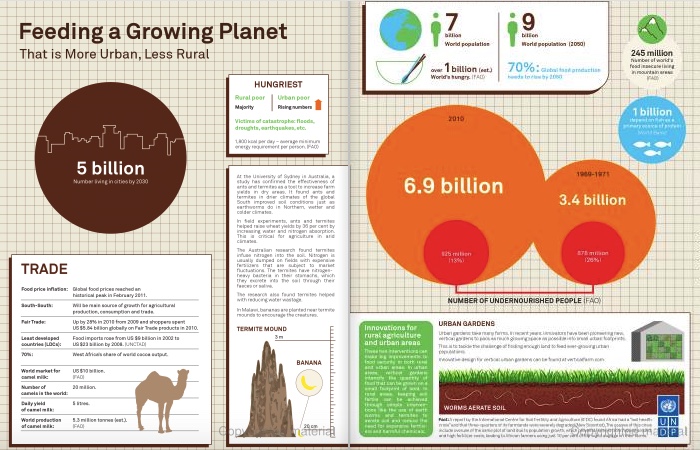
It is believed that 70 per cent of Ghana’s farms are just 3 hectares in size or smaller. They grow many things, but cassava is the most common crop.

Cassava soon spoils once it has been harvested and needs to be consumed quickly. Currently, too much of it goes to waste. In Ghana, according to The Guardian, there is an annual surplus of some 40 per cent of cassava produced.

The Accra Brewery Limited (ABL) (http://www.sabmiller.com/index.asp?pageid=1156) decided to find a way to put the cassava from smallholder farms to good use and stop the waste. The brewery had observed the success of parent company SABMiller (http://www.sabmiller.com/index.asp?pageid=27) elsewhere in Africa, in turning cassava and the grain sorghum from smallholder farmers into beer. Farmers had directly benefited from the purchase of their surplus product.

Eagle brand cassava beer is creating opportunities for business, consumers and smallholder farmers in Ghana. According to The Guardian, the company hopes to source cassava from 1,500 smallholders.

By having a guaranteed purchase from the brewery on a regular basis, farmers are able to move beyond subsistence agriculture and turn themselves into functioning businesses.

The spare income from selling the cassava also can be used to improve a farmer’s household access to healthcare and education.

The Accra Brewery provides advice on agricultural techniques and growing a diverse range of crops, to ensure farmers are not dependent on a monocrop harvest. It also offers advice on business and developing commercial relationships.

The Eagle brand cassava beer will be sold at a 30 per cent discount to low-income drinkers in order to lure them away from illicit and informal alcohol drinks of dubious quality.

Professor Ethan Kapstein of business school INSEAD found that ABL and its water business Voltic (GH) Ltd. was a creator and supporter of high-quality jobs in Ghana and supported 17,600 jobs throughout the Ghanaian economy.

Adjoba Kyiamah (http://www.sabmiller.com/index.asp?pageid=1766&blogid=172), corporate and legal affairs director at Accra Brewery, told The Guardian she believes Eagle brand beer will help create even more jobs, boost government revenues and expand consumer choice.

This is an innovative first, as cassava beer had never been made before in Ghana on a commercial scale. This had not been possible in the past because of the challenge of collecting fresh cassava from farms widely spread out over a large territory. As well as spoiling quickly, Cassava is heavy, being mostly made up of water, and is difficult to transport over large distances.

“Part of our strategy across Africa is to make high quality beer which is affordable for low-income consumers while simultaneously creating opportunities for smallholder farmers in our markets. The launch of Eagle in Ghana ticks both these boxes,” said Mark Bowman, Managing Director of SABMiller Africa.

“Eagle is aimed at attracting low-income consumers away from illicit alcohol. This is a virtuous circle: smallholder cassava farmers have a guaranteed market for their crop, which is then used to make consistently high quality, affordable beer for consumers; and the government realises increased revenues as people trade up into formal, taxable alcohol consumption.”

ABL is using a mobile processing unit developed by DADTCO (Dutch Agricultural Development and Trading Company) Cassava Processing Ghana Ltd. It is designed to process the cassava on site, preserving the integrity of the starch.

Eagle is sold in 375 millilitre bottles at a price 70 per cent lower than that charged for other lager beers. The use of local ingredients, and a reduced excise tax awarded to the brand because is it is boosting local agriculture, allows for the lower price.

Production of cassava beer got its start first in Mozambique, with the launch of the Impala brand (http://www.sabmiller.com/index.asp?pageid=149&newsid=1748), the first commercial-scale cassava-based clear beer, in October 2011.

Published: April 2013

Resources

1) Southern Innovator Magazine Issue 3: Agribusiness and Food Security. Packed with information, insights and business models to turn smallholder farmers into agribusinesses. Website: http://www.scribd.com/doc/106055665/Southern-Innovator-Magazine-Issue-3-Agribusiness-and-Food-Security

2) Cassava can become Africa’s new cash crop: Cassava is abundant in sub-Saharan Africa, and could be an ideal crop to improve food security for millions of people. Website: http://www.guardian.co.uk/global-development-professionals-network/2013/mar/28/cassava-food-security-sub-saharan-africa

3) Cassava recipes from the BBC. Website: http://www.bbc.co.uk/food/cassava

Southern Innovator logo

London Edit

31 July 2013

Development Challenges, South-South Solutions was launched as an e-newsletter in 2006 by UNDP’s South-South Cooperation Unit (now the United Nations Office for South-South Cooperation) based in New York, USA. It led on profiling the rise of the global South as an economic powerhouse and was one of the first regular publications to champion the global South’s innovators, entrepreneurs, and pioneers. It tracked the key trends that are now so profoundly reshaping how development is seen and done. This includes the rapid take-up of mobile phones and information technology in the global South (as profiled in the first issue of magazine Southern Innovator), the move to becoming a majority urban world, a growing global innovator culture, and the plethora of solutions being developed in the global South to tackle its problems and improve living conditions and boost human development. The success of the e-newsletter led to the launch of the magazine Southern Innovator. 

Creative Commons License

This work is licensed under a
Creative Commons Attribution-Noncommercial-No Derivative Works 3.0 License.

ORCID iD: https://orcid.org/0000-0001-5311-1052.

© David South Consulting 2022

Categories
Archive Development Challenges, South-South Solutions Newsletters

Preserving Beekeeping Livelihoods in Morocco

By David SouthDevelopment Challenges, South-South Solutions

SOUTH-SOUTH CASE STUDY

The clever combining of tourism and long-standing beekeeping skills has revived a local craft and is also helping to preserve the ecology of Morocco.

Beekeeping, or apiculture (http://en.wikipedia.org/wiki/Beekeeping), has two clear benefits. Bee products, including honey, beeswax, propolis, pollen and royal jelly can be a valuable source of income. The other benefit is the critical role bees play in the ecology by pollinating flowers and plants as they go about their daily business.

Bees are at risk around the world, as reports of the dying-off of bees from colony collapse disorder (http://en.wikipedia.org/wiki/Colony_collapse_disorder) raise concerns about the impact on the earth’s ecology and plant life should bees disappear.

North Africa and the Middle East are considered the cradle of beekeeping, with records showing beekeeping going back to 2400 BC in Egypt. According to “A review of beekeeping in Arab countries” by Moustafa H. Hussein, “The total number of honey bee colonies in Arab countries is approximately 42 million, the total number of beekeepers is 321,700”.

In the paper “The Future of Bees and Honey Production in Arab Countries” by Moustafa A. EL-Shehawy, Egypt has the largest number of bee colonies in Arab countries (48 per cent), with Algeria in second place and Morocco with 9 per cent of the bee colonies.

Support for beekeeping comes from the Arab Beekeepers Union (http://abu.saudibi.com/index.php?page_id=115), which was established in 1994 with the aim to improve “the beekeeping profession all over the Arab World”, according to its website, and the Arab Apicultural Congress, first launched in 1996.

Beekeeping has significant potential for further development, many argue, and can be a great source of income and sustainable livelihoods for communities with a long history of beekeeping.

In Morocco, one solution to preserve beekeeping as a skill and source of income is to turn beekeeping into a tourist destination and event, which has the dual aim of boosting a local food product and reviving a traditional craft and skill.

The Berber heartland of the Agadir region is an area with a reputation for beauty, filled with waterfalls and mountains – and plentiful flowers, which attract bees. As a result, the area is home to the proud local specialty of honey, as well as for its argan nuts and oil, almonds, palm, juniper and olive production.

Now a “Honey Road” route for tourists, combined with community honey festivals, is helping preserve local skills and give a boost to this long-standing economic activity.

Beekeeping is a centuries old skill for the Berber people of North Africa. Berbers (http://en.wikipedia.org/wiki/Berber_people) are spread out across North Africa and were traditionally nomadic herders. Most now live in Morocco and Algeria, but Berbers can also be found in Tunisia, Libya, Mauritania, Mali and Niger.

Starting at the beginning of May, a honey festival takes place in the Moroccan village of Imouzzer des Ida Outanane (http://en.wikipedia.org/wiki/Imouzzer_Ida_Ou_Tanane), 60 kilometres from Agadir.

The honey festival brings together the region’s beekeepers. Tourists can sample honey and prizes are offered based on the quality of the product. It is part of the “Honey Road” route that tourists are encouraged to journey along.
The villagers share responsibility for the care of the bees. Demonstrations take place showing the basics of honey production and the keeping of queen bees.

A few kilometres away on the Honey Road is the village of Izourki Oufella, which produces honey perfumed with thyme and lavender.

The Honey Road runs a triangular pattern south and west of Marrakech between Argana, Oued Tinkert, Asif Tamraght, Agadir and Imouzzer. Argana is reputed to have the “largest and oldest collective beehive in the world” (http://www.morocco.com/blog/tantalizing-tastes-of-the-honey-festival).

Abdelhakim Sabri, owner of Auberge Zolado (aubergezolado.com) – a hilltop hotel with a restaurant and spa – is located in Agadir on the Honey Road.

Sabri works to preserve local culture. “Rural beekeepers struggle, so we’re introducing visitors to apiculturists like Ahmed – and Morocco’s finest honey,” he told High Life magazine.

Ahmed is a Berber beekeeper. He builds cylindrical hives for the bees by rolling sheets of woven reed and then caking them in earth. When the earth has dried, the bees quickly make it their home.

The region’s honey is prized for its distinctive flavour, infused with the aroma of herbs such as thyme, or flowers such as lavender, orange blossom or cactus. A mixture is made of honey, argan oil and almonds and is usually given to couples on their honeymoon.

“Different flowers bloom during different periods, so honey changes through the year,” said Sabri.

It sounds like the Honey Road is worth regular visits to sample the honey as it changes with the seasons!

Published: April 2013

Resources

1) A documentary on the Honey Route from Morocco’s travel promotion agency. Website: http://www.visitmorocco.com/index.php/eng/content/view/full/3975

2) Apinews: Latest apiculture news. Website: http://www.apinews.com/en/

3) Saudi Beekeeping Industry: An association to coordinate efforts to promote and support apiculture. Website: http://www.saudibi.com/?page_id=115
4) Laboratory of Apiculture and Social Insects (LASI): The Laboratory of Apiculture and Social Insects (LASI) at the University of Sussex is the largest research group in the UK studying honey bees and other social insects. Website: http://www.sussex.ac.uk/lasi/

5) Apimondia 2013: This year’s International Apicultural Congress will take place in Kiev, Ukraine from 29 September to 4 October 2013. Website: http://apimondia2013.org.ua/en/

6) International Bee Research Association: Founded in 1949, the International Bee Research Association (IBRA) is a not for profit organisation. It collects, collates and disseminates information on all species of bees.  It is a publishing house, producing a varied and extensive selection of bee publications. Website: http://www.ibra.org.uk/

Southern Innovator logo

London Edit

31 July 2013

Development Challenges, South-South Solutions was launched as an e-newsletter in 2006 by UNDP’s South-South Cooperation Unit (now the United Nations Office for South-South Cooperation) based in New York, USA. It led on profiling the rise of the global South as an economic powerhouse and was one of the first regular publications to champion the global South’s innovators, entrepreneurs, and pioneers. It tracked the key trends that are now so profoundly reshaping how development is seen and done. This includes the rapid take-up of mobile phones and information technology in the global South (as profiled in the first issue of magazine Southern Innovator), the move to becoming a majority urban world, a growing global innovator culture, and the plethora of solutions being developed in the global South to tackle its problems and improve living conditions and boost human development. The success of the e-newsletter led to the launch of the magazine Southern Innovator. 

Creative Commons License

This work is licensed under a
Creative Commons Attribution-Noncommercial-No Derivative Works 3.0 License.

ORCID iD: https://orcid.org/0000-0001-5311-1052.

© David South Consulting 2022