Domarkaite, Marija (2013) “European Union’s Support Programmes to African Cinema: Outcomes to Their Practices,” Universidade de Lisboa Faculdade de Letras, 2013.
I am an international development consultant with over 25 years’ experience. I specialise in media, health communications, development strategies, project management and publishing. I have led high-profile projects in Asia, Canada and the UK. This work has included a number of groundbreaking, award-winning new media projects.
United Nations Global Marketplace (ungm.org) Vendor.
Economy Reports for APEC Economies on demographics, policies & ICT applications for people with Special Needs (Seniors and People with Disabilities), Asia-Pacific Economic Cooperation, APEC Telecommunications and Information Working Group, January 2013
Financing Renewable Energy in Developing Countries: Analysis of Business Models and Best Practices, Resources Future Publication, Pakistan Office, July 2018
Impact of Digital Strategy in Business for Small and Medium Enterprises in Developing Countries by Malik Mustafa, International Journal for Modern Trends in Science and Technology, 7 (09): 205-210, 2021
Mobilising Finance for Infrastructure: A Study for the UK Department for International Development (DFID), Cambridge Economic Policy Associates Ltd., August 2015
Propagating Gender Struggles Through Nollywood: Towards a Transformative Approach by Nita Byack George Iruobe, Geonita Initiative for Women and Child Development, 17 July 2015
A Thai business is working hard to expand access to organic food in the country. It sees this as part of a wider campaign to improve health in the country – and its success has caught the attention of the government, which wants to turn Thailand into a global health destination.
The Lemon Farm chain run by Suwanna Langnamsank (http://www.lemonfarm.com/lmf/) was started 13 years ago and has grown to nine organic supermarkets in the capital, Bangkok. Lemon Farm works with 200 organic farms in Thailand and employs 160 people.
Organic food (http://en.wikipedia.org/wiki/Organic_food) – grown without chemicals and artificial fertilizers and not irradiated or subjected to other tampering – is believed by many to be healthier because it avoids the harmful effects of accumulating chemicals. It is also thought to be richer in vitamins and minerals because of the use of non-chemical fertilizers on the soil.
The supermarkets use eye-pleasing modern design to set themselves apart from more conventional supermarkets.
According to Lemon Farm’s website, it is a social enterprise and practices fair trade. It is using market-driven solutions to increase the availability of healthy food in the country. It seeks to support small-scale farmers and champion change in farming methods, encouraging a move away from dependence on harmful chemicals that damage human health and the environment and promoting “agricultural and economic self-sufficiency”.
The macrobiotic restaurant operates to six values, among them using fresh vegetables and only using produce from associated farms. The restaurants do not use added sugar, they cook using a pressure cooker, and use natural ingredients such as sea salt, ginger, fermented soy sauce and natural miso. They do not use any artificial preservatives or flavour enhancers such as monosodium glutamate (MSG), a common practice in Asian cooking.
Lemon Farm’s success as an organic food pioneer has caught the attention of the Thai government. The Ministry of Commerce (http://www2.moc.go.th/main.php?filename=index_design4_en) has contracted Lemon Farm to join its campaign to offer organic food in schools and hospitals.
By promoting organic food, the government is hoping to boost farmers’ incomes while improving health in the country and bolstering the country’s thriving medical services industry serving foreign patients.
“We need to promote healthy food and a healthy environment,” Piramol Charoenpao, deputy permanent secretary at the Ministry of Commerce, told Monocle magazine. “Thailand is a medical hub. The idea is to have retreat-style hospitals serving organic food. We’re increasing organic food production and educating people about it.”
Thailand has already built a good reputation with its medical and health services. More than 1.6 million non-Thais are treated in Thai hospitals annually, with an estimated 500,000 travelling specifically for medical treatment (The Guardian).
Former Thai Prime Minister Thaksin Shinawatra mooted the idea of making the country an international leader in medical tourism in 2003. It is expected providing medical services to overseas patients will make the country US $3.3 billion by 2015 (The Guardian). It is hoped that offering organic food in hospitals and health facilities will boost the attractiveness and effectiveness of using health services in Thailand.
Medical tourism is considered one of the fastest-growing sectors in the world. Estimates place it as a market worth US $100 billion. Three countries that compete in this market by offering medical services in the English language include India, Singapore and Thailand. They compete by offering services comparable to wealthier countries but at considerably less cost.
Lemon Farm says it is on a mission to develop the marketplace for organic food in Thailand by educating consumers and producing “innovative natural food”. It looks like it has already made a big impact.
Published: February 2013
Resources
1) Whole Foods Market: The world’s leader in natural and organic foods, with more than 340 stores in North America and the United Kingdom. Website: wholefoodsmarket.com
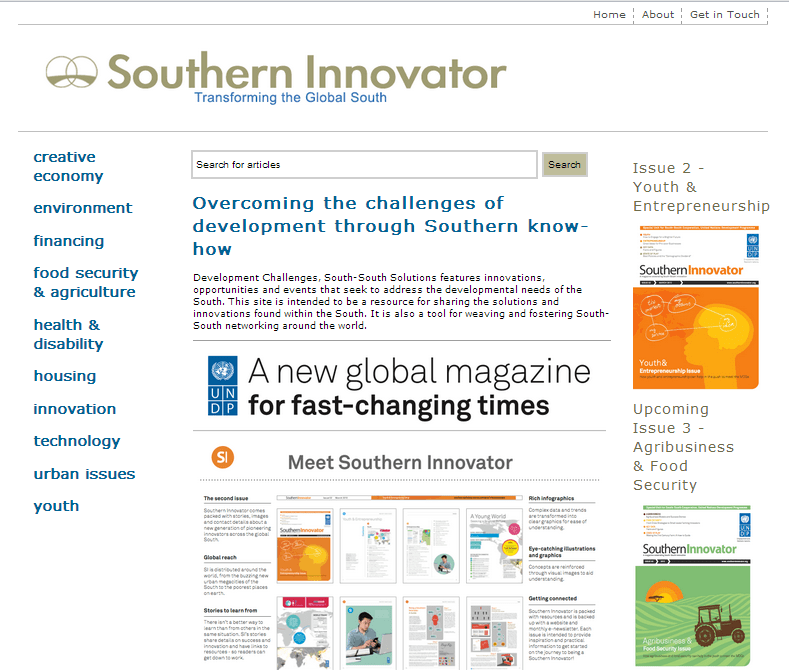
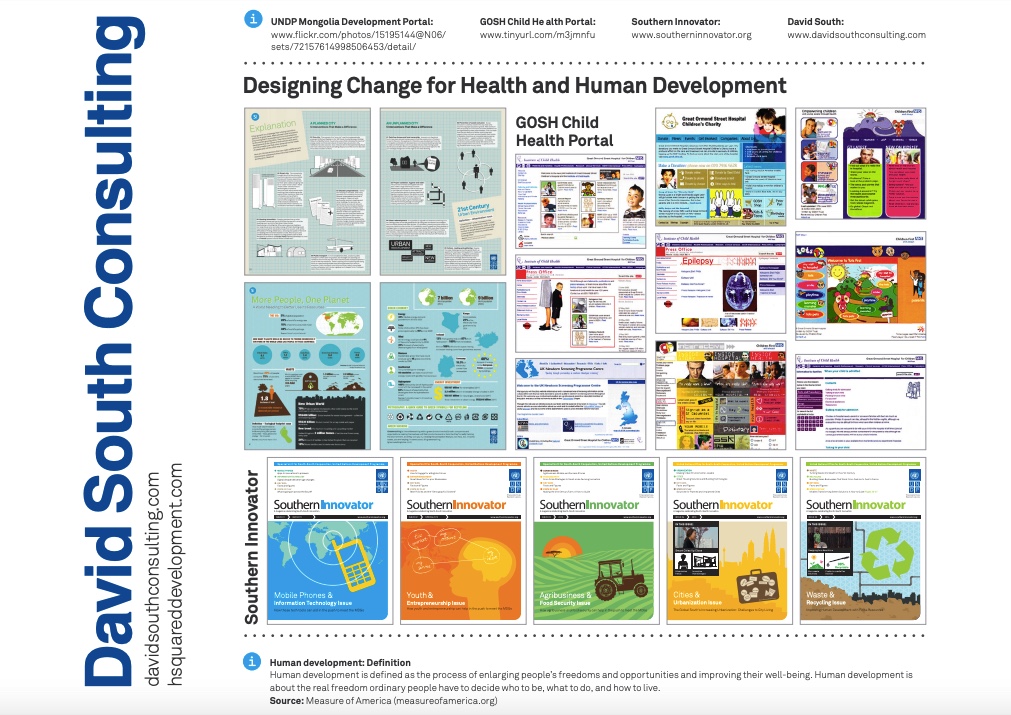
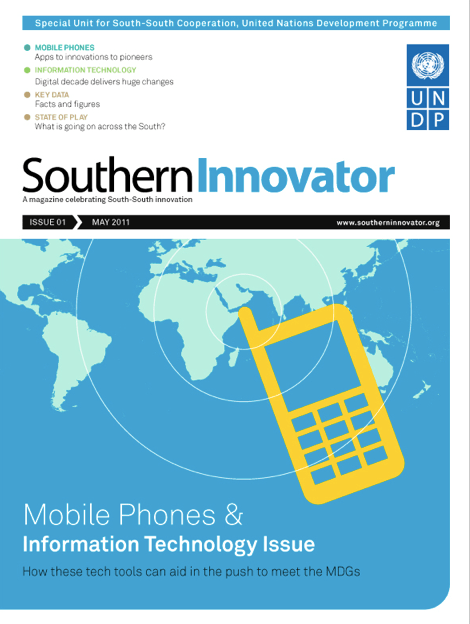
Development Challenges, South-South Solutions was launched as an e-newsletter in 2006 by UNDP’s South-South Cooperation Unit (now the United Nations Office for South-South Cooperation) based in New York, USA. It led on profiling the rise of the global South as an economic powerhouse and was one of the first regular publications to champion the global South’s innovators, entrepreneurs, and pioneers. It tracked the key trends that are now so profoundly reshaping how development is seen and done. This includes the rapid take-up of mobile phones and information technology in the global South (as profiled in the first issue of magazine Southern Innovator), the move to becoming a majority urban world, a growing global innovator culture, and the plethora of solutions being developed in the global South to tackle its problems and improve living conditions and boost human development. The success of the e-newsletter led to the launch of the magazine Southern Innovator.
Innovation is increasingly being recognized as the key to tackling long-standing development problems in Africa, as well as across the developing and developed world. While it is easy to draw up a list of challenges facing the global South, it takes a special person to see not problems but solutions.
Innovation tends to mean fresh thinking brought to bear to old problems, or completely radical new technologies, insights and ways of doing things that are transformative.
Product innovation is a good or service that is new or significantly improved. This includes significant improvements in technical specifications, components and materials, software in the product, user friendliness or other functional characteristics. Process innovation is a new or significantly improved production or delivery method. This includes significant changes in techniques, equipment and/or software. Marketing innovation is defined as a new marketing method involving significant changes in product design or packaging, product placement, product promotion or pricing. And finally, organizational innovation is a new organizational method in business practices, workplace organization or external relations.
How quickly these can be brought to the marketplace, and the level of innovation in society, will be critical to a country’s success in the coming decade, according to the Organization for Economic Cooperation and Development (OECD). Importantly, innovation is being seen as the big driver of economic progress and well-being and the best way to deal with the plethora of challenges facing human health and the environment.
As an example, in the past decade, communications innovation has given more and more of the world’s population access to mobile phones and the Internet. This has led to the success of many new companies, from the search engine giant Google to multiple software innovations such as Kenya’s M-Pesa mobile phone banking application (http://www.safaricom.co.ke/personal/m-pesa/m-pesa-services-tariffs/relax-you-have-got-m-pesa), to small and innovative companies spreading the innovation bug such as Pico Crickets (http://www.picocricket.com/) or the Raspberry Pi (http://www.raspberrypi.org/).
As the OECD has said, “Not only has innovation moved to centre stage in economic policymaking, but there is a realization that a coordinated, coherent, ‘whole of government’ approach is required.
“Even countries that have generally refrained from active industrial policy in recent years now seek new ways to improve the environment for innovation in order to boost productivity and growth. Today, innovation performance is a crucial determinant of competitiveness and national progress.”
In the past, African innovators mostly went unacknowledged, unsupported and unrecognized. But this is changing, as new resources come online to support, finance, encourage and champion African innovators. Until very recently, people outside the continent heard little positive news about what was happening there. But the African innovator story is an inspiration to people around the world.
The Innovation Prize for Africa (http://innovationprizeforafrica.org), begun in 2011, awards US $100,000 for the top innovation that matches its criteria of marketability, originality, scalability, social impact and business potential.
The prize aims to encourage people to come up with practical solutions to the continent’s long-standing problems. This year’s prize received 900 applications from 45 countries.
The 2013 prize went to the South Africa-based AgriProtein (http://www.agriprotein.com) team for an innovation that uses waste and fly larvae to produce animal feed. The solution collects biodegradable waste and then feeds it to flies. The larvae the flies produce are then ground into a protein which is used as a feed for animals. Not only does this approach improve the nutritional quality of the feed, it also lowers the cost for African processors and farmers.
This year’s finalists offer a mixed bag of innovations, including creative ways to find new energy sources, improving access to clean water and preventing diseases.
Joining a clutch of other South African finalists, Dr. Dudley Jackson has created the SavvyLoo, a waterless toilet for use in rural areas and makeshift settlements. It separates the waste into liquids and solids to reduce the risk of disease, odour, and harm to the environment and eases waste removal.
Another South African, Professor Eugene Cloete, is the inventor of the TBag Water Filter that cleverly uses material recovered from tea bags to filter polluted water until it is completely safe to drink.
When it comes to the thorny issue of finding new energy sources for an energy-hungry continent, the prize unearthed some interesting solutions. One is Justus Nwaoga, a Nigerian finalist, who developed a way to turn a common weed into a source of renewable solar energy.
Nwaoga, a researcher from the Department of Pharmaceutical and Medicinal Chemistry at the University of Nigeria Nsukka (http://unn.edu.ng/), found the common tropical weed Mimosa pudica (http://en.wikipedia.org/wiki/Mimosa_pudica) surprisingly provides a way to tap into the sun’s energy.
The weed has leaves which fold in on themselves when touched, but spring quickly back into their normal form when exposed to daylight. The plant opens up in the morning and closes in the evening – an indicator of how sensitive it is to sunlight.
Nwaoga began to experiment with the plant, subjecting it to artificial light at night to see if the leaves would open up again. But they didn’t. He came to the conclusion there were properties in the leaves that only responded to natural, solar light. He further concluded it had something to do with electrical transmission in the leaves. He isolated the element that was making the leaves respond to solar light, finding it more sensitive than the silicon solar cell used in solar panels.
Other innovators recognized by the prize include a Tunisian research and development startup called Saphon Energy (http://www.saphonenergy.com/), which makes bladeless wind turbines, and Muna Majoud Mahoamed Ahmed from Sudan, who has created the Agroforestry Model Farm in Khartoum.
“We see a strong trend emerging of innovations that have significant social impact for Africa,” Dr.Francois Bonnici, director of the Bertha Centre for Social Innovation at the University of Cape Town’s Graduate School of Business, told Ventures Africa.
The call for applications for the 2014 Prize will be announced in July 2013.
Published: June 2013
Resources
1) Innovation Prize for Africa: Innovation Prize for Africa (IPA) is a joint initiative of the United Nations Economic Commission for Africa (ECA) and the African Innovation Foundation (AIF) started in 2011. Website:http://innovationprizeforafrica.org
2) Appfrica: Accelerating the Growth of Africa’s Tech Sector: Appfrica has launched “The Cheetah Code”, an ongoing web series documenting the African tech and creative space. The series is a collection of mini-documentaries chronicling Africa’s young entrepreneurs, creative class, and emerging technology sector. The goal is to record high-quality video content that is entertaining, educational, and inspirational all at once. You can find all of this content and more at tv.cheetahcode.com. Website:http://blog.appfrica.com/2013/05/12/a-web-series-about-africas-entrepreneurs-creatives-and-technologists/?utm_medium=twitter&utm_source=twitterfeed
Development Challenges, South-South Solutions was launched as an e-newsletter in 2006 by UNDP’s South-South Cooperation Unit (now the United Nations Office for South-South Cooperation) based in New York, USA. It led on profiling the rise of the global South as an economic powerhouse and was one of the first regular publications to champion the global South’s innovators, entrepreneurs, and pioneers. It tracked the key trends that are now so profoundly reshaping how development is seen and done. This includes the rapid take-up of mobile phones and information technology in the global South (as profiled in the first issue of magazine Southern Innovator), the move to becoming a majority urban world, a growing global innovator culture, and the plethora of solutions being developed in the global South to tackle its problems and improve living conditions and boost human development. The success of the e-newsletter led to the launch of the magazine Southern Innovator.



















 David South Consulting
You must be logged in to post a comment.