Tag: 2012

  • Development Challenges, South-South Solutions Newsletter

    Development Challenges, South-South Solutions Newsletter
    By David SouthDevelopment Challenges, South-South Solutions
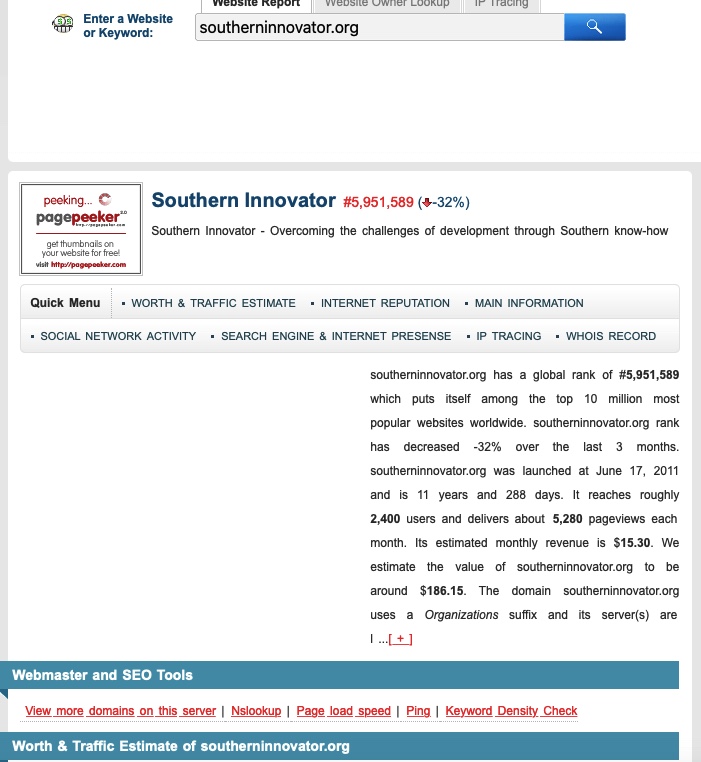
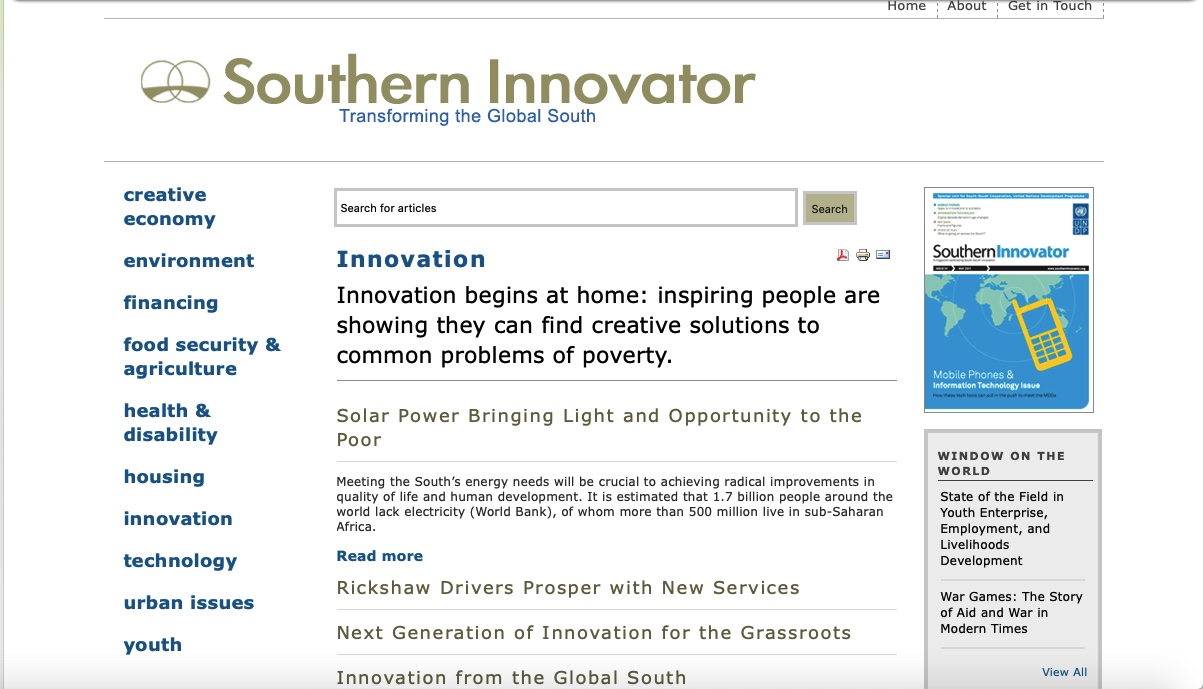
    The original southerninnovator.org website launched in 2011, in tandem with the first issue of Southern Innovator Magazine, and ranked midway in the top 10 million most popular websites in the world. Its content has been cited in books, scholarship and strategic plans.

    ISSN 2227-3905

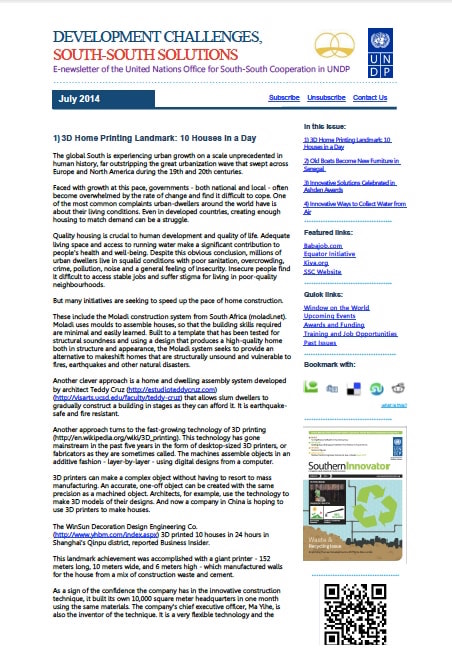
    Development Challenges, South-South Solutions is the monthly e-newsletter for the United Nations Office for South-South Cooperation in UNDP (formerly the United Nations Development Programme’s South-South Cooperation Unit). I research and write all stories (since January 2007). You can view the original website here. The stories are in English, French and Spanish.

    The original WordPress website for Development Challenges, South-South Solutions (southsouthnews.wordpress.com). It was launched in 2006 and eventually became southerninnovator.org in 2011. The magazine Southern Innovator was also launched in New York in 2011.
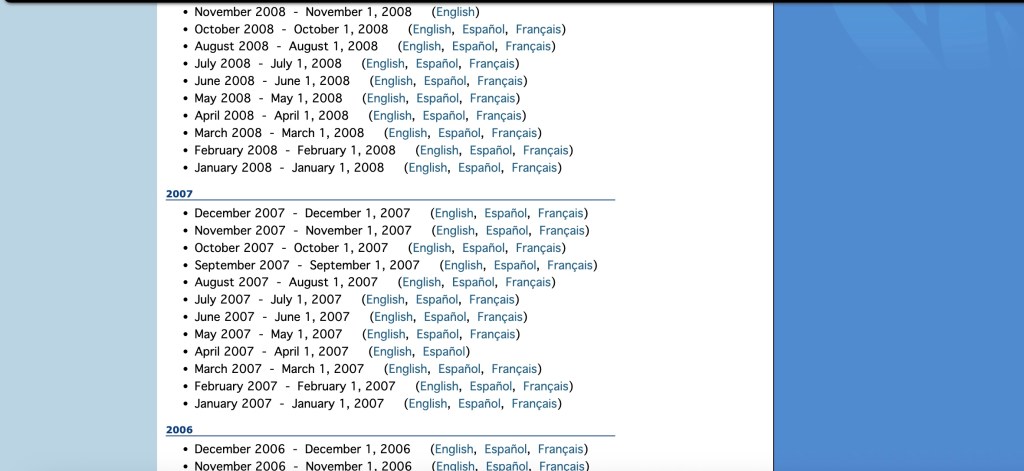
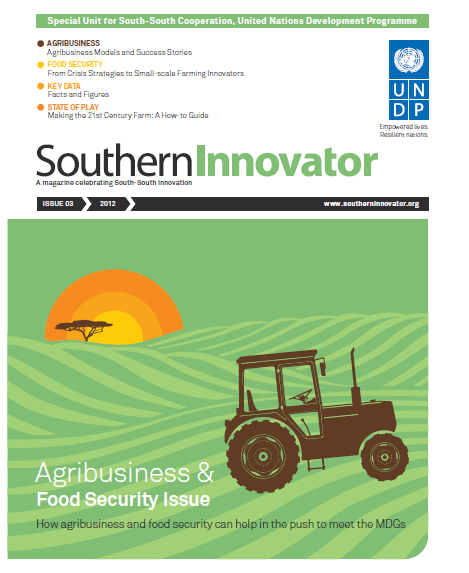
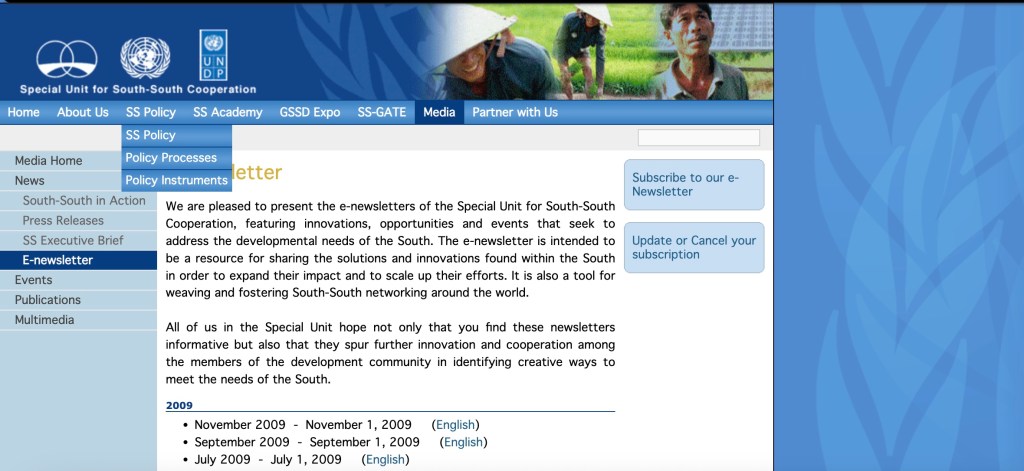
    The newsletter archive on the website for UNDP’s Special Unit for South-South Cooperation circa 2011 (including issues in English, French and Spanish). 2011 was an important year as the e-newsletter Development Challenges, South-South Solutions scaled into a dedicated web archive, http://southerninnovator.org, a sister magazine, Southern Innovator (https://unsouthsouth.org/2014/12/25/southern-innovator-magazine/), and pollinated its content across multiple platforms, capitalising on the platform and social media explosion of the time.

    Here is a good background article on the rise of South-South cooperation, how it is altering global trade and power relationships, and what the future holds: South-South Cooperation Defies the North. And here is some historical background from Wikipedia: South-South Cooperation.

    Development Challenges, South-South Solutions reaches a global audience of influential decision-makers on the frontlines of international development in the South. More than 2,000 subscribers read the newsletter every month (academic institutions, UN agencies, private sector companies, UNDP Country Offices, financial institutions including the IMF and World Bank, inter-governmental organisations, UNDP knowledge networks around the world, and all South-South focal points in West Africa).

    Remember to think of Development Challenges, South-South Solutions when you have a Southern innovation to share with the world. You can read our archive of stories online here: http://ssc.undp.org/index.php?id=66

    From Special Unit for South-South Cooperation: 2008 Reflections: “As part of the strategy to foster South‐South cooperation within and across regions, the Division has continued to invigorate and re‐enforce a South‐South cooperation focal point system. These efforts included the publication and distribution of a monthly e‐newsletter, Development Challenges: South-South Solutions, which presents a briefing for South‐South focal points, Southern academics and development professionals on practical solutions to development challenges found throughout the South. Over the course of 2008, twelve e‐newsletters were released via e‐mail and published on the website of the Special Unit.”

    What are people saying about Development Challenges, South-South Solutions? Read some comments here.

    Contact me by email about the newsletter here: developmentchallenges@googlemail.com.

    Contact me by email about the new global magazine Southern Innovator here: southerninnovator@yahoo.co.uk

    July 2014 issue of Development Challenges, South-South Solutions: The last issue is available online for download. Support the e-newsletter for 2017: we are seeking additional funding so we can improve the reader experience and frequency of the e-newsletter. Since first launching in 2006, we often heard from readers how they valued the stories in the e-newsletter and how it has helped in raising the profile of innovators across the global South (“Congratulations on another great newsletter that’s packed with fascinating information! I really enjoy getting it each month.”). Additional resources would enable us to improve the way readers can access and receive the e-newsletter, enable the e-newsletter’s contributors to travel and report on developments, and allow us to offer daily and weekly updates and a wider range of resources online and on mobile platforms. Additional funds help in maintaining the quality of the e-newsletter, something that has been appreciated by readers (“Great economic and business reporting! Very helpful for us.” Africa Renewal). It will also allow the e-newsletter to spin-off quality resources for innovators, such as the influential magazine Southern Innovator. Contact the United Nations Office for South-South Cooperation if you wish to support the e-newsletter for 2017: UNOSSC.

    “What a tremendous magazine your team has produced! It’s a terrific tour de force of what is interesting, cutting edge and relevant in the global mobile/ICT space… This is great, engaging, relevant and topical stuff.” Rose Shuman, Founder & CEO, Open Mind and Question Box, Santa Monica, CA, U.S.A.

    “Great economic and business reporting! Very helpful for us.” Africa Renewal, Africa Section, Strategic Communications Division, United Nations Department of Public Information

    “The reviewer observed that, although the Policy and UN Coordination Unit had produced all of the reports requested by intergovernmental bodies, especially for the High-level Committee, it had not been able to produce many of the publications (evidence-based analytical reports) that had previously been within its purview. Such publications included Southern Innovator magazine and the monthly e-newsletter “Development Challenges, South-South Solutions”. In the case of Southern Innovator, one issue (No. 5 on waste and recycling) was published during the four-year period of the framework but did not have wide online distribution, and issue No. 6 was awaiting funds for publication. The e-newsletter was last issued in July 2014 even though the reviewer found it a good way to communicate with focal points at the national and inter-agency levels. In fact, the shortage of funds for those knowledge products was the main reason that they had ceased being produced during the evaluation period.”  Final evaluation of the performance of the United Nations Office for South-South Cooperation  under its strategic framework, 2014-2017, in light of the adoption of the 2030 Agenda for Sustainable Development

    Note: Unfortunately, the reason for “the shortage of funds” was down to suspension of funding to the UNOSSC in 2015 and 2016 pending two internal UN audit investigations after arrests made in 2015 by the Federal Bureau of Investigation (FBI) revealed a bribery and money laundering network targeting the United Nations via various NGOs, including the UN-based news organisation South-South News. The case eventually made its way to the Supreme Court of the United States.

    Back Issues

    Development Challenges, South-South Solutions Newsletter | 2011-2014

    2014

    Development Challenges, South-South Solutions Newsletter | 2007-2010

    2013

    https://www.slideshare.net/DavidSouth1/development-challenges-july-2013-issue

    2012

    https://www.slideshare.net/DavidSouth1/development-challenges-july-2012-issue

    2011

    https://www.slideshare.net/DavidSouth1/development-challengessouthsouthsolutionsdecember2011issue

    2010

    2009

    2008

    https://www.slideshare.net/DavidSouth1/development-challenges-may-2008-issue

    2007

    “Beautiful, inspiring magazine from UNDP on South-South innovation. Heart is pumping adrenaline and admiration just reading it.”

    This work is licensed under a Creative Commons Attribution 4.0 International License.

    ORCID iD: https://orcid.org/0000-0001-5311-1052.

    © David South Consulting 2025
  • African Farming Wisdom Now Scientifically Proven

    African Farming Wisdom Now Scientifically Proven

    By David SouthDevelopment Challenges, South-South Solutions

    SOUTH-SOUTH CASE STUDY

    Increasing the agricultural productivity of Africa is critical for the continent’s future development, and the world’s. Two-thirds of Africans derive their main income from agriculture, but the continent has the largest quantity of unproductive – or unused – potential agricultural land in the world.

    This means the continent has the potential to become the world’s new breadbasket – but there is a problem. A report by the International Centre for Soil Fertility and Agriculture (IFDC) found the continent had a “soil health crisis” and that three-quarters of its farmlands were severely degraded (New Scientist). The causes of this crisis include overuse of the same plot of land due to population growth, which prevents farmers moving around, and high fertilizer costs, leading to African farmers using just 10 per cent of the world average on their farms.

    But a new study shows that an existing practice by some African farmers could help solve this dilemma if it was adopted by the majority.

    At the University of Sydney in Australia, a study has confirmed the effectiveness of ants and termites as a tool to increase farm yields in dry areas. It found ants and termites in drier climates of the global South improved soil conditions just as earthworms do in northern, wetter and colder climates. Both termites and ants, by burrowing their way through the soil, carve out tunnels that make it easier for plants to shoot their roots outwards in search of water.

    In field experiments, ants and termites helped raise wheat yields by 36 per cent by increasing water and nitrogen absorption. This is critical for agriculture in arid climates.

    While termites wreak havoc on crops such as maize (corn) and sugarcane, they are very useful for other African crops.

    The Australian research found termites infuse nitrogen into the soil. Nitrogen is usually dumped on fields with expensive fertilizers that are subject to market fluctuations. The termites have nitrogen-heavy bacteria in their stomachs, which they excrete into the soil through their faeces or saliva.

    The research also found termites helped with reducing water wastage.

    This research reinforces what has long been known to some African farmers. Long-held farmer tradition in parts of West Africa uses termites to enhance soil by placing wood on the earth to attract them. By burying manure in holes near newly planted grains, farmers in Burkina Faso attract termites to the soil.

    In Malawi, bananas are planted near termite mounds to encourage the creatures. In southern Zambia, soil from termite nests is harvested and used as top soil on agricultural land.

    If more farmers adopted this practice, Africa could simultaneously address its chronic malnutrition and hunger problem and contribute to the world’s food needs. As the McKinsey Global Institute (MGI) found, “With 60 percent of the world’s uncultivated arable land and low crop yields, Africa is ripe for a ‘green revolution’ like those that transformed agriculture in Asia and Brazil.”

    McKinsey estimated that Africa’s agricultural output could increase from US $280 billion a year now to US $500 billion by 2020 and as much as US $880 billion by 2030.

    The UN recently declared that the world’s population has reached 7 billion. That is many mouths to feed and presents Africa with a dilemma and an opportunity.

    And as urban growth accelerates across the global South – the world is now a majority urban place – there is a huge profit to be made from providing food to growing urban populations.

    The time to act is now, as there have been reports from African farmers that they are seeing harvests declining by 15 to 25 per cent. And the picture gets gloomier: many farmers think their harvests will drop by half over the next five years.

    Given that there are 2,600 different species of termites now recognised in the world (UNEP) and with over 660 species, found in Africa, it is by far the richest continent in termite diversity (Eggleton 2000) and they are proof that an affordable solution is close at hand to the current crisis.

    Published: January 2012

    Resources

    1) World Vegetable Center: The World Vegetable Center is the world’s leading international non-profit research and development institute committed to alleviating poverty and malnutrition in developing countries through vegetable research and development. Website:http://www.avrdc.org

    2) Songhai Centre: a Benin-based NGO that is a training, production, research, and development centre in sustainable agriculture. Website:http://www.songhai.org/english

    3) Marketing African Leafy Vegetables: Challenges and Opportunities in the Kenyan Context by Kennedy M. Shiundu and Ruth. K. Oniang. Website:http://www.ajfand.net/Issue15/PDFs/8%20Shiundu-IPGR2_8.pdf

    4) 2050: Africa’s Food Challenge: Prospects good, resources abundant, policy must improve: A discussion paper from the Food and Agricultural Organization (FAO). Website:http://www.fao.org/wsfs/forum2050/wsfs-background-documents/issues-briefs/en

    5) African Alliance for Capital Expansion: A management consultancy focused on private sector development and agribusiness in West Africa. Website:http://www.africanace.com/v3

    6) Ants and termites increase crop yield in a dry climate by Theodore A. Evans, Tracy Z. Dawes, Philip R. Ward and Nathan Lo, Nature Communications 2, Article number: 262

    7) Integrating Ethno-Ecological and Scientific Knowledge of Termites for Sustainable Termite Management and Human Welfare in Africa by Gudeta W. Sileshi et al, Ecology and Society, Volume 14, Number 1. Website:http://www.ecologyandsociety.org/vol14/iss1/art48

    8) State of the World 2011: Innovations that Nourish the Planet. Website: http://www.worldwatch.org/sow11

    9) Soil health crisis threatens Africa’s food supply. Website:http://www.newscientist.com/article/dn8929-soilhealth-crisis-threatens-africas-food-supply.html

    Creative Commons License

    This work is licensed under a
    Creative Commons Attribution-Noncommercial-No Derivative Works 3.0 License.

    ORCID iD: https://orcid.org/0000-0001-5311-1052.

    © David South Consulting 2023

  • Mobile Phone Shopping to Create Efficient Markets across Borders

    Mobile Phone Shopping to Create Efficient Markets across Borders

    By David SouthDevelopment Challenges, South-South Solutions

    SOUTH-SOUTH CASE STUDY

    An anticipated game-changing revolution in African trading set for 2013 is getting one innovative business very excited.

    Southern African mobile phone “m-commerce” pioneer moWoza (mowoza.com) is developing new ways of selling services and products through mobile phones and developing the networks and infrastructure to capitalize on coming changes in Africa as cross-border trade is liberalized.

    It is already selling food packages containing well-known South African brands that can be ordered by migrants on their mobile phones and then delivered to recipients – family or friends – even in remote and hard-to-reach communities. The service is currently operating between Mozambique and South Africa – the two countries share a border.

    The start-up hopes to help the millions of migrant workers and small traders who contribute to the constant flow of trade and wealth between states in Africa. These people face many obstacles, including bureaucratic red tape, corruption and harassment.

    Cross-border trade by economic migrants is largely informal. moWoza hopes to make it formal and efficient while reducing exploitation of migrants and corrupt practices by officials. By providing an easy-to-use mobile phone service, it hopes to build trust with these transactions.

    Africa is a market of a billion people worth US $2 trillion in trade and business, but the World Bank estimates the continent is losing billions of dollars in potential earnings because of high trade barriers. It found that it is easier for African countries to trade with the rest of the world than with other African countries.

    The continent’s leaders are calling for a continent-wide free trade area by 2017.

    Studies by the World Bank and others have repeatedly shown that inefficient transport and trade barriers translate into higher prices of goods for consumers as importers pass along high transport costs to consumers. Food prices remain extremely high in Africa – almost 25 per cent higher than they were in 2006, according to the World Bank. In developing countries, people normally spend up to 80 per cent of their incomes on food.

    With the world in the grip of an ongoing food crisis brought about by multiple factors – including growing populations, environmental challenges such as drought and soil depletion, declining rural economies, inefficient farming methods and commodity speculation – measures that increase efficiencies and trade can be a powerful counterweight and help drive prices back down again.

    moWoza – mo stands for mobile and Woza is a Zulu word meaning running -sells a range of products including basic foodstuffs to a target market of cross-border migrants in Southern Africa. moWoza estimates there are 7 million migrant and cross-border shoppers in South Africa alone, and it’s building a network reaching into remote communities to deliver packages ordered through its m-commerce service on mobile phones.

    moWoza aims to open up access to products in these underserved markets.

    moWoza is trying to position itself for the new opportunities that will arise when, in 2013, 23 African borders open for regional trade, creating a vast trading area stretching from Cairo in Egypt to Cape Town in South Africa.

    moWoza wants to be the m-commerce brand that people will turn to. It is chasing customer markets that include African economic migrants, small and medium-sized enterprises doing cross border trade, and the 30 million African economic migrants who are supporting family back in their home countries.

    Founder Suzana Moreira says the company carried out extensive research in South Africa, Mozambique, Lesotho, Zimbabwe and Kenya before launching its first trial runs between South Africa and Mozambique. “We ran several pilots to determine the most efficient way to provide access to packages for the beneficiaries and developed the necessary technology to enable our customers (migrants) to place orders simply. We are now operating between Johannesburg and Maputo,” she said.

    Officially incorporated in 2009, moWoza did not get up and running until 2010.

    Once a customer has experienced a delivery from moWoza, they are introduced to other services like banking or how to download information from the Internet. Many customers are only just learning about the resources available online.

    “We look forward to the opening up of cross border trade as our findings suggest that the liberalization and facilitation of the cross-border trade initiative will increase demand for all products and services from South Africa to neighbouring countries,” Moreira said. “South Africa offers an extensive range of products compared to the choice of products that are offered in many of the neighbouring countries.

    “The structures and networks that compel migrants to come to South Africa are well established,” she explained.

    “The social networks encourage the movement of labour. Hundreds of thousands of male migrants from the Southern African Develoment Community, SADC (http://www.sadc.int/), countries have spent the greater parts of their working lives in South Africa. They in turn had parents or grandparents who had worked in South Africa, while providing a lifeline to the family in the home country.

    “This practice will continue: mobile money to a degree will facilitate this lifeline but as long as products can be sourced cheaper in South Africa, the demand for South African products will continue.”

    The people behind moWoza sound like business radicals, proclaiming that traditional ‘bricks and mortar’ businesses will be replaced in a shopping revolution by WAP (wireless application protocol) and SMS (short message service) business platforms operating on mobile phones.

    Apart from developing the m-commerce business, moWoza aspires to become a well-known brand for the migrant community.

    “Becoming a lifestyle brand is a bold statement on our part,” Moreira said. “However, this goal reflects a measure of success and would demonstrate that we are delivering value to our customers (migrants and micro-merchants) and their beneficiaries.”

    The moWoza brand hopes to reflect the lives of their customers and be all about embracing fluidity and mobility.

    “As our primary customers are transnational and highly mobile (immigrants with a dual existence), we would like moWoza to represent mobility and fluidity (attune to anytime, anywhere, always).” she said. “Their greatest aspiration is an improved livelihood and a simplification of the rigours of grass-roots existence.”

    moWoza foresees big changes coming for the economies of the African countries affected by the opening up of regional trade. According to its website: “New markets and trading routes will mushroom, traditional value chains will be replaced with ICT [information and communications technology] innovations; a savvier and younger consumer will emerge who will value convenience and simplicity.”

    For users, moWoza’s service works like this: A customer uses a mobile phone to make a purchase. An agent helps with selecting the right package and delivery options. When the payment is made, an SMS mobile receipt – a so-called m-receipt – is sent to the customer. The person who will be receiving the parcel will also receive a text message. During the delivery process, ‘m-updates’ are sent on progress to both parties and when the parcel is finally delivered, a final notification is sent of delivery.

    Special drop-off points have been set up in countries where the service is available and there is follow-up contact with the customer to determine their continuing needs.

    MoWoza hires people from the communities they operate in as agents. An agent works with the customer to show how the Internet works on mobile phones and to improve their literacy skills.

    Product parcels are selected to meet the World Health Organization (WHO) nutritional guidelines. The packages are selected based on focus groups and customer feedback.

    With offices in South Africa and the United Kingdom, moWoza is looking forward to expanding what it can offer.

    “We will continue to innovate, and deliver services that improve the livelihoods of our target market and their beneficiaries,” Moreira said. “We will extend our packages to include seeds and other agricultural products, school and educational materials, and health products. As we grow, our services will extend to digital (virtual) goods, e.g. insurance products specifically targeting the underserved communities.”

    Published: August 2012

    Resources

    1) A downloadable map showing border delays, bribes and barriers impeding cross-border trade. Website: http://www.borderlesswa.com/resources/18th-usaid-uemoa-road-governance-map

    2) Borderless Alliance: Removing Trade Barriers in West Africa: Borderless is a vision for competitive trade in West Africa – of eliminating barriers to trade. Streamlining procedures, attacking corruption and facilitating the movement of people and goods will lower costs. Consequently, businesses will expand, create jobs and generate more revenue for government and more income for people. Website: http://www.borderlesswa.com/

    3) Borderless Conference 2013 and 2014: Call for proposals: The Borderless Alliance Secretariat announces a call for proposals to host the 2013 annual Borderless Conference. Borderless Conference 2013 will be the second transport and trade annual conference in West Africa, and will bring together more than 300 stakeholders from around the world to discuss efficiency in logistics, using data for decision making and advocacy. Website:http://www.borderlesswa.com/news/borderless-conference-2013-2014-call-proposals

    4) West Africa Trade Hub: Website:http://www.watradehub.com

    5) Trade Mark East Africa: Supporting East African Integration: Through TradeMark East Africa, a cost-effective regional aid delivery mechanism has been established that can focus on building long-term East African capacity. TradeMark East Africa provides a durable platform for scaling-up of Aid For Trade to East Africa. Website: http://www.trademarkea.com/home/

    6) Geneva Trade and Development Forum. Website: http://www.gtdforum.org/

    7) Spaza News: The newspaper aimed at spaza shop owners seeking to connect them. Website: http://www.spazanews.co.za/

    8) Africa Trade Gateway: Website: https://www.africatradegateway.com/

    9) Cross Border Trade Desk: This website is a ‘resource’ to help cross border traders in Eastern and Southern Africa to find an association near to them, to voice their opinions and explain what COMESA is doing in improving conditions for small-scale cross border traders. Website: http://www.cbtcomesa.com/

    10) Defragmenting Africa website including the report De-Fragmenting Africa: Deepening Regional Trade Integration in Goods and Services by the World Bank. Website: http://tinyurl.com/cta3ykf

    https://davidsouthconsulting.org/2022/10/09/a-new-mobile-phone-aimed-at-the-poor/

    https://davidsouthconsulting.org/2020/04/30/crowdsourcing-mobile-phones-to-make-the-poor-money/

    https://davidsouthconsulting.org/2020/05/01/diy-solution-charges-mobile-phones-with-batteries/

    https://davidsouthconsulting.org/2022/10/09/entrepreneurs-use-mobiles-and-it-to-tackle-indian-traffic-gridlock/

    https://davidsouthconsulting.org/2022/11/01/innovative-mobile-phone-applications-storm-south/

    https://davidsouthconsulting.org/2022/10/27/kenyan-mobile-phone-innovations/

    https://davidsouthconsulting.org/2022/10/10/mobile-applications-market-opportunities-for-south/

    https://davidsouthconsulting.org/2020/12/20/mobile-phones-engineering-souths-next-generation-of-entrepreneurs/

    https://davidsouthconsulting.org/2020/12/12/mobile-phones-new-market-tools-for-the-poor/

    https://davidsouthconsulting.org/2020/12/20/mobile-phones-bring-the-next-wave-of-new-ideas-from-the-south/

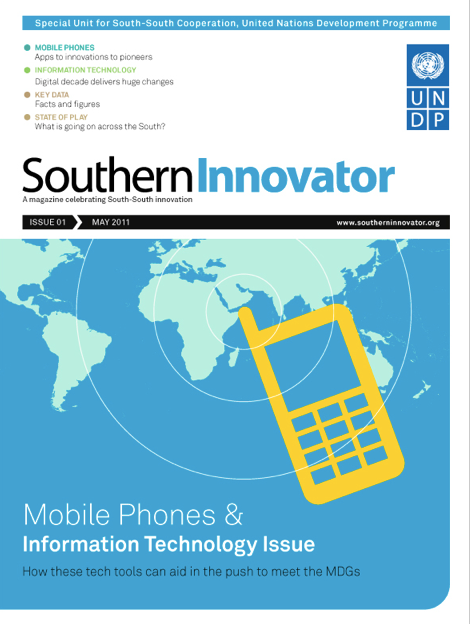
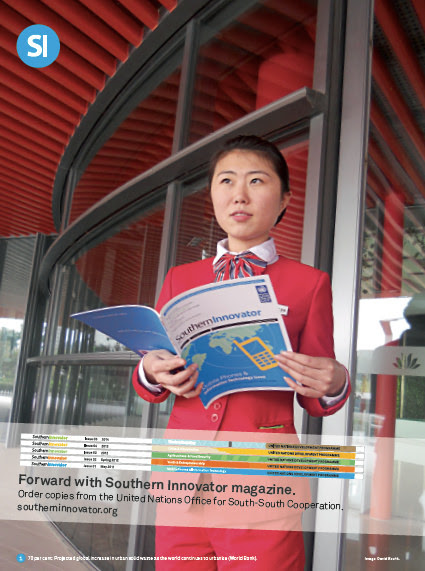
    Development Challenges, South-South Solutions was launched as an e-newsletter in 2006 by UNDP’s South-South Cooperation Unit (now the United Nations Office for South-South Cooperation) based in New York, USA. It led on profiling the rise of the global South as an economic powerhouse and was one of the first regular publications to champion the global South’s innovators, entrepreneurs, and pioneers. It tracked the key trends that are now so profoundly reshaping how development is seen and done. This includes the rapid take-up of mobile phones and information technology in the global South (as profiled in the first issue of magazine Southern Innovator), the move to becoming a majority urban world, a growing global innovator culture, and the plethora of solutions being developed in the global South to tackle its problems and improve living conditions and boost human development. The success of the e-newsletter led to the launch of the magazine Southern Innovator.

    https://davidsouthconsulting.org/2021/03/05/southern-innovator-issue-1/

    Creative Commons License

    This work is licensed under a
    Creative Commons Attribution-Noncommercial-No Derivative Works 3.0 License.

    ORCID iD: https://orcid.org/0000-0001-5311-1052.

    © David South Consulting 2022

  • China Looking to Lead on Robot Innovation

    China Looking to Lead on Robot Innovation

    By David SouthDevelopment Challenges, South-South Solutions

    SOUTH-SOUTH CASE STUDY

    Since the 1950s, science fiction has been telling the world we will soon be living with robots. While robots have emerged, they have been mostly kept to heavy industry, where machines can perform dangerous, hot and unpleasant repetitive tasks to a high standard.

    But China is pioneering the move to mainstream robots in more public spheres. And the country is promising big changes in the coming decade.

    Robots, strange as it may seem, can play a key role in development and fighting poverty.

    If used intelligently, the rise of robots and robotics – itself a consequence of huge technological advances in information technology, the Internet, nanotechnology,artificial intelligence, and mobile communications – can free workers from boring, difficult and dangerous jobs. This can ramp up the provision of public goods like cleaning services in urban areas, or remove the need to do back-breaking farming work.

    Robotics also offers a new field of high-tech employment for countries in the global South who are producing far more educated engineering and science students than they can currently employ. These students can help build the new robot economy.

    China is considered to be in the early stages of competing with robot pioneers such as Japan, Switzerland, Germany, Sweden and the United States. And China still has a low penetration of industrial robots per population. In 2011 estimates placed the number of industrial robots in China at 52,290 (International Federation of Robotics) (ifr.org).

    In the years ahead, China confronts a double demographic problem. It has the world’s largest elderly population, who will need care, and it also has a shrinking number of young people available to work as a result of the country’s one-child policy (http://en.wikipedia.org/wiki/One-child_policy).

    Robots can help solve these problems.

    China started its robotics research in the 1970s and ramped it up from 1985. It has already made significant progress manufacturing domestic robots for cleaning. The Xiamen Lilin Electronics Co., Ltd. (http://cnlilin.en.made-inchina.

    com/) makes vacuum cleaners that are small round robots smart enough to return to their recharging stations when low on power. Another firm, Jetta Company (http://www.jetta.com.hk/home.htm), has built and sells the iRobot Roomba vacuum cleaning and floor-washing robots (http://www.irobot.com/uk/store.aspx?camp=ppc:google:products_roomba:G_790612075_1846279957_iRobot%20roomba:roomba_brand&gclid=CMiezMiG8a4CFc4LtAodYE3MKw).

    For the heavy duty stuff, there is Ningbo’s Dukemen Robot, sold with the slogan “man, technology, robot”. The company manufactures arm-like robots for heavy lifting and lifting in dangerous or uncomfortable environments (dukerobot.com/ks/robot-manufacturers/).

    A company called Quick specializes in making soldering equipment for manufacturing electronic components and sells robots that can do this with high accuracy and speed (quick-global.com/9-new-soldering-robot-1.html).

    Other robotic advances in China include a robot dolphin that swims through the water measuring its quality.

    There are also robots in development to do housework and help people who need assistance in the home like the elderly and the disabled. These robots can monitor a person’s physical condition and provide psychological counselling and search for, and deliver, requested items. One example is called UNISROBO, and is based on the Japanese robot PaPeRo robot (http://www.nec.co.jp/products/robot/en/index.html).

    Still other robots can perform surgical procedures or even play sport, like Zhejiang University’s ping pong-playing robot (http://www.youtube.com/watch?v=4BtHYHi7trA).

    Even more ambitiously, China is developing robots to send to the moon.

    The push to introduce robots into the workplace and wider society is receiving considerable attention in China.

    The Taiwan-based technology company Foxconn – well-known for assembling products for the American company Apple, maker of the iPad and iPhone -has pledged to deploy a million robots in its Chinese factories in the coming years to improve efficiency.

    Some are forecasting that if China starts building robots on the scale it has pledged, then the world’s population of manufacturing robots will grow tenfold in 10 years.

    China is also broaching one of the trickiest aspects of robotics – getting robots to interact with humans.

    The tricky bit in robotics is getting interaction with human beings right and to avoid the experience being intimidating or frightening. One sector that is already ahead in experimenting with this aspect of robots is the restaurant business. One robot being used in restaurants sits on a tricycle trolley laden with drinks. It cycles from table to table in endless rotation allowing customers to choose drinks when they like.

    The first robot restaurant started a trial run in 2010 in Jinan (http://en.wikipedia.org/wiki/Jinan), the capital of Shandong Province. The hot pot restaurant uses six robots to help with the service. The restaurant has also given itself the perfect name for this new approach: Continental Robot Experience Pavilion. Adorned with robot posters, the restaurant is 500 square metres in size and can seat 100 diners.

    Diners at the Continental Robot Experience Pavilion are greeted by two ‘female’ “beauty robot receptionists” dressed in uniforms. Inside, the six robot waiters serve the customers. There are two to deliver drinks and two to serve the small tables and two to serve the big tables.

    The robot comes to the table and takes the customers’ orders for food dishes and drinks. The robots, designed with sensors to stop them moving when they sense something or someone in front of them, are able to handle 21 tables and deal with the 100 customers at a single sitting.

    The robots have proven so effective, the restaurant’s staff can stay focused on administration and providing assistance. The cooking is still done by human beings.

    This trial run is designed to test the concept and the novelty of having robots attracting customers, the restaurant’s manager told the People’s Daily Online.

    The plan is to increase the number of robots to 40 and also to have robots do cleaning and other tasks.

    “They have a better service attitude than humans,” said Li Xiaomei, 35, who was visiting the restaurant for the first time. “Humans can be temperamental or impatient, but they don’t (the robots) feel tired, they just keep working and moving round and round the restaurant all night,” Li said to China Daily.

    Published: March 2012

    Resources

    1) The Robot Report: It boasts compiling more than 1,400 robotics-related links and is about “Tracking the business of robotics”. Website: therobotreport.com

    2) The Robot Shop: Bills itself as “The world’s leading source for professional robot technology” and sells online all the parts, kits, toys, tools and equipment to get any enthusiast or small and medium enterprise working with robotics quickly. Website: robotshop.com

    3) Robot App Store: Sells ‘apps’ or software applications to expand the capabilities of robots. It also operates as a store for application developers to sell their robot apps to others. Also has information and resources on how to get started making robot apps and making money from making robot apps. Website: robotappstore.com

    4) Roboearth: Funded by the European Union, RoboEarth is an online, open source network where robots can communicate with each other and share information and “learn from each other about their behaviour and their environment. Bringing a new meaning to the phrase “experience is the best teacher”, the goal of RoboEarth is to allow robotic systems to benefit from the experience of other robots, paving the way for rapid advances in machine cognition and behaviour, and ultimately, for more subtle and sophisticated human-machine interaction. Website: roboearth.org

    5) Robotland: A blog writing about the “visions, ideas, innovations, awards, trends and reports from leading robotics research and development places in the world”. Website: http://robotland.blogspot.co.uk/

    6) China Hi-Tech Fair: Running from 16-21 November 2012, the Fair is a great way to see the latest developments in robotics in China. Website: chtf.com/english/

    7) Singularity Hub: A cornucopia of robotic resources and news on “science, technology and the future of mankind”. Website: http://singularityhub.com/

    Development Challenges, South-South Solutions was launched as an e-newsletter in 2006 by UNDP’s South-South Cooperation Unit (now the United Nations Office for South-South Cooperation) based in New York, USA. It led on profiling the rise of the global South as an economic powerhouse and was one of the first regular publications to champion the global South’s innovators, entrepreneurs, and pioneers. It tracked the key trends that are now so profoundly reshaping how development is seen and done. This includes the rapid take-up of mobile phones and information technology in the global South (as profiled in the first issue of magazine Southern Innovator), the move to becoming a majority urban world, a growing global innovator culture, and the plethora of solutions being developed in the global South to tackle its problems and improve living conditions and boost human development. The success of the e-newsletter led to the launch of the magazine Southern Innovator.  

    Follow @SouthSouth1

    Slideshare: http://www.slideshare.net/DavidSouth1/development-challengessouthsouthsolutionsnovember2010issue

    Southern Innovator Issue 1: https://books.google.co.uk/books?id=Q1O54YSE2BgC&dq=southern+innovator&source=gbs_navlinks_s

    Southern Innovator Issue 2: https://books.google.co.uk/books?id=Ty0N969dcssC&dq=southern+innovator&source=gbs_navlinks_s

    Southern Innovator Issue 3: https://books.google.co.uk/books?id=AQNt4YmhZagC&dq=southern+innovator&source=gbs_navlinks_s

    Southern Innovator Issue 4: https://books.google.co.uk/books?id=9T_n2tA7l4EC&dq=southern+innovator&source=gbs_navlinks_s

    Southern Innovator Issue 5: https://books.google.co.uk/books?id=6ILdAgAAQBAJ&dq=southern+innovator&source=gbs_navlinks_s

    Citations

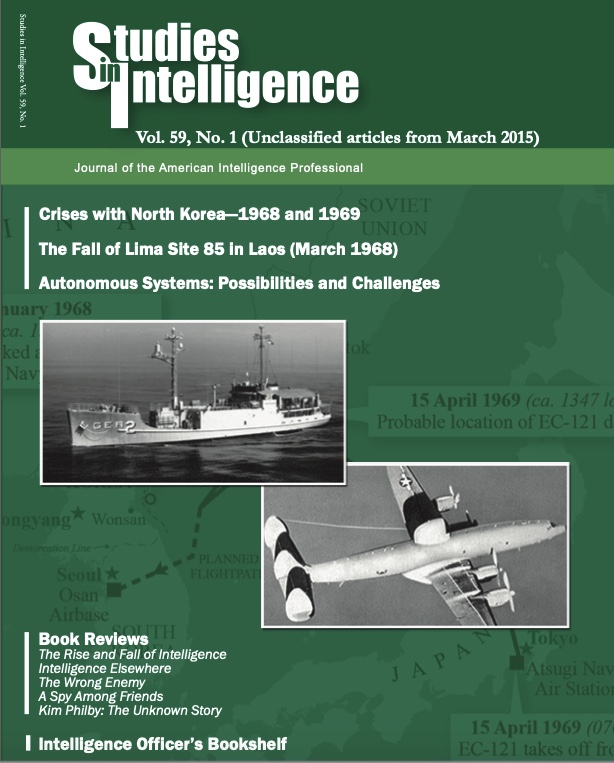
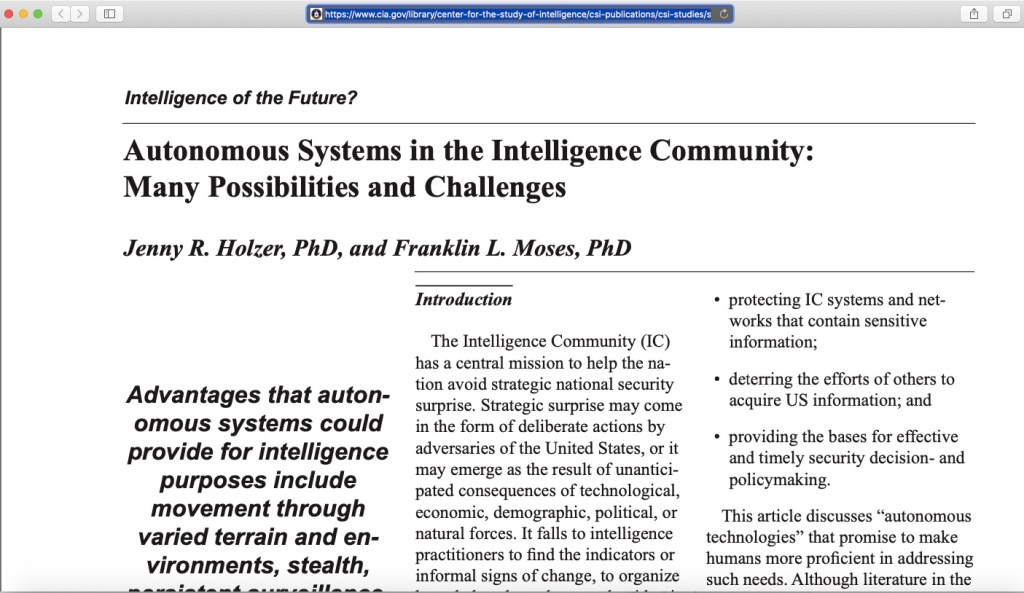
    Cited in Studies in Intelligence, Autonomous Systems in the Intelligence Community: Many Possibilities and Challenges, Vol. 59, No.1 (Extracts, March 2015).

    Studies in Intelligence, Vol. 59, No.1 (Unclassified articles from March 2015).
    Autonomous Systems in the Intelligence Community: Many Possibilities and Challenges by Jenny R. Holzer, PhD, and Franklin L. Moses, PhD in Studies in Intelligence Vol 59, No. 1 (Extracts, March 2015).
    Autonomous Systems in the Intelligence Community: Many Possibilities and Challenges by Jenny R. Holzer, PhD, and Franklin L. Moses, PhD in Studies in Intelligence Vol 59, No. 1 (Extracts, March 2015).
    Link: https://www.cia.gov/resources/csi/studies-in-intelligence/volume-59-no-1/autonomous-systems-in-the-intelligence-community-many-possibilities-and-challenges/.

    More China stories:

    Better by Design in China

    https://davidsouthconsulting.org/2021/12/20/better-by-design-in-china/

    https://davidsouthconsulting.org/2022/10/20/china-consumer-market-asian-perspective-helps/

    China Pushing Frontiers of Medical Research

    https://davidsouthconsulting.org/2020/04/25/china-pushing-frontiers-of-medical-research/

    China Sets Sights on Dominating Global Smartphone Market

    https://davidsouthconsulting.org/2020/12/10/china-sets-sights-on-dominating-global-smartphone-market/

    https://davidsouthconsulting.org/2022/10/04/chinas-booming-wine-market-can-boost-south/

    China’s Outsourced Airliner Development Model

    https://davidsouthconsulting.org/2020/04/29/chinas-outsourced-airliner-development-model/

    https://davidsouthconsulting.org/2021/03/20/computer-gold-farming-turning-virtual-reality-into-real-profits/

    Creating Green Fashion in China

    https://davidsouthconsulting.org/2021/01/25/creating-green-fashion-in-china/

    https://davidsouthconsulting.org/2020/12/11/cyber-cities-an-oasis-of-prosperity-in-the-south/

    Designed in China to Rival ‘Made in China’

    https://davidsouthconsulting.org/2021/01/26/designed-in-china-to-rival-made-in-china/

    https://davidsouthconsulting.org/2022/10/04/popular-chinese-social-media-chase-new-markets/

    https://davidsouthconsulting.org/2021/10/04/putting-quality-and-design-at-the-centre-of-chinese-fashion/

    Rammed-Earth Houses: China Shows how to Improve and Respect Traditional Homes

    https://davidsouthconsulting.org/2021/02/12/rammed-earth-houses-china-shows-how-to-improve-and-respect-traditional-homes/

    Virtual Supermarket Shopping Takes off in China

    https://davidsouthconsulting.org/2020/04/17/virtual-supermarket-shopping-takes-off-in-china/

    Creative Commons License

    This work is licensed under a
    Creative Commons Attribution-Noncommercial-No Derivative Works 3.0 License.

    ORCID iD: https://orcid.org/0000-0001-5311-1052.

    © David South Consulting 2023