Tag: 2011

  • 2011 Trends for the South

    2011 Trends for the South

    By David SouthDevelopment Challenges, South-South Solutions

    SOUTH-SOUTH CASE STUDY

    The world has been through a dramatic and fascinating period since the global economic crisis erupted in 2008. While the wealthy, developed nations of the North have been pitched into one crisis after another, the countries of the global South (many of whom are well accustomed to crises) have been part of a powerful new economic phenomenon: the rapid growth of South-South trade, investment and exchange. Its effects include stronger ties between Asia and South America and between China and Africa.

    South-South trade is the great economic success story of the past decade. World Trade Organization (WTO) (www.wto.org) figures show South-South trade grew to 16.4 percent of the US $14 trillion in total world exports in 2007, from 11.5 percent in 2000. While the global economic crisis has slowed trade down, the overall trend for South-South trade and connections seems firmly established.

    South-South trade made up 20 percent of global exports by 2010, and foreign direct investment to developing economies rose by 10 percent in 2010 due to a rapid economic recovery and increasing South-South flows.

    Trade between China and Africa has surged during the decade since China joined the WTO in 2001, from around US $10 billion in 2000 to US $73.3 billion in 2007, a year-on-year increase of 32.2 percent. By 2008, it had soared by 44.1 percent to reach a record high of US $106.84 billion, according to Zhang Yongpeng of the Institute for West Asian and African Studies (IWAAS).

    The surge is remarkable and recent. For example, according to accountants KPMG, between 2001 and 2009 China invested just US $215 million in Brazil. But in 2010, China invested US $20 billion in energy and chemical companies in Argentina and Brazil. And Luis Alberto Moreno, president of the Inter-American Development Bank, told the Financial Times that “seven percent of Colombian gasoline has been replaced by domestic ethanol, produced with green Indian technology – while Indian companies, including Infosys and Tata, now have 17,000 employees in Latin America and the Caribbean.”

    This jump in investment has also had its downside: coming fast and furious as investment cash chases better investment profits in the global South, it has pushed up inflation and commodity prices and spawned property speculation bubbles. This, as can be seen across North Africa and the Middle East, can lead to political and social instability.

    A review of the big trends bubbling under the surface in 2011 shows how important South-South exchange will be in alleviating poverty and improving lives in the run-up to the 2015 Millennium Development Goals (http://www.un.org/millenniumgoals/). It also shows up the dangers inherent in this new environment – rising inflation without economic growth can crush the poor. A focus on innovation and new thinking will be necessary to get through this year and beyond.

    Some of the top trends that will have a big impact in 2011 are:

    – Inflation: In 2011 it looks like we will hear a lot about inflation. As the global economy tries to stabilize and return to growth, there will be inflation surges for a wide variety of reasons. People will need strategies and new techniques to make sure they can afford the necessities of life. This will be critical if development gains from the past decade are not to be lost.

    – Super cycle: Some are putting forward the theory we are entering a ‘super cycle’ (http://www.bloomberg.com/news/2011-01-23/super-cycle-leaves-no-economy-behind-as-davos-shifts-to-growth-from-crisis.html) created by better connectivity, global travel and mobility and the ease of moving around investment to create businesses and jobs. The super cycle theory claims that this will spark the greatest period of human development in history – raising all national economies – as more and more people benefit from rising living standards and opportunities.

    – Switch to South-South trade: With the trend of increasing South-South trade now firmly established, there is a greater awareness now of the power of sharing ideas across the South. One example of this idea-sharing is the annual Global South-South Development Expo (http://www.southsouthexpo.org/) run by UNDP’s Special Unit for South-South Cooperation Unit (http://ssc.undp.org/).

    – New technologies: The spread of new technologies around the world will continue and bring many changes. Africa is seeing increasing access to high-speed Internet as new undersea cables are laid around the continent. Mobile phones will continue to be a critical tool for many to stay in touch and boost incomes.

    – MDGs on horizon in 2015: The Millennium Development Goals (MDGs) target of 2015 is just four years away. This will face the headwinds of the global economic crisis and urgent attention will be needed to make sure gains are not lost as 2015 approaches. The role played by South-South trade will be a critical partner in aiding goal achievements.

    – Cities: A surge to the urban was pronounced by 2007 and we are now living in a majority urban world. Innovation and sharing experiences and knowledge will play a key role in ensuring this is not a disaster. A recent book, Arrival City by Canadian journalist Doug Saunders, detailed this urban surge occurring across the global South, the largest movement of people to cities and urban and semi-urban areas in human history. It follows the pattern that was seen in Europe in the 19th century, as economies change and people seek the new opportunities promised by cities, or find rural economies unsustainable.

    – The China model of development: The big talking point will be China’s economic model for eradicating poverty on a mass scale. A new book by Dambisa Moyo, How the West Was Lost: Fifty Years of Economic Folly – And the Stark Choices Ahead, investigates the mistakes made in developed, Western nations and what can be learned from the experiences in the global South.

    – Food crisis: At the beginning of February, the Food and Agricultural Organization (FAO) issued a warning about the risk of a new global food crisis after its food price index reached a record high in January 2011. The FAO also issued an alert about severe drought in China, the world’s largest wheat producer. Flooding in Brazil and Australia have also devastated crops, much of which are exported to countries across the South. There is also risk to crops from flooding in southern Africa. Wheat, corn and soybean prices are rising, and prices reached a peak just as they did in 2008 (FAO).

    Even developed countries normally used to food surpluses are at risk. In the US, corn reserves are at a 15 year low (US Department of Agriculture), and the price of corn has doubled in past six months.

    A billion people go to bed hungry every night; someone starves to death every 3.6 seconds – 75 percent are children under five, according to the World Food Programme (http://www.wfp.org/1billion).

    Published: 2011

    Resources
    1) Global Information and Early Warning System on Food and Agriculture: A data mix tracking global food prices and situation reports. Website: http://www.fao.org/worldfoodsituation/wfs-home/en/
    2) World Bank Food Crisis blog: Website: http://www.worldbank.org/foodcrisis/
    3) Trade Law Centre for Southern Africa: “Building capacity to help Africa trade better”: tralac’s mission is to build trade law capacity in southern Africa so that these countries can participate effectively in the global economy; to negotiate trade agreements that will support their development objectives, and so that they can implement the agreements to ensure that they realise the potential benefits of international trade. Website: http://www.tralac.org/cgi-bin/giga.cgi?cmd=cause_dir_cause&cause_id=1694
    4) Future Forum world videos: Compelling animated videos exploring the hard choices of an urbanizing world and the need to promote sustainable development and environmental harmony. Website: http://www.youtube.com/user/forumforthefuture96

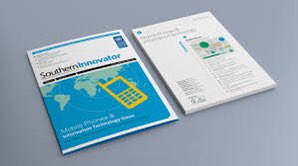
    Development Challenges, South-South Solutions was launched as an e-newsletter in 2006 by UNDP’s South-South Cooperation Unit (now the United Nations Office for South-South Cooperation) based in New York, USA. It led on profiling the rise of the global South as an economic powerhouse and was one of the first regular publications to champion the global South’s innovators, entrepreneurs, and pioneers. It tracked the key trends that are now so profoundly reshaping how development is seen and done. This includes the rapid take-up of mobile phones and information technology in the global South (as profiled in the first issue of magazine Southern Innovator), the move to becoming a majority urban world, a growing global innovator culture, and the plethora of solutions being developed in the global South to tackle its problems and improve living conditions and boost human development. The success of the e-newsletter led to the launch of the magazine Southern Innovator. 
    Creative Commons License

    This work is licensed under a
    Creative Commons Attribution-Noncommercial-No Derivative Works 3.0 License.

    ORCID iD: https://orcid.org/0000-0001-5311-1052.

    © David South Consulting 2022

  • Indian Toilet Pioneer Champions Good Ideas

    Indian Toilet Pioneer Champions Good Ideas

    By David SouthDevelopment Challenges, South-South Solutions

    SOUTH-SOUTH CASE STUDY

    Access to adequate sanitation and toilet facilities is critical to making development gains. Yet this simple fact of life often gets overlooked, especially in fast-growing cities where populations are on the rise or in transit. Out of an estimated 2.6 billion people in the world without toilets, two-thirds are in southern and eastern Asia (World Toilet Organization).

    It is easy to take toilet technology for granted in developed countries, but in the fast-growing urban world of the global South, increasing access will be the dividing line between a future of good human health and dignity, or misery and poor health. The biggest gains in human health always come about once people have access to clean water and sanitation. Yet this proven fact gets lost in many places for a wide variety of reasons.

    One country currently failing to meet the needs of its population is India. According to the McKinsey Global Institute, by 2030, 70 percent of India’s jobs will be created in its cities, and 590 million Indians will be city-dwellers. An enormous infrastructure task lies ahead for India: a city the size of Chicago needs to be built every year. But so far this challenge is not being met, leaving the country with the largest number of urban slum dwellers anywhere in the world. Housing is just not keeping up with populations’ needs.

    As K.T. Ravindran, a professor of urban development, told the New York Times: “We require radical rethinking about urban development. It is not that there are no ideas. It is that there is no implementation of those ideas.”

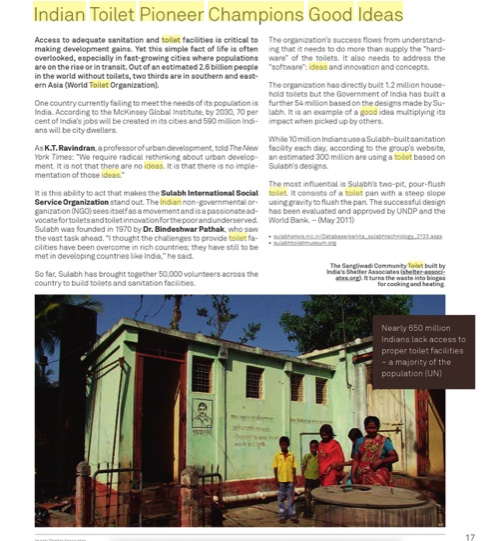
    It is this ability to act that makes the Sulabh International Social Service Organization stand out. The Indian non-governmental organization (NGO) sees itself as a movement and is a passionate advocate for toilets and toilet innovation for the poor and underserved.

    Sulabh was founded in 1970 by Dr. Bindeshwar Pathak, who saw the vast task ahead. “I thought the challenges to provide toilet facilities have been overcome in rich countries; it has still to be met in developing countries like India,” he said.

    So far, Sulabh has brought together 50,000 volunteers across the country to build toilets and sanitation facilities.

    The organization’s success flows from understanding that it needs to do more than supply the ‘hardware’ of the toilets; it also needs to address the ‘software’: ideas and innovation and concepts.

    The organization has directly built 1.2 million household toilets – but the government of India has built a further 54 million toilets based on the designs made by Sulabh. It’s an example of a good idea multiplying its impact when picked up by others.

    While 10 million Indians use a Sulabh-built sanitation facility each day, according to the group’s website, an estimated 300 million are using a toilet based on Sulabh’s designs.

    Most influential is Sulabh’s two-pit, pour-flush toilet (www.sulabhenvis.nic.in/Sulabhtechnology.htm). It consists of a toilet pan with a steep slope using gravity to flush the pan. Water is poured in to the pan to flush the toilet and the waste goes into either one of two pits. As one pit fills up with waste, waste is diverted to the second pit. After around 18 months, the first, filled pit’s waste becomes a safe, organic fertiliser suitable for agriculture and the fertiliser’s value covers the cost of emptying the pit. The successful design has been evaluated and approved by UNDP and the World Bank.

    Sulabh has also been designing ways to get power and energy from toilets, building 200 biogas plants that turn the gas generated from the human excrement deposited in the toilets into a source of energy. Biogas (http://en.wikipedia.org/wiki/Biogas) is a clean-burning gas that can be made from animal, plant and human waste with the right technology and is a green solution to the need for gas to cook and run electricity generators.

    Pride of place for the NGO is its vast toilet and bath complex at the holy shrine of Shri Sai Baba in Shirdi, Maharashtra (http://en.wikipedia.org/wiki/Maharashtra). Millions flock to the shrine every year, but it lacked proper sanitation facilities. To solve this problem Sulabh’s local branch has built a vast complex occupying two acres. The brightly coloured and palace-like facility has 120 toilets, 108 bathing cubicles, six dressing rooms, and urinals and can serve 30,000 people a day. There are telephones and 5,000 lockers for tourists to keep possessions safe.

    There are also three biogas plants connected to the facility, generating electricity and hot water for bathing used by the toilet and bath complex. This solves the puzzle of how to fund the utilities. Water discharged from the facility is used to irrigate the surrounding green spaces.

    Sulabh has also built a museum dedicated to toilets and toilet technology (http://www.sulabhtoiletmuseum.org). The museum places the toilet as a critical part of human civilisation and shows how it fits in with the cultural context of India. Toilets and toilet designs from around the world and throughout history are gathered together and make a fascinating journey through this essential human need.

    Published: May 2011

    Resources

    1) World Toilet Organization: World Toilet Organization (WTO) is a global non- profit organization committed to improving toilet and sanitation conditions worldwide. Website: http://www.worldtoilet.org

    2) World Toilet Day: On November 19 every year, this event draws attention to the lack of access for 2.6 billion people. Website: http://www.worldtoilet.org

    3) Dirt: The Filthy Reality of Everyday Life: An exhibit by the prestigious Wellcome Collection on the human relationship with dirt and hygiene in history. Website:http://www.wellcomecollection.org/whats-on/exhibitions/dirt.aspx

    4) World Toilet College: Established in 2005, the World Toilet College (WTC) started as a social enterprise, with the belief that there is need for an independent world body to ensure the best practices and standards in Toilet Design, Cleanliness, and Sanitation Technologies are adopted and disseminated through training. Website:http://worldtoilet.org/ourwork3.asp

    Development Challenges, South-South Solutions was launched as an e-newsletter in 2006 by UNDP’s South-South Cooperation Unit (now the United Nations Office for South-South Cooperation) based in New York, USA. It led on profiling the rise of the global South as an economic powerhouse and was one of the first regular publications to champion the global South’s innovators, entrepreneurs, and pioneers. It tracked the key trends that are now so profoundly reshaping how development is seen and done. This includes the rapid take-up of mobile phones and information technology in the global South (as profiled in the first issue of magazine Southern Innovator), the move to becoming a majority urban world, a growing global innovator culture, and the plethora of solutions being developed in the global South to tackle its problems and improve living conditions and boost human development. The success of the e-newsletter led to the launch of the magazine Southern Innovator. 

    Creative Commons License

    This work is licensed under a
    Creative Commons Attribution-Noncommercial-No Derivative Works 3.0 License.

    ORCID iD: https://orcid.org/0000-0001-5311-1052.

    © David South Consulting 2023

  • Indian City Slum Areas Become Newly Desirable Places to Live

    Indian City Slum Areas Become Newly Desirable Places to Live

    By David SouthDevelopment Challenges, South-South Solutions

    SOUTH-SOUTH CASE STUDY

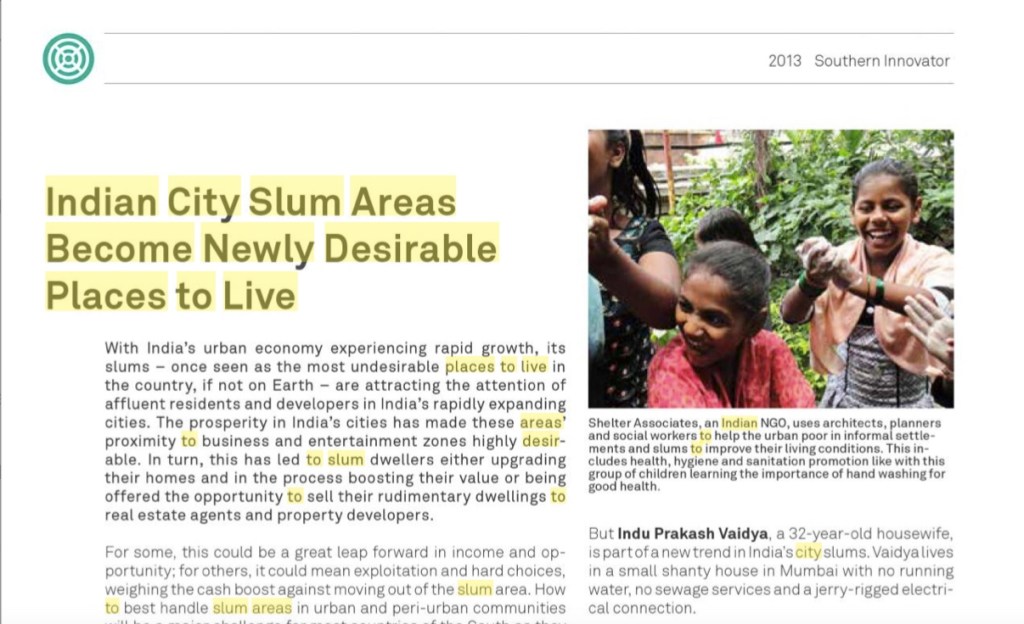
    With India’s urban economy experiencing rapid growth, its slums – once seen as the most undesirable places to live in the country, if not on Earth – are attracting the attention of affluent residents and developers inIndia’s rapidly expanding cities. The prosperity inIndia’s cities has made these areas’ proximity to business and entertainment zones highly desirable. In turn, this has led to slum dwellers either upgrading their homes and in the process boosting their value, or being offered the opportunity to sell their rudimentary dwellings to real estate agents and property developers.

    For some, this could be a great leap forward in income and opportunity; for others, it could mean exploitation and hard choices, weighing up the cash boost against moving out of the slum area.

    How to best handle slum areas in urban and peri-urban communities will be a major challenge for most countries in the South as they continue to urbanize.

    India’s phenomenal economic growth rate – forecast to be 7.9 percent this year by the Asian Development Bank, after averaging 7.7 percent per year over the past decade – has been the force behind an expanding middle class population, now estimated at 50 million people (McKinsey). Forecasts see it swelling from 5 percent ofIndia’s population to 40 percent by 2025.

    With 30 percent of the population living in urban areas and cities contributing 60 percent of the country’s GDP and 90 percent of government revenues (Wall Street Journal), city-dwellers’ fate is critical to the functioning of the economy.

    According to the 2001 Indian census, slums make up 25 percent of all housing and 26 percent of urban households lack access to sanitation facilities.

    But Indu Prakash Vaidya, a 32-year-old housewife, is part of new trend inIndia’s city slums. Vaidya lives in a small shanty house in Mumbai with no running water, no sewage services and a jerry-rigged electrical connection.

    Vaidya’s home is a just a single room for the five people in her family. They sleep on the cement floor and the ‘kitchen’ is a two-burner gas stove. The dwelling is so poorly constructed that they have to move around inside the room when it rains outside to avoid getting soaked.

    But her humble home has been valued at US $24,000 by people looking to buy it.

    According to real estate agent Hari Ram, the average price of a 91 square metre shanty home in Mumbai is now US $46,000.

    “Shanties as small as 120 square feet… are as expensive as US $93,000,” Dinesh Prabhu, a construction company owner, told NDTV television.

    Sixty percent of Mumbai’s 21 million people live in slums. And many are now finding themselves the subject of a property boom. This has led to the bizarre spectacle of luxury high-rise buildings sprouting up in a sea of slum housing. The slums are attracting the attention of those with money because many busy city workers face long commutes and are desperate for homes closer to work and entertainment areas.

    The value of living close to the action is summed up by one slum dweller:

    “People would kill to be in a place like this,” said slum dweller Sundar. “There are four local train stations close by. And the bus stop is a stone’s throw away.”

    Some say this real estate boom offers enormous potential for the poor.

    “All I can say is, given the current real-estate rates, those slums are invaluable,” said Sharad Mahajan of the Pune-based nonprofit organization Mashal (http://mashalindia.org).  Mashal focuses on the problem of urban shelter and also implements housing projects. It has been working in the Dharavi slum area with theMaharashtra government on its redevelopment. The slum is well-known for its representation in the film Slumdog Millionaire, and the area is next to the Bandra-Kurla Complex business district of Mumbai. Mashal has been mapping the area, home to 60,000 families, to make sure the redevelopment is fair to the families living there.

    Land tenure is an issue however. Many slum dwellers do not have official title to the land they live on. Over time, they have become semi-official places to live as governments have hooked many up to electricity and drinking water. Issues of corruption and exploitation are also other problems that need addressing if this real estate windfall is to actually benefit slum dwellers.

    Typical slum dwellers are day labourers and poor migrants. But others are people who good easily afford to live somewhere else but don’t want the long commutes to work.

    “It is simpler and less expensive to live here,” said Sankaralingam, a plastic merchant, who estimates his annual income at around US $9,300: an amount that could get him a home somewhere nicer.

    For Indu Prakash Vaidya, the dilemma – to sell or not to sell – makes for some painful choices. While her current home is prone to flooding during the rainy season, she feels she would have nowhere else to go if she sold the home.

    Yet the pressure to sell is great and elemental.

    “I have three children, and their education and well-being need to be taken care of. Financial constraints can push me to sell this shanty in the future, then where will I live? I will have nowhere to go,” she told NDTV. 

    Published: December 2011

    Resources

    1) New documentary Urbanized gives a passionate over-view of the challenges facing the rapidly urbanizing world around us. Website: http://urbanizedfilm.com/

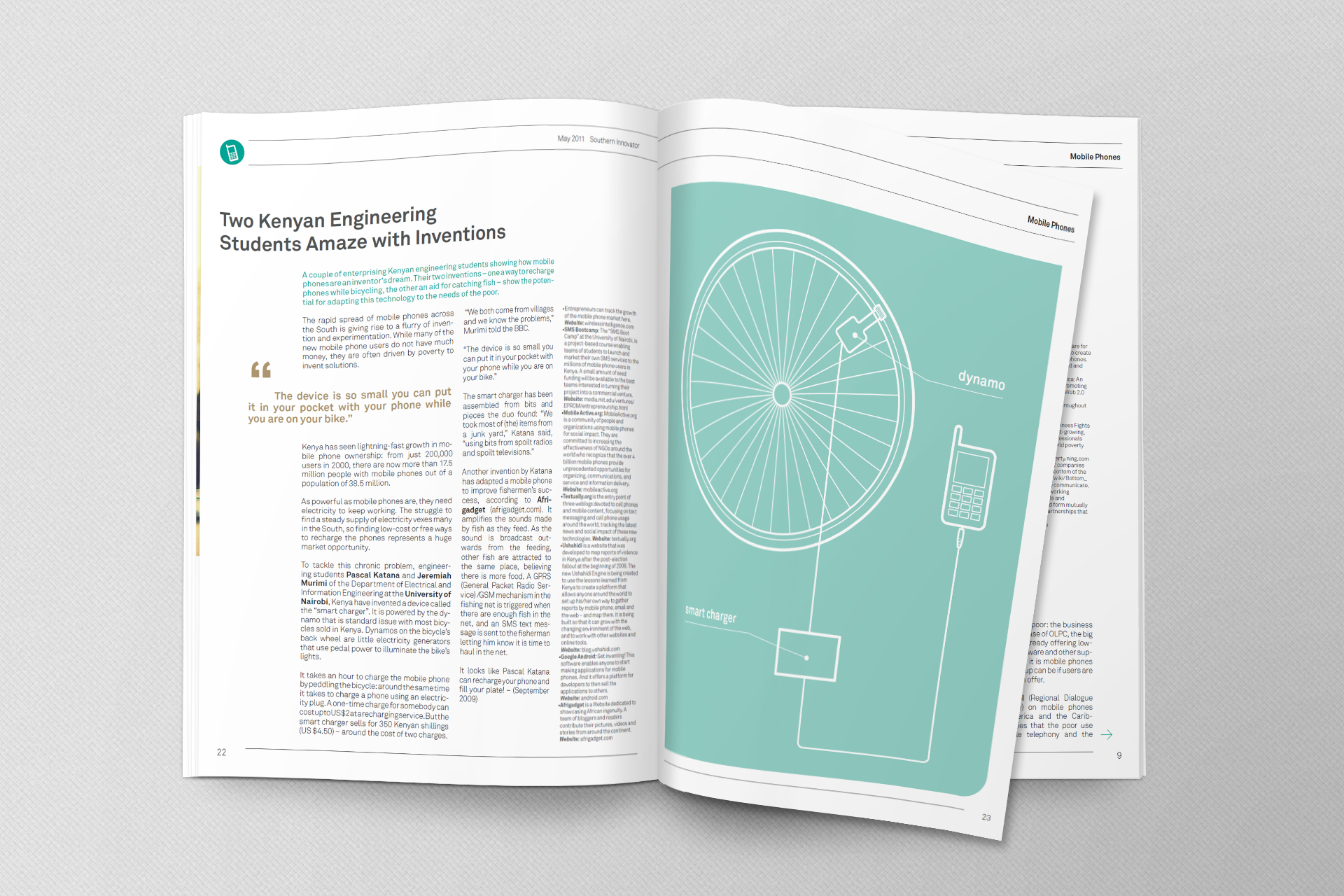
    Development Challenges, South-South Solutions was launched as an e-newsletter in 2006 by UNDP’s South-South Cooperation Unit (now the United Nations Office for South-South Cooperation) based in New York, USA. It led on profiling the rise of the global South as an economic powerhouse and was one of the first regular publications to champion the global South’s innovators, entrepreneurs, and pioneers. It tracked the key trends that are now so profoundly reshaping how development is seen and done. This includes the rapid take-up of mobile phones and information technology in the global South (as profiled in the first issue of magazine Southern Innovator), the move to becoming a majority urban world, a growing global innovator culture, and the plethora of solutions being developed in the global South to tackle its problems and improve living conditions and boost human development. The success of the e-newsletter led to the launch of the magazine Southern Innovator. 
    Creative Commons License

    This work is licensed under a
    Creative Commons Attribution-Noncommercial-No Derivative Works 3.0 License.

    ORCID iD: https://orcid.org/0000-0001-5311-1052.

    © David South Consulting 2023

  • Floating Bank Floats New Dreams for Brazilian Middle Class

    Floating Bank Floats New Dreams for Brazilian Middle Class

    By David SouthDevelopment Challenges, South-South Solutions

    SOUTH-SOUTH CASE STUDY

    Brazil’s booming economy has seen a dramatic increase in the size of its middle class. More and more people have been lifted out of poverty as a growing, stable economy overcomes years of political and economic instability. In 2010, Brazil’s economy grew by a record 7.5 percent, surpassing a previous peak in 1986 (Brazilian Institute of Geography and Statistics) (IBGE) (www.ibge.gov.br/english). The country’s gross domestic product (GDP) reached 3.67 trillion reais (US $2.21 trillion) in 2010, making it Latin America’s largest economy.

    This strong growth is being fuelled by growing domestic demand in Brazil.

    One key component in building personal wealth is the ability to save and bank. It is common across the global South for the poor and lower middle classes to be ignored by traditional banking services.

    Freezing large numbers of people out of banking services is a double problem. Individuals are being denied a safe way to store and grow wealth and borrow to improve their economic situation, and the wider economy suffers because many millions are left out of the mainstream economy and can neither consume high-value products nor use services beyond those that meet the basic needs of daily survival.

    This leaves many economies experiencing what can be described as a whirlpool effect: wealth spiralling around small clusters of people – for example those with privileged access to natural resources – but failing to spread across the whole of society. This has the effect of discounting the contribution made by the majority of a nation’s people. That majority is a market that needs tending to, not ignoring, as pioneers like the late C.K. Prahalad (http://en.wikipedia.org/wiki/C._K._Prahalad) have shown.

    In Brazil, one major bank has woken up to this fact and is pioneering services for millions of the nation’s “unbanked” (http://en.wikipedia.org/wiki/Unbanked). Even wealthy countries like the United States have large numbers of unbanked people, often those living paycheck to paycheck and with little or no savings. In the US in 2009, 7.7 percent of the population fell into this category (Federal Deposit Insurance Corporation) (FDIC).

    Banco Bradesco SA (www.bradesco.com.br) has pioneered reaching the poor and marginalised by opening branches in long-neglected places like the impoverished and crime-ridden shanty town favelas (http://en.wikipedia.org/wiki/Favela) that surround major cities like Rio de Janeiro and Sao Paulo. It is creating a path other businesses can follow.

    “Every bank will care about these people eventually,” Odair Rebelato, the executive heading Bradesco’s retail banking outreach programme, told The Wall Street Journal.

    According to FEBRABAN (http://www.febraban.org.br), the Brazilian Banking Federation, the number of bank accounts in the country has tripled in the past decade. It has surged from 42 million in 1997, to 126 million by the end of 2008. That still leaves around 50 million Brazilians who do not have bank accounts.

    It’s not just poverty that cuts many Brazilians off from banking services – there is also the problem of isolation.

    Brazil is home to the largest portion of the vast Amazon rainforest (http://en.wikipedia.org/wiki/Amazon_Rainforest), whose population is spread out in isolated villages reachable only by boat. The capital of Amazonas state, Manaus, is the economic hub of the region but transport links only connect it to major cities and not the region’s many isolated villages.

    A solution to both problems comes in the form of Bradesco bank’s Voyager III, a three-deck riverboat converted into a floating bank. Launched in November 2010, the white-and-blue 38 metre riverboat ventures up the Solimões River on a journey to 50 isolated communities in 11 municipalities.

    “It was something never seen before in the world – a floating branch,” Nézio Vieira, a Bradesco bank manager in São Paulo, told Monocle magazine. “We are now present in 100 per cent of Brazil’s municipalities.”

    Luzia Moraes is a former housewife and now the manager of the Voyager III’s floating bank. The bank offers savings and checking accounts, personal loans and direct deposits. Most of the customers are public servants, pensioners and the poor.

    It is a simple operation: a red banner is hung in a cramped former storeroom on the boat. Sitting behind a desk, Moraes has just three tools to offer the full banking services: a laptop computer, a printer and an automated teller machine.

    Enterprising and adventures, Moraes even uses canoes and rafts to reach out from the riverboat to even remoter villages.

    “Before, there were cases where people would take 10 to 12 hours by boat to get to a bank. It wasn’t worth it,” Vieira said. “To be able to serve these river-dwellers you need to go to them. Today the Voyager goes there.”

    The Voyager III has signed up more than 1,000 new account holders by touring the river. It heads off every two weeks from Manaus, reaching as far as a remote town on the border with Colombia and Peru, Tabatinga.

    The boat’s computers communicate with a satellite, allowing 24-hour access to the bank’s servers so people can access accounts and apply for loans.

    A regional lifeblood, the Voyager III also carries 500 tons of beans, chicken, bleach and other goods to sell on the 1,609 kilometre river journey. The boat can carry around 200 passengers for the trip.

    “People don’t know what to think,” Moraes told The Wall Street Journal, “but it’s not hard to explain that a bank can make things easier.”

    Published: May 2011

    Resources

    1) Kenya’s Equity Bank: By offering Kenya’s poor people savings accounts and microloans, Equity Bank has captured 50 percent of the Kenyan bank market. Website: http://www.equitybank.co.ke

    2) Safaricom M-PESA: Mobile phone banking in Kenya is proving highly successful. Customers can deposit, transfer and withdraw money using their mobile phones. Website: http://www.safaricom.co.ke/index.php?id=123

    https://davidsouthconsulting.org/2022/10/21/african-media-changing-to-reach-growing-middle-class/

    https://davidsouthconsulting.org/2021/08/29/brazilian-design-for-new-urban-middle-class-world/

    https://davidsouthconsulting.org/2022/10/20/global-souths-middle-class-is-increasing-prosperity/

    https://davidsouthconsulting.org/2022/11/15/indonesian-middle-class-recycle-wealth-back-into-domestic-economy/

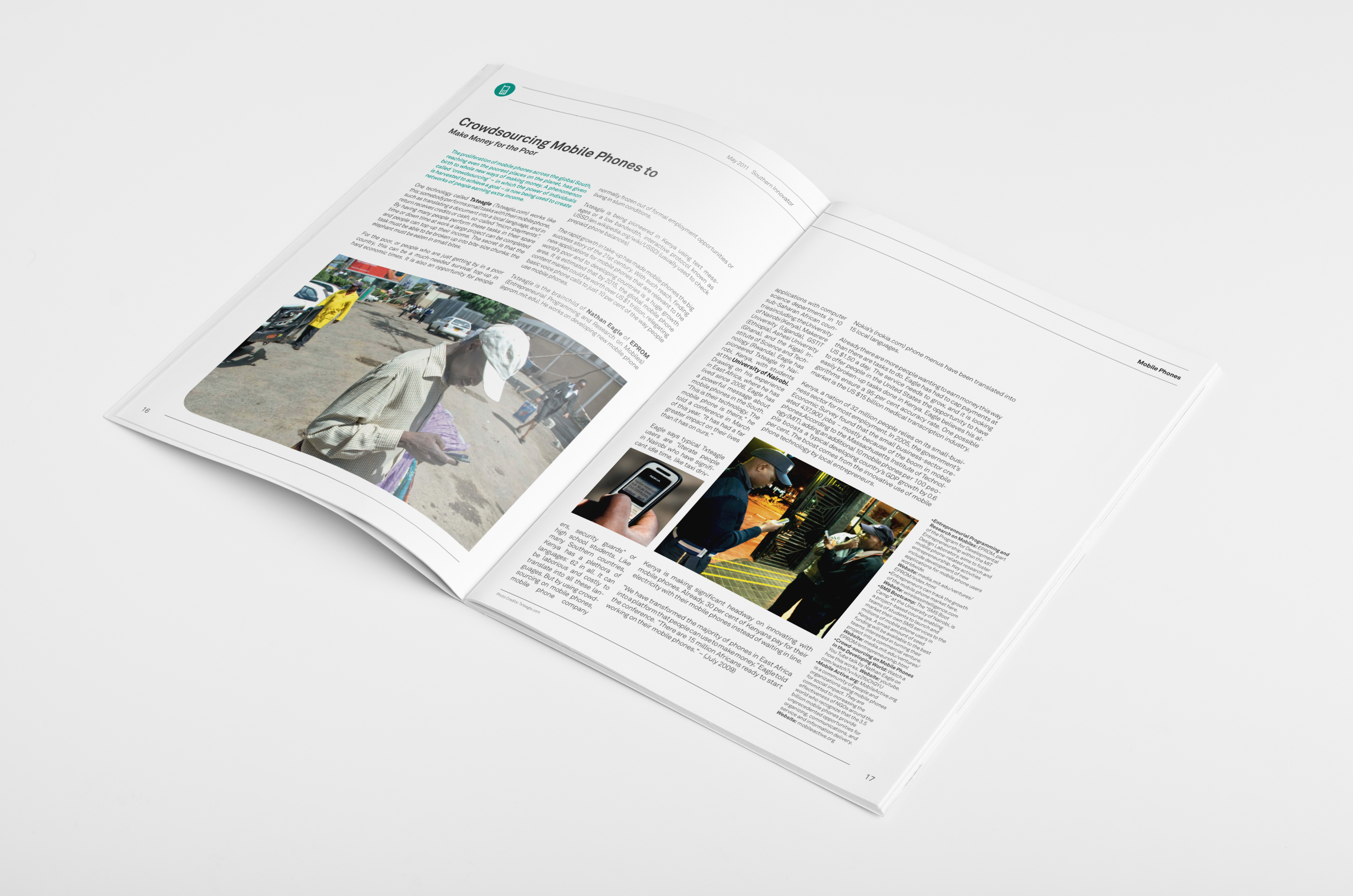
    Development Challenges, South-South Solutions was launched as an e-newsletter in 2006 by UNDP’s South-South Cooperation Unit (now the United Nations Office for South-South Cooperation) based in New York, USA. It led on profiling the rise of the global South as an economic powerhouse and was one of the first regular publications to champion the global South’s innovators, entrepreneurs, and pioneers. It tracked the key trends that are now so profoundly reshaping how development is seen and done. This includes the rapid take-up of mobile phones and information technology in the global South (as profiled in the first issue of magazine Southern Innovator), the move to becoming a majority urban world, a growing global innovator culture, and the plethora of solutions being developed in the global South to tackle its problems and improve living conditions and boost human development. The success of the e-newsletter led to the launch of the magazine Southern Innovator. 
    https://davidsouthconsulting.org/2021/03/05/southern-innovator-issue-2/

    Creative Commons License

    This work is licensed under a
    Creative Commons Attribution-Noncommercial-No Derivative Works 3.0 License.

    ORCID iD: https://orcid.org/0000-0001-5311-1052.

    © David South Consulting 2023