“I think you [David South] and the designer [Solveig Rolfsdottir] do great work and I enjoy Southern Innovator very much!”
Ines Tofalo, Programme Specialist, United Nations Office for South-South Cooperation
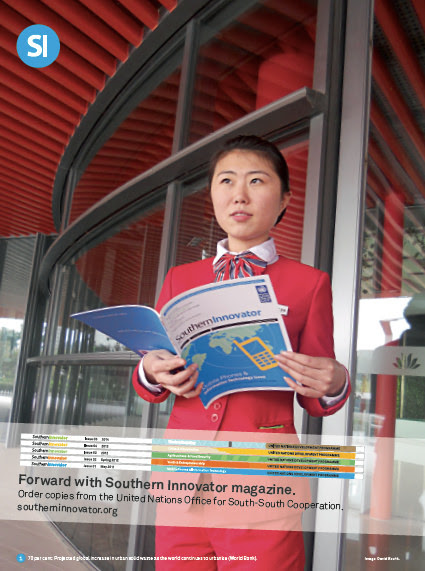
Southern Innovator in Tianjin, China.Issue 5 of Southern Innovator at the Global South-South Development Expo (GSSD Expo) 2014 held in Washington, D.C.Volunteers in Nairobi, Kenya pose with Southern Innovator Issue 4 at the Global South-South Development Expo (GSSD Expo) in 2013.Southern Innovator Editor and Writer David South in Australia.Southern Innovator Graphic Designer and Illustrator Sólveig Rolfsdóttir in Iceland.
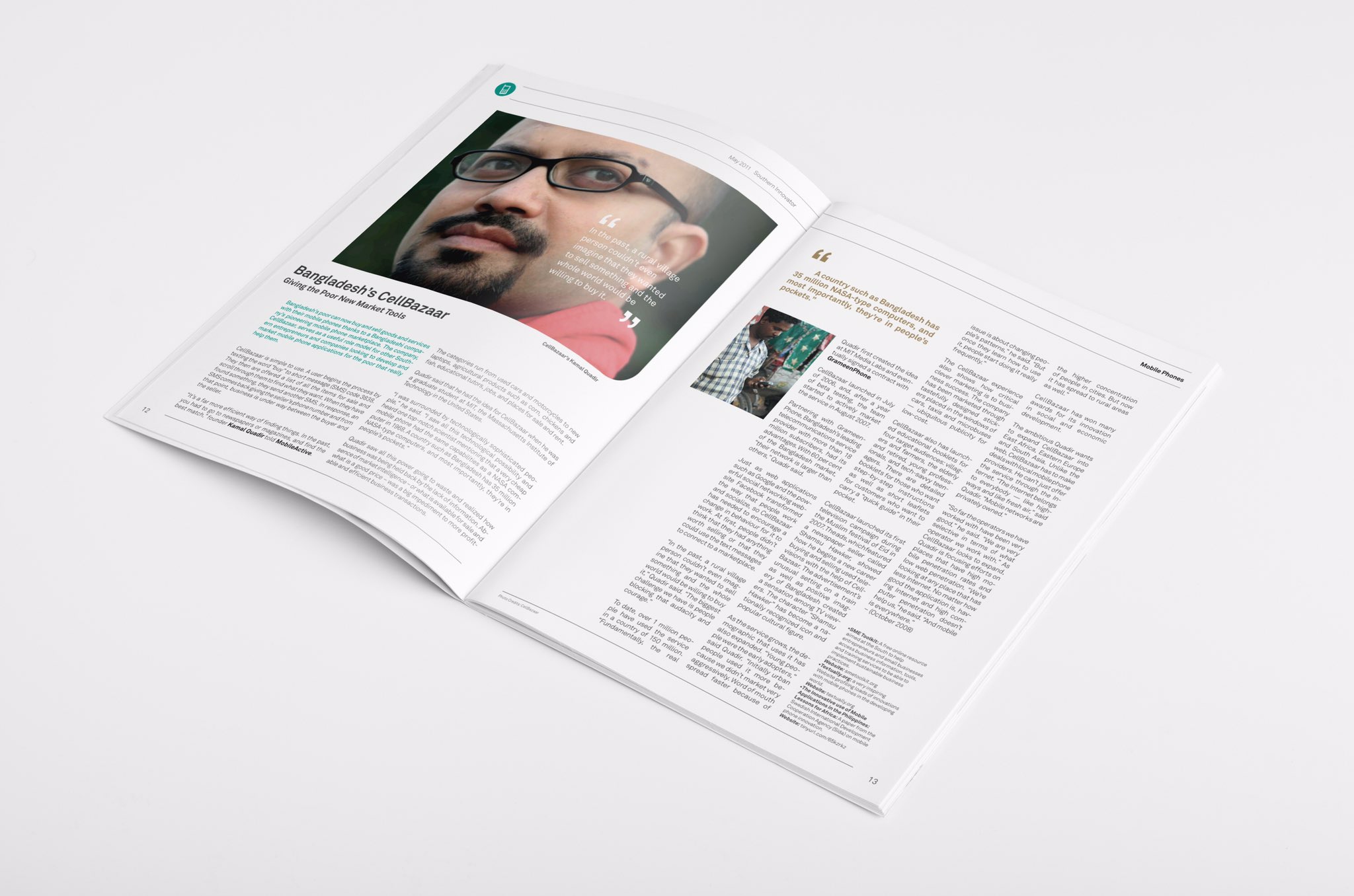
Some comments that have come in so far about SI’s first issue:
“What a tremendous magazine your team has produced! It’s a terrific tour de force of what is interesting, cutting edge and relevant in the global mobile/ICT space… Really looking forward to what you produce in issues #2 and #3. This is great, engaging, relevant and topical stuff.”, to “Looks great. Congratulations. It’s Brill’s Content for the 21st century!”
What they are saying about SI on Twitter: From @CapacityPlus Nice job RT @ActevisCGroup: RT @UNDP: Great looking informative@SouthSouth1 mag on South-South Innovation; @UNDP Great looking informative @SouthSouth1 mag on South-South Innovation; @JeannineLemaireGraphically beautiful & informative @UNDP Southern Innovator mag on South-South Innov.
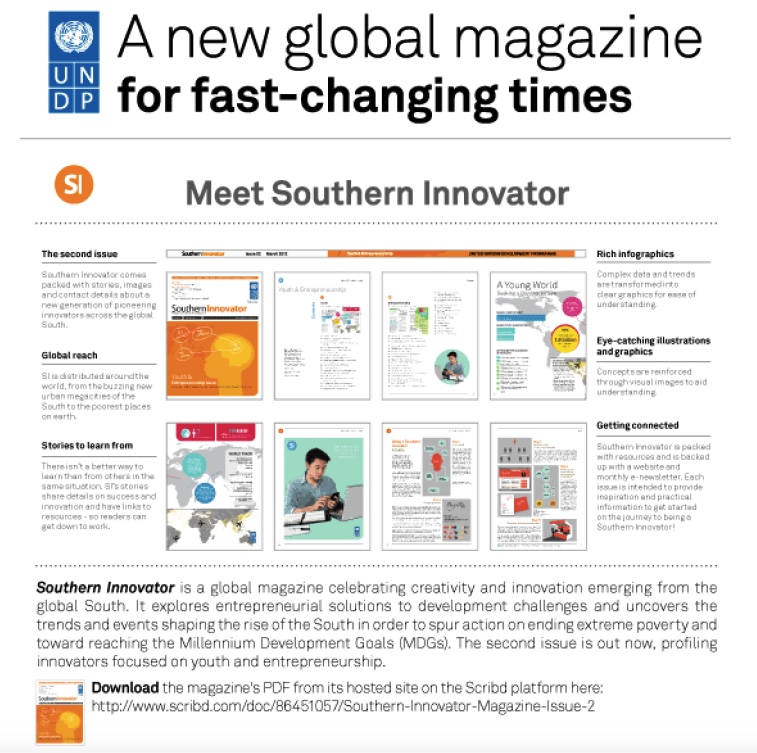
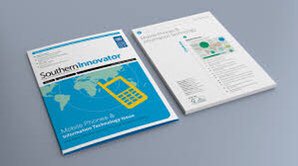
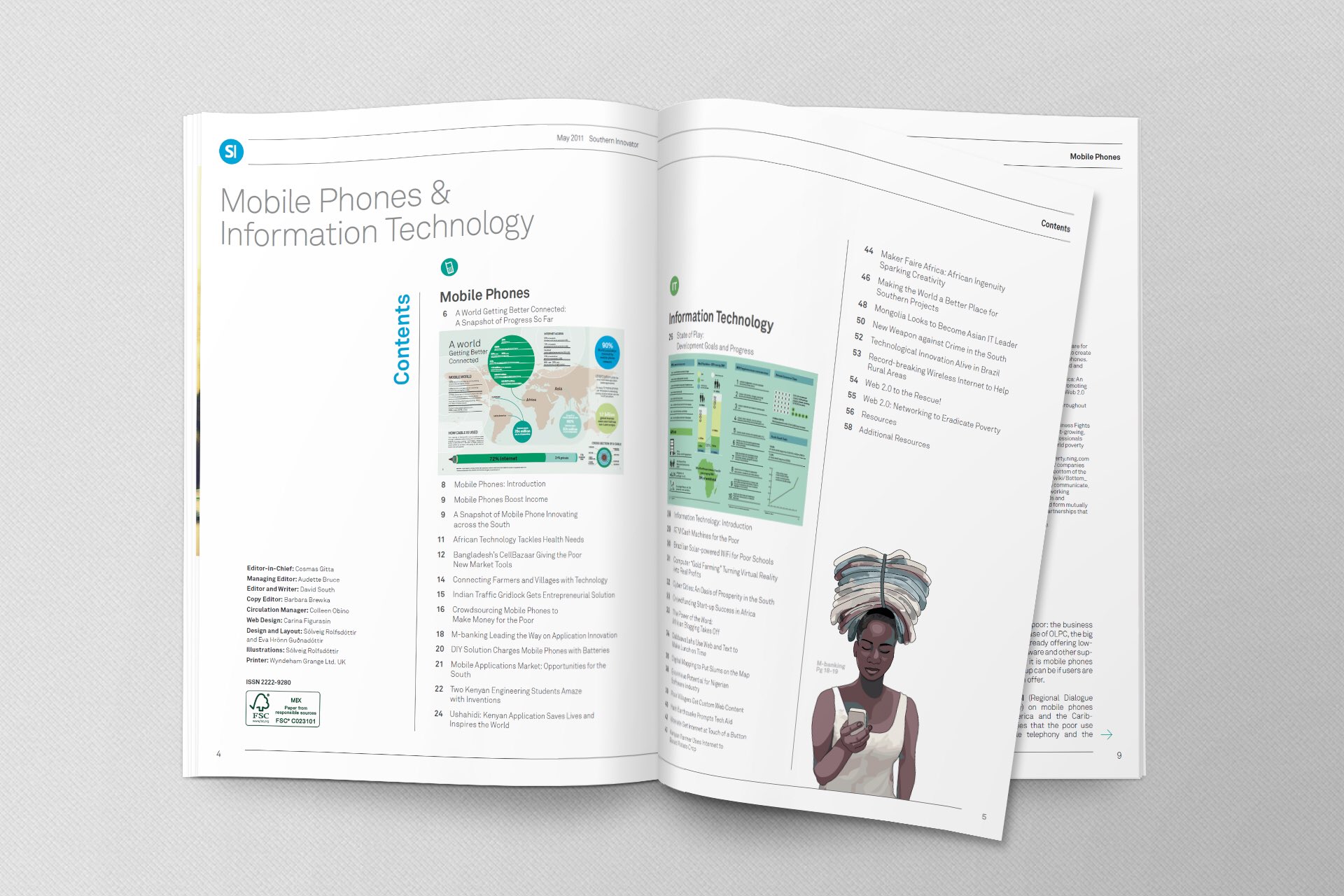
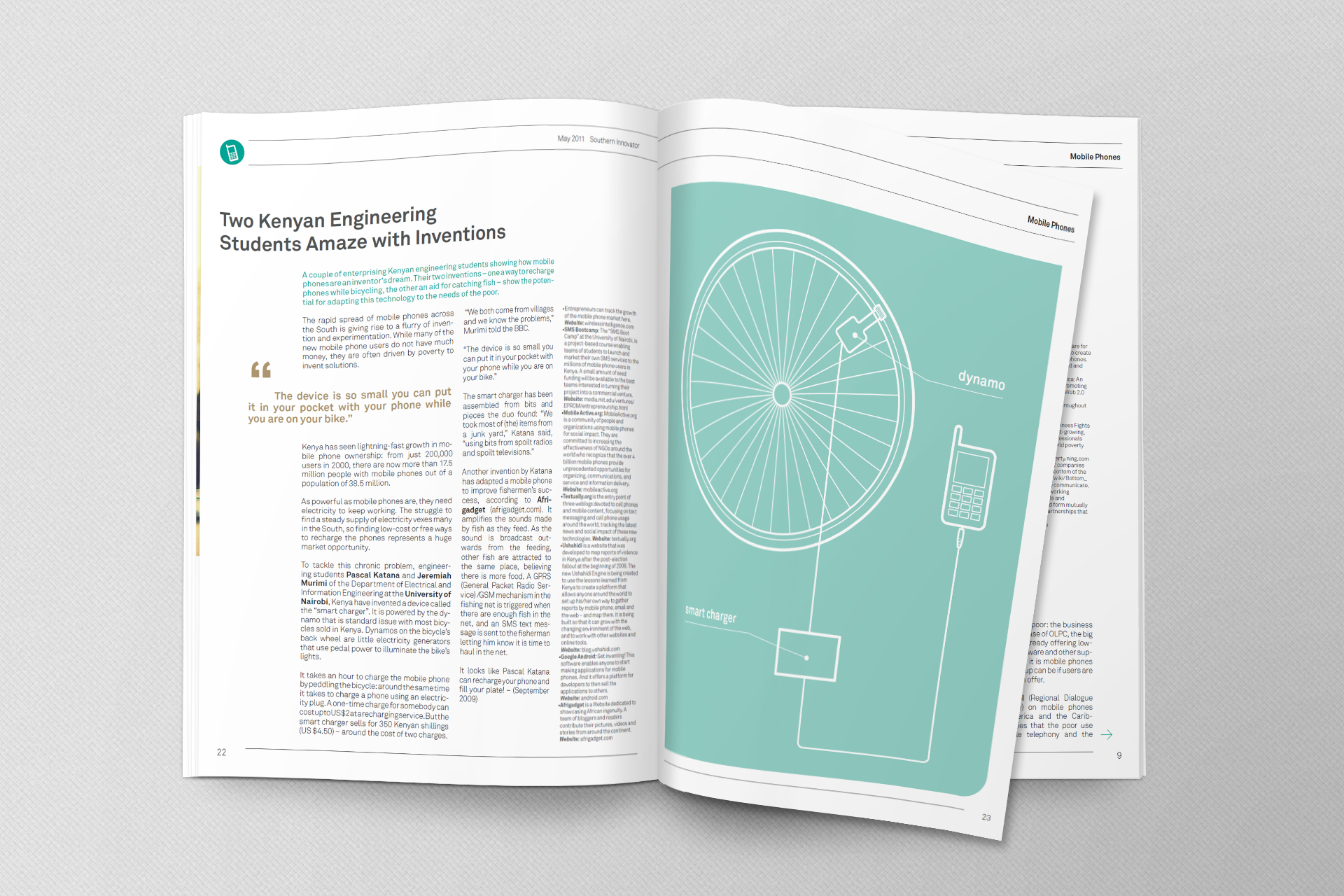
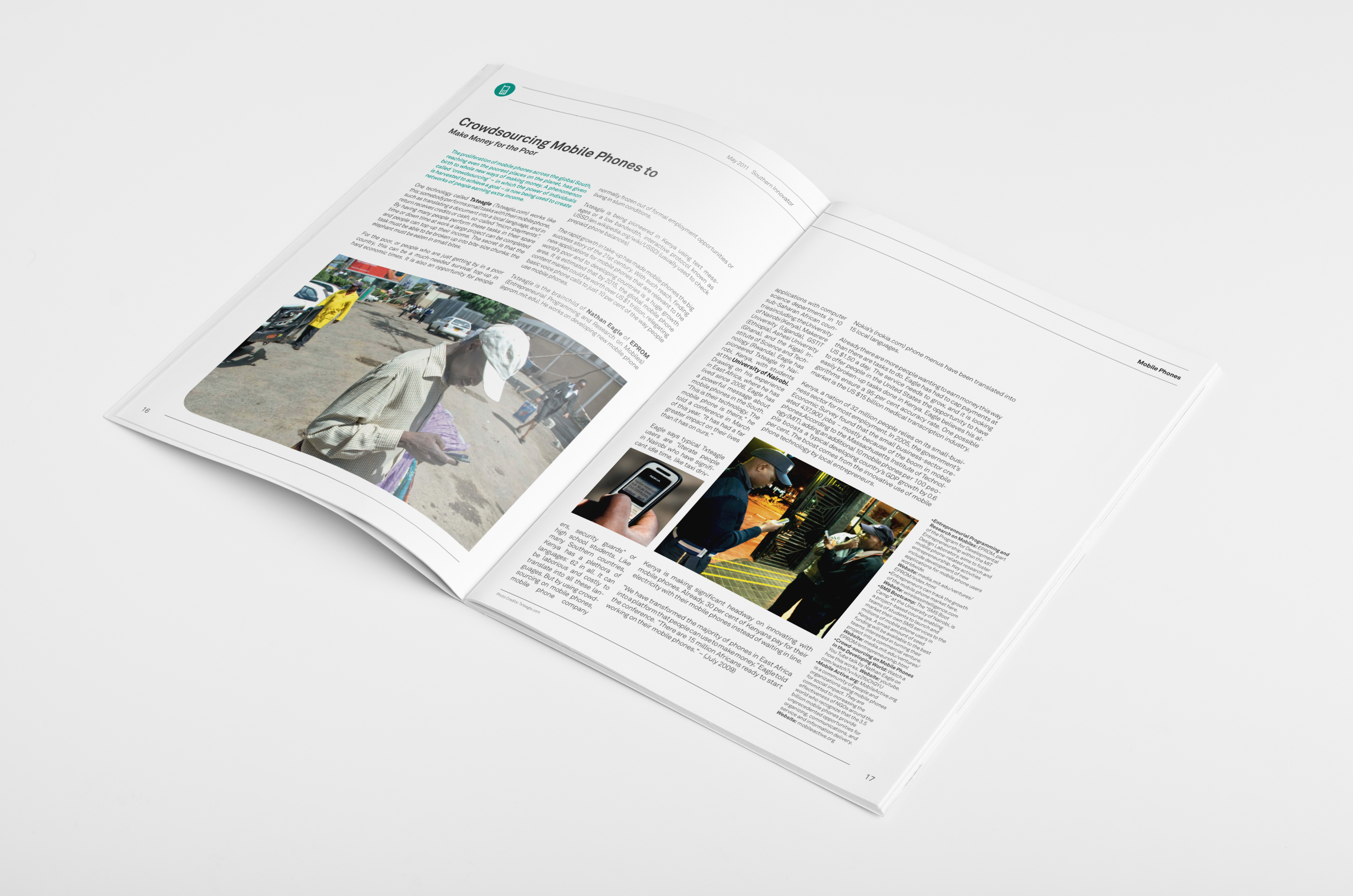
Development Challenges, South-South Solutions was launched as an e-newsletter in 2006 by UNDP’s South-South Cooperation Unit (now the United Nations Office for South-South Cooperation) based in New York, USA. It led on profiling the rise of the global South as an economic powerhouse and was one of the first regular publications to champion the global South’s innovators, entrepreneurs, and pioneers. It tracked the key trends that are now so profoundly reshaping how development is seen and done. This includes the rapid take-up of mobile phones and information technology in the global South (as profiled in the first issue of magazine Southern Innovator), the move to becoming a majority urban world, a growing global innovator culture, and the plethora of solutions being developed in the global South to tackle its problems and improve living conditions and boost human development. The success of the e-newsletter led to the launch of the magazine Southern Innovator.
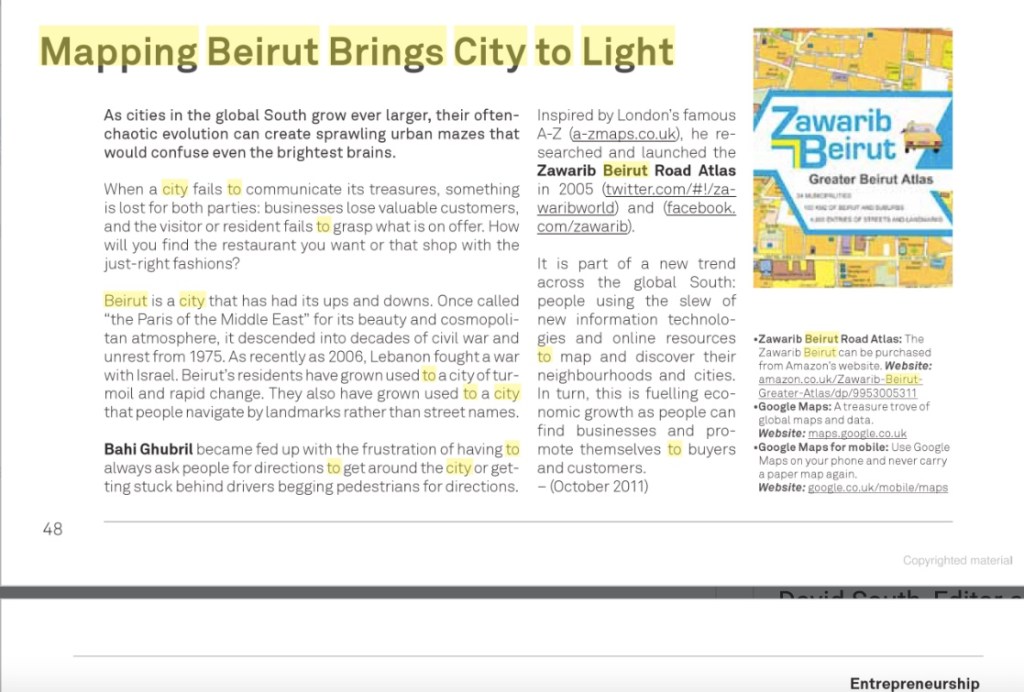
As cities in the global South grow ever larger, their often-chaotic evolution can create sprawling urban mazes that would confuse even the brightest brains.
Streets can be unnamed, unnumbered, twisty, full of dead ends and alleys. Informal settlements can pop up within weeks, whole neighbourhoods are razed to the ground and replaced by gleaming office buildings and apartments within months. Some countries experience political instability and conflict, disrupting daily life and making planning difficult. All this chaos makes business and travel more inefficient, especially to visiting businesspeople looking to trade or tourists simply wanting to look around.
When a city fails to communicate its treasures, something is lost for both parties: the city’s businesses lose valuable custom and the visitor or resident fails to grasp what is on offer. How will you find the restaurant you want, or that shop with the just-right fashions?
Beirut is a city that has had its ups and downs. Once called “the Paris of the Middle East” for its beauty and cosmopolitan atmosphere, it descended into decades of civil war and unrest from 1975, most recently in 2006 it had a war with Israel. Its residents have grown used to a city of turmoil and rapid change. They also have grown used to a city that people navigate by landmarks rather than street names.
Bahi Ghubril grew fed up with the frustration of having to always ask people for directions to get around the city, or getting stuck behind drivers begging pedestrians for directions.
It is part of a new trend across the global South: people using the slew of new information technologies and online resources to map and discover their neighbourhoods and cities. In turn, this is fuelling economic growth as people can find businesses and promote themselves to buyers and customers.
It took Ghubril two years to put together the first guide, gathering street images from satellite photos and then combining them with information collected on foot and from local mayors and cartographers.
“The project was born from a need to organise the city,” he told Monocle magazine, “but also as a socio-political project to open up the city to its residents and visitors.”
As an entrepreneur, Ghubril had no previous experience in publishing. He has been an actor and worked in finance.
During the research for the guide, Ghubril developed a rich knowledge of the city’s structure, its bureaucracy and how people really live their lives. His willingness to do this hard work is paying off.
Zawarib Beirut – which translates as Beirut Alleys – has successfully expanded into editions covering nearby cities, a pocket version, eight versions colourfully decorated by local artists, and the first Beirut bus map.
The service has a database including thousands of street names, landmarks, sectors and districts within the 34 municipal regions making up Greater Beirut. It includes useful phone numbers, car parks and a bus map. During holidays, like the Muslim holy month of Ramadan, it publishes a map of all of Beirut’s mosques.
Ghubril promotes the guide directly to the city’s residents. Wearing blue and black t-shirts asking “Lost? ask me,” young women help to distribute the guide on the streets of Beirut.
Other mapping projects depend on the mobile phones that are more and more part of daily life in the South’s slums – even for the poorest people. With the spread of mobile phones, it is becoming possible to develop a digital picture of a slum area and map its needs and population. It has become possible to undertake digital mapping initiatives to truly find out who is where and what is actually going on.
An NGO called Map Kibera (http://www.mapkibera.org) is working on an ambitious project to digitally map Africa’s largest slum, Kibera in Nairobi, Kenya.
The Map Kibera project uses an open-source software programme, OpenStreetMap (http://www.openstreetmap.org), to allow users to edit and add information as it is gathered. This information is then free to use by anybody wanting to grasp what is actually happening in Kibera: residents, NGOs, private companies and government officials.
The mappers physically travel around the favela and upload information on each individual landmark (restaurants, roads etc.) as they go. They use Nokia N95s mobile phones that are connected to Google Maps (http://www.maps.google.com). The project then uses Wikimapa (http://www.wikimapa.org.br), and Twitter (http://www.twitter.com) to log the information.
Published: October 2011
Resources
1) Zawarib Beirut Road Atlas: The Zawarib Beirut can be purchased from Amazon’s website. Website:http://www.amazon.co.uk/Zawarib-Beirut-Greater-Atlas/dp/9953005311
Development Challenges, South-South Solutions was launched as an e-newsletter in 2006 by UNDP’s South-South Cooperation Unit (now the United Nations Office for South-South Cooperation) based in New York, USA. It led on profiling the rise of the global South as an economic powerhouse and was one of the first regular publications to champion the global South’s innovators, entrepreneurs, and pioneers. It tracked the key trends that are now so profoundly reshaping how development is seen and done. This includes the rapid take-up of mobile phones and information technology in the global South (as profiled in the first issue of magazine Southern Innovator), the move to becoming a majority urban world, a growing global innovator culture, and the plethora of solutions being developed in the global South to tackle its problems and improve living conditions and boost human development. The success of the e-newsletter led to the launch of the magazine Southern Innovator.
With the so-called Arab Spring still unfolding across much of the Arabic-speaking world, it is easy to miss a rising new economic opportunity: The introduction of an Arabic domain name system for the Internet.
The explosion in mobile phones in the Arab world has dramatically increased the number of people who can now access the Internet. One Arabic financial website put the number of people who can now access the Internet in one way or another in the Arab world as 75 million (www.nuqudy.com). As highlighted in the 2003 Arab Human Development Report (AHDR), Arabic-speaking countries have been at a knowledge disadvantage for some time: more than 270 million citizens have access to fewer books than other languages, slower growth economies, and greater illiteracy than the faster-growing emerging economies. At the time, the AHDR found there were just 18 computers per 1,000 people compared to a global average of 78. And just 1.6 percent of Arabs had Internet access, one of the lowest ratios in the world (AHDR 2003).
Since the dawn of the Internet, Latin script has been used exclusively for top-level web domain names, the addresses that end .com, .org and so on. That has been a big obstacle for users of non-Latin script languages like Arabic. It is estimated just 10 percent of people in the Arab world speak English. Many of the resources on the Internet and its utility have been lost to these people. But by using Arabic domain names, there will be a consistency and no more guesswork.
A typical problem in Latin transliterations of Arabic is the conundrum as to either using El or Al as the prefix to a word. This problem is eliminated when Arabic is used.
The Arab world is also very mixed, including the resource-rich, cash-rich Gulf States – Kuwait, Qatar, United Arab Emirates, Saudi Arabia, Oman and Bahrain – and states with high rates of poverty such as Egypt, Djibouti and Yemen.
The protests and uprisings this year in Tunisia, Egypt and elsewhere – with their Facebook pages and Twitter streams – have shown that a growing group of highly Internet-savvy young people is emerging in the Arab world. But for many without the education or the resources, access to knowledge still remains weak. But armed with Internet-capable mobile phones and Arabic language domain names, rapid change is now possible.
The number of books published in Arabic is notoriously relatively low, and print runs are small. Arabic language books make up just 1.1 percent of world production.
The AHDR reports have called this knowledge deficit a direct obstacle to human development in Arab countries.
But things are changing and the rise of Arabic domain names offers the potential for an explosion in Arabic language Internet content.
In May 2010 ICANN, the world’s Internet domain authority, decided to allow top-level domains in non-Latin script. For Arabic speakers, it started this program in Egypt, Saudi Arabia and the United Arab Emirates.
As a sign of the importance of Arabic participation in future growth of the Internet, this year’s World Summit for the Information Society (WSIS) held in Geneva, Switzerland in May 2011 was sponsored by the United Arab Emirates (UAE).
A catchy domain name has many advantages. For Arabic speakers, this means they can type in Arabic domain names for websites and even do it right to left, as they do in print.
In 2009, the first Arabic domain name was grabbed by Egypt. As the Internet naming authority, the Internet Corporation for Assigned Names and Numbers (ICANN) (www.icann.org), started to allow the registering of non-Latin script names. The domain was for the Arabic word for Egypt or “.masr”.
As an early adopter, Egypt sees it as an important part of bringing more Arabic speakers online. George Victor, from the Egyptian National Telecom Regulatory Authority, told the BBC: “We believe that this is a great step that will open new horizons for many e-services in Egypt, and it will have its direct impact, enlarging the number of online users.”
Victor believes using Arabic builds trust.
“Having a domain name in your own language is a point of having a local identity,” he said.
“When talking about Arabic domain names, we are talking about having users which are not online now. People with languages disabilities – people who are having language as a barrier to connect online.”
From now on Internet address names will be able to end with almost any word in any language, offering organizations around the world the opportunity to market their brand, products, community or cause in new and innovative ways.
The advantages of registering an Arabic domain name are numerous. They include clear improvements to business and trade: an ability to protect a trademark, better communication with Arabic customers, better Arabic-language advertising opportunities, better memorability for Arabic domain names because they will be in the Arabic language, and greater access to Arabic customers.
But there are also significant improvements to how the Internet functions in the Arabic world. Search results on Arabic search engines will be more precise with Arabic domain names; catchy, memorable domain names will be a spur to the advertising and marketing industries; and a more Arab-friendly Internet will draw in more Arabic-speaking Internet users, helping them to enjoy the fruits of this great technological advance just as speakers of other languages have.
In March 2011, the Gulf state of Qatar enthusiastically started to offer Arabic domain names.
“The launch of Qatar’s Arabic top-level domain names is a major milestone as we work to build a more digitally inclusive society,” said Dr. Hessa Al Jaber, Secretary General of the Supreme Council of Information and Communication Technology, which will manage Qatar’s Internet domain names through the Qatar Domains Registry.
“As more organizations and individuals begin adopting Arabic domain names, the Internet will literally be opened up to broad new audiences. The Arab world represents a region with enormous potential for growth both in terms of usage and the creation of new digital content, especially Arabic content.”
ICANN’s President and Chief Executive, Rod Beckstrom, sees this as a new phase for the Internet: “ICANN has opened the Internet’s naming system to unleash the global human imagination. Today’s decision respects the rights of groups to create new Top Level Domains in any language or script. We hope this allows the domain system to better serve all of mankind.”
Published: July 2011
Resources
1) Watch the ICANN educational video “Get Ready for the Next Big Thing”, explaining how domain names work and what the changes mean. Website:http://www.icann.org
Development Challenges, South-South Solutions was launched as an e-newsletter in 2006 by UNDP’s South-South Cooperation Unit (now the United Nations Office for South-South Cooperation) based in New York, USA. It led on profiling the rise of the global South as an economic powerhouse and was one of the first regular publications to champion the global South’s innovators, entrepreneurs, and pioneers. It tracked the key trends that are now so profoundly reshaping how development is seen and done. This includes the rapid take-up of mobile phones and information technology in the global South (as profiled in the first issue of magazine Southern Innovator), the move to becoming a majority urban world, a growing global innovator culture, and the plethora of solutions being developed in the global South to tackle its problems and improve living conditions and boost human development. The success of the e-newsletter led to the launch of the magazine Southern Innovator.
While other parts of the world will spend 2011 worrying about their debt levels and how to spur economic growth, many factors are pointing to Africa potentially following a different story. A frenzy of activity has been building around Africa’s market opportunities and its growing middle class consumer population. Years of steady growth rates up to 2008 and the vast, untapped opportunities on the continent have sparked interest from investors and businesses alike.
Foreign direct investment (FDI) to developing economies rose by 10 percent in 2010 due to fast economic recovery and increasing South-South flows. Africa peaked in 2008 because of the resource boom and fell by 14 percent to US $50 billion in 2010 (UNCTAD). Rising FDI from Asia and Latin America has still yet to match the decline from developed countries – still the majority of FDI to Africa.
However, foreign direct investment to Africa had risen sixfold to US $58.56 billion between 2000 and 2009 (UNCTAD). The amount going to manufacturing and services has been growing, despite the slow down in 2009 because of the global economic downturn. Africa’s 11 largest economies are now being seen as the next to match Brazil and Russia, economic stars of the last few years.
The continent as a whole forms the 10th largest economy in the world. Of Africa’s more than 1 billion people, 900 million can be classified as part of the consumer economy. Out of this group, there is a third – approximately 300 million people – who make modest sums by Western standards, about US $200 a month, but have spare cash to buy things like mobile phones, DVDs and new clothes, or pay for better schools. They are the population that is overlooked when attention is focused only on the very poor living on less than US $2 a day.
This vast group is captured in the book Africa Rising by University of Texas professor Vijay Mahajan, which details the phenomenon of Africa’s middle class consumer society. He calls this group of middle class consumers “Africa 2,” with the desperately poor called Africa 3s, and the extremely rich Africa 1s.
This new group has expanded far beyond ruling elites and government workers. Many of its members work in the private sector, as secretaries, computer entrepreneurs, merchants and others who have benefited from consistent growth rates in many African countries.
The portion of African households with discretionary spending power rose from 35 percent in 2000 to 43 percent in 2008. The challenge will be to turn this wealth to the benefit of made-in-Africa businesses and to create stable, high-quality jobs to ensure this wealth effect lasts.
The new wealth effect can give Africa the tools needed to tackle its long-standing development challenges and lift more and more people out of poverty and misery while reducing dependence on foreign aid. And this can add rocket fuel to the surge toward meeting the Millennium Development Goals deadline in 2015 (http://mdgs.un.org/unsd/mdg/Default.aspx).
Consulting firm McKinsey (http://www.mckinsey.com/) believes Africa’s billion citizens should be seen as consumers and says the continent’s growing number of middle-income consumers now outstrips India’s. It boldly claims consumer spending will reach US $1.4 trillion in Africa by 2020, up from US $860 billion in 2008. Consumer spending rose by 16 percent a year from 2005 to 2008 before the global economic crisis.
It is forecast that 220 million Africans now frozen out of this consumer wave will become consumers by 2015 if current trends continue.
The IMF believes the steady growth will continue, with 5.5 percent growth for the 47 sub-Saharan countries this year.
That’s the good news. But many African countries still rank at the bottom in the World Bank’s Ease of Doing Business survey (http://www.doingbusiness.org/rankings). Africa remains a logistical nightmare for companies. Poor quality roads, inadequate harbours and inefficient rail systems, all make it difficult to move goods around the continent and across borders.
This makes distribution in Africa costly. Companies also often have to import building supplies and equipment to construct factories and plants. Then there is the unreliable electricity supply. Unable to trust local power supplies, many companies use their own electricity generators.
If handled right, new brands and companies are set to join African global success stories like Mo Ibrahim (http://en.wikipedia.org/wiki/Mo_Ibrahim), who founded the mobile telecommunications company Celtel.
Some of the new success stories include African companies pairing up with global firms as they seek local knowledge and experience. This will be a substantial opportunity for companies wise enough to organise themselves for global competition. In 2010, Sweden’s Electrolux – one of the world’s largest makers of home appliances – bought Egypt’s Olympic Group (http://www.ameinfo.com/145039.html), a North African powerhouse for household goods.
In the Ivory Coast, Nouvelle Parfumerie Gandour (http://www.npgandour.com/english/index.html) – makers of perfume, cologne, cosmetics and talcs – is an African cross-border success story. It has factories in Ivory Coast, Senegal, Morocco and Cameroon. Thirty percent of its profits come from exports, some of which are to the United States and Europe.
Sonatrach (http://www.sonatrach-dz.com/NEW/) in Algeria is the largest oil and gas company in Algeria and Africa. Is using its base in oil and gas exploration, production, pipeline transportation and marketing of hydrocarbons and by products, to move into other areas. It is increasing its investments in power generation, new and renewable energies, water desalination, and mining exploration and exploitation. Looking to grow its business with 30 percent coming from exports by 2015, it has spread across Africa ( Mali , Niger , Libya , Egypt ), to Spain , Italy , Portugal , United Kingdom , Peru and the United States.
Marwa (http://www.marwa.es/) from Casablanca, Morocco, is an African fashion success story. The brand started by Karim Tazi in 2003 began with just two stores in Casablanca and Rabat. It identified the niche of very fashionable but good quality and inexpensive clothing. It blends international trends with subtle influences from Moroccan tradition. Its prices hover between six euros for a t-shirt and 100 euros for a coat. It has successfully created a Moroccan high-street fashion look that can be exported. It has opened a branch in Zaragoza, Spain and is expanding to Riyadh, Saudi Arabia, Paris, France, Beirut, Lebanon and Istanbul, Turkey.
A survey by consultants AT Kearney (http://www.atkearney.com) found eight out of nine West African subsidiaries of global consumer goods companies discovered quicker revenue growth than their parent companies.
All this new wealth and growth provides substantial opportunities to African brands to build their businesses and markets. The big issue will be who will rise to the occasion and who will be clever enough to learn from existing African brands that are already thriving and have shown the way.
Two trends will also power this growth: urbanization and large youth populations. Africa’s youthful, urban population has already been reached by the telecoms sector through the rapid growth of mobile phones. More than 500 million subscribers have been signed up since 2000 (Informa Telecom and Media), a user base greater than the entire US population.
“By 2040, the continent will be home to one in five of the planet’s young people and will have the world’s largest working-age population,” according to Charles Roxburgh and Susan Lund, authors of a study for the McKinsey Global Institute.
“If Africa can give its young people sufficient education and skills, they could be a substantial source of consumption and production in years ahead.”
Published: January 2011
LINKS:
1) Afrique Avenir: Inspiring blog tracking Africa’s rising middle class and their global economic impact. Also great photo gallery The Other Africa, a photographic journey through all 54 African countries featuring the rising middle class. Website:http://www.afriqueavenir.org/en/
2) Afrocoffee: A design-savvy South African coffee shop chain that has expanded to Europe. It uses a modern African-themed design in its shops and product range. Website:https://www.afrocoffee.com/index.php?id=4&menustate=&L=1
3) Africa Rising: A book by Professor Vijay Mahajan on how Africa’s consumer economy is growing and growing. Website:http://tinyurl.com/2vk3m9n
4) Arise Magazine: Arise is a Nigerian style monthly started by Nigerian media mogul Nduka Obaigbena, who also publishes Nigeria’s leading newspaper, This Day. Website:http://www.arisemagazine.net/
Development Challenges, South-South Solutions was launched as an e-newsletter in 2006 by UNDP’s South-South Cooperation Unit (now the United Nations Office for South-South Cooperation) based in New York, USA. It led on profiling the rise of the global South as an economic powerhouse and was one of the first regular publications to champion the global South’s innovators, entrepreneurs, and pioneers. It tracked the key trends that are now so profoundly reshaping how development is seen and done. This includes the rapid take-up of mobile phones and information technology in the global South (as profiled in the first issue of magazine Southern Innovator), the move to becoming a majority urban world, a growing global innovator culture, and the plethora of solutions being developed in the global South to tackle its problems and improve living conditions and boost human development. The success of the e-newsletter led to the launch of the magazine Southern Innovator.

















 David South Consulting
You must be logged in to post a comment.