Tag: 2011

  • Model City to Test the New Urbanism Concept in India

    Model City to Test the New Urbanism Concept in India

    By David SouthDevelopment Challenges, South-South Solutions

    SOUTH-SOUTH CASE STUDY

    India’s phenomenal economic growth rate – forecast to be 7.9 percent this year by the Asian Development Bank, after averaging 7.7 percent per year over the past decade – has been the force behind an expanding middle class population, now estimated at 50 million people (McKinsey). Forecasts see it swelling from 5 percent of the population to 40 percent by 2025.

    India now boasts many fast-growing global companies and booming enterprise zones like the technology hub of Bangalore. But the country still comes in for heavy criticism of the way it has managed the growth of its cities. Poor planning and chaotic growth have left many cities with vast slum areas, congestion, poor hygiene and sanitation services, crumbling infrastructure and poor-quality transportation services. To more and more Indians it has become clear these factors are now serious impediments to economic growth and modernisation of the country and its economy.

    With 30 percent of the population living in urban areas and cities contributing 60 percent of the country’s GDP and 90 percent of government revenues (Wall Street Journal), city-dwellers’ fate is critical to the functioning of the economy.

    According to the 2001 Indian census, slums make up 25 percent of all housing, and 26 percent of urban households lack access to sanitation facilities.

    And as the middle class grows and its members accumulate savings, their desire to be better housed will also grow. They will be on the hunt for new places to live to realise their dreams. Those who can satisfy this strong urge will be those who will also profit.

    This is where the new city concept of Lavasa (www.lavasa.com) comes in. This new community sits nestled in picturesque mountains and features promenades, sidewalk cafes, and ice cream parlours, but none of the clichéd fixtures of today’s Indian cities: rickshaws, noise and pollution, poor sanitation and over-crowding. It has apartment houses in mustard, terra cotta, ochre, olive and beige. It is also going to have a medical campus, luxury hotels, boarding schools, sports academies, a golf course, a space camp, animation and film studios, software-development companies, biotech labs and law and architectural companies. A thoroughly ‘knowledge economy’ mix that India’s aspiring classes wish to see the country embrace for its future development.

    The people behind Lavasa see it as a new model of governance and urban development for India in the 21st century.

    Lavasa is located in Western Ghats, 200 kilometres southeast of Mumbai, India’s financial and entertainment capital, and 65 kilometres west of Pune, a centre for software programming and computer animation.

    Lavasa’s colourful and detailed website boasts it as a “private hill city being developed by Lavasa Corporation Limited where people can live, work, learn and play in harmony with nature.” It’s billed as “an inclusive city, based on the principles of New Urbanism.”

    The master plan is to house more than 300,000 people divided in to five linked towns.

    The first town, Dasve, will be completed in 2011. Its houses are selling well and are almost sold out, according to its developers.

    Lavasa is the concept of Ajit Gulabchand, chairman of Hindustan Construction Company, an Indian company with extensive experience building bridges and dams.

    The development is located in the remote hills along the Varasgaon Lake, a reservoir providing water to Pune. Lavasa Hill City covers “25,000 acres with 60 Kms of lakefront” according to its website. The land had originally been designated for holiday homes, but this seemed too small an aspiration.
    Lavasa will be governed by a private corporation. It is also being planned according to the principles of New Urbanism (www.newurbanism.org) – a belief in cities built around walkability not cars, where business and residential sit side-by-side, with mixed income housing and lots of green space for parks.

    The corporation will take responsibility for providing all major utilities: running water, electricity, sewage treatment, garbage collection and fibre optic connections.

    This thoroughly modern approach has startled prospective buyers of homes, puzzled there weren’t water tanks on the roofs and septic tanks for each house: something they had come to expect with current Indian cities.

    The Lavasa Corporation has hired an American city administrator, Scot Wrighton, to run the new city.

    He told The Atlantic magazine that Lavasa offered him “a chance to build a new governance model for a country where governance at the municipal level does not work.”

    The project seeks to exploit a portion of Maharashtra state law that lets corporations assume many of the responsibilities normally provided by, or in the domain of, the state. These do not include police powers or the ability to raise taxes but take in pretty much everything else.

    Lavasa has private security guards to watch over its residents and funds itself through home sales, renting, and business deals. The prices for apartments in the development range between US $17,000 and US $36,000. While cheap by Western standards, this is still expensive to middle class Indians.

    The project has come in for criticism for being just for the wealthy and being a pipe dream in chaotic India.

    In response to criticism, Gulabchand is introducing cheaper apartments targeting young professionals and starter homes that he claims will rent for US $11 a month. This far lower monthly rent could make the development affordable for more people, including domestic servants and laborers.

    Gulabchand admitted the plan was not without risks. “We’re worried we’ll still get slums,” he said. “Do we have all the answers yet? No. It is still an experiment, okay?”

    As for charges the development doesn’t look much like the ‘real’ India, Gulabchand says: “Why should we look to the past? India is a young society.”

    But Gulabchand doesn’t think India has the time to waste pondering these aesthetic questions: the country has a desperate need for better quality living conditions.

    “We may not get a perfect Singapore-style model city,” he told The Atlantic. “But this is a model for a more vibrant, inclusive, greener place that still has soul.”

    Published: September 2011

    Resources

    1) New documentary Urbanized gives a passionate over-view of the challenges facing the rapidly urbanizing world around us. Website: http://urbanizedfilm.com/

    https://davidsouthconsulting.org/2021/03/05/southern-innovator-issue-4/

    https://davidsouthconsulting.org/2022/09/28/model-cities-across-the-south-challenge-old-ways/

    https://davidsouthconsulting.org/2020/12/04/model-indian-villages-to-keep-rural-relevant/

    Creative Commons License

    This work is licensed under a
    Creative Commons Attribution-Noncommercial-No Derivative Works 3.0 License.

    ORCID iD: https://orcid.org/0000-0001-5311-1052.

    © David South Consulting 2022
  • African Manufacturing Pioneers Proving it is Possible to Thrive

    African Manufacturing Pioneers Proving it is Possible to Thrive

    By David SouthDevelopment Challenges, South-South Solutions

    SOUTH-SOUTH CASE STUDY

    Africa’s paradox is that it is home to the greatest share of the world’s unexploited resources, yet has some of the world’s lowest per capita incomes. History has shown that exploiting the continent’s resources alone for export markets does little to improve incomes and living conditions in Africa, which in turn does nothing to improve human development. The key to resolving this paradox is made-in-Africa jobs, in particular high-value jobs that make products.

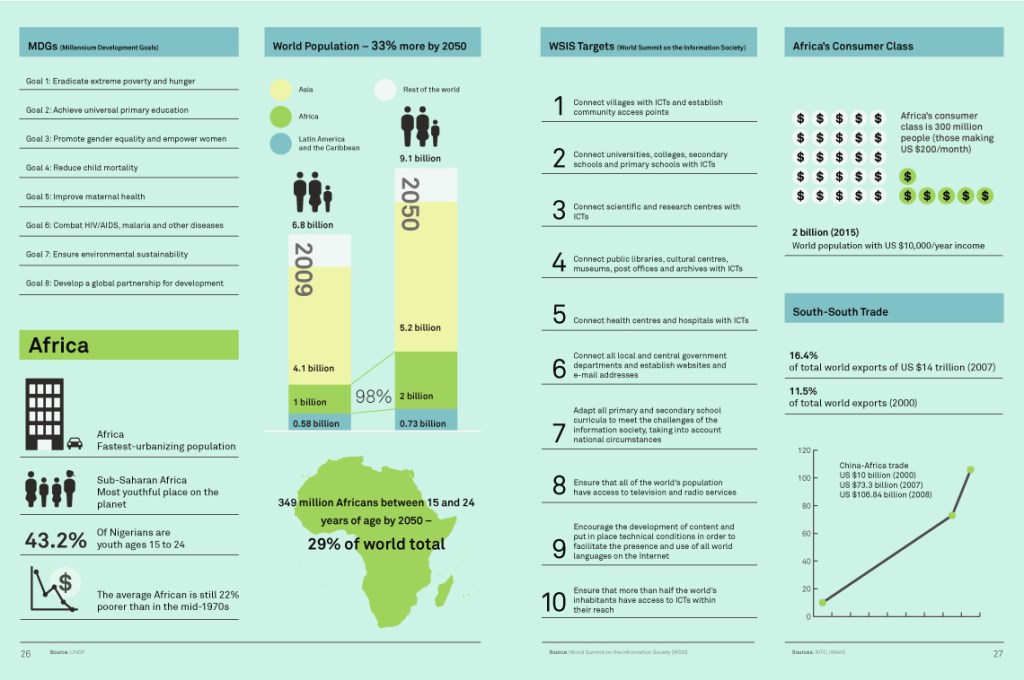
    Africa still mostly makes its income from exporting raw commodities, from minerals to fuel to food. In the 1990s, Asian countries exported five times more manufactured goods, as share of GDP, than sub-Saharan Africa. Things changed in the 2000s. African manufactured output has roughly doubled over the last 10 years. And those goods are going more to the emerging economies than to the traditional powers (African Economic Outlook).

    African Economic Outlook points out that by 2009 “trade between African countries and emerging powers equalled that between Africa and its traditional partners.”

    “South-based manufacturing enhances the welfare of African consumers via prices and functionality,” the report says.

    “For instance, generic Indian pharmaceuticals are cheaper than brands from traditional partners.”

    Small and medium enterprises (SMEs) have been identified as a key part of Africa’s future prosperity and key to its ability to reduce poverty and achieve development objectives like the Millennium Development Goals (MDGs) (www.un.org/millenniumgoals).

    The sector is large but its economic power is inefficiently used. Telling the Wall Street Journal, Mthuli Ncube, chief economist at the African Development Bank Group, estimated one-quarter of Africa’s gross domestic product — about US $450 billion — comes from 65 million small and medium-sized enterprises.

    Manufacturing has been difficult to measure because so many businesses are just tiny cottage industries.

    Obstacles to growth include poor infrastructure, unreliable power supplies, unscaleable business models, low quality standards and poor quality branding and design.

    Access to funding is often weak and fragmented and many programmes run by international donors and banks targeting SMEs are uncoordinated and duplicate resources. The global economic crisis has not made these factors any easier.

    But things are changing in many areas. The booming technology, consumer goods and resource sectors offer hope for a manufacturing renaissance.

    There are examples from Africa defying the sceptics and showing it is possible to expand and export manufactured, finished goods that meet international standards.

    What they have in common is a sophisticated product offering and an ability to meet international export standards. They also have overcome obstacles that scare away more timid international rivals.

    Nigerian shoe and garment maker Fut Conceptus (www.futconceptus.com) has been taking raw Nigerian leather that was once just sent overseas for export, and instead is turning out high-quality shoes and bags made in Nigerian factories. These shoes – made in African, Spanish and Italian styles – meet international standards and are exported aroundAfrica. It has also established operations in Spain and the United Kingdom.

    Started in 2008, the company got off to a good start by seeking out the best expertise to train its staff. Shoe-making experts fromSpainwere brought in to do the training. The company also imported top-quality machinery fromItalyandSpainto make sure its operations were modern and efficient.

    These first, smart moves have meant the company is able to run an efficient and high-skilled operation inNigeriawhile also making its products to international standards. This is critical for a start-up business: the better the quality of the product in the beginning, the better the chance for accessing lucrative export markets. And the better and more efficient the manufacturing processes, the better chance a company will have meeting increasing demand and tight deadlines. It is one thing to make the best shoe in the world, but if you cannot deliver the quantity required for orders, then your reputation will be damaged.

    Fut Conceptus is able to produce 22,000 pairs of sandals and 10,000 pairs of safety boots a day, according to its website.

    Fut Conceptus Manufacturing Nigeria Ltd. also found a way to thrive in the country’s difficult and erratic conditions. To deal with the unreliable power supply, they run four electric generators. This costs them US $500 a day in fuel. This power problem scares off multinational companies, leaving the market open for Fut Conceptus. The company has been able to use this first-mover advantage to build its brand acrossWest Africa. It currently makes men’s moccasins, slippers, law enforcement footwear, safety footwear, and ladies’ sandals.

    Founder Olumide Wole-Madariola is proud of the achievement. “Nobody was ready for what we were doing… Nobody was ready for ‘Made inNigeria,’” he said.

    South African sauce maker Primolitos (www.primolitos.com) has become one of the few African companies able to meet international standards for food exports. It makes a vast range of products (http://www.primolitos.com/index.php?option=com_content&view=article&id=10&Itemid=12), from juices to sauces, spices, pickles, soups and baked goods.

    The company has been around for over a decade and sells 2,000 products. It has also set-up a sister division to specialise in liquid and powdered food sachets. The company also has a clear “Quality Policy”, championing collective decision-making between management and staff, delivering “quality and safe consumer products”, and a system to quickly respond to consumer complaints and recall substandard products. All ingredients for building trust in a business.

    It also has an ISO 20 0002 (www.iso.org/iso/home.html) accredited factory, complete with three testing labs, a training room, test kitchen, care centre for employees’ children, a wellness centre, laundry, high-tech water filtration and purification systems and the latest in hygiene and manufacturing processes. All of this a clear example of the commitment required to build a quality company that can export.

    Over at Good African Coffee, Ugandan entrepreneur Andrew Rugasira is pioneering new ways to process coffee inAfrica. He set upUganda’s first enterprise to make instant coffee two years ago. This is a radical departure from the old practice of exporting the coffee beans to Europe for processing into instant coffee, which would then be exported back toAfrica.

    “For decades, Africans have produced what they do not consume and consumed what they do not produce,” Rugasira told the Wall Street Journal.

    The company has developed unique distribution arrangements for its instant coffee. A recent deal included providing coffee for an American network of 12,000 churches.

    The company’s products are cleverly designed and packaged and are sold in distinct colour-coordinated packets. The company also passionately champions “trade not aid” as the long-term solution toAfrica’s economic growth (http://www.goodafrican.com/index.php/our-story/trade-not-aid.html).

    On the African islandof Madagascar, a company is trying to reverse the practice of exporting Africa’s cocoa beans for manufacturing into chocolate products. The Madecasse Chocolate LLC. (http://madecasse.com) is a collaboration between American entrepreneur Tim McCollum and Madagascan chocolatier Shahin Cassam Chenai. The company is making a range of chocolate and vanilla products for US supermarkets.

    “IfAfricacould sell the world chocolate…it wouldn’t solve all the continent’s problems, but it could make a big dent,” McCollum told the Wall Street Journal.

    Africais believed to produce 60 to 70 percent of the world’s cacao supply. Less than one percent is made inAfricaand most is made into chocolate outside the continent.

    Madecasse’s high-quality chocolate bars sell in the USfor US $6 each. Their market niche is to make “a single-origin chocolate, made entirely in Madagascar, which rivals the flavour of the best European chocolates”, according to its website. Flavours (http://store.madecasse.com) include pink pepper and citrus, cinnamon and sakay (a type of Madagascan hot pepper sauce), exotic pepper, sea salt and nibs, Arabica coffee, and baking chocolate. They also sell the world-famous Madagascan vanilla beans and extract. All are sold in colourful and well-designed packaging and sold on their website.

    Chenai is a self-taught chocolate maker and works with a local team to refine the Madécasse chocolate.

    “Connoisseurs knowMadagascarproduces some of the best cocoa in the world,” maintains Chenai. “My passion is to prove we can produce some of the best chocolate in the world.”

    Published: December 2011

    Resources

    1) SME Toolkit South Africa: A website packed with resources and support for anyone starting a small business in Africa. Website: http://southafrica.smetoolkit.org/sa/en

    2) African Guarantee Fund for Small and Medium-sized Enterprises: The AGF provides guarantees and technical assistance to financial institutions in Africa with the objective of generating enhanced growth in the SME sector and increasing employment opportunities in the economy, particularly for youth. Website: www.afdb.org/en/topics-and-sectors/initiatives-partnerships/african-guarantee-fund-for-small-and-medium-sized-enterprises/

    3) Small and Medium Enterprise Support, East Africa: A blog promoting events and support for SMEs in East Africa. Website: http://smeseastafrica.blogspot.com/

    4) Integrating Developing Countries’ SMEs into Global Value Chains: A paper from UNCTAD (2010). Website:http://www.unctad.org/en/docs/diaeed20095_en.pdf

    Creative Commons License

    This work is licensed under a
    Creative Commons Attribution-Noncommercial-No Derivative Works 3.0 License.

    ORCID iD: https://orcid.org/0000-0001-5311-1052.

    © David South Consulting 2023

  • Press Release 1 | Southern Innovator

    Press Release 1 | Southern Innovator

    Press Release for General Distribution

    New Magazine Targets Innovators in Global South

    United Nations, New York, 20 September 2011

    • Global magazine Southern Innovator profiles innovation culture ending poverty
    • 60-page color magazine gives snapshot of fast-changing world

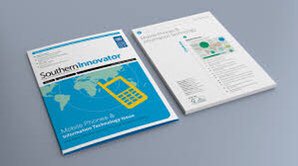
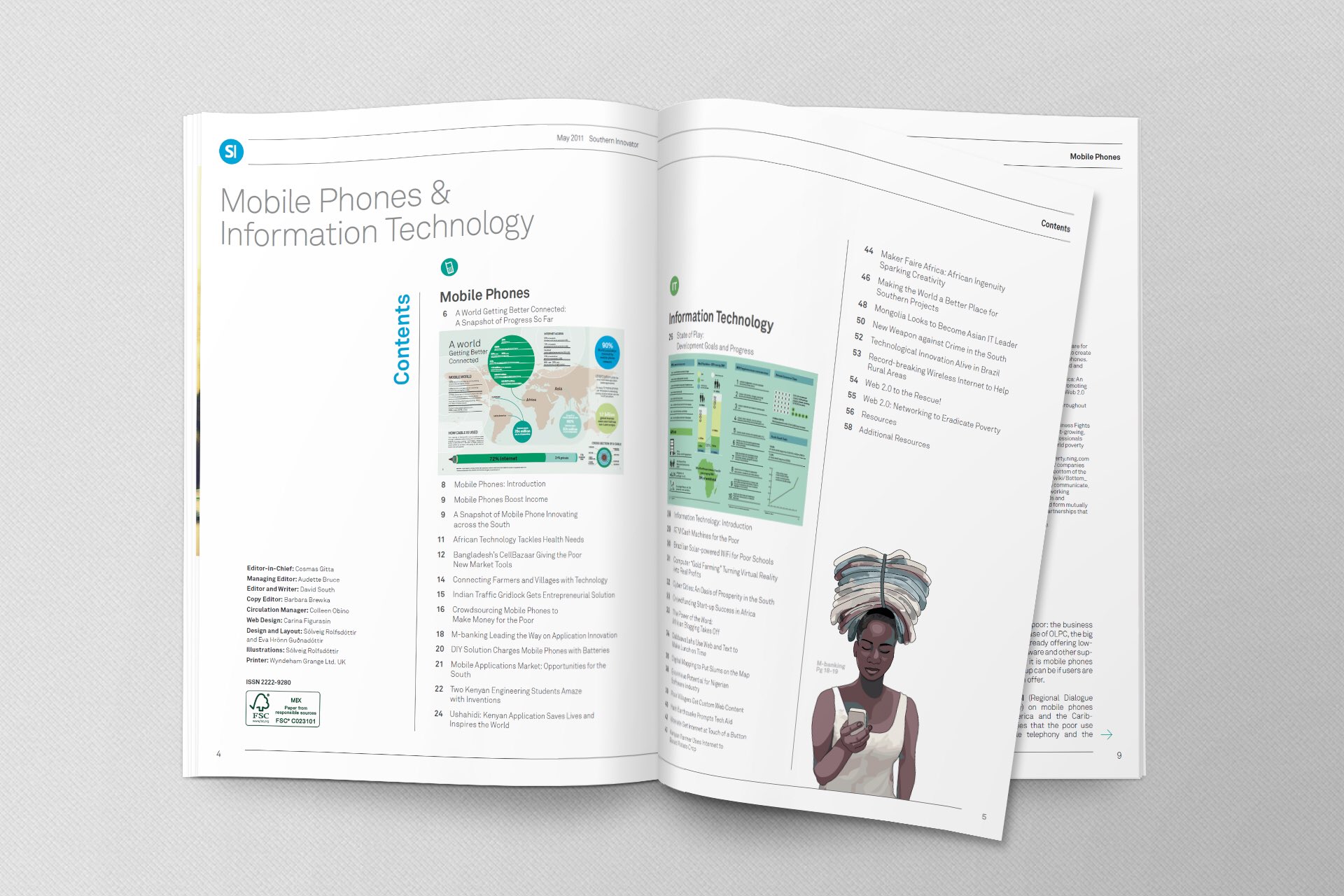
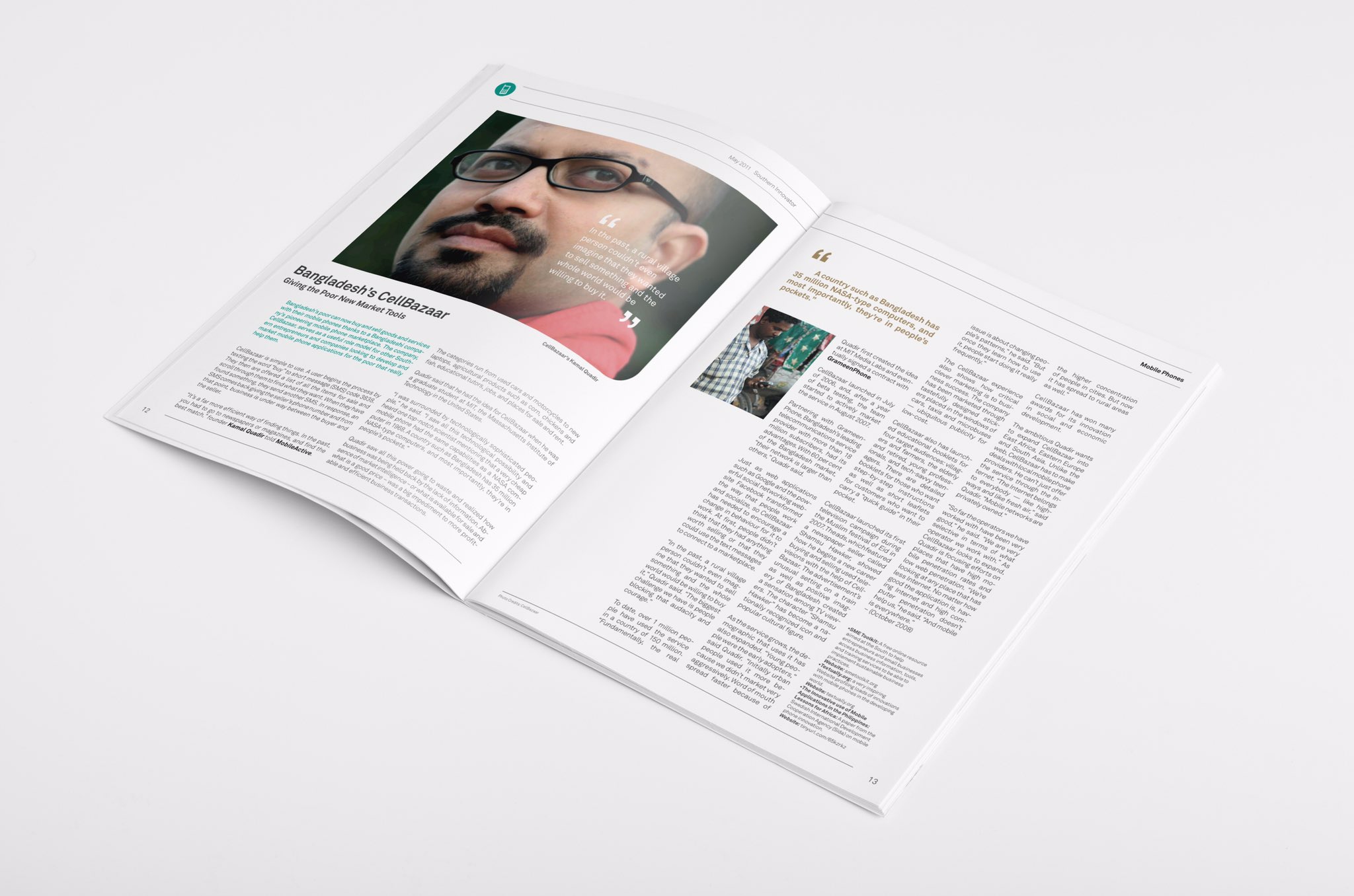
    Southern Innovator (SI) is a new magazine for a fast-changing world. It profiles and celebrates the innovators across the global South finding new ways to tackle poverty, create wealth and improve human development and achieve the millennium development goals (MDGs). In its first issue, Southern Innovator features the people who are re-shaping new technologies – from mobile phone ‘apps’ to Internet technologies – to overcome poverty and to improve the quality of life in some of the poorest places on earth.

    SI is based on intensive research and is produced by UNDP’s Special Unit for South-South Cooperation (www.southerninnovator.org). The Unit is the leading organisation in the world tasked with the goal of sharing knowledge across the global South. It organises events including the yearly South-South Expo (www.southsouthexpo.org), a roaming celebration and gathering of Southern innovators previously held in New York and Geneva, Switzerland. This year’s Expo will be held in Rome, Italy (5 to 9 December 2011).

    SI is being distributed around the world through the United Nations network and partners and reaches some of the poorest and remotest places as well as the vibrant but stressed growing global megacities. It is hoped the magazine will inspire budding innovators with its mix of stories, essential information, facts and figures, images and graphics. The magazine will evolve based on reader responses and this first issue is very much the beginning of a journey. As became clear while researching this first issue, many things can change in a short space of time. Few could have imagined the rapid take-up of mobile phones in Africa and how these phones have become integral to development goals across the continent.

    SI magazine is a quarterly publication and the next issues will launch in September and December of this year.

    A summary for publication is here:

    “Southern Innovator (ISSN 2222-9280) is a quarterly magazine published by the United Nations Development Programme’s Special Unit for South-South Cooperation. Launched in May 2011, SI is a new magazine celebrating creativity and innovation emerging from the global South. It explores entrepreneurial solutions to development challenges and uncovers the trends and events shaping the rise of the South in order to spur action on ending extreme poverty and toward reaching the Millennium Development Goals (MDGs).”

    We hope you enjoy the magazine and find its content interesting and illuminating: a snapshot of a fast-changing world awash, as we found out, with innovators, creators and do-ers making their world a better place.

    For more information on Southern Innovator contact Cosmas Gitta at cosmas.gitta@undp.org or editor David South at southerninnovator@yahoo.co.uk.

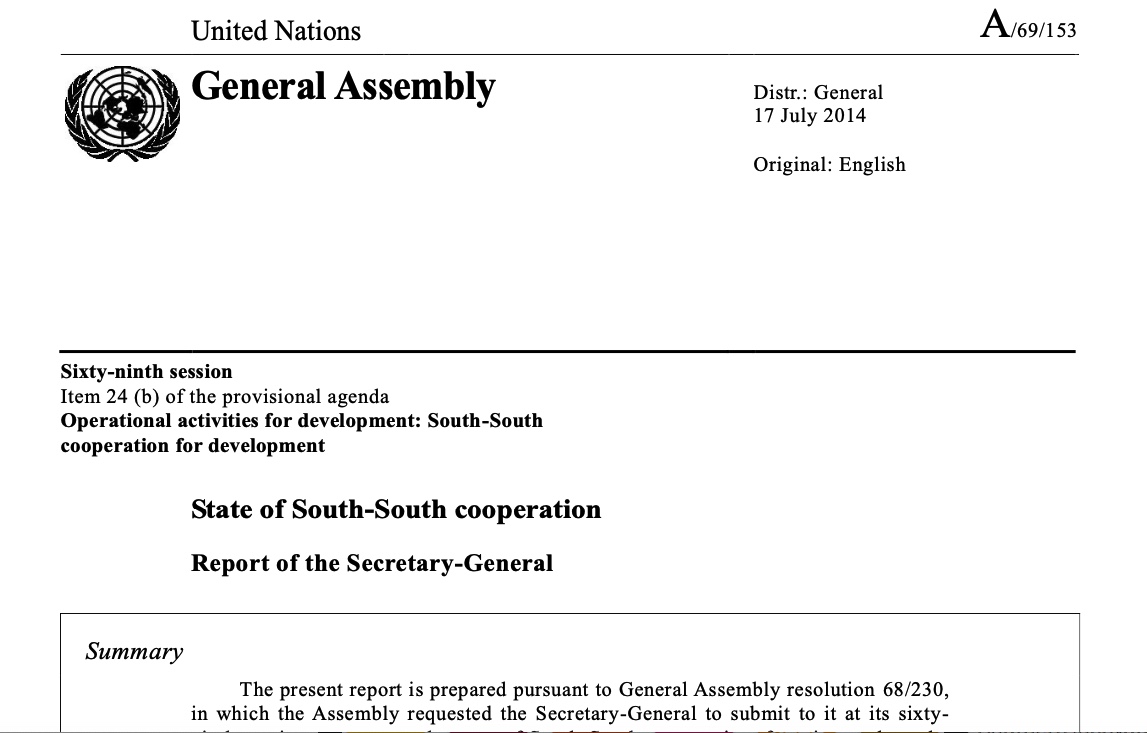
    United Nations General Assembly: Sixty-ninth session, Item 24 (b) of the provisional agenda, Operational activities for development: South-South cooperation for development, 17 July 2014.
    The research informing Southern Innovator Magazine played a part in the formulation of the UN’s post-2015 development agenda, including the Sustainable Development Goals (SDGs).

    https://davidsouthconsulting.org/southern-innovator-scale-up-fundraiser/

    ORCID iD: https://orcid.org/0000-0001-5311-1052.

    © David South Consulting 2022

  • Turning African Youth on to Technology

    Turning African Youth on to Technology

    By David SouthDevelopment Challenges, South-South Solutions

    SOUTH-SOUTH CASE STUDY

    An African NGO believes the Internet is the single biggest key to rapid development in Africa – and it is working to connect youth, women and rural populations to the web, and in turn, switch them on to the vast resources stored across the world’s Internet sites.

    After initial successes with a youth project and with farmers, Voices of Africa (VOA) (http://www.voicesofafrica.info) is now seeking to scale up its work to fan out across Africa – and take its services to the world’s largest refugee camp, the Dadaab Refugee Camp in Kenya. 

    The youth and technology empowerment NGO has developed a business model to deliver low-cost Internet access and e-resources to Africa’s slums and rural farmers.

    VOA argues that “the digital divide, defined by a lack of access to information for a specific population, symbolizes the largest difference between developed and developing countries: the opportunity to obtain and utilize information.”

    “The digital divide runs much deeper than hardware and software,” it says. “While equipment is necessary it is not sufficient. The real heart of the digital divide is that those without access to information resources often suffer needlessly while the solutions to their problems are floating in the air.”

    But why is the Internet so important?

    “The internet puts the choice of content at the fingertips of the user,” explains executive director Crystal Kigoni. “Traditional media is one way communications. Internet is bi-directional.

    “Our NGO is completely grassroots. We train the people who train the people. It is an each one, teach one philosophy and is highly effective. We also design our projects to be self-sustainable after one year of successful implementation.”

    The philosophy behind Voices of Africa – “Sustainable Development through Information Empowerment” – is to give people the information and resources to take better control of their lives.

    Access to the Internet in Africa is patchy and, for the poor, an expensive resource. The penetration of mobile phones in Africa has been spectacular in the past five years. But there are limits to the resources people can afford to access with their phones. Issues abound about data costs, mobile phone networks, and mobile phone capability.

    VOA targets youth and women in sub-Saharan Africa through online educational resources offered on their e-learning website (http://elearning.voicesofafrica.info/). The resources have been certified by Nazarene University (http://www.anu.ac.ke), a private university in Nairobi, Kenya.

    The e-learning resources include high quality training videos, presentations and screencasts (http://en.wikipedia.org/wiki/Screencast) – like a movie, it is a digital recording of changes on a computer screen and is used to teach software – to share on the web. The resources are also shared through compact discs (CDs) and iPods (http://en.wikipedia.org/wiki/IPod).

    Project coordinator Nick Kungu coordinates the staff working on the pilot Kenyan projects: a Rural Internet Kiosk; a Youth Empowerment Center; and KiberaNet, which launched in August 2011. VOA uses a part-time and volunteer staff of more than 20 Kenyans and four international ‘virtual’ volunteers.

    The group is also working with farmers in Kutus, central Kenya, to help them get a better price for their products and introduce sustainable agriculture practices. This is done through online courses so the farmers do not need to travel. It is hoped by doing this they can improve the supply of food for the country.

    The Youth Empowerment Center in Webuye constituency of the Western province of Kenya involves a partnership with the government of Kenya to teach computer basics, research and data collection, social media, ICT (information communication technology) for development, social business and community health.

    In rural areas, the need for information cannot be overestimated. In the remote countryside, there are few schools with adequate resources and almost no community libraries. The lifesaving knowledge the people require has to date been completely beyond their grasp. As one rural woman in the Western province of Kenya exclaimed to VOA after encountering the resources on the Internet, “It is like being brought from the darkness into the light.”

    Another project in development is SlumNet, which seeks to combine the Internet with low-cost devices like tablet computers and netbooks. Its pilot scheme, KiberaNet, launched this month in the Kibera slum of Nairobi, Kenya to test the business model. VOA hopes to then expand it to Uganda, Tanzania, Ghana, Nigeria and Sierra Leone. It is using a business model to bring low-cost Internet access to Africa’s slums that is fully funded by the local communities and the users.

    It has identified the key needs of youth in slums that need to be met: a way to access the vast resources available on the Internet; a way to generate income, undertake low-cost learning, and organise for social justice; ways to overcome social, economic and political isolation; a way to access affordable equipment and resources to improve their quality of life in the short-term.

    To make it a sustainable business model, the community takes a 60 percent stake in the incorporated entity. Voices of Africa will select six local civil society organisations to take another 10 percent stake in the business. VOA takes 10 percent and the remaining 30 percent will be open to outside investors.

    It involves setting up a closed intranet system and Internet access covering the entire Kibera slum, which has an estimated population of 2 million, a majority under the age of 30.

    KiberaNet hopes to act as a community hub for socialising, education and generating content. A key part is creating an atmosphere that is welcoming to novices. The business model is about delivering the bandwidth of Internet access and simultaneously generating a sustainable source of income to keep it going. Partners in the business include Promote Africa, Plexus Group and Future Optics Networks.

    VOA also has been blogging about its time in Kenya’s Dadaab Refugee Camp (http://www.unhcr.org/cgi-bin/texis/vtx/page?page=49e483a16) at their website, www.voicesofafrica.info, and has been developing plans to expand services to the camp, home to over 400,000 refugees from drought and famine in Somalia. The camp was only designed to hold 90,000 people. The chronic food insecurity has caused a massive humanitarian crisis in the Horn of Africa, leaving over 10 million people in need of help.

    “There are plenty of resources going in but it is aid business as usual,” claims Kigoni. “You see lots of waste in many areas, and a lack in others that would be extremely beneficial. Hence, why Voices of Africa has come up with the youth technology and empowerment plan that accompanies a general information and communications system, DadaabNet.”

    DadaabNet will be a youth-run community Internet service and education service. VOA plans to use a wireless intranet, internal communications systems and low-cost internet access in the refugee camp.

    The project is the first of its kind in Dadaab and a first in Kenya, claims VOA, allowing free educational content without needing to access the Internet

    The intranet will host free educational videos that can be accessed by mobile phones and computers. The topics covered in the videos include health, nutrition, sanitation and computer training and how to use technology for sustainable development.

    The curriculum is also approved by Nazerene University to certificate level.

    The system is supervised and would be able to offer resources to other NGOs seeking to provide services to the camp’s residents. The intention is to open up opportunities for education and employment youth who are currently unemployed.

    At present the youth in the camp, many of whom have not completed secondary school, get by ‘hustling’ for work, according to VOA. By being left to their own devices, there is a risk they will fall into negative behaviour like crime and drug use or be preyed upon by terrorist organisations operating in the area like al Shabaab, they maintain.

    “In our dreams, everyone everywhere in the world can have the opportunity to develop their minds. It is through this creativity that Africa will rise,” concludes Kigoni.

    Published: August 2011

    Resources

    1) The Impact of Mobile Phones on Profits from Livestock Activities by Roxana Barrantes. Website: http://www.mendeley.com/research/impact-mobile-phones-profits-livestock-activities-evidence-puno-peru-14/

    2) 2011 UNHCR Country Operations Profile – Kenya. Website: http://www.unhcr.org/cgi-bin/texis/vtx/page?page=49e483a16

    3) Southern Innovator magazine: New global magazine Southern Innovator’s first issue is out now and is about Mobile Phones and Information Technology in the global South. Website: http://www.scribd.com/doc/57980406/Southern-Innovator-Issue-1

    Creative Commons License

    This work is licensed under a
    Creative Commons Attribution-Noncommercial-No Derivative Works 3.0 License.

    ORCID iD: https://orcid.org/0000-0001-5311-1052.

    © David South Consulting 2023