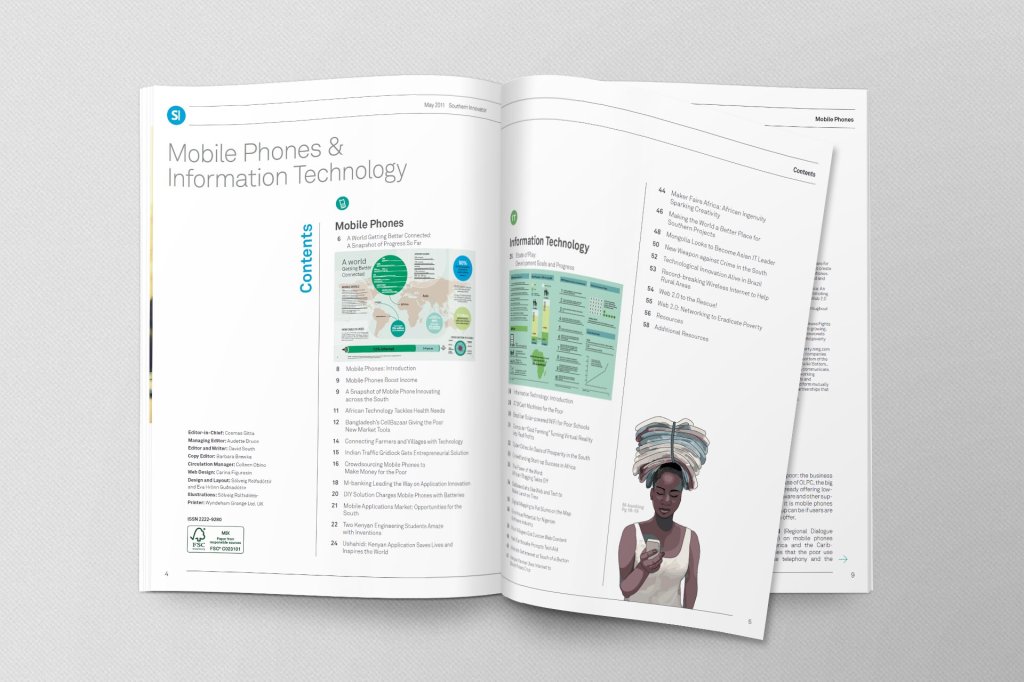
Launched in 2011, Southern Innovator’s first issue on mobile phones and information technology proved highly influential, profiling the work of a new generation of innovators. It has been cited in books, papers and strategic plans.
“What a tremendous magazine your team has produced! It’s a terrific tour de force of what is interesting, cutting edge and relevant in the global mobile/ICT space… Really looking forward to what you produce in issues #2 and #3. This is great, engaging, relevant and topical stuff.”
Rose Shuman, Founder & CEO, Open Mind and Question Box
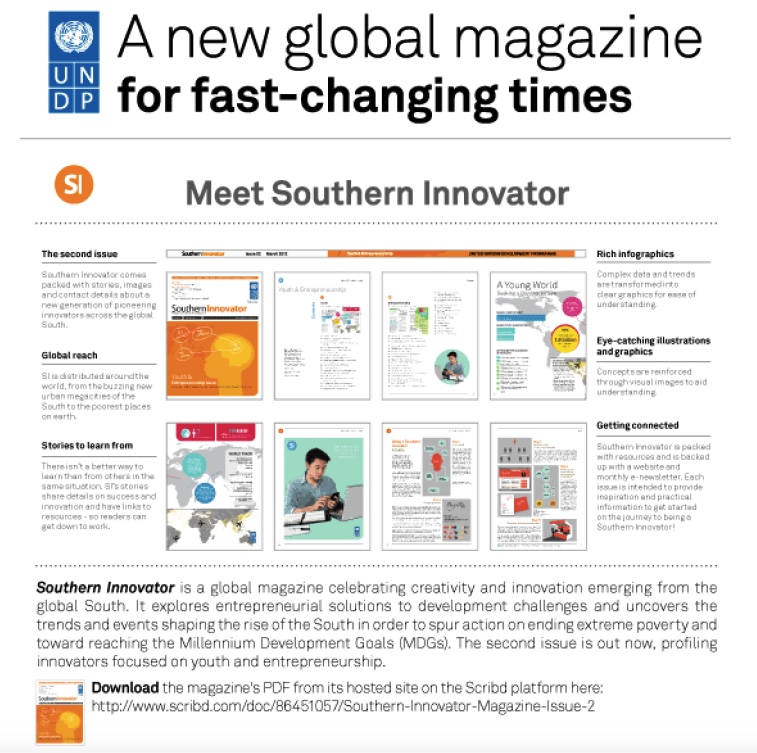
I had the pleasure of visiting the printing plant to witness the presses rolling with the first issue of new global magazine, Southern Innovator. The magazine has been in careful development and saw its name evolve from Creative Sparks to Southern Innovator. As Shakespeare noted in his play Romeo and Juliet, “What’s in a name? That which we call a rose, by any other name would smell as sweet.” And it is what Southern Innovator is that counts the most.
This first issue is just the beginning of a process, a back-and-forth dialogue with our readers as we refine and improve the magazine to boost its impact. The first issue’s theme – mobile phones and information technology – was chosen because of the sheer dynamism of this area and some jaw-dropping achievements: the growth of mobile phone usage in Africa represents an unprecedented take-up of a new technology, often in some of the poorest places on the planet. That impresses and it seemed right to share information about the amazing people behind this phenomenon and the lessons they learned along the way. It has also become clear in the research behind the monthly e-newsletter Development Challenges, South-South Solutions (published since 2006), that significant future development gains will not happen without the aid of mobile phones and information technology, and, important to note, will need these tools to raise living standards for all the world’s people in an environment of increasing competition and pressure for resources.
Used right, mobile phones and information technology allow the efficient use of resources. But, as anyone who has worked with technology knows, this isn’t a given. Vast sums of money and time can be squandered if technology is not used intelligently, or lessons not learned from past failures. It is hoped Southern Innovator‘s first issue can contribute to a better use of resources, and by taking a broad look at what is happening out there, enlighten readers to new ideas, people and concepts.
Southern Innovator is designed in Iceland by Graphic Designer and Illustrator Solveig Rolfsdottir.
“Question Box was featured in Southern Innovator, a new publication of UNDP that profiles some of the most innovative ideas coming out of the global South. We were pleased to see many friends in the sector profiled as well, such as Ushahidi, Medic Mobile, and TxtEagle. Take a look at the magazine, as it is a great primer on ICT and mobile innovation from around the globe.”
Southern Innovator made its way to the annual Global South-South Development Expo (GSSD Expo), which was held this year in Rome, Italy and was hosted by the Food and Agriculture Organization (FAO) of the United Nations. It was great to meet many of the people presenting their work at the Expo and to catch up with the team at the Special Unit for South-South Cooperation.
Southern Innovator Issue 1 called a “tour de force of what is interesting, cutting edge and relevant in the global mobile/ICT space…”
Many people find the prospect of staying in airport hotels dreary at best. They tend to be located in industrial parts of cities or far from city centres. They can be surrounded by roads and highways and are built to move lots of people, not to look nice. The surrounding areas can be very common to all nations – warehouses, office parks, nondescript restaurants and hotels – and give few clues to where you are apart from the weather and the languages on the sign boards.
In short, they are the last place you would choose to stay to get a flavour of a country or culture. But in Nairobi, Kenya, this experience has been turned on its head. While many people travel to Africa to take in the breathtaking beauty of the continent and absorb the fascinating cultures and people, they usually wait to do this once they are far from the airport. But not in Nairobi, where it is possible to begin an African adventure right at the airport.
The Nairobi Tented Camp (www.nairobitentedcamp.com) opened in December 2010. It allows tourists to sleep in the open savannah (http://en.wikipedia.org/wiki/Savanna). The experience is properly wild, with game animals roaming near the camp. Started by Kenyan Guy Lawrence and drawing on his years of experience running safaris and adventure travel, he partnered with Will Knocker, Marian Mason and Ibrahim Ali Abayo, an elder from the Boran tribe who works as assistant camp manager.
The business makes effective use of its website, interlinking good design, photographs and a blog with other social media to make the camp appealing to tourists using the web.
Tourists can expect to see rhino, zebra, giraffe, wildebeest, leopard, antelope and possibly lions while listening to the yelps of hyenas at night.
Located just minutes from Nairobi’s Jomo Kenyatta Airport (www.kenyaairports.co.ke/kaa/airports/jkia/), Wilson Airport and Nairobi City itself, the camp is nestled in a forest in Nairobi National Park (http://www.kws.org/parks/parks_reserves/NANP.html). It is the first accommodation to be allowed in this part of the park.
In total, it takes 30 minutes from landing at the airport to be settled in the camp. The last 20 minutes of the drive to the camp takes place in the park, and gets the wild game adventure started early.
In real estate people talk about “location, location location”: find the right place, and you reap the benefits. And you cannot find a better location than Kenya’s oldest national park – 12,000 hectares in size – located beside East Africa’s dynamic regional hub of Nairobi, Kenya. The business is a good example of how a twist on the traditional safari camp and resort can attract attention.
The camp is surrounded by savannah plains on one side, and the city of Nairobi on the other.
The tented camp pitches itself at travellers looking for a better option than just staying in a nondescript airport hotel, or who are looking for a great way to begin a longer journey into Kenya.
“Safaris in Kenya used to start after a long five-hour drive down to the Maasai Mara,” camp owner Gary Lawrence told Monocle magazine. “But now your safari can start 10 minutes after leaving the airport.”
Kenya has been in recovery mode since its tourism industry was hit hard by a combination of events in 2008. Kenya experienced violent rioting during the 2007 and 2008 elections and a body blow from the 2008 global economic crisis. Both events caused a severe drop in tourism.
In 2007, the country received more than 2 million foreign tourists and close to US $1 billion in revenue, but numbers fell the following year. However, tourism grew 15 percent from 2009 to 2010 in Kenya, putting the country on course to meet its 2012 goal of returning to 2 million tourists a year.
Tourism is a critical foreign currency earner for Kenya and saw growth in revenues of 18 percent in 2010 from 2009 (Kenya Tourist Board).
Kenya’s strategy has included aggressive marketing campaigns in new markets to attract tourists. The country is billing itself as a “high value for high spending tourists” and it has seen increasing numbers of visitors from the booming emerging economies of India, Russia, China and the Middle East. Most of Kenya’s tourists come from the United Kingdom, the United States, Italy and Germany.
2) Ecotourism Kenya: Ecotourism Kenya promotes responsible tourism practices within the tourism industry. This entails encouraging the adoption of best practices in the use of tourism resources, working with local communities and managing wastes and emissions. Website:http://www.ecotourismkenya.org
3) Magical Kenya: The official Kenya Destination website designed to help tourists plan a trip. Website:http://www.magicalkenya.com
4) Ministry of Tourism Kenya: A website packed with information on accommodation, parks and reserves and business opportunities. Website:www.tourism.go.ke
Development Challenges, South-South Solutions was launched as an e-newsletter in 2006 by UNDP’s South-South Cooperation Unit (now the United Nations Office for South-South Cooperation) based in New York, USA. It led on profiling the rise of the global South as an economic powerhouse and was one of the first regular publications to champion the global South’s innovators, entrepreneurs, and pioneers. It tracked the key trends that are now so profoundly reshaping how development is seen and done. This includes the rapid take-up of mobile phones and information technology in the global South (as profiled in the first issue of magazine Southern Innovator), the move to becoming a majority urban world, a growing global innovator culture, and the plethora of solutions being developed in the global South to tackle its problems and improve living conditions and boost human development. The success of the e-newsletter led to the launch of the magazine Southern Innovator.




 Southern Innovator is designed in Iceland by Graphic Designer and Illustrator Solveig Rolfsdottir.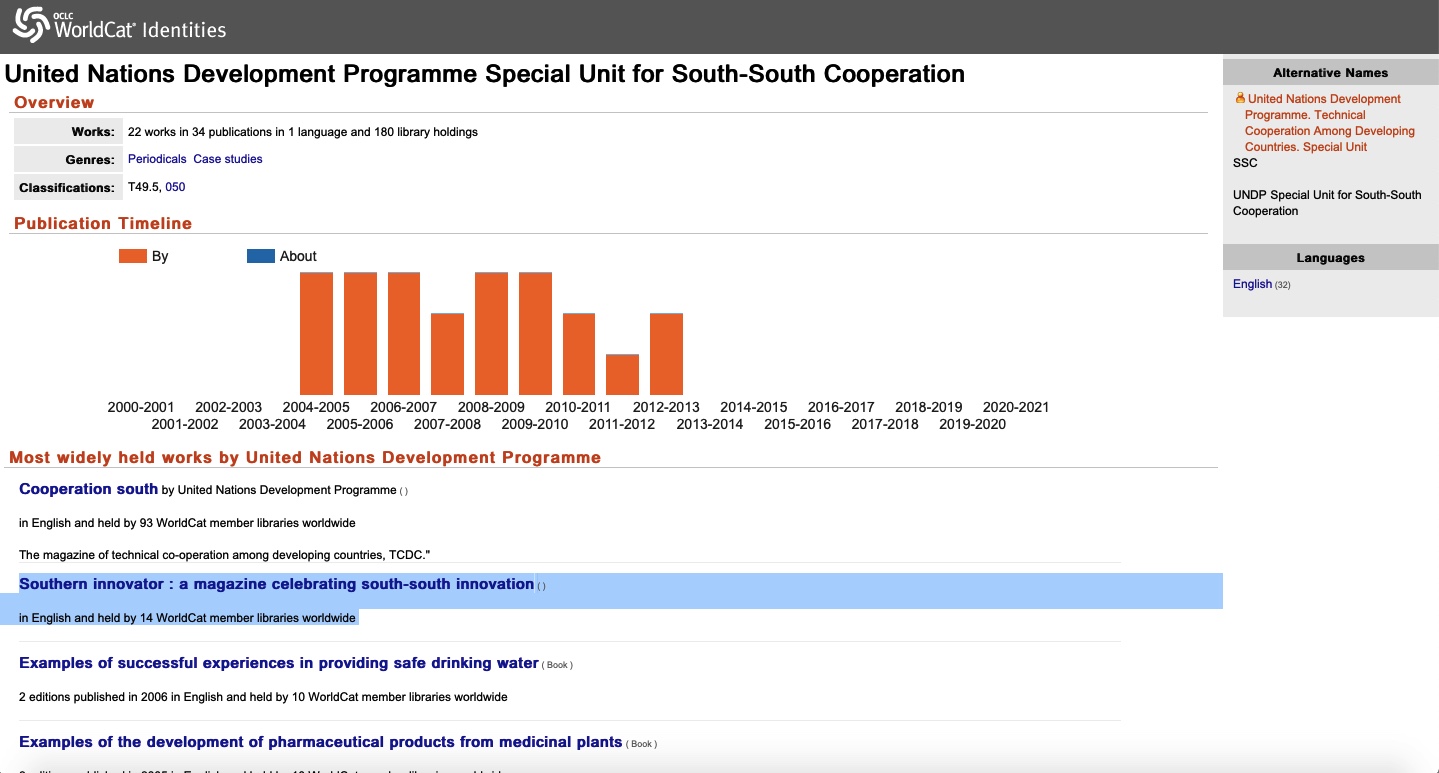







 David South Consulting
You must be logged in to post a comment.