Categories
Archive Development Challenges, South-South Solutions Newsletters

Iranian Savings Funds to Tackle Loan Drought

By David SouthDevelopment Challenges, South-South Solutions

SOUTH-SOUTH CASE STUDY

For entrepreneurs around the world, acquiring finance to start or expand a small business has become harder and harder as the global financial crisis has bitten hard. Across the globe, people with good ideas or successful businesses that need funds to expand are finding the door closed by traditional banks.

As banks and governments have focused on reducing debt and building up cash reserves, it is small businesses and small-scale entrepreneurs – often without business or family connections – who suffer the most. Opportunities are being missed to create new jobs and enterprises and lift poor communities out of poverty.

In that climate, the search is on for alternative ways to build up wealth. In Iran, a new phenomenon has arisen to address the lack of bank loans for small businesses brought about by the economic crisis. Iran is suffering under international sanctions as well as outstanding bank loans exceeding US $45 billion, according to the Financial Times.

The domestic banking crisis this has provoked has resulted in a tightening of credit for loans.

But in response, middle class Iranians are forming their own savings clubs to help each other with loans.

The savings clubs work like this: each member buys a share in the club costing around US $2 per day (around US $620 over 10 months). Each share makes the saver eligible for one loan during the year. For example in a club of 30 Tehran taxi drivers, every month four members of the club receive US $600 each in loans. The fund lasts 10 months and each member is guaranteed one loan per share.

“It is a savings fund and doesn’t have the uncertainty of the banking system, which might or might not give you a loan,” club member Ahmad told the Financial Times newspaper. As one of the drivers, he has four shares and is eligible for four loans.

“My mother is also saving money in a fund of housewives among our female relatives.”

The fund is managed by the head of the taxi agency and a driver who is a retired teacher. Both are trusted. “The retired teacher receives the money every day and puts a check mark by the names of those who pay. He is trusted by the head of the taxi agency, while other drivers respect him as an educated, honest man.”

Savings clubs are also good for the local economy, helping people to be able to buy goods on loans they would never be able to purchase otherwise. Another driver used the fund to “buy the things we cannot afford under normal conditions, like a washing machine, for instance, for which we have zero chance to get bank loans.”

Overdue loans by Iran’s banks grew by 66 percent from last year according to Asghar Abolhassani, the deputy economy minister.

The Financial Times reported that an estimated 25 percent of bank loans are outstanding, making Iran’s banking system technically bankrupt. International sanctions are also blocking the country’s banks from accessing global financial markets for support.

“Stagnation has gripped many parts of the economy,” said Hamid Tehranfar, the central bank’s director-general for banking supervision.

Turning to savings clubs can be an excellent alternative saving and loans model, but it requires very specific trust guarantees in place to ensure the holder of the funds doesn’t just take the money. For those who can’t find somebody local they trust, there are a number of online social lending and fundraising alternatives for raising funds and borrowing money. These include Kiva (www.kiva.org), which connects poor people looking for loans with people around the world willing to lend.

As the crisis continues and banks and governments hoard wealth for their own needs to pay down debt, alternative sources of loans will become ever more important for the poor.

Published: April 2010

Resources

1) Zopa: “Where people meet to lend and borrow money.” Website: www.zopa.com

2) Kiva: Kiva’s mission is to connect people, through lending, for the sake of alleviating poverty. Website: www.kiva.org

3) Betterplace: Started in 2007, Betterplace is an online marketplace for projects to raise funds. It is free, and it passes on 100 percent of the money raised on the platform to the projects. Website: www.betterplace.org

4) Kickstarter: Kickstarter is a funding platform for artists, designers, filmmakers, musicians, journalists, inventors, and explorers. Website: http://www.kickstarter.com/

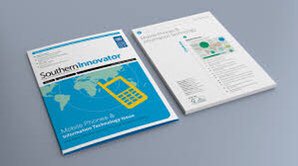
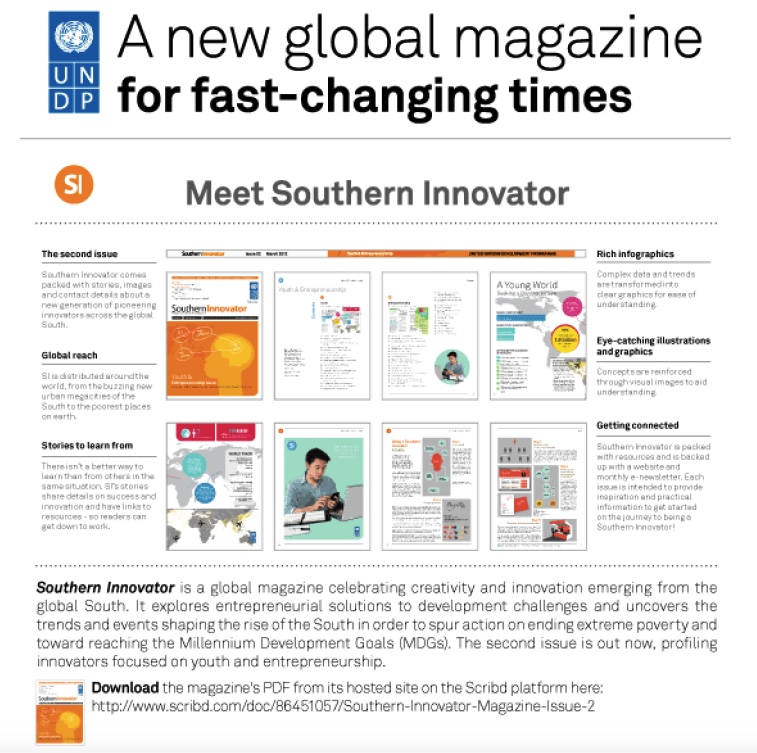
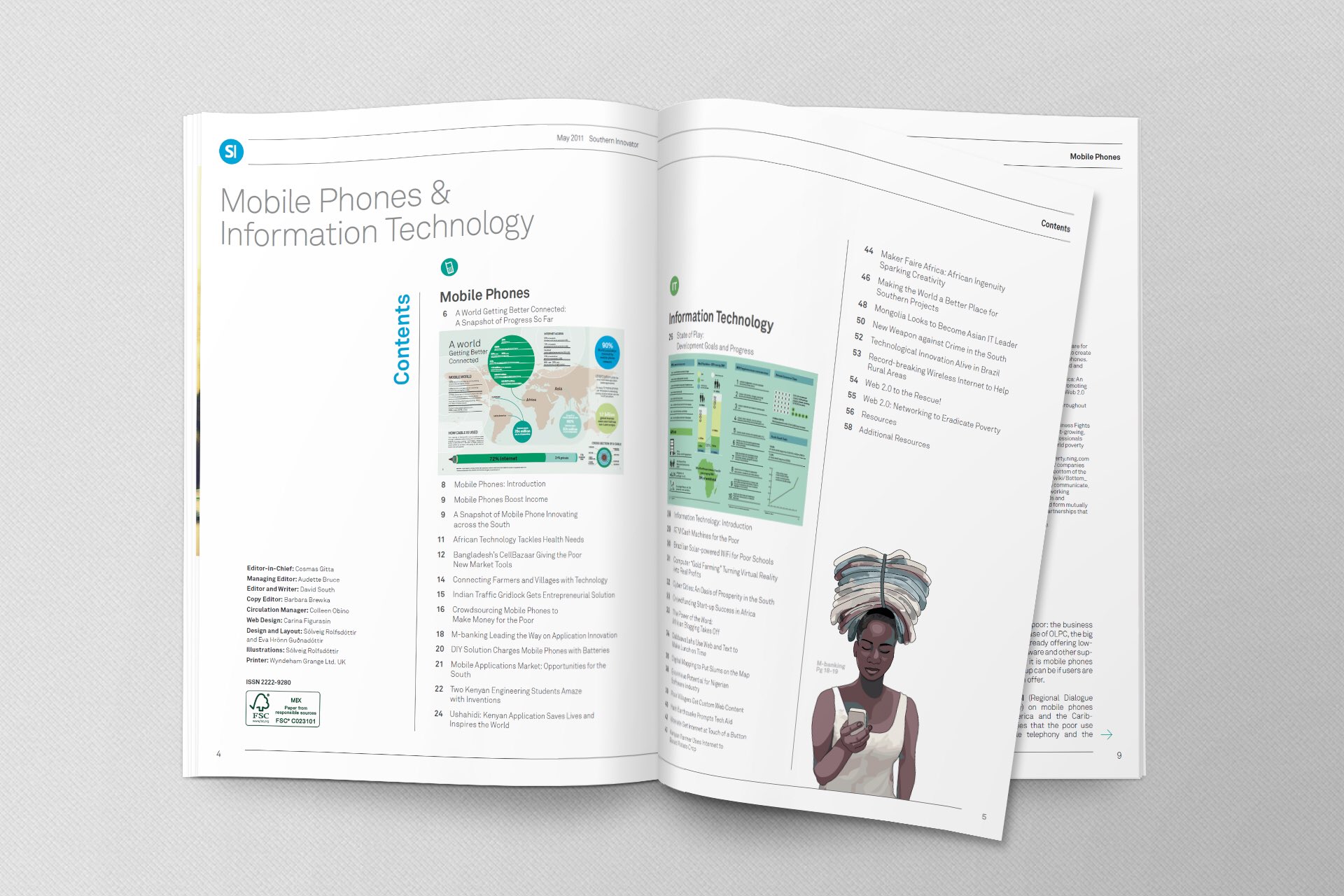
Development Challenges, South-South Solutions was launched as an e-newsletter in 2006 by UNDP’s South-South Cooperation Unit (now the United Nations Office for South-South Cooperation) based in New York, USA. It led on profiling the rise of the global South as an economic powerhouse and was one of the first regular publications to champion the global South’s innovators, entrepreneurs, and pioneers. It tracked the key trends that are now so profoundly reshaping how development is seen and done. This includes the rapid take-up of mobile phones and information technology in the global South (as profiled in the first issue of magazine Southern Innovator), the move to becoming a majority urban world, a growing global innovator culture, and the plethora of solutions being developed in the global South to tackle its problems and improve living conditions and boost human development. The success of the e-newsletter led to the launch of the magazine Southern Innovator. 

Creative Commons License

This work is licensed under a
Creative Commons Attribution-Noncommercial-No Derivative Works 3.0 License.

ORCID iD: https://orcid.org/0000-0001-5311-1052.

© David South Consulting 2023

Categories
Archive Development Challenges, South-South Solutions Newsletters

African Media Changing to Reach Growing Middle Class

By David SouthDevelopment Challenges, South-South Solutions

SOUTH-SOUTH CASE STUDY

Africa’s growing middle classes are being targeted by a new generation of media entrepreneurs. This growing group of Africans is ambitious and intelligent, and they want media that matches their aspirational ways. Clever media people are stepping up to feed this trend.

The continent as a whole forms the 10th largest economy in the world. Of Africa’s more than 1 billion people, 900 million can be classified as part of the consumer economy. Out of this group, there a third – approximately 300 million people – make modest sums by Western standards, about US $200 a month, but have spare cash to buy things like mobile phones, DVDs and new clothes, or pay for better schools. They are the population that is overlooked when attention is focused only on the very poor living on less than US $2 a day.

Pulitzer Prize-winning Nigerian journalist Dele Olojede is one of several African media pioneers re-shaping the continent’s media and taking it to the next level. Another is Godfrey Mwampembwa, whose popular puppet television show satirizes contemporary politics and current events and brings a welcome local flavour to a programming schedule packed with foreign imports.

A book by University of Texas professor Vijay Mahajan, Africa Rising, details the phenomenon of Africa’s middle class consumer society. He calls this group of middle class consumers ‘Africa 2’, with the desperately poor called Africa 3s, and the extremely rich Africa 1s.

This new group has expanded far beyond just the ruling elites and government workers. Many of its members work in the private sector, as secretaries, computer entrepreneurs, merchants and others who have benefited from consistent growth rates in many African countries.

And because these people consume products and services – and advertising products and services are the lifeblood of private media – the opportunities are plentiful.

“I’m convinced that Africa is going to be built by Africa 2s,” Mahajan told the Washington Post newspaper. “These are the people sending their kids to school . . . who are the most optimistic, the most forward-thinking.”

Olojede, owner and publisher of Next newspaper (http://234next.com/csp/cms/sites/Next/Home/index.csp) in Nigeria’s biggest city, Lagos, has been able to grab readers by breaking original stories and offering a quality, well-designed publication. Launched in 2008, it has its sights set on going continent-wide by 2011.

“There is a need for a newspaper for the African metropolitan middle classes, along the lines of the International Herald Tribune,” he told Monocle magazine.

Olojede cut his teeth as a foreign editor for the US newspaper Newsday and has used this experience to make Next such a success.

Next has become the number one news website in Nigeria’s highly competitive media scene.

Wisely, Olojede put design at the centre of making his newspaper and website stand out from the competition. He commissioned the experienced newspaper design team of Garcia Media (http://garciamedia.com/blog/articles/in_west_africa_a_new_newspaper_is_born_—online_first) – who have designed for The Wall Street Journal, The Miami Herald and Die Zeit – to develop the template and prototypes.

Kenyan economist James Shikwati (http://en.wikipedia.org/wiki/James_Shikwati) believes Africa’s middle-income consumers are also a driving force for political change.

“It’s empowering,” he told the Washington Post. “If you give people a sense of freedom in the economic sector, then you deny it in the political sector, you have a problem.”

Kenya-based newspaper cartoonist Gado (Godfrey Mwampembwa) has profited from this phenomenon. Fed up with TV channels sticking to a menu of foreign imports and dull news programmes, he looked to famous puppet TV shows Spitting Image (from Britain) and Les Guignols (from France) for inspiration. The result is the XYZ Show (http://xyzshow.com/blog), which features grotesque puppet caricatures of well-known public and political figures. The show’s blog makes for an excellent entry point into African TV programme-making and its ups and downs. The show is broadcast on Citizen TV in Kenya’s capital, Nairobi.

“I moved to Nairobi in 1992 when I was 23,” Mwampembwa explained to Monocle. “The Daily Nation, the biggest newspaper in Kenya, had lost its editorial cartoonist so they ran a competition to look for his replacement. I sent in my drawings and came second.”

“I took a year off in 2000-2001 to study film and animation in Vancouver. When I got back to Nairobi I started thinking about the sort of TV programme I would like to make. Kenya needed a show that would make fun of our politicians and expose hypocrisy and I thought a puppet show like Les Guignols or Spitting Image would be a great way to do it.”

“We managed to raise funds for a pilot in 2007 and Citizen TV (http://www.facebook.com/pages/Citizen-TV-Kenya/261061365404), a private station, eventually agreed to broadcast a series.”

Each episode costs US $16,740 and the puppets are US $3,600 to make. The programme-makers could only get money from foreign donors: the French, Dutch, and Finnish embassies and the Ford Foundation.

Despite initial complaints from politicians, the show is preparing for its second season – and, Mwampembwa said, “there will be a lot of big stories for us to cover.”

Making a popular TV show is not an easy thing to do. Mwampembwa maintains a furious work pace to straddle his many roles:

“I have to draw a cartoon every day but editorial cartooning is not a nine-to-five job, it’s 24/7. Whenever I get ideas I have to sketch them.

“It was a steep learning curve in the first season. The show is important for Kenyan TV and everything is done here in Nairobi. We won’t change any of the politics though. We are very hard-hitting and we will stay that way.

“Over the years I’ve got nasty letters, emails and phone calls but that’s OK, it’s part of it.”

As these media innovators show, there is nothing but opportunity for entrepreneurs feeding the hungry news and information appetite of the continent’s ambitious middle class.

And Mwampembwa says becoming better informed doesn’t have to be dull: “We are informing the public but I’d like to think we are entertaining them too.”

Published: September 2010

Resources

  • Africa Rising: A book by Professor Vijay Mahajan on how Africa’s consumer economy is growing and growing. Website: http://tinyurl.com/2vk3m9n

Development Challenges, South-South Solutions was launched as an e-newsletter in 2006 by UNDP’s South-South Cooperation Unit (now the United Nations Office for South-South Cooperation) based in New York, USA. It led on profiling the rise of the global South as an economic powerhouse and was one of the first regular publications to champion the global South’s innovators, entrepreneurs, and pioneers. It tracked the key trends that are now so profoundly reshaping how development is seen and done. This includes the rapid take-up of mobile phones and information technology in the global South (as profiled in the first issue of magazine Southern Innovator), the move to becoming a majority urban world, a growing global innovator culture, and the plethora of solutions being developed in the global South to tackle its problems and improve living conditions and boost human development. The success of the e-newsletter led to the launch of the magazine Southern Innovator. 

Creative Commons License

This work is licensed under a
Creative Commons Attribution-Noncommercial-No Derivative Works 3.0 License.

ORCID iD: https://orcid.org/0000-0001-5311-1052.

© David South Consulting 2023

Categories
Archive Development Challenges, South-South Solutions Newsletters

Ghanaian Coffins Prove Design and Craftsmanship Boost Incomes

By David SouthDevelopment Challenges, South-South Solutions

SOUTH-SOUTH CASE STUDY

In many parts of the world, indigenous ingenuity and craft skills are finally getting the recognition they deserve. The quirky but very inventive gadgets and solutions featured on the Afrigadget blog (http://www.afrigadget.com) never fail to inspire and amaze. The Democratic Republic of the Congo’s (DRC) fashionable gentlemen (http://www.henryherbert.com/gentlemen-of-bacongo/) grabbed the attention of – and inspired – European fashion designers with their creativity and flair. And then there are the Africa Maker Faires, gatherings of clever and innovative thinkers and inventors who get down to work generating solutions to today’s problems.

Beyond the grim stories of development failures and human tragedies, there is another Africa full of creativity and can-do attitude.

Amongst the Ga people (http://en.wikipedia.org/wiki/Ga_people) of Teshi, Ghana there is a tradition with a twist: custom-designed coffins. A Ghanaian pioneer has been transforming the way people deal with that most sombre and respectful of rituals, the funeral. Coffin-artist Paa Joe is drawing on a modern-day tradition in Ghana dating back to the 1950s. Coffins – which are normally made from wood and follow the standard template of a narrow, body-length box – are transformed into grand and lively statements about the deceased person’s life.

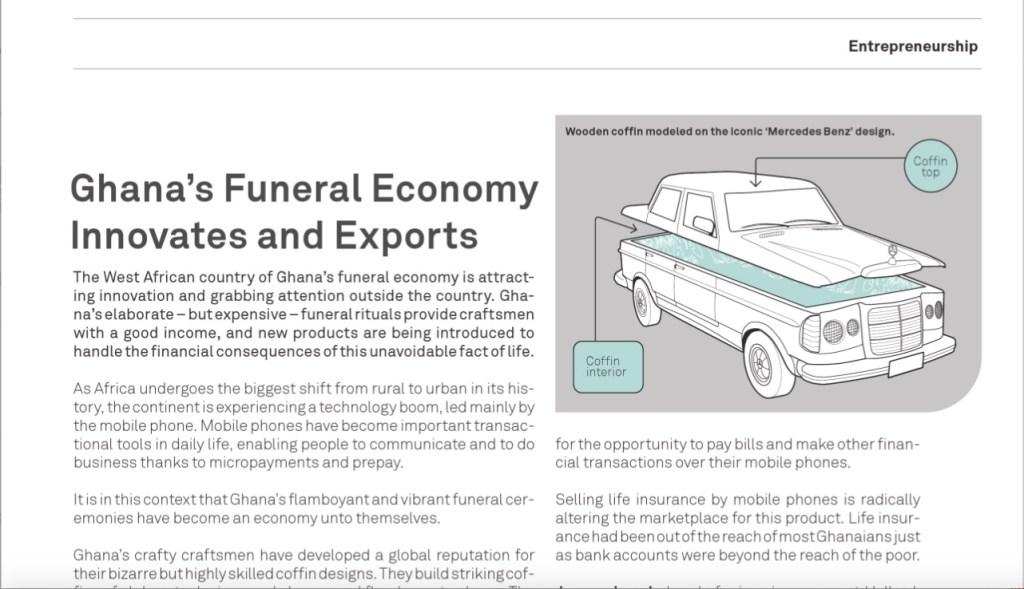
Designs have included a giant pink fish, a Ghana Airways plane, a souped-up Mercedes Benz and an African eagle.

“The Ga people (http://www.ghanaweb.com/GhanaHomePage/tribes/ga.php), from the south-east coast of Ghana, revere their ancestors and give great importance to funeral celebrations,” Jack Bell, a London gallery owner exhibiting the coffins, told The Observer newspaper. “Their tradition of creating beautifully carved figurative coffins originated in the 1950s.”

Paa Joe was born in the Akwapim hills north-east of Accra in 1945. He is considered the top sculpted coffin maker of his generation. He apprenticed with the pioneer of the craft, Kane Kwei (http://www.culturebase.net/artist.php?153) – the man who began this unique vocation in the 1950s. The skill and artistry involved is now recognized in museums around the world, including London’s British Museum.

The community had a history of highly skilled woodwork and elaborate carvings were regularly created for village chiefs – giant eagles or even the surreal spectacle of a giant cocoa pod.

The bespoke coffins are an example of how long-standing skills were applied to a new product. The idea of making custom-sculpted coffins begun by Kane Kwei evolved from being a livelihood for Kwei to an apprenticed craft passed down to younger craftsmen. When Kane Kwei’s grandmother died in 1951, without fulfilling her lifelong wish to fly on a plane, Kane made a plane-shaped coffin for her. This coffin was admired by others and Kane got the idea of setting up a workshop and making custom-designed coffins symbolizing the
deceased’s status and achievements in life.

“Families commission the coffins – sometimes to a brief designed by the deceased – to represent the aspirations or achievements of a deceased relative, or to characterize their personality: a car for a businessman, a cocoa pod for a farmer, a bible, or even a camera,” Bell said.

For people with modest means, there are simpler designs of boats, canoes and books. Prices are negotiated with the coffin maker.

Where there were none, now there are multiple workshops providing custom coffins for funerals. Traditional Ghanaian funerals are lively, colourful events, but the coffin sculptures of Teshi are a modern phenomenon and proof that innovation and good design can transform the most sombre of items into something special.

Published: December 2010

Resources

  • Maker Faire Africa: Flickr photo gallery: A clickable archive of the Maker Faire inventors and their inventions. Website:http://www.flickr.com/groups/makerfaireafrica/pool/
  • Afrigadget: Afrigadget: ‘Solving everyday problems with African ingenuity’: This blog never ceases to amaze and fascinate. Website: http://www.afrigadget.com/
  • E-machine Shop: eMachineShop: This remarkable service allows budding inventors to download free design software, design their invention, and then have it made in any quantity they wish and shipped to them: Amazing! Website: http://www.emachineshop.com/ 4) Maker Faire Africa 2010: Catch up on the last Maker Faire Africa. Website: (http://makerfaireafrica.com)
  • Afrigadget: ‘Solving everyday problems with African ingenuity’: This blog never ceases to amaze and fascinate. Website: http://www.afrigadget.com/
  • International Development Design Summit: The Summit is an intense, hands-on design experience that brings together people from all over the world and all walks of life to create technologies and enterprises that improve the lives of people living in poverty. Website:http://iddsummit.org/

https://davidsouthconsulting.org/2022/10/20/bangladesh-coffin-maker-offers-an-ethical-ending/

https://davidsouthconsulting.org/2022/10/20/ghanas-funeral-economy-innovates-and-exports/

Development Challenges, South-South Solutions was launched as an e-newsletter in 2006 by UNDP’s South-South Cooperation Unit (now the United Nations Office for South-South Cooperation) based in New York, USA. It led on profiling the rise of the global South as an economic powerhouse and was one of the first regular publications to champion the global South’s innovators, entrepreneurs, and pioneers. It tracked the key trends that are now so profoundly reshaping how development is seen and done. This includes the rapid take-up of mobile phones and information technology in the global South (as profiled in the first issue of magazine Southern Innovator), the move to becoming a majority urban world, a growing global innovator culture, and the plethora of solutions being developed in the global South to tackle its problems and improve living conditions and boost human development. The success of the e-newsletter led to the launch of the magazine Southern Innovator. 

https://davidsouthconsulting.org/2021/03/05/southern-innovator-issue-2/

Creative Commons License

This work is licensed under a
Creative Commons Attribution-Noncommercial-No Derivative Works 3.0 License.

ORCID iD: https://orcid.org/0000-0001-5311-1052.

© David South Consulting 2023

Categories
Archive Development Challenges, South-South Solutions Newsletters

Indians Fighting Inflation with Technology

By David SouthDevelopment Challenges, South-South Solutions

SOUTH-SOUTH CASE STUDY

Despite the global economic downturn, many countries of the South are seeing rapid economic growth. That can have a down side: inflation (http://en.wikipedia.org/wiki/Inflation). Inflation can be caused by variety of factors – too much money chasing too few goods, deliberate government policies to increase demand for goods and services, environmental disasters creating scarcity, or poor investment in infrastructure straining against rapid economic growth. But when it gets out of control for life-essential goods like food, then people need solutions to survive.

In India – home to more poor people than all of sub-Saharan Africa – rising inflation has prompted the Reserve Bank of India to raise interest rates, which in turn leads to more expensive loans and credit, just when funds need to be borrowed to invest in infrastructure improvements for the country.

India’s finance minister, Pranab Mukherjee, has warned that the rising interest rates necessary to fight inflation will hurt India’s economic growth.

India has seen inflation jump from single digits in 2008 to double digits this year. Consumer price inflation for industrial and farm workers in India rose by 14 percent, government data show – up from 5.51 percent in January 2008 (It hit 16.22 percent in January 2010, according to the Indian Ministry of Labour).

And it is the poorest who suffer the most from inflation. Inflation in India has led to worker protests for wage increases and rising prices for essentials like food: a life-and-death issue for the poor.

Other countries across the South are also experiencing high inflation, the worst being Venezuela. India has the highest inflation after Venezuela’s 32 percent rate, according to Bloomberg data compiled from 82 countries.

The UN’s trade and development body, UNCTAD, has called for new measures to tackle inflation. “In the past few decades, monetary policies have been more and more gradually based on inflation targeting,” said Supachai Panitchpakdi, secretary-general of UNCTAD. “I see there should be other instruments to contain inflation rather than monetary policies.”

Frustration with inflation has even been taken up by India’s vibrant entertainment industry, Bollywood (http://www.bollywoodworld.com).

The song “Mehangayi Daayan” (“The Inflation Witch”) in a film produced by acting star Aamir Khan has the lyrics, “my husband’s earnings are good but his second wife — inflation — is eating them up.”

Indian marketing consultant Suhasini Sakhare (http://www.suhasinisakhare.com/index.php?option=com_content&view=section&layout=blog&id=2&Itemid=12) from Nagpur has called for Indian consumers to be empowered, just as farmers are with the successful e-Choupal web portal.

E-Choupal (http://www.echoupal.com) has developed a reputation for both controlling prices and increasing incomes for poor farmers. Started in 2000 by the major Indian company ITC Limited (http://www.itcportal.com), it links farmers to the latest prices for products including soybeans, wheat, coffee and prawns.

E-Choupal works through computers set up in rural areas. It has built one of the largest internet initiatives in rural India, reaching 4 million farmers in 40,000 villages. It does this through 6,500 computer kiosks located in the homes of farmer-coordinators called Sanchalaks. The kiosks offer weather reports and the latest market prices, important scientific developments, risk management advice, and help with sales and marketing. The computer is in the Sanchalak’s house and connects to the internet by telephone. Each computer can serve around 600 farmers in the surrounding area.

Indian agriculture suffers from being very fragmented, with poor infrastructure and an army of middlemen looking to get the best price for themselves at the expense of farmers and consumers. Indian farmers are heavily in debt and plagued by a very high suicide rate as a result (http://en.wikipedia.org/wiki/Farmers’_suicides_in_India). This agricultural crisis has a direct impact on India’s ability to meet its development goals and lift many millions more out of poverty in the future.

E-Choupal sees itself as creating a “virtuous circle of higher productivity, higher incomes, enlarged capacity for farmer risk management, larger investments and higher quality and productivity.”

E-Choupal has increased yields for farmers, reduced transaction costs, and raised the quality of output leading to rising farmer incomes.

It is clear from experience in other countries that better access to price information helps control price inflation. E-Choupal has the advantage of providing both information and the means to access it: a big problem in rural India. Most poor Indian consumers do not have access to the internet and make food purchases from small vendors, whom they must trust to set the right price for products.

Online, there are plenty of price comparison websites for Indians (http://explore.oneindia.in/internet/portal/comparisonsites): computers, electronics and household goods (http://compareindia.in.com) for example. But this is of no use to poor Indians without access to the information.

Economic commentator Paranjoy Guha Thakurta told AFP of the political dangers: “There’s a huge amount of discontent and anger across the country and certainly among the poor. Speak to the person on the street and their biggest problem is inflation.”

Published: August 2010

Resources

  • Olam: A global food supply company in ‘agri-products’ that got its start in Nigeria. It shows how a Southern brand can grow and go global, and overcome the difficulties of cross-border trade. Website: www.olamonline.com
  • Model Village India: A pioneering initiative is reviving impoverished rural villages. Drawing on self-organizing methods used in India since 1200 BC, the Model Village India is based around India’s democratic system of Panchayats: a village assembly of people stemming back to pre-colonial times. Website: www.modelvillageindia.org.in
  • e-Choupal: Hope or Hype? By Neeraj Dangi and Harjit Singh, American Journal of Economics and Business Administration 2 (2): 179-184, 2010. Website: http://tinyurl.com/3682r3p
  • A book on the consequences of inflation when it gets out of control: When Money Dies: The Nightmare of the Weimar Hyper-Inflation by Adam Fergusson. Website: http://www.amazon.co.uk/When-Money-Dies-Nightmare-Hyper-Inflation/dp/1906964440
  • The American National Inflation Association: A website with educational videos and resources on inflation. Website: http://inflation.us

https://davidsouthconsulting.org/2022/10/14/anti-bribery-website-in-india-inspires-others/

https://davidsouthconsulting.org/2022/09/29/the-battle-for-indias-coffee-drinkers-in-buzzing-economy/

https://davidsouthconsulting.org/2022/11/22/bio-ethanol-from-sturdy-and-once-unwanted-indian-plant/

https://davidsouthconsulting.org/2022/02/07/boosting-tourism-in-india-with-surfing-culture/

https://davidsouthconsulting.org/2022/09/29/cheap-indian-tablet-seeks-to-bridge-digital-divide/

https://davidsouthconsulting.org/2021/09/01/disaster-recovery-ten-years-after-the-gujarat-india-experience/

https://davidsouthconsulting.org/2022/10/20/the-e-reader-battle-reaches-india/

https://davidsouthconsulting.org/2022/10/09/entrepreneurs-use-mobiles-and-it-to-tackle-indian-traffic-gridlock/

https://davidsouthconsulting.org/2022/04/04/help-is-at-hand-for-indias-beleaguered-bus-riders/

https://davidsouthconsulting.org/2022/09/27/india-2-0-can-the-country-make-the-move-to-the-next-level/

https://davidsouthconsulting.org/2022/10/14/indias-modernizing-food-economy-unleashing-new-opportunities/

https://davidsouthconsulting.org/2021/08/29/indian-business-model-makes-green-energy-affordable/

https://davidsouthconsulting.org/2022/10/25/indian-city-slum-areas-become-newly-desirable-places-to-live/

https://davidsouthconsulting.org/2021/08/28/indian-entrepreneur-brings-dignity-to-poor-women/

https://davidsouthconsulting.org/2021/03/04/indian-id-project-is-foundation-for-future-economic-progress/

https://davidsouthconsulting.org/2022/10/18/indian-initiatives-to-make-travel-safer-for-women/

https://davidsouthconsulting.org/2022/06/15/indian-mobile-phone-application-innovators-empower-citizens/

https://davidsouthconsulting.org/2022/11/01/indian-newspapers-thrive-with-economy/

https://davidsouthconsulting.org/2022/10/06/indian-solar-economy-brings-new-vocation-for-women/

https://davidsouthconsulting.org/2022/10/06/indian-solar-power-pack-powers-villages/

https://davidsouthconsulting.org/2022/10/25/indian-toilet-pioneer-champions-good-ideas/

https://davidsouthconsulting.org/2022/03/29/model-city-to-test-the-new-urbanism-concept-in-india/

https://davidsouthconsulting.org/2020/12/04/model-indian-villages-to-keep-rural-relevant/

Development Challenges, South-South Solutions was launched as an e-newsletter in 2006 by UNDP’s South-South Cooperation Unit (now the United Nations Office for South-South Cooperation) based in New York, USA. It led on profiling the rise of the global South as an economic powerhouse and was one of the first regular publications to champion the global South’s innovators, entrepreneurs, and pioneers. It tracked the key trends that are now so profoundly reshaping how development is seen and done. This includes the rapid take-up of mobile phones and information technology in the global South (as profiled in the first issue of magazine Southern Innovator), the move to becoming a majority urban world, a growing global innovator culture, and the plethora of solutions being developed in the global South to tackle its problems and improve living conditions and boost human development. The success of the e-newsletter led to the launch of the magazine Southern Innovator. 

https://davidsouthconsulting.org/2021/03/05/southern-innovator-issue-1/

https://davidsouthconsulting.org/2021/03/05/southern-innovator-issue-5/

Creative Commons License

This work is licensed under a
Creative Commons Attribution-Noncommercial-No Derivative Works 3.0 License.

ORCID iD: https://orcid.org/0000-0001-5311-1052.

© David South Consulting 2023