Tag: 2009

  • A New Mobile Phone Aimed at the Poor

    A New Mobile Phone Aimed at the Poor

    By David SouthDevelopment Challenges, South-South Solutions

    SOUTH-SOUTH CASE STUDY

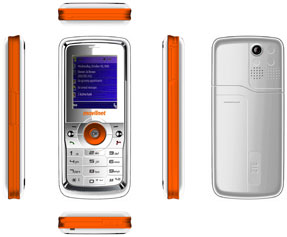
    A low-cost Venezuelan mobile phone aimed at the South’s poor is proving that South-South technological cooperation works. Packed with features and costing no more than US $15 – making it one of the cheapest mobile handsets in the world – the phone is aimed at the fast-growing mobile market across the global South.

    The South is a dynamic market and has seen quick acceptance of mobile phones. The number of mobile phone users in the world passed 4 billion in 2008, and the fastest growth was in the South (ITU). The development of inexpensive handsets means the phones will be able to reach even more poor people. And packing these phones with the latest in multimedia capability means the poor will be able to make a technological leap.

    The Venezuelan phone is being championed as the world’s cheapest mobile phone. It is a bold effort to create an affordable mobile phone packed with features: a camera, WAP internet access (wireless application protocol), FM radio, and MP3 and MP4 players for music and videos.

    The phone uses inexpensive parts from China and is assembled in Venezuela. A quarter of the cost of manufacturing the phone is subsidized by the government. Venezuela often uses the profits from its oil industry to subsidize social goals.

    The phone was launched on Mother’s Day by Venezuela’s president Hugo Chavez with a call to his mother. Chavez boasted to the Guardian newspaper: “This telephone will be the biggest seller not only in Venezuela but the world.”

    With his usual bravado, he said that “whoever doesn’t have Vergatario is nothing” – a statement that has become the marketing slogan for the phone on its website.

    The phone already has a waiting list of 10,000 people. The phones are assembled in western Venezuela by Vetelca, a joint state (85 percent) and Chinese (15 percent) company. Vetelca hope to make 600,000 phones in 2009, and to sell more than 2 million in 2011. Exports will first target the Caribbean and then the world.

    The desire to spark technological innovation at home is also alive in the Southern African country of Mozambique, which is making the bold move to start manufacturing computers for schools in the country. Like other African countries, Mozambique is connecting schools with computers and the internet. By manufacturing the laptop computers within the country, Mozambiquans are increasing the program’s economic benefit to the country, and building advanced technical skills.

    Most Southern African countries rely on importing computers, and Rwanda, South Africa and Ethiopia are getting their school computers from the OLPC (One Laptop Per Child) (www.laptop.org) initiative from the United States.

    The Mozambique laptops are call Magalhael (www.portatilmagalhaes.com) and are made in partnership with the Mozambican Ministry of Science and Technology (www.mct.gov.mz/portal/page?_pageid=615,1&_dad=portal&_schema=PORTAL) and Portugal Telecom (www.telecom.pt/InternetResource/PTSite/PT). They come with a 60 gigabyte (GB) hard drive and 2 GB of RAM (memory) and are entirely built in Mozambique.

    Read these stories on ICT4D from Development Challenges, South-South Solutions:

    Published: June 2009

    Resources

    • Google Android: Android is a software for mobile phones that allows people to create useful applications (apps) for the phones. Website: http://code.google.com/android/and www.android.com
    • Kabissa: Space for Change in Africa: An online African web community promoting and supporting the transition to Web 2.0 services in Africa. Offers lots of opportunities to meet people throughout Africa and learn more.Website: www.kabissa.org
    • Business Fights Poverty: Business Fights Poverty is the free-to-join, fast-growing, international network for professionals passionate about fighting world poverty through good business.Website:http://businessfightspoverty.ning.com/
    • BOP Source is a platform for companies and individuals at the BOP to directly communicate, ultimately fostering close working relationships, and for NGOs and companies to dialogue and form mutually valuable public-private partnerships that serve the BOP. Website:http://bopsource.ning.com/
    • Venezuelan Phone. Website: www.vergatorio.com

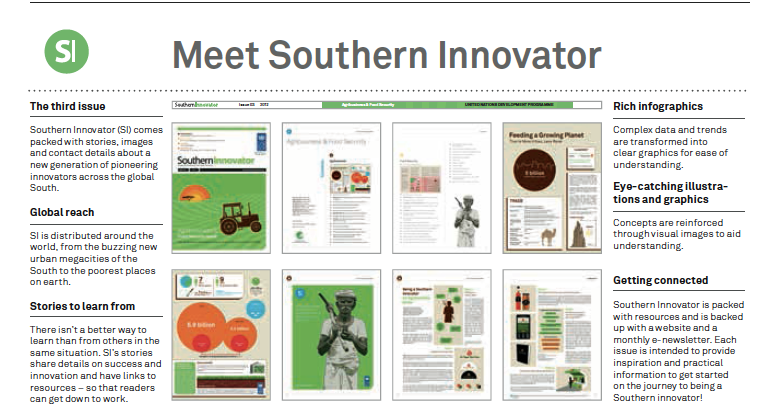
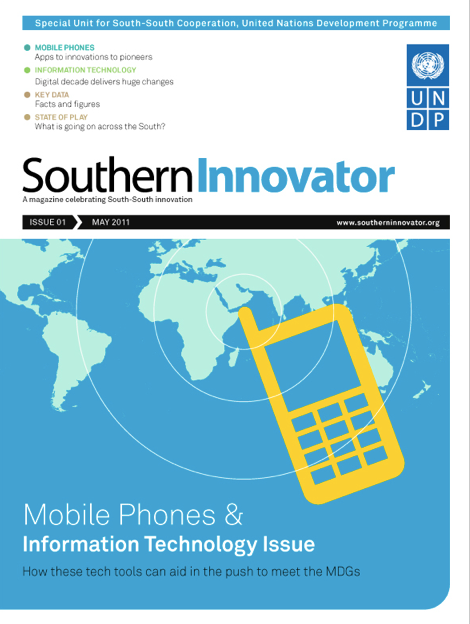
    Like this story? Please check out our first issue of Southern Innovator on mobile phones and information technology.
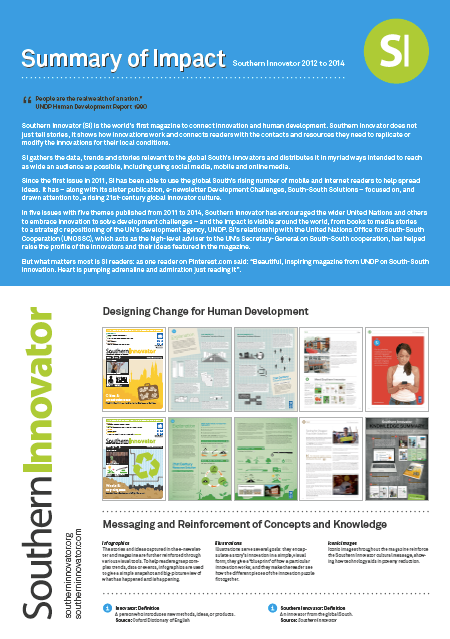
    Development Challenges, South-South Solutions was launched as an e-newsletter in 2006 by UNDP’s South-South Cooperation Unit (now the United Nations Office for South-South Cooperation) based in New York, USA. It led on profiling the rise of the global South as an economic powerhouse and was one of the first regular publications to champion the global South’s innovators, entrepreneurs, and pioneers. It tracked the key trends that are now so profoundly reshaping how development is seen and done. This includes the rapid take-up of mobile phones and information technology in the global South (as profiled in the first issue of magazine Southern Innovator), the move to becoming a majority urban world, a growing global innovator culture, and the plethora of solutions being developed in the global South to tackle its problems and improve living conditions and boost human development. The success of the e-newsletter led to the launch of the magazine Southern Innovator.  

    Creative Commons License

    This work is licensed under a
    Creative Commons Attribution-Noncommercial-No Derivative Works 3.0 License.

    ORCID iD: https://orcid.org/0000-0001-5311-1052.

    © David South Consulting 2023

  • Avoiding Wasting Food and Human Potential with ICTs

    Avoiding Wasting Food and Human Potential with ICTs

    By David SouthDevelopment Challenges, South-South Solutions

    SOUTH-SOUTH CASE STUDY

    Creative use of information technology in the South is helping to address two very different kinds of waste – of food and of human and community potential.

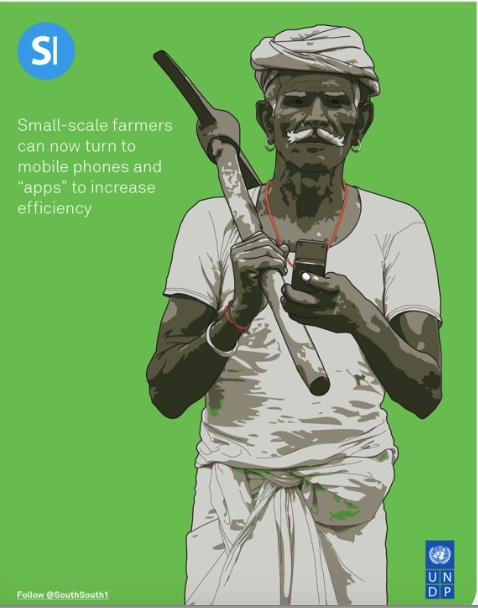
    In Ghana, a mobile phone-driven Internet marketplace is helping to improve efficiencies in farming and selling food. Another initiative is addressing the crisis in India’s villages by drawing on the diaspora of former villagers now living in urban environments around the world.

    Finding ways to efficiently trade food is crucial to keeping hunger at bay and meeting the needs of growing populations. In a report earlier this year, the UN’s Environment Programme (UNEP) found that more than half of the world’s food is wasted or discarded.

    “There is evidence … that the world could feed the entire projected population growth alone by becoming more efficient,” said Achim Steiner, UNEP Executive Director, at the launch of The Environmental Food Crisis: The Environment’s Role in Averting Future Food Crises.

    Ghana is a country that has already gained a reputation as an IT leader in West Africa (www.ghanaictawards.com). Now a clever technology based in the capital, Accra, is using mobile phones to connect farmers and agricultural businesses and associations to the marketplace. By using SMS (http://en.wikipedia.org/wiki/SMS) text messages, information from the field is gathered and collated. This can include tracking what is happening on the farm, how crops are surviving the weather, and the status of food inventories day-by-day. All the data is collected by the TradeNet website and displayed with prices and deadlines for buyers and sellers to get in touch with each other. This reduces the time and cost involved in gathering updates from thousands of people across the country.

    Launched in 2007, the service recently won the Information Communication Technology innovations contest by the World Summit Award (WAS) (http://www.wsis-award.org/about/index.wbp) of the United Nations’ World Summit on Information Society (WSIS).

    TradeNet is currently collating market data from 13 countries and proclaims itself the largest SMS-based market information service on the continent of Africa. It has more than 12,000 registered users and covers 500 individual markets.

    The service’s full name is TradeNet: Market Information on your Mobile (http://www.tradenet.biz/?lang=en), and it tracks products like ground nuts, sesame, tomato, maize and white beans. It offers market information from Afghanistan , Benin , Burkina Faso , Cameroon , Cote d’Ivoire , Ghana , Madagascar , Mali , Mozambique , Nigeria , Sudan and Togo.

    Founded by its chief executive officer Mark Davies, TradeNet is run out of the internet start-up incubator Busy Lab (http://www.busylab.com/) in Accra. Busy Lab specializes in building mobile web solutions for companies and projects involved in rural media and computing.

    While in India, villages are in crisis: As India’s economy has boomed, its small towns and villages have withered. Home to the majority of the country’s population, they are suffering declining populations and high suicide rates. India’s urban slums are where people are going; they are growing 250 percent faster than the country’s population. Yet so many people share some past connection with the country’s 260,000 ailing villages.

    And while the world has become a majority urban place, it is acknowledged the future for the environment and agriculture rests in the health of villages.

    The social media website Mana Vuru (www.manavuru.com) seeks to connect people living in cities with the villages they were born in, or where their families came from. It is about restoring the broken connection with the village in order to enhance their future development.

    As Mana Vuru declares: “Villages form the backbone of our economy. True progress, growth and prosperity can only be realized when villages become self-sustainable.”

    The site points out that “most villages are suffering from crippling infrastructure and some even lack the basic amenities like electricity and fresh water. We believe that every person who migrated to greener pastures and attained success and wealth should feel some sort of moral responsibility and do their bit for their respective villages.”

    A project of the Palette School of Multimedia (http://www.palettemultimedia.com/) in Hyderabad – one of India’s technology hubs – the site lets former village dwellers register and start meeting and connecting with fellow members of the diaspora. Together they can network to help the village address its development challenges.

    Published: August 2009

    Resources

    1) A video story by CNN on Tradenet. Website: http://www.youtube.com/watch?v=s6z0ywkHPPQ

    2) BOP Source is a platform for companies and individuals at the BOP (bottom of the pyramid) to directly communicate, ultimately fostering close working relationships, and for NGOs and companies to dialogue and form mutually valuable public-private partnerships that serve the BOP.
    Website: http://bopsource.ning.com/

    3) Afriville is a Web 2.0 service and an African Caribbean social network. Afriville is a community website along the lines of the famous MySpace. Users are free to message and post profiles. The difference is that the user is able to choose how closed or open the networks are. The site features a state of the art music management system which allows African and Caribbean artists to get straight in touch with their fans.
    Website: www.afriville.com

    4) Business Action for Africa: Business Action for Africa is an international network of businesses and business organisations from Africa and elsewhere, coming together in support of three objectives: to positively influence policies for growth and poverty reduction, to promote a more balanced view of Africa, and to develop and showcase good business practice in Africa
    Website: www.businessactionforafrica.org

    5) Model Village India: An innovative concept to rejuvenate India’s villages and build economies and self-reliance. Website: http://www.modelvillageindia.org.in/index1.html

    Development Challenges, South-South Solutions was launched as an e-newsletter in 2006 by UNDP’s South-South Cooperation Unit (now the United Nations Office for South-South Cooperation) based in New York, USA. It led on profiling the rise of the global South as an economic powerhouse and was one of the first regular publications to champion the global South’s innovators, entrepreneurs, and pioneers. It tracked the key trends that are now so profoundly reshaping how development is seen and done. This includes the rapid take-up of mobile phones and information technology in the global South (as profiled in the first issue of magazine Southern Innovator), the move to becoming a majority urban world, a growing global innovator culture, and the plethora of solutions being developed in the global South to tackle its problems and improve living conditions and boost human development. The success of the e-newsletter led to the launch of the magazine Southern Innovator.  

    Creative Commons License

    This work is licensed under a
    Creative Commons Attribution-Noncommercial-No Derivative Works 3.0 License.

    ORCID iD: https://orcid.org/0000-0001-5311-1052.

    © David South Consulting 2023

  • Info Ladies and Question Boxes: Reaching Out to the Poor

    Info Ladies and Question Boxes: Reaching Out to the Poor

    By David SouthDevelopment Challenges, South-South Solutions

    SOUTH-SOUTH CASE STUDY

    Quick access to accurate and useful information is crucial for development. With the remarkable spread of information around the world via the Internet – one of the greatest achievements of the 21st century – more than 1.5 billion people now use the Web to boost their incomes and opportunities (Internet World Stats).

    For those lucky enough to be able to afford regular access to the Internet – as well as a computer and electricity – this new technology is a powerful tool for economic and social advancement. But what about people who are overlooked by technology companies because they are too poor, or too remote, or who are illiterate?

    Two initiatives are bringing the benefits of information and communication technologies (ICTs) to the poor and the illiterate in ingenious ways.

    Bangladesh’s (http://www.virtualbangladesh.com) ‘Info Lady’ scheme is the brainchild of D.Net (Development Research Network) (http://www.dnet-bangladesh.org/), a non-profit organization formed in 2001 to use information and communication technology (ICT) for economic development.

    Info Ladies typically come equipped with a mobile phone, laptop computer, Internet modem, headphone, webcam, digital camera, and photo printer. They roam around remote villages on bicycles and are a one-stop access point for the rural poor for information, telephone calls and digital services like photography. And Info Ladies can also be Info Men, though this seems to be a problem because women have an easier time being invited into people’s homes.

    One Info Lady is Luich Akhter Porag. She travels the countryside on her bicycle, equipped with a laptop computer, modem and a mobile phone, and can provide a commercial phone service, photography, livelihood information, knowledge services, international and local voice calls, video and animation and Internet resources.

    When farmer Dula Miah had two of his cows bitten by a rabid dog, he was puzzled as to what to do. According to Bangladesh’s Daily Star newspaper, Info Lady Luich Akhter Porag came by to help. By using a software programme called ‘Jeeon’ (http://www.dnet.org.bd/MultimediaSoftware.php?BookType=8) – software designed to provide nine essential services to rural people –  Porag was able to identify the solution: a vaccine and a trip to the Sundarganj Veterinary Hospital.

    Around 24 Info Ladies are now working in various villages in the districts of Gaibandha, Noakhali and Satkhira. The concept is effective: after receiving training in how to use the laptop computer and resources, they are dispatched on bicycles to remote villages to connect the poor and uneducated with crucial information.

    D.Net started with something they called ‘Mobile Lady’ which used just mobile phones, but became frustrated with the limits of the service and decided to combine the phones with a laptop computer, effectively turning the women into mobile ‘telecentres’ (http://en.wikipedia.org/wiki/Telecentre).

    Dr Ananya Raihan, executive director of D.Net, told The Daily Star that each Info Lady now earns between Tk 2,500 (US $36) and Tk 20,000 (US $290) per month. It has proven to be a good business for rural women, he said. And things are set to grow: “We are planning to increase the number of info ladies to 1,000 by year-end (2009).”

    While traditional technology companies have stayed away from rural villages because it isn’t worth it for them to go there, the Info Ladies are simultaneously making money in the villages and connecting people to the outside world.

    Porag says she has provided services to around 6,000 villagers.

    “Now I earn more than Tk 2,500 (US $36) to Tk 3,500 (US $50) per month after becoming an info lady,” said Porag who started working as an Info Lady in June 2007.

    Another initiative that is filling the gap between the needs of the poor and powerful information technologies is the Question Box (www.questionbox.org).

    Pioneered in India – home to the largest number of illiterate people in the world: 304.11 million (Human Development Report) – the idea is brilliantly simple. An intercom-like white tin box with a phone inside is placed in a village’s public areas. Using the existing phone networks, the user just has to hit a simple button to get an operator at the other end. The operator sits in front of an Internet-enabled computer. The user just asks their question, and the operator turns these questions into search queries. When the computer’s search engine gives back answers, the operator selects the best one and then replies in the user’s native language and in layman’s terms.

    The Open Mind Program’s Question Box Project opened its first Box in September 2007 and now operates in Pune, Maharashtra.

    It has also expanded to Uganda, where the Question Box and Grameen Foundation (http://www.grameenfoundation.org/) have partnered to bring what they call AppLab Question Box (AQB) to rural Uganda. AQB is a live, local-language telephone hotline service that brings the Internet to the fields and market stalls in Uganda where there are no computers.

    The Question Box is based on an idea from Rose Shuman, a business and international development consultant. Shuman had become frustrated that with all the clever people and vast sums of money going into information technology, few were developing low-cost ways to take the power of computers to the people.

    Following the constant improvement approach favoured in information technology, the Box is now in its third iteration. One of the adjustments made has been the switch to solar power for the boxes because the electricity grid was too unreliable, according to Shuman.

    Published: September 2009

    Resources

    1) The Question Box project in photos. Website:http://www.flickr.com/photos/73495762@N00/ and Website: http://www.questionbox.org/ and blog: Website:http://questionblog.posterous.com/
    2) Info Dev (www.infodev.org) has a quick guide to low-cost computing devices and initiatives for the developing world. Website: http://www.infodev.org/en/Publication.107.html

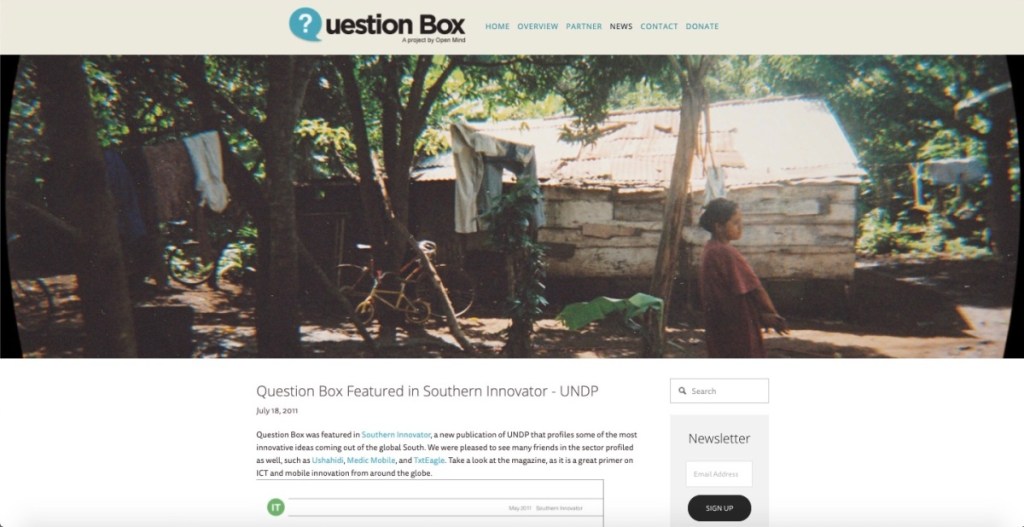
    Question Box in Southern Innovator Magazine.

    https://davidsouthconsulting.org/2022/11/19/cooking-up-a-recipe-to-end-poverty/

    https://davidsouthconsulting.org/2021/09/23/david-south-consulting-books-1997-2014/

    https://davidsouthconsulting.org/2022/10/24/flurry-of-anti-poverty-innovations/

    https://davidsouthconsulting.org/2021/04/06/gobi-desert-wine-to-tackle-poverty-and-boost-incomes/

    https://davidsouthconsulting.org/2022/11/22/happy-nigeria-west-african-nation-has-good-attitude/

    https://davidsouthconsulting.org/2022/06/10/illiterate-get-internet-at-touch-of-a-button/

    https://davidsouthconsulting.org/2022/11/20/kiva-new-gateway-of-loans-for-the-poor/

    https://davidsouthconsulting.org/2022/10/21/local-animation-a-way-out-of-poverty/

    https://davidsouthconsulting.org/2022/11/20/old-adage-gets-new-life/

    https://davidsouthconsulting.org/2022/10/21/social-networking-websites-a-way-out-of-poverty/

    https://davidsouthconsulting.org/2021/03/05/southern-innovator-issue-1/

    https://davidsouthconsulting.org/2021/01/23/a-steppe-back-economic-liberalisation-and-poverty-reduction-in-mongolia/

    https://davidsouthconsulting.org/2021/01/23/the-sweet-smell-of-failure-the-world-bank-and-the-persistence-of-poverty/

    https://davidsouthconsulting.org/2022/11/20/venezuelas-currencies-promote-cooperation-not-competition/

    https://davidsouthconsulting.org/2022/11/18/web-2-0-networking-to-eradicate-poverty/

    Creative Commons License

    This work is licensed under a
    Creative Commons Attribution-Noncommercial-No Derivative Works 3.0 License.

    ORCID iD: https://orcid.org/0000-0001-5311-1052.

    © David South Consulting 2023