Categories
Archive Development Challenges, South-South Solutions Newsletters

Venezuela’s Currencies Promote Cooperation Not Competition

By David SouthDevelopment Challenges, South-South Solutions

SOUTH-SOUTH CASE STUDY

The global economic crisis has spread around the world and is bringing many problems in its wake.  As global currency markets gyrate wildly, and people find they can go from having wealth to being poor almost overnight, the question is being asked: “is there another way?”

The global economy is slowing rapidly. Even Iceland – a country recently named as having the best quality of life in the world (Human Development Index) (HDI) – has gone broke, and many other nations around the world will face serious economic crises. People will need to protect themselves from the worst effects of the fallout from various economic bubbles bursting.

Runaway inflation, as is occurring in Zimbabwe – reaching 231 million percent in October, 2008 according to official sources – shows faith in a country’s currency can be sorely tested. But do people and the poor in particular, need to be prisoners of the economy managed by a national currency?

The ‘prosumer’ movement (http://en.wikipedia.org/wiki/Prosumer), where consumers take an active role in re-shaping markets and economies to their benefit, around the world is looking for ways to bypass national currencies and make food, goods and services more affordable and stable, improving the lives of the poor. One way this is done is through alternative currencies (http://en.wikipedia.org/wiki/Alternative_currency).

Cimarrones, or the Cimarron, joins 10 other alternative currencies currently in operation across Venezuela. They are circular cardboard tokens with a picture of a runaway slave on them.

Supported by Hugo Chavez, the country’s president, the new currencies are aimed at tackling poverty and establishing new economies. The currencies can’t be exchanged for the Venezuelan currency, the bolivar.

It works like this: to be a prosumer, you must first bring something to sell before you can buy anything. The range of products for sale at prosumer markets is not vast, but that isn’t the point.

“It’s magic,” Pablo Mayayo, an Argentinian advising Venezuela on prosumer schemes, told The Economist. “ When you take away money, which is the cause of almost all the great evils in the world, people relate to each other in a different way, by cooperating, not competing.”

Argentina pioneered so-called “barter markets” in response to its economic crises, helping people avoid starvation, looting and perhaps a revolution. By the end of 2002, there were 4,500 barter markets being used by half a million people producing 600 million credits.

“They were organized geographically around church halls, car parks and baseball courts,” recalled Peter North, a Liverpool University geographer. “They offered a wide range of products and services, supplied by professionals, trades people and farmers, as well as housewives and the unemployed. Stalls attracted ‘prosumers’ in their thousands, who paid with credit coupons issued by one or more barter markets. Everyone involved was both a prosumer and a producer, since you couldn’t purchase credits or exchange them for pesos.”

In Rio Chico, a small town in the Venezuelan coastal region of Barlovento, the prosumer currency market has people happy with the prices.

“I grow coconuts,” said Angenia Hernandez. “In the shops they cost 3.5 bolivares each (US $1.63) at the official exchange rate), but we we’re going to sell them at [the equivalent of] 1.5.” She calls it an end to “commercial fascism.”

Because of global currency speculation and investment flows, national currencies are not entirely at the control of national governments. High inflation seriously hurts the poor and low-waged, and national currencies can hurt the rural poor, who become prisoners to high interest rates charged by urban lenders.

Turning to a local, alternative currency has many advantages: it stops currency speculation, stops the flow of wealth to urban areas, preserves purchasing power, keeps trading local. Avoiding the draining away of wealth to middlemen, it addresses currency scarcity, and fosters greater awareness of how economies function and the mechanisms of trade

Criticism of these schemes say it is just a re-run of regressive company currencies and feudal tokens that were used in the past to control people and force them to only buy products from the landowner or boss.

In Papua New Guinea , shells are used for money and are called Tabu.  It is an ancient currency system used by the Tolai people of East New Britain Island . Stephen Demeulenaere (www.network-economies.com), who has worked on alternative currencies around the world and helped with the re-introduction of the Tabu in Papua New Guinea , sees it playing a key role in the local economy.

“Tabu was very effective at addressing poverty,” he said, “because anything could be purchased with it, from a handful of peanuts up to a piece of land or even a car, without needing national currency.  Tabu is produced traditionally by women, so theoretically nobody would suffer from a lack of it.  The advantage over the national currency is that it has a very long history of use, and people trust it more than the national currency.

“Tabu builds wealth by facilitating the exchange of locally-produced goods and services which may not circulate in a ‘national-currency only’ economy, and values activities that may not be considered to be economically viable if the use of national currency was the only option.  In the west we see this where ‘mother’s work’, hobbies, mutual-aid and other traditional under-valued but economically important activities are not valued monetarily.

“By encouraging the exchange of locally-produced goods and services, wealth is built in the community from the ground up.”

Over 75,000 people now use the shells, usually traded in great rings.

Getting the introduction of an alternative currency right is critical. In Argentina, such currencies were criticised for being manipulated by criminal gangs and political forces.

“The main advice I have is to study the community closely, and our website at http://www.complementarycurrency.org, provides free resources for people wishing to start their system,” Demeulenaere said.

“The system must be transparent so that people trust it and participate in maintaining its health and stability; democratic, so that it can not be abused by those in power; appropriate, so that it achieves general social and economic goals and aspirations of the community; and to be complementary to the regular economy so that the system helps its members to improve their lives economically.”

At the Jai Marketplace in Thailand , all of the goods in the market can be bought entirely in the local currency called “Jai’. Jai is convertible to Thai Baht or to organic, locally made cow fertilizer, and is designed to improve the local economy and the climate for micro, small and medium enterprises through the local exchange network.

Published: January 2009

Resources

https://davidsouthconsulting.org/2022/10/26/african-trade-hub-in-china-brings-mutual-profits-2/

https://davidsouthconsulting.org/2022/10/14/cash-machines-for-the-poor/

https://davidsouthconsulting.org/2020/12/15/development-challenges-south-south-solutions-newsletter-2007-2010-2/

https://davidsouthconsulting.org/2020/12/15/development-challenges-south-south-solutions-newsletter-2011-2014-2/

https://davidsouthconsulting.org/2022/04/12/djibouti-re-shapes-itself-as-african-trade-hub/

https://davidsouthconsulting.org/2022/02/10/food-inflation-ways-to-fight-it/

https://davidsouthconsulting.org/2022/10/20/global-souths-rising-economies-gain-investor-spotlight-2/

https://davidsouthconsulting.org/2021/07/19/global-south-trade-boosted-with-increasing-china-africa-trade-in-2013/

https://davidsouthconsulting.org/2022/07/01/poorest-countries-being-harmed-by-euro-currency-crisis/

https://davidsouthconsulting.org/2022/11/17/sos-shops-keep-food-affordable-for-poor-unemployed/

https://davidsouthconsulting.org/2021/07/19/south-south-trade-helping-countries-during-economic-crisis/

https://davidsouthconsulting.org/2021/01/23/the-sweet-smell-of-failure-the-world-bank-and-the-persistence-of-poverty/

https://davidsouthconsulting.org/2022/10/20/trade-to-benefit-the-poor-up-in-2006-and-to-grow-in-2007/

https://davidsouthconsulting.org/2022/10/05/women-empowered-by-fair-trade-manufacturer/

https://davidsouthconsulting.org/2022/06/16/women-mastering-trade-rules/

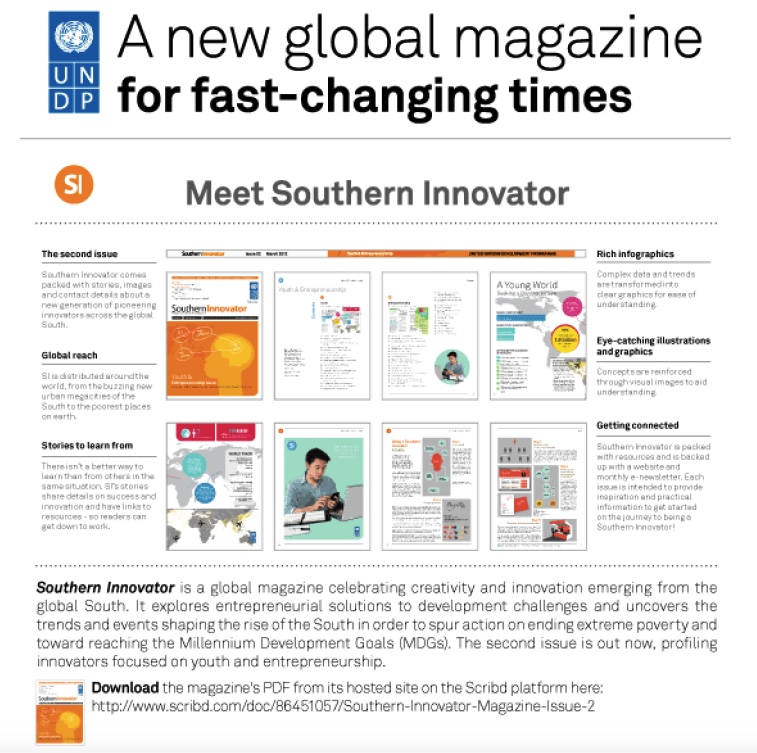
Development Challenges, South-South Solutions was launched as an e-newsletter in 2006 by UNDP’s South-South Cooperation Unit (now the United Nations Office for South-South Cooperation) based in New York, USA. It led on profiling the rise of the global South as an economic powerhouse and was one of the first regular publications to champion the global South’s innovators, entrepreneurs, and pioneers. It tracked the key trends that are now so profoundly reshaping how development is seen and done. This includes the rapid take-up of mobile phones and information technology in the global South (as profiled in the first issue of magazine Southern Innovator), the move to becoming a majority urban world, a growing global innovator culture, and the plethora of solutions being developed in the global South to tackle its problems and improve living conditions and boost human development. The success of the e-newsletter led to the launch of the magazine Southern Innovator.
https://davidsouthconsulting.org/2021/03/05/southern-innovator-issue-2/

Creative Commons License

This work is licensed under a
Creative Commons Attribution-Noncommercial-No Derivative Works 3.0 License.

ORCID iD: https://orcid.org/0000-0001-5311-1052.

© David South Consulting 2023

Categories
Archive Development Challenges, South-South Solutions Newsletters

Finding Fortune in Traditional Medicine

By David SouthDevelopment Challenges, South-South Solutions

SOUTH-SOUTH CASE STUDY

Traditional medicines and treatments could help provide the next wave of affordable drugs and medicines for the world. But a phenomenon known as ‘bio-prospecting’ – in which global companies grab a stake in these once-free medicines – has been placing traditional medicines out of reach of Southern entrepreneurs. Pharmaceutical patents (http://en.wikipedia.org/wiki/Patents) taken out by international drug companies are making traditional medicines expensive and inaccessible to the poor.

Indian scientists have identified more than 5000 bio-prospecting patents, worth some US $150 million, taken out by companies outside India.

Now governments in countries like India are moving to protect these recipes and the plants and animals they are made from.

The Indian government has labelled 200,000 traditional treatments as public property and free for anyone to use. These treatments are key parts of the 5000-year-old Indian health system called Ayurvedic medicine (http://en.wikipedia.org/wiki/Ayurveda) – ayur means health in Sanskrit, veda means wisdom.

“We began to ask why multinational companies were spending millions of dollars to patent treatments that so many lobbies in Europe deny work at all,” said Dr. Vinod Kumar Gupta, head of the Traditional Knowledge Digital Library, which lists in encyclopaedic detail the 200,000 treatments.

“If you can take a natural remedy and isolate the active ingredient then you just need drug trials and the marketing. Traditional medicine could herald a new age of cheap drugs,” Gupta told The Guardian..

Currently, it is very expensive to follow the Western approach to developing drugs. A so-called “blockbuster drug” can cost US $15 billion and take 15 years to bring to the market. With patents lasting 20 years, a drug company can have as little as five years to recover its development costs. This helps explain the high prices for drugs.

Unlike traditional healers in the South, multinational corporations can marshal the money, time and legal resources to file patents.

In the past, India has fought expensive and lengthy battles to revoke patents on traditional remedies. One example is the battle over the popular Indian spice turmeric powder (used for healing wounds, among other things). A patent awarded to the University of Mississippi in 1995 was successfully withdrawn after a legal battle by the Indian government.

The Indian government’s move to make traditional medicines and therapies public property promises to unleash a new wave of natural remedies and drugs and to expand the market for Southern health entrepreneurs drawing on traditional knowledge and recipes.

As the world’s economy continues to suffer, finding new ways to earn incomes and spark a whole new generation of businesses will be crucial to recovery.

The World Health Organization (WHO) defines traditional medicine as “the sum total of knowledge, skills and practices based on the theories, beliefs and experiences indigenous to different cultures that are used to maintain health, as well as to prevent, diagnose, improve or treat physical and mental illnesses.”

The importance of traditional medicines in primary health care can be seen in Asia and Africa, where its usage reaches 80 percent of the population in some countries (WHO). Herbal medicines alone are worth billions of dollars a year in sales. Examples of traditional remedies include antimalarial drugs developed from the discovery and isolation of artemisinin from Artemisia annua L., a plant used in China for almost 2000 years. In 2003, doctors found scientific evidence supporting the use of traditional Ghanaian plants to help wounds heal. Parts of the African tulip tree and the Secamone afzelli are made into pastes which are applied to wounds.

The downside of traditional medicine is the urgent need for better regulation and safety standards. While more than 100 countries have regulations for herbal medicines, counterfeit, poor quality or adulterated herbal medicines are still a major problem.

Herbal treatments are the most popular form of traditional medicine, and are highly lucrative in the international marketplace. Annual revenues in Western Europe reached US $5 billion in 2003-2004.. In China, sales of products totalled US $14 billion in 2005. Herbal medicine revenue in Brazil was US $160 million in 2007 (WHO).

One initiative is ensuring there is a solid future for traditional medicine in India. Charity Bodytree India, set up in 2004 by a group of health, human rights and education workers, addresses issues surrounding access to health care and the disappearing traditional medical practices amongst isolated indigenous communities. Bodytree has established a successful educational programme that trains young people from different indigenous communities to become community health workers and operates programmes of health education for community groups (http://www.bodytree.org/index.html).

Almost four-fifths of India’s billion people use traditional medicine and there are 430,000 Ayurvedic medical practitioners registered by the government in the country. The department overseeing the traditional medical industry, known as Ayush, has a budget of 10 billion rupees (US $260 million).

In the state of Kerala in India’s South, Ayurveda medical tourism has become a good income generator. And it is so popular in the nearby nation of Sri Lanka, hotels can have Ayurveda included in the name.

Indian entrepreneurs are drawing on increasing awareness of the importance of healthy living and rising interest in vegetarian diets – what were once holidays are now health experiences. With global obesity rates rapidly rising, along with the attended diseases like cancer and diabetes, more and more people are looking for a dramatic change to their eating and lifestyle habits to ensure long-term health. And traditional medicine has solutions.

Published: March 2009

Resources

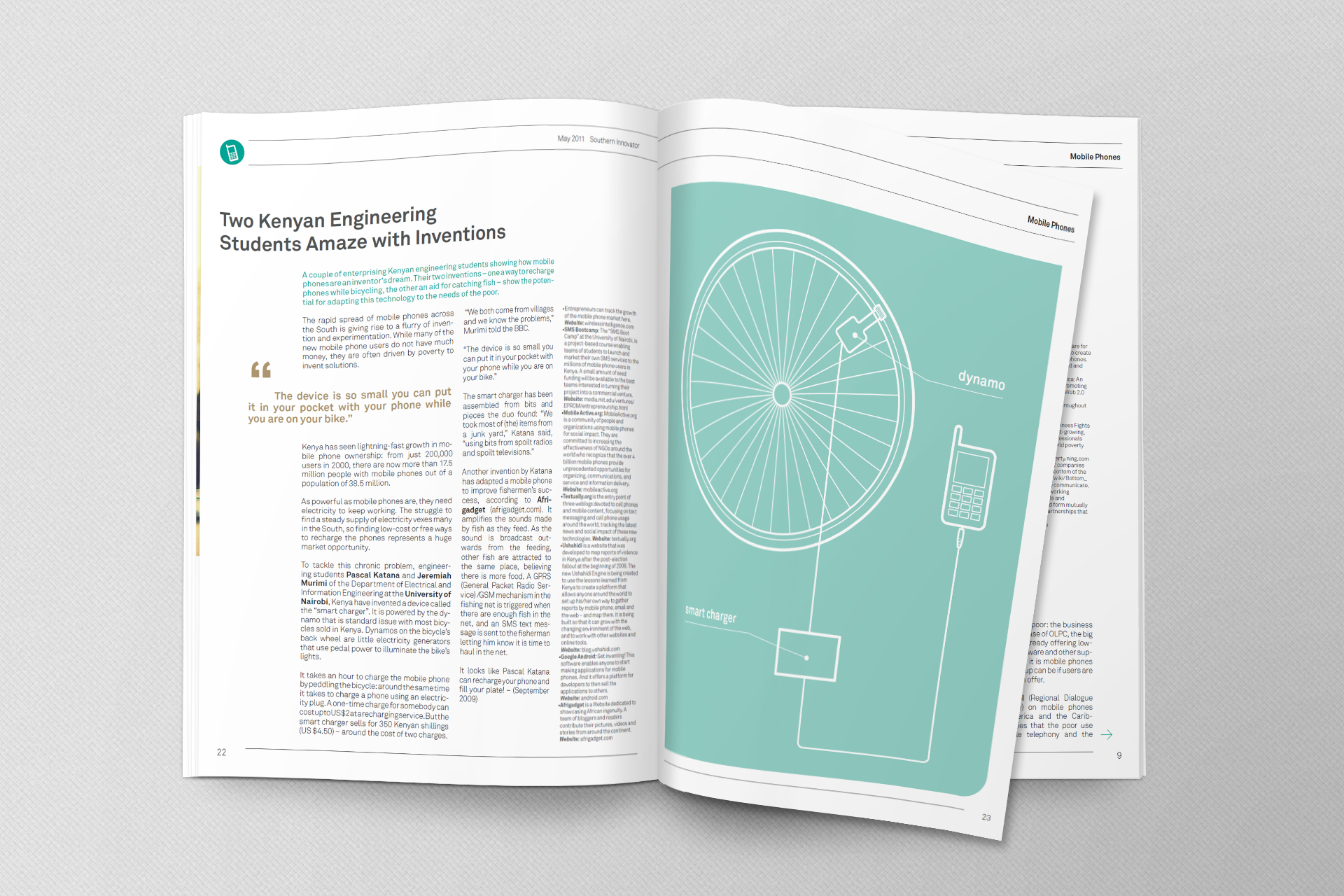
Development Challenges, South-South Solutions was launched as an e-newsletter in 2006 by UNDP’s South-South Cooperation Unit (now the United Nations Office for South-South Cooperation) based in New York, USA. It led on profiling the rise of the global South as an economic powerhouse and was one of the first regular publications to champion the global South’s innovators, entrepreneurs, and pioneers. It tracked the key trends that are now so profoundly reshaping how development is seen and done. This includes the rapid take-up of mobile phones and information technology in the global South (as profiled in the first issue of magazine Southern Innovator), the move to becoming a majority urban world, a growing global innovator culture, and the plethora of solutions being developed in the global South to tackle its problems and improve living conditions and boost human development. The success of the e-newsletter led to the launch of the magazine Southern Innovator.
Creative Commons License

This work is licensed under a
Creative Commons Attribution-Noncommercial-No Derivative Works 3.0 License.

ORCID iD: https://orcid.org/0000-0001-5311-1052.

© David South Consulting 2022

Categories
Archive Development Challenges, South-South Solutions Newsletters

Southern Drinks Challenge Corporate Dominance

By David SouthDevelopment Challenges, South-South Solutions

SOUTH-SOUTH CASE STUDY

Across the global South, its thirsty people have long been a target market for Northern drinks companies. The ubiquity of the American soft drink Coca Cola, or even its rival Pepsi Cola, is testimony to that. Even the most remote village on the impoverished island of Haiti can offer an ice-cold Coke.

But the marketing power of these companies has a down side: it has pushed aside local drink brands based on traditional formulations. But in some countries, local brands are fighting back.

In India, the Cow Protection Department of the Rashtriya Swayamsevak (called RSS) based in Hardwar (www.hardwar.com), one of the four holy cities on the River Ganges, has produced a soft drink made from recycled cow urine. They call it ‘gau jal’ (Sanskrit for ‘cow water’) and it is set for a launch at the end of 2009.

The urine is highly processed to make the drink. “Don’t worry, it won’t smell like urine and will be tasty too,” Om Prakash told the Daily Mail. “Its unique selling point will be that it’s going to be very healthy. It won’t be like carbonated drinks and will be devoid of any toxins.”

The price will be less than American brands such as Coca Cola.

“We’re going to give them good competition as our drink is good for mankind,” he continued. “We may also think of exporting it.”

The drink contains not only cow urine but a blend of medicinal and ayurvedic herbs. Ayurveda is the 5,000-year-old ancient Indian health system.

The RSS was founded in 1925 and claims to have eight million members.

Cows are sacred to India’s Hindu population and killing them is illegal in many parts of India.Finding ways to make a living from cows’ waste products is common. Cow dung (manure) is already used as a fertilizer in villages. It is claimed the new soda pop will help with cancer, obesity and liver disease.

Another drink that has been consumed for its health-giving properties is Mongolian mare’s (female horse) milk. Studies by female scientists from Mongolia, South Korea and China for UNDP in the late 1990s found the milk was packed with vitamins and minerals and effective in treating liver diseases, cancer, intestine inflammations and tuberculosis.

Mongolians have used mare’s milk for centuries in their traditional diet. The drink, called airag in Mongolian, is consumed especially during traditional holidays.

There are eight times as many horses in Mongolia as the human population, which numbers 2.7 million, so the potential for this drink is enormous. The Food and Biotechnology Institute of the Mongolian University of Science and Technology (www.must.edu.mn/beta_new/) in association with the Swiss International Development Agency (www.sdc.admin.ch), has been developing technology to process mare’s milk, and make value-added products with it to create rural jobs. Under the project, eight kinds of beauty products have been manufactured so far using mare’s milk.

Published: July 2009

Resources

Just Food is a web portal packed with the latest news on the global food industry and packed with events and special briefings to fill entrepreneurs in on the difficult issues and constantly shifting market demands. Website: www.just-food.com

Brandchannel: The world’s only online exchange about branding, packed with resources, debates and contacts to help businesses intelligently build their brand. Website: www.brandchannel.com

Small businesses looking to develop their brand can find plenty of free advice and resources here. Website: www.brandingstrategyinsider.com

Growing Inclusive Markets, a new web portal from UNDP packed with case studies, heat maps and strategies on how to use markets to help the poor. Website: www.growinginclusivemarkets.org

Asia-Pacific Traditional Medicine and Herbal Technology Network: an excellent first stop for any entrepreneur, where they can find out standards and regulations and connect with education and training opportunities. Website: www.apctt-tm.net

Development Challenges, South-South Solutions was launched as an e-newsletter in 2006 by UNDP’s South-South Cooperation Unit (now the United Nations Office for South-South Cooperation) based in New York, USA. It led on profiling the rise of the global South as an economic powerhouse and was one of the first regular publications to champion the global South’s innovators, entrepreneurs, and pioneers. It tracked the key trends that are now so profoundly reshaping how development is seen and done. This includes the rapid take-up of mobile phones and information technology in the global South (as profiled in the first issue of magazine Southern Innovator), the move to becoming a majority urban world, a growing global innovator culture, and the plethora of solutions being developed in the global South to tackle its problems and improve living conditions and boost human development. The success of the e-newsletter led to the launch of the magazine Southern Innovator.
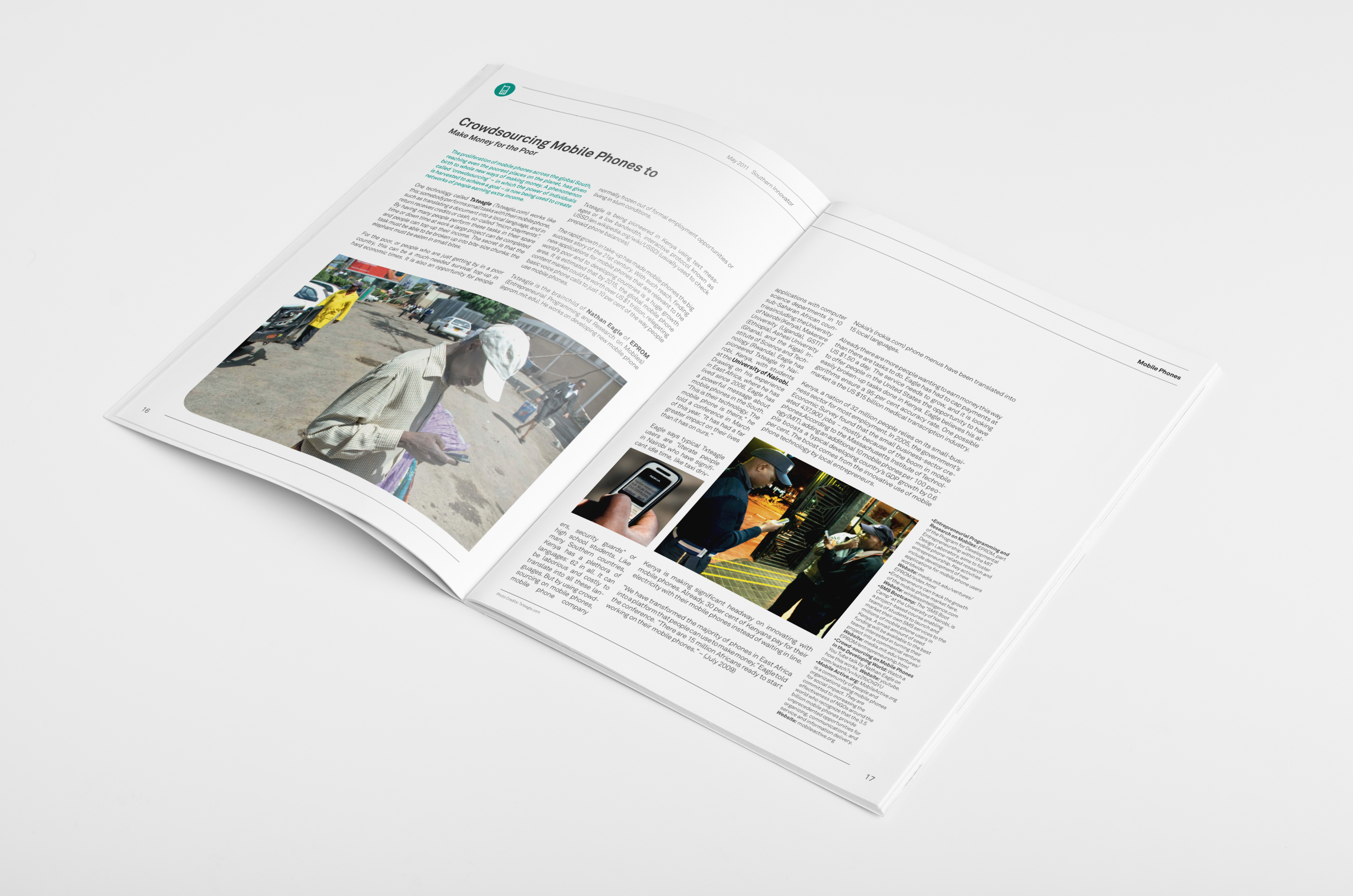
Southern Innovator’s online archive portal was launched in New York City, U.S.A. (home to the UN’s headquarters) in 2011 (southerninnovator.org).
Creative Commons License

This work is licensed under a
Creative Commons Attribution-Noncommercial-No Derivative Works 3.0 License.

ORCID iD: https://orcid.org/0000-0001-5311-1052.

© David South Consulting 2024

Categories
Archive Development Challenges, South-South Solutions Newsletters

Tourist Passion for Quirky Holidays Helps South

By David SouthDevelopment Challenges, South-South Solutions

SOUTH-SOUTH CASE STUDY

Conventional thinking holds that any country with a poor or non-existent reputation in the international media will not attract tourists. But this conventional thinking is wrong: The hottest tourist trend for 2009 is directly benefiting the South’s more out-of-the-way and under-appreciated countries. So says a travel expert who specializes in overlooked travel destinations.

Prior to the economic downturn, tourism accounted for more than 10 percent of global GDP and 8 percent of total employment worldwide. It grew by 6 percent in 2007, according to the UN World Tourism Organization. Tourism in the Asia-Pacific region grew by 10 percent and Africa by 8 percent.

But it has since declined by 8 percent between January and April of 2009 compared to the same period in 2008. Destinations worldwide recorded a total of 247 million international tourist arrivals in those four months, down from 269 million in 2008 (UNWTO World Tourism Barometer).

This means competition is heating up for tourists. Well-travelled tourists are now looking for out-of-the-way places and places far off the beaten track. They want to be unique and have a tale to tell when they get home.

Tony Wheeler, author of the book Bad Lands: A Tourist on the Axis of Evil and co-founder of the Lonely Planet travel guides, said “Lots of tourists want to be the first through the door.”

During the Fitur Travel Fair in Madrid in January 2009, Myanmar (formerly Burma) appeared for the first time. Europe’s biggest travel fair also saw Zimbabwe, the Palestinian territories and Iran chasing travellers to come and see the sights.

Wheeler told Britain’s Daily Telegraph newspaper that, ironically, the more negative reports in the media a country gets, the more this new breed of tourist want to visit and find out the truth.

And his travel experiences have taught him, for example, the Burmese people do not believe in isolation and boycotts, as he wrote in the Guardian.

“Over the three decades since my first visit, tourism has grown from 20,000 tourists a year to more than 100,000.”
“Cutting the country off from the rest of the world isn’t going to help. We recently received a letter from one of our Burma authors saying the psychological damage of being isolated can be as bad as the economic damage.”

North Korea – which was labelled part of the “axis of evil” by President George W. Bush – saw its foreign tourist numbers rise to 4,500 in 2008 from just 600 in 2001.

Ross Kennedy of Africa Albida Tourism, which operates safari lodges in Zimbabwe, said bad headlines hurt but presenting an alternative view can reverse apprehension and lure tourists to come.

The lodges saw a 4 percent rise in visitors in 2008 in spite of chaotic elections in Zimbabwe that drew negative press.

“You certainly can’t write off an entire destination because of the choices or behaviour of a few individuals,” Kennedy told the Telegraph.

Tourism is now generally recognized to be one of the largest industries in the world, if not the largest. It has grown rapidly and almost continuously over the past 20 years, and is now one of the world’s most significant sources of employment and of Gross Domestic Product (GDP). Tourism particularly benefits the economies of developing countries, where most of the sector’s new tourism jobs and businesses are being created.

Tourism, because it is a labor-intensive industry, is seen as a great way both to reduce poverty and to meet all the Millennium Development Goals. It favours small-scale businesses, it is decentralized and can diversify regional economies, it is relatively non-polluting and can contribute to the conservation and promotion of natural and cultural heritage, and most importantly it can act as a catalyst for kick-starting other sectors of the economy.

In Iran, the Laleh Kandovan International Rocky Hotel, located in the province of East Azerbaijan in the north-west of the country, has been luring in tourists with the villages’ cave homes. Located in the village of Kandovan, where residents speak a Turkish dialect, the homes look like craggy sandcastles with holes in them; around 700 people live in the hollowed out rocks.

Prior to the hotel opening, it was only possible to visit for a day and the locals, who make their money harvesting fruit and walnuts, were suspicious of outsiders.

Kandovan means “Land of the Unknown Carvers”. An added attraction to visiting Kandovan is the mystery surrounding the houses. No one knows how long people have been there or when the homes were carved out of the rock. Others claim it is the biblical land of Nod, where Cain was left to wander after murdering his brother Abel.

The hotel occupies a hillside of caves and has a large restaurant and rooms that blend traditional décor like Persian rugs with modernist touches like recessed lighting. The rooms offer under-floor heating and some even have whirlpool baths. The hotel currently has 10 rooms, but plans to expand to 30.

Published: July 2009

Resources

United Nations World Tourism Organization (UNWTO). Website: www.unwto.org

Magic Carpet Travel: It specializes in trips to Iran and bookings for the Laleh Kandovan International Rocky Hotel. Website: www.magic-carpet-travel.com

African Travel and Tourism Association: ATTA creates the platform for buyers across Europe to meet suppliers of African tourism products at networking events, trade shows and through its links with the media. Website: www.atta.co.uk

Planeta: One of the first ecotourism resources to go online (since 1994) and still offers plenty of information for those wanting to start a business. Website: www.planeta.com

Off The Beaten Track Travel Magazine: Off The Beaten Track is a site for the traveller who avoids the beaten path of mass tourism. Website: www.off-the-beaten-track.net

World Tourism Cities: Developing Tourism Off the Beaten Track, edited by Robert Maitland and Peter Newman, Publisher: Routledge. Website: www.amazon.com

https://davidsouthconsulting.org/2022/10/20/african-tourism-leads-the-world-and-brings-new-opportunities/

https://davidsouthconsulting.org/2022/10/20/africas-tourism-sector-can-learn-from-asian-experience/

https://davidsouthconsulting.org/2022/02/07/boosting-tourism-in-india-with-surfing-culture/

https://davidsouthconsulting.org/2022/09/27/caribbean-island-st-kitts-goes-green-for-tourism/

https://davidsouthconsulting.org/2022/11/20/ecotourism-to-heal-the-scars-of-the-past/

https://davidsouthconsulting.org/2022/11/23/kenyan-safari-begins-minutes-from-airport/

https://davidsouthconsulting.org/2022/10/10/a-solution-to-stop-garbage-destroying-tourism/

https://davidsouthconsulting.org/2021/03/05/southern-innovator-issue-2/

Development Challenges, South-South Solutions was launched as an e-newsletter in 2006 by UNDP’s South-South Cooperation Unit (now the United Nations Office for South-South Cooperation) based in New York, USA. It led on profiling the rise of the global South as an economic powerhouse and was one of the first regular publications to champion the global South’s innovators, entrepreneurs, and pioneers. It tracked the key trends that are now so profoundly reshaping how development is seen and done. This includes the rapid take-up of mobile phones and information technology in the global South (as profiled in the first issue of magazine Southern Innovator), the move to becoming a majority urban world, a growing global innovator culture, and the plethora of solutions being developed in the global South to tackle its problems and improve living conditions and boost human development. The success of the e-newsletter led to the launch of the magazine Southern Innovator. 

Creative Commons License

This work is licensed under a
Creative Commons Attribution-Noncommercial-No Derivative Works 3.0 License.

ORCID iD: https://orcid.org/0000-0001-5311-1052.

© David South Consulting 2023