South Africa’s township music is pounding its way into the global music charts. How has music made in the impoverished townships that are a hangover from decades of apartheid – the country’s former racial separation laws, which trapped millions of black South Africans in disenfranchisement and poverty – travelled around the world? By hitching a ride with the country’s ubiquitous taxi drivers.
In the age of digital downloads and rampant pirating of music CDs by bootleggers, musicians in the South face an epic struggle to earn income from their music. It’s estimated 95 percent of digital downloads of music are unauthorized, with no payment to artists and producers (www.ifpi.org).
And for musicians and artists from the world’s poorest places, who are far out of sight of the mainstream music business, life is even harder. The question remains: what on earth do you do to get heard?
Many South Africans are big fans of European House, a type of dance music. An enterprising group of producers living in the townships of Pretoria started to experiment, taking the House they loved and turning it into something more reflective of where they lived. The result, dubbed Township House, blends the school-of-hard-knocks beats of South African hip-hop, Kwaito, with House music’s tempos and electronic sounds.
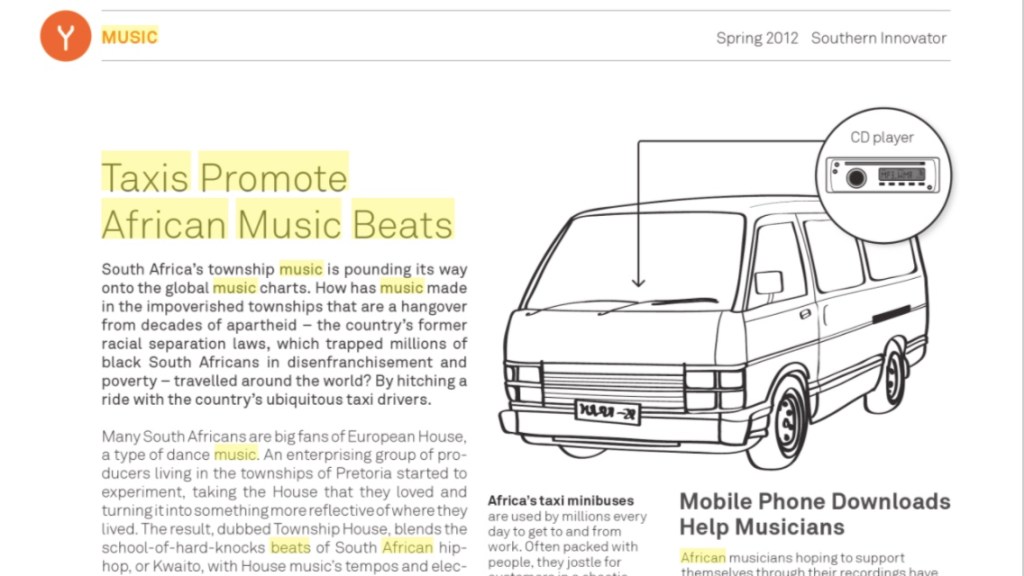
Being from the townships meant the musicians behind Township House were frozen out of the mainstream music industry. And as every artist knows, if you can’t get heard, then your music will go nowhere. Rejected by radio stations and big record labels, they turned to an unlikely outlet: taxis, the ubiquitous small minibuses that are the only alternative form of transportation for people who do not have a car.
They are heavily used: the University of Pretoria (www.web.up.ac.za) estimates between 5 and 10 million people use minibus taxis every day to get to work or get around.
“In South Africa, the easiest way to the people is through the taxis,” musician DJ Qness told CNN.
The vast network of taxis serving the country represent a captive audience of listeners. Many are simply bored as they endure lengthy commutes. The Township House producers handed out compact discs (CDs) of their tracks to taxi drivers to play. They soon had a hit on their hands. But without any presence in record stores people couldn’t buy the CDs they wanted. And a new source of income was born for taxi drivers: selling CDs from their taxi stands or roadside stalls.
With appetites whetted for Township House, it started to outsell imported dance music.
The biggest hit maker of this pioneering group was DJ Mujava, whose track Township Funk was a global dance club hit in 2008.
“These people created a demand. The Mujava’s ‘Township Funk’ blew up on the streets and everything went crazy,” said Qness, who works for record label Sheer Music.
After all this home-grown success, the record labels jumped in. DJ Mujava landed a record deal with the small label Sheer Music. But the township musicians were still just reaching a local audience. However, by putting together a low-budget video using township dancers, and by posting the video on the YouTube (www.youtube.com) video-sharing website, they attracted the attention of British record labels Warp Records and This is Music, who re-mixed the track for clubs.
The model of using taxis as a music distribution vehicle has been copied by others. Pretoria’s Gospel Taxi Club uses the method to promote their religious music. Political parties are also using music CDs to get their message out.
Other Pretorian township successes are making waves as well. They include Bojo Mujo and Tembisa Funk by McLloyd.
“By combining the electronic sound from European House with the hard drum and the raw snare they’ve created something totally unique. You can’t find it anywhere in the world — only in South Africa,” said Qness.
Published: June 2009
Resources
DJ Mujava: Listen to all of DJ Mujava’s tracks at his website. Website:www.myspace.com/mujavaDigiArts Africa: The DigiArts Africa network is a tool to find people working in Digital Arts in Africa and to provide a collaborative working space to promote digital arts in Africa. Website:http://portal.unesco.org/culture/en/ev.php-URL_ID=5346&URL_DO=DO_TOPIC&URL_SECTION=201.htmlAfrican Musicians Profiles: A lively website featuring profiles of African musicians by alphabetical listing and also reviews African films. Website: www.africanmusiciansprofiles.comRecording Industry of South Africa (RiSA): RiSA is the main body representing the South African recording industry. Website: www.risa.org.za
The Caribbean nation of Haiti is the poorest country in the western hemisphere, with 80 percent of the population living below the poverty line (CIA World Factbook). The country had been enjoying some positive economic growth since 2005 after decades of economic and political turmoil.
The country’s political vacuum and economic problems gave rise to violent gang rule on its streets and a collapse in public services, in particular garbage collection. The piles of waste became a source of disease and squalor as well as providing barricades for gangs to wage their street battles.
Haiti was also hit by four devastating hurricanes in 2008, with heavy damage to the country’s agricultural sector and transport infrastructure.
But a project by UNDP’s Special Unit for South-South Cooperation (http://ssc.undp.org/Home.118.0.html) has turned around a Haitian neighbourhood by simultaneously cleaning up the garbage, creating employment and income and reducing gang violence and despair. The United Nations has been working in Haiti to restore the economy and bring peace and good government to the country since the 1990s. Its most recent mission, MINUSTAH (http://minustah.org/),has been running since 2004.
Called ‘Love n’ Haiti’ and located in the Carrefour-Feuilles district (http://www.maplandia.com/haiti/ouest/carrefour-feuilles/) of the capital Port-au-Prince, the project used a ground-up strategy to tackle the problem of waste removal.
“I know we have a bad image. But the violence is going down in my neighbourhood,” said Gislène La Salle, a widow and a mother of six from Carrefour-Feuilles, to the Indo-Asian News Service (IANS).
“But when the security situation deteriorated sharply, I could not work in the streets. Luckily, six months ago, I found work in this project. Now, life is more stable. I have a regular income,” she said.
“The money I earn allows me to feed my family better and send three of my six children to school.”
The neighbourhood has a population of 150,000. Nine community leaders were identified and a management committee set up called the Committee d’Action Sanitaire de Carrefour Feuilles (CASCAF). The management committee then undertook difficult negotiations with local street vendors to establish garbage collection points. A waste collection plan was drawn up, and around 400 workers were hired to clean the streets and canals and collect the waste.
The workers were divided up into nine street cleaning teams and three waste collection teams, comprising people who were members of rival groups.
The project started in 2006 from a very basic point: generating awareness in the population about the dangers of waste and the need for it to be disposed of. The breakdown in public services from decades of political turmoil and poverty had meant a culture of waste disposal no longer existed. The project drew on similar experiences in Brazil and used Brazilian expertise.
A triage (http://en.wikipedia.org/wiki/Business_Triage)centre was set up to sort the waste into paper, plastic, metal, glass and organic matter for recycling. Two products are made from the waste to earn income: cooking briquettes and fertilizer.
The cooking briquettes may also help stem Haiti’s horrific deforestation. The country shares its island with the Dominican Republic in the Caribbean, and anyone flying over the island can see a sharp dividing line between the green and lush forests of the Dominican Republic and the almost-barren and dusty Haitian hills.
By turning the trash into cooking briquettes, people are being offered an alternative to chopping down the forests and burning trees to make charcoal fuel for cooking.
Income for the waste collectors has increased to US $3 a day and the project has removed 70 percent of the neighbourhood’s waste, making it easier to get around and get things done (another boost to incomes).
Georginette is also a widow. Like Gislène, this mother of seven is thrilled to find a regular job. “Earlier, only three of my seven children went to school. Many children from the neighbourhood roamed the streets. But since November 2007 when I began working here, I can afford to send five,” she said.
Prior to the project, the neighbourhood was one of the most dangerous in Port-au-Prince. The project unexpectedly found the history of violence and conflict were quickly overcome when the project began to make quick progress.
Collecting the waste now earns an income for 380 families. And by gravitating community leadership to nonviolent leaders, relationships between people and groups improved.
The 50 waste collection points and public garbage bins now contribute to a reduction in common diseases that are rife in other parts of Haiti: leptospirosis, worms, canicola fever, tetanus, yellow fever, typhoid, dengue, and malaria.
Originally, the government of Haiti appealed to the India, Brazil and South Africa Facility for Poverty and Hunger Alleviation (IBSA Trust Fund) (http://www.indianembassy.org/newsite/press_release/2007/Sept/17.asp) to get to grips with the woeful garbage collection in the capital, while tackling the violence in the slums and lack of economic opportunity.
The project is also a partnership between Port-au-Prince’s city hall, the Ministry of Public Works and other government ministries, Quisqueya University, UNDP Haiti, IBSA, and the Special Unit for South-South Cooperation. The project is run on the ground by UNDP Haiti.
Where once the trash made flooding worse by blocking canals, having it removed has prevented the stew of waste that was produced when floods occurred.
“Impressed by the positive results so far, the Haitian government would like to replicate this model in other regions of the country,” said Eliana Nicolini, the UNDP project coordinator.
It is hoped the project can be scaled up to reach across Haiti and even be replicated in other countries. The UN Special Envoy for Haiti, former US President Bill Clinton, has been drafted in to help with raising funds for expanding the project.
The Love n’ Haiti project has been selected by the BBC’s World Challenge contest, which invites the general public to vote for which project they think is the best. Voting takes place on their website:http://www.theworldchallenge.co.uk.The project is number eight in the list on the website.
“It is not easy to choose who to hire in a place where so many are desperately in need of work. Many people beg us for work but we don’t have vacancies at the moment. If we can hire even 100 more persons, it would solve a lot of problems,” said Patrick Massenat, a local youth heading a committee created to implement activities contributing to waste management and to ensure effective involvement of governmental institutions.
“Most people in this area never knew real work. Now, they have experienced it. They also have families. The area is cleaner; the women who lost their husbands in gang wars and police firing are happier. It’s a beginning.”
3) A collective of women in the slums of Delhi, India sell fashionable recycled shopping bags online. Website:http://www.theindiashop.co.uk/
4) Proyecto Alcatraz (Project Alcatraz): This Venezuelan project offers violent gang members the opportunity to go straight and make their way into the economic mainstream with real job opportunities and skills. Website:http://www.proyectoalcatraz.org/home_eng.php
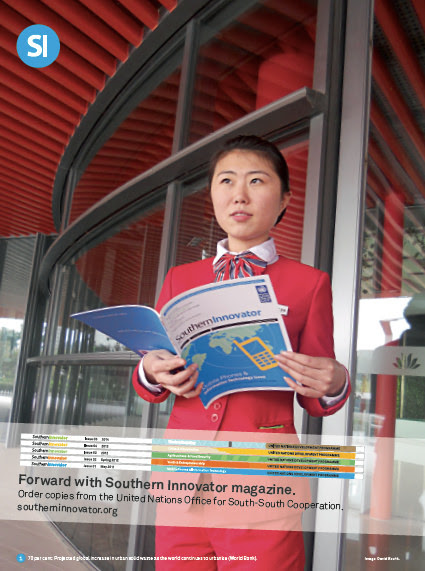
Development Challenges, South-South Solutions was launched as an e-newsletter in 2006 by UNDP’s South-South Cooperation Unit (now the United Nations Office for South-South Cooperation) based in New York, USA. It led on profiling the rise of the global South as an economic powerhouse and was one of the first regular publications to champion the global South’s innovators, entrepreneurs, and pioneers. It tracked the key trends that are now so profoundly reshaping how development is seen and done. This includes the rapid take-up of mobile phones and information technology in the global South (as profiled in the first issue of magazine Southern Innovator), the move to becoming a majority urban world, a growing global innovator culture, and the plethora of solutions being developed in the global South to tackle its problems and improve living conditions and boost human development. The success of the e-newsletter led to the launch of the magazine Southern Innovator.
Good ideas are plentiful, but how to fund life-improving projects has always been a thorny issue. Judging how effective a project is can also be fraught with debate and contention. Over the past two decades, the number of NGOs in the global South has exploded (http://lboro.ac.uk/gawc/rb/rb144.html). The best of them offer the local knowledge and understanding required to make development gains. But unlike NGOs in the North, many lack the powerful fundraising capabilities of the big global NGO brands.
An exciting new initiative based in Germany, but already featuring hundreds of projects from across the South, is using the power of the internet to directly connect projects and donors.
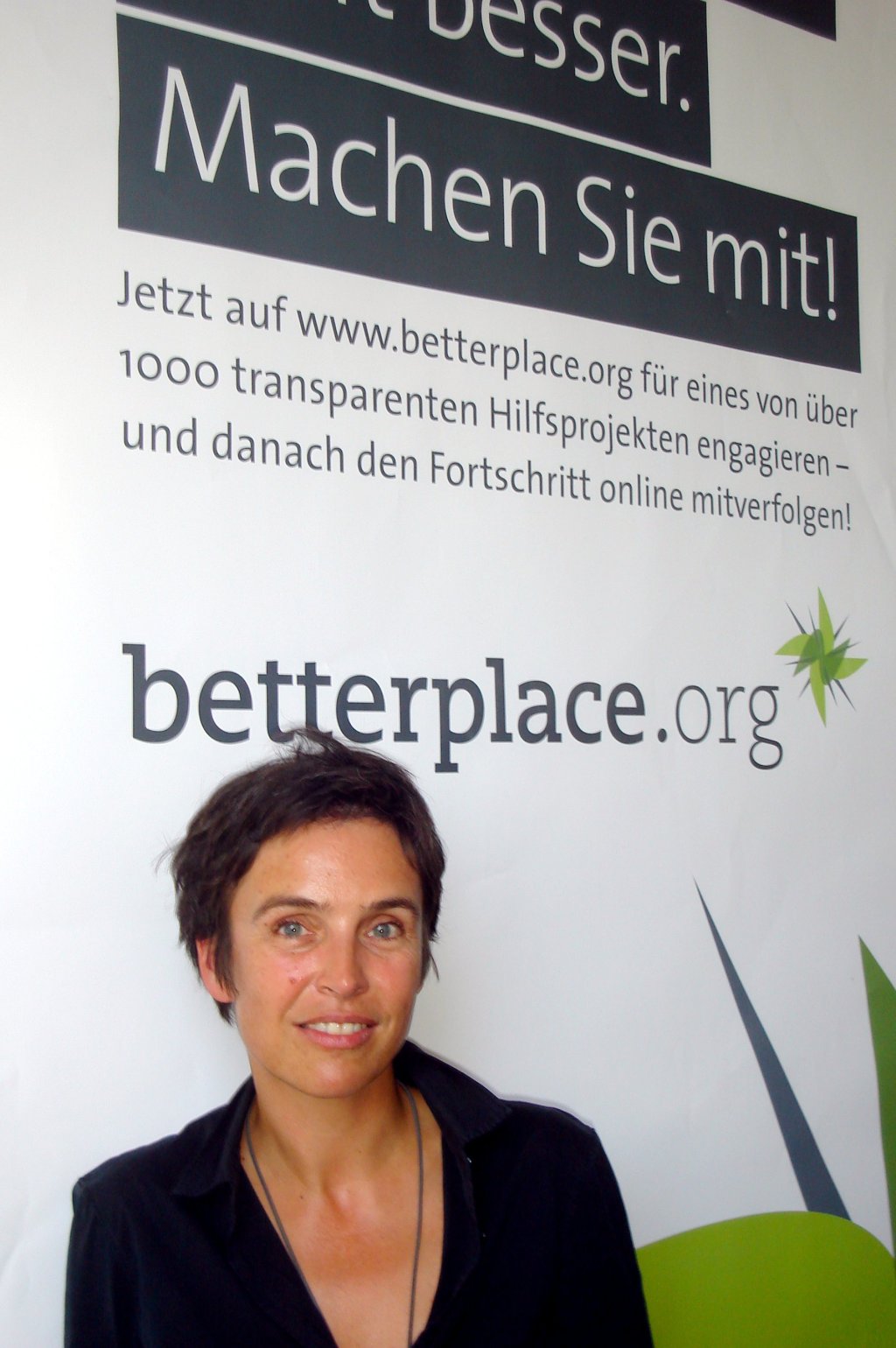
Joana Breidenbach, an anthropologist, author and co-founder of betterplace.org (www.betterplace.org), says NGOs are emerging in India and other countries of the South to challenge the big Northern global NGOs.
“Why wouldn’t you want to donate to these Southern NGOs? There are more entrepreneurs and local approaches which are better.
“Betterplace gives local institutions a platform to express themselves.”
Started in 2007, betterplace is an online marketplace for projects to raise funds. It is free, and it passes on 100 percent of the money raised on the platform to the projects. The foundation that runs betterplace supports its overheads by offering additional services that people can pay for if they wish. It works in a way similar to the online marketplace eBay (http://www.ebay.com): NGOs post their project, set up an account, blog about their achievements and successes and needs, and receive donations direct to their bank account when they come in.
Breidenbach points out up to a third of any NGO’s income is spent on fundraising. In Germany, that represents more than Euro 1.3 billion out of over Euro 4 billion in private donations – money that could have gone directly into the hands of the people needing help.
With betterplace, donators can surf through the projects and pick the one they want. Already, more than 100 large corporations trawl through betterplace seeking projects to fund to meet their corporate social responsibility (CSR) obligations (http://en.wikipedia.org/wiki/Corporate_social_responsibility).
“I find it very exciting to introduce a good and innovative NGO to a corporate sponsor,” Breidenbach said.
Breidenbach says betterplace’s ultimate goal is “to transfer the donation market online.” It hopes to change the rules in donation and charity in the same way blogs and the search engine Google changed the way people publish and search for information.
“This provides better transparency, feedback,” Breidenbach said. “Now (with betterplace) donors and organizations can cut out the middlemen. A lot of established organizations do not like this too much.”
Over the past decade, new concepts like social entrepreneurs and venture philanthropy have emerged to straddle the delicate line between social good and private profit. Betterplace joins this wave of new thinking about how to do development better.
In the 20 months since betterplace went online more than 1,500 projects have joined. They are now averaging between 20 to 35 new projects joining every week.
Betterplace is a simple open-plan office on the top floor of a Berlin warehouse beside the city’s Spree river. The small team (http://www.betterplace.org/about_us/team) work on laptop computers. A blackboard on the wall details in bright colours a running tally of the projects that have joined.
Breidenbach gives the example of a mother in Cameroon who is using betterplace to raise the school fees for her children. The mother blogs about the children’s progress and has been able to raise the fees for a year and a half.
“People are now directly connected to somebody in need.”
“Right now the functionality (of the website) does not allow people getting in contact publicly and we want to enable this knowledge transfer in 2010. If you want to build a well in Cameroon then you could search for the best technology and to contact other people who are doing similar projects to learn from them.”
Success on betterplace is by no means certain. “The experience of the project managers has been as varied as development work is – some have done really well, raising thousands of Euros over the website – others have received no funding at all,” Breidenbach said.
But betterplace provides tools to give the projects the best chance possible. “Projects can present their work, breaking it down in a transparent way (in order to let supporters know exactly what is needed for their realization), there are sound payment processes in place and project managers can give feedback through their project blog, supporters can download project widgets etc., all supplied free of charge.”
Breidenbach has other tips for making betterplace work for a project: post details in English when creating a profile, break down the project into much smaller, low-cost goals (few people are willing to make large donations) – this also has the advantage of receiving payments straight away when they are small. Tell a good story about the project, and try and use actual testimonials from the people affected. Blog and update regularly with photos and videos to keep people engaged. Also avoid copying and pasting text from a previous grant application.
“We have the numbers to show that projects which give regular feedback and have a lively web of trust receive more donations than others, which are not very active.”
“Don’t think you can just go on to betterplace and the money starts rolling in,” said Breidenbach.
The betterplace platform places all projects seeking funds on the same level, allowing individuals and small NGOs to compete equally with the big, branded global NGOs with their websites and sophisticated fundraising operations.
“All the big NGOs have their own websites,” continues Breidenbach. “But it is the small initiatives that often don’t have a website or know how to use Pay Pal etc. (http://www.paypal.com). We are very useful for smaller NGOs.”
“Another big advantage is that we are a real marketplace: whatever your interests (as a potential donor), you will find a project tackling this issue on the platform.”
But what about fraud and people seeing betterplace as a coin-making machine rather than a way to make the world a better place?
“We have a feeling for dodgy projects. We check the IP address. We have a number of trust mechanisms in place (and are currently working on enlarging them). Thus projects on betterplace can create trust through their good name … But we also include something which I would call network-trust: In our web of trust different kinds of stakeholders of an organization or a project have a voice and can publicly state what they think of it. Thus beneficiaries of a project can say if the project has done them good or has been counterproductive, people who have visited the project on the ground can describe what they have seen etc. … we hope to give a much denser and more varied impression of social work and give donors (a terribly badly informed group of people), the basis for a much more informed choice.
“If a contributor to a project is dissatisfied with the project’s outcome … she can either directly contact the project manager via betterplace, or openly voice her concern on the project page for other potential donors to see her views.”
For now, betterplace is still only useful to people who have access to the internet and have a bank account (necessary for the money transfers). But in the future betterplace hopes to have mobile phone interactivity and more features to expand who they can reach.
“We are also re-working our site to make it more intuitive and easier to use for people without computer skills,” Breidenbach said. “In the pipeline is also a knowledge backbone, enabling people to access knowhow about development and social innovation issues and exchange views and experiences. This will be very useful for projects in the South as so many people are working on the same issues without knowing about it. They could learn a lot from each other, without the “help” of the north.”
With internet broadband in Africa set to take off, according to the report Africa Connect: Undersea Cables to Drive an African Broadband Boom (http://www.pyr.com/downloads.htm?id=5&sc=PR090309_INSAME1.6), even more people will soon be able to make the most of initiatives like betterplace.
Published: September 2009
Resources
1) CSR Wire: This is a news service with all the latest news, reports and events and where companies announce their CSR (corporate social responsibility) programmes and how much they are contributing. A great resource for any NGO looking to make a targeted appeal for funds. Website:http://www.csrwire.com/
2) Alibaba: Alibaba.com is an online marketplace started in China but is now global. It allows businesses from all over the world to trade with each other, make deals and find funding. Website:http://www.alibaba.com/
Development Challenges, South-South Solutions was launched as an e-newsletter in 2006 by UNDP’s South-South Cooperation Unit (now the United Nations Office for South-South Cooperation) based in New York, USA. It led on profiling the rise of the global South as an economic powerhouse and was one of the first regular publications to champion the global South’s innovators, entrepreneurs, and pioneers. It tracked the key trends that are now so profoundly reshaping how development is seen and done. This includes the rapid take-up of mobile phones and information technology in the global South (as profiled in the first issue of magazine Southern Innovator), the move to becoming a majority urban world, a growing global innovator culture, and the plethora of solutions being developed in the global South to tackle its problems and improve living conditions and boost human development. The success of the e-newsletter led to the launch of the magazine Southern Innovator.
“A few weeks ago, David South, Development consultant and author of UNDP’s Development Challenges, South-South Solutions Newsletter, came by the betterplace office to take a look at our work. When I asked him how he had come about betterplace.org, he answered: he found me on twitter! So much for the twitter-scepticts. Read the article about how we can Make the World a Better Place for Southern Projects. (As the UNDP always publishes the newsletter on its South to South Website only months later, here is the link via David South’s blog).”
The power of design to improve products and the way they are manufactured is increasingly being seen as a critical component of successful economic development.
The importance of trade – both South-South and South-North – as a reducer of poverty in developing countries is now widely acknowledged. Countries that have made the biggest gains in reducing poverty, like China, India and Brazil, have done it through trade.
The power of trade in high quality goods to raise incomes has been proven for more than a decade. South-South trade grew by an average of 13 percent per year between 1995 and 2007. By 2007, South-South trade made up 20 percent of world trade. And over a third of South-South commerce is in high-skill manufacturing. Making finished goods, rather than just selling raw materials, improves workers’ skill levels and increases the return on trade.
But trying to get other people to desire and buy your products is very tricky. Design plays a major part in understanding the unique demands of countries and markets, and what people find appealing or repellent.
A product that has both a successful design (people want to buy it) and is produced efficiently (a well-designed manufacturing process), will generate a good profit.
In India, the Craft Resource Centre or CRC Exports Limited of Kolkata (http://en..wikipedia.org/wiki/Calcutta)has been successfully selling leather travel bags to the Vodafone (>http://www.vodafone.com/hub_page.html) mobile phone company in The Netherlands. It did this by teaming up with Dutch Designers in Development (http://www.ddid.nl/english/index.html), an NGO focused on matching European importers and retailers and professional designers with small and medium enterprises in the South.
Founded in 1989, CRC applies the concept of adding value to turn small-scale and poor artisans into successful and sustainable businesses. Many of these traditional handicraft artisans subsist on low incomes. CRC provides artisans across India with marketing, design, finance and exporting help. It also connects them with other artisans and helps to divide projects between them. This has the power of using networks to help in bad times while also sharing opportunities when they come up.
CRC’s director, Irani Sen, has divided the more than 15,000 artisans they work with into 15 different trading groups. CRC has also consulted to over 350 projects across Asia.
“The best thing fair trade gives (artisans) is the continuity of work … and with the continuity comes the basic security,” Sen said on the CRC website. “With that security they can develop, they can plan and then we try to motivate them for education, health (and) education for their children.”
It all began with a need: Dutch company Unseen Products (http://www.unseenproducts.com/home) needed somebody to make high-quality leather travel bags for their client, Vodafone, who in turn wanted the bags as an incentive for their employees. Unseen Products is a business connecting European retailers with small producers in the South to build long-term business relationships. They seek to make “unseen or hard to find products accessible at commercially interesting prices.”
They approached Dutch Designers in Development (DDiD), which in turn recommended CRC.
As a matchmaker, DDiD puts together European clients, Dutch designers and small and medium-sized enterprises in developing countries. The designers share their knowledge of European consumer tastes, product development, design and quality standards.
DDiD receives orders from companies, NGOs and government agencies to stimulate the production and sale of sustainable products from developing countries in Europe.
The Dutch group works with producers to develop skills and adapt producers’ products to present and future demands in Europe. By following this approach, Southern producers can reduce the risk of making products nobody wants, or that lack originality in the marketplace and thus won’t sell.
DDiD explains to producers the importance of design and how it improves the product and the business. Good design, the group believes, should reduce production costs and the time taken to get to market, and boost the reputation of the product brand and maker.
Meewisse said he was uncertain at first whether the artisans would be able to make the highly complex bags. The solution was to break down the bag into smaller parts. And that is where the knowledge of design process comes into play.
“The button bag for example is a complex bag that has been taken apart: compartments, pockets, handles,” said Meewisse. “This provided us with elements that were each really simple to manufacture. After that the pieces would only have to be clicked together with the buttons. And there it was: a complete bag with all the elements you need in a good bag.”
Stella van Himbergen, a project manager at DDiD, said the concept is about introducing a new way of looking at things through the prism of design.
“Small producers in developing countries are not lacking craftsmanship,” said Himbergen. But, she added, “it is important for producers to receive support in production-led design, and not only in aesthetic design.”
Conceptually, this is the difference between designing and making something because it is aesthetically pleasing, and taking a market-driven design approach – letting market demands lead to the design solution. As a different way of looking at things, it takes in the company’s vision, brand values and positioning in the marketplace, production requirements (costs, sustainability), organization, and client’s needs.
DDiD helps producers learn how to quickly create new products based on market demands. They also raise the level of awareness of design to global standards, and show how to apply this across the production process, from graphic design, to packaging, retail and exhibition space, brand design and design management. Since 2005, the group has completed 46 international projects.
DDiD also stresses sustainability, encouraging the use of environmentally friendly materials such as biological cotton, bamboo and water hyacinth for paper and rope.
Apart from Vodafone, the CRC-made bags are sold in shops and on the web.
The extra attention to design seems to have paid off. CRC’s bags have been such a success that a second order has been placed. And CRC has picked up another project from Dutch importer Global Goodies (http://www.globalgoodies.nl/).
Development Challenges, South-South Solutions was launched as an e-newsletter in 2006 by UNDP’s South-South Cooperation Unit (now the United Nations Office for South-South Cooperation) based in New York, USA. It led on profiling the rise of the global South as an economic powerhouse and was one of the first regular publications to champion the global South’s innovators, entrepreneurs, and pioneers. It tracked the key trends that are now so profoundly reshaping how development is seen and done. This includes the rapid take-up of mobile phones and information technology in the global South (as profiled in the first issue of magazine Southern Innovator), the move to becoming a majority urban world, a growing global innovator culture, and the plethora of solutions being developed in the global South to tackle its problems and improve living conditions and boost human development. The success of the e-newsletter led to the launch of the magazine Southern Innovator.






 David South Consulting
You must be logged in to post a comment.