Tag: 2008

  • New Weapon Against Crime in the South

    New Weapon Against Crime in the South

    By David SouthDevelopment Challenges, South-South Solutions

    SOUTH-SOUTH CASE STUDY

    Crime in the South’s fast-growing cities has a negative affect on economic development and social and community harmony. In Africa, with one fifth of the world’s population, for example, data is very poor on crime and its victims. The absence of good data means prevention and detection of crime is poor, and resources to fight it can’t be allocated effectively.

    Over 900 million people – almost a sixth of the world’s population – now live in urban slums (UN) – high-tension places that offer a fertile environment for crime to flourish. In developing countries 43 per cent of urban dwellers live in slums – and in the least-developed countries the figure is 78 per cent. Keeping these areas safe is a serious challenge, especially when trust in police and local authorities is low. People are often afraid of how police will react to reporting of crime. Many rightly believe they will be asked for a bribe, or that reporting a crime somehow singles them out as a troublemaker.

    Harnessing the power of people organizing together offers one way of fighting back against crime, and combating the paralysis of feeling there is nothing that can be done. An initiative in Brazil is turning to the powerful collaborative potential of Web 2.0 to track crime and help to solve it. And for the first time in history, Brazilians can now see in more or less real time what crime there is and where it is happening in their country.

    Wikicrimes, the brainchild of Professor Vasco Furtado of the University of Fortaleza’s Knowledge Engineering Research Group, is inspired by the very popular user-contributed encyclopaedia Wikipedia, and germinated in his mind while on an academic sabbatical at Stanford University in California in 2006.

    Victims of crime can simply map and report crimes using the website, which uses brightly coloured drawing pins to indicate where a cluster of crimes has taken place. Site users answer a series of questions on suspects and witnesses. Anyone planning a journey can then easily zoom in on the places where they will go, and see the crime profile of that area – and perhaps be more cautious and aware to avoid becoming victims themselves.

    Brazil’s crime problem is huge: Films like City of God – where gangs fight deadly battles in the slums or favelas – shows how vicious it is.

    Wikicrimes, whose motto is “Share crime information, Keep safe!”, began development in April 2006, and went ‘live’ with a launch at the end of 2007. Starting with just two employees, it has now grown to a team of 10.

    Furtado was frustrated with police hoarding crime statistics in Brazil, and not letting people know where crimes were taking place: he also believes the police, as in many other countries, manipulate statistics for various political purposes. “The traditional mechanism of data-gathering for which police are responsible ends up giving them a monopoly over the handling of information on criminal occurrences,” Furtado said. And that “is not always in keeping with the precept of transparency and public availability of information required by a democratic system.”

    Furtado believes transparent crime statistics are vital to a well-functioning democracy.

    “We are still facing very big challenges,” he said. “Cultural change is one of them. We don’t have in Brazil the culture of sharing information for benefiting others. People need to realize that when they register a crime they are helping others, and that should be the reason others will act in the same fashion.”

    He tried to get the police involved in the project, by contributing data, but with no luck. Brazil’s police argue their monopoly over crime statistics exists for some very serious reasons. “We are very worried about revealing police data which may restrict the work of the police,” Antenor Martins of Rio’s Civil Police Department told the BBC. “Also we don’t want a feeling of insecurity for the people – they don’t deserve that here or anywhere else in the world.”

    Many also worry about a crime profile of an area dragging that area down, scaring people away. The police also worry about inaccurate information. “When people walk into a police station, you sign an incident report. If you give information which isn’t true, you have to respond to charges of giving false evidence,” said Martins.

    But Furtado believes trust between citizens and the police is so low, it is hurting the fight against crime.

    “The police suffer a lack of credibility among the populace which, in turn, contributes toward the low rate of reporting such occurrences: the so-called underreporting effect,” he said. “Research conducted with victims of crime in several Brazilian states has shown that underreporting may, in densely-populated areas, reach up to 50 per cent for certain types of crimes.”

    Furtado believes a better picture of crime will lead to better public policies and policing: “The result of this can be disastrous in terms of formulation of public policies and especially in the planning of police actions, in view of the fact that the official criminal mapping may reflect a trend that is quite unlike what is actually occurring in real life.

    “WikiCrimes intends to change the traditional logic of handling information on crimes that have already occurred, and considers that such a change is up to the citizens themselves. It is based on the principle that with adequate support, citizens will be capable of deciding how and when historical information on criminal occurrences can be publicized as well as for what purpose.”

    Sao-Paulo-based NGO Sou de Paz works to reduce violence in Brazil, and is a big supporter of Wikicrimes. “If we develop Wikicrimes, we can look at things like domestic violence or information on drug trafficking – things that affect communities but that people don’t report either because of shame or fear,” the group’s Denis Mizne told the BBC. “If you can get access to this information or publicise it together with Wikicrimes, it could help in areas that suffer most from violent crime.”

    Wisely, Wikicrimes is acting to address police concerns over accurate reporting of crimes.

    “Technically the big challenge is to define mechanisms to identify false registering,” Furtado said. “We are creating fields in WikiCrimes for the user to provide further information that brings more reliability to the crime information registered — links to newspapers, for instance. We are also defining algorithms to compute the reputation of the informants.”

    And Wikicrimes is not just for Brazil: they want people from around the world to add to the site and help build up the crime profile of all countries.

    Furtado said responses from the general public have largely been positive. “The best I could ever hope,” he said. “The project is for the citizen and I feel that they realize this. Every day, I receive messages from people offering support and giving congratulations.”

    “I had no idea of similar projects before doing Wikicrimes, but, recently, I have received some messages of similar initiatives even though with a local scope in Brazil, Argentina and USA,” he added.

    “In terms of crime it would be nice if this would show that it’s necessary to publish the crime data that we have in law authorities and institutions,” he said. “If this is a success, I am sure that all the crime data will be available for people, because they will realize there is no way that the authorities can keep it all to themselves.”

    Furtado keeps a rolling report on progress with Wikicrimes on his blog.

    Published: May 2008

    Resources

    https://davidsouthconsulting.org/2020/12/04/big-data-can-transform-the-global-souths-growing-cities/

    https://davidsouthconsulting.org/2020/12/11/cyber-cities-an-oasis-of-prosperity-in-the-south/

    https://davidsouthconsulting.org/2020/12/04/data-surge-across-global-south-promises-to-re-shape-the-internet/

    https://davidsouthconsulting.org/2021/03/04/indian-id-project-is-foundation-for-future-economic-progress/

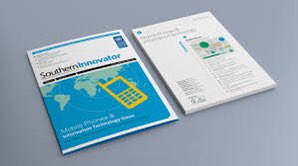
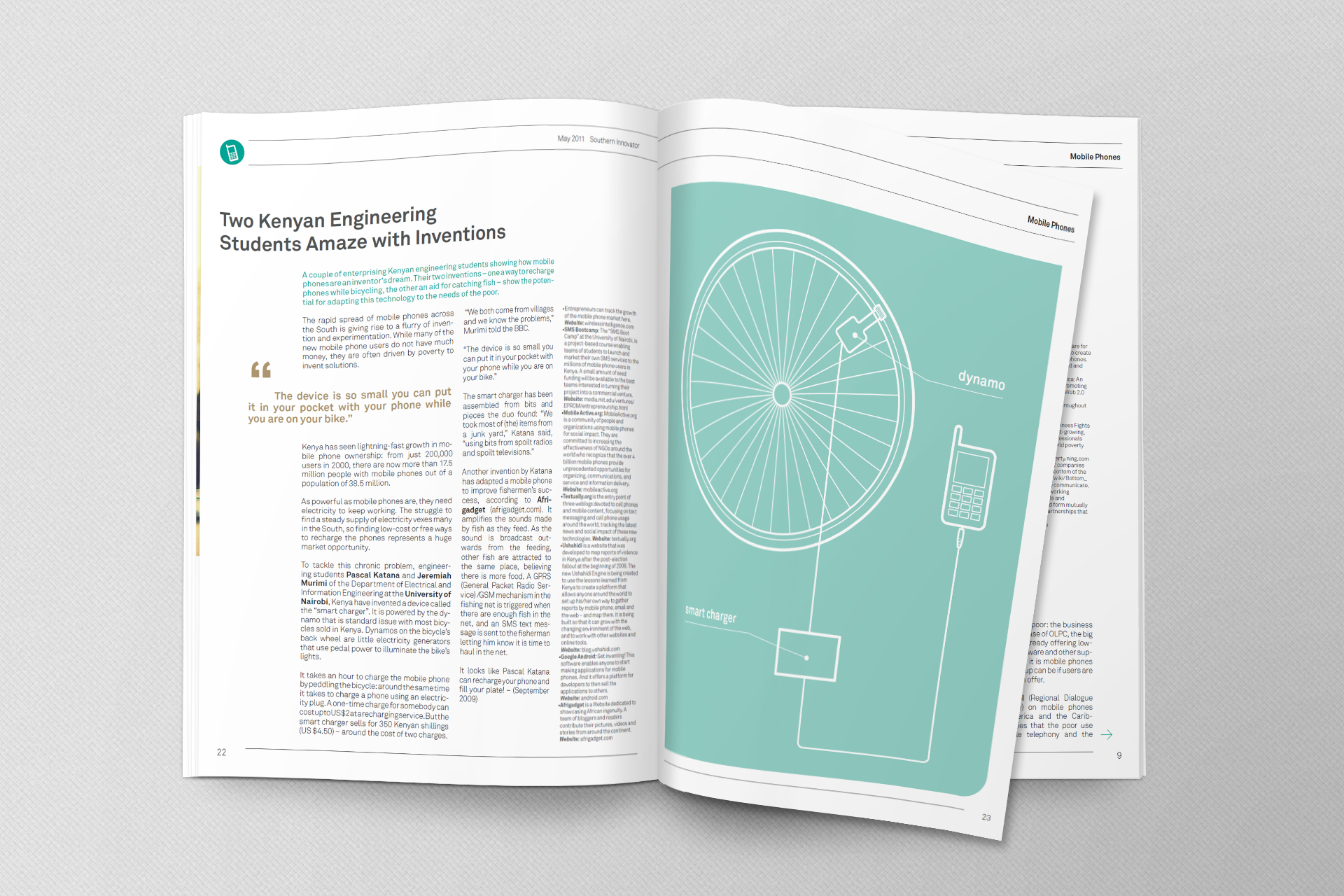
    Development Challenges, South-South Solutions was launched as an e-newsletter in 2006 by UNDP’s South-South Cooperation Unit (now the United Nations Office for South-South Cooperation) based in New York, USA. It led on profiling the rise of the global South as an economic powerhouse and was one of the first regular publications to champion the global South’s innovators, entrepreneurs, and pioneers. It tracked the key trends that are now so profoundly reshaping how development is seen and done. This includes the rapid take-up of mobile phones and information technology in the global South (as profiled in the first issue of magazine Southern Innovator), the move to becoming a majority urban world, a growing global innovator culture, and the plethora of solutions being developed in the global South to tackle its problems and improve living conditions and boost human development. The success of the e-newsletter led to the launch of the magazine Southern Innovator.  

    Follow @SouthSouth1

    Google Books: https://books.google.co.uk/books?id=p03–n51i44C&dq=development+challenges+april+2008&source=gbs_navlinks_s

    Slideshare: http://www.slideshare.net/DavidSouth1/development-challengessouthsouthsolutionsapril2008issue

    Southern Innovator Issue 1: https://books.google.co.uk/books?id=Q1O54YSE2BgC&dq=southern+innovator&source=gbs_navlinks_s

    Southern Innovator Issue 2: https://books.google.co.uk/books?id=Ty0N969dcssC&dq=southern+innovator&source=gbs_navlinks_s

    Southern Innovator Issue 3: https://books.google.co.uk/books?id=AQNt4YmhZagC&dq=southern+innovator&source=gbs_navlinks_s

    Southern Innovator Issue 4: https://books.google.co.uk/books?id=9T_n2tA7l4EC&dq=southern+innovator&source=gbs_navlinks_s

    Southern Innovator Issue 5: https://books.google.co.uk/books?id=6ILdAgAAQBAJ&dq=southern+innovator&source=gbs_navlinks_s
    Read online: https://drive.google.com/file/d/0B-buqyoV0jpSZWcyNWQ5ZTY4OG8/view?resourcekey=0-1b7ZdQH3iBhSTAiACr7HVA.

    https://davidsouthconsulting.org/2021/03/05/southern-innovator-issue-1/

    Creative Commons License

    This work is licensed under a
    Creative Commons Attribution-Noncommercial-No Derivative Works 3.0 License.

    ORCID iD: https://orcid.org/0000-0001-5311-1052.

    © David South Consulting 2023

  • Computer ‘Gold Farming’ Turning Virtual Reality Into Real Profits

    Computer ‘Gold Farming’ Turning Virtual Reality Into Real Profits

    ByDavid South,Development Challenges, South-South Solutions

    SOUTH-SOUTH CASE STUDY

    The rapid spread of the internet around the global South is bringing with it new forms of work. One of these trends is so-called “gold farming”: making money in the virtual world of computer gaming by trading in virtual money, prizes and goods for busy gamers who don’t have time to do it themselves. This work now employs 400,000 people – mostly men and mostly in China, but also elsewhere in the South, according to new report.

    Working out of internet centres where they can get access to high-speed or broadband internet connections, “gold farmers” use the global trade in virtual goods for online computer games in the same way stockbrokers trade shares on the world’s stock exchanges. The trade operates similarly to the stock market, with prices fluctuating based on demand and changing by the minute.

    And as the report discovered, this trade is acting as a gateway into the world of information technology employment, where computer-literate young men are able to earn an income they could not have done otherwise.

    It is a trade that can provide gold farmers with US $145 a month in income. They are often given free food and accommodation to do it, and many have few other economic choices.

    “You can probably think of two models,” said the report’s author, Professor Richard Heeks of Manchester University’s Development Informatics Group. “They could play as an individual at a local cybercafe doing their own in-game farming and then selling to one of the trading sites (that buy from farmers at one price, then sell on to player-buyers at a higher price). Or they could be organized into a small/medium enterprise by an owner, all working together in a room full of computers.”

    There is a dark side to gold farming too: there have been reports of youths forced to gold farm by gangs who make them work 12 hour days. Crime gangs sometimes become involved and scams proliferate.

    Heeks says the downside is the result of governmental ignorance. “The main problem is a lack of understanding about ICT and ICT enterprise generally in some governments in developing countries and in particular a relative lack of understanding about the spread and implications of computer games.”

    Supporters see gold farming as a flourishing Southern economy that is worth hundreds of millions of dollars, and exposes participants both to information technology skills and the wide horizons of the virtual computing world. Its defenders say it shows that those who dismiss the expansion of IT infrastructure as a waste of time are missing the emerging economic opportunities it is creating.

    Heeks said we still know too little about this fast-evolving sector, but that “gold farming does seem to be providing income/livelihood for young men who would otherwise be unemployed. There are claims that it has helped mop up youths who had otherwise been involved in crime, but we don’t yet know how generalized such claims are.”

    The number of players engaged in online gaming has grown by 80 percent per year, and Heeks sees the rise in gold farming as linked to a bigger trend: “in both North and South, we will spend increasing amounts of work and leisure time in cyberspace. Couple that with the growing penetration of ICTs into developing countries, including into poor communities, and there will be growing opportunities for this kind of ‘virtual outsourcing.’”

    Currently, more than 300 million people worldwide have access to the internet through fast broadband connections (mostly in developed countries, although this is changing quickly), and more than 1.1 billion of the world’s estimated 6.6 billion people are online.

    China is working hard to capture the economic power of the internet. The country’s economic boom has helped create an affluent urban middle class clamouring for the social aspects of internet access like chat rooms, while the government has been driving the roll-out of internet access in rural areas.

    The country’s largest Cyber Park is under construction inWujin New and High-tech Development Zone of Changzhou. It will be a technology incubator, a research and development centre, and a place for small and medium-sized enterprises to innovate.

    China’s most ambitious digital media industry development is the Beijing Cyber Recreation District (CRD), a collection of digital media academies and company incubators spread over 100 square kilometres, creating the world’s largest virtual world development. It is already home to more than 200 game and multimedia content producers in western Beijing.

    And even in Africa, where broadband penetration rates are very poor, countries are now looking to the mobile phone companies to provide their populations with access to the internet, as they struggle to find a place at the digital table.

    Mauritius, an island in the Indian Ocean strategically close to Africa and better known for tourism and luxury hotels, wants to become the world’s “cyber island”, and Africa’s e-gateway. Armed with the first 3G network in Africa (the third generation of mobile phone technology – offering high-speed internet access and video telephony), Mauritius is moving fast to make good on this advantage. And it is even moving to the next level of mobile-phone speed, High-speed Download Packet Access (HSDPA) – allowing even greater quantities of information to be exchanged.

    Mauritius joins a select few countries, including Japan and South Korea, at the forefront of access to 3G. Wireless – or wi-fi – computer access is available in three-quarters of the island.

    Published: September 2008

    https://davidsouthconsulting.org/2022/11/21/asia/

    https://davidsouthconsulting.org/2022/10/20/china-consumer-market-asian-perspective-helps/

    https://davidsouthconsulting.org/2020/12/10/china-sets-sights-on-dominating-global-smartphone-market/

    https://davidsouthconsulting.org/2020/12/11/cyber-cities-an-oasis-of-prosperity-in-the-south/

    https://davidsouthconsulting.org/2021/01/26/designed-in-china-to-rival-made-in-china/

    https://davidsouthconsulting.org/2022/10/04/popular-chinese-social-media-chase-new-markets/

    https://davidsouthconsulting.org/2020/04/17/virtual-supermarket-shopping-takes-off-in-china/

    Development Challenges, South-South Solutionswas launched as an e-newsletter in 2006 by UNDP’s South-South Cooperation Unit (now the United Nations Office for South-South Cooperation) based in New York, USA. It led on profiling the rise of the global South as an economic powerhouse and was one of the first regular publications to champion the global South’s innovators, entrepreneurs, and pioneers. It tracked the key trends that are now so profoundly reshaping how development is seen and done. This includes the rapid take-up of mobile phones and information technology in the global South (as profiled in the first issue of magazine Southern Innovator), the move to becoming a majority urban world, a growing global innovator culture, and the plethora of solutions being developed in the global South to tackle its problems and improve living conditions and boost human development. The success of the e-newsletter led to the launch of the magazine Southern Innovator.

    Follow@SouthSouth1

    Archive.org:https://archive.org/details/Httpwww.slideshare.netDavidSouth1development-challengessouthsouthsolutionsseptember2008issue

    Slideshare:http://www.slideshare.net/DavidSouth1/development-challengessouthsouthsolutionsseptember2008issue

    Southern Innovator Issue 1:https://books.google.co.uk/books?id=Q1O54YSE2BgC&dq=southern+innovator&source=gbs_navlinks_s

    Southern InnovatorIssue 2: https://books.google.co.uk/books?id=Ty0N969dcssC&dq=southern+innovator&source=gbs_navlinks_s

    Southern Innovator Issue 3:https://books.google.co.uk/books?id=AQNt4YmhZagC&dq=southern+innovator&source=gbs_navlinks_s

    Southern Innovator Issue 4:https://books.google.co.uk/books?id=9T_n2tA7l4EC&dq=southern+innovator&source=gbs_navlinks_s

    Southern Innovator Issue 5:https://books.google.co.uk/books?id=6ILdAgAAQBAJ&dq=southern+innovator&source=gbs_navlinks_s

    Creative Commons License
    This work is licensed under a
    Creative Commons Attribution-Noncommercial-No Derivative Works 3.0 License.

    ORCID iD:https://orcid.org/0000-0001-5311-1052.

    © David South Consulting 2025

  • Carbon Markets Need to Help the Poor

    Carbon Markets Need to Help the Poor

    By David SouthDevelopment Challenges, South-South Solutions

    SOUTH-SOUTH CASE STUDY

    The global carbon credit trading schemes emanating from the Kyoto Protocol have created a multi-billion dollar market – the global carbon market was worth US $30 billion in 2007 (World Bank) – and represents one of the fastest growing business opportunities in the world. The bulk of this trading is with the European Union’s emissions trading scheme, some US $25 billion. But the big problem to date has been most of this investment is enriching stock brokers, and not the poor.

    And this is a huge opportunity missed, as some point out: “These numbers are relevant because they demonstrate that the carbon market has become a valuable catalyst for leveraging substantial financial flows for clean energy in developing countries,” according to Warren Evans, the World Bank’s director of environment.

    And the way to do this is through the Clean Development Mechanism (CDM) – where wealthy countries can meet their greenhouse gas targets by investing in clean energy projects in the South. But so far, it has been criticised for spending 4.6 billion Euros on projects that would have cost just 100 million Euros if implemented by development agencies.

    But if done right, the CDM could become directly beneficial to the so-called Bottom of the Pyramid (BOP) – the four billion who live on less than US $2 a day. The CDM allows developed countries to offset their greenhouse gas emissions by paying projects targeting the poor to develop clean energy, or to create what are called carbon sinks (planting trees for example), to cut global emissions.

    One mechanism to make all of this work is the CDM Bazaar: officially launched in September 2007, it is about linking together buyers and sellers. This is a place where people with business ideas or projects can go for start-up funding. It is also a place to share information, contacts and learn about how to tap the market.

    And two Southern innovators are showing what can be achieved by tapping the power of the sun to help the poor.

    One such initiative In India, owned by Mr. Deepak Gadhia and Dr Mrs. Shirin Gadhia, is targeting the 63 per cent of the BOP market that is with rural populations. All of these people need affordable and clean energy if their lives are to improve: most currently use firewood and kerosene for cooking and heating. The company Gadhia Solar is building and selling solar steam cook stoves in rural villages. The giant solar dishes which resemble satellite TV dishes, can fry and roast using the sun and come in Do-it-Yourself kits. The enormous silver dishes beam concentrated sunlight on to a black plate on the oven, reaching temperatures of over 450 Celsius.

    In Morocco, the company Tenesol, an electric supply co-operative society, is using solar power to bring electricity to 60,000 poor households in 29 provinces. And it is making Morocco a world leader in the use of solar for rural electricity.

    Each house is equipped with a solar home system comprising a solar panel, battery and controller. It is powerful enough to light four to eight lamps, and support a television, radio or mobile phone charger.

    Customers pay a connection fee of US $80, and then a monthly service fee of between US $7.50 and US $17.50. The fee competes well with what rural households were spending on candles and batteries.

    The initial outlay for equipment is mostly paid for by investors, with the hope that the money will be made back on the service fees.

    Tenesol hopes to bring electricity to 101,500 households, and also wire them up and provide light bulbs.

    Published: March 2008

    Resources

    • More on emissions trading: Click here
    • UNDP has produced a free users guide introduction to the Clean Development Mechanism.
      Website: http://www.undp.org/
    • South South North has also produced a Practitioners’ Practical Toolkit.
      Website: http://www.cdmguide.com/

    Development Challenges, South-South Solutions was launched as an e-newsletter in 2006 by UNDP’s South-South Cooperation Unit (now the United Nations Office for South-South Cooperation) based in New York, USA. It led on profiling the rise of the global South as an economic powerhouse and was one of the first regular publications to champion the global South’s innovators, entrepreneurs, and pioneers. It tracked the key trends that are now so profoundly reshaping how development is seen and done. This includes the rapid take-up of mobile phones and information technology in the global South (as profiled in the first issue of magazine Southern Innovator), the move to becoming a majority urban world, a growing global innovator culture, and the plethora of solutions being developed in the global South to tackle its problems and improve living conditions and boost human development. The success of the e-newsletter led to the launch of the magazine Southern Innovator.  

    Follow @SouthSouth1

    Google Books: https://books.google.co.uk/books?id=DqmXBgAAQBAJ&dq=development+challenges+march+2008&source=gbs_navlinks_s

    Slideshare: http://www.slideshare.net/DavidSouth1/development-challengessouthsouthsolutionsmarch2008issue-44443163

    Southern Innovator Issue 1: https://books.google.co.uk/books?id=Q1O54YSE2BgC&dq=southern+innovator&source=gbs_navlinks_s

    Southern Innovator Issue 2: https://books.google.co.uk/books?id=Ty0N969dcssC&dq=southern+innovator&source=gbs_navlinks_s

    Southern Innovator Issue 3: https://books.google.co.uk/books?id=AQNt4YmhZagC&dq=southern+innovator&source=gbs_navlinks_s

    Southern Innovator Issue 4: https://books.google.co.uk/books?id=9T_n2tA7l4EC&dq=southern+innovator&source=gbs_navlinks_s

    Southern Innovator Issue 5: https://books.google.co.uk/books?id=6ILdAgAAQBAJ&dq=southern+innovator&source=gbs_navlinks_s

    This work is licensed under a Creative Commons Attribution 4.0 International License.

    ORCID iD: https://orcid.org/0000-0001-5311-1052.

    © David South Consulting 2021

  • Rebuilding After Chinese Earthquake: Beautiful Bamboo Homes

    Rebuilding After Chinese Earthquake: Beautiful Bamboo Homes

    By David SouthDevelopment Challenges, South-South Solutions

    SOUTH-SOUTH CASE STUDY

    It has been a year since the May 12, 2008 Sichuan earthquake in China that killed more than 70,000 people.

    China’s strongest earthquake for more than half a century, with a magnitude of 8.0 (en.wikipedia.org), it devastated large parts of the province of Sichuan. More than 10 million people were made homeless, most of them poor and elderly villagers (cities were not badly damaged).

    Getting Sichuan back to normal is critical for not only the province’s people, but for all of China. Sichuan is China’s rice bowl, growing more food than any other province. But despite the abundance of food, Sichuan remains poor and has seen its working age population move away for work. If it is to have a viable future then its communities need to get back to normal as fast as possible – and its farming economy back to full production.

    The unprecedented media coverage of the disaster meant people across China saw the scenes of devastation and have since contributed large donations to help with the reconstruction. The Chinese government has pledged to spend US $151 billion on reconstruction projects.

    Finding ways to re-house people after large disasters has become an urgent issue over the last five years. From the Asian tsunami to Hurricane Katrina in the United States and multiple hurricane disasters in the Caribbean, restoring communities is critical for the health of the people and the economies they rely on. Experience has shown that temporary shelters have many drawbacks, being usually of poor quality for long-term habitation and a source of health problems.

    The temporary shelters erected for the Sichuan homeless are unsuitable for long-term housing: the 12 square metre grey boxes – two sheets of aluminium sandwiching a polystyrene core for insulation – have no heating. The occupants roast inside in the summer and freeze in the winter. They are also located away from the main source of income: the farms.

    The dilemma is how to build new, long-term houses that will not cost too much. Inflation has increased the costs of conventional building materials: bricks, cement and steel.

    But the use of traditional building materials and home designs offers an alternative. By drawing on the abundant bamboo and wood in Sichuan and by building to traditional designs, cheaper but sturdy and beautiful homes can be built.

    An average home now costs around 80,000 yuan (US $11,688). The Chinese government estimates the price is now 820 yuan per square meter for a new home: bamboo homes cost between 300 and 400 yuan per square meter. Government compensation is between 16,000 yuan (US $2,337) and 23,000 yuan (US $3,360) per family. The bamboo houses range in size from 75 to 200 square metres, and in cost from 22,500 yuan to 80,000 yuan for a very large home.

    In Daping village, Pengzhou Town, original homes destroyed by the earthquake sit at the edge of a forested hill. Their frames are more or less intact, but the walls and roofs have collapsed. The new houses replacing them are large, two stories high and have solid grey clay tile roofs. The beauty of the designs stands out and sits in stark contrast to the temporary shelters and concrete buildings.

    “There are 43 houses and two public buildings being rebuilt in this project,” says team member Hu Rong Rong of the Green Building Research Centre of Xi’an University of Architecture and Technology. “The design and the main building material are based on the ecological and sustainable habitat idea. The place (Sichuan) is rich in bamboo and wood. These natural materials are cheap and friendly to the environment. In some buildings we use light steel which can be also recycled.”

    The new homes are built to earthquake resistance standards. Led by Professor LiuJiaping, a team of 15 people from the research centre and two from a design institute developed the home designs and supervised the training of local people. They were joined by 10 people from an NGO called Global Village of Beijing, who managed the project to completion.

    “All the designs were discussed with the local people,” continues Hu. “We trained a local construction team, which means the local people would build their own houses by themselves. Both our research center and the local people were involved in developing the home design.

    “To get the trust from the local people is a challenge in the project. We resolved it by showing our respect to the local people. Before we started our design we discussed with the local people many times to know what kind of house they like. We built the first house to make them believe us.”

    Hu believes it is possible to replicate the homes across Sichuan.

    “The design is suitable for other villages in Sichuan which have a similar climate and culture with this village. To rebuild sustainable houses after a disaster we should know well about the local life, environment and culture – try to find the useful technique which was used in their traditional houses and upgrade the traditional house to meet the need of their modern life.”

    Others have not been as lucky as these villagers. In the village of Yuan Bao, Chen Jingzhong, 66, has had to build a makeshift shack: “They wanted to get us to build our own houses but they didn’t give us enough money,” Chen told the Telegraph Magazine. “All we could afford was this shack, which we built ourselves, with our own hands and without any help from anyone.”

    Published: May 2009

    Resources

    Architecture for Humanity: By tapping a network of more than 40,000 professionals willing to lend time and expertise to help those who would not otherwise be able to afford their services, they bring design, construction and development services where they are most critically needed. Website: www.architectureforhumanity.org

    Chinese Red Cross: The Red Cross Society of China is accepting donations for disaster reconstruction and is coordinating rebuilding efforts in Sichuan Website: http://www.redcross.org.cn/ywzd/

    Gerd Niemoeller has developed flat pack, cardboard homes that can be deployed quickly after a disaster and can become permanent homes.Website: http://tinyurl.com/6t6jtf and the company
    Website: http://www.wall.de/en/home

    Global Greenhouse Warming is a website that tracks extreme weather events around the world: drought, flooding, severe storms, severe winter, tropical cyclone, wildfires, and extreme heat waves.Website: www.global-greenhouse-warming.com

    The Building and Social Housing Foundation: An independent research organization promoting sustainable development and innovation in housing through collaborative research and knowledge transfer. Website: www.bshf.org

    https://davidsouthconsulting.org/2021/09/01/disaster-recovery-ten-years-after-the-gujarat-india-experience/

    https://davidsouthconsulting.org/2021/11/12/energy-efficient-wooden-houses-are-also-earthquake-safe/

    https://davidsouthconsulting.org/2021/09/01/haiti-earthquake-prompts-tech-aid/

    https://davidsouthconsulting.org/2021/02/12/rammed-earth-houses-china-shows-how-to-improve-and-respect-traditional-homes/

    https://davidsouthconsulting.org/2022/09/26/3d-home-printing-landmark-10-houses-in-a-day/

    Development Challenges, South-South Solutions was launched as an e-newsletter in 2006 by UNDP’s South-South Cooperation Unit (now the United Nations Office for South-South Cooperation) based in New York, USA. It led on profiling the rise of the global South as an economic powerhouse and was one of the first regular publications to champion the global South’s innovators, entrepreneurs, and pioneers. It tracked the key trends that are now so profoundly reshaping how development is seen and done. This includes the rapid take-up of mobile phones and information technology in the global South (as profiled in the first issue of magazine Southern Innovator), the move to becoming a majority urban world, a growing global innovator culture, and the plethora of solutions being developed in the global South to tackle its problems and improve living conditions and boost human development. The success of the e-newsletter led to the launch of the magazine Southern Innovator.

    https://davidsouthconsulting.org/2021/03/05/southern-innovator-issue-4/

    Creative Commons License

    This work is licensed under a
    Creative Commons Attribution-Noncommercial-No Derivative Works 3.0 License.

    ORCID iD: https://orcid.org/0000-0001-5311-1052.

    © David South Consulting 2023