Categories
Archive Development Challenges, South-South Solutions Newsletters Southern Innovator magazine

Urban Farming to Tackle Global Food Crisis

By David SouthDevelopment Challenges, South-South Solutions

SOUTH-SOUTH CASE STUDY

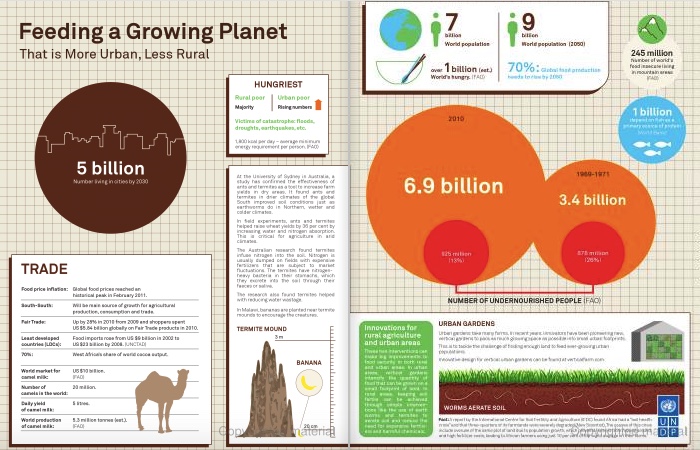
The world’s population is becoming more urban by the day. By 2030, some five billion people around the world will live in cities. This year is the tipping point: urban dwellers (3.3 billion people) now outnumber rural residents for the first time (UNFPA’s State of the World Population 2007 Report). 

But with rising food prices across the globe, many city-dwellers are experiencing hunger and real hardship. On international commodity markets, food prices have gone up 54 percent over the last year, with cereal prices soaring 92 percent (FAO – World Food Situation). While living in an urban environment means living cheek-by-jowl with other people, it doesn’t mean there aren’t ways to grow food and supplement urban dwellers’ tight budgets and boost diets.

U.N. Secretary General Ban Ki-moon has called for food production to increase 50 percent by 2030 just to meet rising demand – and right now there are 862 million people undernourished (FAO). But one solution, urban farming, can make a huge difference, as the Caribbean island of Cuba has shown.

Today, Cuba imports about 50 percent of its minimum fuel and food requirements – a cost that reached US $1.6 billion last year for food. (Reuters). The island has been buffeted by one food crisis after another in the past two decades, first by the collapse of its aid from the Soviet Union, and then by a fuel crisis. But now, urban farming in Cuba provides most of the country’s vegetables, thanks to urban gardens that have sprung up on abandoned land in the country’s cities and towns. And the food is pesticide-free: 70 percent of the vegetables and herbs on the island are organic (http://www.soilassociation.org/web/sa/saweb.nsf/Living/ whatisorganic.html).

These urban farms mean fresh food is just a short walk away from the people who eat it. And in a world of rising fuel prices, Cuba has reduced the use of fossil fuels in the production and transportation of food.

The urban farms have created 350,000 jobs that pay better than most government jobs. It has also improved Cuban’s health: many have moved from diets dominated by rice and beans and imported canned goods from Eastern Europe, to fresh vegetables and fruits.

While Cubans receive at least a basic state ration of rice, beans and cooking oil, the rations do not include fresh fruit and vegetables. After the withdrawal of Soviet subsidies, the average Cuban’s daily calorie intake fell sharply. Between 1989 and 1993, daily calorie intake dropped from 3,004 to 2,323 (UN). But with the growth of urban farms, this has moved up to 3,547 calories a day – even higher than the amount recommended for Americans by the US government.

The secret to this success has been the rise of entrepreneurs like Miladis Bouza, a 48-year-old former research biologist who had to abandon a comfortable middle class life after the collapse of the Soviet Union. Her government salary dropped to US $3 a month. Unable to make ends meet and provide food for her family, she quit her job.

The Cuban government allowed people to turn unused urban land into mini farms. The cities have many vacant lots because the state owns most land and there isn’t competition from private developers, as in many other countries. Unusually for communist Cuba, 80 percent of the profits are kept by the farmers. This can be an average wage of US $71 per month.

“Those salaries are higher than doctors, than lawyers,” Roberto Perez, an agronomist who runs the country’s first urban farm, told The Associated Press. “The more they produce, the more they make. That’s fundamental to get high productivity.”

Miladis grabbed this opportunity to farm a half-acre plot near her home in Havana. Along with her husband, she grows tomatoes, sweet potatoes and spinach, and sells the vegetables at a stall on nearby busy street. This has enabled her monthly income to rise to between US $100 per month and US $250 per month, far more than the average government salary of US $19 per month.

Cuba was inspired by greenbelt farms in Shanghai (http://en.shac.gov.cn/hjgl/jqgk/t20030805_82028.htm): but Cuba has gone even further to make urban farming a key part of the national food supply.

All this urban farming is also all-natural farming. Farms have had to turn to natural compost as fertilizer, and natural pesticides like strong-smelling celery to ward off insects.

So-called organoponicos (http://academicos.cualtos.udg.mx/Pecuarios/ PagWebEP/Lecturas/ORGANOPONICOS.htm ) gather together a wide variety of vegetables, fruits and herbs, as well as ornamental plants. Customers are offered mangos, plantains, basil, parsley, lettuce, garlic, celery, scallions, collard greens, black beans, watermelon, tomatoes, malanga, spinach and sweet potatoes.

“Nobody used to eat vegetables,” said David Leon, 50, buying two pounds of Swiss chard at a Havana organoponico. “People’s nutrition has improved a lot. It’s a lot healthier. And it tastes good.”

Published: June 2008

Resources

https://davidsouthconsulting.org/2020/12/14/african-farming-wisdom-now-scientifically-proven/

https://davidsouthconsulting.org/2022/10/10/cheap-farming-kit-hopes-to-help-more-become-farmers/

https://davidsouthconsulting.org/2023/01/16/hip-driven-pump-brings-water-to-parched-fields/

https://davidsouthconsulting.org/2022/11/23/kenyan-farmer-uses-internet-to-boost-potato-farm/

https://davidsouthconsulting.org/2022/10/31/new-kenyan-services-to-innovate-mobile-health-and-farming/

https://davidsouthconsulting.org/2021/11/09/pocket-friendly-solution-to-help-farmers-go-organic/

https://davidsouthconsulting.org/2021/09/16/small-fish-farming-opportunity-can-wipe-out-malnutrition/

https://davidsouthconsulting.org/2022/10/18/woman-wants-african-farming-to-be-cool/

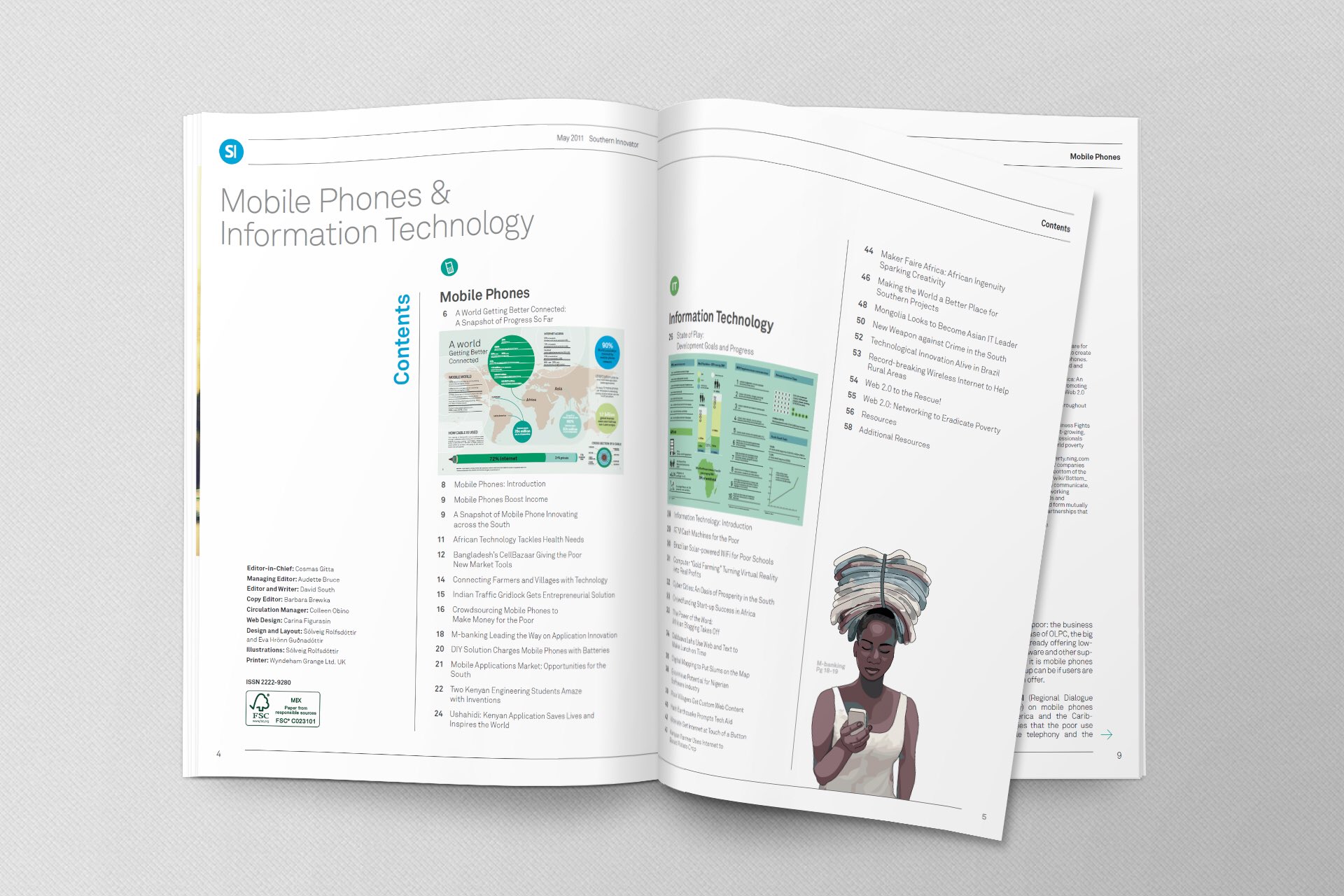
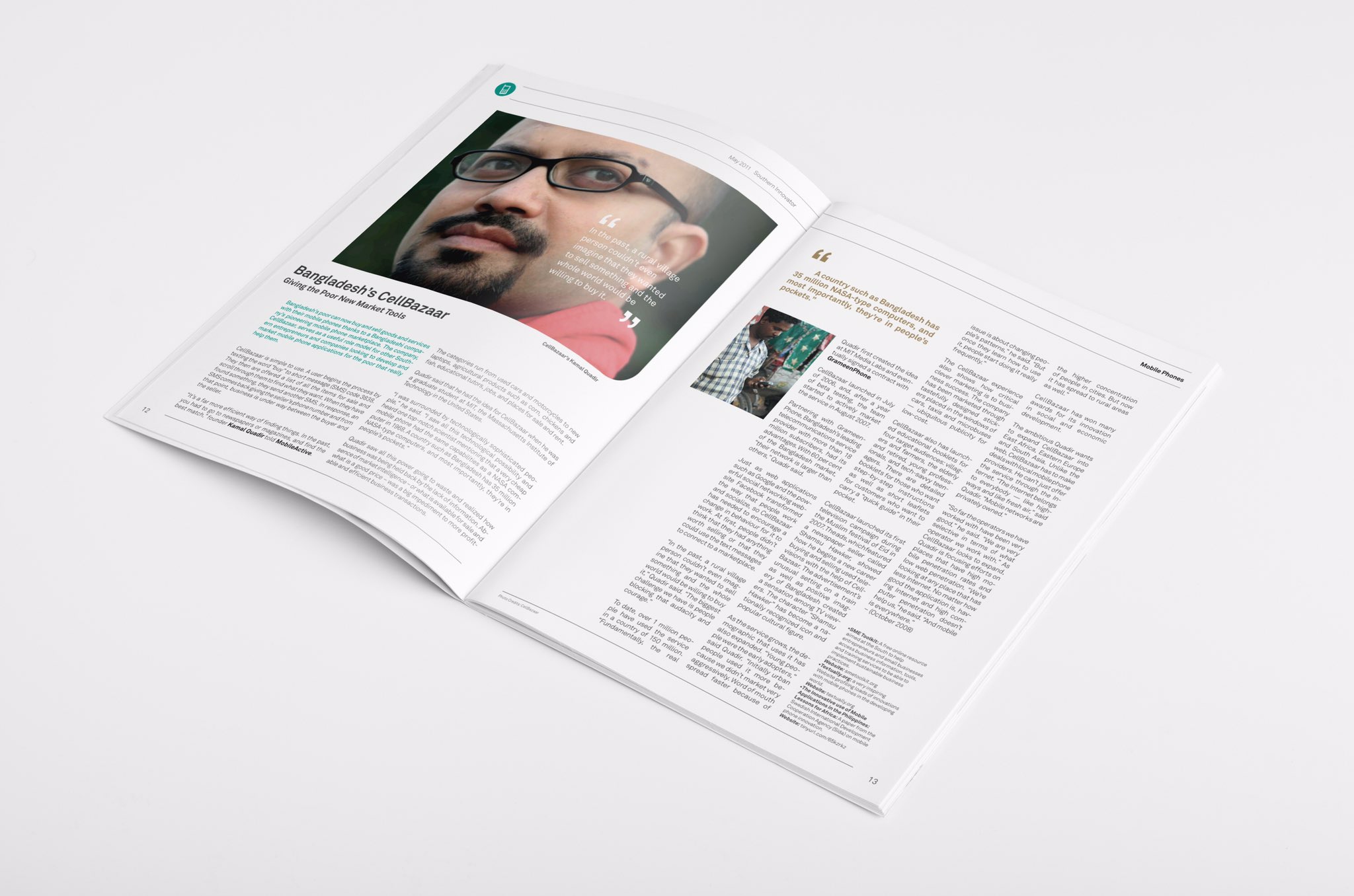
Development Challenges, South-South Solutions was launched as an e-newsletter in 2006 by UNDP’s South-South Cooperation Unit (now the United Nations Office for South-South Cooperation) based in New York, USA. It led on profiling the rise of the global South as an economic powerhouse and was one of the first regular publications to champion the global South’s innovators, entrepreneurs, and pioneers. It tracked the key trends that are now so profoundly reshaping how development is seen and done. This includes the rapid take-up of mobile phones and information technology in the global South (as profiled in the first issue of magazine Southern Innovator), the move to becoming a majority urban world, a growing global innovator culture, and the plethora of solutions being developed in the global South to tackle its problems and improve living conditions and boost human development. The success of the e-newsletter led to the launch of the magazine Southern Innovator. 
https://davidsouthconsulting.org/2021/03/05/southern-innovator-issue-3/

Creative Commons License

This work is licensed under a
Creative Commons Attribution-Noncommercial-No Derivative Works 3.0 License.

ORCID iD: https://orcid.org/0000-0001-5311-1052.

© David South Consulting 2023

Categories
Archive

Tapping the Power of Child Play

By David SouthDevelopment Challenges, South-South Solutions

SOUTH-SOUTH CASE STUDY

Children are an amazing source of energy. Each generation fizzes with the restlessness and optimism of youth. But all that energy is expended in the playground, leaving behind nothing but the sound of laughter. What if that energy could actually be harnessed and turned into electricity? And electricity to power the cash-strapped school the children need to attend to get a good head start in life?

Meeting the Millennium Development Goal of achieving universal primary education would be significantly helped if schools had electricity and in turn the ability to use computers and the Internet. As well, school buildings can be used to their maximum if they have lights for night schools, and expand to secondary and adult education. It is typical practice in Africa to use schools in the evenings for older students. But usually they only have kerosene lamps to turn to for light.

The need is urgent for electricity for schools in Africa: even sub-Saharan Africa’s richest nation, South Africa, has 5,131 schools without electricity. And in the battle for energy, schools have to compete with businesses and cities, as increasing demand makes power outages more common.

Child-power is currently used to run Playpumps’ merry-go-rounds, drawing water from wells. But a children’s see-saw hopes to use the same principle to bring light to power-starved African schools. Children in Uganda are involved in a pilot test of a see-saw that generates electricity with the simple up-and-down motion of the playground ride. The electricity generated is sent to a storage battery via an underground cable. Just five to 10 minutes on the see-saw can generate enough electricity to light a classroom for an evening.

The see-saw is being tested in the Ugandan city of Jinja, made from locally sourced parts, and has been designed by 23-year-old British design student Daniel Sheridan. He was inspired after volunteering on a school trip to the island of Wasimi, south of Mombasa, Kenya, while building a school and teaching.

“The number of children we saw there that loved to play, and their vibrancy, I thought it would be great if I could somehow make use of this,” he told the BBC. “They don’t have Gameboys and all the rest. They are just so genuine and keen to help – they would grab the wheelbarrows we were working with given the chance.”

Sheridan won £5,500 (US $10,930) to further develop the idea at various university student enterprise award schemes. The money is being used for prototype development.

“The current need for electricity in sub-Saharan Africa is staggering. Without power, development is extremely difficult. The potential for this product is huge and the design could be of benefit to numerous communities in Africa and beyond.”

After the prototype testing in Uganda he hopes to either start a business or charity to manufacture the see-saws. His dream?

“Ultimately I would love to design a whole playground of different pieces of equipment that could generate enough electricity to power a whole village.”

Published: April 2008

Resources

  • Playpumps International: More child-powered ways to make a difference: these water pumps draw water from a well while children spin on the merry-go-round. Website: www.playpumps.org
  • OUiP! Or Optimized Universal Interface Platform: This white plastic handheld electronic bar uses the child’s play motion to power it, while it makes noises and displays images. Website: www.thinkthing.net
  • Sprig Toys: Electro-mechanical toys made from wood and recycled plastic that are run on child-power only. Website: www.sprigtoys.com

Development Challenges, South-South Solutions was launched as an e-newsletter in 2006 by UNDP’s South-South Cooperation Unit (now the United Nations Office for South-South Cooperation) based in New York, USA. It led on profiling the rise of the global South as an economic powerhouse and was one of the first regular publications to champion the global South’s innovators, entrepreneurs, and pioneers. It tracked the key trends that are now so profoundly reshaping how development is seen and done. This includes the rapid take-up of mobile phones and information technology in the global South (as profiled in the first issue of magazine Southern Innovator), the move to becoming a majority urban world, a growing global innovator culture, and the plethora of solutions being developed in the global South to tackle its problems and improve living conditions and boost human development. The success of the e-newsletter led to the launch of the magazine Southern Innovator. 

Creative Commons License

This work is licensed under a
Creative Commons Attribution-Noncommercial-No Derivative Works 3.0 License.

ORCID iD: https://orcid.org/0000-0001-5311-1052.

© David South Consulting 2023

Categories
Archive Development Challenges, South-South Solutions Newsletters Southern Innovator magazine

Making Bamboo Houses Easier to Build

By David SouthDevelopment Challenges, South-South Solutions

SOUTH-SOUTH CASE STUDY

More than 1 billion people around the world lack decent shelter. Of these, the majority live in urban areas, usually in slums and informal settlements (UN-HABITAT). Latin America has a serious shortage of adequate housing: in Colombia, 43 percent of the population needs decent housing; in Brazil, 45 percent; Peru, 53 percent.

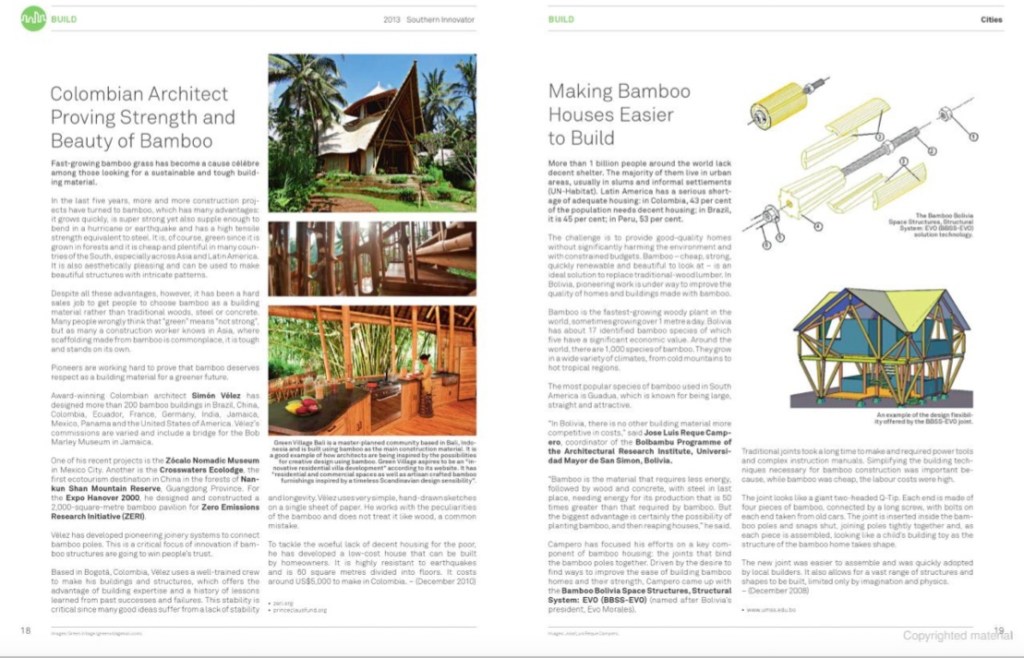
The challenge is to provide good quality homes without significantly harming the environment – and with constrained budgets. Bamboo – cheap, strong, quickly renewable and beautiful to look at (http://en.wikipedia.org/wiki/Bamboo) – is an ideal solution to replace traditional wood lumber. In Bolivia, pioneering work is underway to improve the quality of homes and buildings made with bamboo.

Bamboo is the fastest growing woody plant in the world, sometimes growing over 1 metre a day. Bolivia (http://en.wikipedia.org/wiki/Bolivia) has about 17 identified bamboo species, of which five have a significant economic value. Around the world, there are 1,000 species of bamboo. They grow in a wide variety of climates, from cold mountains to hot tropical regions.

Once called the “poor man’s timber” – a temporary building material to replace once there is more money – bamboo is now getting the respect it deserves. Bamboo for housing has a long history in Latin America, stretching back 4,500 years to ancient civilizations. In Asia, it has long been a traditional construction material. But most of the existing bamboo dwellings in Latin America are 50 to 100 years old.

The most popular species of bamboo used in South America is Guadua, which is known for being large, straight and attractive.

“In Bolivia, there is no other building material more competitive in costs,” said Jose Luis Reque Campero, coordinator of the Bolbambu Programme of the Architectural Research Institute, Universidad Mayor de San Simon, Bolivia (http://www.umss.edu.bo/).

“Bamboo is the material that requires less energy, followed by wood and concrete, with steel in last place, needing energy necessary for its production 50 times greater than that required by bamboo.”

Campero also says bamboo is much less expensive than traditional building materials.

“But the biggest advantage is certainly the possibility of planting bamboo, and then reaping houses,” he said.

Campero has focused his efforts on a key component of bamboo housing: the joints that bind the bamboo poles together. Driven by the desire to find ways to improve the ease of building bamboo homes and their strength, Campero came up with the Bamboo Bolivia Space Structures, Structural System: EVO (BBSS-EVO) (named after Bolivia’s president, Evo Morales – http://en.wikipedia.org/wiki/Evo_Morales).

Traditional joints took a long time to make and required power tools and complex instruction manuals. Simplifying the building techniques necessary for bamboo construction was important because, while bamboo was cheap, the labour costs were high.

The joint looks like a giant two-headed Q-Tip. Each end is made of four pieces of bamboo, connected by a long screw with bolts on each end taken from old cars. The joint is inserted inside the bamboo poles and snaps shut, joining poles tightly together and, as each piece is assembled, looking like a child’s building toy as the structure of the bamboo home takes shape.

The new joint was easier to assemble and was quickly adopted by local builders. It also allows for a vast range of structures and shapes to be built, limited only by imagination and physics.

Devising joints made from bamboo has the advantage of avoiding the weight and cost of bringing in concrete, especially to remote areas.

“The manufacturing process is fully in the workshop and indoors,” said Campero, “which in addition to allowing a degree of quality control in production, improves working conditions for staff and protects the material.”

The whole building process adheres to “the principles of the famous phrase: ‘do-it-yourself’.”

The Evo joint allows for flexibility and easy assembly and disassembly, enabling the builder to move around parts of the structure and not be wedded to the original structural plan. This has the advantage of customizing the building to its physical location.

Working in the tropical forests of Cochabamba (http://en.wikipedia.org/wiki/Cochabamba), Campero has been testing his designs with the local people, who were looking to improve the tourist infrastructure in the resort town of Cristal Mayu.

Costa Rica in Central America – ironically a country without indigenous bamboo plants – has used its National Bamboo Project of Costa Rica (http://www.unesco.org/most/centram1.htm) to prove it is possible to both cultivate bamboo and use it to provide housing for the poor, confirming the wisdom of millions of people: bamboo is economical, convenient, safe and looks great.

Campero has received a great deal of interest in his innovations and is looking for funding partners in 2009 to take his work further.

He has this advice for other builders and designers: “Stick to developing local technologies, use what you have and innovate, use native materials and the local environment for the development of elements, components and construction systems. Don’t rely on advanced technology tools for manufacture, and stay in harmony with the human need for creativity.”

Published: December 2008

Resources

  • UNEP, the UN’s Environment Programme, has produced a report on bamboo biodiversity and how it can be preserved. Website: http://www.unep-wcmc.org
  • The Asian Development Bank is using its Markets for Poor programme to link bamboo products to marketplaces, helping poor communities. Website:http://www.markets4poor.org/
  • The United Nations Human Settlements Programme, UN-HABITAT, is the United Nations agency for human settlements. It is mandated by the UN General Assembly to promote socially and environmentally sustainable towns and cities with the goal of providing adequate shelter for all. Website: www.unhabitat.org

https://davidsouthconsulting.org/2022/10/26/bamboo-becomes-transport-option-for-the-south/

https://davidsouthconsulting.org/2022/10/26/colombian-architect-proving-strength-and-beauty-of-bamboo/

https://davidsouthconsulting.org/2021/11/11/decent-and-affordable-housing-for-the-poor/

https://davidsouthconsulting.org/housing/

https://davidsouthconsulting.org/2022/11/16/housing-innovation-in-souths-urban-areas/

https://davidsouthconsulting.org/2021/11/11/housing-solution-for-worlds-growing-urban-population/

https://davidsouthconsulting.org/2021/02/12/rebuilding-after-chinese-earthquake-beautiful-bamboo-homes/

https://davidsouthconsulting.org/2022/11/17/tiny-homes-to-meet-global-housing-crisis/

Development Challenges, South-South Solutions was launched as an e-newsletter in 2006 by UNDP’s South-South Cooperation Unit (now the United Nations Office for South-South Cooperation) based in New York, USA. It led on profiling the rise of the global South as an economic powerhouse and was one of the first regular publications to champion the global South’s innovators, entrepreneurs, and pioneers. It tracked the key trends that are now so profoundly reshaping how development is seen and done. This includes the rapid take-up of mobile phones and information technology in the global South (as profiled in the first issue of magazine Southern Innovator), the move to becoming a majority urban world, a growing global innovator culture, and the plethora of solutions being developed in the global South to tackle its problems and improve living conditions and boost human development. The success of the e-newsletter led to the launch of the magazine Southern Innovator. 

Creative Commons License

This work is licensed under a
Creative Commons Attribution-Noncommercial-No Derivative Works 3.0 License.

ORCID iD: https://orcid.org/0000-0001-5311-1052.

© David South Consulting 2023

Categories
Archive Development Challenges, South-South Solutions Newsletters

Brazilian Solar-powered WiFi for Poor Schools

By David SouthDevelopment Challenges, South-South Solutions

SOUTH-SOUTH CASE STUDY

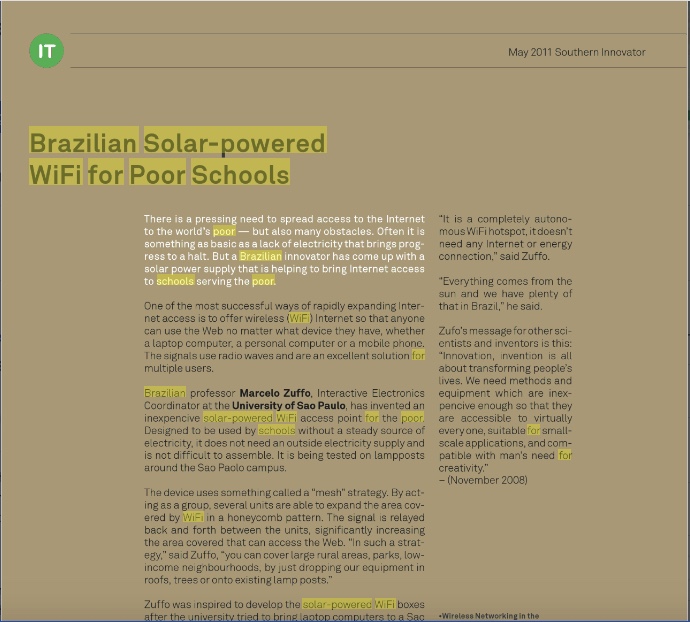
There is a pressing need to spread access to the internet to the world’s poor — but also many obstacles. Often it is something as basic as a lack of electricity that brings progress to a halt. But a Brazilian innovator has come up with a solar power supply that is helping to bring internet access to schools serving the poor.

Many initiatives are trying to bring inexpensive access to the internet to rural and remote regions around the world. Schools in poor areas are receiving laptop computers through schemes like the One Laptop Per Child project, but it is common that schools do not have a steady electricity supply to power the computers or the internet connection. One of the most successful ways of rapidly expanding access is to offer wireless (WiFi) internet so that anyone can use the Web, no matter what device they have, whether a laptop computer, a personal computer or a mobile phone. The signals use radio waves, and are an excellent solution for multiple users.

Brazilian professor Marcelo Zuffo, Interactive Electronics Coordinator at the University of Sao Paulo, has invented a cheap solar-powered WiFi access point for the poor. Designed to be used by schools without a steady source of electricity, it doesn’t need outside electricity supply, and is not difficult to assemble. It is being tested on lampposts around the Sao Paolo campus.

The device uses something called a ‘mesh’ strategy. By acting as a group, several units are able to expand the area covered by WiFi in a honeycomb pattern. The signal is relayed back and forth between the units, significantly increasing the area covered that can access the Web. “In such a strategy,” said Zuffo,”you can cover large rural areas, parks, low income neighbourhoods, by just dropping our equipment in roofs, trees or on to existing lamp posts.”

Zuffo was inspired to develop the solar-powered WiFi boxes after the university tried to bring laptop computers to a Sao Paulo school, and found they didn’t have a steady electricity supply.

“We came up with the idea of taking energy that is most plentiful and cheap, i.e. the sun,” he told the BBC. “We have a solar panel, a cheap motorcycle battery and a circuit that is responsible for energy management. We can have up to two days of full internet coverage and our goal is to increase that to 10 days – so that in the rainy season and the winter, you can have the internet for free.

“The natural plan is to miniaturize the system so that we can save on costs. So by the end you can imagine these WiFi solar mesh devices being the size of a cellphone or playing card.”

The low cost, solar-powered access point is ready as soon as it is unpacked and needs neither maintenance nor a power socket to get going.

“It is a completely autonomous WiFi hotspot, it doesn’t need any internet or energy connection,” said Zuffo.

“Everything comes from the sun and we have plenty of that in Brazil,” he said.

The volunteer organization Green WiFi initiative is also developing solar powered technologies to bring ubiquitous internet access to the world’s poor.

Zufo’s message for other scientists and inventors is this: “Innovation, invention is all about transforming people’s lives. We need methods and equipment which are cheap enough so that they are accessible to virtually every one, suitable for small scale applications, and compatible with man’s need for creativity.”

The issue of inequality in access to the internet has stark consequences for global economic development. Already, according to the World Information Society Report 2007, “Europe has achieved the largest overall gain in digital opportunity over the last two years, followed by the Americas… Asia and Africa have witnessed smaller gains in digital opportunity. The implications for the digital divide are clear: digital opportunity is becoming more sharply divided by region, not less.”

Published: November 2008

Resources

  • Wireless Networking in the Developing World: A Practical Guide to Planning and Building Low-cost Telecommunications Infrastructure. Website:
  • World Information Society Report 2007: A progress report on pledges to bring digital opportunity to all. Website:
  • The Wireless Geographic Logging Engine: This is a website with maps tracking the presence of WiFi access around the globe. So far it maps over 10 million separate WiFi networks. Entrepreneurs only have to log into the website to start searching for wireless networks near them.
  • iTrike: The world’s first solar powered wireless internet rickshaw.
  • The KyaTera lab where the technology was developed. Website: http://kyatera.incubadora.fapesp.br/portal/research/laboratories/interactive-electronic-media

Development Challenges, South-South Solutions was launched as an e-newsletter in 2006 by UNDP’s South-South Cooperation Unit (now the United Nations Office for South-South Cooperation) based in New York, USA. It led on profiling the rise of the global South as an economic powerhouse and was one of the first regular publications to champion the global South’s innovators, entrepreneurs, and pioneers. It tracked the key trends that are now so profoundly reshaping how development is seen and done. This includes the rapid take-up of mobile phones and information technology in the global South (as profiled in the first issue of magazine Southern Innovator), the move to becoming a majority urban world, a growing global innovator culture, and the plethora of solutions being developed in the global South to tackle its problems and improve living conditions and boost human development. The success of the e-newsletter led to the launch of the magazine Southern Innovator. 

Creative Commons License

This work is licensed under a
Creative Commons Attribution-Noncommercial-No Derivative Works 3.0 License.

ORCID iD: https://orcid.org/0000-0001-5311-1052.

© David South Consulting 2023