African youth need to play more according to a new landmark study published in the UK’s leading medical journal, The Lancet. The study tackles the high rates of illiteracy and educational under-achievement in Africa and finds that malnourishment and lack of stimulation are leaving millions unable to benefit from schooling. It found projects that encouraged learning through play led to children boosting their IQs and getting better reading skills. And it comes up with a very simple and low-cost solution – but excellent opportunity for entrepreneurs – toys and play.
“These are not high tech interventions,” said team leader for the study, Professor Sally McGregor of the Institute of Child Health of University College London. “Research over decades in Jamaica (and other countries) has shown that women with only primary school-level education and a few home made toys can be trained to make a significant difference in the education, intelligence and mental health of disadvantaged children. The Millennium Goal of universal primary education for all cannot be met unless these children’s poor development is tackled.”
The paper – Strategies to Avoid the Loss of Developmental Potential among Over 200 Million Children in the Developing World – is published in three parts in the journal.
Twenty projects around the world were evaluated for the benefits they produce for children under five who use toys. McGregor, who has set up several projects in Kenya, Tanzania and Uganda designing and constructing toys using whatever materials are available, was appalled by the widespread neglect of play throughout these countries. With play, the study found children read better, have better mental health and better self-esteem. In Africa it is ‘desperate, really desperate’ she says.
African primary school enrolments and literacy rates are among the lowest in the world, with over 42 million school children in sub-Saharan Africa not enrolled in school, and many children not able to afford to go or stay in primary school. Today a little more than half of African adults are literate and some 60 per cent of children go to school, according to UNESCO. The agency has forecasted the need for an additional 1.6 million teachers in Sub-Saharan African classrooms by 2015 – an increase of 68 percent.
The materials used to construct the toys do not need to be expensive or sophisticated. Toys can be constructed from banana trees, mud, corn on the cob, old plastic bottles, or cloth and straw dolls. It is key that the toys are safe for children under five and that anyone building such toys for sale must follow existing manuals.
McGregor continues: ‘One mother in a village was doing marvellous things with tiny scraps of material to make a doll. She received no recognition in the village for the work she was doing yet it was so important. It doesn’t take much – dolls or simple wooden blocks – they are so versatile. You see schools with nothing – it is unforgivable. The problem is how poor these people are – food just takes priority over toys – it is that stark.”
Locally produced toys are key to resolving this crisis for several reasons. Cost is the most important, with those most adversely affected also the least able to pay for toys and who are already living a precarious existence where basic survival takes precedence over play. Another factor is Africa being home to the countries who import the least number of toys: Somalia, Liberia, Togo, Rwanda and Chad. But the situation for African toymakers is often desperate as well, with many craft workers living at the economic margins. Several initiatives have emerged in the last couple of years to address this problem and ensure African toys are local and toymakers earn a living.
Initiatives like the African Toyshop based in Johannesburg, South Africa – a fair trade business – work to ensure African toymakers can make a living and get their wares to as wide a market as possible. The toymakers featured all use natural resources or recycled materials. Most work at the village level and produce toys that are culturally relevant to Africa. The organization COFTA – Cooperation For Fair Trade in Africa – is a network of Fair Trade producer Organizations in Africa involved and working with disadvantaged grassroots producers to eliminate poverty through fair trade. It is an excellent resource for grassroots organizations wanting to work with African toymakers.
Published: January 2007
Resources
The UK charity TALC – Teaching-aids At Low Cost – is planning to make available toy making manuals on a CD. Tel: (0) 1727 853869
Book: Africa on the Move: Toys from West Africa Stefan Eisenhofer, Karin Guggeis, Jacques Froidevaux Stuttgart, Germany: Arnoldsche, 2004. 216 pp., 195 color, 28 b/w illustrations. $75.00, cloth.
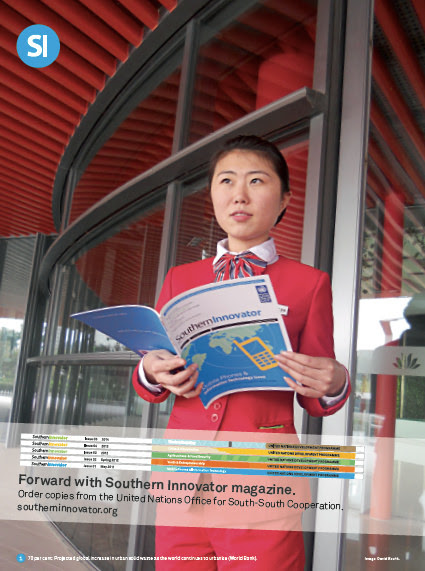
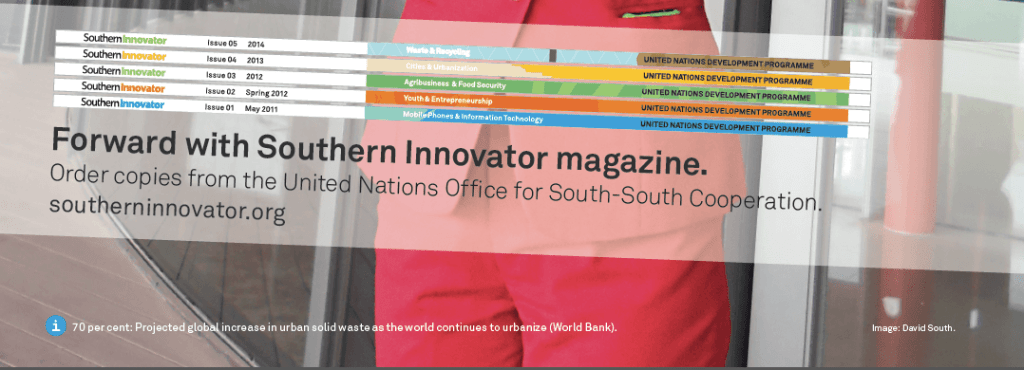
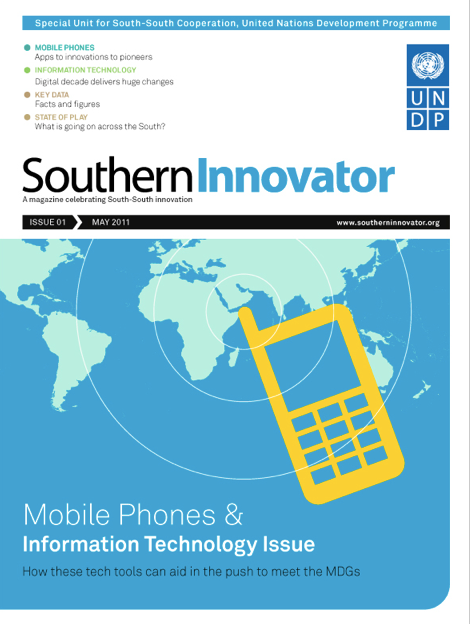
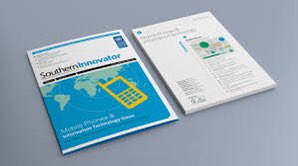
Development Challenges, South-South Solutions was launched as an e-newsletter in 2006 by UNDP’s South-South Cooperation Unit (now the United Nations Office for South-South Cooperation) based in New York, USA. It led on profiling the rise of the global South as an economic powerhouse and was one of the first regular publications to champion the global South’s innovators, entrepreneurs, and pioneers. It tracked the key trends that are now so profoundly reshaping how development is seen and done. This includes the rapid take-up of mobile phones and information technology in the global South (as profiled in the first issue of magazine Southern Innovator), the move to becoming a majority urban world, a growing global innovator culture, and the plethora of solutions being developed in the global South to tackle its problems and improve living conditions and boost human development. The success of the e-newsletter led to the launch of the magazine Southern Innovator.
Dabbawallahs Use Web and Text to Make Lunch on Time Development Challenges:The developing world’s rapidly growing cities are bringing with them whole new ways of living and working. One rapidly expanding category of citizen is the office worker. A symbol of growing prosperity, the office worker also tends to be a time-poor person who often must commute large distances between home and workplace.
Flurry of Anti-poverty Innovations Development Challenges: Innovation is key to transforming the lives of the world’s four billion poor. And it is at the core of much of the new thinking these days. While the world’s poor can’t rely on political developments, or wider macro-economic events to go their way, they can harness the power of invention, innovation and self-reliance to make big changes in the quality of their lives and increase income – and so can those who want to help them.
Local Animation: A Way Out of Poverty Development Challenges: One of the more remarkable creative developments since 2000 has been the explosion in animation production in the developing world, in particular Asia. Once seen as frivolous or unnecessary, animation is now acknowledged as a high-growth area and a critical component in the emerging economies being shaped by information technology.
Mobile Phones Bring the Next Wave of New Ideas from the South Development Challenges: The rapid growth in take-up has made mobile phones the big success story of the 21st century. With such reach, finding new applications for mobile phones that are relevant to the world’s poor and to developing countries is a huge growth area. It is estimated that by 2015, the global mobile phone content market could be worth over US $1 trillion: relegating basic voice phone calls to just 10 per cent of how people use mobile phones.
November
Mountain People: Innovative Ways to Help the World’s Most Vulnerable Development Challenges: Physically isolated and socially and politically marginalized, mountain dwellers are among the most vulnerable in the world, according to the Food and Agriculture Organization. A disproportionate number of the world’s 840 million chronically undernourished people live in highland areas — about 270 million mountain people lack food security, with 135 million suffering chronic hunger. Large numbers of additional people in lowland areas also depend on mountains.
Saving the Amazon Forest While Making a Living Development Challenges: The vast Amazon rainforest straddles Brazil (over half is there), and stretches over many countries, including Peru, Ecuador and Bolivia. It holds more than 2,500 tree species and 30 per cent of all known plant species – 30,000 in all. It contains the world’s largest tropical forest national park, Brazil’s Tumucumaque Mountains National Park(http://www.amazon-rainforest.org/places-of-interest.html).
Africa’s Fast-Growing Cities: A New Frontier of Opportunities Development Challenges: According to a new report by the International Institute for Environment and Development, Africa now has a larger urban population than North America and 25 of the world’s fastest growing big cities. Europe’s share of the world’s 100 largest cities has fallen to under 10 percent in the past century.
Turning Street Children into Entrepreneurs Development Challenges: The UN estimates that 500 million people around the world are homeless, and UNICEF estimates India alone has 11 million homeless children on its streets (though it is difficult to pin down the figure). In order to survive another day, these children will work in one way or another.
October
African Culture as Big Business Development Challenges: In the last decade the world’s creative industries (including crafts, fashion and design) have gained greater respect for being the spark that drives economic development and entrepreneurship. They are seen as fast growers and good job creators, and importantly, the lynch pin in cultural identity and cultural diversity.
Next Generation of Innovation for the Grassroots Development Challenges: Taking inspiration from science fiction sagas like the TV show Star Trek, the next generation of innovation is already taking shape in the South. A group of innovative facilities called Fab Labs (short for Fabrication Laboratory) in Ghana, India, Kenya, South Africa and Costa Rica are applying cutting-edge technology to address the everyday needs of people.
Ecotourism to Heal the Scars of the Past Development Challenges: The legacy of underdevelopment during the communist era in parts of Eastern Europe is now being seen as an advantage in the global tourism trade. Well off the beaten path for tourists, areas as diverse as Chechnya and Romania are working to turn their rustic rural hinterlands into a strategic advantage in grabbing the market for ecotourists.
Popular Characters Re-invent Traditional Carving Development Challenges: The popular cartoon characters from the long-running series The Simpsons are breathing new life into traditional African stone carvings.
September
African Breakthroughs To Make Life Better Development Challenges: In the last 50 years, the domestication of high technology – bringing cheaper access to everything from personal computers to digital cameras and applications like global positioning systems (GPS) – has transformed millions of lives and the way business is done. In the next 50 years, biotechnology is set to do the same.
Traditional Medicine is now a Proven Remedy Development Challenges: Once dismissed as old fashioned, ineffective and unscientific, traditional medicine is now seen as a key tool in bringing healthcare and healing to poor people bypassed by existing public and private health measures.
Mobile Phones: Engineering South’s Next Generation of Entrepreneurs Development Challenges: Technology is fuelling unprecedented growth in productivity in Asia, with sub-Saharan Africa languishing behind (International Labour Organization). But the growth in mobile phones could help close this gap, as home-grown entrepreneurs are stepping up to exploit this new opportunity.
Saving Water to Make Money Development Challenges: The world’s water supplies are running low, and according to the World Health Organisation (WHO), four out of every 10 people are already affected. But despite the gloomy reality of this problem, entrepreneurs in the South are rising to the challenge to save water.
August
Social Franchising Models Proving Poor Bring Profits Development Challenges: The four billion people in the world who live on less than US $2 a day have been described as the bottom of the economic pyramid, or BOP for short. In his book The Fortune at the Bottom of the Pyramid, Indian business consultant and professor CK Prahalad argues that this attitude must be turned on its head: rather than seeing the world’s poor as a burden, only worthy of charity, Prahalad sees nothing but opportunity and unmet needs that business can address.
Cooking up a Recipe to End Poverty Development Challenges: Like music, food has a powerful ability to jump across cultural and regional barriers and unite people in the sheer pleasure of the meal. Tapping the rich vein of regional culinary heritages is also a great way to make money. Promoting local recipes and foods has other benefits: as the global obesity (or globesity as WHO calls it) epidemic reaches into the urban areas of cities in the developing world, anything that pulls people away from fast food and high-fat foods is a good thing. Doctors have found home cooking keeps people thin and is better for them.
The Power of the Word: African Blogging and Books Development Challenges: “Culture is not a luxury … Culture is the spiritual backbone of society”: with these words Jan Kees van de Werk, the Dutch poet and long-standing advocate of African literature, summed up the importance of culture to Africa’s development. Two trends could significantly alter the prospects for African writers in 2007: the new wave of African bloggers and websites that are now emerging, and the increasing awareness of African literature.
Online Free Knowledge Sharing Development Challenges: UNESCO’s Kronberg Declaration on the Future of Knowledge Acquisition and Sharing is blunt: the future of learning will increasingly be mediated by technology, and traditional educational processes will be revolutionized. Acquiring factual knowledge will decrease and instead people will need to find their way around complex systems and be able to judge, organize and creatively use relevant information.
July
Banning of Plastic Bags and Containers Brings New Opportunities Development Challenges: This month, Uganda bans plastic bags, outlawing their import, manufacture and use and joining a growing list of African countries seeking to sweep cities of this menace. Uganda’s ban follows similar moves in Kenya and in Tanzania, where even plastic drinks containers will soon be banished.
Record-breaking Wireless Internet to Help Rural Areas Development Challenges: Many initiatives seek to bring inexpensive access to the internet to rural and remote regions around the world. One of the most successful ways to rapidly expand access is to offer wireless internet so that anyone can use a laptop computer, a PC or a mobile phone to quickly access the Net. Access to wireless internet is being rolled out in cities around the world with so-called ‘hot spots’, but the thornier issue of improving access in rural or remote regions could get better, thanks to a Venezuelan team.
A New House Kit for Slum Dwellers that is Safe and Easy to Build Develoment Challenges: By 2030, some 5 billion people around the world will live in cities. Next year, 2008, is predicted to be the tipping point, when urban dwellers (3.3 billion people) will outnumber rural residents for the first time. These are the conclusions of UNFPA’s State of the World Population 2007 Report. Even more strikingly, the cities of Africa and Asia are growing by a million people a week. And 72 percent of the population in sub-Saharan Africa live in slum conditions.
Afro Coffee: Blending Good Design and Coffee Development Challenges: The importance of good design and a strong brand in the success of a business cannot be emphasised enough. That extra effort and thought can take a business from local success to regional and even global success. As consultants KPMG make clear, “For many businesses, the strength of their brands is a key driver of profitability and cash flow “. Yet the majority of small businesses fail to think about their brand values or how design will improve their product or service.
June
African Entrepreneur Wants to Bring Order to Urban Chaos Development Challenges: All over the global South, urban and semi-urban areas are growing at a furious pace. Great swathes of mega-regions – places where large cities blend seamlessly into smaller towns and villages creating a giant economic hub – are becoming key economic and opportunity drivers in developing countries.
Entrepreneurs Use Mobiles and IT to Tackle Indian Traffic Gridlock Development Challenges: Around the world, traffic congestion is often accepted as the price paid for rapid development and economic dynamism. But as anyone who lives in a large city knows, a tipping point is soon reached where the congestion begins to harm economic activity by wasting people’s time in lengthy and aggravating commuting, and leaving them frazzled and burned out by the whole experience.
Web 2.0 to the Rescue! Using Web and Text to Beat Shortages in Africa Development Challenges: The beep-beep of a received text on a mobile phone is now becoming a much-needed lifeline to Africans. Zimbabweans, who continue to struggle every day with inflation that has shot to 3,731 percent (Zimbabwe Central Statistical Office), have usd African ingenuity and 21st century technology to survive another day.
Bio-ethanol From Sturdy and Once-Unwanted Indian Plant Development Challenges: With awareness of global warming at an all-time high – and governments seeking real-world solutions to solve this enormous problem – bioethanol fuel has risen up the agenda as a replacement for conventional fuel sources. At present, most bioethanol fuel is produced from either corn or sugar but a less known plant jatropha could be the real solution. Brazil has been a pioneer in producing bioethanol fuel from sugar, while the United States has focused on its substantial corn crop as a source, and both contribute more than half the world’s supply.
May
Youth Surge in the South A Great Business Opportunity Development Challenges: The world’s youth population (those between the ages of 12 and 24) has now reached a historical high of 1.5 billion – 1.3 billion of whom are in developing countries (World Development Report 2007). Nearly half of the world’s unemployed are youth, and the Middle East and North Africa alone must create 100 million jobs by 2020 to meet demand for work.
Old Adage Gets New Life Development Challenges: Education is recognized as critical for development and improving people’s lives. Universal primary education is a Millennium Development Goal and countries are now allocating more funds for primary education across the global South. However, the options available to youth after primary education are often very limited.
Safe Healthcare is Good Business and Good Health Development Challenges: Many people have been shocked by recent stories about the proliferation of counterfeit drugs and the rate at which they are killing and harming people in Nigeria. The International Narcotics Control Board found that up to 50 percent of medicines in developing countries are counterfeit. This has driven home the point that without the presence of legitimate players in the African drug market, the illegal sharks will step in to make large profits – and a literal killing.
April
Creative and Inventive Ways to Aid the Global Poor Development Challenges: As the saying goes, “necessity is the mother of invention”. Poverty can be a major spur to invention, and invention a route out of poverty – but only if the poor in the developing world can get the recognition, capital and support for navigating the legal and bureaucratic hurdles that will inevitably stand in their way. Thankfully many new initiatives acknowledge this.
Kiva: New Gateway of Loans for the PoorDevelopment Challenges: The rise of social networking websites has created new opportunities for the poor to gain access to much needed credit. Kiva.org is pioneering a new way for entrepreneurs in the South to obtain for their businesses unsecured, no-interest financing from lenders worldwide. By just a click of the mouse a person anywhere in the world can lend as little as $25 or more to aspiring entrepreneurs in developing countries.
Innovation from the Global South Development Challenges: A major study has documented a rising tide of scientific innovation coming from Asia’s fast-developing countries, especially India and China. Conducted over 18 months by UK-based think tank Demos, it challenges the conventional wisdom that scientific ideas come from the top universities and research laboratories of large companies based in Europe or the US. It found ideas emerging in unexpected places, flowing around the world conveyed by a mobile diaspora of knowledge workers from the South.
Creative Use of Wi-Fi to Reach the Poor Development Challenges: In 2003 former UN Secretary-General Kofi Annan called for greater access to wi-fi, or wireless internet networks, as a mechanism to help poorer regions catch up with the pace of technological change in developed countries. Wireless networks remove the need to lay costly wires and can quickly bring fast and convenient internet access to large populations currently denied access. By removing the need to lay lots of cables to get communities online, wireless could help poorer nations narrow the digital divide and catch up with countries where the technology has already taken hold. Social entrepreneurs are stepping in to fill the gap between the promise of wi-fi and the reality.
March
Trade to Benefit the Poor Up in 2006 and to Grow in 2007 Development Challenges: The global fair trade market – in which goods and services are traded under the Fairtrade logo, guaranteeing a minimum fair price to producers experienced unprecedented growth in 2006. In the UK alone, 2006 sales totalled £290 million – a jump of 46 percent from 2005. The Fairtrade Foundation predicts sales will reach UK £300 million in 2007.
Business as a Tool to Do Good Development Challenges: The United States’ fast-paced and highly inventive technology sector is re-shaping philanthropy and proving it is possible to do good and make money at the same time. The approach taken by these philanthropists is flavoured by their experiences in the cut-throat world of technology, where innovation is a necessity and where re-invention and risk are de rigeur. They share many of these qualities, counter intuitively, with millions of the world’s poor as they struggle day in and day out to survive and get ahead.
Social Networking Websites: A Way Out of Poverty Development Challenges: Social networking websites also known as, Web 2.0 – the name given to the new wave of internet businesses and websites such as YouTube and MySpace that are transforming the way people interact with the Web – has been dubbed the social web for its power to bring people together.
Fashion Closes Gap Between Catwalk and Crafts Development Challenges: The notion of doing right with fashion has been getting a make-over in the past few years. In the West, non-sweatshop clothing and crafts from developing countries have long been confined to a small niche in the marketplace. They were seen at best as garments for the eccentric or unconventional, and at worst as a poor substitute for clothing and accessories peddled by the major manufacturers. Organic or ethically produced products were often stigmatized as unfashionable and frumpy.
February
Dynamic Growth in African ICT is Unlocking Secrets of SME Treasure Trove Development Challenges: A newly released survey of 14 African countries in 2006 has documented the impact of Information and Communication Technology (ICT) on private sector development and how it is contributing to developing a vibrant Small Medium Enterprise (SME) sector in Africa. It discovered how dynamic the SME sector is, how it has rapidly adopted mobile phone technology (96 percent have it), and how if used properly in concert with this new technology, extraordinary economic growth is possible.
Grassroots Entrepreneurs Now Have Many Ways to Fund their EnterprisesDevelopment Challenges: In the past, African entrepreneurs were extremely limited in the options for funding their plans. They had to rely on often ineffective national banks or local networks based on political, tribal or family connections to secure funding for enterprises. That has now changed, and there is an explosion in new thinking on business start-ups and how best to help grassroots entrepreneurs.
African Tourism Leads the World and Brings New Opportunities Development Challenges: Tourism around the world is growing rapidly again after the setbacks caused by the September 11, 2001 terrorist attacks. Tourism is also finally acknowledging Africa – home to 888 million people (2005, UN) – and where 46 percent of sub-Saharan Africa’s people live on less than US$1 a day. Led by Kenya and South Africa, the continent has come out on top in world tourism growth according to the United Nations World Tourism Organisation (UNWTO) (http://www.unwto.org/). While global tourism is forecast to grow by four percent in 2007, Africa as a whole enjoyed growth of 10.6 percent in 2006.
Securing Land Rights for the Poor Now Reaping Rewards Development Challenges:The hotly debated issue of land rights for the poor has never been more relevant. There is mounting evidence that access to land rights can catapult the poor out of poverty and spur growth for the economy. Experience in India and China is now showing the economic power unleashed when the poor gain full legal rights over their land.
January
New Battery Back-up Technology Targeting Developing Countries and Remote Regions Development Challenges: Africa’s greater global engagement and economic growth in the past few years has started to draw attention back towards the continent’s dearth of reliable power sources and inadequate power infrastructure. While demand grows at a fast pace, sadly political instability and lack of security in many countries scares off foreign investors and multinational companies who could help to expand capacity.
Computing in Africa is Set to Get a Big Boost Development Challenges: The image of Africa as a technological laggard is set to be seriously challenged as a number of developments converge in 2007. Alongside the booming African mobile phone market – itself now getting global attention for innovation – the African computer scene will soon have both the software and hardware that acknowledge the continent’s unique needs while being affordable.
Ring Tones and Mobile Phone Downloads are Generating Income for Local Musicians in Africa Development Challenges: African musicians hoping to support themselves through their recordings have always had to contend with the added burden of poor copyright control over their work. While musicians in the West are supported by a highly regulated regime of copyright protection – ensuring some to become the richest people in their respective countries – most African musicians have had to stand back and watch their work being copied, sold and exchanged with little chance of seeing any royalties.
Carbon Credits Can Benefit African Farmers Thanks to New System Development Challenges: The global carbon credit trading schemes emanating from the Kyoto Protocol are now creating a multi-billion dollar market – the European carbon market was worth €14.6 billion in 2006 – and represents one of the fastest growing business opportunities in the world. Being green has finally come of age. Yet all the benefits of this are largely bypassing Africa despite more than 70 percent of the continent’s inhabitants earning a living off the land.
Development Challenges, South-South Solutions was launched as an e-newsletter in 2006 by UNDP’s South-South Cooperation Unit (now the United Nations Office for South-South Cooperation) based in New York, USA. It led on profiling the rise of the global South as an economic powerhouse and was one of the first regular publications to champion the global South’s innovators, entrepreneurs, and pioneers. It tracked the key trends that are now so profoundly reshaping how development is seen and done. This includes the rapid take-up of mobile phones and information technology in the global South (as profiled in the first issue of magazine Southern Innovator), the move to becoming a majority urban world, a growing global innovator culture, and the plethora of solutions being developed in the global South to tackle its problems and improve living conditions and boost human development. The success of the e-newsletter led to the launch of the magazine Southern Innovator.
A major study has documented a rising tide of scientific innovation coming from Asia’s fast-developing countries, especially India and China. Conducted over 18 months by UK-based think tank Demos, it challenges the conventional wisdom that scientific ideas come from the top universities and research laboratories of large companies based in Europe or the US. It found ideas emerging in unexpected places, flowing around the world conveyed by a mobile diaspora of knowledge workers from the South.
China has seen its spending on research and development jump by 20 percent each year since 1999. India is now producing 260,000 engineers a year and its number of engineering colleges is due to double to 1,000 by 2010. Research and development in India has grown by threefold over the past decade. There is now a global flow of research and development money to the new knowledge centres of Shanghai, Beijing, Hyderabad and Bangalore.
The study found the greater political and economic emphasis being placed on science and technology was paying dividends. These emerging science powers are now investing heavily in research to become world leaders in information technology, biotechnology and nanotechnology within the next ten to fifteen years. This is also producing a flood of scientific papers from China and India to the world’s prestigious scientific journals.
For India, its knowledge-based industries by the end of this year will be a US $57 billion export industry, accounting for 4 million jobs and 7 percent of Indian GDP. Interestingly, the study also found a new wave of change is underway. Where once it was mostly low-wage manufacturing and call centre jobs that were going to China and India, a new wave of research and development jobs is now moving there. Drawn in by technology clusters in Shanghai and Bangalore, “Microsoft began to realize we can’t find all the talented people in the US. Nowhere in this universe has a higher concentration of IQ power (than India),” said Harry Shun, head of Microsoft’s research in Asia.
Published: April 2007
Resources
The Atlas of Ideas is an 18-month study of science and innovation in China, India and South Korea, with a special focus on new opportunities for collaboration with Europe. It is a comprehensive account of the rising tide of Asian innovation. It pinpoints where Asian innovation is coming from and explains where it’s headed. Special reports on China, India and Korea, introducing innovation policy and trends in these countries can be downloaded for free here.
Entrepreneurship Development Institute of India
Innovation China: A website linking all stories on the fast-breaking world of Chinese innovation.
Development Challenges, South-South Solutions was launched as an e-newsletter in 2006 by UNDP’s South-South Cooperation Unit (now the United Nations Office for South-South Cooperation) based in New York, USA. It led on profiling the rise of the global South as an economic powerhouse and was one of the first regular publications to champion the global South’s innovators, entrepreneurs, and pioneers. It tracked the key trends that are now so profoundly reshaping how development is seen and done. This includes the rapid take-up of mobile phones and information technology in the global South (as profiled in the first issue of magazine Southern Innovator), the move to becoming a majority urban world, a growing global innovator culture, and the plethora of solutions being developed in the global South to tackle its problems and improve living conditions and boost human development. The success of the e-newsletter led to the launch of the magazine Southern Innovator.
The image of Africa as a technological laggard is set to be seriously challenged as a number of developments converge in 2007. Alongside the booming African mobile phone market – itself now getting global attention for innovation – the African computer scene will soon have both the software and hardware that acknowledge the continent’s unique needs while being affordable. Further challenging stereotypes, the continent’s burgeoning and dynamic open source software movement is the subject of a new film by a Danish filmmaker, and the African-made Ubuntu, Linux-based operating system now has a new user manual to help it attract new adherents.
African technological innovation rarely makes headlines in the West. But a Danish filmmaker is changing these perceptions with his film showing the dynamism and enthusiasm behind the open source software movement in Africa. The yet-untitled film, directed by David Madie, is from Eighty Days Productions and is due for release in the spring of 2007. It follows a young computer entrepreneur, Wire Lunghabo James, from Uganda’s Linux Solutions in Africa, who has been instrumental in building the Web’s presence in the country and in East Africa.
“This film will show the characters fighting for what they believe in. This happens to be Open Source, which I think is an important agenda,” director Madie told Tactical Technology Collective ( www.tacticaltech.org), a website “demystifying technology for non-profits.”
Unlike off-the-shelf software, open source software has many advantages. It is free, and no licence fee is required, so as many copies as necessary can be made. It is fully customisable, so local languages and cultural conditions can be taken into consideration. It is a universal language (the most popular is Linux) and thus it is easier to understand how a specific application works. For developing countries, it has the advantage of empowering local programmers and dymistifying computer programming, removing it from the domain of private companies and large government agencies. In 2005 the New Partnership for African Development (NEPAD) urged African countries to embrace open source software to encourage the growth of indigenous software development.
“I think he (James) is also a role model in the sense that he combines doing a business, with doing social work. To him these things are not opposites: these are things that can perfectly work well together. You can do business in a social manner,” Madie said.
The Ubuntu software programme is a complete, free operating system that emphasizes community, support, and ease of use while refusing to compromise on speed, power, and flexibility. Ubuntu is an ancient African word meaning humanity to others, and its software version is described as Linux for human beings – designed for everyone from computer novices to experts. Ubuntu is the most in-demand Linux system in Africa, and the official guide is aimed at NGOs, home users or small businesses.
One Laptop Per Child Project (OLPC)
In another development, the One Laptop Per Child project (OLPC) has announced the release for general sale of its durable bright green and yellow laptops ready loaded with Linux-based operating systems. Customers in wealthy countries will have to buy two laptops, with the second going to a developing country. Five million will be delivered to the developing world over the summer of 2007. The eventual aim is to sell the machine to developing countries for US $100, but the current cost of the machine is about US $150. The OLPC laptop’s software has been designed to work specifically in an educational context. It has built-in wireless networking and video conferencing so that groups of children can work together. The OLPC project is working with the search engine Google, who will act as “the glue to bind all these kids together”. Google will also help the children publish their work on the internet.
The One Laptop Per Child project (http://wiki.laptop.org/go/Home) has struck its first deal with Rwanda’s president Paul Kagame to provide every school pupil with a laptop computer within the next five years. The laptops and all the support costs will be covered by OLPC.
Development Challenges, South-South Solutions was launched as an e-newsletter in 2006 by UNDP’s South-South Cooperation Unit (now the United Nations Office for South-South Cooperation) based in New York, USA. It led on profiling the rise of the global South as an economic powerhouse and was one of the first regular publications to champion the global South’s innovators, entrepreneurs, and pioneers. It tracked the key trends that are now so profoundly reshaping how development is seen and done. This includes the rapid take-up of mobile phones and information technology in the global South (as profiled in the first issue of magazine Southern Innovator), the move to becoming a majority urban world, a growing global innovator culture, and the plethora of solutions being developed in the global South to tackle its problems and improve living conditions and boost human development. The success of the e-newsletter led to the launch of the magazine Southern Innovator.








 David South Consulting
You must be logged in to post a comment.