Categories
Archive Development Challenges, South-South Solutions Newsletters

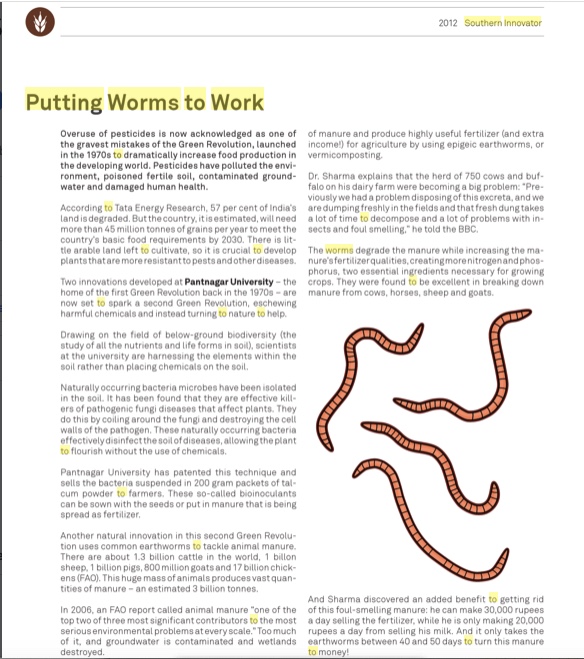
Putting Worms to Work

By David SouthDevelopment Challenges, South-South Solutions

SOUTH-SOUTH CASE STUDY

Overuse of pesticides is now acknowledged as one of the gravest mistakes of the  Green Revolution, launched in the 1970s to dramatically increase food production in the developing world. Pesticides have polluted the environment, poisoned fertile soil, contaminated ground water and damaged human health.

According to Tata Energy Research, 57 per cent of India’s land is degraded. But the country, it is estimated, will need more than 45 million tons of grains to meet the country’s basic food requirements by 2030. There is little arable land left to cultivate, so it is crucial to develop plants that are more resistant to pests and other diseases.

Two innovations developed at  Patnagar University in Patnagar, India – the home of the first Green Revolution back in the 1970s – are now set to spark a second Green Revolution, eschewing harmful chemicals and instead turning to nature to help.

Drawing on the field of below-ground biodiversity (the study of all the nutrients and life forms in soil), scientists at the university are harnessing the elements within the soil, rather than placing chemicals on the soil.

Naturally occurring bacteria microbes have been isolated in the soil. It has been found that they are effective killers of pathogenic fungi diseases that affect plants. They do this by coiling around the fungi and destroying the cell walls of the pathogen. These naturally occurring bacteria effectively disinfect the soil of diseases, allowing the plant to flourish without the use of chemicals.

Patnagar University has patented this technique and sells the bacteria suspended in 200 gram packets of talcum powder to farmers. These so-called bioinoculants can be sown with the seeds or put in manure that is being spread as fertilizer.

Another natural innovation in this second Green Revolution uses common earthworms to tackle animal manure. There are about 1.3 billion cattle in the world, a billon sheep, a billion pigs, 800 million goats and 17 billion chickens (Food and Agriculture Organization of the United Nations [FAO]). This huge mass of animals produces vast quantities of manure – an estimated 3 billion tons.

In 2006, an FAO report called animal manure “one of the top two of three most significant contributors to the most serious environmental problems at every scale.” Too much of it, and groundwater is contaminated and wetlands destroyed.

India produces millions of tons of livestock manure. Dr. R.J. Sharma, dean of veterinary and animal sciences at the Patnagar university, has found a handy way to rid farms of manure and produce highly useful fertiliser (and extra income!) for agriculture by using epigeic earthworms, or vermicomposting.

Dr Sharma explains that his herd of 750 cows and buffalo on his dairy farm were becoming a big problem: “Previously we had a problem disposing this excreta, and we are dumping freshly in the fields and that fresh dung takes a lot of time to decompose and a lot of problems with insects and foul smelling,” he told the BBC.

The worms degrade the manure while increasing the manure’s fertiliser qualities, creating more nitrogen and phosphorus: two essential ingredients necessary for growing crops. They were found to be excellent in breaking down manure from cows, horses, sheep and goats.

And Sharma discovered an added benefit to getting rid of this foul-smelling manure: he can make 30,000 rupees a day selling the fertilizer, while he is only making 20,000 rupees a day from selling his milk. And it only takes the earthworms between 40 and 50 days to turn this manure to money.

Published: January 2008

Resources

  • Digital soil maps: The Food and Agriculture Organization has a CD-ROM soil map available  here, and the GlobalSoilMap initiative is building a real-time soil map here.
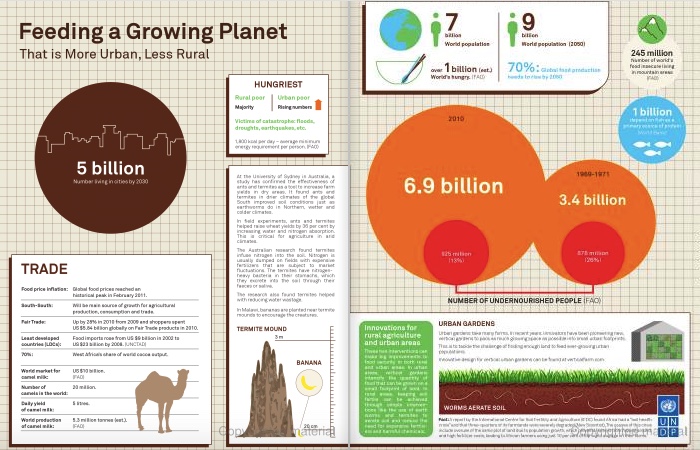
Development Challenges, South-South Solutions was launched as an e-newsletter in 2006 by UNDP’s South-South Cooperation Unit (now the United Nations Office for South-South Cooperation) based in New York, USA. It led on profiling the rise of the global South as an economic powerhouse and was one of the first regular publications to champion the global South’s innovators, entrepreneurs, and pioneers. It tracked the key trends that are now so profoundly reshaping how development is seen and done. This includes the rapid take-up of mobile phones and information technology in the global South (as profiled in the first issue of magazine Southern Innovator), the move to becoming a majority urban world, a growing global innovator culture, and the plethora of solutions being developed in the global South to tackle its problems and improve living conditions and boost human development. The success of the e-newsletter led to the launch of the magazine Southern Innovator.

Creative Commons License

This work is licensed under a
Creative Commons Attribution-Noncommercial-No Derivative Works 3.0 License.

ORCID iD: https://orcid.org/0000-0001-5311-1052.

© David South Consulting 2023
Categories
Archive Watch Magazine

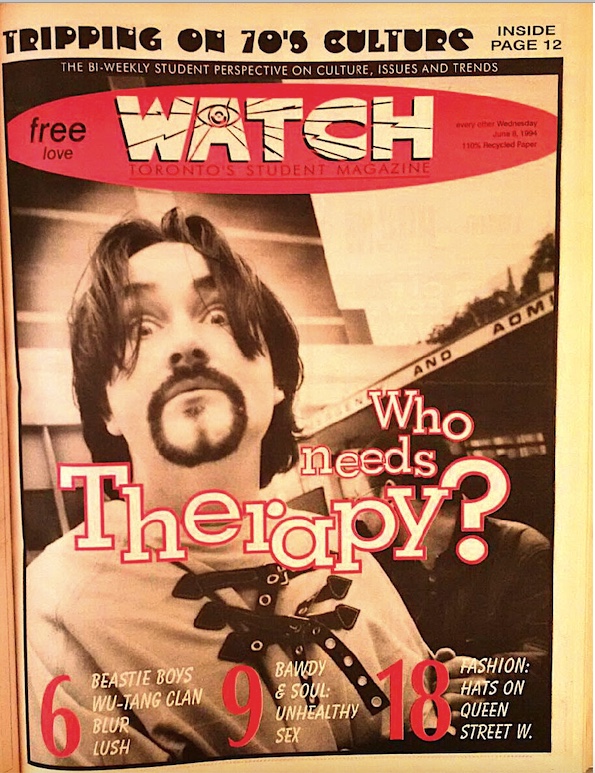
Freaky – The 70s Meant Something

By David South

Watch Magazine (Toronto, Canada), June 8, 1994

It was the decade of the happy face, bell-bottoms, avocado fridges, disco and the Bay City Rollers; in short, the 70s was a pimple on the ass of history, better evaporated in a pot haze on a waterbed. Not so says 70s-obsessed author Pagan Kennedy, who believes the much-maligned decade is the victim of a bum rap perpetuated by the idolization of the 60s.

Kennedy says the 70s saw all the radical ideas and culture of the 60s go mainstream and mutate in a way the hippies couldn’t imagine.

Social relations and culture were profoundly reshaped during this decade as the non-traditional family took form, women flooded the workplace and unions became rich monoliths.

The social turmoil spawned blue collar red-necks with Confederate flags customizing fuck trucks – vans complete with waterbed, eight-track stereo, bong and sleazy airbrushed exteriors of naked women –  to cruise the nation’s highways enjoying the liberal sexual values while keeping conservative political views. Sexual liberation for these clowns consisted of bumper stickers saying “Ass, gas or grass – nobody rides for free!”. Kennedy remembers it all too well.

“This was the midst of the energy crisis, so big cars that wasted a lot of gas were really cool,” she says. “I guess it came out of the whole drug culture, sex culture thing. It was like a basement kids have, only it was on wheels – a party on wheels. It’s not just the mattress for the fuck truck, you’re supposed to be doing your bong hits in there – so the police can’t see you.”

Sex holidays

“Our lives are much more constrained than they were in the 70s,” continues Kennedy. “I think the 70s must seem like an exotic time to grow up in. One of my favourite parts in Douglas Coupland’s Generation X is when the characters want to take a sex holiday to 1974.

“There was a lot of obsession in the early 70s with swingers and wife-swapping. It was the one time when suddenly the sexual revolution was kicking in, not just for white, privileged college kids, but for everybody – for the working class. There were discos and orgy clubs. There was Plato’s Retreat in New York City where you would go in and there was an orgy in full progress.”

In music, the 70s rocketed between extremes. There was nauseating soft rock, concept albums and “progressive” rock. There was the outrageous glam, with artists like Slade and Gary Glitter jacked up on elevator shoes in sequin one-piece flare suits. There was disco and punk. But the sickest phenomena says Kennedy was corporate rock.

David Cassidy

“In the 60s, people were just learning how to package rock and make it a big corporate thing. By the 70s they had learned a lot. The Partridge Family was a group that was entirely fabricated. David Cassidy had a bigger fan club than Elvis. This was a guy who didn’t become a rock star until he went on TV. In the 60s, FM was alternative radio – you could play anything. Corporate guys got their hooks into FM by the 70s. They were formatting. It was no longer what the DJ wanted to hear. You were getting playlists. The money came from big rock concerts, so there was a desire to push these mega-groups and superstars.”

Another truly 70s phenomena was TV as social conscience. Before the 70s, TV variety shows focused on pure entertainment. But now writers, directors and producers schooled in the 60s political milieu were in control.

Blaxploitation

“All in the Family, Maude and Good Times were all part of the same world. All in the Family acknowledged the deep rifts in American society – America was at war with itself. Yet it did it in a soft enough way to not offend people.”

US blacks had been ignored until the civil rights struggle of the 1960s woke up a dopey white America. In the 1970s, blacks were being portrayed like never before in the media and popular culture. But all of this awareness took a twisted turn.

“I think what happened among blacks was they saw their leaders either killed or put in jail. And that was devastating. Blacks really turned to electoralism in the 70s. A lot of black people started running for office. While trying to change things from outside the system, they realized the price was too high. A lot of black people were involved in making those blaxploitation movies, but so were a lot of white people. Shaft and Superfly are like the bookends of the genre. They were really made by black filmmakers. But then there were all these ripoff versions starring football players – whitebread ideas of what black culture was like.”

Pagan Kennedy’s latest book, Platforms: A Microwaved Cultural Chronicle of the 1970s, is published by St. Martin’s Press and available in most book shops. She’s got a really cool collection of eight-track tapes and drives a yetch! 1974 Plymouth Valiant.

Her website is here: https://www.pagankennedy.space/

“Tripping on 70s Culture”: Watch Magazine was published in Toronto, Canada in the 1990s. “The Bi-Weekly Student Perspective on Culture, Issues and Trends.”

https://davidsouthconsulting.org/2022/11/16/canadian-magazines-newspapers-1990s/

https://davidsouthconsulting.org/2021/06/14/case-study-1-investigative-journalism-1991-1997-2/

https://davidsouthconsulting.org/2021/06/01/case-study-2-watch-magazine-1994-and-1996-2/

https://davidsouthconsulting.org/2020/12/08/featured-in-new-book-busted-an-illustrated-history-of-drug-prohibition-in-canada-december-2017/

https://davidsouthconsulting.org/2021/03/25/oasis-has-arrogance-a-pile-of-attitude-and-the-best-album-of-1994/

https://davidsouthconsulting.org/2022/10/08/time-machines/

https://davidsouthconsulting.org/2020/11/24/too-black/

Creative Commons License

This work is licensed under a
Creative Commons Attribution-Noncommercial-No Derivative Works 3.0 License.

ORCID iD: https://orcid.org/0000-0001-5311-1052.

© David South Consulting 2023
Categories
Archive Blogroll

Featured In New Book Busted: An Illustrated History Of Drug Prohibition In Canada | December 2017

Upon my return from a United Nations workshop in Dhaka, Bangladesh, I was delighted to receive a copy of the new book Busted: An Illustrated History of Drug Prohibition in Canada (Fernwood Publishing, 2017, ISBN 978-1-55266-976-1) by Professor Susan Boyd from the Faculty of Human and Social Development at the University of Victoria in British Columbia, Canada. 

Busted: An Illustrated History of Drug Prohibition in Canada by Susan Boyd (Fernwood Publishing).

It is a beautifully illustrated book and an excellent introduction to Canada’s unique history surrounding drug use and drug prohibition. As the country embarks on a new phase in its relationship to some drugs, the book gives the bigger picture that many Canadians are probably unaware of. Canada had a period of extensive social experimentation in the late 1960s and early 1970s, defying perceptions the country is ‘boring’ and where excitement doesn’t happen.

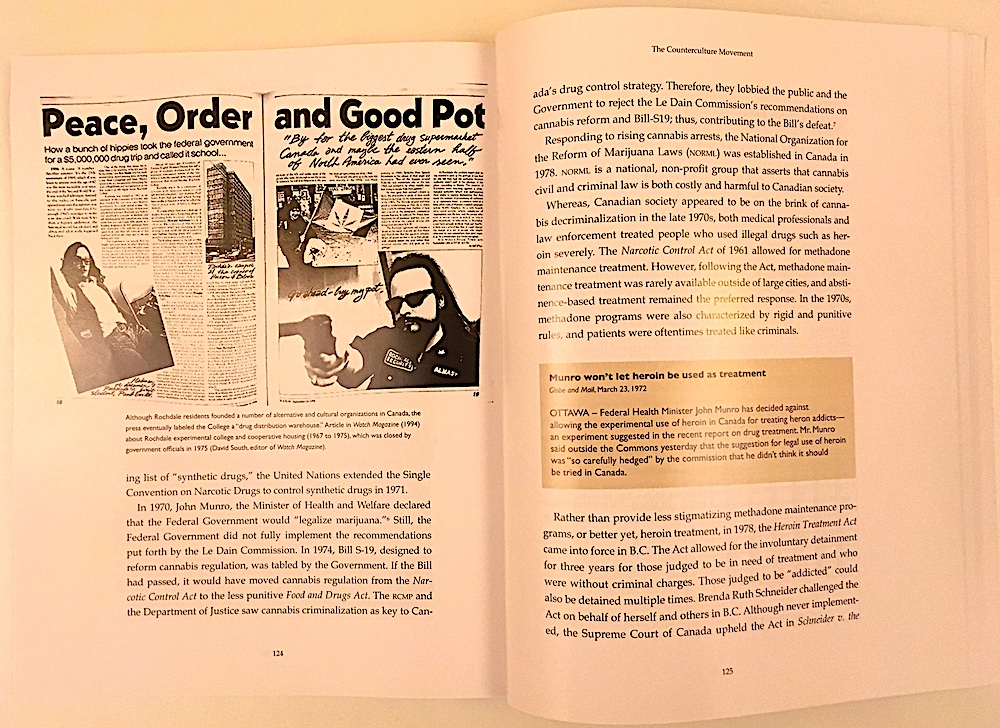
A feature we did for Toronto’s Watch Magazine in 1994 (in which I was Editor-in-Chief) is on page 124 in the chapter on The Counterculture Movement: The 1960s and 1970s.

“Peace, Order and Good Pot” by Bill White from Toronto’s Watch Magazine in 1994.
Citation in Busted: An Illustrated History of Drug Prohibition in Canada (2017).

© David South Consulting 2017