UNDP Mongolia Communications Coordinator (1997-1999):David South
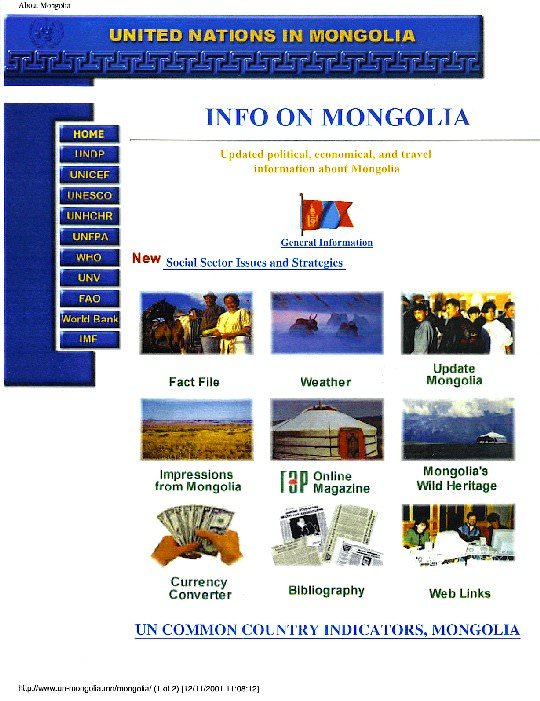
I launched this portal in 1997, in the middle of a major economic crisis in Mongolia. This award-winning (winner in 1998 of the People’s Choice WebSite 500 award and the CyberTeddy Top 500 Website award) and pioneering United Nations Mongolia development web portal was singled out by UN headquarters as an example of what a country office website should be like.
At this time, Mongolia was still recovering from the chaotic and turbulent transition from Communism to free markets and democracy begun at the start of the 1990s, called by some “one of the biggest peacetime economic collapses ever” (Mongolia’s Economic Reforms: Background, Content and Prospects, Richard Pomfret, University of Adelaide, 1994). There was a thirst for information: access to the Internet was still limited and access to mobile phones was just the preserve of the rich. As a legacy of the past, information, especially that about the outside world and the country’s true economic and social conditions, was restricted. During the years of Communism, even simple travel from one place to the next was strictly regulated.
While today we can take it for granted the world’s information arrives in seconds via the Internet on mobile and smart phones and devices, this just was not the case in the late 1990s in Mongolia.
The UN/UNDP Mongolia development web portal addressed the urgent need to communicate what was happening in the country during a major crisis, and to transparently show what the UN was doing to address the crisis. It made critical data on the country’s development easy to find, and informed the wider world about the country and its people and culture. While the Internet had only just arrived in Mongolia, from the start the UNDP Mongolia Communications Office was experimenting with this powerful new technology to reach a global audience. This included Mongolia’s first web magazine, Ger (launched in 1998).
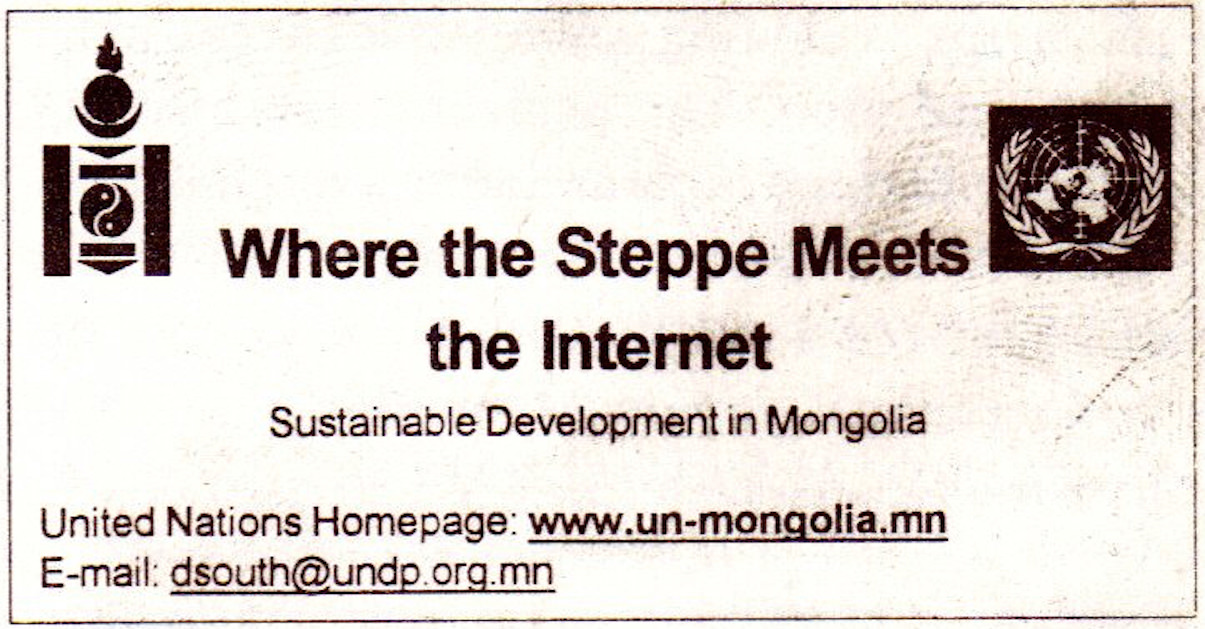
After the http://www.un-mongolia.mn website launched in 1997, a media campaign began to inform readers of its presence. This ad appeared regularly in magazines, newsletters and newspapers.
Ger Magazine was launched on September 9, 1998 (Ger is the Mongolian word for both the traditional tent dwelling and home). The theme of youth in the transition was explored by a combined team of Mongolian and foreign journalists. The Ger Magazine project had basically three goals: first, raise the quality of journalism in the country, secondly, introduce the country to a wider global audience and, thirdly, by being the country’s first online magazine, prove the Internet was an effective way to communicate.
Issue 1 of the magazine investigated what life was like for youth during the transition years (post-1989). Stories tackled the struggle to find work in the free market, the booming pop music scene and how it is leading the way in business entrepreneurship, reproductive health, the basics on Mongolian culture, and vox pop views from Mongolian youth.Issue 2 of the magazine investigated modern life in Mongolia during transition. The team of journalists were hitting their stride by this issue. Stories probed the proliferation of bars and the problem of alcoholism, corrupt banking practices and the loss of savings, how the young were the country’s leading entrepreneurs, Mongolia’s meat and milk diet, “girl power” and the strong role played by women, the burgeoning new media, the rise and rise of Buddhism, and Mongolia’s dynamic fashion designers (this article inspired foreign fashion designers to embrace the Mongolian ‘look’ in the next season’s designs).
The UN/UNDP Mongolia homepage quickly became the top resource for development news on Mongolia in the late 1990s.“A UN System site. A very nice, complete, professional site. Lots of information, easily accessible and well laid out. The information is comprehensive and up-to-date. This is a model of what a UNDP CO web site should be.”
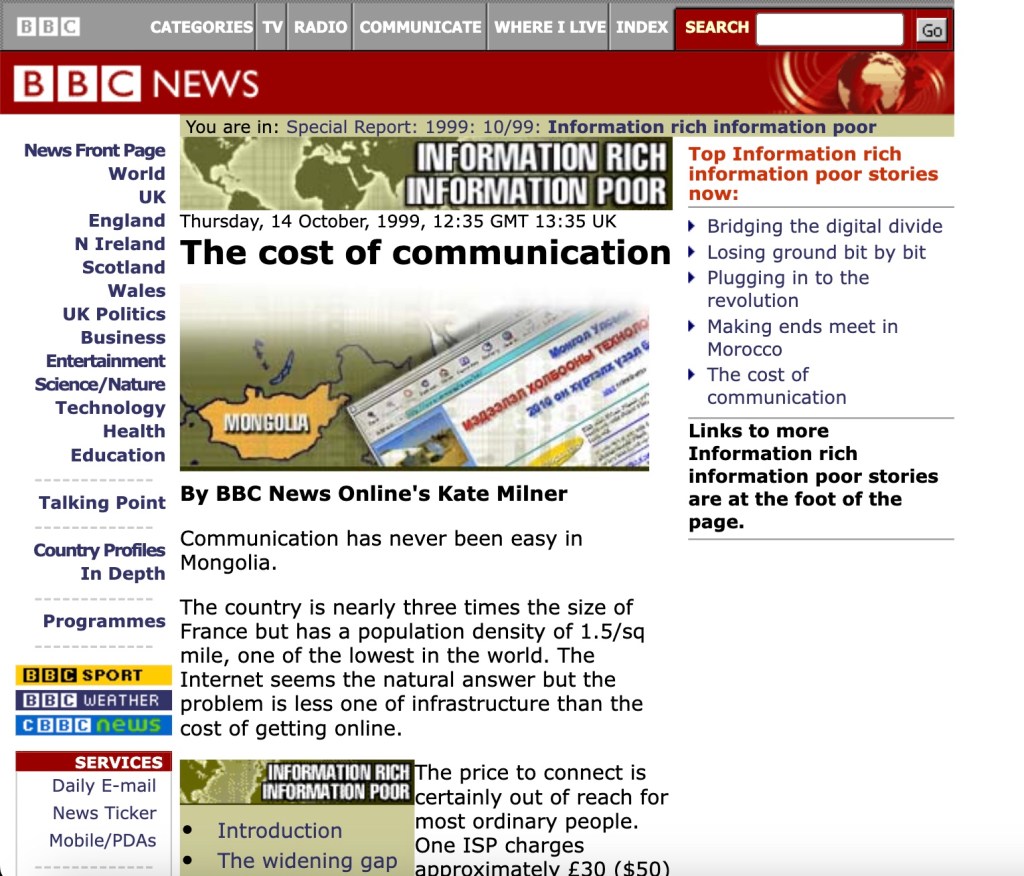
“Information Rich Information Poor: The cost of communication”, BBC News Online, Thursday, 14 October 1999.
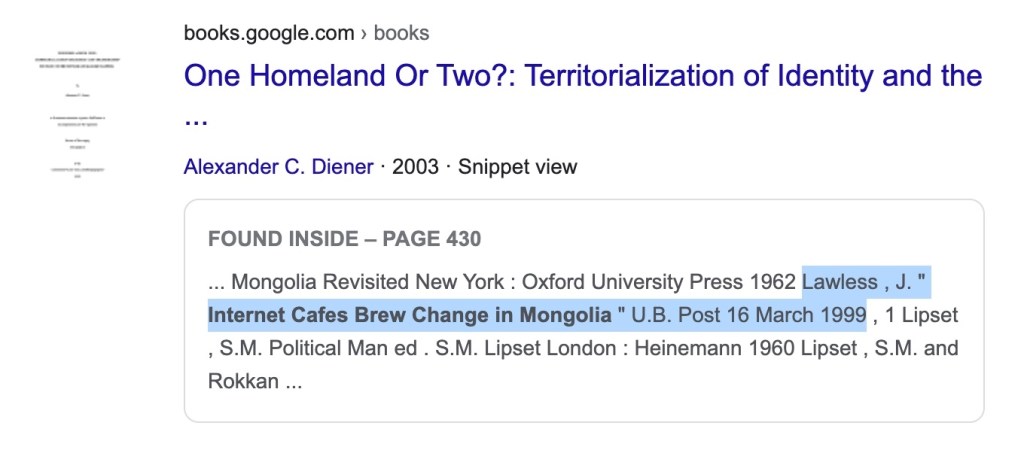
“Internet Cafes Brew Change in Mongolia”, UB Post 16 March 1999 by Jill Lawless, cited in One Homeland or Two?: Territorialization of Identity and the Migration Decision of the Mongolian-Kazakh Diaspora by Alexander C. Diener, 2003.
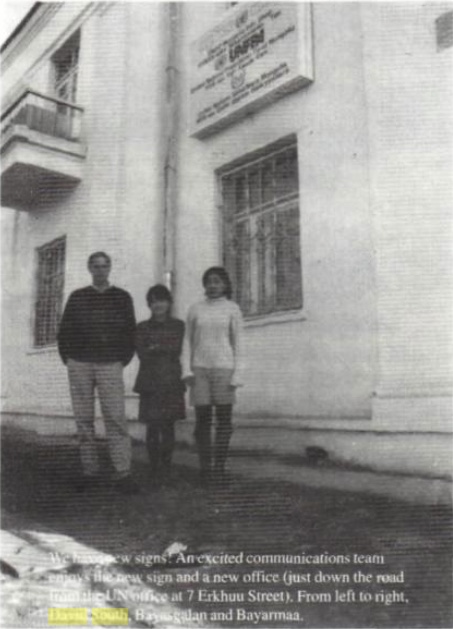
United Nations Cyber Center Ulaanbaatar, Mongolia: UNDP Mongolia established the first public internet cafe in its former headquarters as part of the UNDP Mongolia Communications Office hub in the late 1990s.
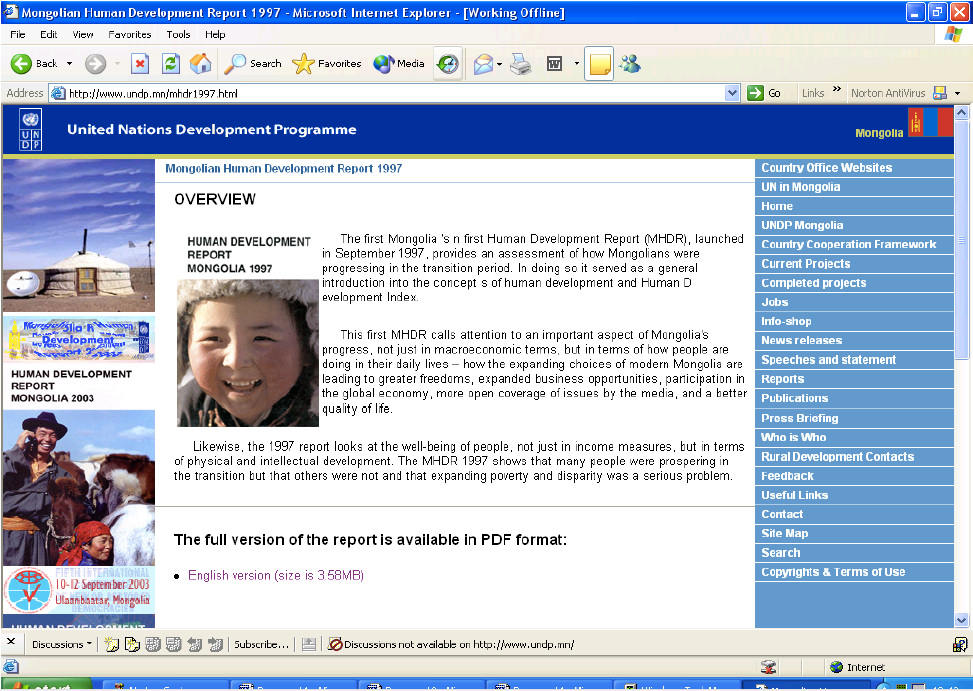
In 2000, the Kiev-based UN Ukraine team had to improve the design and capability of the mission website to handle new content and online services. There was a strong demand for information on country conditions and how to support the UN’s work (for example, on HIV/AIDS). It was a dangerous time to be involved in any online communications and the media and online communicators were routinely threatened with violence and even death.Whilst with a UK-based international development consultancy, I worked on the drafting and online launch in 2000 of the World Bank’s Task Force on Higher Education and Society report, Higher Education in Developing Countries: Peril and Promise. At the time, it was still rare to see reports made user friendly for the world’s web audience. As a survey in 2014 discovered, a shocking third of the Bank’s publications are never downloaded, 40 per cent were downloaded just 100 times, and only 13 per cent were downloaded more than 250 times in their lifetime (The Washington Post).As the Millennium Development Goals (MDGs) were being communicated, the link between the powerful new digital and mobile/information technologies and development goals became explicit in information materials. The cleaner and more modern design introduced with Mongolia’s first human development report in 1997, continued in future publications and online, as can be seen in this screen grab from 2003 and that year’s human development report. The first use of infographics was also introduced in a report on the MDGs for UNDP Mongolia in 2005. Importantly, a country that had been isolated from the non-Communist world for decades, was now routinely using the Internet to tell its stories and post development data.
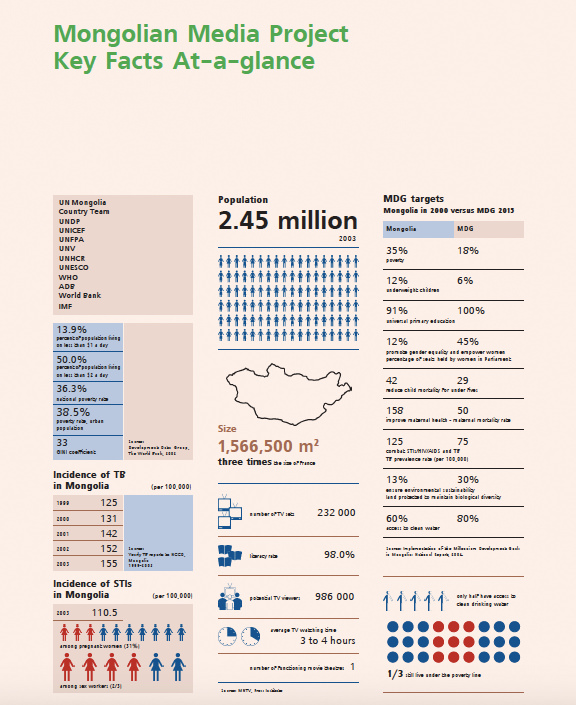
Human Development Infographics: Infographics have proven a useful visual aid for communicating human development concepts. This example was created for a UNDP Mongolia report during missions undertaken in 2005.
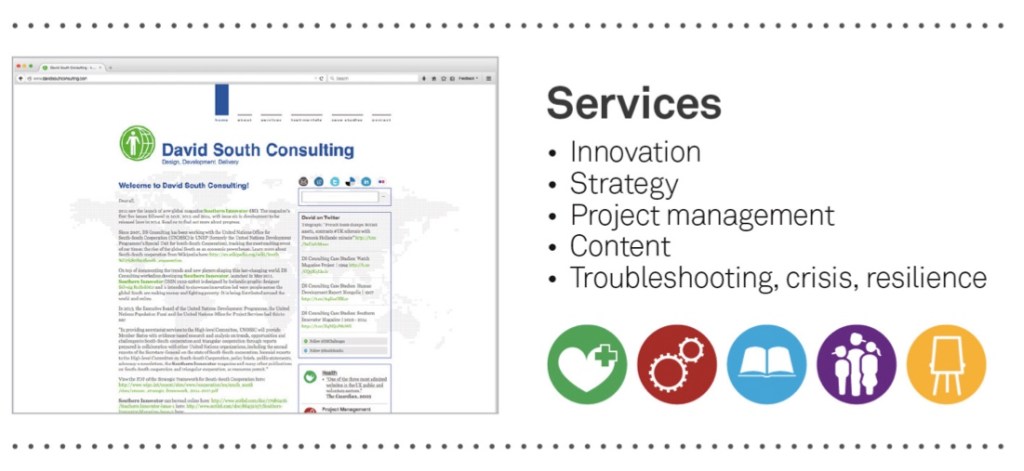
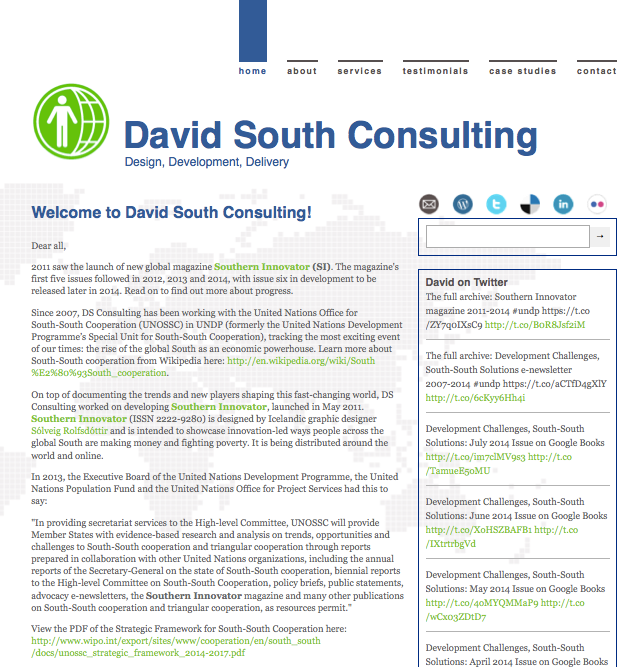
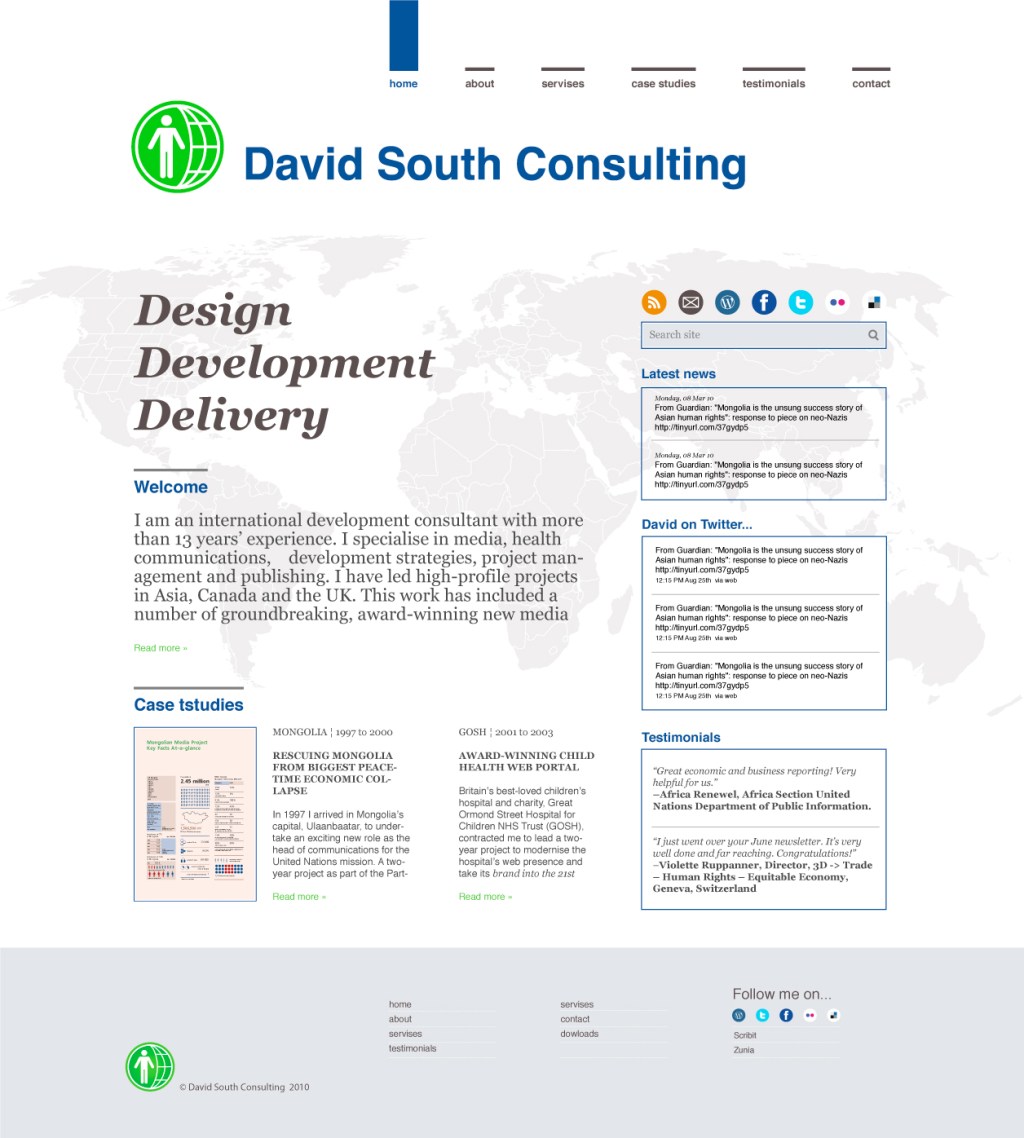
Five years prior to the MDGs deadline in 2015, the David South Consulting website went live (2010). Featuring a new branding and design, it signaled a new design phase more comfortable with developments in social media and online and mobile content sharing. Designed by Solveig Rolfsdottir, one of Iceland’s top graphic designers and illustrators, the website’s design was intentially made compatible with the new global magazine, Southern Innovator (also designed by Solveig Rolfsdottir).The online story archive for Southern Innovator was launched by the United Nations Office for South-South Cooperation (UNOSSC) in 2011. Organized by theme, the stories were cited in blogs, books and reports around the world.
The new template for the United Nations e-newsletter Development Challenges, South-South Solutions was launched in 2011 and designed by Solveig Rolfsdottir. It included a QR code for mobile and smartphone users to connect to the Southern Innovator website.
In 2016 the mobile-friendly version of the David South Consulting website was launched.
Expertise: Project evaluation, strategy, project management, project delivery, UN system, MDGs, research papers, media strategies and digital media strategies.
Locations: Ulaanbaatar, Mongolia, Kiev, Ukraine, Pretoria, South Africa, Ashgabat, Turkmenistan 2000 to 2006
From 1999, I worked as a consultant for United Nations (UN) missions in Africa, Asia, Central Asia and Eastern Europe, for USAID Mongolia and for a UK-based international development consultancy.
About
Was the United Nations being effective and reflecting the potential for change in the mobile and information technology age? What needed to change? Who were the policy innovators?
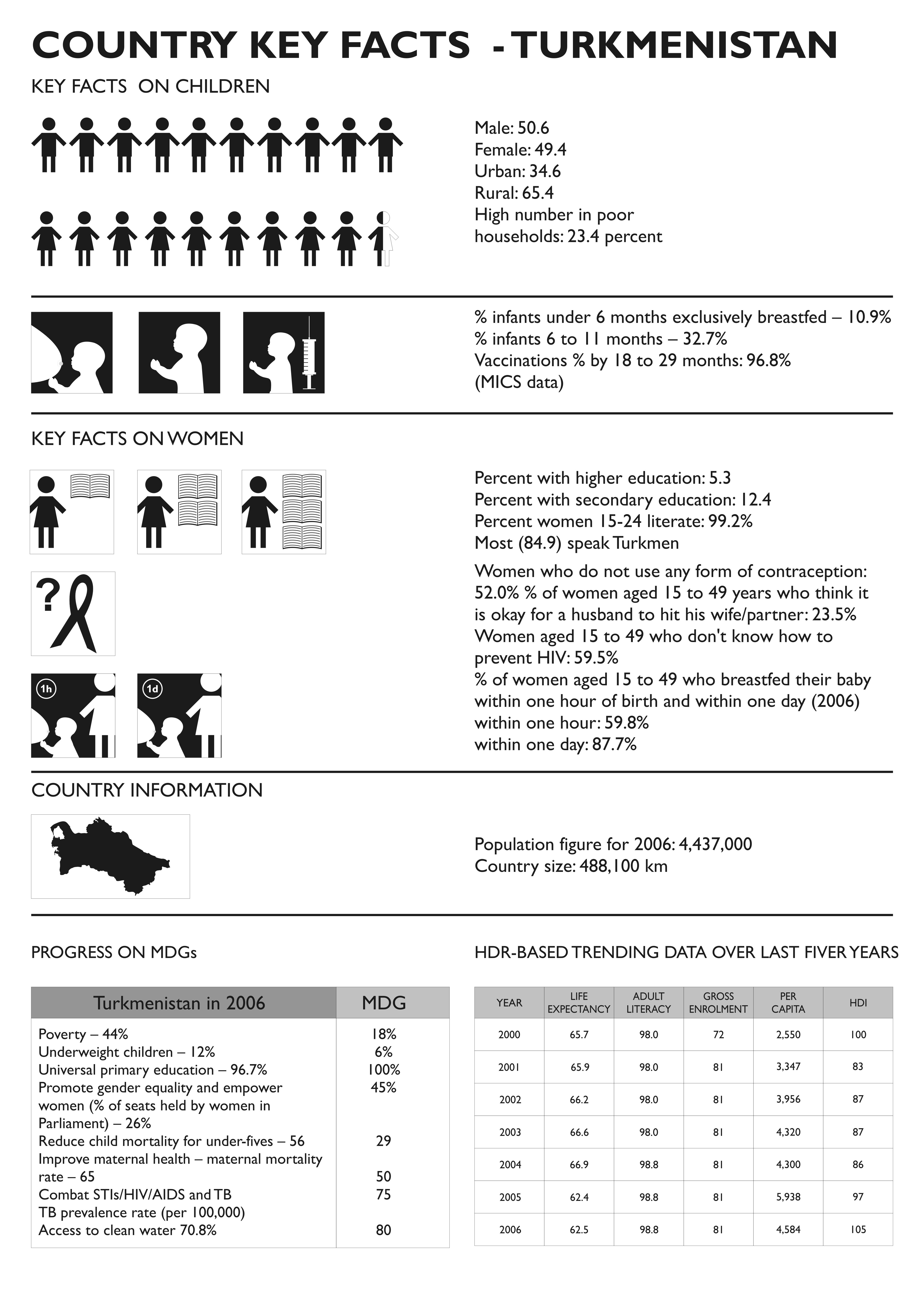
This work included overseeing various digital media projects, including the strategic re-development of the UN Ukraine web portal, aiding in the rolling out of the media campaign for the Millennium Development Goals (MDGs) in Mongolia, including the first use of infographics in the Mongolia UN mission, advising on strategies for youth engagement in development goals in South Africa, and support to the UN mission in Turkmenistan as it finalised its United Nations Development Assistance Framework (UNDAF) with the government and also work with UNICEF there. What I learned during this period proved crucial to the insights and thinking reflected in two highly influential United Nations publications, e-newsletter Development Challenges, South-South Solutions, and Southern Innovator magazine (developed in 2010).
This period was particularly advantageous because I had a front-row seat to the unfolding digital and mobile information technology revolution sweeping across the emerging markets and the global South. I also had insight into what worked and didn’t in international development as well as the UN system. I also learned a great deal about development challenges first-hand in highly varied countries, how the Millennium Development Goals (MDGs) were actually being rolled out, and met amazing people who were challenging existing precepts on how to do development. All of this work proved very useful later on.
I have either travelled to, or worked and lived, in many countries, enhancing my global perspective and affording me a valuable trove of knowledge that has in turn informed my work in international development. I have always paid attention to the level of development in the country, how it has organized itself, the quality of its design, and how it interacts with other countries for trade and relations. The countries visited to date include: Antigua and Barbuda, Australia, Azerbaijan, Belgium, Canada, China, Cuba, Denmark, Domenica, Finland, France, Germany, Greece, Guadalupe, Haiti, Hong Kong, Iceland, Ireland, Israel, Italy, Japan, Kenya, Luxembourg, Malaysia, Mexico, Monaco, Mongolia, Montseratt, Morocco, the Netherlands, Norway, Philippines, Portugal, Russia, Singapore, South Africa, South Korea, Spain, Sweden, Switzerland, Thailand, Tunisia, Turkey, Turkmenistan, Ukraine, the United Kingdom, the United States of America, Vatican City. A fascinating mix of countries – some holders of top place on the UN’s Human Development Index – and others where human development is at its worst. Seeing with your own eyes what works and what does not is highly illuminating, while knowing first-hand how human development can be improved is critical for giving informed advice.
Timeline
1999/2000: USAID Mongolia (design and publicity strategy for business development brochure, US Mongol (Mongolia) Construct and US tour, work with Riverpath Associates in the UK on communications strategies and the drafting of papers for the American Foundation for AIDS Research, the Global Fund to Fight AIDS, Tuberculosis and Malaria, UNCTAD, Harvard Institute for International Development, and the preparation of the report and launch strategy for the World Bank’s Task Force on Higher Education.
2000: UN Ukraine: strategic re-development of the UN Ukraine web portal and incorporation of the Millennium Development Goals (MDGs).
2004: UN Mongolia (media campaign for MDGs) and UN South Africa (evaluation of youth NGO associated with the University of Pretoria and its projects and providing a strategic marketing plan).
2005: UN Mongolia (media campaign for MDGs) and UN Turkmenistan (finalising its United Nations Development Assistance Framework – UNDAF).
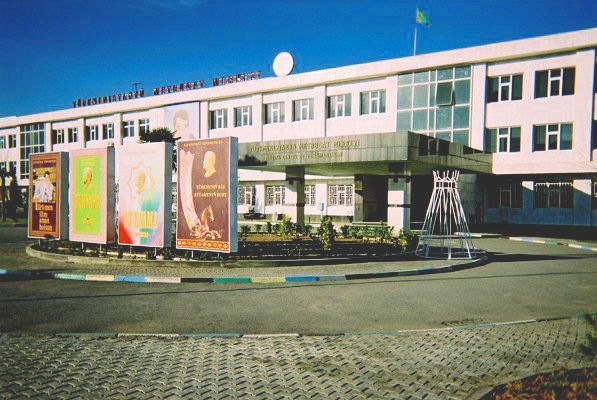
Rukhnama publishers in Turkmenistan’s capital, Ashgabat (2005). Photo: David SouthAn infographic commissioned for UN Turkmenistan MDGs report (2006).
“I highly recommend Mr. David South as a communications consultant who gets results.” Brian DaRin, Representative/Director, USAID Investment & Business Development Project, Global Technology Network/ International Executive Service Corps-Mongolia, 23 September 1999
Impact
Micro
working as a communications consultant for UN missions – Ukraine, South Africa, Mongolia, Turkmenistan
redeveloping mission websites, preparing content, reports, advising on communications strategy
working with local designers on new ways to present development data through inforgraphics (2005/2006)
Macro
in the course of travel and work, seeing the unfolding impact of the global communications revolution, in particular the rapid roll-out and take-up of mobile technologies, and the urgent need for the UN system to take this on board. Also witnessed firsthand the grassroots solutions revolution brought about by information and mobile technologies and the Internet, which needed to be fully embraced by the UN
Resources
A Marketing and e-Marketing Strategy – the New SASVO, Prepared from December 2004 to February 2005 for the Southern African Student Volunteers (University of Pretoria).















 David South Consulting
You must be logged in to post a comment.