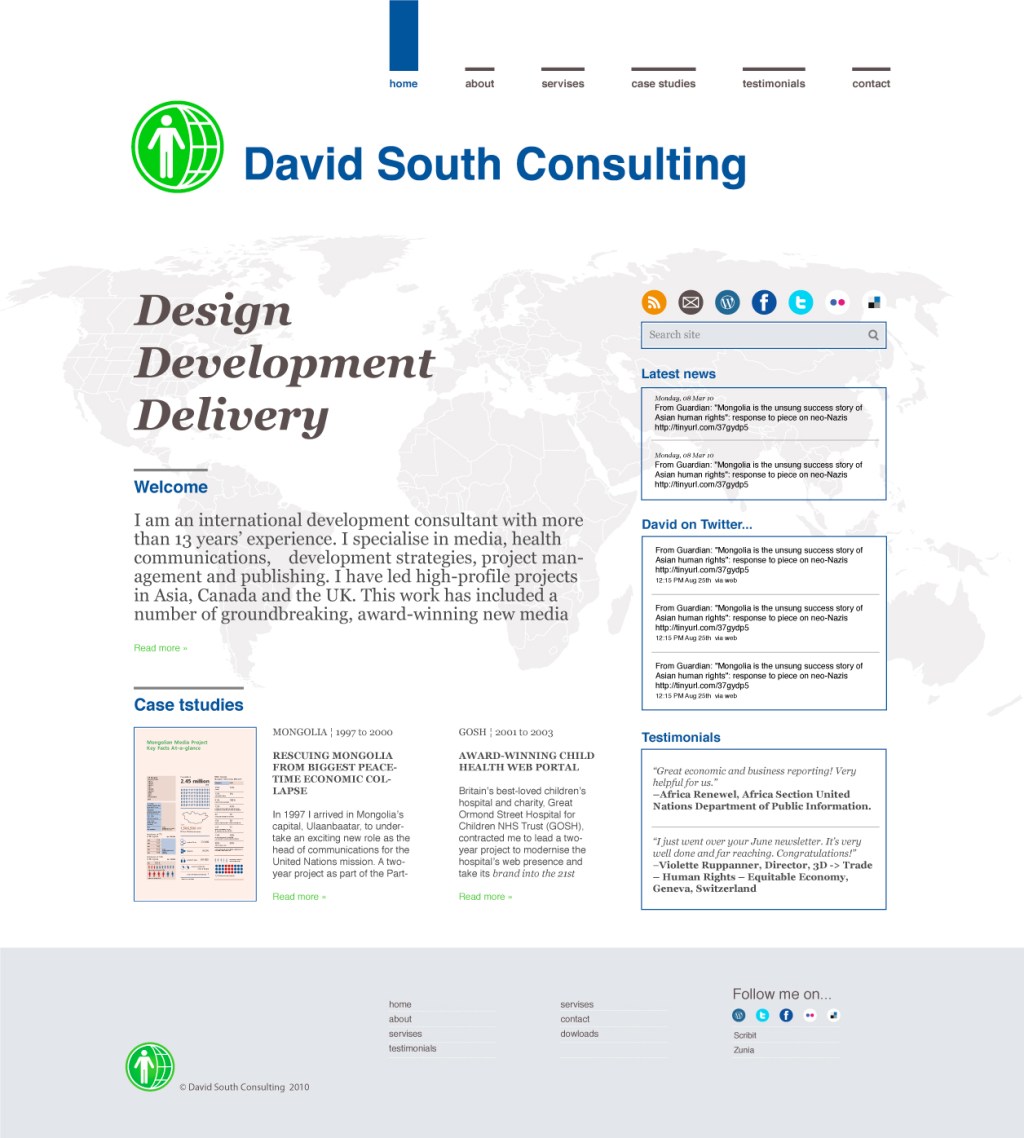
With summer break now behind us, and the autumn gradually unfolding (the pace seems slower with the economic uncertainties all around), my new public website is being assembled. Icelandic graphic designer Solveig Rolfsdottir is working on the project and I hope this is the beginning of many more collaborations.
David South Consulting Prototype Website Design 2010.David South Consulting branding and Squarespace website by Graphic Designer and Illustrator Solveig Rolfsdottir.In 2010, David South Consulting was relaunched with a new logo and branding for the 21st century. It represented a new phase, as work became global and very high-profile and influential. The foundations have been laid for future growth and expansion.
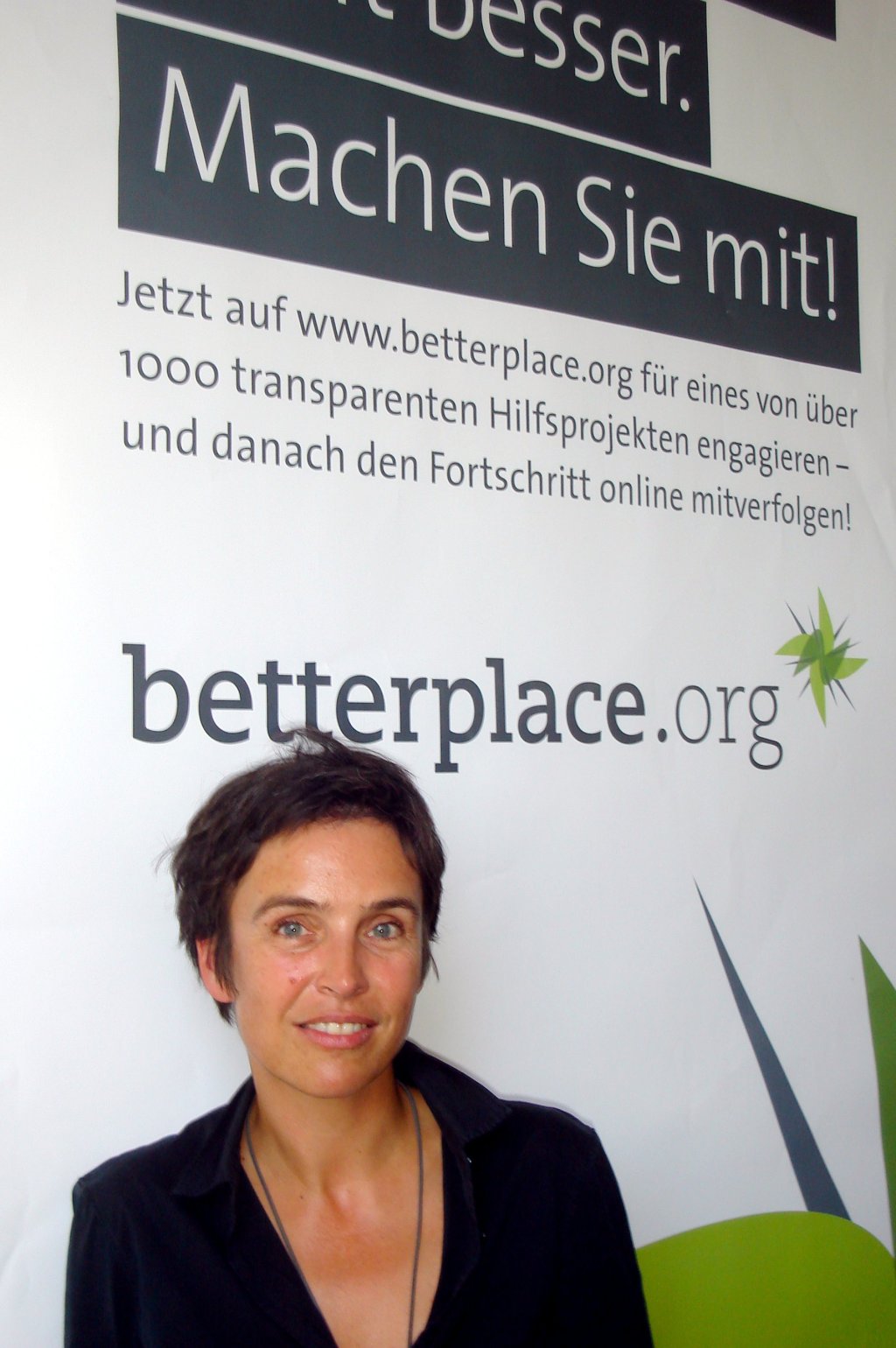
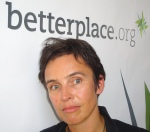
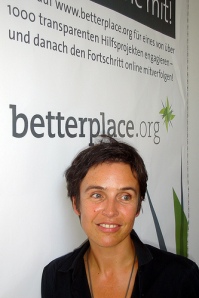
United Nations e-newsletter Development Challenges, South-South Solutions visited the Berlin, Germany headquarters of start-up betterplace.org in 2009. It was the dawn of the Berlin digital tech boom.
Good ideas are plentiful, but how to fund life-improving projects has always been a thorny issue. Judging how effective a project is can also be fraught with debate and contention. Over the past two decades, the number of NGOs in the global South has exploded (http://lboro.ac.uk/gawc/rb/rb144.html). The best of them offer the local knowledge and understanding required to make development gains. But unlike NGOs in the North, many lack the powerful fundraising capabilities of the big global NGO brands.
An exciting new initiative based in Germany, but already featuring hundreds of projects from across the South, is using the power of the internet to directly connect projects and donors.
Joana Breidenbach, an anthropologist, author and co-founder of betterplace.org (www.betterplace.org), says NGOs are emerging in India and other countries of the South to challenge the big Northern global NGOs.
“Why wouldn’t you want to donate to these Southern NGOs? There are more entrepreneurs and local approaches which are better.
“Betterplace gives local institutions a platform to express themselves.”
Started in 2007, betterplace is an online marketplace for projects to raise funds. It is free, and it passes on 100 percent of the money raised on the platform to the projects. The foundation that runs betterplace supports its overheads by offering additional services that people can pay for if they wish. It works in a way similar to the online marketplace eBay (http://www.ebay.com): NGOs post their project, set up an account, blog about their achievements and successes and needs, and receive donations direct to their bank account when they come in.
Breidenbach points out up to a third of any NGO’s income is spent on fundraising. In Germany, that represents more than Euro 1.3 billion out of over Euro 4 billion in private donations – money that could have gone directly into the hands of the people needing help.
With betterplace, donators can surf through the projects and pick the one they want. Already, more than 100 large corporations trawl through betterplace seeking projects to fund to meet their corporate social responsibility (CSR) obligations (http://en.wikipedia.org/wiki/Corporate_social_responsibility).
“I find it very exciting to introduce a good and innovative NGO to a corporate sponsor,” Breidenbach said.
Breidenbach says betterplace’s ultimate goal is “to transfer the donation market online.” It hopes to change the rules in donation and charity in the same way blogs and the search engine Google changed the way people publish and search for information.
“This provides better transparency, feedback,” Breidenbach said. “Now (with betterplace) donors and organizations can cut out the middlemen. A lot of established organizations do not like this too much.”
Over the past decade, new concepts like social entrepreneurs and venture philanthropy have emerged to straddle the delicate line between social good and private profit. Betterplace joins this wave of new thinking about how to do development better.
In the 20 months since betterplace went online more than 1,500 projects have joined. They are now averaging between 20 to 35 new projects joining every week.
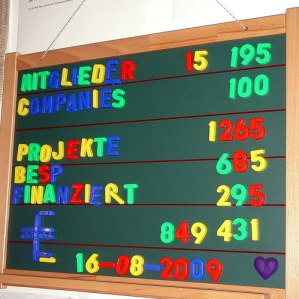
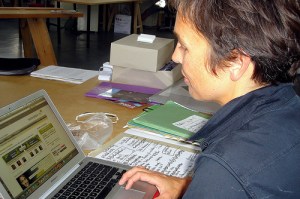
Betterplace is a simple open-plan office on the top floor of a Berlin warehouse beside the city’s Spree river. The small team (http://www.betterplace.org/about_us/team) work on laptop computers. A blackboard on the wall details in bright colours a running tally of the projects that have joined.
Breidenbach gives the example of a mother in Cameroon who is using betterplace to raise the school fees for her children. The mother blogs about the children’s progress and has been able to raise the fees for a year and a half.
“People are now directly connected to somebody in need.”
“Right now the functionality (of the website) does not allow people getting in contact publicly and we want to enable this knowledge transfer in 2010. If you want to build a well in Cameroon then you could search for the best technology and to contact other people who are doing similar projects to learn from them.”
Success on betterplace is by no means certain. “The experience of the project managers has been as varied as development work is – some have done really well, raising thousands of Euros over the website – others have received no funding at all,” Breidenbach said.
But betterplace provides tools to give the projects the best chance possible. “Projects can present their work, breaking it down in a transparent way (in order to let supporters know exactly what is needed for their realization), there are sound payment processes in place and project managers can give feedback through their project blog, supporters can download project widgets etc., all supplied free of charge.”
Breidenbach has other tips for making betterplace work for a project: post details in English when creating a profile, break down the project into much smaller, low-cost goals (few people are willing to make large donations) – this also has the advantage of receiving payments straight away when they are small. Tell a good story about the project, and try and use actual testimonials from the people affected. Blog and update regularly with photos and videos to keep people engaged. Also avoid copying and pasting text from a previous grant application.
“We have the numbers to show that projects which give regular feedback and have a lively web of trust receive more donations than others, which are not very active.”
“Don’t think you can just go on to betterplace and the money starts rolling in,” said Breidenbach.
The betterplace platform places all projects seeking funds on the same level, allowing individuals and small NGOs to compete equally with the big, branded global NGOs with their websites and sophisticated fundraising operations.
“All the big NGOs have their own websites,” continues Breidenbach. “But it is the small initiatives that often don’t have a website or know how to use Pay Pal etc. (http://www.paypal.com). We are very useful for smaller NGOs.”
“Another big advantage is that we are a real marketplace: whatever your interests (as a potential donor), you will find a project tackling this issue on the platform.”
But what about fraud and people seeing betterplace as a coin-making machine rather than a way to make the world a better place?
“We have a feeling for dodgy projects. We check the IP address. We have a number of trust mechanisms in place (and are currently working on enlarging them). Thus projects on betterplace can create trust through their good name … But we also include something which I would call network-trust: In our web of trust different kinds of stakeholders of an organization or a project have a voice and can publicly state what they think of it. Thus beneficiaries of a project can say if the project has done them good or has been counterproductive, people who have visited the project on the ground can describe what they have seen etc. … we hope to give a much denser and more varied impression of social work and give donors (a terribly badly informed group of people), the basis for a much more informed choice.
“If a contributor to a project is dissatisfied with the project’s outcome … she can either directly contact the project manager via betterplace, or openly voice her concern on the project page for other potential donors to see her views.”
For now, betterplace is still only useful to people who have access to the internet and have a bank account (necessary for the money transfers). But in the future betterplace hopes to have mobile phone interactivity and more features to expand who they can reach.
“We are also re-working our site to make it more intuitive and easier to use for people without computer skills,” Breidenbach said. “In the pipeline is also a knowledge backbone, enabling people to access knowhow about development and social innovation issues and exchange views and experiences. This will be very useful for projects in the South as so many people are working on the same issues without knowing about it. They could learn a lot from each other, without the “help” of the north.”
With internet broadband in Africa set to take off, according to the report Africa Connect: Undersea Cables to Drive an African Broadband Boom (http://www.pyr.com/downloads.htm?id=5&sc=PR090309_INSAME1.6), even more people will soon be able to make the most of initiatives like betterplace.
1) CSR Wire: This is a news service with all the latest news, reports and events and where companies announce their CSR (corporate social responsibility) programmes and how much they are contributing. A great resource for any NGO looking to make a targeted appeal for funds. Website: http://www.csrwire.com/
2) Alibaba: Alibaba.com is an online marketplace started in China but is now global. It allows businesses from all over the world to trade with each other, make deals and find funding. Website:http://www.alibaba.com/
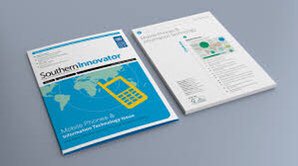
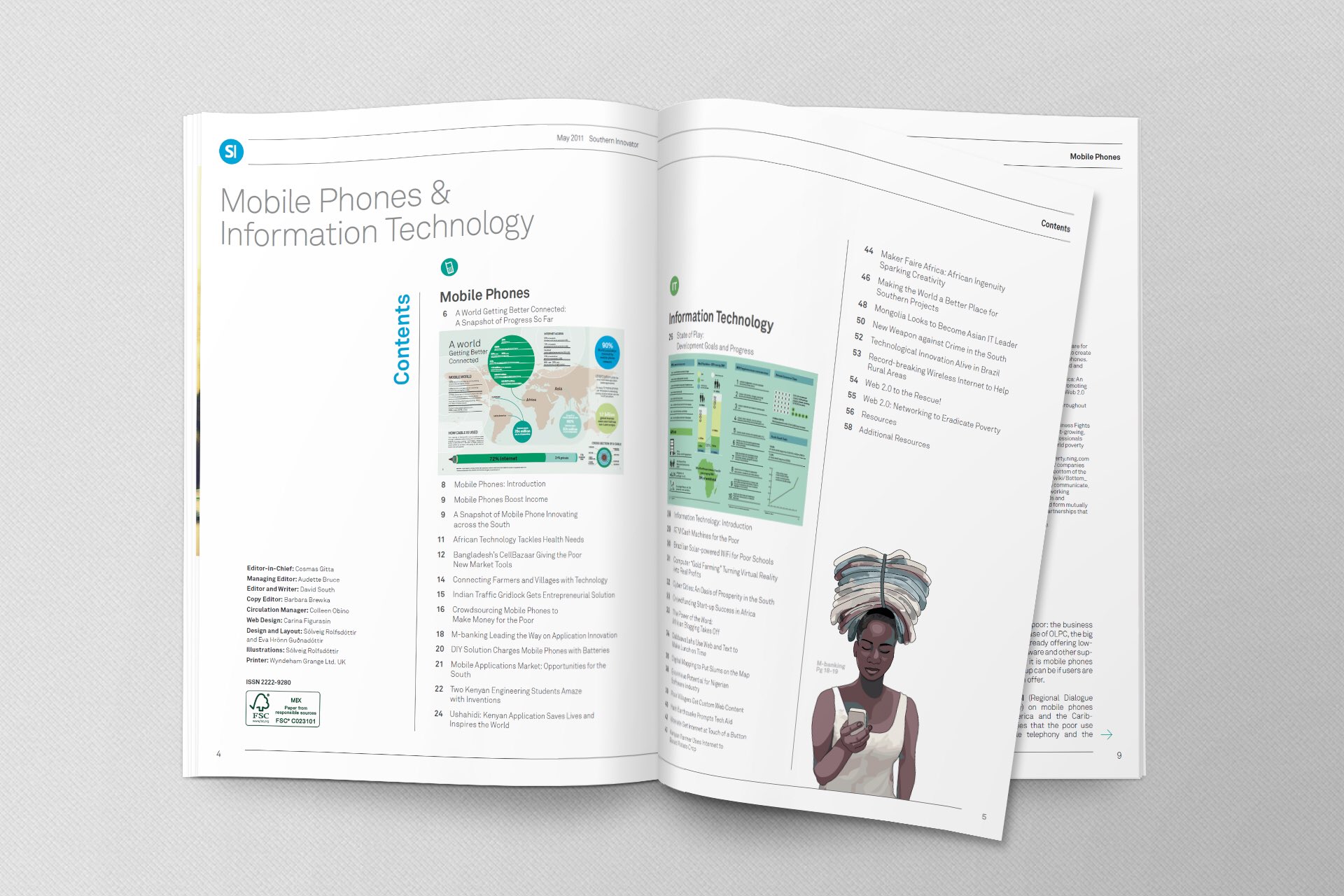
Development Challenges, South-South Solutions was launched as an e-newsletter in 2006 by UNDP’s South-South Cooperation Unit (now the United Nations Office for South-South Cooperation) based in New York, USA. It led on profiling the rise of the global South as an economic powerhouse and was one of the first regular publications to champion the global South’s innovators, entrepreneurs, and pioneers. It tracked the key trends that are now so profoundly reshaping how development is seen and done. This includes the rapid take-up of mobile phones and information technology in the global South (as profiled in the first issue of magazine Southern Innovator), the move to becoming a majority urban world, a growing global innovator culture, and the plethora of solutions being developed in the global South to tackle its problems and improve living conditions and boost human development. The success of the e-newsletter led to the launch of the magazine Southern Innovator.
The rise of social networking websites (http://en.wikipedia.org/wiki/List_of_social_networking_websites) during the past few years has swept across the internet. The popular Facebook (www.facebook.com) site alone has over 350 million users worldwide. In Africa, there are more than 67 million people with access to the internet – just over 6 percent of the population (http://www.internetworldstats.com/stats1.htm). And this phenomenon has even begun to penetrate and influence life in poor places with weak internet infrastructure. A farmer in Kenya, Zack Matere, has boosted his potato crop by turning to Facebook for help.
On his farm in Seregeya near Eldoret, Kenya, Matere used the internet to find a cure for his ailing potato crop.
“I cycled 10 kilometres to the local cyber café, Googled (www.google.com) ‘potato disease,’ he told the BBC, “and discovered that ants were eating the potato stems.
“I checked again and found that one of the solutions was to sprinkle wood ash on the crop.”
Matere also used the internet to find a buyer for his rescued crop, and has been able to triple the price he gets for tree seedlings he sells.
Zack believes he is a bit of pioneer: “I think I am the only farmer in the area who uses the internet.”
He uses his mobile phone to access the internet and it costs him about US 0.66cents a day to do it.
This is a lot of money for small-scale farmers so Zack has a plan to tackle the cost. He will share the information he uncovers on the internet with other farmers in the community by posting it on local community notice boards.
He has noticed some important realities about how people he knows interact with the mobile web. He has found most people do much more with the Net than surfing the mobile web alone at home.
“The internet is quite an individual pursuit. But a notice board is more of a group thing.
“So if I post an item on a notice board on potato disease, for example, the community can read it, talk together and come to a decision.”
One example of the kind of intelligence Matere is able to glean from the internet is reports of cartels deceiving farmers by buying potatoes in over-large 130 kg bags instead of 110 kg bags. Matere takes this information and translates it into Swahili and posts it on community notice boards.
Matere also has to fend off other people looking to use his community’s water supply, which he has done by photographing interlopers with his mobile phone and then posting the photographs on Facebook.
“When they came before, I took photos of what they were doing, posted them on my Facebook page and was able to get assistance,” he said.
“I got in touch with Forest Action Network (http://www.fankenya.org/) and they came back to me quickly saying they would help me protect the catchment area.”
He has also discovered there are more profitable ways to make money for farmers.
“There is a lot of money in tree seedlings or bee hives. So if we can get these young people to use the land in an environmentally (friendly) way, they can get even more money than through farming.”
“I have 400 Facebook friends and I think some of them can buy the honey.”
Matere is philosophical about the future: “I am now seeing the practicality of the internet here in rural Kenya. The problem is I am the only one. That is why the notice board is important. All we need is a bit of relevant information to help us.”
“Once it is made simpler and is more in the local language with more local content, people are going to access the internet here,” he predicts.
Development Challenges, South-South Solutions was launched as an e-newsletter in 2006 by UNDP’s South-South Cooperation Unit (now the United Nations Office for South-South Cooperation) based in New York, USA. It led on profiling the rise of the global South as an economic powerhouse and was one of the first regular publications to champion the global South’s innovators, entrepreneurs, and pioneers. It tracked the key trends that are now so profoundly reshaping how development is seen and done. This includes the rapid take-up of mobile phones and information technology in the global South (as profiled in the first issue of magazine Southern Innovator), the move to becoming a majority urban world, a growing global innovator culture, and the plethora of solutions being developed in the global South to tackle its problems and improve living conditions and boost human development. The success of the e-newsletter led to the launch of the magazine Southern Innovator.
Agriculture around the world produces a great deal of waste as a by-product. It can be animal faeces, or the discarded plant husks thrown away when rice, grains or maize are harvested. When this waste meets the urgent need for electricity, something special can happen.
The number of people still without electricity in the South is vast. The failure of major electricity generating power stations to reach so many people has spurred entrepreneurs to come to the rescue. Power is critical to so many things: small businesses need it, anyone wanting access to computers and the Internet needs it, and modern appliances like refrigerators run on it. During the past 25 years, electricity supplies have been extended to 1.3 billion people living in developing countries. Yet despite these advances, roughly 1.6 billion people, a quarter of the global population, still have no access to electricity and some 2.4 billion people rely on traditional biomass fuels, including wood, agricultural residues and dung, for cooking and heating. More than 99 percent of people without electricity live in developing regions, and four out of five live in rural areas of South Asia and sub-Saharan Africa (International Energy Agency, IEA).
Power outages in Africa are a serious and frequent problem and a significant force holding back development. With global oil prices on the rise, turning to diesel generators is an expensive option.
According to the IEA, the lack of electricity leaves poor countries “trapped in a vicious circle of poverty, social instability and underdevelopment.”
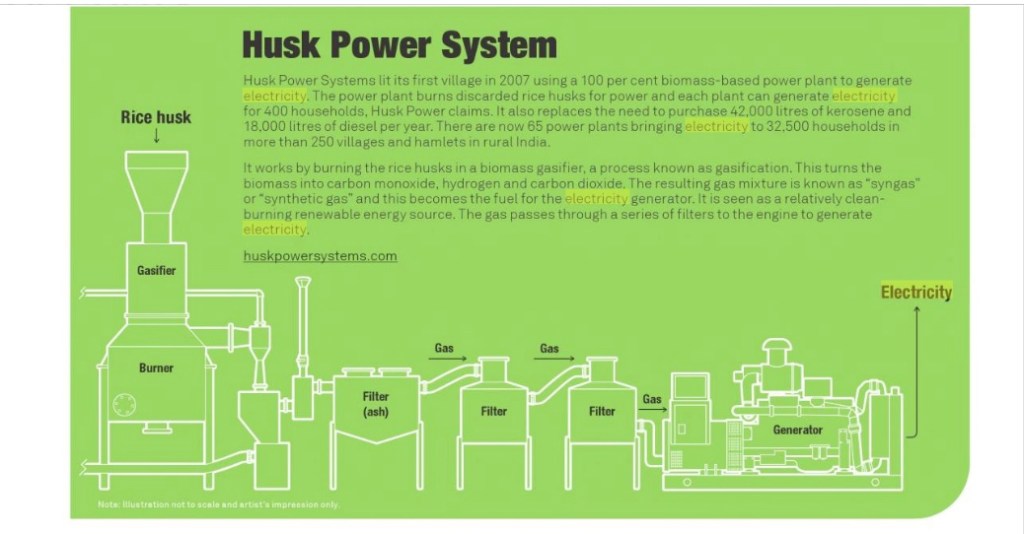
In India, 80,000 of the country’s half a million villages lack electricity. Two students, Charles Ransler and Manoj Sinha, have started a business providing electricity to some of these villages by turning rice husks – a by-product of rice milling – into gas that then powers an electricity generator.
Already, two of their rice-burning generators are providing electricity to 10,000 rural Indians. The hope is to rapidly expand the business to hundreds of small village power plants.
The business, Husk Power Systems, was started while the two were at the University of Virginia’s Darden School of Business.
While the generator burns the rice husks to make a gas to produce electricity, it also leaves behind a waste product of ash that is sold as an ingredient in cement.
This technology can provide off-grid power to rural Indian villages of 200 to 500 households. Using the husk-powered mini power plant, the team plans to offset close to 200 tons of carbon emissions per village, per year in India.
The idea for the rice husk generators was originally conceived by Sinha and Gyanesh Pandey, the third partner in Husk Power, who left an engineering career in Los Angeles to return to India and oversee the rice husk project. Sinha and Pandey went to college together in India and both come from rural Indian villages that struggle with a lack of electricity.
“We grew up in those areas,” said Sinha. “Our relatives still do not have electricity. We wanted to give back to those areas.” Originally they envisioned refining the generator concept and raising enough money to donate rice-husk generators for two or three villages near where they grew up, said Sinha.
But instead, after some research, they realised it could be a financially viable business expandable to hundreds of villages. There are 480 million Indians with no power and 350 million of them live in rural villages, concentrated in eastern India’s “Rice Belt,” where the villagers are “rice rich and power poor,” said Ransler.
They think that each rice husk generator is to break even in about two and a half years.
And they like to think this is the Starbucks of off-grid electricity generation, potentially as successful as the globe-spanning US coffee shop chain. “You can put one of these in 125,000 locations, hire local people, and turn a raw material into money – just substitute rice husks for coffee beans,” said Ransler.
Another maker of biomass mini power plants in India is Decentralised Energy Systems India (DESI power). It is a New Delhi-based non-profit company specialising in building a decentralised power network for rural India. It was formed by Development Alternatives, India’s largest sustainable development NGO. It is able to provide a megawatt of electricity to a village for the cost of 44 million rupees, rather than 57 million rupees from the central grid.
Development Challenges, South-South Solutions was launched as an e-newsletter in 2006 by UNDP’s South-South Cooperation Unit (now the United Nations Office for South-South Cooperation) based in New York, USA. It led on profiling the rise of the global South as an economic powerhouse and was one of the first regular publications to champion the global South’s innovators, entrepreneurs, and pioneers. It tracked the key trends that are now so profoundly reshaping how development is seen and done. This includes the rapid take-up of mobile phones and information technology in the global South (as profiled in the first issue of magazine Southern Innovator), the move to becoming a majority urban world, a growing global innovator culture, and the plethora of solutions being developed in the global South to tackle its problems and improve living conditions and boost human development. The success of the e-newsletter led to the launch of the magazine Southern Innovator.










 David South Consulting
You must be logged in to post a comment.