Category: Southern Innovator magazine

  • The e-Reader Battle Reaches India

    The e-Reader Battle Reaches India

    By David SouthDevelopment Challenges, South-South Solutions

    SOUTH-SOUTH CASE STUDY

    The rise and rise of e-books and electronic publishing has prompted the development of e-readers: handy, portable devices that try to mimic the reading experience of paper books while offering the storage and navigation capability of computers.

    A good example is the very popular e-reader from Amazon, the Kindle (http://en.wikipedia.org/wiki/Amazon_Kindle). The latest version boasts the ability to store up to 3,500 books.

    The utility of these e-readers for people in the global South is clear: they can enable people to bypass the lack of local library facilities to store vast, personal archives of books. This is a powerful educational tool: imagine a village doctor with easy access to thousands of medical texts and papers, or a child preparing for university exams no longer having to worry they can find study texts. It also is a cost-effective way to publish in many local languages and break the stranglehold English-language publishing has had on delivering e-books.

    Over the past decade, India has developed a reputation for its fast-growing information technology industries, making software and providing IT-related services.

    Now India has produced a rival to the Kindle. The Wink (https://www.thewinkstore.com/ereader/index) is designed to accommodate 15 common Indian languages. (The 2001 census in India found 29 languages with at least a million native speakers). It comes in an eye-catching design and is complemented by a sleek website stuffed with e-books ready for download. The entire package is very well-thought-out and marketed.

    The Wink was developed and built by EC Media International and retails, according to its website, for Rs 8,999 (US $200). It looks similar to the Kindle, but where the Kindle is grey the Wink is white. This Indian rival has some impressive capabilities: it can not only support 15 Indian languages, it can also access an online library of more than 200,000 book titles. They range from arts and entertainment to biography, newspapers and science topics. There is also a large archive of free books for download.

    But it has come in for criticism for its price, which some say is far too high for the Indian market.

    The Tech 2 website also criticized the Wink for its “frustrating performance, which actually detracts from the pleasure of reading.” Overall it found the reader “a decent first attempt, but there are many issues that need to be ironed out.”

    It can be a rocky road to information technology hardware innovation. And maybe this first attempt at a made-in-India e-reader still has a way to go to get it right. There have been a number of high-profile, over-hyped disappointments in the last few years. One was the pledge to make a US $35 tablet computer. The project was launched in 2010 with much fanfare, but by January 2011 the Indian government had dropped manufacturers HCL Technologies for failing to honour its 600 million rupee (US $13 million) contract.

    It joins the disappointing attempt at rivalling the One Laptop Per Child (www.onelaptop.org) computer from MIT (Massachusetts Institute for Technology) with an Indian version for US $10. What was offered instead in 2009 was a device with no screen or keyboard, requiring an additional laptop and paper to access its stored files. It was also made in Taiwan, rather than India.

    What these first steps show is the complexity of hardware development and how challenging it is to get the user experience right for customers while keeping the price affordable.

    But from these tries comes experience, and in time better products will be developed as lessons are learned.

    Published: June 2011

    Resources

    1) How to build your own personal computer: This guide helps to demystify computing hardware and shows how to build a computer at home. Website:http://www.buildeasypc.com/

    2) Hardware design and architecture: An archive of free e-books on all aspects of computer hardware and architecture design. An outstanding resource to get anyone started in computer engineering. Website: http://www.e-booksdirectory.com/listing.php?category=38

    3) Jonathan Ive is the man behind the highly successful and user-friendly modern design that has turned the Apple computer brand into such a global success story. He provides tips on how to design usable computer hardware and shares the secrets of his success. Website:http://www.wired.com/culture/design/news/2003/06/59381

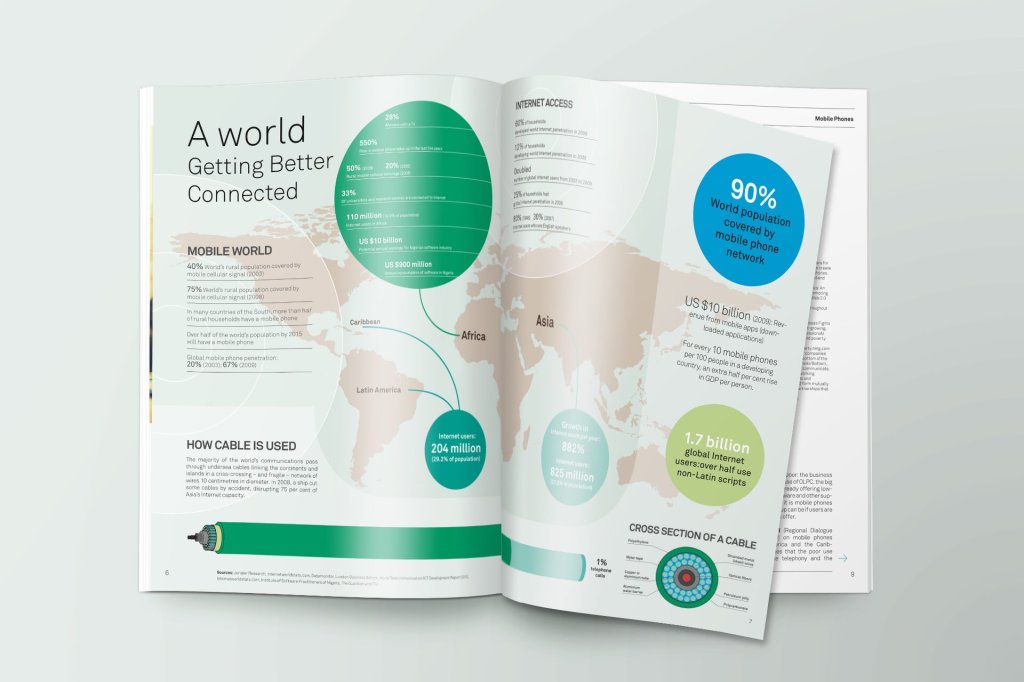
    Development Challenges, South-South Solutions was launched as an e-newsletter in 2006 by UNDP’s South-South Cooperation Unit (now the United Nations Office for South-South Cooperation) based in New York, USA. It led on profiling the rise of the global South as an economic powerhouse and was one of the first regular publications to champion the global South’s innovators, entrepreneurs, and pioneers. It tracked the key trends that are now so profoundly reshaping how development is seen and done. This includes the rapid take-up of mobile phones and information technology in the global South (as profiled in the first issue of magazine Southern Innovator), the move to becoming a majority urban world, a growing global innovator culture, and the plethora of solutions being developed in the global South to tackle its problems and improve living conditions and boost human development. The success of the e-newsletter led to the launch of the magazine Southern Innovator. 

    Creative Commons License

    This work is licensed under a
    Creative Commons Attribution-Noncommercial-No Derivative Works 3.0 License.

    ORCID iD: https://orcid.org/0000-0001-5311-1052.

    © David South Consulting 2023

  • Chinese Building Solution for Rapidly Urbanizing Global South

    Chinese Building Solution for Rapidly Urbanizing Global South

    By David SouthDevelopment Challenges, South-South Solutions

    SOUTH-SOUTH CASE STUDY

    The global South is currently experiencing the biggest surge in urban population ever seen in human history. This transformation from urban to rural is happening in many different ways across the global South. Some countries have highly detailed plans and are building new cities from scratch, while other countries feel overwhelmed by their booming urban populations.

    By 2025, it is estimated the developing world could become home to 37 megacities with more than 10 million residents (http://en.wikipedia.org/wiki/Megacity) (The Guardian). Sixty years ago there were just two megacities: New York and Tokyo. Today, there are between 21 and 23, and the UN is forecasting that by 2025 Asia will have nine new megacities. By 2025, the majority of the world’s megacities will be in the global South.

    But how will these cities be built? How will they use resources well and ensure the rapidly rising new buildings are safe and healthy?

    A Chinese innovator and Internet sensation has developed a way to rapidly build high-density, high-rise structures that are also safe and meet strict earthquake-proofing standards. Building upwards is an efficient way to get more use out of space and to free up land for things like parks.

    Just as the first megacities such as New York began building skyscrapers a century ago, going upwards will be the solution many of the new megacities will choose as they feel the pressing twin demands of rising populations and financial restraints.

    Based in Changsha, China (http://en.wikipedia.org/wiki/Changsha), the BROAD Group
    (http://www.broad.com/) (http://www.broad.com:8089/english/) has become an Internet sensation for posting videos of it rapidly building skyscrapers. It does this to show off its innovative technologies, which have significantly reduced the time it takes to build high-rise buildings.

    The BROAD Group calls itself “an enterprise based on the vision of unique technologies and the philosophy of preserving life.”

    The company is a pioneer in making non-electric air conditioning equipment, energy systems, and sustainable building technology.

    The company has come a long way since it was started in 1988 with just US $3,000. By 1995, it had shed its debts and loans. It sees its mission as confronting the two major crises facing the world today: atmospheric pollution and global warming. The company hopes to evolve into a social enterprise.

    BROAD calls itself a world leader in making central air conditioning powered by natural gas and waste heat (http://en.wikipedia.org/wiki/Broad_Group). The company is currently exporting its systems to more than 60 countries and was an official supplier to the 2010 Shanghai Expo.

    BROAD has recently been expanding its product range and moving into constructing sustainable buildings. In particular it is developing an expertise in rapid construction techniques. This is important in the modern world as cities across the global South experience population growth and the pressing need to house people and create workplaces efficiently. BROAD is proud of the 15-storey hotel in Dongting Lake in Hunan Province it built in just six days, which became a hit on YouTube (http://www.youtube.com/watch?v=sjGhHl-W8Wg). After this achievement, BROAD constructed a 30-storey hotel in 15 days.

    Part of the BROAD Group, Broad Sustainable Building (BSB) claims to make the “World’s first factory-made building.” BROAD says its buildings are sustainable because they efficiently use recycled construction materials, rely on materials free of formaldehyde, lead, radiation and asbestos and avoid “construction sewage” dust or waste.

    BROAD was provoked into making sustainable buildings after the Wenchuan Earthquake in 2008 (http://quake.mit.edu/~changli/wenchuan.html). A year after the earthquake, 300 researchers from BROAD developed an earthquake-resistant building technology.

    The factory-made building works like this: a “main board” is prepared with a floor and ceiling, ventilation, water supply and drainage, electricity and lighting. This is then placed on a truck and taken to the building site. All the workers need to do on site is assemble the building by screwing in the bolts and finishing it with the painting and other decorating. This makes the time spent assembling the building on site, according to BROAD, just 7 per cent of the total construction hours. This means 93 per cent of the building is prefabricated in a factory compared to an industry norm of 40 per cent.

    BROAD’s latest project and biggest challenge is to build Sky City One (http://skycityone.wordpress.com/) – the world’s tallest tower at 220 floors and 838 metres – in Changsha in just 90 days. A mix of residential, commercial and retail space, it will allow between 70,000 and 120,000 people to work and live. The start date could be November 2012 and the building completed by early 2013.

    The finished building will be 10 metres taller than the current tallest tower, the Burj Khalifa (http://www.burjkhalifa.ae/) in Dubai.

    Published: October 2012

    Resources

    1) 20th Century World Architecture: The Phaidon Atlas by The Phaidon Editors, Publisher: Phaidon. Focusing on 750 of the most outstanding works built between 1900 and 1999, the book features every imaginable building type. Website: http://uk.phaidon.com/store/ 

    2) Megacities Foundation: The Megacities initiative originates from the awareness of the future role of cities as the dominant type of settlement for humanity. Cities will play this role not just as a matter of fact but out of necessity as the only way of housing the world’s increasing population. Website: http://megacities.nl/ 

    3) Andrew Marr’s Megacities: A BBC series exploring the rise of the megacities and what life will be like for their residents. Website: http://www.bbc.co.uk/programmes/b011ql6k 

    4) The Rise of Megacities Interactive: An online resource on the world’s rising megacities. Website: http://www.guardian.co.uk/global-development/interactive/2012/oct/04/rise-of-megacities-interactive

    https://davidsouthconsulting.org/2022/10/26/african-trade-hub-in-china-brings-mutual-profits-2/

    https://davidsouthconsulting.org/2021/12/20/better-by-design-in-china/

    https://davidsouthconsulting.org/2022/10/20/china-consumer-market-asian-perspective-helps/

    https://davidsouthconsulting.org/2020/04/25/china-looking-to-lead-on-robot-innovation/

    https://davidsouthconsulting.org/2020/04/25/china-pushing-frontiers-of-medical-research/

    https://davidsouthconsulting.org/2020/12/10/china-sets-sights-on-dominating-global-smartphone-market/

    https://davidsouthconsulting.org/2022/10/04/chinas-booming-wine-market-can-boost-south/

    https://davidsouthconsulting.org/2020/04/29/chinas-outsourced-airliner-development-model/

    https://davidsouthconsulting.org/2021/01/25/creating-green-fashion-in-china/

    https://davidsouthconsulting.org/2021/01/26/designed-in-china-to-rival-made-in-china/

    https://davidsouthconsulting.org/2021/07/19/global-south-trade-boosted-with-increasing-china-africa-trade-in-2013/

    https://davidsouthconsulting.org/2021/02/12/rammed-earth-houses-china-shows-how-to-improve-and-respect-traditional-homes/

    https://davidsouthconsulting.org/2022/10/26/tackling-chinas-air-pollution-crisis-an-innovative-solution/

    https://davidsouthconsulting.org/2020/04/17/virtual-supermarket-shopping-takes-off-in-china/

    Development Challenges, South-South Solutions was launched as an e-newsletter in 2006 by UNDP’s South-South Cooperation Unit (now the United Nations Office for South-South Cooperation) based in New York, USA. It led on profiling the rise of the global South as an economic powerhouse and was one of the first regular publications to champion the global South’s innovators, entrepreneurs, and pioneers. It tracked the key trends that are now so profoundly reshaping how development is seen and done. This includes the rapid take-up of mobile phones and information technology in the global South (as profiled in the first issue of magazine Southern Innovator), the move to becoming a majority urban world, a growing global innovator culture, and the plethora of solutions being developed in the global South to tackle its problems and improve living conditions and boost human development. The success of the e-newsletter led to the launch of the magazine Southern Innovator. 
    Creative Commons License

    This work is licensed under a
    Creative Commons Attribution-Noncommercial-No Derivative Works 3.0 License.

    ORCID iD: https://orcid.org/0000-0001-5311-1052.

    © David South Consulting 2023

  • Woman Wants African Farming to be Cool

    Woman Wants African Farming to be Cool

    By David SouthDevelopment Challenges, South-South Solutions

    SOUTH-SOUTH CASE STUDY

    Can farming be cool? Especially on a continent where it has long been associated with hardship and poverty, can agriculture be attractive to a young generation looking for big opportunities? A young woman in Nigeria thinks so and is on a mission to show farming is a great way to get ahead in modern Africa. And she hopes more people attracted to farming will boost the continent’s food security and reduce costly imports.

    Cynthia Mosunmola Umoru’s company, Honeysuckle PTL Ventures (http://www.tootoo.com/d-c3015227-Honeysuckles_Ptl_Ventures/), is based in Lagos , the business capital of Nigeria. The West African country has become dependent on food imports, despite many attempts to modernise its agricultural sector.

    The country’s heavy dependence on oil exports for its income has led to poor investment in its domestic economy. Over 80 percent of Nigeria’s university graduates struggle to find work. And it is these two problems – food security and high unemployment among the country’s young, educated and ambitious – that Umoru wants to change.

    Leading by example, Umoru has set up a successful and modern agribusiness focusing on high-quality food products using modern packaging and fast delivery. She produces meat products, from seafood like shrimps and prawns to snails, beef, chicken, and birds. Her niche is to deliver the product however the customer wishes: fresh, frozen or processed. Her business has its own farms and ponds but also has developed a sophisticated network with other farmers, providing them with standard contracts and benefits. This extra capacity means she can meet the demand and handle large volume orders.

    She is proudly self-taught. “I didn’t have a mentor in farming! Though I have other mentors,” Umoru told the Guardian Life Magazine. “My knowledge of agribusiness has been largely from personal education and research. The Internet has served greatly as my resource bank.”

    Umoru was initially on the path to study medicine, but had that dream upset by riots in the late 1990s. She then moved on to study zoology at Lagos State University. In her final year, she became interested in agribusiness. Her company was officially registered in 2004, but she had already begun at university providing meat products to fast-food outlets in Lagos.

    “It took five years to gain relevance,” she said. “My involvement in the agribusiness sector is really impacting people, particularly young people like me, who I always hear say ‘If you are involved with farming then it is probably not as bad as it seems’. Farming, before now in Nigeria, was termed business of low-lives and with the barrier to entry being so high for young people to actively participate.”

    “I have successfully, in my little way, impressed on my generation that farming could be glamorous and cool enough for us to trade places with the business executive in the large conglomerate and also the bank’s middle management cadre, which is the initial attraction for most young graduate(s) in Nigeria.”

    She is not shy talking about how rough it was in the beginning: “As a young entrepreneur, in my very early days, I lost a lot of the seed capital I got from financial mentors to poor and bad business decisions I took because there was no one to talk to.”

    Overall in sub-Saharan Africa, the long-term prospects for agriculture are good. The Food and Agricultural Organization (FAO) found in a 2009 paper that “the sub-Saharan agricultural sector — 80 percent of which consists of smallholder farmers — grew more than 3.5 percent in 2008, well above the 2 percent rate of population growth.”

    Sub-Saharan Africa’s population is predicted to grow from 770 million in 2005 to 1.5 to 2 billion in 2050 (FAO). Despite rapid migration from the countryside to cities and the growth in urban population, the absolute number of rural people is also likely to continue to increase.

    Agriculture is the motor for rural development, poverty and hunger reduction in sub-Saharan Africa. The FAO paper said that agricultural growth in sub-Saharan Africa is likely to be led by domestic and intra-African demand for food commodities due to urbanization and the growing population.

    African farming has been able to benefit from rising global food prices and demand. The policy environment has also become more favourable, according to the FAO. The paper found “There is a particular need for programmes and policies to increase the capacity of smallholder farmers to enter dynamic sectors of national, regional and international markets.”

    African farming can see serious productivity gains if it changes and it takes on new techniques. At the moment only 3 percent of the region’s food crops are produced using irrigation, compared to more than 20 percent globally.

    The irony is that Nigeria has already hatched one of the world’s most successful food companies, Olam (www.olamonline.com). A global food supply company in ‘agri-products’ that got its start in Nigeria, it shows Umoru is on to something – a Southern brand can grow and go global, and overcome the difficulties of cross-border trade in Africa.

    Olam currently supplies well-known global food brands including Cadbury (chocolate), Nestle, Lavazza (coffee), Mars (chocolate), Tchibo and Planters (peanuts).

    With some 218 million people in Africa — around 30 percent of the total population — estimated to be suffering from chronic hunger and malnutrition, a thriving local food sector would bring many gains.

    Turning to more sophisticated business models offers solutions to chronic problems. With 80 percent of Africa’s farms less than two hectares in size – and there are 33 million of them – cereal yields have grown little and are still around 1.2 tonnes per hectare in the region, compared to an average of some 3 tonnes per hectare in the developing world as a whole. Fertilizer consumption was only 13 kg per hectare in sub-Saharan Africa in 2002, compared to 73 kg in the Middle East and North Africa and 190 kg in East Asia and the Pacific. The FAO has estimated that the potential additional land area available for cultivation in sub-Saharan Africa amounts to more than 700 million hectares – a boon to the continent’s and the world’s food needs in coming years if handled well.

    And the demand is there: Between 2001 and 2007, annual increases in the global consumption of agricultural commodities were larger than during the 1980s and 1990s. The quantity of agri-products harvested in the world is 5.2 billion metric tonnes a year.

    “I have been able to reach out to so many people across the nation, preaching the agribusiness development and adoption gospel,” said Umoru. “I have also worked closely with other youth agencies to empower many more young people to aspire in Nigeria.”

    One such agency is the Harambe Nigeria Endeavour. Harambe Nigeria (http://www.hendeavor.org/content/bgroups/nigeria.php) is a programme designed to stimulate growth in the agricultural sector and open up opportunities for youth to become leaders and entrepreneurs in this area. And this means future young entrepreneurs going into the agricultural sector will not feel as alone as Umoru once did.

    As Obinna Ukwuani, creative director of Harambe Nigeria says: “We wish to rectify the tarnished image of agriculture in Nigeria, making it a viable investment for Nigerian youth from all walks of life.”

    Published: May 2010

    Resources

    1) World Vegetable Center: The World Vegetable Center is the world’s leading international non-profit research and development institute committed to alleviating poverty and malnutrition in developing countries through vegetable research and development. Website: http://www.avrdc.org

    2) Marketing African Leafy Vegetables: Challenges and Opportunities in the Kenyan Context by Kennedy M. Shiundu and Ruth. K. Oniang. Website: http://www.ajfand.net/Issue15/PDFs/8%20Shiundu-IPGR2_8.pdf

    3) 2050: Africa’s Food Challenge: Prospects good, resources abundant, policy must improve: A discussion paper from the Food and Agricultural Organization (FAO). Website: http://www.fao.org/wsfs/forum2050/wsfs-background-documents/issues-briefs/en/

    4) African Alliance for Capital Expansion: A management consultancy focused on private sector development and agribusiness in West Africa. Website: http://www.africanace.com/v3

    5) Branding Strategy Insider: This blog provides advice and case studies on how to build trust for your brand. Website: www.brandingstrategyinsider.com

    6) Growing Inclusive Markets, a web portal from UNDP packed with case studies, heat maps and strategies on how to use markets to help the poor. Website: www.growinginclusivemarkets.org

    7) Starting a SME (small, medium enterprise): This website is packed with advice and tips for starting a small business and how to grow it with limited resources. Website: http://www.smallbusiness.co.uk

    8) World Business Fair: The World Business Fair is an international trade platform for global entrepreneurs and professionals. Website: http://www.worldbusinessfair.com

    Development Challenges, South-South Solutions was launched as an e-newsletter in 2006 by UNDP’s South-South Cooperation Unit (now the United Nations Office for South-South Cooperation) based in New York, USA. It led on profiling the rise of the global South as an economic powerhouse and was one of the first regular publications to champion the global South’s innovators, entrepreneurs, and pioneers. It tracked the key trends that are now so profoundly reshaping how development is seen and done. This includes the rapid take-up of mobile phones and information technology in the global South (as profiled in the first issue of magazine Southern Innovator), the move to becoming a majority urban world, a growing global innovator culture, and the plethora of solutions being developed in the global South to tackle its problems and improve living conditions and boost human development. The success of the e-newsletter led to the launch of the magazine Southern Innovator. 

    Creative Commons License

    This work is licensed under a
    Creative Commons Attribution-Noncommercial-No Derivative Works 3.0 License.

    ORCID iD: https://orcid.org/0000-0001-5311-1052.

    © David South Consulting 2023

  • Vietnam Launches Low-cost, High-Quality Video Game

    Vietnam Launches Low-cost, High-Quality Video Game

    By David SouthDevelopment Challenges, South-South Solutions

    SOUTH-SOUTH CASE STUDY

    The creative economy offers huge opportunities to the countries of the global South. With the proliferation of new technologies – mobile phones, digital devices, personal computers with cheap or free software, the Internet – the tools to hand for creative people are immense. This begins to level the playing field and allows hardworking and talented people in poor countries to start to compete directly with those in wealthy countries.

    One case of this dynamic at work is the computer and video games industry. Once, they were only created by ‘first world’ nations like Japan, the United States and the United Kingdom. And then came South Korea, as its prosperity increased through the 1980s and 1990s. And then China got in on the game. And India.

    And now innovators in Vietnam are using the medium to make money, and tell a story from a distinctly Vietnamese perspective. And that story is the long-running Vietnam wars that engulfed the country, from the 1950s through the 1960s until 1975 when the last of the United States’ helicopters left Saigon, then the capital of South Vietnam.

    Emobi Games (http://emobigames.vn) from Hanoi, unified Vietnam’s current capital, uses the motto “Enjoy challenges.” Launched in 2011 by founder and director Nguyen Tuan Huy, it has created 7554, a game that places players in the shoes of a Vietnamese soldier during the independence war against the French. Cleverly, it also comes at a competitive price: US $12.

    The game’s name refers to May 7, 1954, the day the French army in Dien Bien Phu surrendered to the Vietnamese People’s Army. This led to the end of the European colonial power’s occupation of its Indochinese colonies. The high death toll and sacrifice from the wars with France and the United States still resonate in the country, and the game reflects this.

    A young team of 20 developers worked on the project for three years. It cost the company an estimated US $802,748 to complete. It was extensively researched to ensure historical accuracy.

    “Dien Bien Phu is a great victory that we are proud of. That day, 7th of May 1954, is a symbol of our strength,” Huy told Ars Technica (http://arstechnica.com).

    “I think it is similar to what Americans feel when they celebrate July 4th. Independence is very important and something worth fighting for. It is also something worth honouring.”

    The game is the end product of an intense struggle to prove critics and sceptics wrong. Many doubted the company could deliver a product that could compete with the more established players. The video game market for firstperson shooters – where the player uses a weapon to engage in first-person combat – has been transformed in the last decade. Many games are highly sophisticated products akin to major films. The Call of Duty (callofduty.com) franchise is a good example. These games have elaborate graphics and story concepts, often use professional actors and come with high-cost, high-publicity marketing campaigns to back up game launches.

    The money at stake is significant: the global video games market is estimated to be worth US $65 billion in 2011 (Reuters). Game makers Activision Blizzard, makers of Call of Duty, had an annual revenue of US $4.8 billion.

    On its website, Emobi proudly takes on the doubters: “We are a very young company in Vietnam, currently we focus on one task: Building a successful PC Video Game for the Vietnamese. Most Vietnamese don’t believe that Vietnam can produce (a) PC Video Game.

    “We, the young people, think about this as a challenge, and want to overcome that. Maybe we will fail, maybe we will succeed. But that’s not important. (It is) Important that it must be time for the Vietnamese Game.”

    Huy admits it was a struggle to make the game.

    “Video games, films or any kind of entertainment in our country must adhere to certain standards,” explains Huy. “Entertainment must not be too violent or too sexy. Our government policy is stricter than other countries, especially when compared to Western countries.”

    Vietnam regulates gaming in various ways including limiting how long people can play online and the opening hours for Internet cafes.

    Out of a population of over 86 million people (World Bank) it is believed Vietnam has 12 million video gamers: a substantial market in the country alone. They play games from around the world and increasingly are willing to pay for legal licenses. This is a key development, since getting gamers to pay represents a revenue stream. With revenue, players in the global South can contribute to the building of their home-grown businesses to become big players.

    “The video game industry is just in its infancy,” said Huy. “We only have four studios that develop major games. Most work on online games. There are not many people who work in game development. Those that do are self-taught. There are no universities that provide education in games development. We learn by doing, failing and doing it again until we get it right.”

    Viewing warfare through non-Western eyes is part of the game’s unique selling point, Huy says.

    “American gamers have not been exposed to many war games where they play as a soldier who is not of American or British background. I think some may find this perspective refreshing.”

    Huy said that “7554 may give some gamers a new perspective. But what is most important is that we create a game that is fun to play.

    “We think we have created a game that FPS (first person shooter) shooter fans will enjoy. The price point is low so that will hopefully allow more people to play the game. I think gamers understand that a good game can come from anywhere in the world. I think gamers are willing to experience different cultures through games, so long as the experience is enjoyable.”

    The 7554 game is scheduled to be launched in the United States and France in February 2012 for personal computers.

    In the future, the company hopes to raid history for more battle scenarios to create new games.

    “Unfortunately there have been many battles fought, so we have a full history to pull from in order to create games,” Huy said.

    Published: January 2012

    Resources

    1) Animation Xpress Asia Pacific: A website packed with interviews and resources for the animation community.Website: http://www.axapac.com

    2) How to make video games: An online website with step-by-step resources to get started. Website:http://www.make-video-games.com

    3) Changing Dynamics of Global Computer Software and Services Industry: Implications for Developing Countries:A report from UNCTAD on how computer software can become the most internationally dispersed high-tech industry. Website:http://www.unctad.org/templates/webflyer.asp?docid=1913&intitemid=2529&lang=1

    4) Southern Innovator: A new magazine launched by UNDP’s Special Unit for South-South Cooperation. The first issue’s theme is mobile phones and information technology. Website: http://www.southerninnovator.org

    Development Challenges, South-South Solutions was launched as an e-newsletter in 2006 by UNDP’s South-South Cooperation Unit (now the United Nations Office for South-South Cooperation) based in New York, USA. It led on profiling the rise of the global South as an economic powerhouse and was one of the first regular publications to champion the global South’s innovators, entrepreneurs, and pioneers. It tracked the key trends that are now so profoundly reshaping how development is seen and done. This includes the rapid take-up of mobile phones and information technology in the global South (as profiled in the first issue of magazine Southern Innovator), the move to becoming a majority urban world, a growing global innovator culture, and the plethora of solutions being developed in the global South to tackle its problems and improve living conditions and boost human development. The success of the e-newsletter led to the launch of the magazine Southern Innovator. 

    Creative Commons License

    This work is licensed under a
    Creative Commons Attribution-Noncommercial-No Derivative Works 3.0 License.

    ORCID iD: https://orcid.org/0000-0001-5311-1052.

    © David South Consulting 2023