In 1996 I was hired as Features Editor for Id Magazine, a bi-weekly alternative magazine in Guelph, Ontario, Canada.
About
In 1996 Id Magazine, an Ontario, Canada alternative biweekly, was expanding and needed to improve the quality of its journalism, while also making the difficult shift to being a more consistently professional offering. I was hired as Features Editor and set about swiftly assembling a team of investigative journalists. My strategy involved targeting stories overlooked by Canadian newspapers and TV news. In the 1990s, it was often the case the best journalism and the best investigative journalism in Canada could be found in the country’s alternative media. This led to a number of firsts, including an extensive investigation into Canada’s flourishing sex industry, the government’s addiction to casinos to boost revenues, unearthing a plot by neo-nazis to infiltrate Ontario high schools with hate rock, university students’ catastrophic debt culture, reporting from the streets of Port-au-Prince, Haiti on Canada’s UN mission, and probing the government’s public services privatisation plans (including being invited to debate this topic on CBC TV’s programme, Face Off). With a keen eye for new media trends, the magazine covered the fast-rising Internet economy, early experiments with digital currencies and smart cards (Mondex) (Canadian Town Tries Out Cash Cards) being carried out in Guelph, Ontario, and concerns about data privacy.
There clearly was a gap in the news marketplace Id could better fill with solid investigative journalism and features writing aimed at a younger demographic.
How large a market gap can be confirmed by various analyses on the state of the Canadian media at the time and since. According to the book The Missing News: Filters and Blind Spots in Canada’s Press (Robert A. Hackett and Richard S. Garneau, Canadian Centre for Policy Alternatives, University of Toronto Press 2000), Canada’s media was in a mess in the 1990s resulting from declining resources, staff layoffs and media closures reducing the breadth and depth of news coverage.
My challenge: Could I bring together a talented, young team and improve the quality and consistency of journalism for a start-up magazine seeking to grow? The proof came in the form of improved audited pick-up of the magazine by readers, the magazine’s confident push to expand on the Internet, and the fact many from that original team have gone on to not only have successful careers in the media and film, but also to be influential in their own right – proof the original belief in their talent was correct.
Pressure on journalists to toe the line and not upset advertisers was also increasing in the context of ongoing high unemployment, a stagnant economy in a recession, and government austerity. Canadian media as whole also has a “great dependence on advertising, which accounts for more than 70% of daily newspaper revenues, about 64% of magazine revenues,” which means there is enormous pressure to only publish stories that do not upset advertisers. And monopolies exert great control over news content in Canada: “In the United States, ten companies control 43.7% of total daily newspaper circulation. By contrast, in Canada since 1996, one single company controls a comparable share of the media pie.”
Quoting Jeffrey Simpson in the book, newspapers are “shrinking in size, personnel, ambition and, as a consequence, in their curiosity,” …. “I believe the result has been a diminution in quality.” (p64)
Fast forward to “Today, we have a crisis in the journalism industry unprecedented in scope. A media implosion. Newspapers being reduced to digital editions, large numbers losing their jobs, circulation falling, ad revenues plunging, near monopoly ownership of big-city dailies, the old business model in a state of collapse.” (Canada’s media: A crisis that cries out for a public inquiry by Lawrence Martin, The Globe and Mail, Feb. 02, 2016).
Brief descriptions of sample issues are below:
Can Harris be Stopped? Cover
My first Id Magazine cover. It was thrown together in a few days after being hired. While a work of resourcefulness under pressure, it did capture the spirit of the times as multiple demonstrations and strikes tried to bring down the much-hated Conservative government in Ontario.
“Can the UN Help Remake a Country?” Cover
This cover photo by Phillip Smith was taken in the market area of Port-au-Prince, Haiti. I had never seen such squalor and desperation in my life. It got worse as we visited the city’s morgue, packed to the rafters with the dead and mutilated bodies of children and adults. It was a tough assignment and one that was captured with professionalism by Phillip’s camera.
Christmas Issue Cover
Back in 1996, the Thatcher thirst for privatisation came to Ontario with a vengeance. In this issue, we asked if it showed a lack of imagination to just sell publicly paid for assets to wealthy investors. We offered other ownership models and I debated this topic on CBC TV’s Face Off.
“Pulling the Plug on Hate Rock” Cover
This excellent cover by Gareth Lind was, as far as I know, the first use of pop art on a biweekly magazine cover in Ontario at that time (I certainly hadn’t seen anyone else do it). It sold the excellent investigation into skinhead rock bands infiltrating Ontario high schools very well. It was timed for release during the North-by-Northeast music festival in Toronto, and had zero returns (as in all issues were picked up).
Sarah Polley Cover
A regular contributor to Id, Canadian actor and director Sarah Polley challenged the stale Canadian left with her spiky views. In this issue we tackled the decline in the quality of TV programmes and asked if it was a moral vacuum being hoovered up by consumerism.
Student Issue Cover
This cover is by great Canadian political cartoonist and illustrator Jack Lefcourt. Always funny, Jack captures well the corporate take-over of the country’s universities and the introduction of the catastrophic debt culture that leaves so many students in a financial pickle. It was also Id’s first student issue.
“The Great Education Swindle: Are Reforms Destroying Your Future?”
“Today’s Sex Toys are Credit Cards and Cash” Cover
As Ontario’s economy experienced year-after-year of high unemployment and stagnant salaries, its sex economy flourished. In another first, the Id team tackled all aspects of the growth of the sex economy and changing attitudes to sexual behaviour. Beating the big papers to this story, they wrote with honesty and verve and made a refreshing break from the limp journalism of most Canadian newspapers.
Timeline
1996: Hired as Features Editor and assembled editorial and creative team.
1997: Id Magazine begins to simultaneously publish its content online, a pioneering move at the time.
Impact
Micro
reducing returns and boosting audited pick-ups of the free magazine – a key metric for a publication reliant on local advertising
assembled talented investigative team and graphic design and photo team
introduced pop art front covers
increased news coverage, especially impact of austerity in Canada
increased foreign coverage, including on Canada’s United Nations mission in Haiti
introduced high-profile contributors, including actor and director Sarah Polley
debated stories on other media, including CBC TV’s Face Off
Macro
most of the team have gone on to very successful careers in the media
magazine still receives good comments on Facebook many years after its closure
one of the first Canadian magazines to embrace the Internet and publish simultaneously online
It was announced in January 2014 that China has surpassed the United States to become the world’s number one trading nation, as measured by the total value of exports and imports. This new economic behemoth also continued to grow its trade relationships with Africa.
US exports and imports of goods totaled US $3.82 trillion in 2013, according to the U.S. Commerce Department. China’s annual trade in goods passed US $4 trillion for the first time in 2013 (Guardian).
Zheng Yuesheng, a spokesman for China’s customs administration, told The Guardian that becoming the world’s number one trading nation was “a landmark milestone for our nation’s foreign trade development.”
Significantly for Africa, 2012 was also a record year for China-Africa trade, which reached 5 per cent of China’s total foreign trade and made up 16 per cent of all of Africa’s international trade, according to a new report from South Africa.
Consultancy Africa Intelligence (consultancyafrica.com), a South African-based organization with more than 200 consultants focused on “expert research and analysis on Africa” highlights the achievements of this strong trade relationship – and also some of its threats and weaknesses – in its report.
Trade between China and Africa has surged during the decade since China joined the World Trade Organization (WTO) (wto.org) in 2001, rising from around US $10 billion in 2000 to US $198.49 billion in 2012, according to China’s Ministry of Commerce. Ambitiously, it could reach US $300 billion by 2015, announced Cheng Zhigang, secretary-general of the China-Africa Industrial Cooperation and Development Forum (www.zfhz.org) (China Daily).
China’s trade and poverty reduction.
The World Bank reported South-South trade now surpasses South-North trade, meaning exports from developing countries to other developing countries exceed exports to wealthy developed countries. South-South trade experienced rapid growth in the 2000s, accounting for 32 per cent of world trade by 2011 (World Bank).
South-South trade and investment between Africa and lower-income and middle-income developing countries rose from 5 per cent in the 1990s to almost 25 per cent in 2010 (Consultancy Africa Intelligence). Before the 1990s, over 90 per cent of trade for Africa was with high-income or developed countries.
China is attractive as a trade partner for many reasons. One of them is the strong admiration for its success in lifting millions out of poverty through an aggressive growth strategy and rapid urbanization with big investments in education, science, technology, infrastructure – modern airports, ports, roads and rail – and research and development.
Since 1978, it is believed China has lifted 500 million people out of poverty, out of a population of 1.3 billion people (World Bank). Incomes have doubled every 10 years with average GDP growth of 10 per cent a year, meaning the country has almost reached all the Millennium Development Goals.
Building a trade relationship with China has led to Zambia’s copper mines running again, Gabon’s oil fields being re-explored, and Sudan becoming a major oil exporter to China. Angola, Democratic Republic of Congo (DRC), Equatorial Guinea, Republic of Congo and South Africa are all benefiting from exporting commodities to China.
The relationship has not been entirely beneficial, according to the Consultancy Africa Intelligence report. Some African industries, such as textiles, have suffered from competition with cheaper Chinese imports, leading to factory closures and job loses.
Non-commodity exports from Africa to China amounted to just 10 per cent of the trade total. Many of the contracts signed for projects also go to Chinese companies, the report found.
Renewed concern has also emerged over rising debt levels in Africa.
In summary, the report finds a growing trade relationship with China has brought to Africa commodity booms, growing GDP (gross domestic product), and lots of foreign investment. On the negative side of the ledger, there have been job loses due to cheaper imports, rising personal and government debt levels and an over-dependence on minerals for economic growth.
Across Africa, new infrastructure has emerged where it probably would not have come about under the continuing debt burdens from the 1970s and 1980s. The continent has received a shot of energy, but it remains to be seen whether governments can sustain this economic jolt and make the wise choices that create African jobs and build liveable cities for the 21st century.
Published: March 2014
Resources
1) Global South-South Development Expo: The Global South-South Development Expo (GSSD Expo) is the only Expo solely from the South and for the South. It showcases successful Southern-grown development solutions (SDSs) addressing the need to meet the Millennium Development Goals (MDGs). Website: southsouthexpo.org
2) World Trade Organization (WTO): There are a number of ways of looking at the World Trade Organization. It is an organization for trade opening. It is a forum for governments to negotiate trade agreements. It is a place for them to settle trade disputes. It operates a system of trade rules. Essentially, the WTO is a place where member governments try to sort out the trade problems they face with each other. Website: http://www.wto.org
3) Djibouti Free Zone: Djibouti Free Zone was created with one primary goal in mind – to bring about a sea-change in the way Africa thinks and does business. No red tape, ruthless efficiency and genuinely exhaustive services – in essence, it offers the ideal conditions for trade and commerce to flourish. Website: djiboutifz.com/
4) Forum on China-Africa Cooperation: Keep up with the busy diplomatic and trade contacts between China and African countries. Website: http://www.focac.org/eng/
5) China-Africa Cooperation Net: China-Africa Industrial Forum (CAIF) is the collective dialogue and cooperation mechanism that was set up by both China and friendly African countries in the year 2000. Website: http://www.zfhz.org/html/en_gywm.html
China has been a member of the WTO (World Trade Organization) since 11 December 2001. The World Trade Organization deals with the global rules of trade between nations. Its main function is to ensure that trade flows as smoothly, predictably and freely as possible.
Weathering the global economic crisis is testing the stability of countries across the global South. But many countries are finding South-South trade and catering to their domestic middle classes can lift incomes and maintain growth rates despite the global turmoil.
A decade of boom in global markets as they became more integrated has brought rising incomes and created growing economies in the so-called emerging markets of the global South. Finance and investment from developed countries flowed into the global South and helped bolster growing economies, boosting incomes and bringing millions of people into the middle classes. But since the start of the global economic crisis in 2008, more and more countries in the global South have experienced turmoil, chaos and crisis.
The export-driven model that had served many Asian countries well – creating products for developed Western markets – is being tested by high unemployment in developed economies and declining purchasing power for the Western middle classes. Two trends that have grown in the past 10 years may offer a solution to this economic crisis. One is to build on the growth in South-South trade, and the other is to tap the growing middle classes of the global South by expanding the products and services available to them and further improving their quality of life.
It is well established that one of the key elements to securing sustainable prosperity is a thriving middle class. Middle classes in many countries in the global South are still classified as vulnerable – at risk of returning to poverty if the economy experiences a short-term crisis. Their resilience to an economic downturn needs to be strengthened, and this can be done by improving the quality of products and services available to them.
Building this market can also strengthen domestic job growth and help reduce a country’s dependence on imports.
One country facing up to this challenge is Indonesia. The New York Times recently reported that ports in Indonesia and other resource-exporting countries are quiet, as China’s demand for resources slows.
But while export markets are experiencing a slowdown, investment is going into Indonesia’s agricultural food-processing industry. Agricultural multinational Cargill (cargill.com) is building a cocoa-bean processing plant in the country, and the PT. Suprama (suprama.co.id/en/) instant-noodle factory is running at full capacity to meet the needs of the country’s growing middle class.
Many countries have experienced significant inflows of investment money as a result of stimulus measures led by the United States Federal Reserve (http://www.federalreserve.gov/faqs/about_12594.htm) to counter the economic contraction caused by the global economic crisis. This money, however, is uncertain and can just as easily disappear as it leaves to chase the next opportunity. Wise countries take measures to avoid being dependent on this fickle and fast investment funding.
Unlike in the Asian Crisis of 1997-1998 (http://en.wikipedia.org/wiki/1997_Asian_financial_crisis), many emerging-market countries now have large foreign currency reserves and robust stock markets. They have also built up their middle classes and increased consumption. Trade links with other countries in the global South have grown enormously since the late 1990s. For example, the trade between China and Africa, as announced by Chinese President Xi Jinping (http://en.wikipedia.org/wiki/Xi_Jinping) in early 2014, has surpassed US $200 billion for the first time, turning China into Africa’s largest trading partner
The relationship between trade and poverty reduction, the case of China.
Despite a raging global crisis, in many emerging economies domestic spending is holding up and, in some cases, has never been stronger.
China now plays a key role in maintaining global economic demand. According to the global bank HSBC, Chinese growth adds “twice as many dollars to annual global demand as growth in the United States economy and far more than the economies of the European Union.”
China is also in the process of altering its economy, from being the low-wage workshop of the world to an increasingly high-tech, high-value economy with growing science, technology and innovation sectors buoyed by heavy investment in research and development, for example China’s Xi’an Hi-tech Industries Development Zone (xdz.com). As China changes, other countries can step in and replace the industries that no longer find China an affordable place to manufacture their goods.
As an example, the Indonesian vice minister of trade, Bayu Krisnamurthi, announced that the Foxconn Technology Group of Taiwan (foxconn.com), which makes components and assembles devices for the popular Apple (apple.com) computer brand, is looking to set up a large factory in Indonesia.
“The other brands will come in their footsteps,” Krisnamurthi told The New York Times.
Other countries are bucking the crisis trend and using greater freedom to boost economic growth.
Cuba has been able to bounce back with free-market reforms. The Caribbean island has had its ups and downs economically since its revolution in the late 1950s. After the revolution, the country had several decades of impressive human development gains and built up enviable education and health care systems. But with the collapse of the Soviet Union in the early 1990s, the country lost its trade relationships and subsidies and was pitched into a major economic crisis.
During the Cold War, the USSR hoovered up almost all of Cuba’s exports of sugar, nickel and citrus fruit, and sold Cuba two-thirds of its food and 98 per cent of its fuel.
What was termed the “special period” after the collapse of the Soviet Union saw petrol become scarce. Many had to turn to cycling and walking to get around. Factories closed and food production declined.
One estimate by Hal Klepak of the Royal Military College of Canada, reported in The Observer newspaper, found the economy collapsed by 50 per cent in the five years to 1993.
Since then, Cuba has endured significant austerity and has struggled to regain its trade relationships and restore economic growth. Tourism has played a key role in keeping the country going.
And since 2008, various economic reforms have started to shift the economy away from over-dependence on the state and towards a more mixed market model.
Its capital, Havana, is a UNESCO world heritage site and is a popular tourist destination with one of the best-preserved former Spanish colonial architecture in the Caribbean.
When President Raul Castro took over from his brother Fidel, he began to slowly experiment with reforms to test how much market freedom could boost the economy and increase incomes. This has included allowing paladares, or privately-run restaurants, which are now flourishing and benefiting from the steady flow of tourists to the island.
The state now allows people to set up as independent traders in 200 occupations. Some have established entertainment businesses such as paint balling, others are running bars, or bookshops. It is now possible to easily change money in Havana and to find accommodation in private homes. Cash machines are spreading throughout the capital and more and more businesses will accept credit cards.
Registered businesspeople rose from 157,000 in October 2011 to more than 442,000 in 2013.
By being flexible, it is possible to discover new ways to grow economies and increase incomes, even in hard times. And increasing South-South trade is the way to go.
1) The China Africa Project: The China Africa Project is a multimedia resource dedicated to exploring every aspect of China’s growing engagement with Africa. Website: chinaafricaproject.com
2) China’s trade and investment in Africa: Resources to contribute to more informed investment and trade policies and decision making in sectors and locations where China is emerging as a major player. Website: http://www.cifor.org/china-africa/home.html
Made-in-China.com: With the continuous and explosive growth of Chinese exports, trade and the number of internet users, Focus Technology launched its online trade platform, Made-in-China.com. Made-in-China.com provides the most complete, accurate and up-to-date information on Chinese products and Chinese suppliers available anywhere on the web. Nowadays, Made-in-China.com is a world-leading B2B portal, specializing in bridging the gap between global buyers and quality Chinese suppliers. Website: made-in-china.com
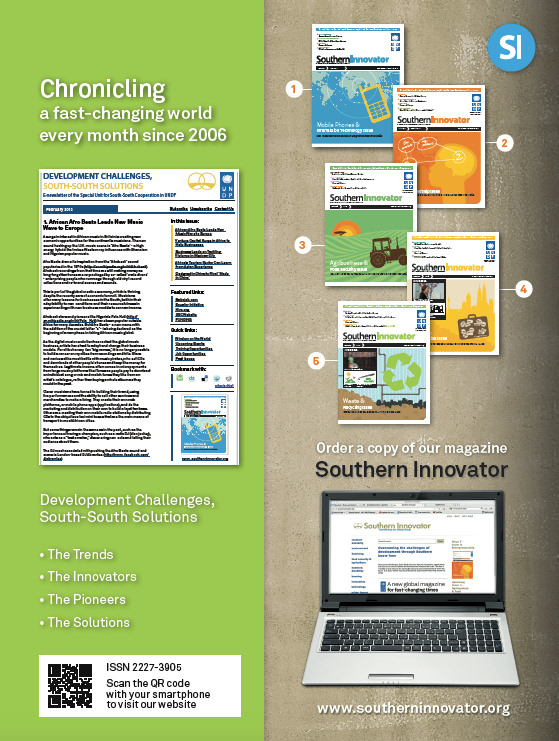
Development Challenges, South-South Solutions was launched as an e-newsletter in 2006 by UNDP’s South-South Cooperation Unit (now the United Nations Office for South-South Cooperation) based in New York, USA. It led on profiling the rise of the global South as an economic powerhouse and was one of the first regular publications to champion the global South’s innovators, entrepreneurs, and pioneers. It tracked the key trends that are now so profoundly reshaping how development is seen and done. This includes the rapid take-up of mobile phones and information technology in the global South (as profiled in the first issue of magazine Southern Innovator), the move to becoming a majority urban world, a growing global innovator culture, and the plethora of solutions being developed in the global South to tackle its problems and improve living conditions and boost human development. The success of the e-newsletter led to the launch of the magazine Southern Innovator.
Expertise: Innovation, innovators, human development, South-South development, United Nations, policy and policy innovation, South-South cooperation, South-South trade, global trends, strategy, online content, global memes, Internet, mobile phones, information technology, global South, resilience strategies, crisis response.
Locations: London, UK and New York, U.S.A. 2007 to 2016
Since the start of 2007, global international development and media consultancy David South Consulting (DSC)/David South International (DSI) has been working with the UNDP-associated United Nations Office for South-South Cooperation (UNOSSC) (formerly the Special Unit for South-South Cooperation) to raise the profile of South-South cooperation and the global South in global development through its innovators, as well as influencing the switch to an innovation-led approach to how development is delivered at the United Nations and at the country level. Based in London, UK and with a design studio in Reykjavik, Iceland, DSC/DSI did this with two highly influential media: the monthly e-newsletter Development Challenges, South-South Solutions, and its sister magazine Southern Innovator.
About
With the global economic crisis unfolding in 2007, we asked “what would inspire people?” What is going on in the global South that would improve human development under these circumstances and make people more resilient?
In 2007, discussing the global South, or solutions from the South, had a far lower profile in international development, the media and with the general public. Being one of the first sources to regularly chronicle the 21st-century world emerging from the crisis, the two publications (e-newsletter Development Challenges, South-South Solutions and its sister magazine Southern Innovator) were able to open up a space for greater coverage of the global South, while drawing attention to a new generation of development innovators.
“Great economic and business reporting! Very helpful for us.” Africa Renewal, Africa Section, Strategic Communications Division, United Nations Department of Public Information
“I just went over your June newsletter. It’s very well done and far reaching. Congratulations!” Violette Ruppanner, Director, 3D -> Trade – Human Rights – Equitable Economy, Geneva, Switzerland
“Just to let you know I enjoyed the newsletter a lot – it was interesting to learn about things going on that I would never otherwise find out about, and also the listing of future conferences and events proved very useful.” Ian Sanderson, Deloitte, Geneva, Switzerland
“Congratulations on another great newsletter that’s packed with fascinating information! I really enjoy getting it each month.” Whitney Harrelson, Making Cents, Washington D.C.
By adopting a strategy to exploit developments in online and digital media (and the space opened up by the global economic crisis), the reach of the e-newsletter and magazine was far greater than would have been possible just a year prior, back in 2006. This proved useful for reaching the growing number of people in the global South who were being digitally connected either through mobile phones or the Internet, or both.
The e-newsletter was not only distributed every month to subscribers, it was also simultaneously posted online in many platforms to reach as wide an audience as possible. It was kept simple in its design so as to be easy to access by readers with low bandwidth or high data costs. It exploited new online services to reach an as wide as possible audience.
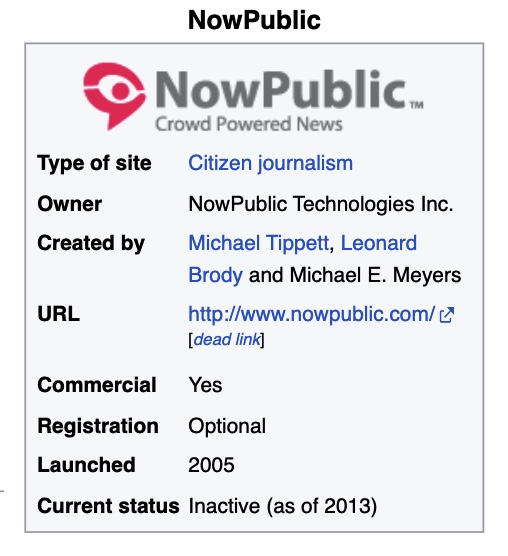
As an example, the arrival of ‘crowd-powered’ media in 2007 allowed for posting of stories to a global audience to test responses and reactions in real time. An experiment from 2008 to 2010 on the innovative Vancouver, Canada-based NowPublic platform proved very effective in developing the right tone for the stories. Many of these stories have been cited in publications and online (please see below for citations).
With 201 Development Challenges, South-South Solutions stories posted on the NowPublic platform, a total of 336,289 views by 2012 had occurred, according to the NowPublic counter.
Various websites offering publishing and archiving services (Scribd for example) meant it was easy to access the stories from any place, device or platform, bypassing firewalls and censors – a very serious concern in many countries of the global South. And social media such as Twitter made it easy to spread the word to the right people.
The two publications proved influential on a number of fronts, being early to draw attention to the following: the rising use of mobile phones and information technology in development, the world becoming an urban place, innovative food solutions including the nascent insect food sector (now a big thing), altering perspectives on what is possible in Africa, the use of data science to innovate development, and tracking the growing number of technology hubs and the fast-growing start-up culture in the global South. The publications were cited for shaping the new strategic direction adopted by the United Nations Development Programme (UNDP) (the UN’s leading development organisation) and its first youth strategy, and the development of the Sustainable Development Goals (SDGs). As the world’s first global innovator magazine, Southern Innovator’s design had to be appropriate for a diverse audience. It has drawn praise for being both “beautiful” and “inspiring”, while its use of sharp, modern graphic design and infographics inspired others in the UN to up their game when it comes to design.
Today, there are many sources for sharing stories on solutions from the global South; in fact, it could be called ‘cool’. South-South cooperation and innovation have now become the key methodology for the UN’s delivery of its programmes and projects. In 2015, China pledged US $2 billion to “support South-South cooperation” and called for the international community to “deepen South-South and tripartite cooperation”. In development parlance, they have been “Mainstreaming South-South and Triangular Cooperation” in their plans.
The current policy vogue for innovation in developing and developed countries can trace its roots back to some of the early work done by these two publications (and which was further amplified by the annual Global South-South Development Expo, which often would feature innovators from the two publications, spreading the innovation message around the world). Both publications had set out to inspire and “champion a global 21st century innovator culture”. And they have done this, as can be seen from concrete evidence and anecdotal responses from individuals and organizations alike.
Crucial to success has been integrity. As was disclosed in arrests made by the Federal Bureau of Investigation (FBI) in October 2015, a news service claiming to be associated with the United Nations (South-South News) had not followed either the letter or the spirit of the UN’s Global Compact. It had received substantial funding from a Macau casino owner featured in a 2010 investigation by International Risk Ltd., which found he “is characterized in the media as a ‘Macau Crime Lord’ and a kingpin of the international slave prostitution trade”. To date, a number of his co-conspirators have been found guilty of various charges and sentenced. He was convicted 28 July 2017 on six counts “for his role in a scheme to bribe United Nations ambassadors to obtain support to build a conference center in Macau that would host, among other events, the annual United Nations Global South-South Development Expo“. He used the news service as a “conduit for bribery and money laundering” at the United Nations, according to the FBI, something admitted to by the various co-conspirators in court and under oath. Read more on this case here: http://www.reuters.com/article/us-un-corruption-idUSKCN0XH2DL. And the conviction here: Chairman of a Macau Real Estate Development Company Convicted on All Counts for Role in Scheme to Bribe United Nations Ambassadors to Build a Multi-Billion Dollar Conference Center
The case of South-South News points to the dangers of cutting corners and the importance of approach and methodology; to not just mouth support for the UN Global Compact but to embrace its letter and spirit as well. As can be seen from this particular case, the reputational damage can be severe if the wrong strategy is pursued. Clients need to be very aware of whom they are working with and conduct due diligence for service provider credentials and also investigate the credentials of potential donors and funders.
Southern Innovator needed to be true to its ethos of championing genuine innovation that improves human development in the global South. It had to be free to pursue its search without interference.
To avoid censorship and interference, its editorial operations were based in London, UK and its design studio was based in Reykjavik, Iceland (a high-ranking country in the World Press Freedom rankings and a former top place holder in the UNDP Human Development Index). Using a women-led design studio, it developed a design vision that could communicate across borders using clear graphic design and high-quality images. For example, when it launched in 2011, infographics were rare in development publications and at the UN; now they are commonplace. It also tried to be as a ‘green’ as possible. The studio was powered on 100 per cent renewable energy (in particular, geothermal energy); the hard copy of the magazine is printed on paper from renewable forests.
To date, five issues of Southern Innovator have been published on key themes identified by the United Nations: mobile phones and information technology, youth and entrepreneurship, agribusiness and food security, cities and urbanization and waste and recycling.
All of the issues collate and explain the trends, innovations and innovators for a large, global audience spanning many countries and regions.
Timeline
2007: David South Consulting begins work on the e-newsletter Development Challenges, South-South Solutions for the Special Unit for South-South Cooperation at the United Nations.
2009: Adjust e-newsletter content based on reader responses. Begin posting content on Twitter platform.
2010: Begin development of initial concepts for innovator magazine and assemble creative team with Icelandic graphic designer and illustrator Solveig Rolfsdottir and graphic designer Eva Hronn Gudnadottir.
2011: Attend Global South-South Development Expo in Rome, Italy. Launch first issue of Southern Innovator magazine on mobile phones and information technology. It is called “a terrific tour de force of what is interesting, cutting edge and relevant in the global mobile/ICT space…”. Launch www.southerninnovator.org website and social media including Twitter account @SouthSouth1.
2012: Attend Global South-South Development Expo in Vienna, Austria. Launch issues 2 (youth and entrepreneurship) and 3 (agribusiness and food security) of Southern Innovator magazine. Called a “Beautiful, inspiring magazine from UNDP on South-South innovation.”
2013: Attend Global South-South Development Expo in Nairobi, Kenya. Launch issue 4 of Southern Innovator magazine (cities and urbanization). Called “fantastic, great content and a beautiful design!” and “Always inspiring.”.
2014: Attend Global South-South Development Expo in Washington, D.C., U.S.A. Launch issue 5 of Southern Innovator magazine (waste and recycling). The Twitter account @SouthSouth1 called “ one of the best sources out there for news and info on #solutions to #SouthSouth challenges.” Final issues of e-newsletter Development Challenges, South-South Solutions published.
Testimonials
“The e-newsletter Development Challenges, South-South Solutions proved to be a timely and prescient resource on the fast-changing global South, tracking the rise of an innovator culture driven by the rapid adoption of mobile phones and information technology …
“In 2010, work began on the development of the world’s first magazine dedicated to the 21st-century innovator culture of the global South. My goal was to create a magazine that would reach across countries and cultures, meet the UN’s standards, and inspire action. Southern Innovator was the result. Mr. [David] South played a vital role in the magazine’s development from its early conception, through its various design prototypes, to its final global launch and distribution.
“Both the e-newsletter and magazine raised the profile of South-South cooperation and have been cited by readers for inspiring innovators, academics, policy makers and development practitioners in the United Nations and beyond.
“I highly recommend Mr. [David] South as a thoughtful, insightful, analytical, creative and very amicable person who has the unique ability to not only grasp complex problems but also to formulate a vision and strategy that gets things done. … ” Cosmas Gitta, Former Assistant Director, Policy and United Nations Affairs at United Nations Office for South-South Cooperation (UNOSSC) in UNDP
“I think you [David South] and the designer [Solveig Rolfsdottir] do great work and I enjoy Southern Innovator very much!” Ines Tofalo, Programme Specialist, United Nations Office for South-South Cooperation
Southern Innovator Issue 5
“@SouthSouth1 is one of the best sources out there for news and info on #solutions to #SouthSouth challenges.” Adam Rogers, Assistant Director, Regional Representative, Europe, United Nations Office for South-South Cooperation (UNOSSC)
“Btw, I really enjoyed reading them, impressive work & a great resource. Looking forward to Issue 6. My best wishes to you & your team at SI.”
“The magazine looks fantastic, great content and a beautiful design!”
Southern Innovator Issue 2
“Thank you David – Your insight into the issues facing us a[s] [a] “global Village” is made real in the detail of your article – 10 out of 10 from the moladi team.” Moladi, South Africa (http://www.moladi.net/index.htm)
Southern Innovator Issue 1
“What a tremendous magazine your team has produced! It’s a terrific tour de force of what is interesting, cutting edge and relevant in the global mobile/ICT space… Really looking forward to what you produce in issues #2 and #3. This is great, engaging, relevant and topical stuff.” Rose Shuman, Founder & CEO, Open Mind and Question Box
“Looks great. Congratulations. It’s Brill’s Content for the 21st century!” Conan Tobias, Managing Editor, Canadian Business
What they are saying about SI on Twitter: From @CapacityPlus Nice job RT @ActevisCGroup: RT @UNDP: Great looking informative @SouthSouth1 mag on South-South Innovation; @UNDP Great looking informative @SouthSouth1 mag on South-South Innovation; @JeannineLemaireGraphically beautiful & informative @UNDP Southern Innovator mag on South-South Innov.
“Beautiful, inspiring magazine from UNDP on South-South innovation. Heart is pumping adrenaline and admiration just reading it”
Impact
Micro
developed content for highly influential UN e-newsletter Development Challenges, South-South Solutions from 2007 to 2014. The monthly briefing is distributed across the UN and to subscribers
developed and launched world’s first global innovator magazine for the United Nations, Southern Innovator
contacted and networked with innovators around the world to raise the profile of their work
attended global events to champion power of 21st century global innovator culture. Visited United Nations agency headquarters around the world to share the innovator message and distribute the publications
cited as a key resource on trends in the global South
Macro
significantly raised profile of global South innovators and 21st century global innovator culture
cited as contributor to new strategic plans for UNDP and its switch to an innovation and South-South focus









 David South Consulting


You must be logged in to post a comment.