Why even bother printing (on paper) Southern Innovator as a magazine? “What about the trees and we live in the digital age!”, some might say.
There is evidence and science supporting the need to always publish Southern Innovator in print as well as online. First, a study of the World Bank’s online publications came to a shocking conclusion: A survey in 2014 found a third of World Bank publications are never downloaded, 40 per cent were downloaded just 100 times, and only 13 per cent were downloaded more than 250 times in their lifetime (The Washington Post). As The Washington Post pointed out, these are publicly funded publications with the intention of contributing to policy debates and providing solutions to the world’s problems. So, if nobody is reading them, or just a handful are, that actually does matter if you care about positive change in the world.
Secondly, a Norwegian study in 2014 from the Stavanger University (part of Europe-wide research into the impact of digitisation on the reading experience), found “… that paper readers did report higher on measures having to do with empathy and transportation and immersion, and narrative coherence, than iPad readers,” according to lead researcher Anne Mangen (The Guardian).
An earlier study the researchers did also found “students who read texts in print scored significantly better on the reading comprehension test than students who read the texts digitally” and that “Studies with students, for instance, have shown that they often prefer to read on paper”, continued Mangen in The Guardian.
Another issue is Internet shutdowns, outages and censorship. All of these have been on the increase, especially in Africa (africanews.com). To put it simply, you cannot electronically shutdown a piece of paper.
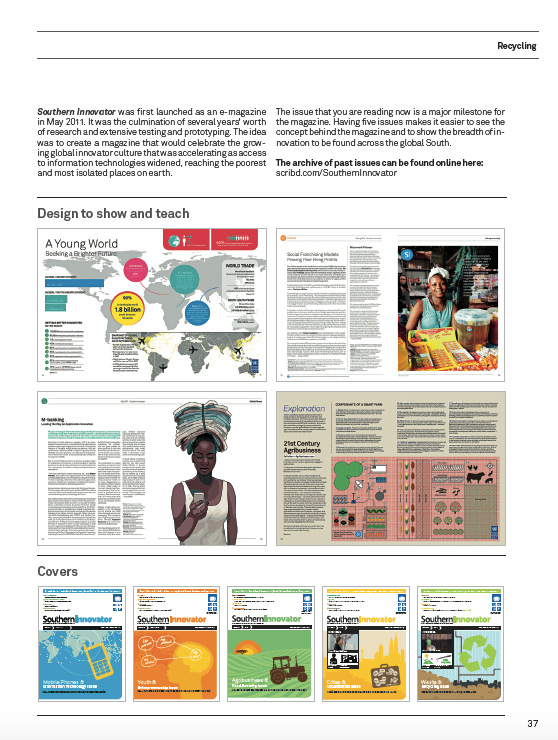
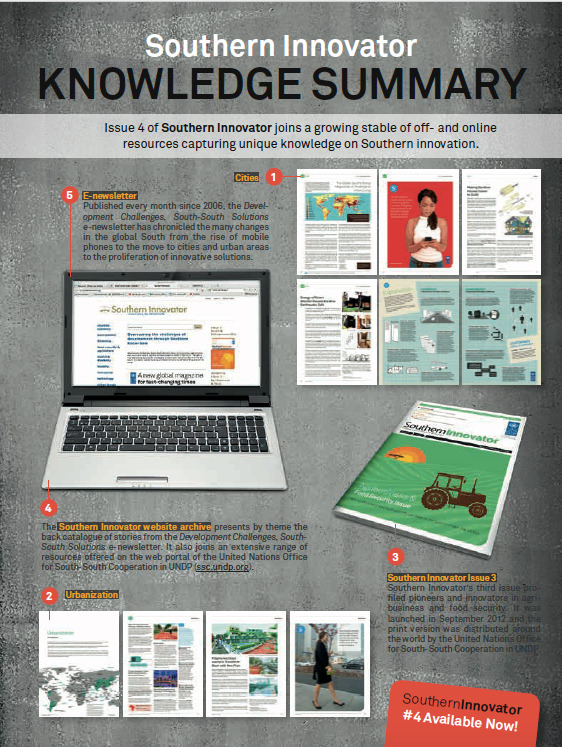
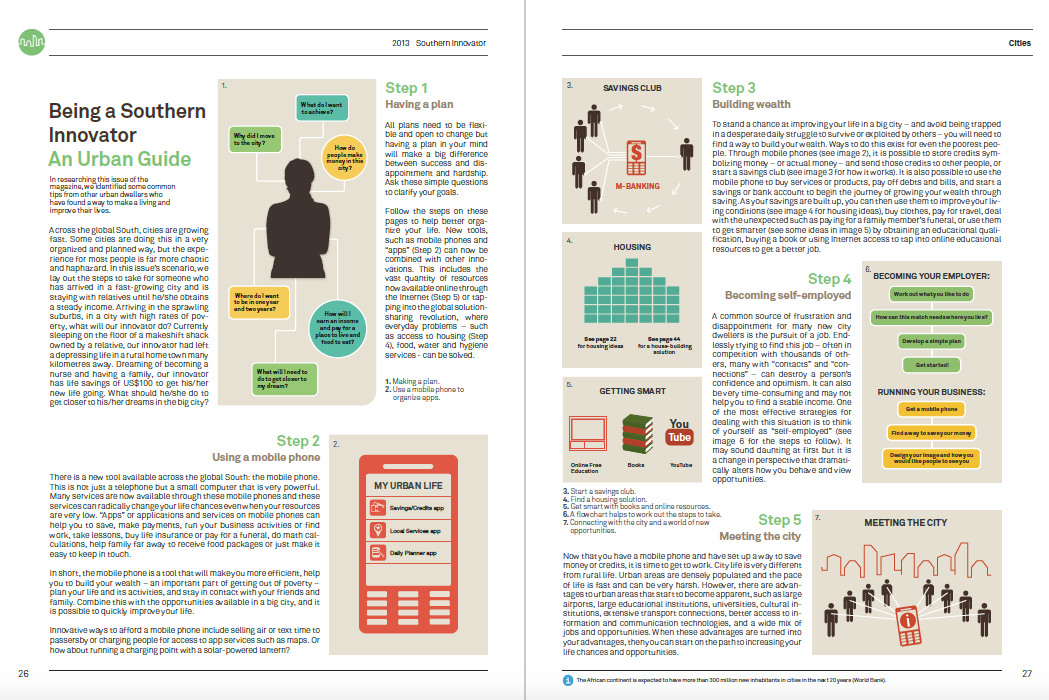
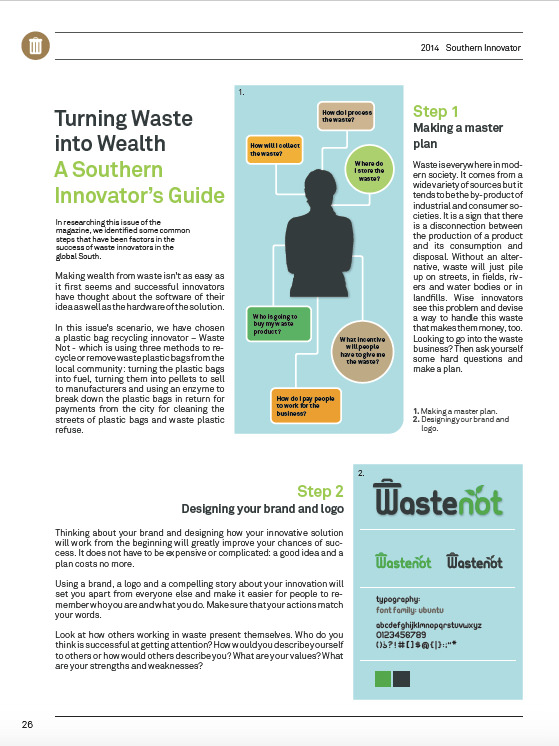
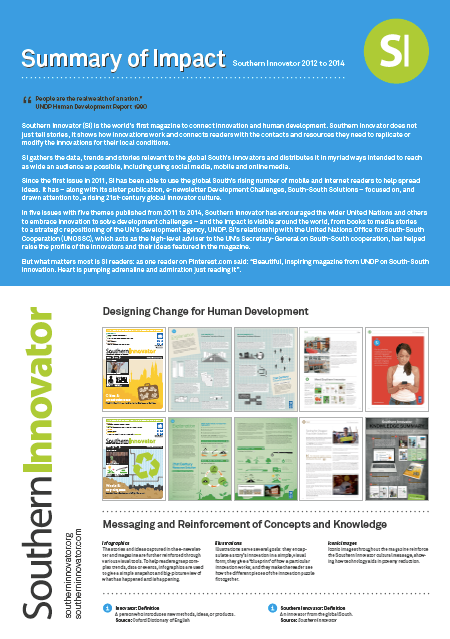
Design to show and teach.Innovations Summary.Innovations Summary.A fast-changing world.Knowledge Summary.Knowledge Summary.Being a Southern Innovator: An Urban Guide.Turning Waste into Wealth: A Southern Innovator’s Guide.Managing the workflow: Getting things done.
Britain’s best-loved children’s hospital and charity, Great Ormond Street Hospital for Children NHS Trust (GOSH), contracted me to lead a two-year project to modernise the hospital’s web presence and take its brand into the 21st century. GOSH is both Britain’s first children’s hospital and a pioneering child health institution (along with its partner the Institute for Child Health). The hospital’s outstanding reputation meant the project was carried out under intense public, media and professional scrutiny, and required a keen awareness of new media developments and the needs of the hospital’s patients, their families and the public.
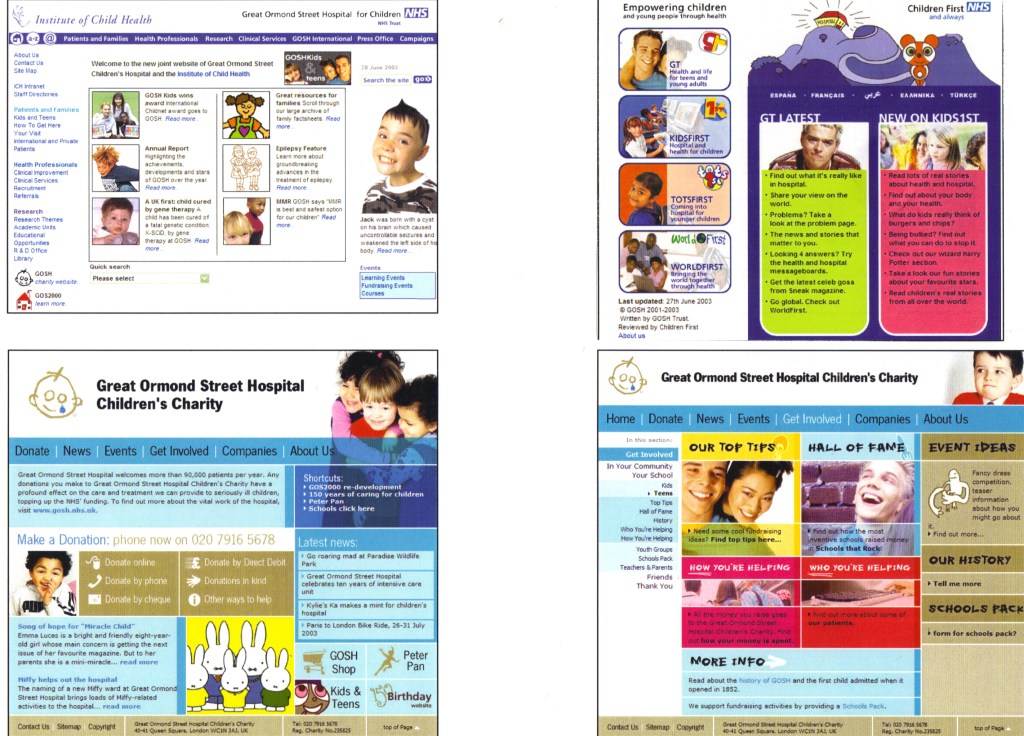
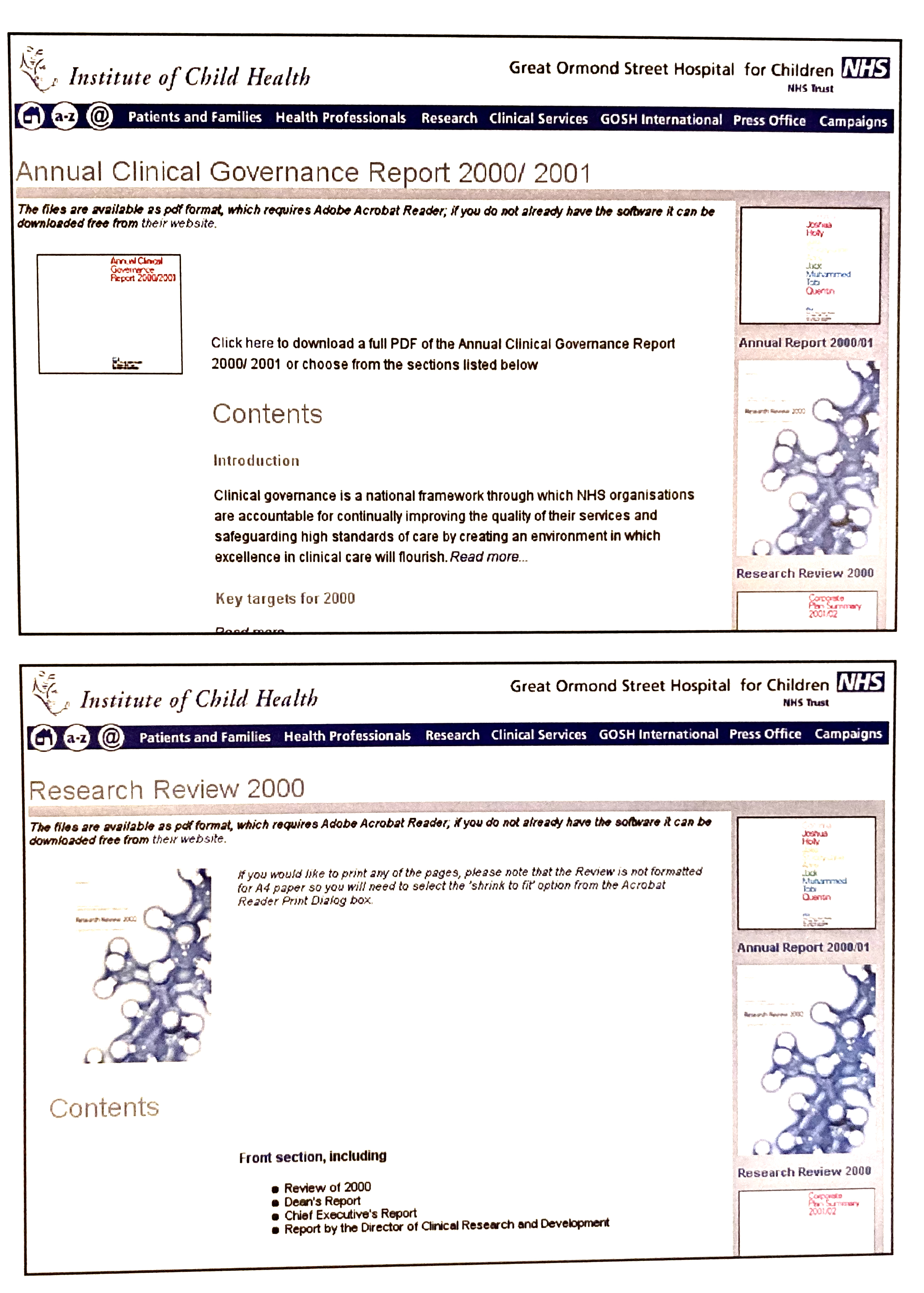
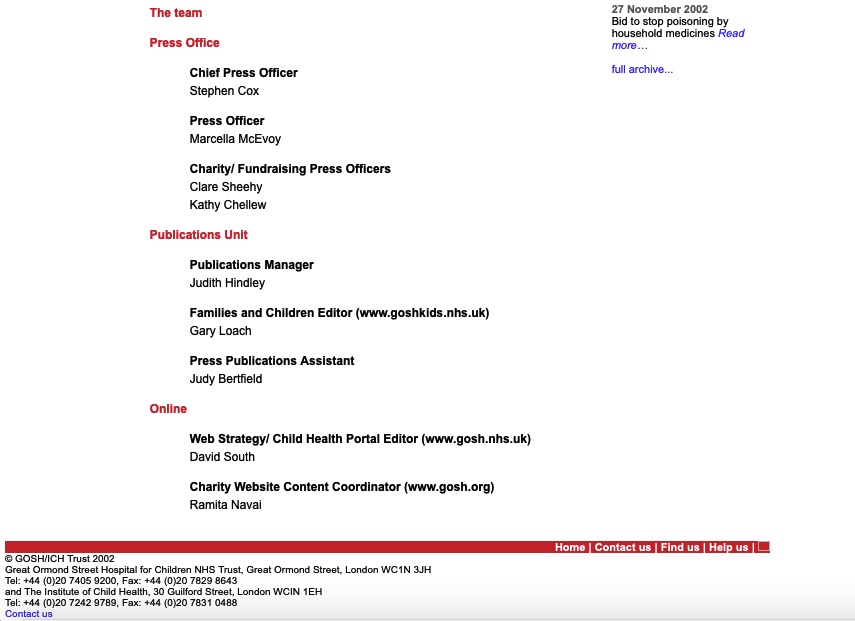
The project was developed in three, distinct phases. Screen grabs from these phases are now available for download and evaluation. They also include web traffic statistics. This unique snapshot of a complex project as it unfolded, should prove useful for other e-health practitioners.
A great way to track the historical development of a web project is to use the Wayback Machine’s internet archive here. By typing in the web address (for example, www.gosh.nhs.uk, and www.gosh.org), you can see a chronological history of the website by month.
Content produced for the GOSH Child Health Portal (now MyGOSH) in 2003 on the ketogenic diet and how it can help with the treatment of epilepsy.
Annual Clinical Governance Report 2000/2001.
Read here about the child health portal project’s vision and strategy, its launch and overall impact. Or download a brief Powerpoint presentation here: GOSH Powerpoint.
In 2003, the UK’s Guardian newspaper called the Children First website one of the “three most admired websites in the UK public and voluntary sectors,” and a UK government assessment called the overall GOSH child health web portal a role model for the NHS.
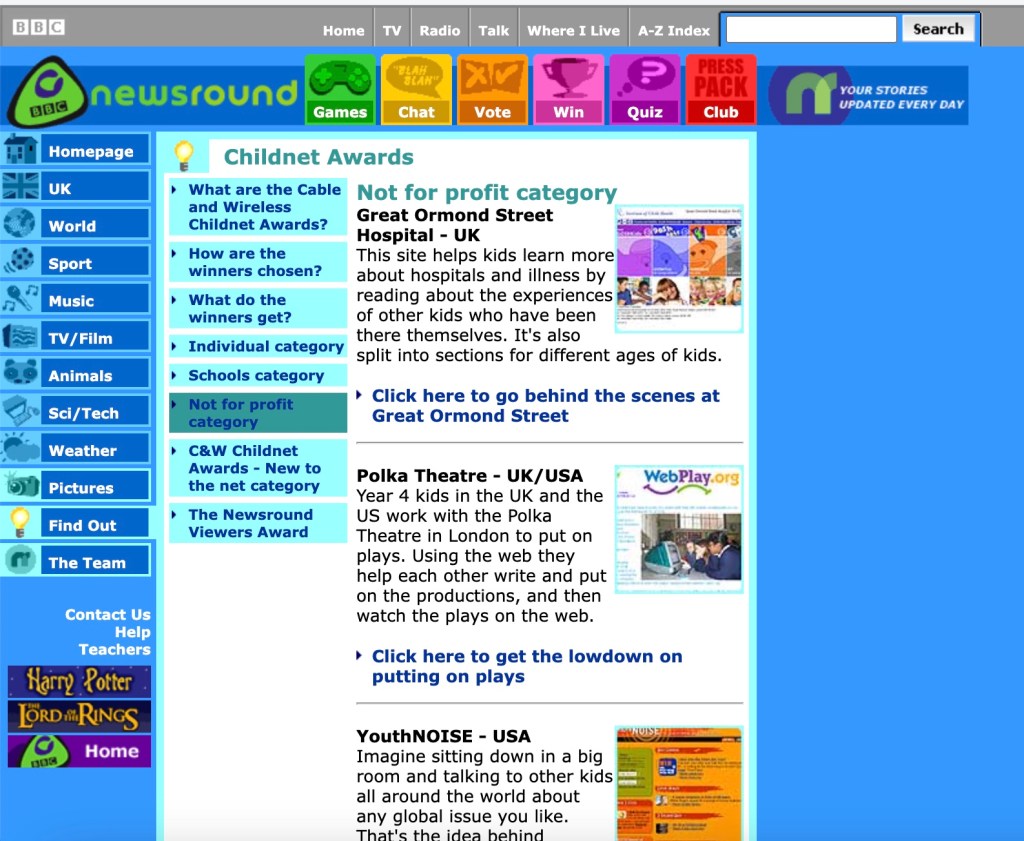
The GOSH Child Health Portal team receive the Childnet Award in 2003 at London’s Science Museum (Photo: CBBC Newsround).
In 2006, The Times of London called Children First the Top Child Health Website in its Wellbeing on the Web: The Best Portals survey (November 11, 2006).
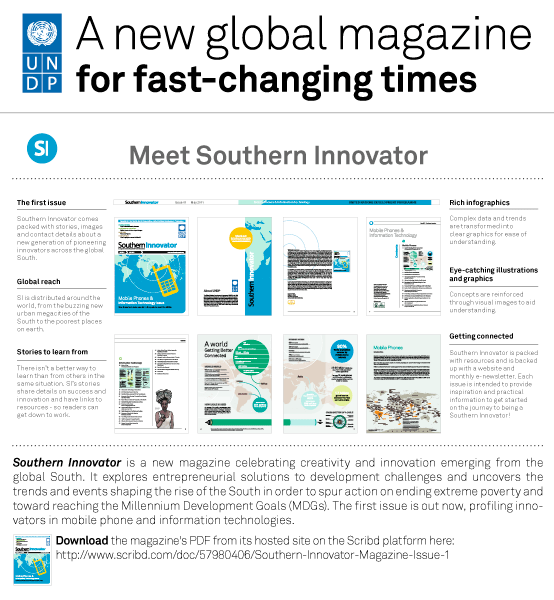
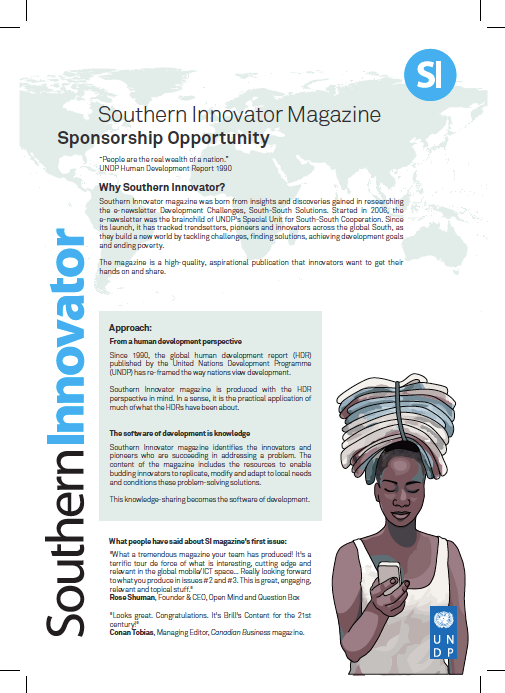
It was 10 years ago this month that Southern Innovator‘s first issue launched in New York during the UN’s General Assembly week (UNGA). It focused on mobile phones and information technology for a reason: these connectivity transformations were re-shaping how people lived their lives, even in the poorest and remotest places on earth.
The content was based on global research, beginning in 2007, funded by the United Nations.
“What a tremendous magazine your team has produced! It’s a terrific tour de force of what is interesting, cutting edge and relevant in the global mobile/ICT space… This is great, engaging, relevant and topical stuff.” Rose Shuman, Founder & CEO, Open Mind and Question Box, Santa Monica, CA, U.S.A.
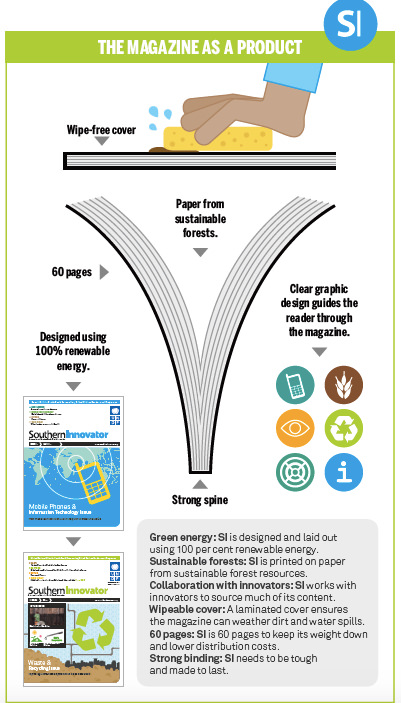
Every issue was launched somewhere new around the world. While Southern Innovator’s digital presence has been key to its success and global reach, the hard copy of the magazine was designed with special features. The magazine needed to be robust and able to stand a fair bit of abuse and hard wear. It needed to be easy to read in low light conditions. And it needed to look sharp and eye-catching to reach as wide an audience as possible.
In 2010, as we prepared to launch Southern Innovator, the branding and website for David South Consulting was re-visioned by Icelandic graphic designer and illustrator Sólveig Rolfsdóttir. David South Consulting has been working with clients around the world since 1991.
Graphic Designer and Illustrator: Sólveig Rolfsdóttir.
A pioneering technology social enterprise has found a way to connect people around the world to the new digital economy, transforming their lives and providing long-term employment opportunities. It is closing the digital divide in a very practical way, teaching new skills and, most importantly, providing income to the poor and vulnerable.
The San Francisco, USA-based non-profit social enterprise Samasource (samasource.org) uses what it calls microwork – a virtual assembly line of small tasks broken down from a larger project so they can be completed over the Internet – to outsource work to its network of workers around the world.
The tasks in this virtual piecework range from writing to transcribing to organizing online content.
The company organizes the projects using its own online work distribution system connecting workers around the world to the SamaHub in San Francisco. Most of the workers are women, youth and refugees. When they complete their task, it is sent back to the SamaHub in San Francisco where the staff check it and assure its quality. Once approved and completed, the project is returned to the client.
The company was founded in 2008 and draws on experts in “distributed work, economic development, and outsourcing.”
The microwork is divided into three areas: content services, data enrichment and transcription.
Content services can include writing descriptions for online business listings, organizing large databases on information or creating brief descriptions of existing content to make it easier for search engines to find it. “Data enrichment” tackles the vast quantity of information on the Internet that needs to be kept up to date and reliable. It also includes ‘tagging’, where text or images on the Internet need to have appropriate ‘tags’ or labels. And finally, transcription services include digitizing paper documents like receipts or books or transcribing audio and video files for the web.
All these tasks are labour intensive and require high attention to detail. And they are critical to any online business’s success if it wants a reputation for accuracy and consistency.
Samasource is optimistic about its future potential because of the sheer size of the market for business process outsourcing: estimated to be worth over US $100 billion. What Samasource does, called ‘impact sourcing’ – outsourcing to people in the developing world living in poor or remote communities – is a market worth US $5 billion, according to Samasource’s website.
It differs from conventional business process outsourcing in a number of respects, including the educational background of the workers. Most conventional outsourcing goes to college graduates in cities in India, China and the Philippines. Impact outsourcing is done by people with at most a high school education.
The digital economy needs these workers to handle the many millions of detailed tasks required to link together information. It is easy to take this for granted because it is hidden from view, but it is what enables the Internet to function and businesses to thrive. Samasource provides outsourcing services including content moderation and data entry to clients like LinkedIn, Intuit and the US State Department.
“We bring dignified, computer-based work to women, youth, and refugees living in poverty,” said Samasource’s founder and chief executive officer, Leila Janah.
Janah has a background in development studies and formerly worked for the World Bank. This experience convinced her that much foreign aid was failing to target what poor people are really looking for: a job that pays well.
Samasource sees what it does as work, and not handouts.
It also believes it is changing perspectives, proving people from the poorest places on earth can become trustworthy, hard-working knowledge workers.
The Internet is a unique medium because it transcends borders and smooths contact between people with varying linguistic, cultural and educational capabilities.
“The Internet reduces the friction of collaboration across all of these centres and time zones, and with a highly distributed workforce,” said Janah.
Samasource claims to have paid out US $1 million in wages to more than 1,500 workers around the world. Ambitiously, it wants to expand this to reach some of the 144 million youth between 16 and 24 living on less than US $2 a day.
Youth are a particular focus for Samasource. Samasource targets young people who are literate and have received an education but still can’t get a job.
As for the many women employed by Samasource, they were either unemployed or earning poverty-level wages doing precarious work in low-level manufacturing and not building their skills.
Samasource currently has 16 partnerships in Haiti, India, Pakistan, Kenya, Uganda and South Africa. Criteria to work with Samasource includes being in a high-poverty region. Another criteria is for most of the money earned to stay within the region where the work is done and adhere to the standards laid down by Samasource.
Samasource’s success means it has attracted further funding. In December 2011, it was given a US $1.5 million grant from Google.org – the Google.com search engine’s charity. It has also raised US $5 million from non-profit investors, including the Ford Foundation, the Rockefeller Foundation and the eBay Foundation. The challenge for the Samasource model will be to prove, with this new funding, that it can scale its operations to pay out more to its workers than it is taking in to meet its operating costs.
Microwork is turning out to be big work indeed!
Published: January 2012
Development Challenges, South-South Solutions was launched as an e-newsletter in 2006 by UNDP’s South-South Cooperation Unit (now the United Nations Office for South-South Cooperation) based in New York, USA. It led on profiling the rise of the global South as an economic powerhouse and was one of the first regular publications to champion the global South’s innovators, entrepreneurs, and pioneers. It tracked the key trends that are now so profoundly reshaping how development is seen and done. This includes the rapid take-up of mobile phones and information technology in the global South (as profiled in the first issue of magazine Southern Innovator), the move to becoming a majority urban world, a growing global innovator culture, and the plethora of solutions being developed in the global South to tackle its problems and improve living conditions and boost human development. The success of the e-newsletter led to the launch of the magazine Southern Innovator.
Like this story? Here is a dirty secret: this website is packed with stories about global South innovators. We spent 7 years researching and documenting these stories around the world. We interviewed the innovators to learn from them and we visited them to see how they did it. Why not use the Search bar at the top and tap in a topic and see what stories come up? As for my work, I have been involved with start-ups and media ventures since the early 1990s. In the years since I have learned a great deal about innovation and digital and have shared these insights in the stories on this website as well as in the 5 issues of Southern Innovator magazine. So, stick around and read some more!
While Southern Innovator’s digital presence has been key to its success and global reach, the hard copy of the magazine was designed with special features. The magazine neded to be robust and able to stand a fair bit of abuse and hard wear. It needed to be easy to read in low light conditions. And it needed to look sharp and eye-catching to reach as wide an audience as possible.




















You must be logged in to post a comment.