Category: Blogroll

  • Angolan Film Grabs Attention at Film Festival

    Angolan Film Grabs Attention at Film Festival

    By David SouthDevelopment Challenges, South-South Solutions

    SOUTH-SOUTH CASE STUDY

    The power of the creative economy to transform lives, livelihoods – and perceptions – should never be underestimated. Creativity can transform the image of places and situations often seen in a negative light. A film from Angola is shining a light on the country’s music scene and showing the vitality of the nation in the wake of a long-running civil war.

    Angola’s vicious civil war ran from 1975 to 2002 (http://en.wikipedia.org/wiki/Angolan_Civil_War) and the country is still recovering from the economic and social damage wreaked by the conflict.

    The film Death Metal Angola (deathmetalangola.com) was a hit of the recent Dubai International Film Festival (dubaifilmfest.com/en/), an annual film showcase running every December in the United Arab Emirates (UAE) in the Middle East.

    Death Metal Angola illustrates the power of film storytelling to draw attention to a country and spark interest in its culture and challenges.

    The film focuses on the hidden world of heavy metal music (of which death metal is a sub-genre) (http://en.wikipedia.org/wiki/Heavy_metal_music) in Angola – but it was not supposed to be about heavy metal music at all.

    The story starts with American director Jeremy Xido (http://jeremyxido.com/). Originally asked to do a film on immigration, Xido happened upon a railway line in Angola being built by Chinese workers. The railway line was being built in the town of Huambo (http://en.wikipedia.org/wiki/Huambo) in central Angola.

    “There’s only one cafe in Huambo where you can get a decent cup of coffee,” he told the UAE’s The National news website. “Everyone interested in coffee is there: expats, military guys, Lebanese businessmen, people from all over the place.”

    Hanging out in the café, he met a young man, Wilker Flores, who said he was a musician.

    “He said he played death metal, and I just thought: ‘I have to hear this.’”

    Flores’ partner, Sonia Ferreira, runs an orphanage and Wilker invited Xido to come hear him play.

    “It was in this really poor neighbourhood with no electricity, and there’s Wilker with an amplifier and guitar and stolen electricity from this wire. We lit him with the headlights from an SUV (sport utility vehicle) and he proceeded to play this impromptu death metal concert in the middle of an orphanage with kids running around. It was the most amazing thing I’ve ever seen.

    “

Xido then discovered that Ferreira and Flores were organizing the country’s first heavy metal music concert. While they were planning the concert, Xido was inspired to switch to making the film Death Metal Angola.

    The documentary took about six weeks to film. Filming took place around Huambu, Benguela and Angola’s booming capital, Luanda. It is a mix of interviews with musicians, including some from the death metal and thrash metal scenes.

    The origins of this music scene in Angola reaches back to the country’s former colonial ruler, Portugal, a country where heavy metal rock music has a strong fan base.

    Xido found the love for metal music was a by-product of the civil war years. “During the war, a lot of the young guys – if they had the opportunity – would go to Portugal to study to get away from armed service, and they were often exposed to contemporary rock.”

    There are local links, too. “Wilker says that rock is actually African in its roots, and says that a lot of the rhythms you’ll find in the countryside are the rhythms you’ll find in death metal.”

    “I think a lot of it has to do with looking back at the war and the sort of unfilled promises of post-war,” said Xido, who adds that the lyrics have very political messages and those involved are highly intellectual.

    “A lot of these guys are working in banks or doing IT. There’s a young guy who is considered to have the best metal growl. He wanted to come to Dubai, but is studying electronics and has exams.”

    Filmmaking is a vibrant part of the global creative economy. According to a 2011 UIS (UNESCO Institute for Statistics) survey, two countries in the global South lead the world in filmmaking. India remains the world’s leading film producer, and Nigeria, with its prolific home video market, continues to hold second place ahead of the United States.

    According to the Creative Economy Report 2010, the creative economy is “A new development paradigm” linking the economy and culture, embracing economic, cultural, technological and social aspects of development at both the macro and micro levels.

    “Central to the new paradigm is the fact that creativity, knowledge and access to information are increasingly recognized as powerful engines driving economic growth and promoting development in a globalizing world,” the report says.

    And as for Xido, making the film has opened his ears to heavy metal music, which he says was not what he listened to growing up.

    “Because of these guys I started listening to Pantera and Sepultura and I really got into it. Metal on headphones in New York is fantastic. I love the way they like it in Angola, where it’s a huge expression of joy.”

    But what about the other film, the one about immigration and the railway? “It’s still in production,” Xido said.

    Published: February 2013

    Resources

    1) UNESCO Institute for Statistics: A treasure trove of data and analysis on the impact of culture. Website: http://www.uis.unesco.org/Culture/Pages/movie-statistics.aspx

    2) How to Make a Movie: Tips on movie-making in 23 steps with pictures. Website: http://www.wikihow.com/Make-a-Movie

    3) How to Make a Video: The 3-step process of making a video. Website: http://www.mediacollege.com/video/tutorial/

    4) Coming soon … how to make the perfect movie trailer: If you want to get your movie noticed, you need an eye-catching trailer. Just follow these simple rules. Website: http://www.guardian.co.uk/film/2012/jun/16/how-to-make-a-movie-trailer

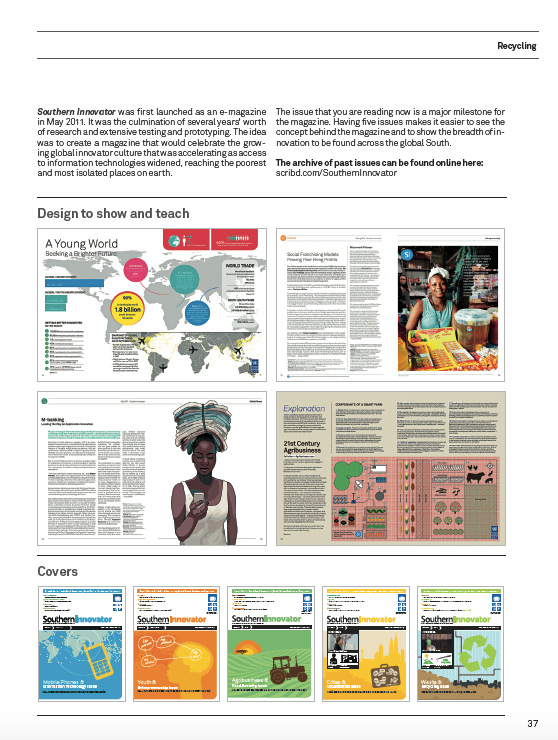
    Southern Innovator logo

    London Edit

    31 July 2013

    Creative Commons License

    This work is licensed under a
    Creative Commons Attribution-Noncommercial-No Derivative Works 3.0 License.

    ORCID iD: https://orcid.org/0000-0001-5311-1052.

    © David South Consulting 2022

  • Riverwood: Kenyan Super-fast, Super-cheap Filmmaking

    Riverwood: Kenyan Super-fast, Super-cheap Filmmaking

    By David SouthDevelopment Challenges, South-South Solutions

    SOUTH-SOUTH CASE STUDY

    The African film-making success story of Nigeria’s Nollywood has been joined by another fast-rising star: Kenya’s Riverwood. Both are beneficiaries of the digital revolution in filmmaking over the last decade, and both are using low-cost digital filmmaking and editing to tell local stories — in the process making money and creating thousands of jobs.

    The power of creative industries to create jobs and wealth has been a focus of UNESCO, through its Global Alliance for Cultural Diversity. UNESCO has been in the forefront in helping African countries re-shape their policies to take cultural industries into consideration. The promotion of cultural industries also has been incorporated into the New Partnership for Africa’s Development (NEPAD).

    What is particularly attractive about this phenomenon for the poor in the South is its rough-and-ready approach to filmmaking: combining low-cost digital cameras and film editing software on personal computers, with small budgets and fast turn-around times. Films are made on location using local people. These factors make getting into filmmaking accessible and within reach of more people.

    Riverwood is named after River Road, a bustling creative and business hub in Nairobi. Riverwood operates at a furious pace, with 20 to 30 films made every week. It adds up to 1,000 films a year selling 500,000 copies at 200 Kenyan shillings (US $2.60) a piece: 1 billion shillings (US $13 million) in the past two years.

    The whole industry is totally self-sufficient, and is following the well-trodden path laid down by Hollywood and India’s Bollywood.

    One of Kenya’s woman directors is leading the renaissance in filmmaking. “Movies are very important because I think they are the most important art in Kenya – in Africa,” said Wanjiru Kinyanjui in the film, “Riverwood, the Blooming of a Film Industry,” by the World Intellectual Property Organization (www.wipo.org). “Basically, because Africans have an oral tradition, and a visual one, there is a huge market for local films.”

    Riverwood films share a common characteristic of on-the-spot sets and a resourceful and cheap approach.

    “They are shot in two, three days and edited in a week,” she continued. “They are selling because people can identify with them. The films being in Riverwood are basically the lives of people, reflecting the Kenyan way of life and entertaining Kenyans. “

    And it is a new form of employment for many people:  “When I am making a movie, I need people: you employ very many people. And you also employ yourself. It is a real way of getting rid of poverty. Because all this talent, which is untapped, could be working.”

    And as Riverwood rising star director John E. Maina puts it: “Hollywood is the model for any society that wants to develop.”

    While still in its infancy compared to Nigeria’s Nollywood, Riverwood is already pioneering ways to protect the creative rights of filmmakers and build a financially-sustainable industry. Inspired by Hollywood’s ownership of creative material, Kenyan filmmakers have come up with some ingenious solutions. Each production company has a rubber stamp and signs on the sleeve of the DVD (digital video disc) – even if it is 1,000 copies.

    If a director finds a pirated copy, and even if pirates have forged the rubber stamp, the signature will look like a forgery.

    “It is based on a business model,” said director John E. Maina. ”It is commercial. So it is self-sustaining. This is how Bollywood is growing, this is how Nollywood is growing, this is how Hollywood developed.”

    As pioneers in copyright protection, Riverwood directors strongly believe they are an important part of the country’s development.

    “When you pirate a product, and the resources are not channelled back to the person who created that product, he is losing out on creating a new product for you tomorrow,” said Maina. “So you are the loser: tomorrow you will not have another product.

    “Riverwood, Nollywood, Hollywood, are the model for any society that wants to develop. No society will develop without an audiovisual industry. And I think the way to protect an audiovisual industry is through strong copyright laws,” he said.

    “If you go to most of the cafes and the pubs in Kenya, people only turn to TV at 7 o’clock, watch the news, after the news is over, they tell the management to put for them the local DVDs from Riverwood. Because they see themselves, they identify with those images. They don’t identify with the foreign American films, the soaps from South America.<

    “The audiovisual industry is a mirror. If you don’t have a mirror to see yourself, you don’t know who you are. If you don’t have that mirror to see yourself, you are lost.”

    Published: November 2008

    Resources

    • The global charity Camfed (dedicated to eradicating poverty in Africa through the education of girls and empowerment of women) has projects to teach women filmmaking skills. Website: http://uk.camfed.org
    • Festival Panafricain du Cinéma et de la Television de Ouagadoogou 2009: Africa’s biggest film festival. Website: http://www.fespaco.bf/
    • Naijarules: Billing itself as the “largest online community of lovers and critics of Nollywood”, an excellent way to connect with all the players in the business.Website: http://www.naijarules.com/vb/index.php
    • A film by the World Intellectual Property Organization about the Riverwood phenomenon and an introduction to its up-and-coming directors. Website: http://uk.youtube.com/watch?v=OwSu5kcUErE

    Citations

    Cited in The Liverpool Companion to World Science Fiction Film by Sonja Fritzsche (2014).

    Accentuating the positive: Building capacity for creative industries into the development agenda for global intellectual property law by Sean A. Pager, Michigan State University College of Law, American University International Law Review, 2012

    Cinema as cultural discourse: A study of cultural symbols in selected contemporary Gikuyu comedies by Stanley Mbugua Njoroge, School of Creative and Performing Arts, Film and Media Studies, Kenyatta University, 2019

    Other Film Stories

    https://davidsouthconsulting.org/2022/03/30/angolan-film-grabs-attention-at-film-festival/

    https://davidsouthconsulting.org/2022/04/01/bolivian-film-schools-film-scene-paying-off/

    https://davidsouthconsulting.org/2022/10/21/local-animation-a-way-out-of-poverty/

    https://davidsouthconsulting.org/2021/02/04/new-cuban-film-seeks-to-revive-sector/

    https://davidsouthconsulting.org/2020/11/30/nollywood-booming-nigerian-film-industry/

    Creative Commons License

    This work is licensed under a
    Creative Commons Attribution-Noncommercial-No Derivative Works 3.0 License.

    ORCID iD: https://orcid.org/0000-0001-5311-1052.

    © David South Consulting 2023

  • Model City to Test the New Urbanism Concept in India

    Model City to Test the New Urbanism Concept in India

    By David SouthDevelopment Challenges, South-South Solutions

    SOUTH-SOUTH CASE STUDY

    India’s phenomenal economic growth rate – forecast to be 7.9 percent this year by the Asian Development Bank, after averaging 7.7 percent per year over the past decade – has been the force behind an expanding middle class population, now estimated at 50 million people (McKinsey). Forecasts see it swelling from 5 percent of the population to 40 percent by 2025.

    India now boasts many fast-growing global companies and booming enterprise zones like the technology hub of Bangalore. But the country still comes in for heavy criticism of the way it has managed the growth of its cities. Poor planning and chaotic growth have left many cities with vast slum areas, congestion, poor hygiene and sanitation services, crumbling infrastructure and poor-quality transportation services. To more and more Indians it has become clear these factors are now serious impediments to economic growth and modernisation of the country and its economy.

    With 30 percent of the population living in urban areas and cities contributing 60 percent of the country’s GDP and 90 percent of government revenues (Wall Street Journal), city-dwellers’ fate is critical to the functioning of the economy.

    According to the 2001 Indian census, slums make up 25 percent of all housing, and 26 percent of urban households lack access to sanitation facilities.

    And as the middle class grows and its members accumulate savings, their desire to be better housed will also grow. They will be on the hunt for new places to live to realise their dreams. Those who can satisfy this strong urge will be those who will also profit.

    This is where the new city concept of Lavasa (www.lavasa.com) comes in. This new community sits nestled in picturesque mountains and features promenades, sidewalk cafes, and ice cream parlours, but none of the clichéd fixtures of today’s Indian cities: rickshaws, noise and pollution, poor sanitation and over-crowding. It has apartment houses in mustard, terra cotta, ochre, olive and beige. It is also going to have a medical campus, luxury hotels, boarding schools, sports academies, a golf course, a space camp, animation and film studios, software-development companies, biotech labs and law and architectural companies. A thoroughly ‘knowledge economy’ mix that India’s aspiring classes wish to see the country embrace for its future development.

    The people behind Lavasa see it as a new model of governance and urban development for India in the 21st century.

    Lavasa is located in Western Ghats, 200 kilometres southeast of Mumbai, India’s financial and entertainment capital, and 65 kilometres west of Pune, a centre for software programming and computer animation.

    Lavasa’s colourful and detailed website boasts it as a “private hill city being developed by Lavasa Corporation Limited where people can live, work, learn and play in harmony with nature.” It’s billed as “an inclusive city, based on the principles of New Urbanism.”

    The master plan is to house more than 300,000 people divided in to five linked towns.

    The first town, Dasve, will be completed in 2011. Its houses are selling well and are almost sold out, according to its developers.

    Lavasa is the concept of Ajit Gulabchand, chairman of Hindustan Construction Company, an Indian company with extensive experience building bridges and dams.

    The development is located in the remote hills along the Varasgaon Lake, a reservoir providing water to Pune. Lavasa Hill City covers “25,000 acres with 60 Kms of lakefront” according to its website. The land had originally been designated for holiday homes, but this seemed too small an aspiration.
    Lavasa will be governed by a private corporation. It is also being planned according to the principles of New Urbanism (www.newurbanism.org) – a belief in cities built around walkability not cars, where business and residential sit side-by-side, with mixed income housing and lots of green space for parks.

    The corporation will take responsibility for providing all major utilities: running water, electricity, sewage treatment, garbage collection and fibre optic connections.

    This thoroughly modern approach has startled prospective buyers of homes, puzzled there weren’t water tanks on the roofs and septic tanks for each house: something they had come to expect with current Indian cities.

    The Lavasa Corporation has hired an American city administrator, Scot Wrighton, to run the new city.

    He told The Atlantic magazine that Lavasa offered him “a chance to build a new governance model for a country where governance at the municipal level does not work.”

    The project seeks to exploit a portion of Maharashtra state law that lets corporations assume many of the responsibilities normally provided by, or in the domain of, the state. These do not include police powers or the ability to raise taxes but take in pretty much everything else.

    Lavasa has private security guards to watch over its residents and funds itself through home sales, renting, and business deals. The prices for apartments in the development range between US $17,000 and US $36,000. While cheap by Western standards, this is still expensive to middle class Indians.

    The project has come in for criticism for being just for the wealthy and being a pipe dream in chaotic India.

    In response to criticism, Gulabchand is introducing cheaper apartments targeting young professionals and starter homes that he claims will rent for US $11 a month. This far lower monthly rent could make the development affordable for more people, including domestic servants and laborers.

    Gulabchand admitted the plan was not without risks. “We’re worried we’ll still get slums,” he said. “Do we have all the answers yet? No. It is still an experiment, okay?”

    As for charges the development doesn’t look much like the ‘real’ India, Gulabchand says: “Why should we look to the past? India is a young society.”

    But Gulabchand doesn’t think India has the time to waste pondering these aesthetic questions: the country has a desperate need for better quality living conditions.

    “We may not get a perfect Singapore-style model city,” he told The Atlantic. “But this is a model for a more vibrant, inclusive, greener place that still has soul.”

    Published: September 2011

    Resources

    1) New documentary Urbanized gives a passionate over-view of the challenges facing the rapidly urbanizing world around us. Website: http://urbanizedfilm.com/

    https://davidsouthconsulting.org/2021/03/05/southern-innovator-issue-4/

    https://davidsouthconsulting.org/2022/09/28/model-cities-across-the-south-challenge-old-ways/

    https://davidsouthconsulting.org/2020/12/04/model-indian-villages-to-keep-rural-relevant/

    Creative Commons License

    This work is licensed under a
    Creative Commons Attribution-Noncommercial-No Derivative Works 3.0 License.

    ORCID iD: https://orcid.org/0000-0001-5311-1052.

    © David South Consulting 2022

  • Austerity And History | 27 November 2015

    Austerity And History | 27 November 2015

    Two historical works I am cited in as a resource both share a connection to austerity crises. The first, Modern Mongolia: From Khans to Commissars to Capitalists by Morris Rossabi (University of California Press), draws on my work for UNDP Mongolia (1997-1999) to show the impact of austerity policies on the country as it peacefully transitioned from Communism to free markets and democracy in the 1990s.

    Modern Mongolia: From Khans to Commissars to Capitalists.
    Modern Mongolia on Google Books.

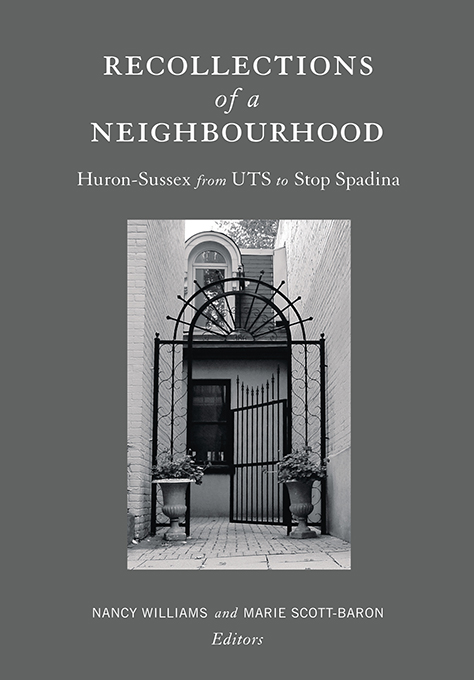
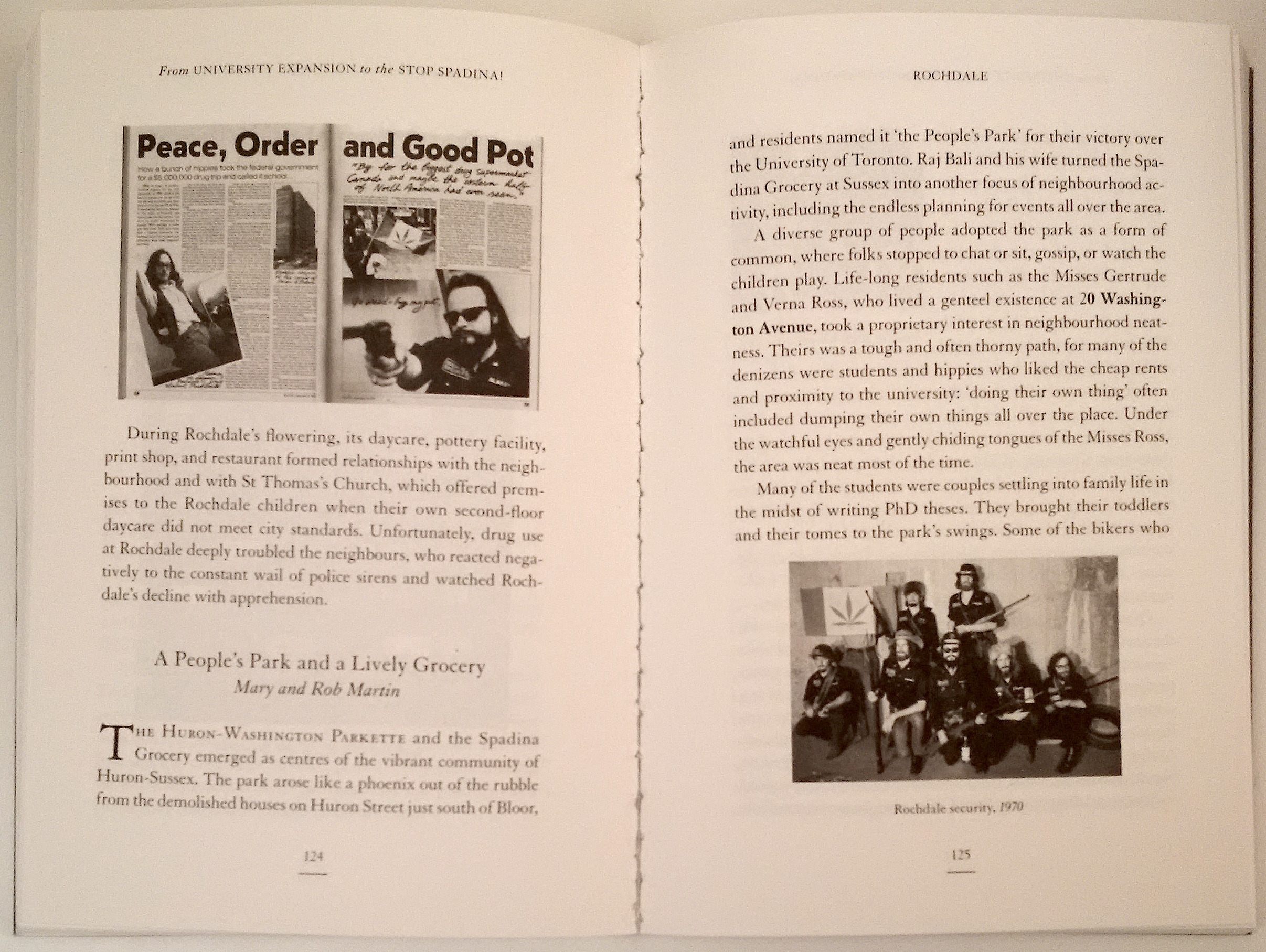
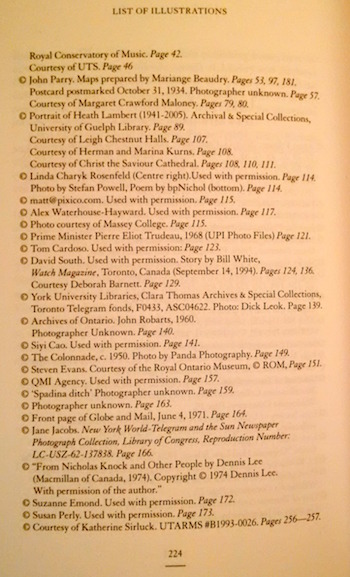
    The second, Recollections of a Neighbourhood: Huron-Sussex from UTS to Stop Spadina by Nancy Williams and Marie Scott-Baron (editors) (Words Indeed Publishing), details the evolution of a remarkable – and bohemian – Toronto, Canada neighbourhood in which I lived in the 1980s and 1990s. It uses an image from Watch Magazine, a youth culture biweekly I edited in 1994 and 1996. The magazine was launched during the depths of Canada’s austerity crisis. Despite the economic gloom, the magazine fizzed with youthful vitality and edge and contributed to Toronto’s resurgence. The particular piece cited is a feature on Rochdale College, a late 1960s experimental college associated with the University of Toronto that lit up the neighbourhood with hippie and alternative cultures, until it went into meltdown as drug gangs took control. It was a bold experiment and a reflection of the counter culture vibe of the time.

    Recollections of a Neighbourhood: Huron-Sussex from UTS to Stop Spadina.
    “Peace, Order and Good Pot” by Bill White.
    List of Illustrations: Sandwiched between Prime Minister Pierre Elliott Trudeau and urbanist Jane Jacobs.

    The Globe and Mail

    Tiny downtown Toronto enclave has a big story to tell

    ORCID iD: https://orcid.org/0000-0001-5311-1052.

    © David South Consulting 2022